

ProductPRODUCT
Featured products
Contact Us
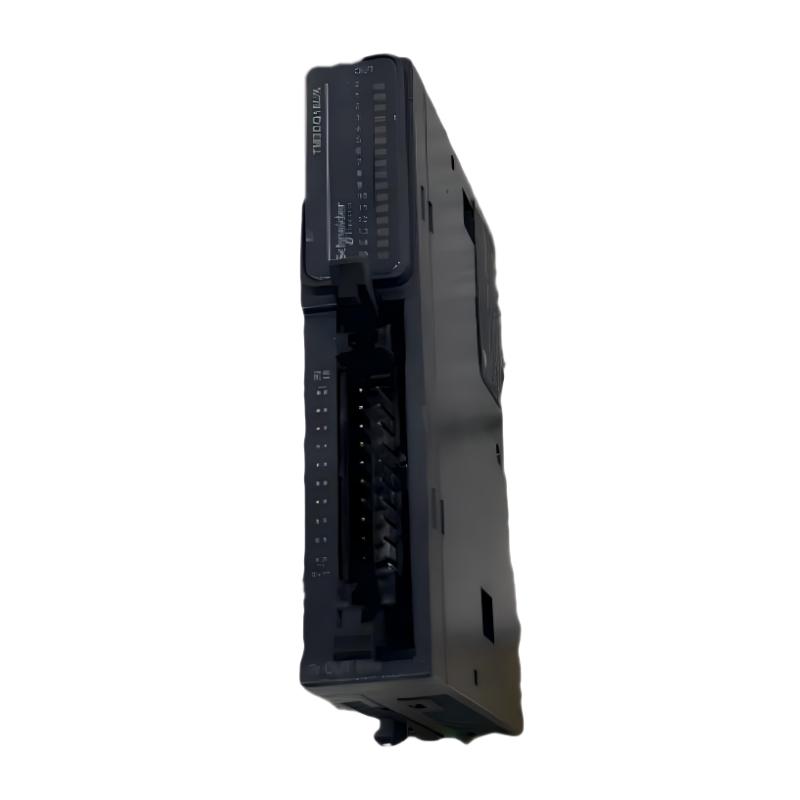
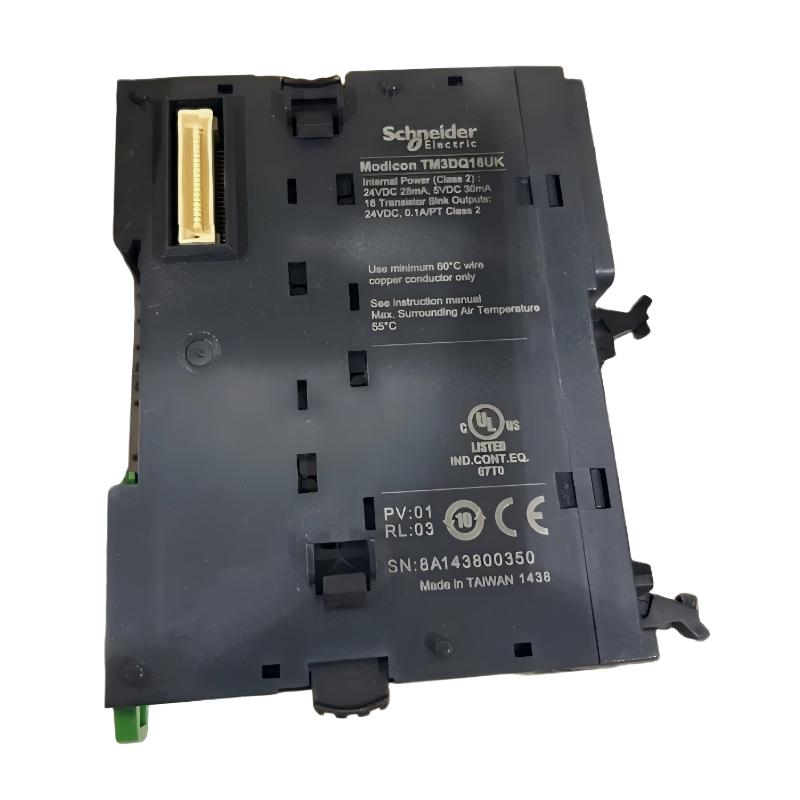
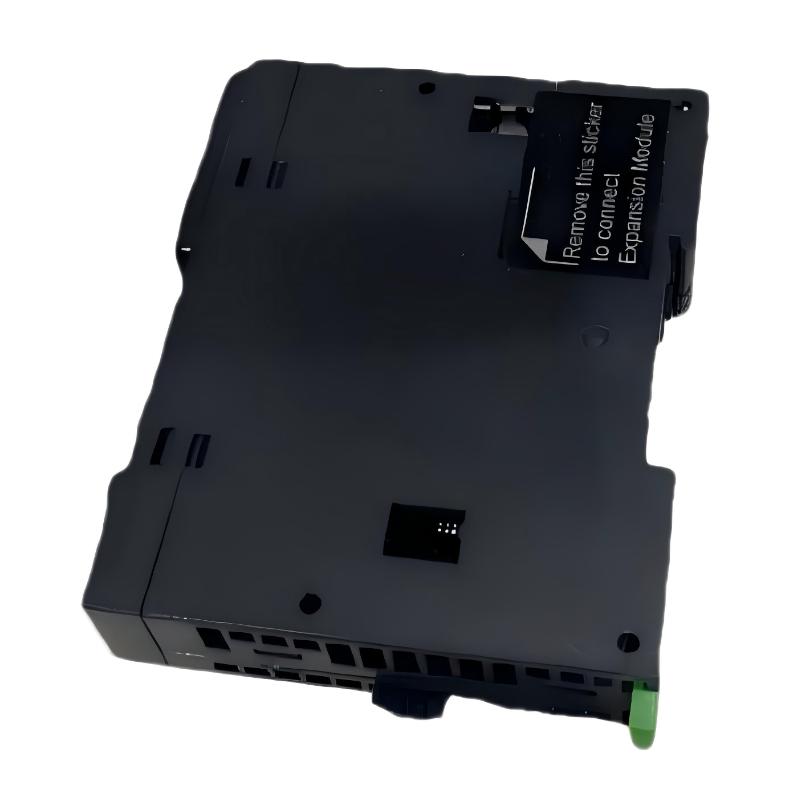
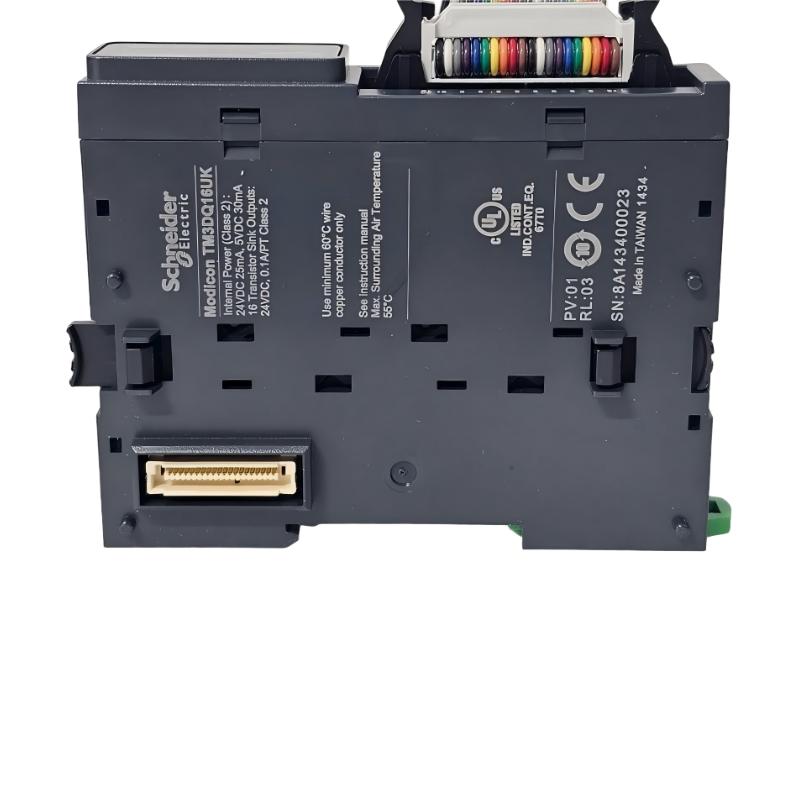
- Schneider
- TM3DQ16UK
- Discrete Output Module
- France
- 90 × 81.3 × 21.4 mm
- 0.111 kg
- Xiamen, China
- New & In Stock
- T/T, PayPal, Western Union
- 1 Year
- 1-3 Working Days
- DHL, UPS, TNT, FedEx and EMS.
- 24-Hour Service
- COO
- 3
Our advantage

Global Logistics
We have a 10-year logistics and express cooperation agreement, so our products can be shipped to any place in the world.

Brand new and original
Our products are imported in bulk from the place of origin. Because of the cooperative relationship, our products are all original and 100% new.

24-hour service
We provide 7*24 hours service to our customers. We will be there whenever you need us.

Price advantage
All our products are priced very favorably because we have our own warehouse and supply.
| Company Information | |||
| [email protected] | |||
| Mobile | +8615980777398 | ||
| +8615980777398 | |||
| 15980777398 |
1. Product Overview
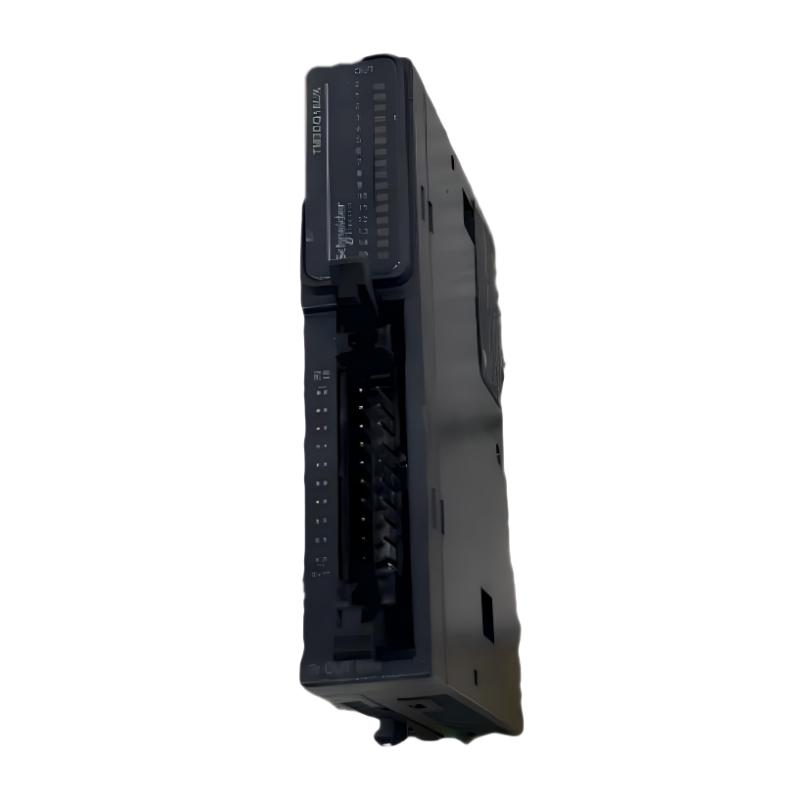
The Schneider Electric TM3DQ16UK is a 16-channel discrete output expansion module from the Modicon TM3 series. It is designed to extend the digital output capacity of compatible Modicon programmable logic controllers (PLCs), providing electronic switching signals for suitable industrial control devices.
The module features 16 transistor outputs with a sink-type, NPN output configuration. It operates with a rated output voltage of 24 V DC and supports a maximum rated current of 0.1 A per output. The total current for the output group is limited to 2 A. These characteristics make the TM3DQ16UK suitable for low-current digital control applications, particularly where external devices accept NPN switching signals.
Unlike relay output modules, the TM3DQ16UK uses semiconductor switching rather than mechanical contacts. This design supports fast switching and frequent operation in suitable DC control circuits. Typical applications include signal transmission, interface control, machine status indication, and low-current automation functions.
The TM3DQ16UK is equipped with an HE10 (MIL 20) connector for output wiring. This connection method allows multiple output signals to be routed through a compatible multi-pin cable assembly. It differs from modules that use individual screw or spring-clamp terminals, so the connector type and cable pin assignment must be checked before installation.
As part of the Modicon TM3 expansion platform, the module is designed for use with supported Modicon M221, M241, M251, and M262 controllers. The PLC executes the application program and determines the required output states, while the TM3DQ16UK switches the corresponding output channels.
Each channel has a green LED indicator to help users identify its output status. These indicators can support commissioning, routine inspection, and troubleshooting. However, the module does not provide built-in short-circuit protection or reverse-polarity protection, so the field circuit must be designed and protected according to the manufacturer’s instructions.
The compact module measures approximately 90 × 81.3 × 21.4 mm and weighs approximately 0.111 kg. It is suitable for installation in an appropriately designed industrial control cabinet where space-efficient I/O expansion and organized signal wiring are important.
When purchasing the TM3DQ16UK, it is essential to distinguish it from similar TM3 output modules. The “U” version uses NPN/sink output logic and an HE10 connector. This is an important electrical distinction from PNP/source output models, and the two types should not be treated as interchangeable without redesigning or verifying the field circuit.
2. Technical Specifications
| Parameter | Specification |
|---|---|
| Brand | Schneider Electric |
| Model | TM3DQ16UK |
| Product Series | Modicon TM3 |
| Product Type | Discrete Output Expansion Module |
| Number of Output Channels | 16 |
| Output Technology | Transistor |
| Output Logic | Negative logic, sink type (NPN) |
| Rated Output Voltage | 24 V DC |
| Output Voltage Range | 19.2–28.8 V DC |
| Rated Current per Output | 0.1 A |
| Total Output Current per Group | 2 A |
| Output Groups | 1 common group |
| Maximum Voltage Drop | 0.4 V DC |
| Maximum Off-State Leakage Current | 0.1 mA |
| Output Turn-On Time | Approximately 450 μs |
| Output Turn-Off Time | Approximately 450 μs |
| Maximum Switching Frequency | 100 Hz under resistive load |
| Electrical Connection | HE10 (MIL 20) connector |
| Cable Type | Unshielded cable |
| Maximum Cable Length | 5 m, subject to manufacturer’s requirements |
| Short-Circuit Protection | Not provided |
| Reverse-Polarity Protection | Not provided |
| Output Status Indication | One green LED per channel |
| Isolation Between Outputs and Internal Logic | 500 V AC |
| Isolation Between Output Channels | Not provided |
| Compatible Controller Families | Supported Modicon M221, M241, M251, and M262 controllers |
| Mounting Options | Compatible DIN rail or panel mounting arrangement |
| Protection Rating | IP20 |
| Dimensions | 90 × 81.3 × 21.4 mm |
| Weight | Approximately 0.111 kg |
| Typical Application | Low-current 24 V DC NPN digital output control |
The specifications above summarize the principal characteristics of the TM3DQ16UK. The output current limit, NPN switching logic, and absence of built-in short-circuit and reverse-polarity protection are particularly important when designing the field circuit.
The maximum cable length and electrical ratings should be verified against the applicable product documentation before installation. External fuses, correct wiring, and appropriate suppression for inductive loads are necessary where specified by the manufacturer’s instructions.
3. Function and Working Principle
3.1 Digital Output Expansion
The primary function of the TM3DQ16UK is to provide additional digital output points for a compatible PLC system. In a typical installation, the PLC executes its control program and determines whether each output should be active or inactive.
The controller transfers the required output states through the TM3 expansion connection. The TM3DQ16UK then switches the corresponding transistor channels to generate the requested output signals.
For example, a PLC may activate an output to signal a downstream controller, operate a suitable interface circuit, or change the state of a low-current indicator. Other channels can be assigned to different control functions, depending on the machine’s program and wiring design.
By providing 16 output channels in one compact module, the TM3DQ16UK helps increase the number of available digital control points without requiring a separate controller for every additional function.
3.2 NPN/Sink Transistor Switching
The TM3DQ16UK uses NPN transistor outputs, also described as sink-type or negative-logic outputs. In a typical sink-output circuit, an activated channel provides a path toward the DC common or 0 V reference, allowing current to flow from the positive supply, through a compatible load, and into the output channel.
This switching arrangement is common in industrial automation systems that use NPN-compatible devices. However, the output logic must match the electrical interface of the receiving equipment.
A PNP/source output works differently: it supplies the positive voltage to the load when activated. Because NPN/sink and PNP/source circuits have different current paths, they should not be wired as though they were equivalent.
Before connecting a field device, engineers should confirm its input type, common-terminal arrangement, supply polarity, and required switching logic. Incorrect matching may prevent normal operation or cause an electrical fault.
3.3 Electronic Switching Performance
The module uses semiconductor switching components rather than mechanical relay contacts. Its specified turn-on and turn-off times are approximately 450 microseconds, making it suitable for many routine industrial digital control applications.
Transistor outputs can be useful where repeated switching is required and mechanical contact wear is undesirable. They are commonly used for low-current signaling and electronic interface circuits.
The maximum specified switching frequency is 100 Hz under a resistive load. The actual performance of a complete circuit also depends on the connected load, cable characteristics, supply conditions, and control-system configuration.
The TM3DQ16UK should not be used as a universal switching device for high-current loads or AC circuits. Applications that require higher current, different voltage levels, or potential-free contacts may need a suitable interface or another output technology.
3.4 HE10 Connector Interface
The TM3DQ16UK uses an HE10 (MIL 20) connector for its output connections. The connector allows multiple output signals to be carried through a compatible cable assembly.
Compared with individual screw or spring terminals, this arrangement can simplify signal routing where a preassembled cable or an intermediate terminal interface is preferred. It also makes correct pin assignment especially important.
The mating connector, cable wiring, and field terminal mapping must match the product’s connection diagram. Do not assume that the pinout is identical to another 16-channel module simply because the number of outputs is the same.
The specified unshielded cable length is limited to 5 m. Cable routing should follow the manufacturer’s instructions, and longer runs should not be assumed acceptable without verifying the applicable requirements.
3.5 Output Status Indication
Each output channel has an individual green LED indicator. When the corresponding channel is activated, the LED provides a local indication of its output state.
During commissioning, technicians can use these indicators to confirm whether the PLC is commanding the expected channels. During troubleshooting, the LED state can be compared with the PLC program, cable connections, field supply, and receiving device.
An illuminated LED does not prove that the external load is operating correctly. The field wiring and the connected equipment must still be checked if the expected action does not occur.
3.6 Protection and Circuit Design
The TM3DQ16UK does not include built-in short-circuit protection or reverse-polarity protection. This distinction is important when designing the output circuit.
The manufacturer’s documentation specifies the use of an appropriate external fast fuse for output protection. The fuse rating and installation arrangement must follow the applicable wiring instructions and the electrical requirements of the connected circuit.
Correct polarity must also be maintained during installation. Reversing supply connections or wiring the output incorrectly can cause malfunction or damage.
Inductive loads, such as relay coils and solenoid devices, can produce voltage transients when switched off. Appropriate suppression should be selected and installed according to the load characteristics and the manufacturer’s guidance.
4. Role in Industrial Control Systems
4.1 Expanding PLC Output Capacity
A machine may require more digital output points as additional actuators, signal devices, or interface circuits are added. The TM3DQ16UK provides 16 additional channels within a supported Modicon TM3 configuration.
This allows a control-system designer to expand the number of available outputs while retaining the existing PLC architecture, provided that the selected controller supports the proposed expansion arrangement.
The permitted number of expansion modules depends on the controller model, system configuration, and applicable hardware limitations. These factors should be confirmed before the cabinet design is finalized.
4.2 Interfacing PLC Logic with Field Circuits
The PLC program determines when an output should change state, but the field equipment requires a suitable electrical signal to respond. The TM3DQ16UK provides the transistor switching interface between the PLC’s digital commands and compatible external circuits.
For example, the PLC may activate a channel after receiving a sensor signal or completing a sequence step. The output can then switch a compatible low-current circuit or an external interface device.
This arrangement separates application logic from field-level switching and can make a control system easier to organize, test, and maintain.
4.3 Supporting Automated Machine Sequences
Automated equipment often follows a sequence of operations such as loading, positioning, processing, transfer, and unloading. The PLC determines the order of operations and monitors the conditions required to proceed.
The TM3DQ16UK can supply digital output signals for suitable low-current devices used in these sequences. When the PLC detects that a condition has been satisfied, it activates the appropriate channel.
Where a downstream actuator requires greater current than the module can provide, an external relay or driver should be used. The output module then provides the control signal, while the external interface handles the load within its own ratings.
4.4 Facilitating Troubleshooting
The channel status LEDs provide a convenient first step when diagnosing an output-related problem. A technician can compare the commanded PLC state with the module’s indicator and then inspect the connector, cable, supply, and connected load.
Because the TM3DQ16UK has no built-in short-circuit or reverse-polarity protection, troubleshooting should also include checking for wiring errors and ensuring that the specified external protection is correctly installed.
A systematic inspection can help distinguish program errors from connection faults, supply problems, or failures in the external equipment.
4.5 Supporting Modular Automation Architecture
The Modicon TM3 platform provides a modular approach to PLC I/O expansion. A compatible system can combine digital input modules, digital output modules, and other supported I/O types to meet the requirements of a machine or process.
Within this architecture, the TM3DQ16UK handles 16 NPN/sink digital output signals. Its suitability depends on the electrical design of the field circuits, not simply on the number of channels required.
5. Industrial Applications
5.1 Packaging Machinery
Packaging equipment may use digital outputs for indicators, interface relays, machine-state signaling, reject-control interfaces, and commands to downstream devices.
The TM3DQ16UK can support these functions where the receiving circuits are compatible with its 24 V DC NPN/sink outputs and current limits.
The PLC can activate outputs according to product position, timing, or sequence conditions. Higher-current pneumatic or mechanical actuators should be controlled through appropriate interface devices.
5.2 Conveyor and Material-Handling Systems
Conveyor systems often include multiple routing stations, position sensors, warning indicators, and transfer mechanisms. A PLC may need several output points to coordinate these functions.
The TM3DQ16UK can provide output signals for compatible low-current interfaces. For example, an output may command an external relay that controls a separate conveyor function.
The module should not directly drive a conveyor motor. Motor-control equipment such as a suitably rated drive, starter, or contactor is required for the motor power circuit.
5.3 Assembly and Production Lines
Assembly machinery commonly uses PLC outputs to coordinate process indicators, control interfaces, and discrete commands between workstations.
The TM3DQ16UK can supply additional output channels for these functions when the receiving devices are designed for NPN/sink signals. The PLC determines when each output should activate based on sensor feedback, operating sequence, and machine status.
The HE10 connector may be useful in installations where a compact multi-pin connection and a preassembled cable arrangement suit the cabinet design.
5.4 Industrial Control Panels
Control panels may use digital outputs to transmit status signals, activate interface relays, or communicate discrete commands to other equipment.
The TM3DQ16UK can be installed inside an appropriately designed enclosure as part of a compatible Modicon TM3 system. Its IP20 rating means it requires protection from environmental conditions that exceed the module’s intended installation environment.
Panel designers should allow space for the module, mating connector, cable routing, external fuses, and maintenance access.
5.5 Auxiliary Equipment and Utility Systems
Some utility and auxiliary-control applications use low-current digital signals to control indicators, relay interfaces, and other compatible devices.
The TM3DQ16UK may be suitable where the receiving circuit accepts an NPN/sink output and its electrical requirements remain within the module’s ratings. Equipment requiring higher current should use an appropriate external interface.
The circuit designer must also ensure that inductive loads have suitable suppression and that the output circuit is protected as specified by the manufacturer.
5.6 Machine Status and Alarm Signaling
Digital output channels are frequently used to indicate machine states, cycle completion, operating modes, or alarm conditions.
The PLC can activate selected outputs based on its control program, while the TM3DQ16UK switches the corresponding low-current circuits. This provides a structured method for distributing discrete status signals across a machine.
Clear channel labeling and accurate cable documentation can simplify maintenance and reduce the risk of wiring errors during future modifications.
6. Installation and System Integration
6.1 Verify PLC Compatibility
Before installation, confirm that the selected PLC supports the Modicon TM3 expansion platform and the intended module configuration.
The TM3DQ16UK is designed for supported Modicon M221, M241, M251, and M262 controllers. Exact compatibility should be checked against the controller reference, firmware requirements, and the manufacturer’s expansion limitations.
The fact that two modules belong to the same product family does not guarantee that every controller configuration supports them in the same way.
6.2 Mounting and Cabinet Layout
The module measures approximately 90 mm high, 81.3 mm deep, and 21.4 mm wide. It can be mounted on a compatible DIN rail or by an approved panel-mounting arrangement, following the manufacturer’s instructions.
Allow sufficient clearance for the HE10 connector, cable bend radius, wiring separation, and maintenance access. The connector should not be subjected to unnecessary mechanical strain.
The IP20 rating is intended for installation within a suitable enclosure. The complete cabinet must provide the environmental protection required by the application.
6.3 HE10 Connector and Cable Wiring
Use a compatible HE10 (MIL 20) mating connector and cable assembly. Before connecting the cable, compare its pin assignment with the manufacturer’s wiring diagram.
Incorrect pin mapping may connect a field device to the wrong output or common connection. Do not rely on cable color alone; use verified connector documentation and label both ends of the cable.
The specified maximum length for the unshielded cable is 5 m. Follow the manufacturer’s guidance for cable routing and separation from sources of electrical interference.
6.4 NPN/Sink Output Wiring
The TM3DQ16UK uses sink-type outputs. In a typical circuit, the compatible load is connected between the positive supply and the output channel, so that the activated transistor provides a current path toward the appropriate common reference.
The circuit must be designed according to the specified NPN/sink arrangement. Confirm the supply polarity, load wiring, common connection, and receiving device’s electrical requirements before energizing the system.
A PNP/source-compatible circuit may require a different interface arrangement. If the field device is designed for the opposite output logic, do not assume that it can be connected directly.
6.5 Output Current and External Protection
Each output has a maximum rated current of 0.1 A, with a 2 A total current limit for the group. Calculate the expected current for every connected load and consider the possibility of multiple channels being active simultaneously.
The module does not provide built-in short-circuit protection or reverse-polarity protection. Install the external fast fuse arrangement specified by the manufacturer’s documentation and verify correct polarity before powering the circuit.
For inductive loads, select appropriate suppression components according to the load and installation requirements. External interface devices must also be rated for the voltage and current they are expected to switch.
6.6 PLC Configuration and Output Testing
After installation, configure the module in the supported PLC engineering environment. Confirm that the controller recognizes the hardware and that the output addresses match the project configuration.
Assign meaningful names to output variables and document their associated field circuits. Before automatic operation, test each channel individually and verify that the intended device responds correctly.
During testing, compare the PLC command, channel LED, field supply, and actual output-circuit behavior. This helps identify configuration errors before the machine is operated under normal conditions.
6.7 Commissioning and Maintenance
Commissioning should include inspection of the module mounting, connector engagement, cable pinout, supply polarity, external fuses, and load ratings.
For maintenance, inspect the cable and connector for damage, loose connections, or incorrect wiring. If an output does not work, verify the PLC command and field circuit before replacing the module.
Because the module lacks built-in short-circuit and reverse-polarity protection, any suspected wiring fault should be investigated carefully. Electrical work must follow the site’s isolation and safety procedures and be performed by qualified personnel.
7. Compatible System Components
The TM3DQ16UK is intended for use within a compatible Modicon TM3 automation system. The following table lists typical component categories that may be used alongside the module, subject to controller and application compatibility.
| Component Category | Function in the System |
|---|---|
| Modicon M221 PLC | Executes control logic and supports compatible TM3 expansion |
| Modicon M241 PLC | Provides PLC control for supported automation applications |
| Modicon M251 PLC | Supports compatible machine-control and networked automation configurations |
| Modicon M262 PLC | Provides controller functionality in supported automation architectures |
| Modicon TM3 Digital Input Modules | Receive discrete signals from sensors and switches |
| Modicon TM3 Analog I/O Modules | Handle compatible analog signals where required |
| 24 V DC Power Supply | Supplies power to suitable field circuits |
| HE10 Mating Connector and Cable | Provides the physical connection for the module’s output signals |
| External Fast Fuses | Provide the external output-circuit protection specified by the manufacturer |
| Interface Relays | Allow low-current outputs to command separately rated electrical circuits |
| Electronic Interface Drivers | Provide a suitable interface for compatible external loads |
| Industrial Sensors | Provide machine or process feedback through suitable input modules |
| Indicator Lamps and Alarm Interfaces | Display machine status and alarm conditions |
| Engineering Software | Supports PLC programming, configuration, diagnostics, and maintenance |
The HE10 connector and external protection arrangement are essential parts of the installation. Connector compatibility, pin mapping, and fuse selection must be confirmed before the system is energized.
The TM3DQ16UK is an output expansion module, not a standalone controller. Its function depends on a compatible PLC, a correct TM3 expansion connection, and properly designed NPN/sink field circuits.
8. Recommended Alternative Models
Alternative selection should be based on output logic, current rating, connector arrangement, and the type of field device being controlled.
| Model or Model Family | Main Difference | Selection Consideration |
|---|---|---|
| Schneider TM3DQ16UK | 16 NPN/sink transistor outputs with HE10 connector | Suitable when the application requires this exact output logic and connection type |
| Schneider TM3DQ16TK | 16-channel transistor output module with HE10 connector | Do not assume direct interchangeability; verify the output logic and full specifications |
| Schneider TM3DQ16TG | 16-channel transistor output module with spring-clamp terminals | Consider only when the field wiring and output characteristics match the application |
| Schneider TM3DQ16T | 16-channel transistor output module with screw terminals | Consider where screw-terminal wiring is required, after verifying electrical compatibility |
| Schneider Modicon TM3 Relay Output Modules | Relay-based output switching | Consider for circuits requiring relay contacts and compatible switching ratings |
These models should not be treated as automatic replacements. In particular, the TM3DQ16UK uses NPN/sink outputs, whereas other transistor modules may use PNP/source outputs. Their output current ratings and connection methods may also differ.
Before substituting a model, verify the complete part number, output logic, rated current, connector pinout, wiring design, controller compatibility, and required external protection. Where the output logic differs, the field circuit may need to be redesigned.
9. Key Advantages of the Schneider TM3DQ16UK
9.1 Sixteen Digital Output Channels
The TM3DQ16UK provides 16 output points in one compact expansion module. This helps increase the digital output capacity of a compatible PLC system while maintaining a modular hardware layout.
9.2 Fast Transistor Switching
The specified turn-on and turn-off times are approximately 450 microseconds. This supports many routine digital control applications that require consistent electronic switching.
9.3 NPN/Sink Output Configuration
The NPN/sink design is useful in systems built around compatible NPN control interfaces. Correct matching of the output logic and receiving device is essential for reliable operation.
9.4 Compact HE10 Connection
The HE10 connector provides a multi-pin output interface that can simplify wiring when used with a correctly assembled cable and a suitable intermediate connection system.
9.5 Individual Channel Status LEDs
One green LED per channel provides local output-state indication. This helps technicians observe output activity during commissioning and maintenance.
9.6 Modular Modicon TM3 Integration
The module is designed for supported Modicon controllers, allowing additional digital output points to be incorporated into a compatible control architecture.
9.7 Compact Size and Low Weight
With dimensions of approximately 90 × 81.3 × 21.4 mm and a net weight of approximately 0.111 kg, the module is suitable for space-conscious control cabinet layouts.
9.8 Clearly Defined Output Ratings
The 0.1 A maximum rated current per channel and 2 A total group-current limit provide defined electrical boundaries for application design. Observing these limits helps engineers select suitable loads and interface components.
9.9 Flexible Low-Current Signal Control
The module can be used for low-current digital signals, status interfaces, and other suitable control circuits where NPN/sink output logic is required.
10. Technical FAQs
Q1: What is the Schneider TM3DQ16UK?
The Schneider Electric TM3DQ16UK is a Modicon TM3 discrete output expansion module with 16 NPN/sink transistor outputs. It is designed for compatible PLC systems requiring additional 24 V DC digital output points.
Q2: How many output channels does the module provide?
The TM3DQ16UK provides 16 discrete transistor output channels. Each channel can be controlled by the PLC program.
Q3: What is the rated output voltage?
The rated output voltage is 24 V DC, with a specified operating range of 19.2–28.8 V DC.
Q4: What is the maximum rated current per output?
The maximum rated current is 0.1 A per output. The total current for the output group is limited to 2 A.
Q5: Is the TM3DQ16UK an NPN or PNP module?
It is an NPN/sink-type transistor output module. This differs from PNP/source output modules, so the receiving device and wiring arrangement must be compatible.
Q6: What connector does the TM3DQ16UK use?
The module uses an HE10 (MIL 20) connector. A compatible mating connector and correctly wired cable assembly are required.
Q7: Does the TM3DQ16UK have built-in short-circuit protection?
No. The module does not provide built-in short-circuit protection. The manufacturer’s wiring documentation specifies the required external fast-fuse protection arrangement.
Q8: Does it have reverse-polarity protection?
No. Correct supply polarity and wiring are essential. Verify the connector pinout and circuit arrangement before energizing the system.
Q9: Which PLCs are compatible with the module?
The TM3DQ16UK is designed for supported Modicon M221, M241, M251, and M262 controllers. Confirm the exact controller and expansion configuration before installation.
Q10: Can the module drive a motor directly?
No. Its output channels are rated for a maximum of 0.1 A each. Motor loads require an appropriately rated drive, contactor, starter, or other suitable interface.
Q11: Can the module control a relay?
It may control a compatible low-current relay coil or interface circuit if the voltage, current, and inductive-load requirements remain within the module’s specifications. Appropriate external protection and suppression must be provided as required.
Q12: What is the maximum cable length?
The specified maximum length for an unshielded output cable is 5 m. Follow the manufacturer’s instructions for cable selection, connector wiring, and installation.
Q13: What is the protection rating?
The module has an IP20 protection rating and should be installed in an enclosure suitable for the application environment.
Q14: What are the dimensions and weight?
The dimensions are approximately 90 × 81.3 × 21.4 mm, and the net weight is approximately 0.111 kg.
Q15: Can the TM3DQ16UK replace the TM3DQ16TK?
Do not assume that it can be used as a direct replacement. The output logic and electrical characteristics must be verified, even if the modules have similar channel counts or connector styles. Confirm the complete specifications and field wiring before substitution.
Q16: What should be checked before purchasing the module?
Confirm the full model number, number of channels, NPN/sink output logic, rated current, output voltage, HE10 connector, cable length, controller compatibility, external fuse requirements, dimensions, and product condition.
11. Conclusion
The Schneider Electric TM3DQ16UK is a compact 16-channel transistor output expansion module designed for compatible Modicon TM3 automation systems. Its 24 V DC NPN/sink outputs, HE10 connector, individual channel status indicators, and modular integration make it suitable for a range of low-current industrial digital control applications.
The module can support machine status signals, interface circuits, and compatible low-current control devices in packaging machinery, assembly systems, material-handling equipment, and industrial control panels.
Correct application design is essential. Each output is rated for 0.1 A, the output group is limited to 2 A, and the module does not include built-in short-circuit or reverse-polarity protection. The field circuit must therefore use the correct NPN/sink wiring, an appropriate external fast fuse, and suitable protection for connected loads.
For industrial automation buyers, maintenance teams, and system integrators, the TM3DQ16UK provides a practical way to add 16 digital output channels to a compatible Modicon PLC system. Confirming the connector, output logic, current ratings, and protection requirements before purchase or replacement helps ensure safe and reliable integration.