

ProductPRODUCT
Featured products




Contact Us
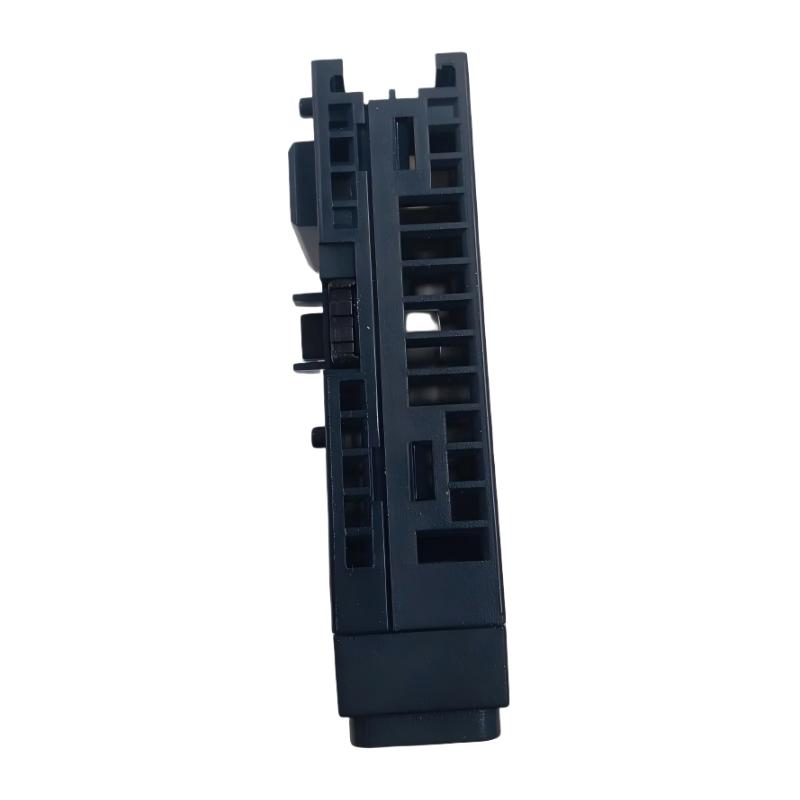
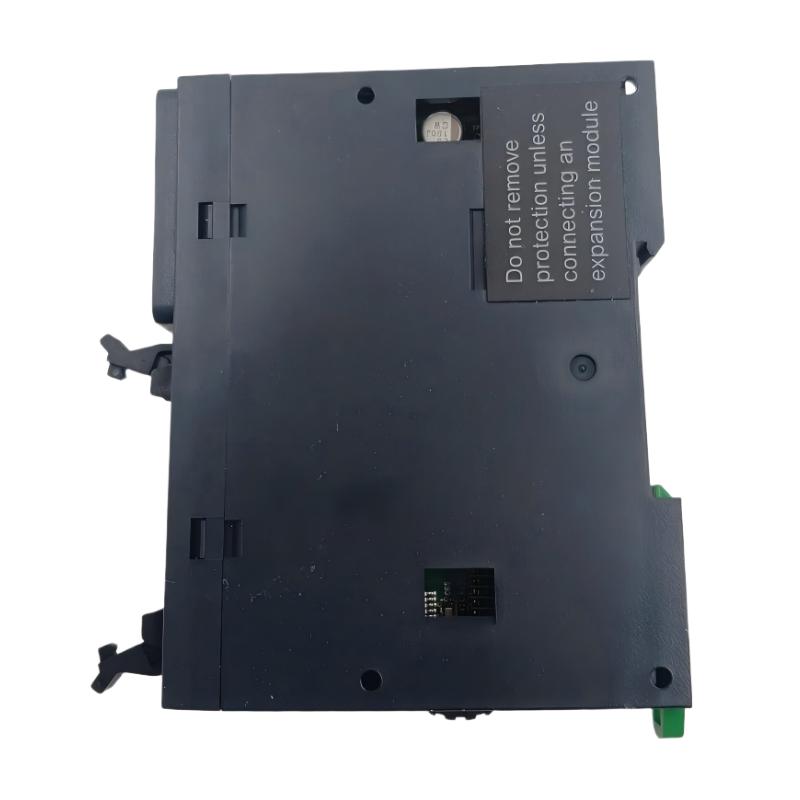
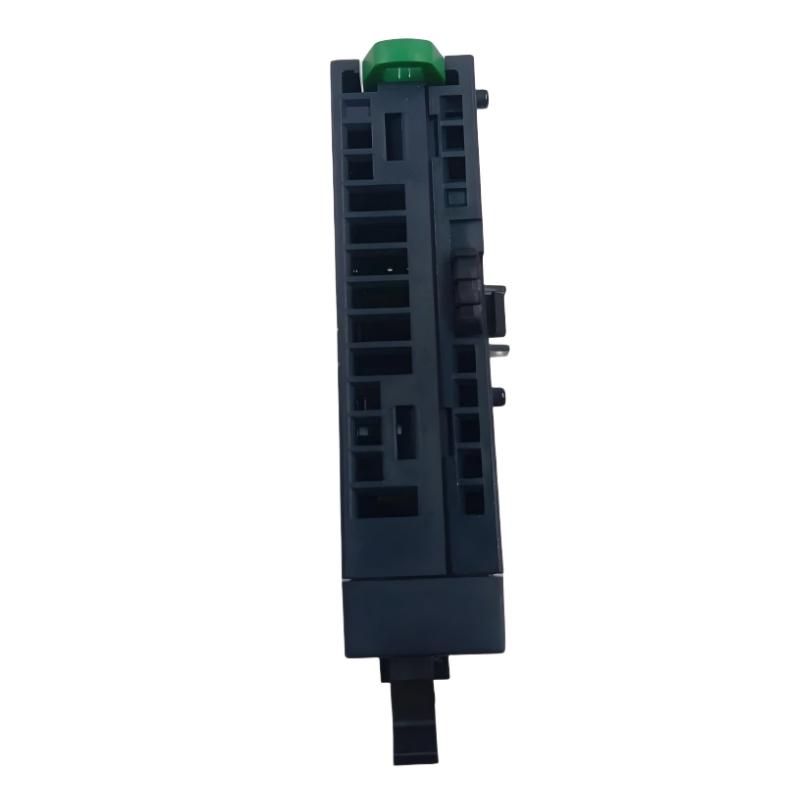
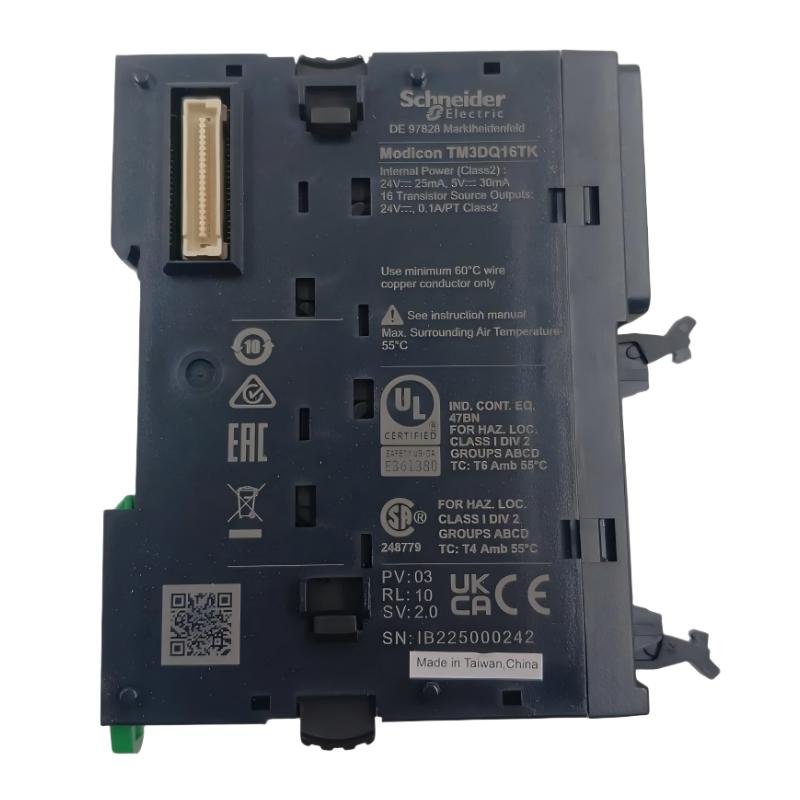
- Schneider
- TM3DQ16TK
- Discrete Output Module
- France
- 90 × 81.3 × 21.4 mm
- 0.72 kg
- Xiamen, China
- New & In Stock
- T/T, PayPal, Western Union
- 1 Year
- 1-3 Working Days
- DHL, UPS, TNT, FedEx and EMS.
- 24-Hour Service
- COO
- 4
Our advantage

Global Logistics
We have a 10-year logistics and express cooperation agreement, so our products can be shipped to any place in the world.

Brand new and original
Our products are imported in bulk from the place of origin. Because of the cooperative relationship, our products are all original and 100% new.

24-hour service
We provide 7*24 hours service to our customers. We will be there whenever you need us.

Price advantage
All our products are priced very favorably because we have our own warehouse and supply.
| Company Information | |||
| [email protected] | |||
| Mobile | +8615980777398 | ||
| +8615980777398 | |||
| 15980777398 |
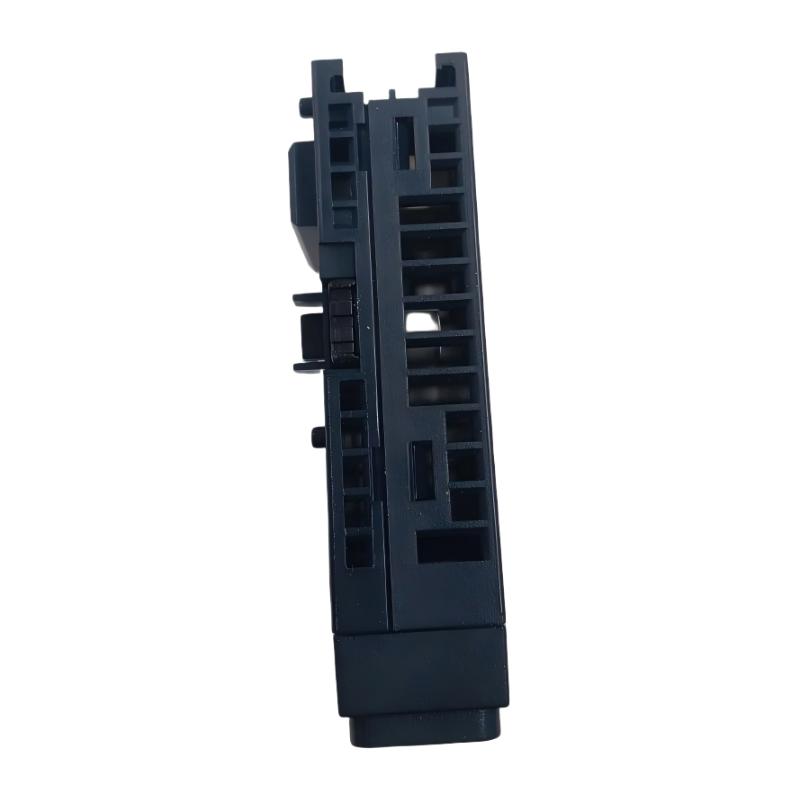
1. Product Overview
The Schneider Electric TM3DQ16TK is a 16-channel discrete output expansion module belonging to the Modicon TM3 series. Designed for industrial automation applications, it provides transistor-based digital outputs for compatible Modicon programmable logic controllers (PLCs). The module enables a PLC system to control external devices such as signal indicators, interface relays, electronic control inputs, and other low-current DC loads that meet its electrical requirements.
As an expansion module, the TM3DQ16TK works with supported Modicon M221, M241, M251, and M262 controllers. It receives output commands through the TM3 expansion interface and converts the controller’s digital instructions into electrical switching signals. This arrangement allows machine builders to increase the number of available output points without necessarily replacing the main controller.
The TM3DQ16TK provides 16 source-type transistor outputs operating at a rated voltage of 24 V DC. Each output supports a maximum rated current of 0.1 A, while the total output current for the group is limited to 2 A. These characteristics make the module suitable for low-current control and signaling applications. Loads with higher current requirements should be operated through appropriately rated interface devices rather than connected directly to the output channels.
One of the defining features of the TM3DQ16TK is its HE10, also known as MIL 20, output connector. Unlike TM3 modules that use removable screw or spring-clamp terminal blocks, this model uses a compact multi-pin connector for output wiring. A compatible cable and connector assembly is therefore required to connect the module to field devices or an intermediate terminal interface.
The module also provides individual green LED indicators for output status. These indicators help maintenance personnel identify which output channels are active during commissioning and troubleshooting. Built-in protection features include protection against short circuits and reverse polarity, subject to the module’s documented operating conditions.
With its compact dimensions, modular architecture, and 16 output channels, the Schneider TM3DQ16TK can be incorporated into a wide range of machine-control and industrial automation systems. Typical applications include packaging equipment, assembly machinery, material-handling systems, control panels, and production equipment that uses low-current 24 V DC control signals.
When selecting this module, engineers and purchasing teams should confirm the connector type, output current, controller compatibility, and cable requirements. The TM3DQ16TK is not electrically interchangeable with every 16-channel output module in the Modicon TM3 family. Correct model identification is essential for maintaining wiring compatibility and reliable system operation.
2. Technical Specifications
| Parameter | Specification |
|---|---|
| Brand | Schneider Electric |
| Model | TM3DQ16TK |
| Product Series | Modicon TM3 |
| Product Type | Discrete Output Expansion Module |
| Number of Output Channels | 16 |
| Output Technology | Transistor |
| Output Logic | Positive logic, source type (PNP) |
| Rated Output Voltage | 24 V DC |
| Output Voltage Range | 19.2–28.8 V DC |
| Maximum Rated Current per Output | 0.1 A |
| Total Output Current per Group | 2 A |
| Number of Output Groups | 1 common group |
| Electrical Connection | HE10 (MIL 20) connector |
| Recommended Cable Type | Unshielded cable |
| Maximum Cable Length | 5 m, subject to manufacturer requirements |
| Output Turn-On Time | Approximately 450 μs |
| Output Turn-Off Time | Approximately 450 μs |
| Maximum Off-State Leakage Current | 0.1 mA |
| Maximum Voltage Drop | 0.4 V DC |
| Short-Circuit Protection | Provided |
| Reverse-Polarity Protection | Provided |
| Output Status Indication | Individual green LEDs |
| Compatible Controller Families | Supported Modicon M221, M241, M251, and M262 controllers |
| Mounting | Compatible DIN rail or panel mounting arrangement |
| Protection Rating | IP20 |
| Dimensions | 90 × 81.3 × 21.4 mm |
| Weight | Approximately 0.72 kg, as listed for this product reference |
| Typical Application | Low-current 24 V DC digital output control |
The specifications above describe the principal characteristics of the TM3DQ16TK. The 0.1 A output rating and 2 A group-current limit are particularly important when designing the field circuit. The output connector and cable arrangement must also comply with the manufacturer’s wiring documentation.
The listed weight is 0.72 kg. Because published weights can vary between product references and packaging configurations, buyers who require a precise shipping or installation weight should confirm the value against the specific product and packaging being supplied.
3. Function and Working Principle
3.1 Digital Output Expansion
The main function of the TM3DQ16TK is to provide additional digital output points for a compatible PLC system. A PLC program evaluates input signals, operating conditions, timers, and sequence logic before determining which outputs should be activated.
The controller sends the corresponding output states through the TM3 expansion connection. The TM3DQ16TK then switches the associated transistor channels to produce the required electrical signals.
For example, a machine may use one output to activate an indicator lamp, another to command an interface relay, and additional outputs to send control signals to other compatible devices. Each output operates according to the logic programmed in the PLC.
By providing 16 channels in one expansion module, the TM3DQ16TK helps organize digital output functions within a modular control architecture.
3.2 Transistor-Based Switching
The TM3DQ16TK uses semiconductor switching devices rather than mechanical relay contacts. Transistor outputs are useful in applications that require repeated electronic switching and relatively fast response.
The module’s specified turn-on and turn-off times are approximately 450 microseconds. This response characteristic supports many standard machine-control and signaling applications in which output commands must be updated quickly.
However, transistor outputs have different electrical characteristics from relay contacts. The TM3DQ16TK is intended for DC control circuits and should not be treated as a universal switching device for AC loads, high-current equipment, or circuits requiring potential-free contacts.
The selection of an output module should always take account of the load voltage, current demand, switching frequency, and electrical interface.
3.3 Source-Type Output Operation
The TM3DQ16TK uses positive-logic source-type outputs, commonly described as PNP outputs. In a typical source-output circuit, an activated output supplies positive DC voltage to the connected load. The load then returns to the appropriate DC common connection.
This arrangement is widely used in industrial 24 V DC control systems. Nevertheless, the complete circuit must be designed around the source-output configuration.
The load’s polarity, common wiring, supply voltage, and input requirements must be checked before connection. A device designed for an incompatible sink-type signal may not operate correctly when connected to a source-type output.
Correct wiring also helps prevent unexpected behavior during startup, shutdown, or fault recovery.
3.4 Output Connector and Signal Distribution
The TM3DQ16TK uses an HE10 (MIL 20) connector for its output connections. This compact interface allows multiple output signals to be carried through a single connector and compatible cable assembly.
The connector arrangement differs from modules that use individual screw or spring terminals. Therefore, the installation requires a suitable mating connector and correctly wired cable. An intermediate terminal block may be used when appropriate for the cabinet design.
The cable must follow the manufacturer’s wiring and length requirements. Published documentation specifies an unshielded cable with a maximum length of 5 m for this transistor output connection. Longer cable runs should not be assumed acceptable without confirming the manufacturer’s instructions and the electrical conditions of the application.
3.5 Status Monitoring
Each output channel has a green LED indicator. When an output channel is activated, its corresponding indicator helps the technician identify the active channel.
This local indication is useful during commissioning, maintenance, and fault diagnosis. If a device does not respond as expected, the technician can compare the PLC program state, the module’s LED status, the field supply, the cable connections, and the receiving device.
An illuminated LED does not prove that the external load is functioning correctly. It indicates the module’s output status, while the actual field circuit must be checked separately.
3.6 Electrical Protection
The TM3DQ16TK includes protection against short circuits and reverse polarity, as specified for the product. These features help manage certain electrical fault conditions, but they do not eliminate the need for correct circuit design.
The module’s maximum rated current is 0.1 A per output, and the total current for the output group must remain within the specified 2 A limit. If a connected device requires more current, an appropriately rated interface relay, driver, or other output stage should be selected.
Inductive loads, including relay coils and solenoid valves, may generate voltage transients when switched off. Appropriate suppression measures should be applied according to the manufacturer’s recommendations and the load characteristics.
4. Role in Industrial Control Systems
4.1 Increasing the Number of Available Outputs
As machine designs become more complex, the original PLC configuration may no longer provide enough output points for every actuator, signal, or interface device.
The TM3DQ16TK adds 16 digital output channels to a compatible Modicon control system. This can help accommodate additional signaling functions, interface relays, and low-current DC control inputs without requiring a complete controller redesign.
The number of expansion modules that can be installed depends on the host controller, the supported system configuration, and the relevant hardware limitations.
4.2 Connecting PLC Logic to External Devices
A PLC program operates primarily through logical variables, conditions, and sequences. Field devices, however, require electrical signals to perform physical actions or receive commands.
The TM3DQ16TK serves as an interface between the PLC’s digital logic and compatible external circuits. When the PLC activates an output, the module switches the corresponding channel, allowing the connected device to receive the control signal.
This division of responsibilities makes it easier to organize the control program, field wiring, and equipment functions.
4.3 Supporting Machine Sequences
Industrial machines commonly execute a sequence of operations such as positioning, clamping, processing, transferring, and unloading.
The PLC determines when each step should occur. The TM3DQ16TK supplies the digital output signals used by compatible low-current devices or interface circuits to carry out those commands.
For example, a PLC may detect that a workpiece is correctly positioned and then activate an output connected to a suitable interface relay. The relay can operate a separate circuit designed for the required actuator.
Using the module in this way helps separate low-current PLC output signaling from the higher-power switching functions required by some field devices.
4.4 Improving Fault Diagnosis
The individual status LEDs provide a convenient first point of inspection when an output-controlled device fails to respond.
Maintenance personnel can check whether the PLC has issued the command, whether the corresponding output indicator is active, and whether the field wiring and supply voltage are correct. The connector and cable assembly should also be inspected for loose connections, damaged conductors, or incorrect pin assignments.
This process helps distinguish between program errors, wiring faults, power-supply problems, and failures in the downstream equipment.
4.5 Supporting Modular Control Architecture
The Modicon TM3 platform allows compatible I/O modules to be combined with supported PLCs to build a control system suited to a particular machine.
The TM3DQ16TK can provide the digital output portion of this arrangement, while digital input modules receive sensor signals and other expansion modules handle additional I/O requirements.
The result is a modular architecture in which the control functions can be organized according to the application’s actual requirements.
5. Industrial Applications
5.1 Packaging and Processing Machinery
Packaging machines use digital outputs to command indicators, interface relays, pneumatic control interfaces, reject mechanisms, and other equipment.
The TM3DQ16TK can provide output signals for suitable low-current devices in these applications. The PLC can activate the outputs based on product position, timing, and machine sequence conditions.
Where a valve or actuator requires more current than the output can provide, an external interface stage must be used.
5.2 Conveyor and Material-Handling Systems
Material-handling systems often include conveyor sections, sorting mechanisms, transfer stations, warning indicators, and position-control devices.
The TM3DQ16TK can control compatible low-current interface circuits associated with these functions. For example, the PLC may activate an output to command a routing relay when a sensor detects a product at a particular position.
The actual conveyor motor or other high-power equipment should be controlled through suitable motor-control equipment rather than directly from the 0.1 A transistor output.
5.3 Assembly and Automated Production Lines
Assembly machines may need multiple outputs for process indicators, interface relays, part-presence signaling, and control inputs to downstream equipment.
The 16-channel arrangement allows these functions to be distributed across a compact expansion module. The PLC coordinates the outputs according to the assembly sequence and feedback received from sensors.
The HE10 connector can also be useful where a preassembled cable and organized connection interface are preferred in the cabinet design.
5.4 Industrial Control Panels
Control panels often use PLC outputs to signal operating states, activate interface devices, or communicate discrete commands to other equipment.
The TM3DQ16TK can be installed within a suitable enclosure as part of a compatible Modicon TM3 configuration. Its IP20 rating means that it should be protected by an enclosure appropriate for the installation environment.
Panel designers should provide enough space for the module, mating connector, cable routing, and maintenance access.
5.5 Utility and Auxiliary Equipment
Some utility-control applications require digital outputs for status indicators, auxiliary relays, and low-current control interfaces. The TM3DQ16TK may be suitable when the voltage, current, and signal characteristics of the connected devices meet its specifications.
High-current pumps, large solenoid valves, and other power-intensive devices normally require appropriately rated switching or drive equipment. The output module should be used only within its documented electrical limits.
5.6 Machine Status and Alarm Signaling
Digital outputs can be used to command suitable indicator lamps, alarm interfaces, and external status circuits.
The PLC may activate an output when a machine starts, a process step completes, a material shortage occurs, or a fault condition is detected. The TM3DQ16TK provides the electrical output points needed for these programmed functions.
Clear output labeling and well-organized cable documentation can simplify future maintenance and help technicians identify the purpose of each channel.
6. Installation and System Integration
6.1 Verify Controller Compatibility
Before installation, confirm that the host PLC supports the Modicon TM3 expansion system and the proposed module configuration.
The TM3DQ16TK is intended for supported Modicon M221, M241, M251, and M262 controllers. Exact compatibility should be checked against the controller reference, hardware configuration, firmware requirements, and applicable expansion limits.
A physical connection alone does not guarantee that a particular controller configuration will support the module.
6.2 Mounting and Cabinet Layout
The TM3DQ16TK measures approximately 90 mm in height, 81.3 mm in depth, and 21.4 mm in width. It can be installed using a compatible DIN rail or an approved panel-mounting arrangement, subject to the manufacturer’s installation instructions.
Allow sufficient clearance for the mating HE10 connector, cable bend radius, ventilation, and maintenance access. The connector and cable must not be placed under unnecessary mechanical stress.
The module’s IP20 protection rating is intended for installation within a suitable protective enclosure. The complete cabinet should provide the environmental protection required by the machine or process.
6.3 HE10 Connector and Cable Selection
The output interface uses an HE10 (MIL 20) connector. Before wiring, obtain a compatible mating connector and cable assembly with the correct pin assignment.
Do not assume that the connector is wired identically to another 16-channel module. Compare the wiring diagram and terminal mapping with the exact product documentation before making connections.
The specified maximum cable length for the unshielded transistor-output cable is 5 m. Cable routing should be planned to reduce mechanical damage and avoid unnecessary exposure to electrical interference.
6.4 Power Supply and Output Load Limits
The TM3DQ16TK has a rated output voltage of 24 V DC and an operating range of 19.2–28.8 V DC.
Each output supports a maximum rated current of 0.1 A, while the total current for the output group must remain within 2 A. Engineers should calculate the load current for every connected device and consider the possibility that several outputs may be active simultaneously.
If a field device exceeds the permitted current, use a suitable interface relay or electronic driver. The external interface must be selected according to the device’s voltage, current, switching characteristics, and protection requirements.
6.5 Configure the PLC Program
After mounting and wiring, configure the expansion module in the supported engineering environment. Confirm that the PLC recognizes the hardware configuration and that the output addresses match the intended project design.
Assign clear names to output variables and document which field device corresponds to each channel. Program interlocks and fault-handling logic where necessary to prevent unintended machine actions.
Before enabling automatic operation, test the outputs individually and verify the response of each connected circuit.
6.6 Commissioning and Maintenance
During commissioning, inspect the module mounting, connector engagement, cable routing, field supply, and output load ratings. Test each output under controlled conditions before running the complete machine sequence.
For maintenance, check the connector and cable assembly for damaged insulation, loose connections, or incorrect pin assignments. If an output fails to operate, compare the PLC command with the module LED and inspect the downstream circuit.
Electrical work should be carried out by qualified personnel using the site’s isolation and safety procedures. The module should be replaced only after the likely causes of the fault have been investigated.
7. Compatible System Components
The TM3DQ16TK is intended to operate as part of a compatible Modicon TM3 automation system. The following table describes common component categories that may be used with it. Compatibility must be confirmed for the selected controller and system arrangement.
| Component Category | Function in the System |
|---|---|
| Modicon M221 PLC | Executes control logic and supports compatible TM3 expansion configurations |
| Modicon M241 PLC | Provides PLC control for suitable machine and automation applications |
| Modicon M251 PLC | Supports compatible machine-control and networked automation applications |
| Modicon M262 PLC | Provides controller functions in supported automation architectures |
| Modicon TM3 Digital Input Modules | Receive discrete signals from sensors, switches, and field devices |
| Modicon TM3 Analog I/O Modules | Handle compatible analog signals where required |
| 24 V DC Power Supply | Supplies the required DC power to suitable field circuits |
| HE10 Mating Connector and Cable | Provides the required physical and electrical output connection |
| Interface Relays | Allow low-current transistor outputs to command suitably rated external circuits |
| Electronic Interface Drivers | Provide an appropriate interface for compatible loads requiring a separate driver stage |
| Industrial Sensors | Provide machine and process feedback through suitable PLC input modules |
| Indicator Lamps and Alarm Interfaces | Display operating states and alarm conditions |
| Engineering Software | Supports PLC programming, configuration, diagnostics, and maintenance |
The module’s HE10 connection is an important part of the system design. A compatible cable assembly with the correct pin mapping is necessary for reliable field wiring.
The TM3DQ16TK should not be treated as a standalone controller or as a direct replacement for every other 16-channel output module. Its output technology, current rating, and connector arrangement must match the application.
8. Recommended Alternative Models
Alternative selection should be based on output type, current requirements, connector arrangement, and the intended control application. The following models or product families may be worth evaluating, but they should not be considered automatic replacements without checking the specifications.
| Model or Model Family | Main Difference | Selection Consideration |
|---|---|---|
| Schneider TM3DQ16TK | 16 source-type transistor outputs, HE10 connector | Reference model for applications requiring this exact output interface |
| Schneider TM3DQ16T | 16 transistor outputs with a different terminal arrangement | Consider only after confirming the exact electrical and connection requirements |
| Schneider TM3DQ16TG | 16 transistor outputs with spring-clamp terminals | May suit applications where spring terminals are preferred; verify current ratings and wiring |
| Schneider TM3DQ8TK | Smaller output-channel configuration, where supported | Consider when fewer output points are required; verify the exact model specifications |
| Schneider Modicon TM3 Relay Output Modules | Relay-based output switching | Consider when the application requires relay contacts, after checking switching ratings and compatibility |
A replacement must match more than the number of output channels. Engineers should confirm the output technology, rated current, output logic, connector type, pin assignment, cable length, and controller compatibility.
In particular, a relay output module and a transistor output module have different electrical characteristics. The choice must be based on the actual field circuit rather than the product name alone.
9. Key Advantages of the Schneider TM3DQ16TK
9.1 Sixteen Digital Output Channels
The TM3DQ16TK provides 16 discrete output points in one expansion module. This allows a compatible PLC system to control multiple low-current devices while maintaining an organized hardware layout.
9.2 Fast Transistor Switching
The specified turn-on and turn-off times are approximately 450 microseconds. This makes the module suitable for many digital control applications that benefit from electronic switching and consistent response.
9.3 Compact HE10 Connection
The HE10 connector provides a compact multi-pin output interface. With a correctly selected cable assembly, it can support organized signal wiring within a control cabinet.
9.4 Integration with Supported Modicon Controllers
The module is designed for compatible Modicon M221, M241, M251, and M262 systems. This provides a modular way to expand output capacity within an appropriate PLC architecture.
9.5 Individual Output Status LEDs
Each channel has a green status indicator. These indicators help technicians observe output states and narrow down possible causes of field-device problems.
9.6 Built-In Electrical Protection
The module includes specified short-circuit and reverse-polarity protection features. These provide additional protection against certain fault conditions but must be used alongside correct wiring and appropriate external circuit protection.
9.7 Suitable for Low-Current 24 V DC Circuits
The 24 V DC source-type output arrangement is suitable for many low-current industrial control signals. Its 0.1 A per-channel rating makes careful load selection essential.
9.8 Modular System Expansion
As part of the Modicon TM3 family, the TM3DQ16TK can be used in supported expansion configurations to add digital output points to an existing control system.
9.9 Practical Maintenance Indication
The channel LEDs and modular format can assist maintenance personnel during commissioning and troubleshooting. Proper labeling and connector documentation further improve serviceability.
10. Technical FAQs
Q1: What is the Schneider TM3DQ16TK?
The Schneider Electric TM3DQ16TK is a Modicon TM3 discrete output expansion module with 16 transistor output channels. It is designed for compatible PLC systems that require additional 24 V DC digital output points.
Q2: How many outputs does the TM3DQ16TK have?
The module provides 16 digital transistor outputs. Each output can be controlled by the PLC program according to the configured application logic.
Q3: What is the rated output voltage?
The rated output voltage is 24 V DC, with a specified operating range of 19.2–28.8 V DC.
Q4: What is the rated current per channel?
The maximum rated current is 0.1 A per output. The total current for the output group is limited to 2 A. The load design must respect both limits.
Q5: What type of output does the TM3DQ16TK use?
It uses source-type, positive-logic transistor outputs, commonly described as PNP outputs. It is intended for compatible DC control circuits.
Q6: What connector does the module use?
The TM3DQ16TK uses an HE10 (MIL 20) connector for output wiring. A compatible mating connector and correctly wired cable assembly are required.
Q7: Is the TM3DQ16TK the same as the TM3DQ16TG?
No. Although both are 16-channel transistor output modules, their output connection arrangements differ. The TM3DQ16TK uses an HE10 connector, while the TM3DQ16TG uses spring-clamp terminals. Their electrical ratings should also be checked independently before selecting a replacement.
Q8: Which PLCs are compatible with the TM3DQ16TK?
It is designed for supported Modicon M221, M241, M251, and M262 controllers. The exact controller model and supported expansion configuration must be confirmed before installation.
Q9: Can the module drive a motor directly?
The module is not intended to drive a motor directly. Its output rating is 0.1 A per channel. Motor operation normally requires a suitable motor drive, contactor, starter, or other appropriately rated interface.
Q10: Can it operate a solenoid valve?
It may be used with a compatible low-current 24 V DC solenoid valve if the valve’s current demand and electrical characteristics are within the module’s limits. If the load exceeds the rating, an appropriate external interface should be used.
Q11: What is the maximum cable length?
The specified maximum length for the unshielded transistor-output cable is 5 m. Follow the manufacturer’s connector, wiring, and installation requirements for the actual application.
Q12: Does the module have output protection?
Yes. The documented specifications include short-circuit protection and reverse-polarity protection. These features do not replace proper wiring, load selection, or external circuit protection.
Q13: What is the protection rating?
The module has an IP20 protection rating. It should be installed in an enclosure suitable for the operating environment.
Q14: What are the dimensions of the TM3DQ16TK?
The stated dimensions are 90 × 81.3 × 21.4 mm. These measurements can be used for preliminary cabinet-layout planning, subject to the clearance required for the connector and cable.
Q15: What is the weight of the module?
The supplied product reference lists a weight of approximately 0.72 kg. For shipping calculations or weight-sensitive designs, confirm whether the value refers to the product itself or a packaged product reference.
Q16: What should be checked before ordering a replacement?
Confirm the complete part number, number of channels, output technology, rated current, output logic, connector type, pin assignment, cable requirements, controller compatibility, and physical condition. For an installed system, compare the replacement’s wiring information with the original module documentation.
11. Conclusion
The Schneider Electric TM3DQ16TK is a 16-channel transistor output expansion module designed for supported Modicon TM3 automation systems. Its 24 V DC source-type outputs, HE10 connector, individual channel status LEDs, and modular integration make it suitable for a range of industrial digital control applications.
The module is particularly appropriate for low-current signaling and control circuits where additional output points are needed. It can support compatible devices used in packaging machinery, assembly systems, material handling, production equipment, and industrial control panels.
Successful installation requires attention to the 0.1 A maximum rated current per channel, the 2 A total output-group limit, the correct HE10 cable assembly, and the controller’s supported expansion configuration. Higher-current loads must be controlled through appropriately rated interface equipment.
For system integrators, maintenance teams, and industrial automation buyers, the TM3DQ16TK provides a modular method of expanding digital output capacity. Confirming the exact part number and technical specifications before purchase or replacement helps ensure electrical compatibility and reliable operation.