

ProductPRODUCT
Featured products
Contact Us

- Emerson
- KJ3222X1-BK1
- Analog Input Module
- USA
- 112 × 40 × 101 mm
- 0.25 kg
- Xiamen, China
- New & In Stock
- T/T, PayPal, Western Union
- 1 Year
- 1-3 Working Days
- DHL, UPS, TNT, FedEx and EMS.
- 24-Hour Service
- COO
- 90
Our advantage

Global Logistics
We have a 10-year logistics and express cooperation agreement, so our products can be shipped to any place in the world.

Brand new and original
Our products are imported in bulk from the place of origin. Because of the cooperative relationship, our products are all original and 100% new.

24-hour service
We provide 7*24 hours service to our customers. We will be there whenever you need us.

Price advantage
All our products are priced very favorably because we have our own warehouse and supply.
| Company Information | |||
| [email protected] | |||
| Mobile | +8615980777398 | ||
| +8615980777398 | |||
| 15980777398 |
Product Overview
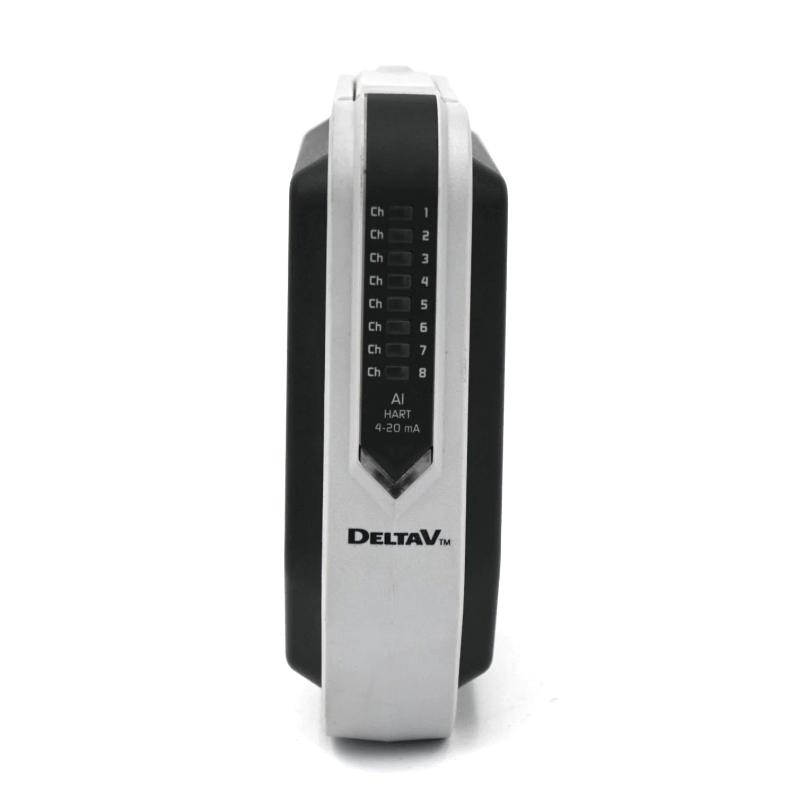
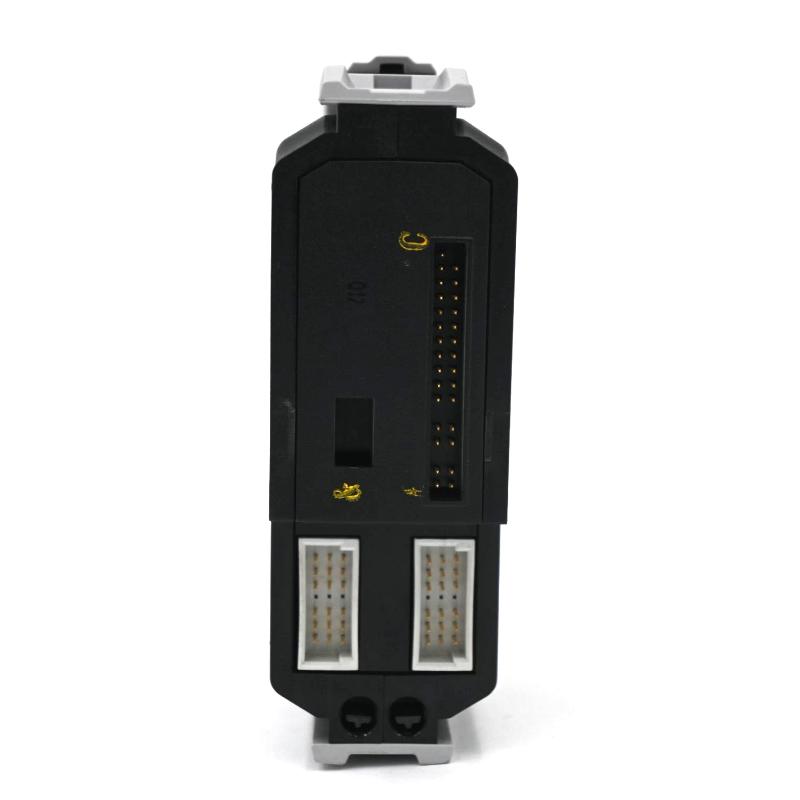
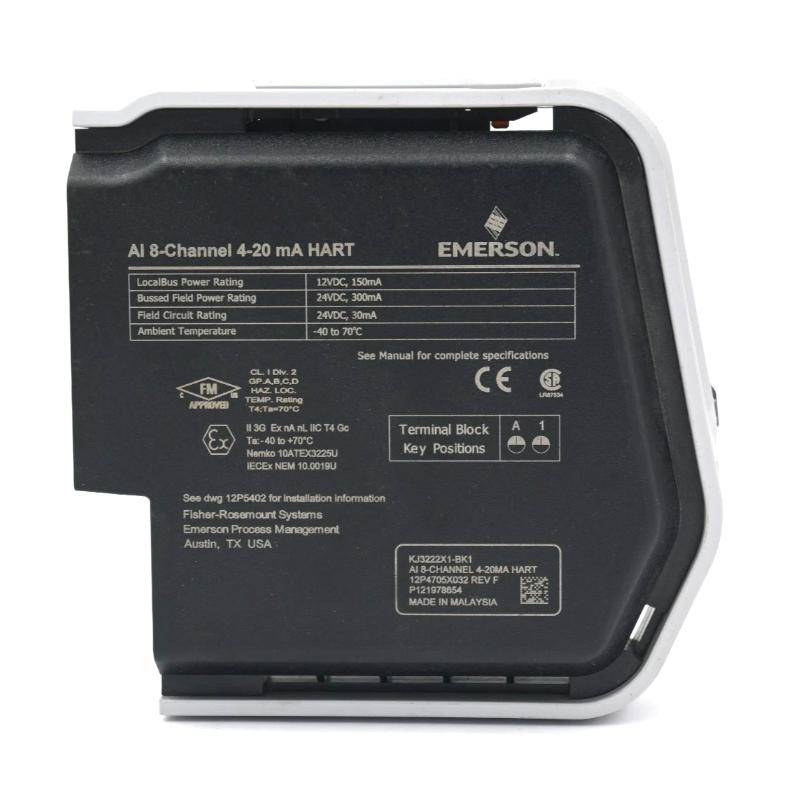
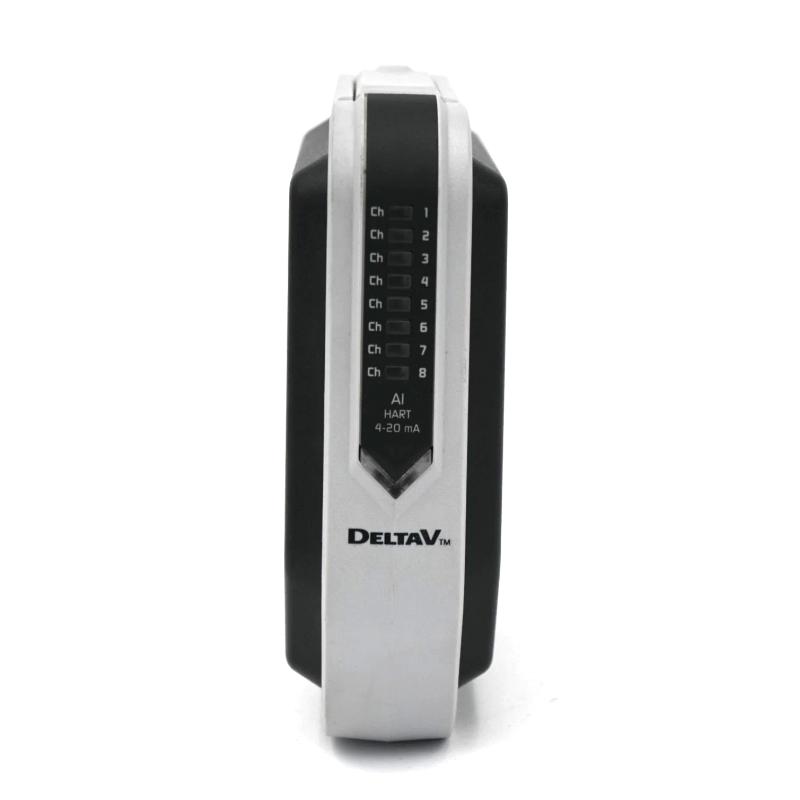
The Emerson KJ3222X1-BK1 8-Channel Analog Input Module is an industrial automation I/O component designed to receive analog signals from field instruments and transfer process information into a control system. It is intended for applications where continuously changing process variables need to be measured and monitored rather than simply detected as ON or OFF states.
Analog signals are commonly used for process variables such as pressure, temperature, flow, level, and other continuously varying measurements. The input module provides the interface between these field instruments and the control system, allowing the measured values to be processed, displayed, monitored, and used within control strategies.
With 8 analog input channels, the KJ3222X1-BK1 can accommodate multiple field signals within a relatively compact hardware footprint. This makes it useful in control cabinets where several process instruments need to be connected without dedicating a separate module to every individual signal.
The module forms part of the I/O layer rather than acting as the main controller. Its primary responsibility is to receive field-level analog information and make that information available to the associated automation system.
Technical Specifications
| Parameter | Details |
|---|---|
| Manufacturer | Emerson |
| Model | KJ3222X1-BK1 |
| Product Type | Analog Input Module |
| Channel Count | 8 Channels |
| Signal Type | Analog Input |
| Main Function | Analog Process Signal Acquisition |
| Application | Industrial Process Automation |
| Installation | Industrial Control System |
| I/O Function | Field Signal Interface |
| Dimensions | 112 × 40 × 101 mm |
| Weight | 0.25 kg |
| Application Area | Process Monitoring and Control |
Product Features
The KJ3222X1-BK1 is designed for applications where multiple analog process signals need to be brought into an industrial control system.
Key features include:
- 8-channel analog input configuration
- Supports multi-point process signal acquisition
- Compact industrial design
- Suitable for distributed I/O architectures
- Interfaces field instrumentation with control systems
- Reduces the need for multiple individual input modules
- Suitable for process monitoring applications
- Compact 40 mm module width
- Lightweight 0.25 kg construction
- Suitable for industrial control cabinet installation
The eight-channel configuration provides a practical balance between signal density and cabinet space, particularly in systems with groups of nearby process instruments.
Working Principle
The KJ3222X1-BK1 receives analog electrical signals from connected field instruments and transfers the measured information into the automation system.
A typical signal path begins with a field transmitter measuring a physical process variable. The transmitter generates a corresponding analog electrical signal, which is connected to one of the module’s input channels. The input circuitry receives the signal and makes the measurement available to the control system for further processing.
The general operating sequence includes:
- Receiving an analog signal from a field instrument
- Monitoring the electrical value of the incoming signal
- Converting the field measurement into usable process data
- Passing the measured information to the control system
- Allowing the controller or operator interface to use the process value
This arrangement allows analog field measurements to become part of control loops, alarm functions, trends, displays, calculations, and other process automation functions.
Role in Industrial Control Systems
The KJ3222X1-BK1 operates at the field I/O level of an automation system.
| Function | Description |
| Analog Signal Acquisition | Receives continuously varying process signals |
| Field Interface | Connects process instruments with the control system |
| Signal Monitoring | Provides measured process information |
| I/O Expansion | Adds multiple analog input points |
| Process Data Collection | Transfers field measurements to the control architecture |
| Control Support | Provides input values for process control strategies |
The module does not normally perform the complete control strategy by itself. Instead, it provides the measured field information required by controllers and higher-level automation functions.
Industrial Applications
The KJ3222X1-BK1 can be used in process automation systems where several analog measurements need to be collected in a centralized or distributed I/O arrangement.
| Industry | Typical Applications |
| Oil & Gas | Pressure, flow, and process monitoring |
| Chemical Processing | Temperature and process variable acquisition |
| Water Treatment | Flow, pressure, and level monitoring |
| Power Generation | Plant instrumentation |
| Pharmaceutical | Process parameter monitoring |
| Food Processing | Temperature and process measurement |
| Manufacturing | Machine and production process monitoring |
| Energy | Analog equipment and process monitoring |
Its eight-channel configuration can be useful where multiple instruments are located within the same process area or control cabinet.
Installation and System Integration
The KJ3222X1-BK1 should be installed as part of a properly designed I/O system. Before connecting field instruments, the electrical characteristics of the signals and the system configuration should be checked.
Recommended installation steps include:
- Confirm the exact module model.
- Verify compatibility with the existing automation system.
- Identify each analog input channel.
- Install the module securely in the designated location.
- Connect field instrument wiring correctly.
- Verify signal polarity and wiring arrangement.
- Check shielding and grounding requirements.
- Configure the corresponding input channels.
- Verify the measured values after system startup.
- Compare readings with the field instruments during commissioning.
Good wiring practice is particularly important for analog signals. Poor shielding, incorrect grounding, excessive cable routing near high-power equipment, or damaged instrumentation wiring can introduce unwanted signal fluctuations.
Compatible System Components
The KJ3222X1-BK1 is normally used together with other components that form the complete process automation system.
| Compatible Component | Function |
| Process Transmitters | Measure pressure, flow, temperature, level, and other variables |
| DeltaV Controller | Processes input values and executes control strategies |
| I/O Carrier or Interface Hardware | Provides physical system integration |
| Terminal Blocks | Provide field wiring connections |
| Control Network | Transfers process data within the automation system |
| Operator Station | Displays measured process values |
| Engineering Workstation | Used for system configuration |
| Process Instruments | Generate analog measurement signals |
The exact combination depends on the system architecture and the type of field instrumentation being connected.
Recommended Alternative Models
| Model | Type | Key Feature | Application |
| Emerson KJ3222X1-BK1 | 8-Channel Analog Input Module | Multi-channel analog signal acquisition | Process automation |
| Emerson DeltaV Analog Input Modules | Analog Input | Field analog signal interface | Process monitoring |
| Emerson DeltaV Universal I/O Modules | Universal I/O | Flexible signal integration | Distributed automation |
| Emerson DeltaV I/O Modules | I/O Module | Modular field signal acquisition | Industrial control |
| Emerson Analog Signal Interface Modules | Analog Interface | Process instrumentation integration | Industrial process systems |
When selecting an alternative, the number of channels alone is not enough. Signal type, electrical range, system generation, field wiring, channel configuration, installation arrangement, and controller compatibility should all be considered.
Key Advantages
- Provides 8 analog input channels
- Supports multiple process measurement points
- Compact 112 × 40 × 101 mm dimensions
- Lightweight 0.25 kg construction
- Suitable for distributed I/O architectures
- Provides an interface between field instruments and the control system
- Helps reduce cabinet space compared with multiple single-channel arrangements
- Suitable for pressure, flow, temperature, level, and other analog measurements
- Supports process monitoring and control applications
- Suitable for industrial automation environments
Technical FAQs
What kind of process signals are normally connected to an analog input module?
Analog input modules are used for continuously varying measurements from field instruments, such as pressure, temperature, flow, and level transmitters. The exact signal type and electrical range must match the input channel and the system configuration.
Why would an automation system use eight analog inputs on one module?
An eight-channel module allows several related process measurements to be collected in a single I/O assembly. This can simplify cabinet organization and reduce the amount of physical hardware needed when multiple instruments are installed in the same process area.
What can cause unstable readings from an analog input channel?
Signal interference, incorrect grounding, poor shielding, loose terminals, damaged instrumentation wiring, unsuitable cable routing, or problems with the field transmitter can all affect analog measurements. The field device and wiring should be checked before assuming that the input module itself is faulty.
Can the KJ3222X1-BK1 be replaced by any eight-channel analog input module?
No. Channel count is only one part of the compatibility requirements. The replacement must also match the required signal characteristics, system architecture, wiring arrangement, software configuration, and hardware generation. An eight-channel module with different electrical or system requirements may not be a suitable substitute.