

ProductPRODUCT
Featured products
Contact Us
- Schneider
- XCC-1930TS36KN
- XCC Incremental Encoder
- France
- 90 mm
- 0.96 kg
- Xiamen, China
- New & In Stock
- T/T, PayPal, Western Union
- 1 Year
- 1-3 Working Days
- DHL, UPS, TNT, FedEx and EMS.
- 24-Hour Service
- COO
- 8
Our advantage

Global Logistics
We have a 10-year logistics and express cooperation agreement, so our products can be shipped to any place in the world.

Brand new and original
Our products are imported in bulk from the place of origin. Because of the cooperative relationship, our products are all original and 100% new.

24-hour service
We provide 7*24 hours service to our customers. We will be there whenever you need us.

Price advantage
All our products are priced very favorably because we have our own warehouse and supply.
| Company Information | |||
| [email protected] | |||
| Mobile | +8615980777398 | ||
| +8615980777398 | |||
| 15980777398 |
1. Product Overview
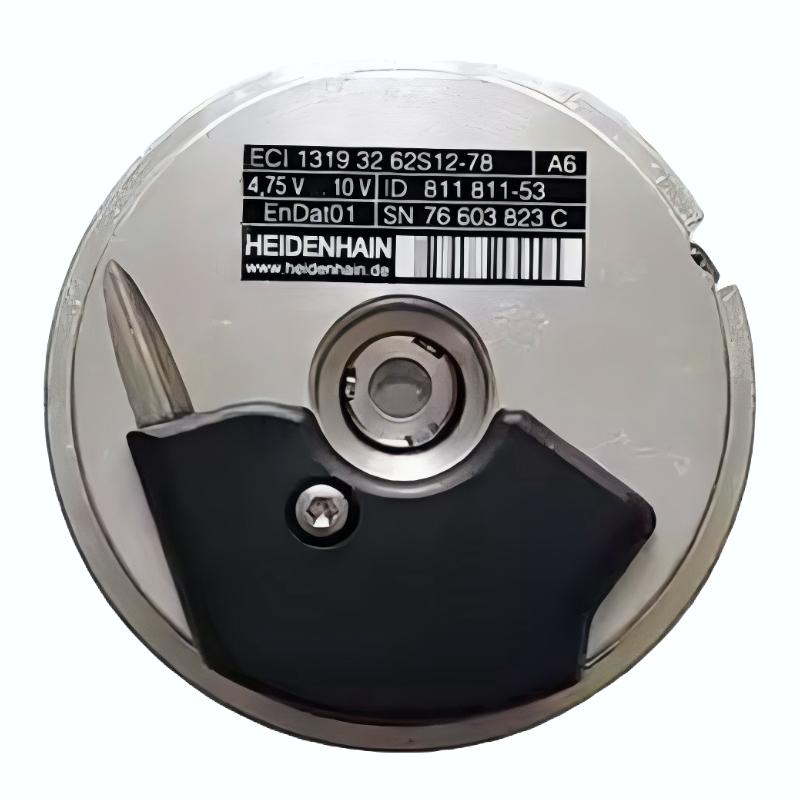
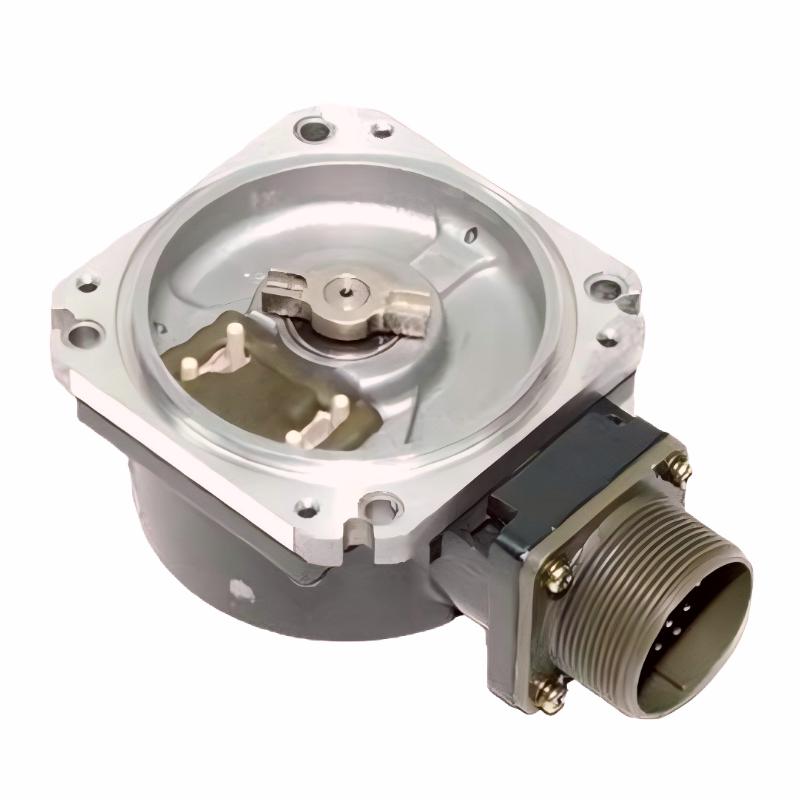
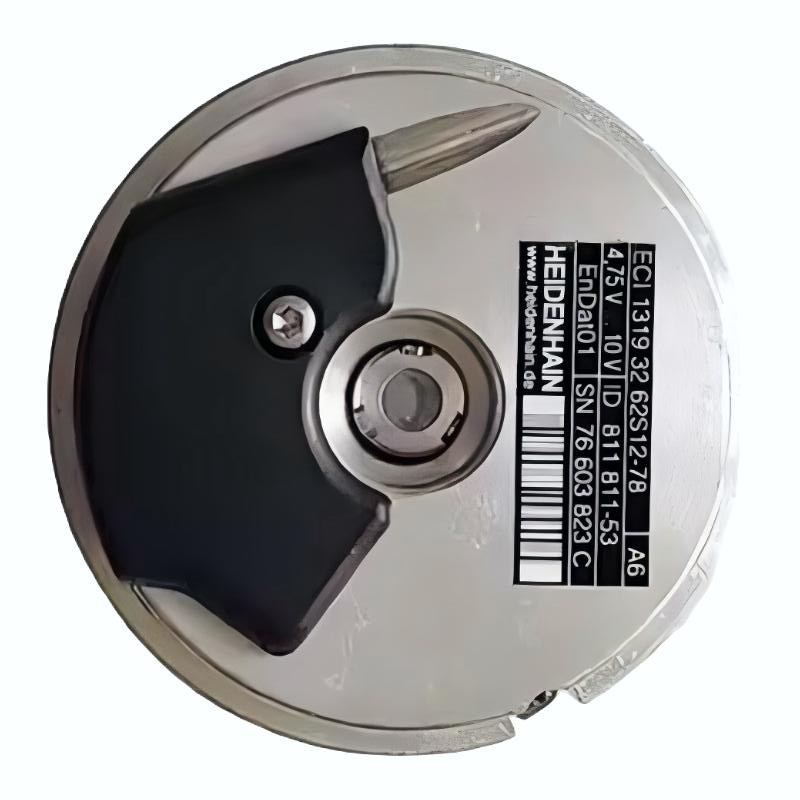
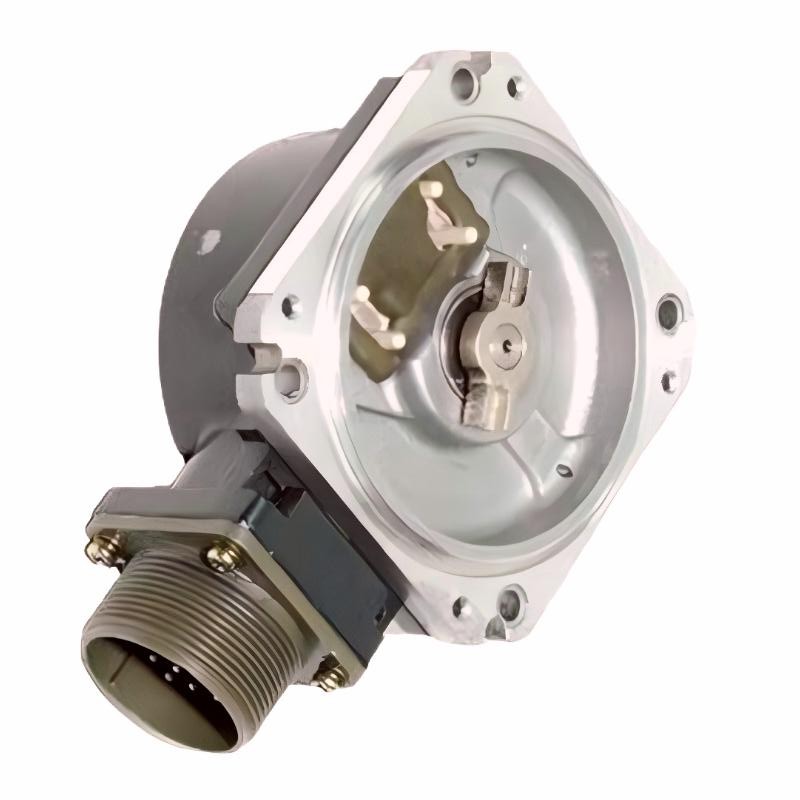
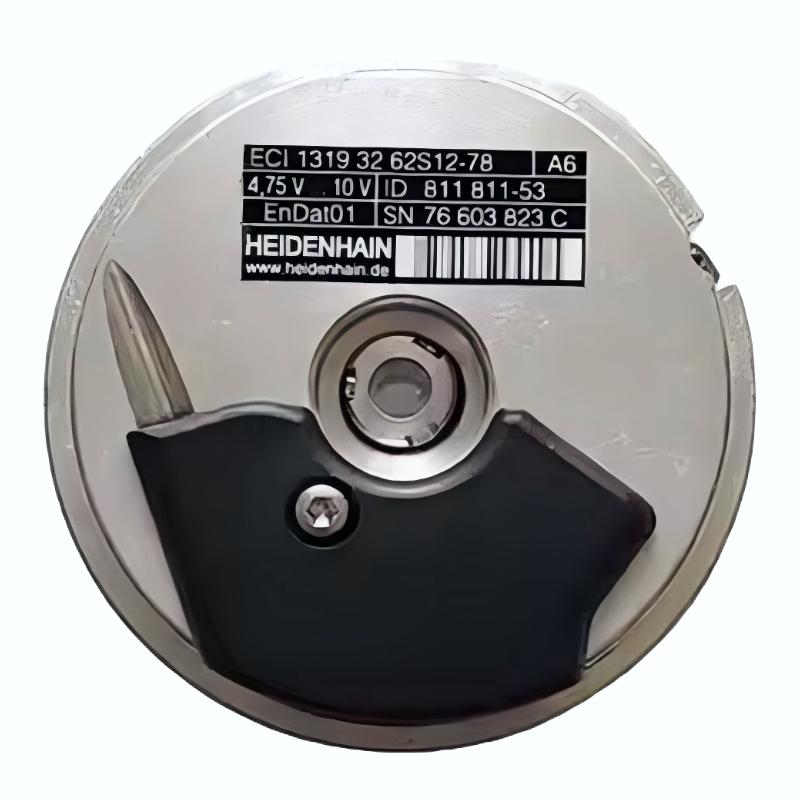
The Schneider Electric XCC1930TS36KN is an incremental rotary encoder designed for industrial automation applications that require reliable rotational measurement, speed monitoring, and movement feedback. Part of the OsiSense XCC product family, this encoder converts mechanical rotation into electrical pulse signals that can be processed by programmable logic controllers (PLCs), high-speed counters, motion controllers, and other compatible automation equipment.
The XCC1930TS36KN features a 90 mm housing diameter and a 30 mm through shaft. Its nominal resolution of 3600 points per revolution enables detailed monitoring of rotational movement in compatible industrial machinery. The encoder uses a Type K push-pull output and operates with an 11–30 V DC supply.
The encoder is equipped with a radial M23 male connector, providing a defined electrical interface for compatible mating cables. Its through-shaft design allows it to be mounted around a suitable rotating shaft, with the appropriate mounting and anti-rotation arrangement required for the installation.
Incremental encoders play an important role in industrial automation by providing feedback signals that represent the movement of rotating equipment. Depending on the control system, these signals can be used to calculate rotational speed, count movement, monitor machine cycles, and coordinate production processes.
The Schneider XCC1930TS36KN may be suitable for compatible industrial machinery, including conveyor systems, material handling equipment, packaging lines, printing machinery, and other applications that require incremental rotational feedback.
For maintenance engineers, system integrators, and industrial spare-parts buyers, confirming the encoder’s mechanical configuration and electrical interface is essential. The 30 mm through shaft, 3600-point resolution, push-pull output, and M23 connector should all match the requirements of the target installation.
2. Technical Specifications
| Parameter | Specification |
|---|---|
| Brand | Schneider Electric |
| Product Series | OsiSense XCC |
| Model | XCC1930TS36KN |
| Product Type | Incremental Rotary Encoder |
| Housing Diameter | 90 mm |
| Shaft Type | Through shaft |
| Through-Shaft Diameter | 30 mm |
| Resolution | 3600 points per revolution |
| Output Stage | Type K |
| Output Type | Push-pull |
| Rated Supply Voltage | 11–30 V DC |
| Electrical Connection | Radial M23 male connector |
| Connector Configuration | 12-pin |
| Maximum Output Frequency | 100 kHz |
| Number of Channels | 3 |
| No-Load Current Consumption | 0–75 mA |
| Maximum Output Current | 40 mA |
| Protection Features | Short-circuit and reverse-polarity protection |
| Enclosure Material | Zamak |
| Base Material | Aluminium |
| Weight | 0.96 kg |
| Typical Applications | Rotational measurement, speed monitoring, pulse counting, and machine automation |
The specifications above describe the identified encoder variant. Confirm the complete product reference and applicable technical documentation before installation or replacement.
3. Function and Working Principle
3.1 Rotational Movement Detection
The XCC1930TS36KN is an incremental rotary encoder. Its primary function is to convert the rotation of a mechanical shaft into electrical signals representing incremental movement.
As the shaft rotates, the encoder’s optical sensing system detects movement and generates a sequence of output pulses. A connected PLC, counter, or motion controller receives these signals and counts them to determine the amount of rotation.
By measuring pulse frequency over time, the control system can calculate rotational speed. By accumulating pulse counts, it can also track movement relative to a known starting point.
This feedback method allows industrial equipment to monitor actual movement rather than relying exclusively on commanded speed or elapsed operating time.
An incremental encoder does not inherently retain absolute shaft position after a loss of power. If an application requires a known position following startup, the control system may need a homing routine, a reference sensor, or another suitable position-establishing method.
3.2 Understanding the 3600-Point Resolution
The XCC1930TS36KN has a nominal resolution of 3600 points per revolution. This means that its specified incremental resolution corresponds to 3600 points during one complete shaft rotation.
For example, 900 points represent one-quarter of a revolution under the nominal point-count convention. A compatible controller can use the accumulated pulse count to calculate rotational movement and, where the mechanical arrangement is known, estimate the movement of the connected equipment.
The final count value depends on the receiving controller’s signal-decoding method. Some systems count selected signal edges, while others use quadrature decoding or different counting modes. Consequently, the encoder’s nominal resolution should not be confused with the effective count value configured in the PLC or motion controller.
A 3600-point encoder can provide more detailed incremental feedback than lower-resolution variants. This may be useful where a control system requires finer rotational measurement, provided the controller can process the resulting pulse frequency.
3.3 Push-Pull Output Operation
The XCC1930TS36KN uses a Type K push-pull output stage. This output actively drives the signal toward its high and low states within the specified electrical limits.
Push-pull outputs can connect to compatible industrial inputs without relying on the same external signal arrangement used by certain other output types. However, the receiving controller must support the encoder’s voltage levels, signal characteristics, and current requirements.
The Type K designation is important when selecting a replacement. Related encoders with Type R RS-422 outputs use a different electrical interface and supply range. A model with the same housing and resolution should not be assumed to be electrically interchangeable.
3.4 Speed Measurement
The frequency of the encoder’s pulse output changes with the rotational speed of the shaft. A compatible PLC, counter, or motion controller can measure this frequency and calculate speed based on the configured resolution.
This function can support conveyor-speed monitoring, rotating-equipment supervision, production-line coordination, and movement verification.
The encoder provides the feedback signal. Speed calculations, process comparisons, alarms, and machine-control responses are performed by the receiving automation system.
4. Role in Industrial Automation Systems
PLC-Based Movement Monitoring
In PLC-controlled machinery, the XCC1930TS36KN can provide pulse signals to a compatible high-speed counter or encoder input. The controller can count these pulses to monitor rotational movement, calculate speed, or determine whether a mechanism has reached a programmed target.
The receiving input must support the encoder’s Type K push-pull interface and be capable of processing the signal frequency generated at the application’s operating speed.
Rotating Equipment Feedback
The encoder can be installed on a compatible rotating assembly to provide feedback about shaft movement. The controller can use this information to monitor operating speed, confirm rotation, and identify unexpected changes in machine behavior.
It should not automatically be treated as a direct replacement for a dedicated servo-motor feedback encoder. Servo drives may require specific electrical interfaces, feedback protocols, resolutions, or other features.
Production-Line Coordination
Industrial production lines often contain conveyors, rollers, feeders, and other moving components that need to operate in coordination. Incremental encoder feedback can help a controller compare actual movement with programmed process requirements.
The resulting performance depends on the control program, mechanical transmission, signal-processing method, and timing requirements of the application.
Equipment Diagnostics
Encoder signals can help maintenance personnel identify conditions such as unexpected stoppages or missing movement feedback. For example, a controller may trigger an alarm if a mechanism is commanded to rotate but no pulses are detected.
This function depends on the control logic and the wider machine design. The encoder supplies feedback but does not independently diagnose every possible electrical or mechanical fault.
5. Industrial Applications
5.1 Conveyor and Material Handling Systems
Conveyor systems use rotational feedback to monitor movement and coordinate material transfer. The XCC1930TS36KN may be installed around a compatible 30 mm shaft to provide incremental pulse signals to the control system.
The controller can use the signal to monitor speed, detect unexpected movement conditions, and coordinate related equipment.
Mechanical compatibility is particularly important in through-shaft applications. The encoder bore, shaft dimensions, mounting arrangement, and anti-rotation mechanism must match the installation.
5.2 Packaging Machinery
Packaging lines may require rotational feedback for feed rollers, material transport, indexing, and synchronized machine cycles. An incremental encoder can supply the pulse information needed to monitor movement and calculate rotational speed.
The 3600-point resolution may suit applications that require relatively detailed rotational measurement, provided the receiving controller supports the resulting signal frequency.
5.3 Printing and Converting Equipment
Printing and converting machinery often depends on coordinated roller movement and controlled material feeding. Encoder feedback can help the control system monitor rotation and identify deviations from expected operating conditions.
Correct mechanical installation, suitable cable routing, and compatible signal processing are important for continuous operation.
5.4 Winding and Unwinding Systems
Winding equipment may use encoder signals to monitor shaft rotation and support movement calculations. The control system can use the feedback as part of its speed supervision and process-coordination logic.
The actual suitability of the XCC1930TS36KN depends on the required measurement performance, mechanical arrangement, and controller configuration.
5.5 Cutting and Processing Machinery
Automated cutting and processing equipment may use rotational feedback to coordinate material feeding and machine cycles. An incremental encoder can supply movement information to a compatible PLC or motion controller.
The complete application must be evaluated for resolution requirements, maximum speed, mounting conditions, and signal-processing capability.
5.6 General Industrial Machinery
The encoder may also be considered for compatible automated assembly equipment, industrial feeders, rotating mechanisms, and continuous production systems requiring incremental feedback.
Its suitability should be determined by comparing the encoder’s mechanical and electrical specifications with the actual requirements of the equipment.
6. Installation and System Integration
6.1 Verify the 30 mm Through-Shaft Arrangement
Before installation, confirm the encoder’s 90 mm housing diameter, 30 mm through-shaft configuration, mounting dimensions, and available clearance.
The shaft must fit the encoder’s specified bore and remain within the applicable mechanical tolerances. Follow the manufacturer’s instructions for mounting and anti-rotation support.
Incorrect alignment, excessive shaft loading, or an unsuitable mounting arrangement can affect measurement reliability and shorten the service life of the equipment. Do not exceed the documented mechanical load limits.
6.2 Confirm the DC Power Supply
The XCC1930TS36KN operates with an 11–30 V DC supply. Verify that the power source remains within this range and that the supply polarity is correct.
Do not assume that every encoder in the XCC family uses the same supply voltage. Related variants with RS-422 output interfaces may require a different voltage range.
6.3 Check the M23 Connector
The encoder uses a radial M23 male connector with a 12-pin configuration. Select a compatible mating cable or connector assembly for the exact model.
Before applying power, verify the pin assignment using the correct wiring documentation. Do not rely solely on wire colours or the pin layout of another encoder variant.
6.4 Match the Push-Pull Output to the Controller
The Type K push-pull output must be compatible with the receiving PLC, counter, or motion controller.
Confirm the input voltage range, current requirements, maximum pulse frequency, and signal-decoding method. The documented maximum output frequency is 100 kHz, but the complete system must be configured to process the actual pulse frequency generated by the machine.
6.5 Configure Pulse Counting
Configure the receiving controller for the appropriate incremental encoder input and counting method. Verify the expected count value per revolution and the scaling required by the mechanical transmission.
If the application needs direction detection or a reference-position routine, confirm that the encoder interface and controller configuration support the required functionality.
6.6 Perform a Commissioning Test
After completing the mechanical installation and electrical connections, test the encoder at a controlled operating speed.
Confirm that the controller receives stable pulses and that the measured count and calculated speed correspond to the expected movement. Investigate missing pulses, unstable readings, or incorrect scaling before returning the equipment to normal production.
7. Compatible System Components
The XCC1930TS36KN operates as part of a broader industrial automation system. The following component categories may be suitable when their specifications match the application.
| Component Category | Function | Compatibility Considerations |
|---|---|---|
| PLC with High-Speed Counter | Counts encoder pulses and processes movement data | Must support Type K push-pull signals and the required frequency |
| Dedicated Counter Module | Measures pulse counts or frequency | Verify voltage levels and input characteristics |
| Motion Controller | Processes movement feedback for machine control | Confirm supported encoder interface and resolution configuration |
| Industrial DC Power Supply | Provides encoder operating power | Must provide a compatible 11–30 V DC output |
| M23 Encoder Cable | Connects the encoder to the control system | Confirm 12-pin connector compatibility and pin assignment |
| Signal Interface Module | Connects encoder signals to control equipment | Verify electrical ratings and signal conditioning requirements |
| Mechanical Shaft or Coupling | Provides the rotating interface | Must match the 30 mm through-shaft arrangement and mechanical tolerances |
| Anti-Rotation Mounting Hardware | Prevents unwanted encoder housing rotation | Must match the encoder and machine mounting arrangement |
These are general component categories rather than guaranteed compatibility with every product in each category. Verify the complete system specifications before ordering or installation.
8. Alternative Models and Replacement Considerations
Selecting an alternative encoder requires more than matching the housing diameter. Resolution, through-shaft dimensions, output type, supply voltage, connector configuration, and controller compatibility must all be checked.
| Model | Resolution | Output Type | Replacement Considerations |
|---|---|---|---|
| Schneider XCC1930TS05KN | 500 points/revolution | Push-pull, 11–30 V DC | Lower resolution than the original model |
| Schneider XCC1930TS10KN | 1000 points/revolution | Push-pull, 11–30 V DC | Lower resolution; controller scaling may need adjustment |
| Schneider XCC1930TS11KN | 1024 points/revolution | Push-pull, 11–30 V DC | Different resolution and count configuration |
| Schneider XCC1930TS25KN | 2500 points/revolution | Push-pull, 11–30 V DC | Lower resolution than the 3600-point model |
| Schneider XCC1930TS36KN | 3600 points/revolution | Push-pull, 11–30 V DC | Original model reference |
| Schneider XCC1930TS36RN | 3600 points/revolution | RS-422, 4.5–5.5 V DC | Different electrical interface and supply requirements |
The XCC1930TS36RN has the same nominal resolution as the XCC1930TS36KN, but it uses an RS-422 output and a different supply range. It should not be treated as a plug-and-play replacement without confirming the receiving controller and wiring.
Other variants in the same family have different resolutions. Changing resolution may affect pulse scaling, speed calculations, and programmed movement targets.
For maintenance projects, the same model is generally the simplest replacement option when it is available and remains suitable for the application. If an alternative is required, confirm the complete mechanical and electrical specifications before ordering.
9. Key Advantages of the Schneider XCC1930TS36KN
90 mm Housing
The 90 mm housing provides a defined mechanical form for compatible industrial installations. Mounting dimensions and available clearance should be checked before installation.
30 mm Through Shaft
The through-shaft configuration allows installation around a suitable rotating shaft. Correct bore compatibility, mounting, and anti-rotation support are essential for reliable operation.
3600-Point Resolution
The nominal resolution of 3600 points per revolution supports detailed incremental rotational measurement. It can be useful where the control system requires finer pulse-based feedback than lower-resolution variants provide.
Push-Pull Output
The Type K output actively drives signal states and can interface with compatible industrial inputs. Electrical compatibility must be confirmed before wiring.
11–30 V DC Supply
The specified supply range supports integration into compatible industrial DC power arrangements, provided the voltage and polarity remain within the documented limits.
Radial M23 Connector
The 12-pin radial M23 male connector provides a defined electrical interface for suitable mating cables, supporting a structured connection to the control system.
Industrial Automation Applications
The encoder can support rotational measurement, speed monitoring, pulse counting, and machine movement feedback in compatible conveyor, packaging, printing, material handling, and processing applications.
10. Technical FAQs
Q1: What is the Schneider XCC1930TS36KN?
The Schneider Electric XCC1930TS36KN is an OsiSense XCC incremental rotary encoder designed to convert mechanical rotation into electrical pulse signals for industrial automation equipment.
Q2: What is the housing diameter?
The encoder has a housing diameter of 90 mm.
Q3: What is the through-shaft diameter?
The XCC1930TS36KN is designed for a 30 mm through-shaft arrangement. Verify the mechanical dimensions and tolerances before installation.
Q4: What is its resolution?
The encoder has a nominal resolution of 3600 points per revolution. The effective count value depends on the receiving controller’s counting and signal-decoding configuration.
Q5: What supply voltage does it require?
The specified supply range is 11–30 V DC. Confirm the correct polarity and electrical interface before applying power.
Q6: What output type does it use?
The model uses a Type K push-pull output stage. The connected PLC input or counter must support this interface.
Q7: What connector does it use?
The encoder uses a radial M23 male connector with a 12-pin configuration. The mating cable and pin assignment must be compatible with the exact model.
Q8: Can it connect directly to any PLC?
No. The PLC or counter must support the encoder’s push-pull output, required voltage levels, and pulse frequency. A compatible high-speed counter or encoder input may be necessary.
Q9: Can the XCC1930TS36RN replace the XCC1930TS36KN?
Not automatically. Although both models have a nominal resolution of 3600 points per revolution, the TS36RN uses an RS-422 output and a 4.5–5.5 V DC supply range, while the TS36KN uses a push-pull output and an 11–30 V DC supply range. The receiving controller and wiring must be checked before considering a replacement.
Q10: Is the encoder suitable for speed monitoring?
Yes, it can supply pulse signals for speed measurement when connected to a compatible controller. The controller calculates speed using the pulse frequency and configured resolution.
Q11: What should be checked before purchasing a replacement?
Verify the complete model number, housing diameter, 30 mm through-shaft arrangement, resolution, output type, supply voltage, M23 connector, and receiving controller compatibility.
11. Procurement and Maintenance Recommendations
When sourcing the Schneider XCC1930TS36KN, confirm the complete reference on the product label. Related XCC models may share a housing diameter and through-shaft design while having different resolutions or output interfaces.
For replacement projects, compare the existing encoder’s mechanical dimensions, resolution, supply voltage, connector configuration, and output type with those of the proposed unit. Particular attention should be paid to the difference between Type K push-pull and Type R RS-422 variants.
During routine maintenance, inspect the encoder’s mounting arrangement, shaft alignment, anti-rotation support, connector condition, and surrounding mechanical components. Unexpected pulse loss or unstable readings may be associated with wiring problems, electrical interference, mechanical misalignment, or incorrect controller settings.
Before removing or installing an encoder, isolate the equipment according to the site’s safety procedures. After installation, verify the pulse count, speed calculation, and any required direction or reference-position functions.
For industrial spare-parts procurement, confirm stock availability, product condition, warranty terms, and connector compatibility with the supplier. If the original model is unavailable, select an alternative only after confirming electrical, mechanical, and functional suitability.
12. Conclusion
The Schneider Electric XCC1930TS36KN is a 90 mm incremental rotary encoder designed for a 30 mm through shaft. It provides a nominal resolution of 3600 points per revolution, uses a Type K push-pull output, and operates with an 11–30 V DC supply. Its radial M23 male connector provides a defined electrical interface for compatible industrial automation systems.
The encoder can support rotational measurement, speed monitoring, pulse counting, and movement feedback when integrated with a suitable PLC, high-speed counter, or motion controller. Correct mechanical mounting, compatible wiring, and appropriate controller configuration are essential for dependable operation.
For maintenance teams, system integrators, and industrial equipment buyers, verifying the complete model reference and electrical interface is essential when purchasing or replacing the XCC1930TS36KN. Careful specification checking helps reduce installation errors and supports reliable operation in industrial automation applications.