
NewsNEWCENTER
Featured products
Contact Us
Industrial Digital Twins Become a Strategic Tool for Machine Builders as Virtual Commissioning Accelerates Automation Projects
2026-08-17Digital Twins Are Changing How Industrial Automation Projects Are Developed
Industrial automation projects traditionally followed a straightforward process.
Engineers designed the machine.
Then they purchased hardware.
Next, they assembled the equipment.
After that, automation engineers programmed the PLC.
Finally, the team tested the complete machine during commissioning.
The problem is that many engineering errors are discovered very late.
A PLC sequence may not work correctly.
A robot may interfere with another machine.
A sensor may be installed in an unsuitable location.
A production sequence may create unexpected bottlenecks.
Fixing these problems after physical installation can be expensive.
Digital twin technology provides a different approach.
Engineers can create a virtual representation of the machine before the physical system is completed.
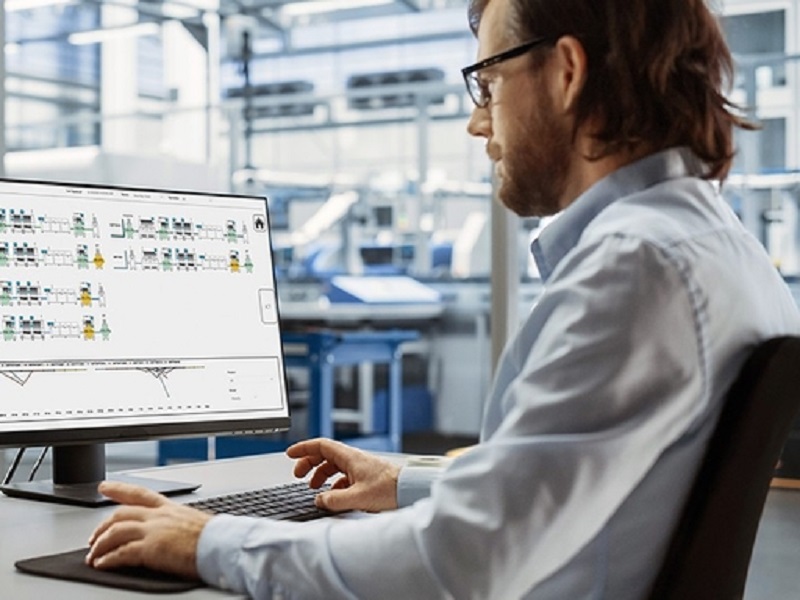
What Is an Industrial Digital Twin?
An industrial digital twin is a virtual representation of a physical machine, process or production system.
Depending on the application, the model can represent:
- Mechanical components
- Motors
- Sensors
- Robots
- PLC logic
- Production sequences
Engineers can then simulate how the system behaves.
The virtual environment becomes a place for testing and optimization.
Virtual Commissioning Reduces Project Risk
Virtual commissioning is one of the most valuable applications of digital twins.
Instead of waiting for the physical machine to be assembled, engineers can test automation logic against the virtual model.
The PLC program can interact with simulated equipment.
Engineers can test:
- Start sequences
- Stop sequences
- Interlocks
- Sensor behavior
- Fault conditions
- Robot interactions
This allows problems to be discovered earlier.
PLC Engineers Can Test Logic Before Machine Completion
PLC programming traditionally depends heavily on physical equipment.
Engineers often need access to the machine before they can fully validate their program.
Digital twins change this workflow.
The PLC logic can communicate with a simulated machine.
For example:
A virtual sensor detects a product.
The PLC receives the signal.
The controller activates a virtual motor.
The product moves through the simulated machine.
Another sensor detects its position.
The next control sequence starts.
This allows engineers to test the logic before the real machine is available.
Digital Twins Improve Robot Integration
Robotic automation can be particularly difficult to commission.
A robot may need to coordinate with:
- Conveyors
- PLC systems
- Sensors
- Vision systems
- Safety equipment
Virtual simulation can reveal potential problems.
Engineers can test:
- Robot reach
- Motion sequences
- Collision risks
- Cycle times
- Material flow
This can reduce the amount of debugging required during physical commissioning.
Digital Twins Can Improve Machine Design
Digital simulation is not only useful for control engineering.
Mechanical engineers can also use virtual models to evaluate machine design.
For example, they can examine:
- Component placement
- Access for maintenance
- Material flow
- Machine movement
Automation engineers can then work with the same digital model.
This creates better collaboration between engineering disciplines.
Digital Engineering Reduces Commissioning Time
Commissioning can be one of the most expensive stages of an automation project.
Engineers and technicians may spend days or weeks resolving:
- Programming errors
- Communication problems
- Sensor issues
- Timing conflicts
- Mechanical interference
Virtual commissioning can move part of this work earlier in the project.
By the time the physical machine is ready, a larger portion of the automation system may already have been tested.
This can shorten the final commissioning period.
Digital Twins Support Standardization
Machine builders frequently produce similar equipment for different customers.
A digital twin can provide a reusable engineering model.
Engineers can create standardized:
- Machine modules
- PLC functions
- Robot sequences
- Simulation models
These components can then be reused.
This reduces repeated engineering work.
Standardization can also improve quality because proven modules are reused instead of recreated from scratch.
AI Can Work With Digital Twins
Artificial intelligence can add another dimension to digital twins.
AI can analyze simulated operating conditions.
For example, engineers can evaluate multiple production scenarios.
AI can potentially identify:
- Bottlenecks
- Inefficient sequences
- Energy-intensive operations
- Machine utilization problems
This creates a powerful combination:
Digital Twin + Simulation + AI + Automation
The system can test possible improvements before implementing them in the physical factory.
Digital Twins Support Predictive Maintenance
Digital twins can also support equipment maintenance.
A virtual model can represent expected machine behavior.
Real machine data can then be compared against the virtual model.
Differences may indicate:
- Equipment degradation
- Process changes
- Abnormal operating conditions
This provides another method for detecting potential problems.
Digital Twins Connect Engineering and Production
One of the biggest advantages of digital twin technology is continuity.
The same digital information can potentially be used throughout the machine lifecycle.
Design
Engineers create the machine concept.
Simulation
The machine is tested virtually.
Commissioning
PLC and robot systems are validated.
Production
The physical machine operates.
Maintenance
Operational data updates the understanding of machine behavior.
This creates a continuous digital thread.
Digital Twins Are Becoming More Important for Smart Factories
Smart factories require more than connected machines.
They require accurate digital representations of production systems.
Digital twins provide this representation.
They can help manufacturers understand:
- How machines interact
- Where bottlenecks occur
- How production changes affect output
- Where energy is consumed
This makes digital twin technology an important foundation for smart manufacturing.
Cybersecurity Must Be Considered
Digital engineering environments contain valuable information.
A digital twin may include:
- Machine architecture
- PLC logic
- Production processes
- Network configurations
These assets must be protected.
Cybersecurity therefore needs to cover both physical automation systems and digital engineering environments.
Digital Twins and the Future of Automation Engineering
The rise of digital twins is changing the skills required from automation engineers.
Engineers will increasingly need to understand:
- PLC programming
- Simulation
- Virtual commissioning
- Digital engineering
- Industrial networking
This creates a more software-oriented engineering role.
However, physical machine knowledge remains essential.
A digital model is useful only when it accurately represents the real machine.
Why Machine Builders Are Adopting Digital Twins
Machine builders can gain several advantages.
Digital engineering can help reduce:
- Development time
- Commissioning time
- Engineering errors
- Rework
It can also improve:
- Standardization
- Customer demonstrations
- Machine optimization
- Engineering collaboration
For companies building complex equipment, these advantages can have a significant impact on project profitability.
Future Outlook
Digital twins will increasingly become a standard component of industrial automation projects.
Future engineering environments will combine:
- CAD
- PLC programming
- Robot simulation
- Digital twins
- AI
- Virtual commissioning
The boundary between engineering and production will become less distinct.
Machines will increasingly exist in two forms:
A physical machine in the factory and a digital machine in the engineering environment.
Both will continuously exchange information.
Conclusion
Industrial digital twins are transforming the way automation systems are designed, tested and commissioned.
Instead of waiting until a physical machine is complete, engineers can increasingly validate PLC logic, robot movements, production sequences and machine interactions in a virtual environment.
This can reduce project risk, shorten commissioning time and improve engineering quality.
The combination of digital twins, virtual commissioning, AI and industrial automation will become increasingly important as manufacturers demand faster project delivery and more flexible production systems.
For PLC engineers, machine builders and system integrators, digital twin technology is becoming more than a visualization tool.
It is becoming a practical engineering platform for designing the next generation of intelligent industrial machines.