Product Overview
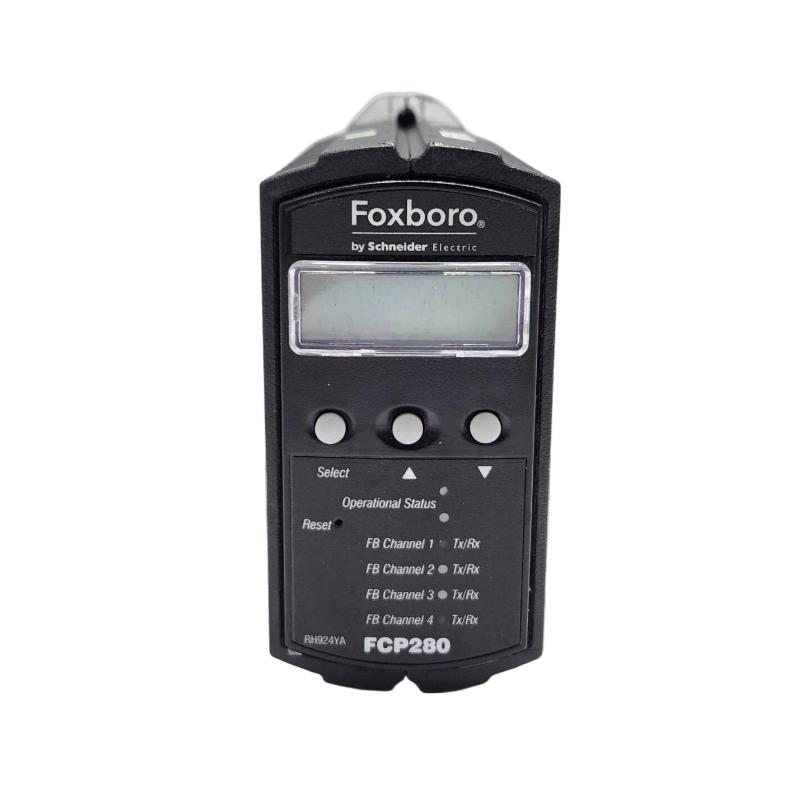
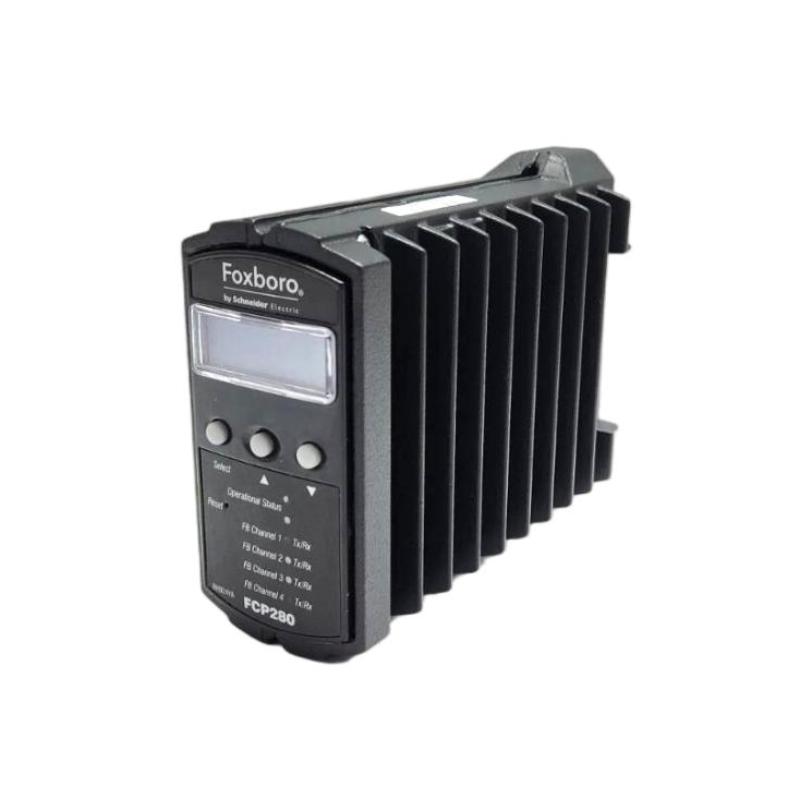
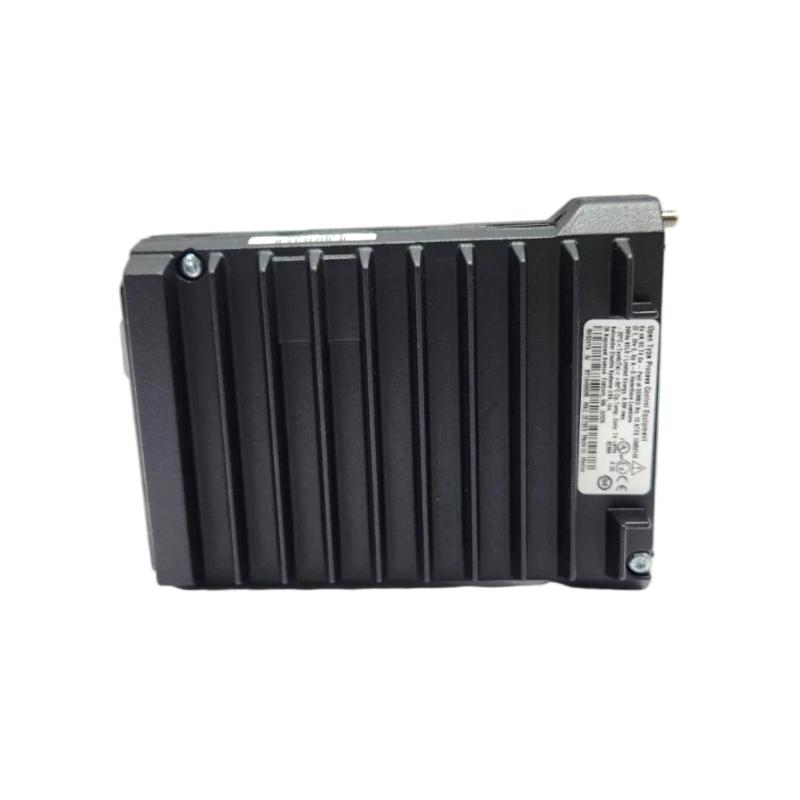
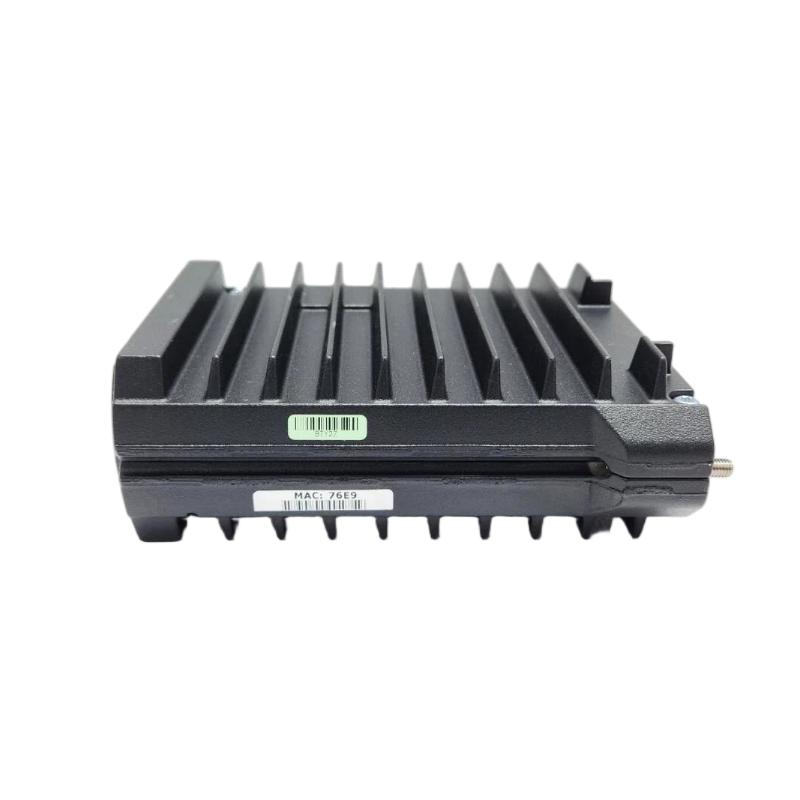
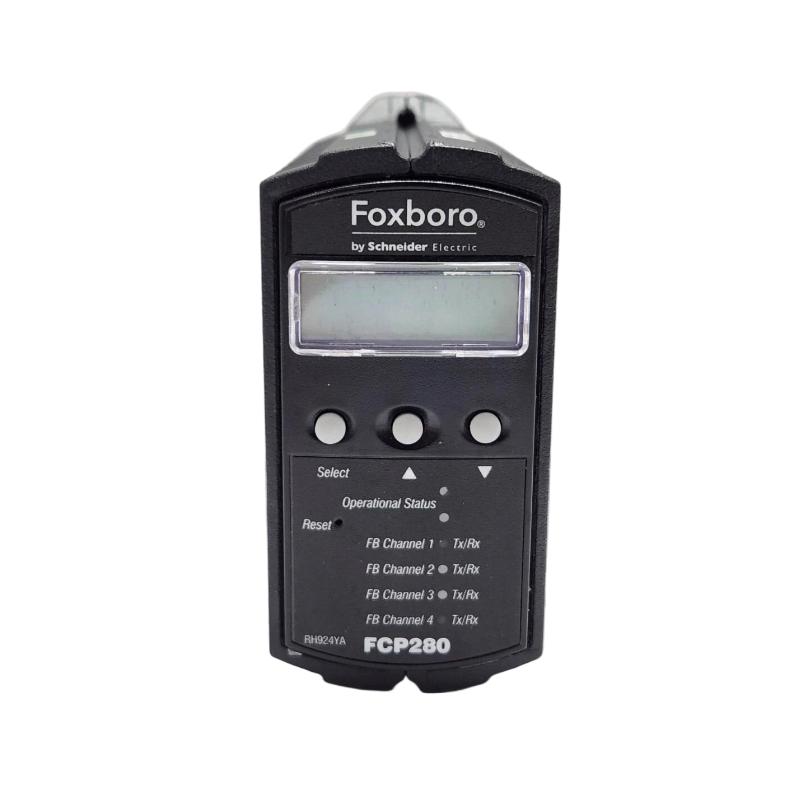
The Foxboro FCP280 RH924YA Field Control Processor is a distributed control processor designed for Foxboro DCS process automation systems. It performs real-time regulatory control, logic control, timing, sequential control, data acquisition, alarm detection, and alarm notification together with connected Fieldbus Modules (FBMs).
The FCP280 is intended for distributed process-control architectures in which control functions are located close to the associated field I/O rather than being concentrated in one central controller. This architecture allows large industrial plants to divide control responsibilities among multiple field control processors while maintaining plant-wide communication through the DCS control network.
The RH924YA is the part number for the FCP280 processor module. It is installed in a dedicated two-position FCP280 baseplate and can be configured as a single controller or as part of a fault-tolerant processor arrangement.
The supplied physical dimensions are 147 × 51.8 × 116 mm, and the approximate weight is 0.8 kg. The 116 mm dimension includes the mounting lugs; the processor body itself is approximately 105 mm high.
The FCP280 supports multiple fieldbus connections and can communicate with the DCS control network through an appropriate fiber-optic or copper Ethernet adapter. It is therefore suitable for large distributed I/O architectures where reliable control processing and scalable fieldbus connectivity are required.
Technical Specifications
| Parameter |
Details |
| Manufacturer |
Foxboro |
| Model |
FCP280 |
| Part Number |
RH924YA |
| Product Type |
Field Control Processor |
| System |
Foxboro DCS |
| Main Function |
Distributed Process Control |
| Control Functions |
Regulatory, Logic, Timing and Sequential Control |
| Data Functions |
Data Acquisition, Alarm Detection and Notification |
| Fieldbus |
HDLC-Based Fieldbus |
| PIO Channels |
Up to 4 independent channels |
| Control Network |
100 Mbps Ethernet |
| Network Media |
Fiber Optic or Copper |
| I/O |
Compatible Foxboro Fieldbus Modules |
| Mounting |
Dedicated FCP280 Two-Position Baseplate |
| Redundancy |
Optional Fault-Tolerant Configuration |
| Dimensions |
147 × 51.8 × 116 mm |
| Weight |
Approx. 0.8 kg |
| Application |
Industrial Process Automation |
| Installation |
Control Cabinet / Field-Mounted Enclosure |
Function and Working Principle
The FCP280 operates as the control-processing center for a group of connected field I/O modules.
A simplified architecture is:
Field Instruments
↓
Foxboro Fieldbus Modules
↓
FCP280 RH924YA
↓
DCS Control Network
↓
Operator / Engineering Systems
Field instruments measure process conditions such as pressure, temperature, flow, and level. Compatible FBMs receive these signals and exchange process data with the FCP280.
The FCP280 then executes the configured control strategy.
For example:
Pressure Transmitter
→ Analog Input FBM
→ FCP280
→ PID Control Calculation
→ Analog Output FBM
→ Control Valve
This allows the controller to perform closed-loop process regulation without requiring every control calculation to be performed by a central supervisory computer.
The processor can also execute logic and sequencing functions for equipment such as pumps, compressors, valves, motors, heaters, and other process equipment.
Main Control Functions
Regulatory Control
The FCP280 can execute continuous regulatory control strategies such as:
- PID control
- Cascade control
- Ratio control
- Feed-forward control
- Process-variable monitoring
- Output calculation
Logic Control
Logic functions can coordinate equipment operation based on process conditions and configured logic.
Examples include:
- Pump permissives
- Valve interlocks
- Motor start/stop conditions
- Equipment protection logic
- Process permissives
Sequential Control
The controller can execute sequences consisting of multiple process steps.
For example:
- Confirm equipment ready.
- Open isolation valve.
- Start pump.
- Verify flow.
- Enable process control.
- Monitor operating conditions.
- Initiate shutdown sequence when required.
Data Acquisition
The FCP280 receives process information from connected FBMs and makes that information available to the wider DCS.
Alarm Processing
The processor can participate in process alarm detection and notification, allowing abnormal operating conditions to be communicated to the operator environment.
Fieldbus Architecture
One of the important characteristics of the FCP280 is its support for multiple fieldbus channels.
A simplified architecture can be represented as:
FCP280
├── PIO Channel 1 → FBMs
├── PIO Channel 2 → FBMs
├── PIO Channel 3 → FBMs
└── PIO Channel 4 → FBMs
This architecture allows field I/O to be distributed across multiple communication paths.
The FCP280 can support a substantial number of compatible FBMs, subject to the exact FBM family, fieldbus configuration, and system limitations.
This makes the processor appropriate for large process units where hundreds of field signals may need to be integrated into a single control-processing architecture.
Control Network Communication
The FCP280 communicates with the Foxboro DCS control network through an appropriate network adapter.
Two common physical communication approaches are:
Fiber-Optic Ethernet
Fiber communication is useful for installations requiring:
- Electrical isolation
- Long communication distances
- Reduced electromagnetic interference
- Separation between equipment areas
Copper Ethernet
Copper Ethernet provides a practical solution for appropriate cabinet and network installations where electrical conditions and cable distances permit its use.
The network interface operates at 100 Mbps Ethernet.
The processor’s network adapter is mounted as part of the FCP280 baseplate arrangement.
Fault-Tolerant Operation
The FCP280 supports optional fault-tolerant operation using two processor modules.
A simplified redundant arrangement is:
FCP280 Primary
↕
FCP280 Fault-Tolerant Baseplate
↕
FCP280 Secondary
The two processor modules occupy dedicated positions in the compatible baseplate. The baseplate provides the interconnection necessary for fault-tolerant processor communication.
This architecture can significantly improve controller availability for processes where an individual processor failure should not cause loss of control.
Typical applications include:
- Continuous production
- Refining
- Petrochemical processing
- Chemical manufacturing
- Power generation
- Critical utility systems
- Large process plants
Fault tolerance should be evaluated as a complete system configuration rather than as a property of the processor alone.
FCP280 RH924YA Installation Guide
Before installing the FCP280, verify the processor part number, baseplate type, network adapter, fieldbus configuration, and power architecture.
Step 1: Inspect the Processor
Check the RH924YA module for:
- Physical damage
- Cracks
- Bent mounting features
- Damaged connectors
- Contamination
- Abnormal mechanical wear
Do not install a visibly damaged processor.
Step 2: Verify the Baseplate
The FCP280 requires a compatible dedicated baseplate.
Typical associated baseplates include:
| Part Number |
Function |
| RH924YL |
Horizontal-Mounted FCP280 Baseplate |
| RH924YF |
Vertical-Mounted FCP280 Baseplate |
| RH100JX |
Dual-Cable Baseplate |
The correct baseplate should be selected according to the cabinet arrangement and system architecture.
Step 3: Install the Processor
Position the RH924YA correctly in its designated baseplate slot.
Make sure the module is fully seated before securing it.
Step 4: Install the Network Adapter
Depending on the network architecture, install the appropriate adapter.
Typical options include:
- RH924WA — Fiber Adapter
- RH924UQ — Copper Adapter
Step 5: Connect Power
Verify the required 24 VDC power arrangement and confirm that the power wiring is correctly connected.
Step 6: Connect the Fieldbus
Connect the fieldbus cables according to the system design.
Check:
- Cable routing
- Connectors
- Termination
- Shielding
- Grounding
- Mechanical strain
Step 7: Connect the Control Network
Connect the appropriate Ethernet network connection.
Step 8: Power Up
Apply power and observe the processor’s local status information.
Step 9: Verify Communication
Confirm communication with:
- DCS control network
- Fieldbus
- Connected FBMs
- Engineering system
- Operator system
Step 10: Commission the Controller
After communication is confirmed, verify the control database, I/O assignments, control loops, alarms, interlocks, and sequences.
System Integration
The FCP280 should be considered as one part of a complete DCS architecture.
A typical system can include:
FCP280
↓
Fieldbus Network
↓
FBMs
↓
Field Instruments
and:
FCP280
↓
Ethernet Control Network
↓
DCS Servers
↓
Operator Workstations
The controller therefore provides the bridge between field-level process control and the higher-level DCS environment.
Compatible System Components
| Component |
Function |
| FCP280 RH924YA |
Field Control Processing |
| RH924YL |
Horizontal FCP280 Baseplate |
| RH924YF |
Vertical FCP280 Baseplate |
| RH100JX |
Dual-Cable Baseplate |
| RH924WA |
Fiber Network Adapter |
| RH924UQ |
Copper Network Adapter |
| RH928CV |
Twinaxial Fieldbus Splitter |
| RH924ZJ |
Redundant Module Fieldbus Cable Adapter |
| RH928CY |
Fieldbus Cable Splitter / Termination Adapter |
| RH924ZQ |
Time Strobe Adapter |
| Foxboro FBM Series |
Field I/O |
| Foxboro Power Equipment |
System Power |
| Ethernet Switches |
Control-Network Infrastructure |
| Field Instruments |
Process Measurement |
| Control Valves |
Final Control |
| Engineering Workstation |
System Configuration |
| Operator Workstation |
Process Monitoring |
FCP280 Configuration Considerations
Before commissioning an FCP280, engineers should verify several configuration parameters.
Controller Identity
The processor must have the appropriate system identity within the DCS architecture.
I/O Assignment
Each connected FBM should correspond to the intended I/O configuration.
Control Strategy
The correct control database and process-control strategy should be loaded and verified.
Network Configuration
The control-network connection must be correctly configured.
Fieldbus Assignment
The connected fieldbus channels should correspond to the configured I/O architecture.
Alarm Configuration
Process alarms should be verified after I/O communication is established.
Interlocks
Critical equipment interlocks should be tested carefully during commissioning.
Maintenance and Inspection
Preventive maintenance should cover both the RH924YA processor and its associated infrastructure.
| Inspection Item |
Recommended Check |
| Processor Housing |
Check physical condition |
| Module Seating |
Confirm secure installation |
| Baseplate |
Inspect mounting and connectors |
| 24 VDC Power |
Verify stable supply |
| Ethernet Connection |
Check network communication |
| Fieldbus Connections |
Verify fieldbus integrity |
| Status Display |
Check operating condition |
| Cabinet Temperature |
Verify suitable conditions |
| Ventilation |
Check airflow |
| Cable Routing |
Check for mechanical stress |
| DCS Diagnostics |
Review active alarms |
| Redundancy |
Verify standby processor status |
Periodic inspection can help identify communication or hardware problems before they develop into process interruptions.
Common FCP280 Fault Symptoms
| Symptom |
Possible Cause |
| Processor Does Not Start |
Power supply problem |
| Processor Offline |
Network communication failure |
| FBMs Not Detected |
Fieldbus problem |
| Multiple I/O Points Lost |
Common fieldbus fault |
| Control Loops Not Updating |
I/O or controller communication problem |
| Ethernet Communication Lost |
Network adapter or cable issue |
| Processor Status Abnormal |
Hardware or configuration problem |
| Redundant Processor Unavailable |
Fault-tolerant connection problem |
| Intermittent Communication |
Cable, connector, or network issue |
| Incorrect Process Values |
I/O configuration or FBM problem |
| Alarm Flood |
I/O, communication, or configuration fault |
| Controller Replacement Does Not Restore Operation |
Configuration or compatibility problem |
FCP280 Troubleshooting Guide
1. Processor Has No Power
First check the 24 VDC power supply.
Verify:
- Input voltage
- Redundant power source
- Wiring
- Fuse or protection device
- Terminal connections
If the supply is correct but the processor remains inactive, inspect the module and baseplate.
2. Processor Is Offline
If the FCP280 does not appear correctly on the DCS network:
- Check the network adapter.
- Inspect the Ethernet cable.
- Check the Ethernet switch.
- Verify network status.
- Check controller identity.
- Review DCS diagnostics.
If multiple controllers are offline simultaneously, investigate the common network infrastructure first.
3. FBMs Are Not Communicating
When the controller operates but connected FBMs are unavailable:
- Check fieldbus power.
- Inspect fieldbus cables.
- Check fieldbus termination.
- Verify fieldbus channel assignment.
- Check the FBM status.
- Inspect fieldbus splitter or adapter hardware.
- Review DCS diagnostics.
If many FBMs disappear simultaneously, the problem is more likely to be in the common fieldbus infrastructure than in individual FBMs.
4. Process Values Are Incorrect
Incorrect process values can result from:
- Incorrect I/O configuration
- Faulty field instrument
- Incorrect signal wiring
- Incorrect FBM configuration
- Scaling error
- Calibration problem
- Fieldbus communication problem
The FCP280 should not automatically be considered defective when a single process value is incorrect.
5. Redundant FCP280 Does Not Switch Correctly
For a fault-tolerant installation, inspect:
- Both processors
- Baseplate
- Interconnecting fault-tolerant connection
- Power supply
- Fieldbus connection
- Control-network communication
- Controller configuration
The fault should be isolated systematically before replacing either processor.
Recommended Replacement Models
| Model |
Product Type |
Application |
| FCP280 RH924YA |
Field Control Processor |
Current FCP280 Control Architecture |
| FCP270 P0917YZ |
Field Control Processor |
Earlier Foxboro DCS Architecture |
| FCP280 Redundant Pair |
Fault-Tolerant Controller |
High-Availability Process Control |
| RH924YL |
FCP280 Baseplate |
Horizontal Installation |
| RH924YF |
FCP280 Baseplate |
Vertical Installation |
| RH100JX |
Dual-Cable Baseplate |
Extended / Redundant Installation |
| FEM100 P0973CA |
Fieldbus Expansion Module |
Fieldbus Expansion |
| FCM100Et P0926GS |
Communication Module |
Fieldbus Communication |
The FCP270 P0917YZ should not be treated as a direct plug-in replacement for the FCP280 RH924YA. Controller generation, baseplate, fieldbus architecture, network adapter, configuration, and software compatibility must be evaluated before substitution.
Key Advantages
- Distributed field-control architecture
- Supports regulatory control
- Supports logic control
- Supports timing functions
- Supports sequential control
- Provides data acquisition
- Supports alarm detection and notification
- Supports multiple fieldbus channels
- Supports large distributed I/O configurations
- 100 Mbps Ethernet control-network communication
- Fiber-optic and copper network options
- Optional fault-tolerant configuration
- Designed for industrial process automation
- Compact module design
- Dimensions of 147 × 51.8 × 116 mm
- Approximate weight of 0.8 kg
- Suitable for demanding continuous-process applications
Technical FAQs
What is the Foxboro FCP280 RH924YA?
The FCP280 RH924YA is a Foxboro Field Control Processor used for distributed process control.
What does the FCP280 control?
It performs regulatory, logic, timing, and sequential control, together with data acquisition and alarm functions.
Is RH924YA the FCP280 CPU?
Yes. RH924YA is the part number associated with the FCP280 Field Control Processor module.
What are the dimensions of the RH924YA?
The supplied dimensions are:
147 × 51.8 × 116 mm
The 116 mm dimension includes the mounting lugs.
What is the weight?
The approximate maximum weight of a single non-fault-tolerant processor is 0.8 kg.
Does the FCP280 support redundancy?
Yes. A fault-tolerant configuration uses two FCP280 processor modules installed in dedicated positions on a compatible baseplate.
How does the FCP280 communicate with the DCS network?
It uses an appropriate network adapter to communicate through 100 Mbps Ethernet, with fiber-optic or copper physical connectivity.
How many fieldbus channels does the FCP280 support?
The FCP280 supports up to four independent PIO channels.
Does the FCP280 require a FEM100 for expanded fieldbus support?
The FCP280 has its own expanded fieldbus architecture and does not require a FEM100 simply to provide expanded fieldbus support. The exact configuration still depends on the FBM family and overall system architecture.
Can the FCP280 replace an FCP270?
Not automatically. Although both are Foxboro field control processors, they belong to different controller architectures. A replacement requires compatibility verification for the baseplate, fieldbus, network, software, configuration, and connected I/O.
Can RH924YA be installed directly on an RH924YL baseplate?
Yes. RH924YL is the horizontal-mounted baseplate designed for the FCP280 processor family.
What should be checked before replacing an RH924YA?
Check:
- Complete part number
- Controller generation
- Baseplate
- Network adapter
- Fieldbus architecture
- 24 VDC power
- I/O configuration
- Control database
- Redundancy requirements
- DCS software compatibility
Conclusion
The Foxboro FCP280 RH924YA Field Control Processor is a distributed control processor designed for demanding industrial process-automation applications. It provides the computing platform required to execute regulatory, logic, timing, and sequential control while also supporting data acquisition and alarm processing.
Its field-oriented architecture allows the controller to operate together with Foxboro FBMs and multiple fieldbus channels, making it suitable for large distributed I/O installations. The processor can also communicate with the broader DCS through a 100 Mbps Ethernet control network using compatible fiber-optic or copper network adapters.
One of the major advantages of the FCP280 architecture is its optional fault-tolerant capability. Two processors can be installed in a dedicated redundant configuration for applications where controller availability is critical.
For the product specified here, the Foxboro FCP280 RH924YA has dimensions of 147 × 51.8 × 116 mm and an approximate weight of 0.8 kg. The 116 mm dimension includes the mounting lugs.
The FCP280 can be applied in oil and gas, refining, petrochemical, chemical processing, power generation, water treatment, manufacturing, and other continuous-process industries where reliable distributed control is required.
For maintenance and system-integration work, the RH924YA should always be evaluated as part of the complete FCP280 architecture. The processor, baseplate, network adapter, fieldbus connections, FBMs, power supply, control database, and DCS software must all be compatible.
Overall, the Foxboro FCP280 RH924YA Field Control Processor provides a scalable and high-availability control platform for modern distributed process-control systems, combining distributed computing, fieldbus integration, Ethernet networking, and optional controller redundancy in a compact industrial module.