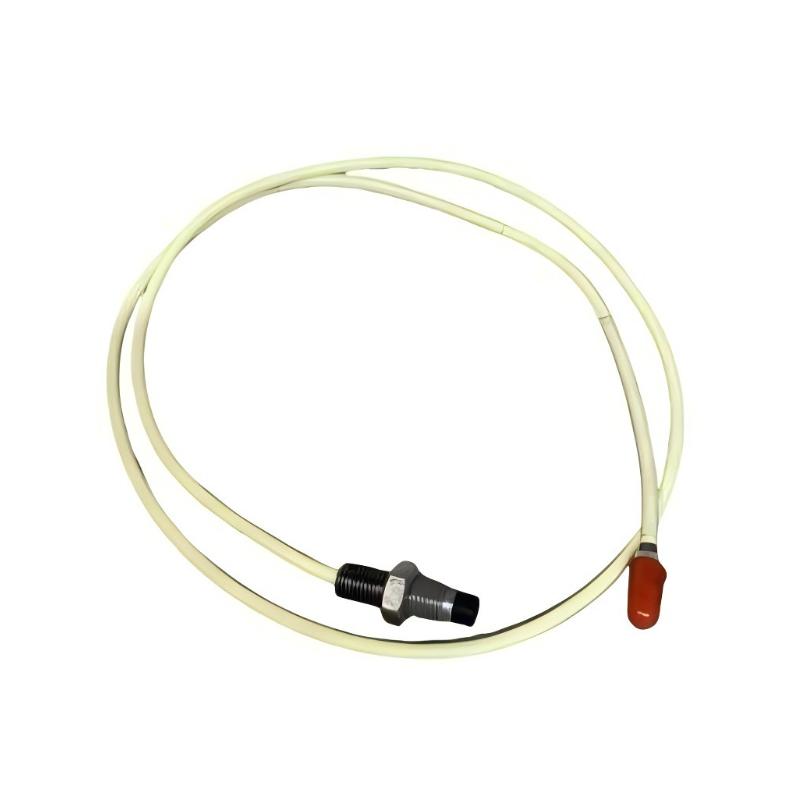
Product Overview
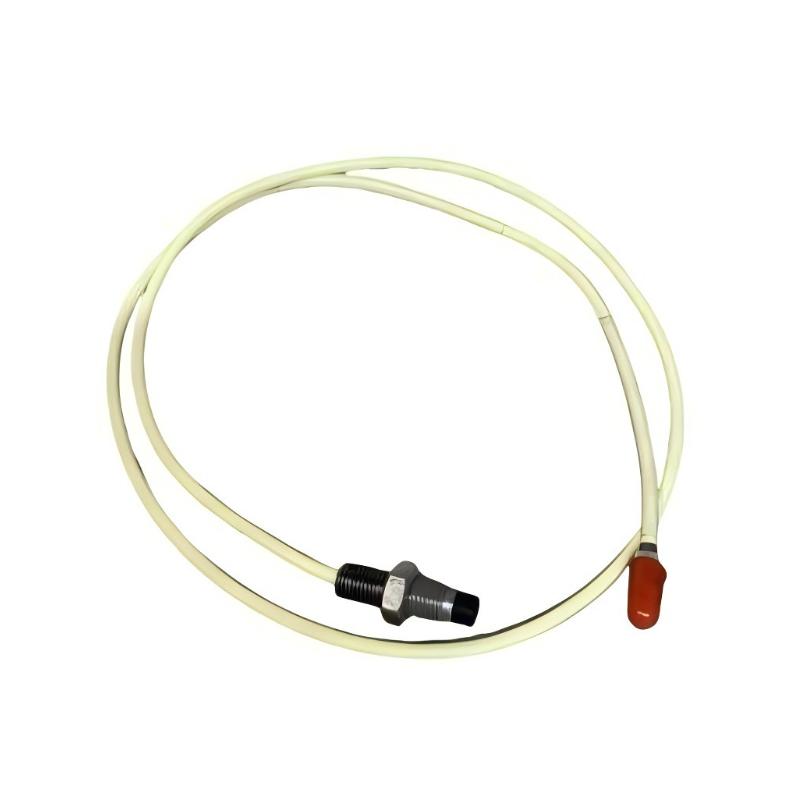
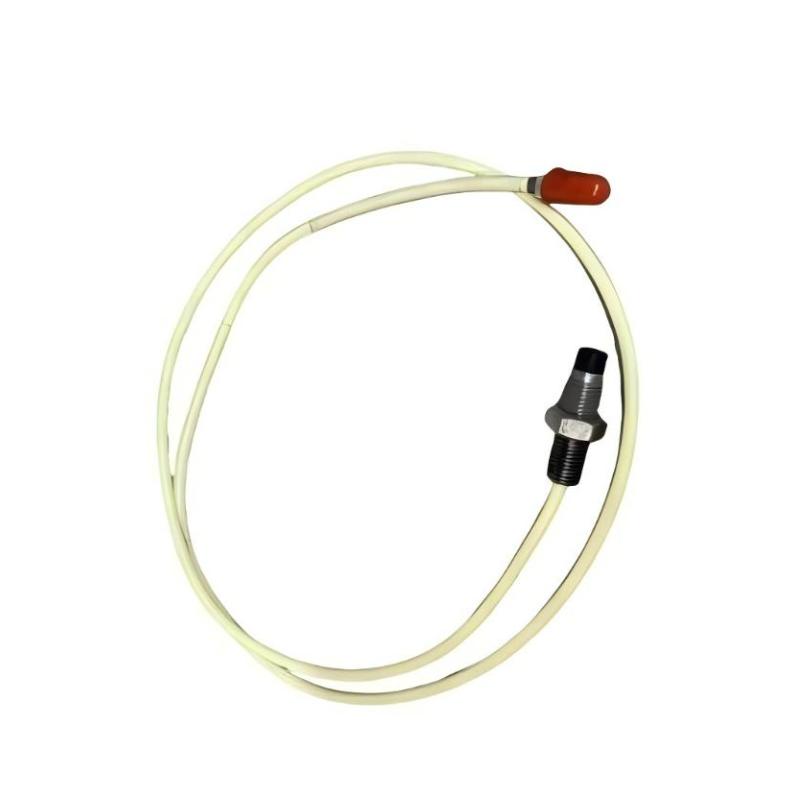
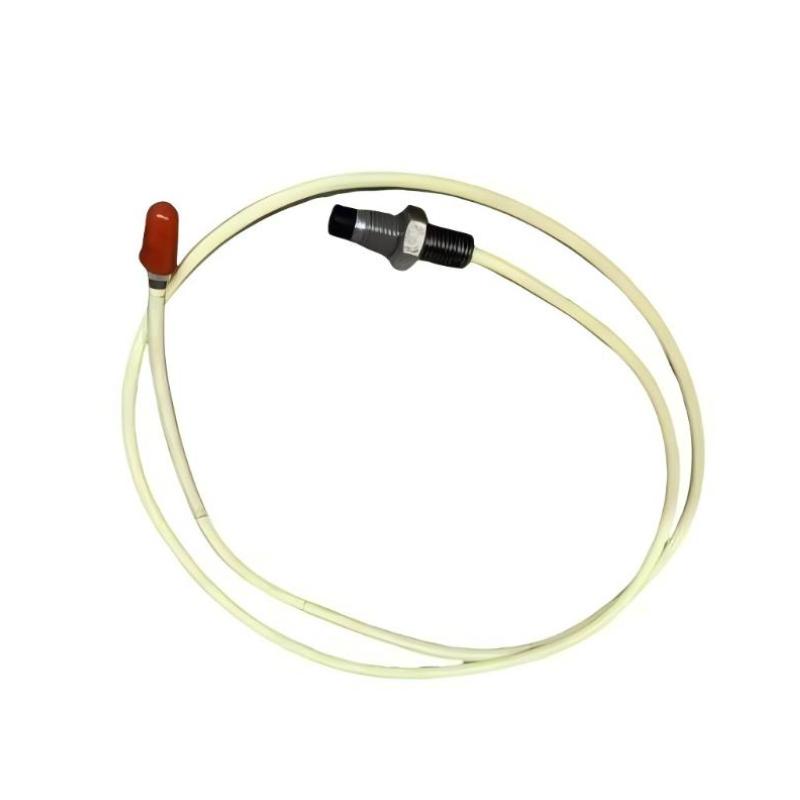
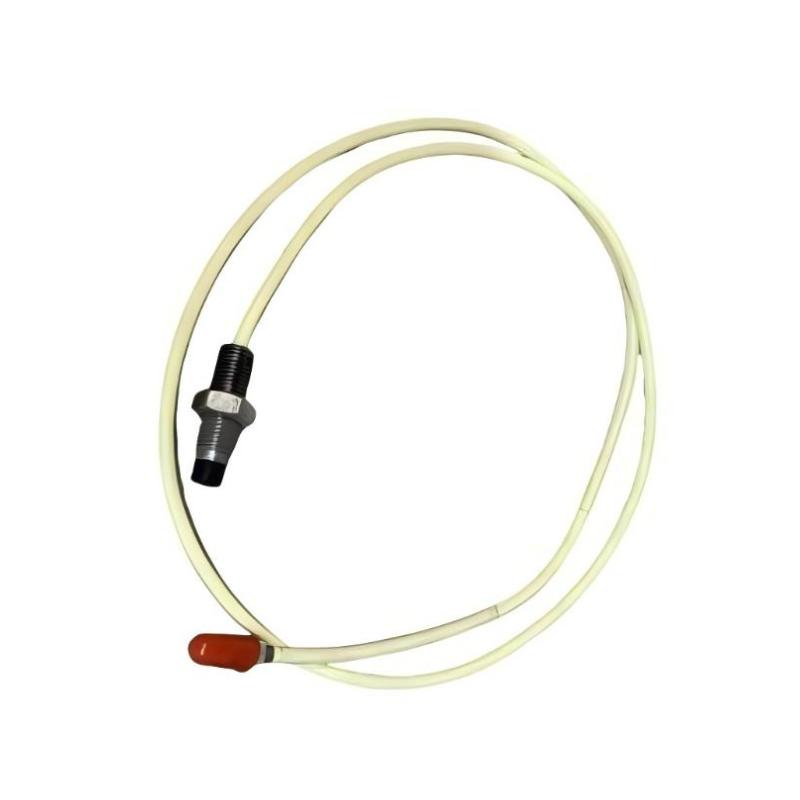
The Bently Nevada 21504-00-48-10-00 7200 Series 8 mm Probe is a non-contact displacement probe designed for machinery condition monitoring applications. It is used to measure the relative movement of a rotating shaft or other conductive target without requiring physical contact between the probe tip and the monitored surface.
In rotating machinery, shaft vibration and radial movement can provide important information about equipment operating condition. A properly installed eddy current probe can detect changes in the distance between the probe tip and the shaft surface, allowing the monitoring system to track shaft displacement and vibration behavior.
The 21504-00-48-10-00 belongs to the Bently Nevada 7200 Series 8 mm Probe family and is intended to operate as part of a complete proximity measurement system. The probe itself is only one part of that system; the associated extension cable, driver or signal-conditioning equipment, and monitoring system must be properly matched for the measurement chain to operate correctly.
Unlike a contact-type sensor, an eddy current proximity probe does not physically touch the rotating shaft during normal operation. This makes it suitable for high-speed rotating equipment where a mechanical contact sensor would introduce additional wear or interfere with shaft movement.
The total length of the 21504-00-48-10-00 is 1 meter, and the stated weight is 0.22 kg, making it suitable for integration into machinery monitoring installations where the probe and cable assembly must be routed between the monitored machine and the associated monitoring equipment.
Technical Specifications
| Parameter |
Details |
| Manufacturer |
Bently Nevada |
| Model |
21504-00-48-10-00 |
| Product Series |
7200 Series |
| Product Type |
8 mm Probe |
| Probe Type |
Eddy Current Proximity Probe |
| Measurement Method |
Non-Contact Displacement Measurement |
| Typical Target |
Rotating Machinery Shaft |
| Application |
Machinery Vibration and Position Monitoring |
| Probe Diameter |
8 mm Series |
| Total Length |
1 meter |
| Weight |
0.22 kg |
| Installation |
Machinery Monitoring System |
| Application Area |
Rotating Equipment Condition Monitoring |
Product Features
The Bently Nevada 21504-00-48-10-00 is designed for non-contact monitoring of rotating machinery.
Key features include:
- 8 mm eddy current probe design
- Non-contact shaft displacement measurement
- Suitable for rotating machinery monitoring
- Supports vibration and shaft position measurement
- Designed for integration with compatible monitoring hardware
- Helps monitor changes in shaft movement
- Suitable for industrial machinery condition monitoring
- 1 meter total length
- Compact probe construction
The non-contact measurement principle is especially useful for machinery operating at high rotational speeds, where physical contact with the shaft would not be practical.
Working Principle
The 7200 Series probe operates using an eddy current measurement principle. The probe generates a high-frequency electromagnetic field around its sensing tip. When a conductive target, such as a rotating machine shaft, is positioned within the sensing range, the target affects the electromagnetic field.
Changes in the distance between the probe tip and the shaft alter the electrical characteristics of the sensing circuit. The associated driver and monitoring electronics use this change to determine shaft displacement.
The basic measurement process includes:
- The probe generates an electromagnetic sensing field.
- The conductive shaft enters the effective sensing region.
- Shaft movement changes the probe-to-target distance.
- The electrical response of the probe changes accordingly.
- The associated signal-conditioning equipment converts this response into a usable measurement.
- The monitoring system evaluates the resulting shaft movement or vibration information.
Because the probe does not physically contact the shaft, there is no normal mechanical wear between the sensing tip and the rotating target.
Role in Industrial Monitoring Systems
The 21504-00-48-10-00 provides the physical sensing point for a machinery vibration or shaft displacement measurement channel.
| Function |
Description |
| Shaft Displacement Measurement |
Detects changes in the distance between probe and shaft |
| Vibration Monitoring |
Provides measurement information for shaft movement |
| Position Monitoring |
Supports observation of relative shaft position |
| Non-Contact Sensing |
Measures movement without touching the rotating shaft |
| Condition Monitoring |
Provides data used to evaluate machinery operating condition |
| Protection Support |
Can contribute to machinery protection measurement channels |
The probe does not normally analyze vibration by itself. Its measurement signal is processed by the associated driver and monitoring electronics.
Industrial Applications
The 7200 Series 8 mm probe is suited to rotating machinery applications where shaft movement needs to be monitored continuously.
| Industry |
Typical Applications |
| Power Generation |
Turbine and generator monitoring |
| Oil & Gas |
Compressor and rotating equipment monitoring |
| Petrochemical |
Pumps, compressors, and turbine equipment |
| Power Plants |
Steam and gas turbine monitoring |
| Industrial Manufacturing |
Critical rotating machinery |
| Water Treatment |
Large pump monitoring |
| Mining |
Heavy-duty rotating equipment |
| General Industry |
Machinery vibration and condition monitoring |
For critical rotating machinery, proximity probes can provide continuous shaft movement information that would be difficult to obtain using conventional contact sensors.
Installation and System Integration
Correct installation is important because the probe measures a relatively small change in distance between its sensing tip and the monitored target.
Recommended installation checks include:
- Verify the complete probe part number before installation.
- Confirm compatibility with the associated monitoring system.
- Install the probe securely in the designated mounting position.
- Maintain the required probe-to-target relationship.
- Ensure the probe tip is properly aligned with the measurement surface.
- Route the cable away from unnecessary mechanical stress.
- Check connectors and cable condition before commissioning.
- Verify the measurement output after installation.
The probe should be positioned so that shaft movement remains within the usable measurement range of the complete system. Mechanical looseness, incorrect alignment, or excessive runout can produce misleading measurement results.
Compatible System Components
A proximity probe normally operates as part of a complete machinery monitoring channel.
| Compatible Component |
Function |
| Proximity Probe Driver |
Supplies and conditions the probe signal |
| Extension Cable |
Connects the probe to the associated driver |
| Monitoring System |
Processes and displays vibration information |
| Machinery Protection System |
Evaluates monitored machine conditions |
| Shaft |
Provides the conductive measurement target |
| Probe Mounting Hardware |
Holds and positions the probe |
| Vibration Monitoring Equipment |
Uses the probe signal for condition monitoring |
The probe, extension cable, and driver should be treated as a matched measurement chain. Replacing only one component without checking the complete system can affect calibration and measurement accuracy.
Recommended Alternative Models
| Model |
Type |
Key Feature |
Application |
| Bently Nevada 21504-00-48-10-00 |
7200 Series 8 mm Probe |
1 meter total length |
Machinery vibration monitoring |
| Bently Nevada 21504-00-52-10-02 |
7200 Series 8 mm Probe |
Alternative probe configuration |
Rotating machinery monitoring |
| Bently Nevada 21504-00 Series |
Proximity Probe |
Multiple probe configurations |
Shaft displacement measurement |
| Bently Nevada 7200 Series Probes |
Eddy Current Probe |
Non-contact shaft measurement |
Machinery protection |
| Bently Nevada Proximity Probe Systems |
Monitoring Sensor |
Complete displacement measurement solution |
Critical rotating equipment |
When selecting an alternative, the probe diameter, mechanical dimensions, cable length, connector arrangement, driver compatibility, mounting configuration, and monitoring system requirements should be checked carefully. A probe with the same general diameter is not necessarily a direct replacement.
Key Advantages
- Non-contact measurement of rotating shaft movement
- Suitable for machinery vibration monitoring
- 8 mm probe design for industrial applications
- Supports shaft displacement and position measurement
- No mechanical contact with the rotating shaft
- Suitable for continuous machinery monitoring
- Can be integrated with compatible Bently Nevada monitoring equipment
- Useful for critical rotating equipment protection
Technical FAQs
How does probe-to-shaft gap affect an eddy current measurement?
The distance between the probe tip and the conductive shaft directly influences the electrical response of the sensing circuit. The probe must therefore be installed within the appropriate operating range, with the mechanical position established carefully during commissioning.
Why is an 8 mm proximity probe used for rotating machinery?
An 8 mm probe provides a practical sensing diameter for applications such as shaft displacement and vibration measurement. The appropriate probe size depends on the available mounting space, target geometry, required measurement range, and monitoring system configuration.
What is the function of the driver in a 7200 Series proximity measurement system?
The driver provides the electrical interface between the proximity probe and the monitoring equipment. It supplies the probe and conditions the resulting signal so that the monitoring system can use the measurement for vibration or shaft-position analysis.
What installation conditions can cause inaccurate shaft displacement measurements?
Probe misalignment, incorrect gap, mechanical looseness, shaft surface irregularities, damaged cabling, and unsuitable probe-driver combinations can all affect measurement quality. The complete measurement chain should be checked when a signal appears unstable or inconsistent.