

ProductPRODUCT
Featured products
Contact Us
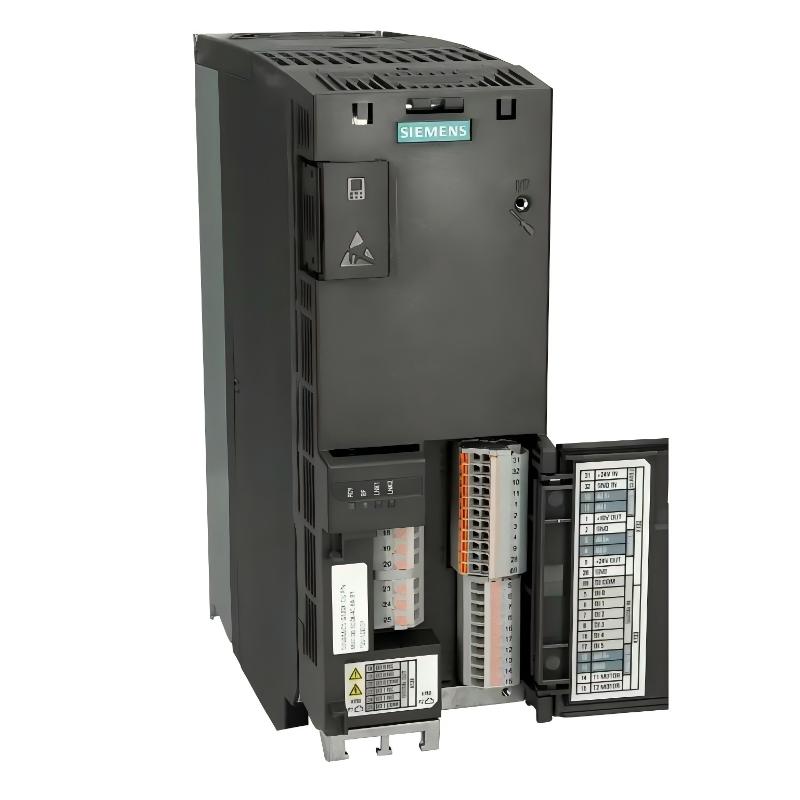
- Siemens
- 6AG1067-2AA00-0AC1
- SINAMICS S120 Control Unit CU310-2 PN
- Germany
- 290 × 470 × 300 mm
- 16.9kg
- Xiamen, China
- New & In Stock
- T/T, PayPal, Western Union
- 1 Year
- 1-3 Working Days
- DHL, UPS, TNT, FedEx and EMS.
- 24-Hour Service
- COO
- 5
Our advantage

Global Logistics
We have a 10-year logistics and express cooperation agreement, so our products can be shipped to any place in the world.

Brand new and original
Our products are imported in bulk from the place of origin. Because of the cooperative relationship, our products are all original and 100% new.

24-hour service
We provide 7*24 hours service to our customers. We will be there whenever you need us.

Price advantage
All our products are priced very favorably because we have our own warehouse and supply.
| Company Information | |||
| [email protected] | |||
| Mobile | +8615980777398 | ||
| +8615980777398 | |||
| 15980777398 |
Siemens 6AG1067-2AA00-0AC1 — Technical Specifications, Product Overview, Applications, Advantages, and Related Models
1. Product Overview
The 6AG1067-2AA00-0AC1 is associated with a SINAMICS G120X drive-training setup designed for practical industrial automation education, drive commissioning exercises, and technical demonstrations.
The training arrangement is intended to help users understand how a variable-frequency drive controls an electric motor, how drive parameters are configured, and how communication between a drive and an automation controller is established. It is particularly relevant to training programs that cover industrial motor control, drive diagnostics, and networked automation.
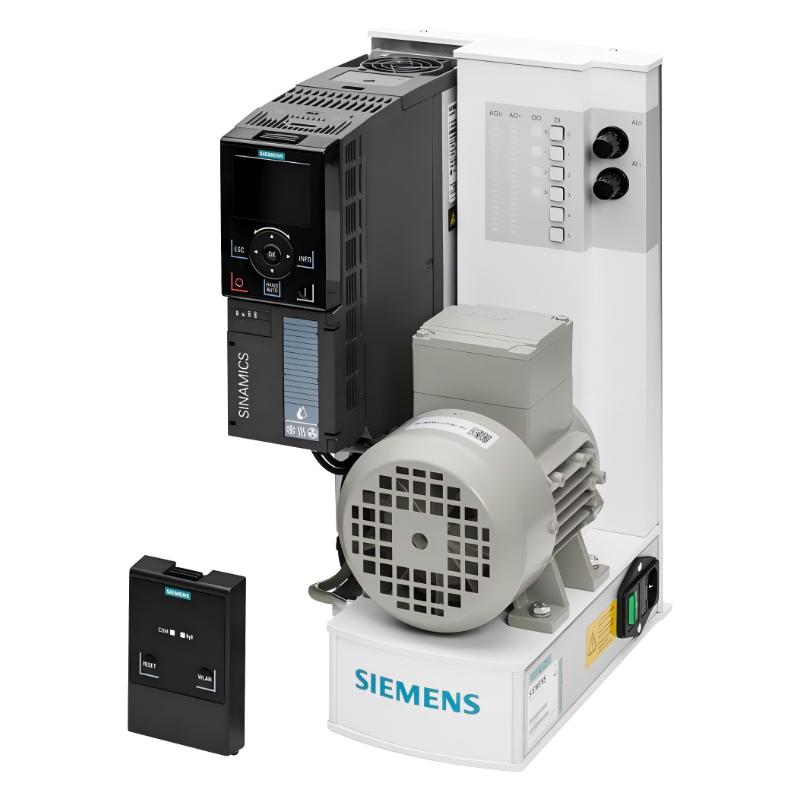
The model is best considered in the context of a complete training arrangement rather than as a standalone frequency converter. Depending on the delivered configuration, the training case may incorporate a drive, operating and demonstration components, an asynchronous motor, and associated connections. The exact contents should be confirmed for the specific unit being purchased.
2. Brand and Product Series
| Item | Details |
|---|---|
| Brand | Siemens |
| Product family | SINAMICS |
| Drive series | SINAMICS G120X |
| Model number | 6AG1067-2AA00-0AC1 |
| Product category | Drive-training equipment |
| Main function | Variable-frequency drive operation and training |
| Drive rating associated with the training configuration | Approximately 0.75 kW |
| Communication interfaces associated with the configuration | PROFINET and EtherNet/IP |
| Motor type | Asynchronous motor in the associated training arrangement |
| Typical use | Industrial automation laboratories, technical education, commissioning practice, and drive demonstrations |
| Equipment format | Training case / demonstration setup |
| Complete production-machine capability | Depends on the actual drive configuration and application requirements |
The SINAMICS G120X family is intended for variable-speed drive applications. The training setup provides a practical environment in which users can explore the operating principles of a drive and learn how communication, configuration, and motor behavior work together.
The precise hardware and accessories supplied with 6AG1067-2AA00-0AC1 should be verified before purchase. The model designation should not be taken as proof that every optional cable, software license, or external controller is included.
3. Detailed Technical Specifications
The following table summarizes the main technical characteristics of the 6AG1067-2AA00-0AC1 training case. Dimensions and weight refer to the assembled training equipment, rather than to the frequency converter alone.
| Parameter | Specification |
|---|---|
| Model number | 6AG1067-2AA00-0AC1 |
| Product name | SINAMICS G120X training case |
| Product type | Mobile drive demonstration and training system |
| Drive family | SINAMICS G120X |
| Supply voltage | 230 V AC, single-phase |
| Drive power rating | 0.75 kW |
| Drive communication | PROFINET and EtherNet/IP |
| Operator panel | Intelligent Operator Panel IOP-2 |
| Additional access facility | SINAMICS G120 Smart Access |
| Motor type | Asynchronous induction motor |
| Main function | Variable-speed motor control and drive-system demonstration |
| Equipment format | Training case with trolley and cover |
| Width | 290 mm |
| Height | 470 mm |
| Depth | 300 mm |
| Overall dimensions (W × H × D) | 290 × 470 × 300 mm |
| Approximate assembled weight | 16.9 kg |
| Motor included | Yes, as part of the specified training-case configuration |
| Operator interface included | IOP-2 |
| Network demonstration | PROFINET and EtherNet/IP |
| Typical installation | Training laboratory, engineering workshop, technical demonstration area |
| Intended use | Education, demonstration, testing, and drive commissioning practice |
| Standalone production suitability | Must be evaluated for the actual application and installation requirements |
Technical notes
Supply voltage: The specified training case is designed for a 230 V single-phase AC supply. The actual supply connection, protective grounding, and electrical protection must follow the equipment’s installation requirements.
Rated drive power: The training configuration uses a 0.75 kW frequency converter. This is a small-drive rating suitable for demonstrating basic variable-speed motor control and related commissioning procedures. The motor’s own rating and wiring must match the installed configuration.
Communication: PROFINET and EtherNet/IP allow the drive to be demonstrated in different industrial networking environments. The two interfaces should not be assumed to operate simultaneously in every configuration; the actual setup and communication mode must be checked.
Operator interface: The IOP-2 panel provides a practical interface for viewing drive information and carrying out supported operating and commissioning tasks. The exact menus and available functions depend on the drive configuration and software version.
Dimensions and weight: The dimensions of 290 × 470 × 300 mm and the approximate weight of 16.9 kg describe the complete training case. These values are more useful for storage, transport, and workshop planning than the dimensions of the internal drive component alone.
4. Product Introduction
4.1 A compact drive-training system
The 6AG1067-2AA00-0AC1 is designed to make variable-frequency drive technology easier to demonstrate and understand. Rather than presenting a drive as an isolated electronic device, the training case brings together the drive, operator interface, access module, and motor in a compact, mobile arrangement.
This allows users to see the relationship between the electrical drive and the mechanical load. They can practice basic operating procedures, examine parameter settings, observe motor behavior, and explore how communication affects the operation of a drive system.
The mobile case format also makes it convenient to move the equipment between training rooms, engineering laboratories, and demonstration areas.
4.2 SINAMICS G120X drive technology
The SINAMICS G120X family is intended for variable-speed motor applications. A frequency converter adjusts the electrical supply delivered to a motor so that its speed and operation can be controlled according to the requirements of the application.
For training purposes, this provides an accessible way to study the fundamentals of motor control. Users can learn how frequency and related drive parameters influence motor operation, how start and stop commands are handled, and why a correctly configured drive is essential for reliable operation.
The training case is particularly useful for introductory and intermediate exercises because the main components are assembled into a single demonstration system.
4.3 Integrated operator panel
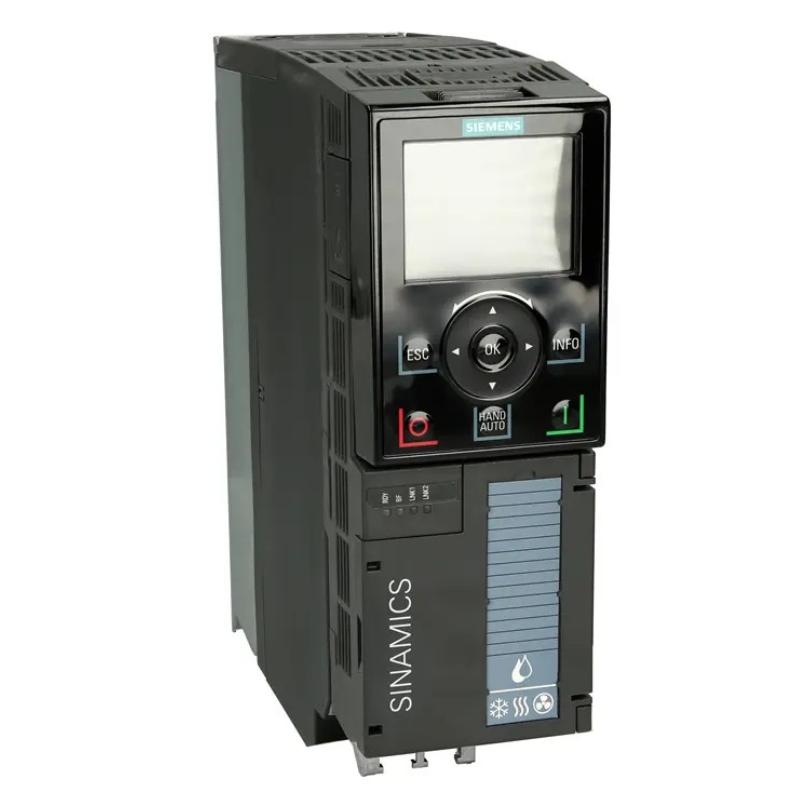
The included IOP-2 operator panel provides a local interface for supported drive operations. Depending on the configuration, users can access drive information, work through commissioning procedures, and review relevant operating or diagnostic information.
A local operator interface is useful during training because it lets learners interact directly with the drive without having to perform every operation through a programmable controller.
It also helps instructors demonstrate the difference between local operation, network-based commands, and parameter configuration.
4.4 Smart Access functionality
The training configuration includes SINAMICS G120 Smart Access. This provides an additional access method for supported commissioning and operating tasks.
The exact access procedure and functions depend on the hardware, software, and network configuration. Before using the module in a particular laboratory, users should verify that their devices and configuration support the intended access method.
4.5 Industrial network integration
The product supports training around PROFINET and EtherNet/IP communication. These interfaces are relevant to industrial environments in which drives exchange operating commands and status information with higher-level automation equipment.
The training case allows users to explore the practical side of network integration, including communication configuration, device recognition, control signals, and basic fault diagnosis.
4.6 Practical motor-control experience
Because the training arrangement includes an asynchronous motor, learners can relate electronic drive settings to the behavior of a real motor.
This helps bridge the gap between theory and practice. Users can study the effect of operating commands and configuration changes, observe whether the motor responds as expected, and learn how to distinguish a parameter problem from a wiring or communication issue.
5. Main Applications
5.1 Industrial automation education
The training case is suitable for technical colleges, vocational education centers, industrial training departments, and engineering laboratories.
It can support lessons on frequency converters, motor-control fundamentals, drive commissioning, and the integration of drives into automated equipment.
Students can work through structured exercises involving parameter configuration, operating commands, fault messages, and motor behavior. Instructors can use the same equipment for demonstrations and practical assessments.
5.2 Drive commissioning training
Commissioning a drive requires more than connecting the power supply and pressing the start button. Engineers need to check the hardware configuration, confirm motor data, establish the appropriate control mode, and verify that the drive responds correctly to commands.
The 6AG1067-2AA00-0AC1 provides a compact platform for practicing these procedures in a controlled environment.
Typical training tasks include checking the supply arrangement, reviewing drive parameters, using the operator panel, confirming the motor’s operating behavior, and identifying configuration errors.
5.3 PROFINET communication exercises
The PROFINET interface makes the training case relevant to networked automation courses.
Trainees can study how a drive is integrated into a compatible network, how communication settings are established, and how control commands and status information are exchanged.
These exercises are useful for understanding that a motor may fail to respond for reasons unrelated to the power stage. Incorrect communication settings, missing enable conditions, or an unsuitable control configuration can also prevent normal operation.
5.4 EtherNet/IP integration practice
The EtherNet/IP interface provides another way to explore industrial communication.
Training may include understanding the role of network configuration, checking communication status, and examining the relationship between the automation controller and the drive.
This can be valuable for engineers who work with different automation architectures and need to understand how drive communication varies between projects.
5.5 Motor-speed control demonstrations
The included asynchronous motor allows the system to demonstrate the basic principles of variable-speed control.
Instructors can explain how drive settings influence motor operation and how an appropriate configuration is selected for the intended task. The actual operating limits depend on the motor, drive configuration, and applicable safety requirements.
5.6 Maintenance and troubleshooting workshops
The training case can be used to develop systematic fault-finding skills.
Users can learn to check the supply, wiring, configuration, enable signals, network status, and fault information in a logical sequence. This encourages a methodical approach instead of replacing parts based only on the observed symptom.
5.7 Engineering demonstrations
The compact trolley format is convenient for product demonstrations, technical presentations, and internal engineering workshops.
The assembled equipment makes it easier to explain the relationship between a frequency converter, motor, operator panel, and communication interface. It can also be used to demonstrate basic functions before a team begins work on a larger installation.
5.8 Laboratory testing
Engineering teams can use the system for controlled testing of basic drive configurations and communication procedures.
It is appropriate for training and demonstration tasks within its supported ratings and configuration. It should not be assumed to replace a full production test system where the application requires a different motor rating, environmental specification, safety architecture, or continuous-duty capability.
6. Product Advantages
6.1 Compact and mobile design
With overall dimensions of 290 × 470 × 300 mm and an approximate weight of 16.9 kg, the training case is relatively compact for a system that includes a drive and motor.
The trolley-style arrangement supports movement between suitable work areas and reduces the need to assemble a demonstration system from separate components for every session.
6.2 Components arranged for demonstration
The integrated setup allows the main drive-control components to be examined as part of one system.
This is helpful for teaching because learners can see the operator interface, drive, and motor together. It also makes demonstrations easier to follow than explanations based solely on diagrams or individual component datasheets.
6.3 Support for two industrial communication environments
PROFINET and EtherNet/IP support training across different networked automation scenarios.
This flexibility is useful for engineering teams that need to understand drive integration in more than one communication environment. The specific communication setup must still be configured according to the installed hardware and application.
6.4 Practical operation through the IOP-2 panel
The operator panel provides a direct interface for supported commissioning and operating tasks.
This allows beginners to learn the basic operating procedure while giving more experienced users a way to demonstrate parameter access and diagnostic workflows.
6.5 Integrated motor for hands-on learning
The inclusion of an asynchronous motor means that users can observe real motor behavior rather than relying entirely on simulated values.
This makes it easier to explain the relationship between drive commands, parameter settings, and mechanical motion.
6.6 Suitable for repeatable training
The training-case format allows instructors to establish a standard starting configuration and repeat the same exercises across multiple sessions.
Repeatability is useful for technical assessments, maintenance workshops, and structured commissioning courses.
6.7 Useful for communication troubleshooting
The combination of a drive, operator interface, and network connectivity creates opportunities to teach fault diagnosis across several layers of a control system.
Users can learn to separate power-related issues from parameter problems and communication faults. This structured approach can reduce unnecessary component replacement and improve troubleshooting consistency.
6.8 Supports different levels of technical experience
Beginners can start with basic operating procedures and motor-control concepts. More experienced users can move on to communication configuration, parameter checks, and systematic fault diagnosis.
This makes the equipment suitable for a range of training activities, although the complexity of each exercise should match the available hardware and software.
7. Five Related Models
The following models are related to industrial drive training and demonstration. They are alternatives rather than guaranteed drop-in replacements for the 6AG1067-2AA00-0AC1.
| Model | Product description | Main parameters | Dimensions (W × H × D) | Weight (kg) |
|---|---|---|---|---|
| 6AG1067-2AA00-0AA0 | SINAMICS G120C training case | 0.55 kW drive; PROFINET; IOP-2 and BOP-2 operator panels; asynchronous motor; 230 V AC single-phase supply | 315 × 400 × 300 mm | Approx. 9 kg |
| 6AG1067-2AA00-0AA1 | SINAMICS G120P compact training case | PM230 power module; CU230P-2 control unit; BOP-2 operator panel; asynchronous motor; 230 V AC single-phase supply | 400 × 320 × 300 mm | Approx. 15 kg |
| 6AG1067-2AA00-0AB8 | SINAMICS G120 compact modular training case | Modular drive-training arrangement; 230 V AC single-phase supply; compatible expansion options depend on configuration | 420 × 695 × 325 mm | Approx. 25 kg |
| 6AG1067-2AA00-0AC2 | SINAMICS G120XA training case | 0.75 kW drive configuration; USS, Modbus RTU, and BACnet MS/TP communication; operator interface and asynchronous motor | 290 × 470 × 300 mm | Approx. 16.9 kg |
| 6AG1067-2AA00-0AC6 | SINAMICS V20 compact training case, variant 2 | 0.12 kW V20 drive; Smart Access module; asynchronous motor; 230 V AC single-phase supply | 180 × 450 × 400 mm | Approx. 9 kg |
Dimensions and weights are approximate training-case specifications. Verify the exact configuration and delivered accessories before ordering.
7.1 6AG1067-2AA00-0AA0 — SINAMICS G120C training case
This is a compact alternative for learning the fundamentals of variable-frequency drive operation. Its 0.55 kW drive configuration is suitable for introductory exercises involving motor operation, basic parameter settings, and local control.
The smaller case is useful where portability and storage space are important. Compared with the G120X training case, it is a different drive configuration and should be selected according to the intended learning objectives.
7.2 6AG1067-2AA00-0AA1 — SINAMICS G120P training case
This model is relevant to training that focuses on the G120P configuration and its associated control hardware.
It provides a platform for studying drive setup, control-unit functions, motor operation, and basic commissioning procedures. Its intended exercises differ from those of the G120X training case, particularly where the required drive architecture and communication arrangements are concerned.
7.3 6AG1067-2AA00-0AB8 — Compact modular G120 training case
This model is useful when the training program requires a more modular drive arrangement.
Its case is larger than the compact G120C and G120X training cases. The modular format may be helpful for studying the relationship between power modules and control units, but the available expansion options depend on the exact configuration.
7.4 6AG1067-2AA00-0AC2 — SINAMICS G120XA training case
This model is a close alternative in physical format and general training purpose.
It is particularly relevant when the training course includes communication protocols such as Modbus RTU or BACnet MS/TP. It should not be selected as a direct substitute if the application specifically requires the G120X configuration and its PROFINET or EtherNet/IP setup.
7.5 6AG1067-2AA00-0AC6 — SINAMICS V20 training case
The V20 training case is suitable for introductory variable-frequency drive exercises, especially when a lower-power demonstration setup is sufficient.
Its 0.12 kW drive configuration differs substantially from the 0.75 kW G120X training case. It is therefore better suited to basic training tasks than to exercises that require the same drive hardware and power rating as the original model.
8. Five Popular Models from the Same Brand
The following table lists five widely used industrial automation and drive models. They cover different functions, so they are alternatives for broader system planning rather than direct substitutes for the G120X training case.
| Model | Product series / description | Main technical parameters | Dimensions (W × H × D) | Weight (kg) |
|---|---|---|---|---|
| 6SL3210-1KE21-3AF1 | SINAMICS G120C compact frequency converter | Compact variable-frequency drive; exact rated power and supply depend on the complete order code and hardware version | Exact dimensions depend on the frame and version | Not confirmed for this exact version |
| 6SL3120-1TE21-8AA3 | SINAMICS S120 motor module | Modular motor-drive power stage; intended for compatible S120 drive configurations | Exact dimensions depend on module version | Not confirmed for this exact version |
| 6ES7214-1AG40-0XB0 | SIMATIC S7-1200 CPU | Programmable logic controller for machine automation; supported onboard I/O and communication depend on CPU variant | Exact dimensions should be checked against the CPU hardware data | Not confirmed for this exact version |
| 6ES7511-1AK02-0AB0 | SIMATIC S7-1500 CPU | PLC for industrial control, logic processing, and automation integration | Exact dimensions should be checked against the CPU hardware data | Not confirmed for this exact version |
| 6EP1333-2BA20 | SITOP power supply | Industrial 24 V DC power supply; output-current rating and mounting details should be confirmed for the exact version | Exact dimensions should be checked against the power-supply hardware data | Not confirmed for this exact version |
The final three entries are automation components rather than complete drive-training cases. Their suitability depends on the wider system design, including power requirements, communication interfaces, mounting arrangements, and the control tasks to be performed.
How these models compare with the G120X training case
– 6SL3210-1KE21-3AF1: Relevant when the requirement is for a compact drive component rather than a complete demonstration case.
– 6SL3120-1TE21-8AA3: Relevant to modular motion-control installations built around a compatible S120 architecture. It is not a direct replacement for the G120X training case.
– 6ES7214-1AG40-0XB0: Suitable for PLC-based automation exercises where users need to learn logic control and machine sequencing alongside drive operation.
– 6ES7511-1AK02-0AB0: Suitable for more advanced PLC training and automation projects requiring a different controller platform.
– 6EP1333-2BA20: Relevant when an industrial 24 V DC power supply is required as part of a control panel or training system.
Dimension and weight note: The dimensions and weights of standalone drives, PLCs, motor modules, and power supplies vary by exact hardware revision and mounting arrangement. They are deliberately marked as unconfirmed rather than assigning figures that could be incorrect. The dimensions and weight of the complete 6AG1067-2AA00-0AC1 training case are listed separately in the technical specification section.
9. Installation and Maintenance Considerations
9.1 Confirm the supply arrangement
Check that the available supply matches the training case’s specified 230 V AC single-phase input. The equipment should be connected using suitable protective devices and grounding arrangements.
Never assume that a training case can be connected to an arbitrary supply simply because its drive rating is relatively low.
9.2 Check the physical installation
Allow sufficient room for the trolley, cover, cables, and operator access. The stated dimensions describe the training case itself; additional clearance may be necessary when it is being used in a laboratory.
Keep the equipment on a stable surface and ensure that moving the case does not strain cables or connectors.
9.3 Review communication settings
Before network exercises, confirm that the drive and the automation equipment are configured for the intended communication interface.
Network configuration errors can prevent commands from reaching the drive even when the power supply and motor wiring are correct.
9.4 Use the correct motor data
Drive commissioning should use the motor data applicable to the supplied motor and actual configuration.
Incorrect motor parameters may result in unexpected operating behavior or faults. The correct procedure should be followed whenever parameters are reset, changed, or restored.
9.5 Observe electrical safety requirements
A frequency converter can contain hazardous voltages and stored energy even after the supply has been disconnected.
Only appropriately qualified personnel should carry out electrical work. Isolation, discharge time, protective grounding, and all other prescribed safety procedures must be followed before touching internal electrical components.
9.6 Keep configuration records
For a training laboratory, record the drive configuration, network settings, software version, and any changes made during practical exercises.
A documented baseline helps instructors restore the system to a known condition and makes it easier to identify mistakes introduced during training.
10. Final Recommendation
The 6AG1067-2AA00-0AC1 is a compact SINAMICS G120X training case intended for drive demonstrations, motor-control education, commissioning practice, and network communication exercises.
Its main strengths are the integrated drive-and-motor arrangement, the operator interface, support for PROFINET and EtherNet/IP training, and the mobile case format. These features make it useful for laboratories and engineering departments that need a practical demonstration system without assembling every component separately.
For selection purposes, the most important specifications are:
-
Supply voltage: 230 V AC, single-phase.
-
Drive rating: 0.75 kW.
-
Communication: PROFINET and EtherNet/IP.
-
Operator interface: IOP-2.
-
Overall dimensions: 290 × 470 × 300 mm.
-
Approximate weight: 16.9 kg.
If the requirement is specifically for G120X training and demonstration, the 6AG1067-2AA00-0AC1 is the most directly relevant choice. If the main objective is basic frequency-converter training, a G120C or V20 training case may be sufficient. For exercises focused on other communication protocols or modular drive architecture, the G120XA, G120P, or modular G120 training cases may be more suitable.