

ProductPRODUCT
Featured products
Contact Us
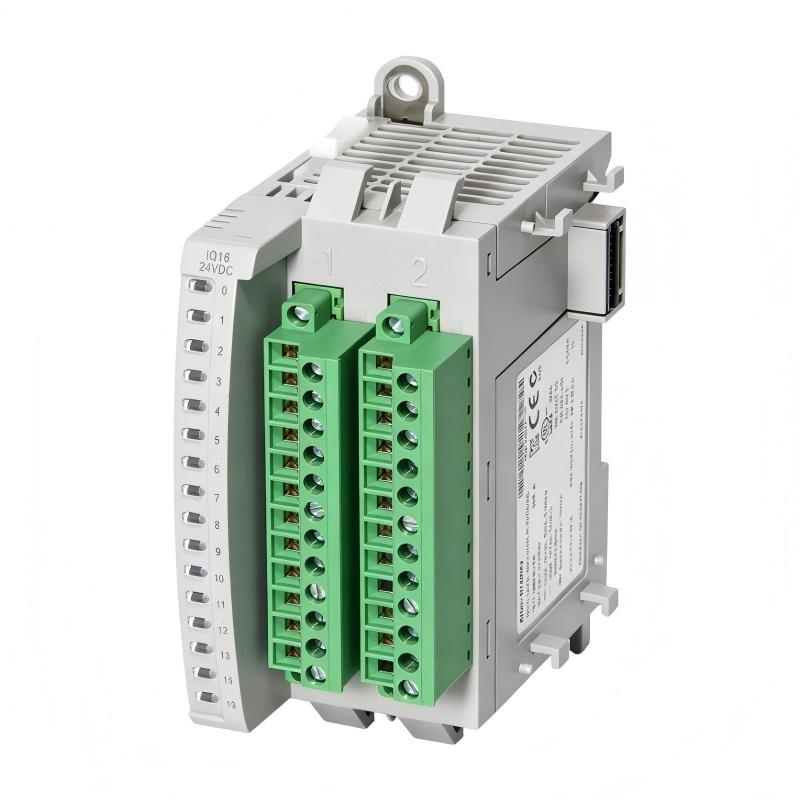
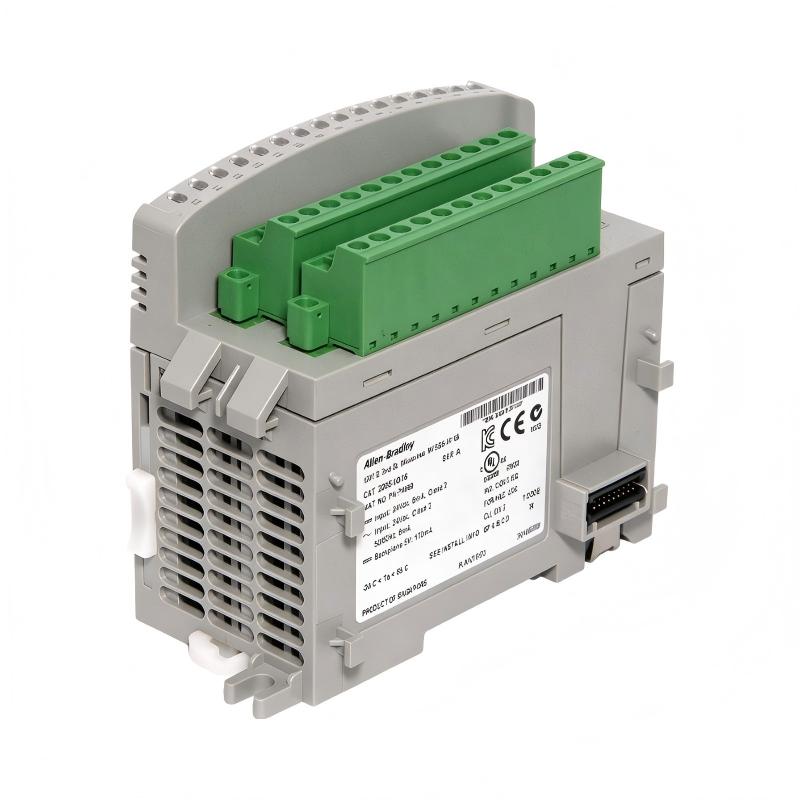
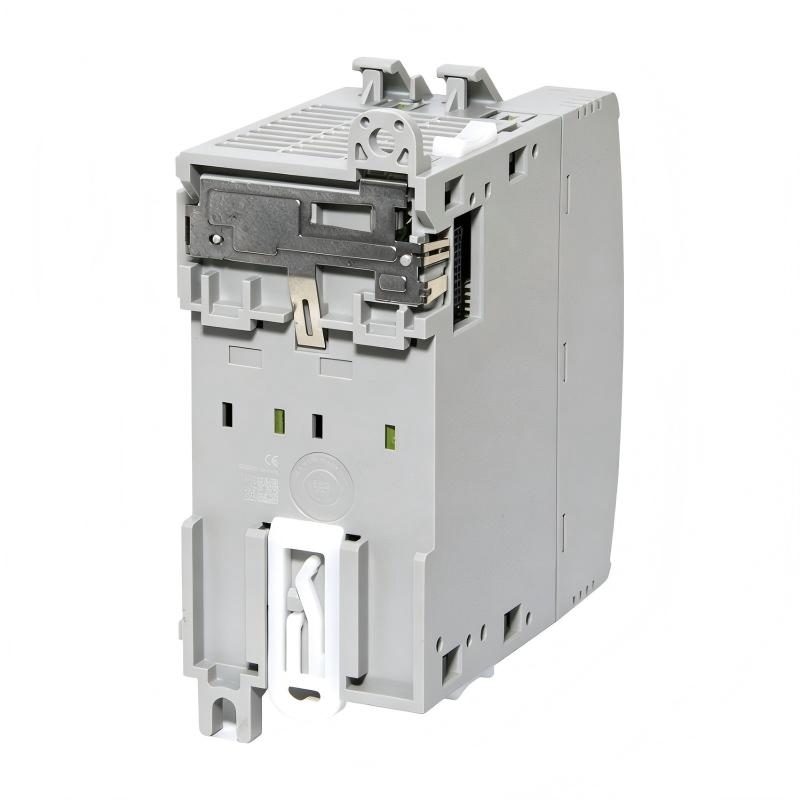
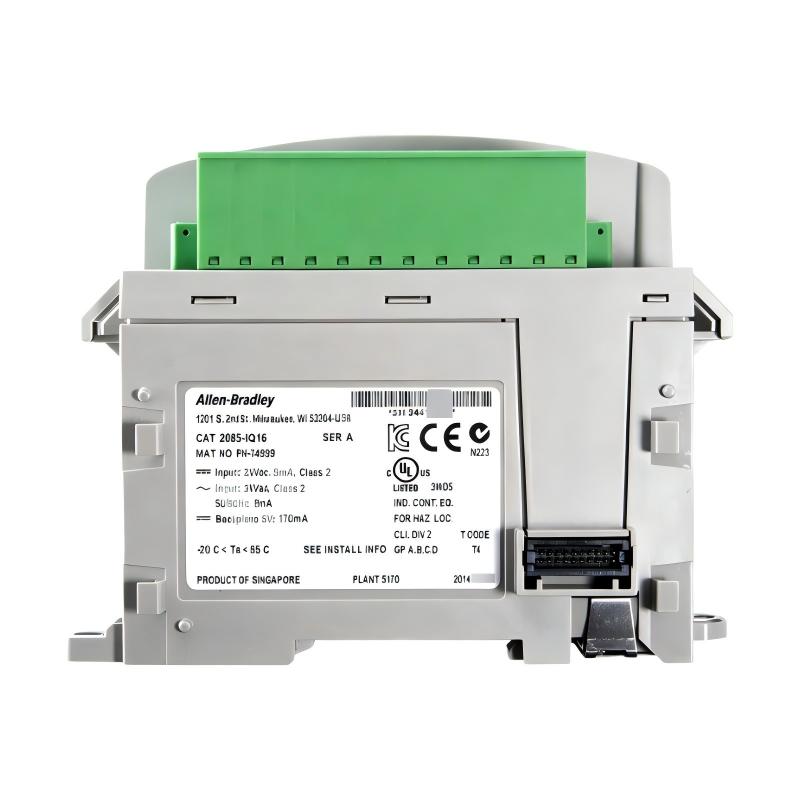
- Allen Bradley
- 2085-IQ16
- Micro800 16-Point Digital Input Module
- USA
- 90 x 44.5 x 87 mm
- 0.22 kg
- Xiamen, China
- New & In Stock
- T/T, PayPal, Western Union
- 1 Year
- 1-3 Working Days
- DHL, UPS, TNT, FedEx and EMS.
- 24-Hour Service
- COO
- 6
Our advantage

Global Logistics
We have a 10-year logistics and express cooperation agreement, so our products can be shipped to any place in the world.

Brand new and original
Our products are imported in bulk from the place of origin. Because of the cooperative relationship, our products are all original and 100% new.

24-hour service
We provide 7*24 hours service to our customers. We will be there whenever you need us.

Price advantage
All our products are priced very favorably because we have our own warehouse and supply.
| Company Information | |||
| [email protected] | |||
| Mobile | +8615980777398 | ||
| +8615980777398 | |||
| 15980777398 |
1. Product Overview
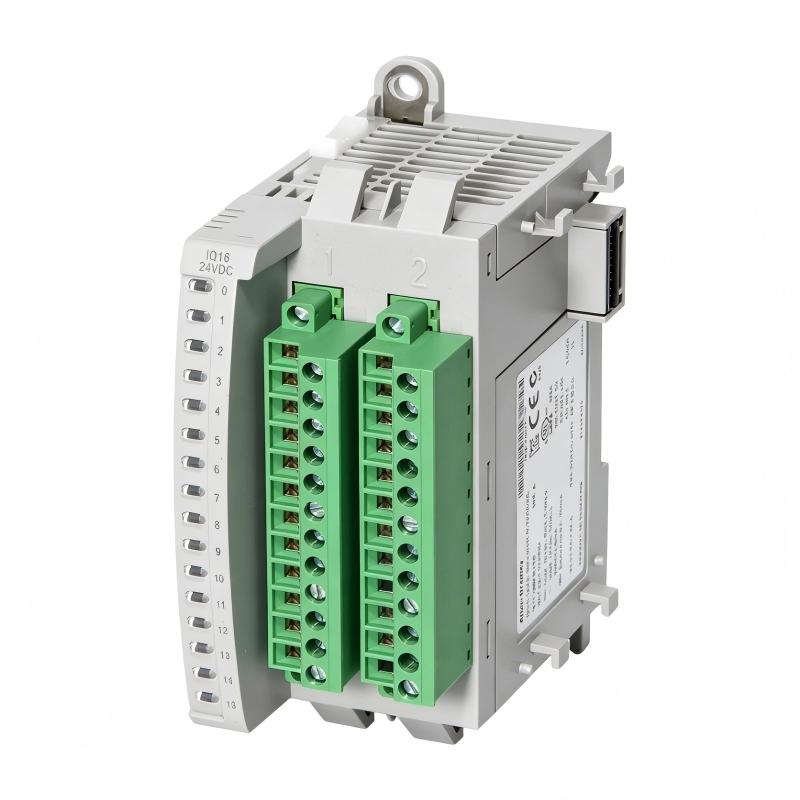
The Allen-Bradley 2085-IQ16 is a 16-point digital input expansion module designed for the Micro800 programmable controller family. Manufactured by Rockwell Automation, this module enables a compatible controller to receive discrete signals from industrial field devices such as push buttons, limit switches, proximity sensors, selector switches, and other on/off signal sources.
As part of the Bulletin 2085 expansion I/O family, the 2085-IQ16 helps expand the input capacity of a compatible Micro800-based control system. It supports 24 V DC sink/source input configurations and provides individual channel status indicators to assist with commissioning, equipment monitoring, and troubleshooting.
The module is suitable for compact industrial automation systems where reliable discrete signal acquisition is essential. Typical applications include packaging machines, conveyor systems, assembly equipment, material handling installations, and general-purpose machine automation.
For maintenance engineers and industrial automation equipment buyers, the 2085-IQ16 is also a useful spare part for existing installations. When selecting a replacement, users should verify the complete catalog number, controller compatibility, wiring configuration, and electrical specifications before installation.
2. Technical Specifications
| Parameter | Specification |
|---|---|
| Brand | Allen-Bradley |
| Manufacturer | Rockwell Automation |
| Model | 2085-IQ16 |
| Product Type | Digital Input Expansion Module |
| Product Family | Micro800 / Bulletin 2085 Expansion I/O |
| Number of Inputs | 16 digital input points |
| Input Type | DC digital input |
| Input Configuration | Sink/source |
| Nominal Input Voltage | 24 V DC |
| Operating Voltage Range | 10–30 V DC |
| Maximum Bus Current Draw | 170 mA at 5 V DC |
| Status Indicators | 16 yellow channel status indicators |
| Maximum Power Dissipation | 4.5 W |
| Isolation | Channel-to-system isolation |
| Continuous Isolation Voltage | 50 V |
| Mounting / Integration | Compatible Micro800 expansion I/O installation |
| Dimensions | 90 × 44.5 × 87 mm, as supplied |
| Weight | 0.22 kg, as supplied |
| Typical Applications | Machine automation, sensor monitoring, discrete control |
| Product Status | Active, according to the manufacturer’s product listing |
Note: The manufacturer’s published dimensions are 44.5 × 90 × 87 mm (H × W × D). The user-supplied dimensions are shown above in the supplied order. Confirm exact electrical limits and wiring details against the applicable product documentation and hardware revision.
3. Main Functions and Working Principle
3.1 Acquisition of Digital Field Signals
The primary function of the 2085-IQ16 is to receive discrete signals from external field devices and make their states available to a compatible programmable controller.
Typical input devices include:
- Push buttons and selector switches
- Limit switches and proximity sensors
- Photoelectric sensors
- Machine-position switches
- Equipment-ready and fault contacts
- Other compatible 24 V DC discrete signal sources
When a connected device changes state, the corresponding input circuit detects the electrical signal. The module processes the input state and communicates the information through the expansion I/O interface so that the controller can use it in its application logic.
For example, a proximity sensor may indicate that a product has reached a conveyor transfer point. The controller can use that input to initiate a sequence, stop a motor, activate an actuator, or update a machine status display.
3.2 Sink and Source Input Compatibility
The 2085-IQ16 supports sink/source input configurations. This provides flexibility when connecting compatible field devices with different DC signal wiring arrangements.
The terms sinking and sourcing describe how current flows between the field device and the input circuit. Correct compatibility depends on the output type of the sensor or switch, the input wiring arrangement, and the module’s specified electrical characteristics.
Before connecting field devices, engineers should check the device wiring diagram, signal polarity, common-terminal arrangement, and voltage levels. Incorrect wiring can prevent the input from switching correctly or damage equipment.
3.3 Individual Channel Status Indication
The module provides individual yellow status indicators for its 16 input channels. These indicators help maintenance personnel determine whether an input channel is detecting an active signal.
During commissioning, technicians can operate a sensor or switch and observe the corresponding indicator. This makes it easier to distinguish between a field-device problem, a wiring fault, and a possible controller configuration issue.
The indicators should be interpreted alongside controller diagnostics and the actual field signal. An illuminated LED alone does not confirm that the complete application logic is operating correctly.
3.4 Expansion of Controller Input Capacity
The 2085-IQ16 adds 16 digital input points to a compatible Micro800 system. This allows the automation system to monitor more field signals without replacing the controller solely because additional discrete inputs are needed.
The module is useful when a machine is expanded with additional sensors, interlocks, operator switches, or status contacts. Before expansion, however, the controller’s supported module count, expansion configuration, power budget, and physical installation requirements must be verified.
3.5 Communication with the Controller
The 2085-IQ16 operates as an expansion I/O module rather than as an independent programmable controller. It supplies input information to the compatible controller, which then executes the configured application logic.
The controller determines how each input is used—for example, as a start command, position confirmation, process interlock, or alarm condition. This separation between signal acquisition and control logic helps keep machine programs organized and easier to maintain.
4. Role in a Micro800 Automation System
The 2085-IQ16 provides the field-input interface for a compatible Micro800 controller installation. It converts external discrete signals into input states that can be used by the controller program.
A typical application may include the following components:
- Micro800 controller: Executes machine logic and coordinates the control sequence.
- 2085-IQ16 digital input module: Acquires up to 16 compatible digital input signals.
- Digital output modules: Control compatible discrete loads, such as indicators, relays, or actuators.
- Analog I/O modules: Interface with compatible process signals when analog measurements are required.
- Field sensors: Detect product presence, position, movement, or machine conditions.
- Push buttons and selector switches: Provide operator commands and mode selection.
- Power supply: Provides suitable power to the controller and field circuits.
- Terminal blocks and wiring: Connect field devices to the input module.
- HMI or operator panel: Displays operating states, alarms, and process information when included in the system.
The module’s role is to deliver reliable discrete input information to the controller. The controller then processes that information according to the programmed application.
The exact system architecture depends on the selected Micro800 controller, expansion capacity, required I/O count, and application design. Always confirm that the selected controller supports the intended module configuration.
5. Industrial Applications
5.1 Packaging Machinery
Packaging equipment uses many discrete signals to track product position, machine-door status, material availability, and operating sequence conditions.
The 2085-IQ16 can collect signals from compatible photoelectric sensors, limit switches, and operator controls. The controller can use these signals to coordinate product feeding, indexing, sealing, labeling, and transfer operations.
5.2 Conveyor and Material Handling Systems
Conveyor systems frequently require input signals from product-detection sensors, end-position switches, and equipment status contacts.
The 2085-IQ16 allows a compatible controller to monitor these discrete conditions. The application program can then control conveyor movement, coordinate transfer points, and detect abnormal operating states.
5.3 Assembly and Machine Tools
Assembly machines often use switches and sensors to confirm that components are present and that a machine has reached the required position.
The module can collect these signals for use in sequence logic and process interlocks. This supports repeatable operation and helps prevent a sequence from advancing when required input conditions are not satisfied.
5.4 Automated Inspection Equipment
Inspection stations may use discrete outputs from photoelectric sensors, part-presence detectors, or compatible inspection devices. The 2085-IQ16 can receive these signals and provide them to the controller for sequencing, counting, rejection control, and alarm handling.
The input module does not itself perform complex inspection or vision analysis; that function belongs to the appropriate inspection equipment and application logic.
5.5 General Industrial Equipment
The module can also be used in compact control systems for pumps, fans, small process skids, utility equipment, and other machines that require multiple discrete status signals.
Its suitability depends on the required electrical interface, environmental conditions, controller compatibility, and the number of input points needed.
6. Installation and System Integration
6.1 Confirm Controller Compatibility
Before installing the 2085-IQ16, verify that the target controller supports the module and the intended expansion arrangement. Check the controller model, firmware requirements, expansion limits, and the applicable Micro800 documentation.
Do not assume that every controller in the Micro800 family supports every expansion configuration in the same way.
6.2 Verify Input Voltage and Polarity
Confirm that each field device supplies a signal compatible with the module’s specified input range. For DC inputs, check the polarity and the sinking or sourcing arrangement before connecting wires.
The module’s nominal input voltage is 24 V DC, with a specified operating range of 10–30 V DC. Field devices must remain within the applicable electrical limits during normal operation.
6.3 Plan Wiring and Common Connections
Organize field wiring so that each sensor or switch is connected to the correct input channel and common terminal. Clearly label the wires and maintain an updated I/O list that links physical terminals to controller tags.
Separate signal wiring from sources of electrical interference where appropriate. Follow the manufacturer’s grounding, wiring, and routing recommendations for the installation.
6.4 Check Power and Thermal Requirements
The expansion module draws current from the controller’s expansion bus. Confirm that the complete installation remains within the controller’s available expansion power budget and the system’s environmental limits.
The module’s published maximum power dissipation is 4.5 W. Cabinet ventilation, ambient temperature, and module spacing should be considered in the overall design.
6.5 Test Each Input Channel
After wiring, test each field device and verify that its corresponding channel indicator responds as expected. Confirm that the controller reads the correct input state and that the associated program logic behaves correctly.
Testing should include normal switching, expected operating sequences, and relevant fault conditions. Any safety-related function must be implemented using appropriately rated safety components and a validated safety design; a standard digital input module should not be treated as a safety-rated device.
6.6 Maintain Documentation
Keep the electrical drawings, terminal assignments, controller program, I/O mapping, and module catalog information up to date. Accurate documentation helps reduce troubleshooting time and makes future expansion or replacement easier.
7. Compatible and Related System Components
The following table lists typical related components and alternatives within the Micro800 expansion I/O family. These products serve different functions and are not all direct substitutes for the 2085-IQ16.
| Model / Component | Type | Application |
|---|---|---|
| Compatible Micro800 controller | Programmable controller | Executes the control program and manages supported expansion I/O |
| 2085-IQ16K | 16-point DC digital input module, conformal coated | Input-module alternative for applications requiring the coated version; verify specifications |
| 2085-IQ32T | 32-point DC digital input module | Provides a higher input-point count in a compatible configuration |
| 2085-IA8 | AC digital input module | Acquires compatible AC input signals; not a direct DC-input replacement |
| 2085-OV16 | 16-point DC sinking output module | Controls compatible output loads; different function from an input module |
| 2085-OB16 | 16-point DC sourcing output module | Controls compatible output loads; different function from an input module |
| 2085-OW16 | Relay output module | Provides relay-based output switching in a compatible system |
| Compatible field sensors | Discrete signal devices | Detect position, presence, or machine conditions |
The controller, module revision, and wiring configuration must be checked before choosing any related component. A module with a different input type or output function cannot be substituted simply because it belongs to the same product family.
8. Alternative Models and Replacement Considerations
When selecting an alternative to the 2085-IQ16, start with the required signal type, number of input points, environmental conditions, and controller compatibility.
| Model | Main Difference | Replacement Consideration |
|---|---|---|
| 2085-IQ16 | 16-point DC sink/source input | Reference model for this product |
| 2085-IQ16K | 16-point DC sink/source input with conformal coating | Consider where the coated version is required; verify exact environmental and hardware requirements |
| 2085-IQ32T | 32-point DC sink/source input | Offers more input points but has different specifications and may require a revised design |
| 2085-IA8 | 8-point AC input | For compatible AC signals; not electrically equivalent to the 2085-IQ16 |
| 2085-OV16 | DC digital output | Output module, not a substitute for an input module |
For a like-for-like replacement, the 2085-IQ16 is generally the starting point. Before ordering, confirm the full catalog number and any suffix, check the installed controller’s compatibility, and verify the terminal arrangement and project configuration.
9. Key Advantages of the 2085-IQ16
Sixteen Digital Input Points
The module provides 16 input channels for collecting discrete field signals, supporting compact machine-control applications.
Flexible DC Input Configuration
Its sink/source input design supports different compatible DC field-device arrangements when correctly wired.
Individual Channel Indicators
Yellow status LEDs provide a convenient way to check input activity during installation, commissioning, and maintenance.
Modular Expansion
The 2085-IQ16 can expand the input capacity of a compatible Micro800 controller system, allowing additional field signals to be integrated into the application.
Compact Form Factor
Its compact physical dimensions help support space-conscious control-panel designs, subject to proper mounting and wiring clearance.
Practical Maintenance and Spare-Part Support
A clearly identified model number helps maintenance teams specify replacement parts and keep essential automation components available for service.
10. Frequently Asked Questions
Q1: What is the Allen-Bradley 2085-IQ16?
The 2085-IQ16 is a 16-point digital input expansion module for compatible Micro800 automation systems. It receives discrete signals from field devices and makes those input states available to the controller.
Q2: How many input points does the 2085-IQ16 provide?
It provides 16 digital input points.
Q3: What input voltage does the module support?
The module is designed for nominal 24 V DC digital input signals. Its specified DC operating voltage range is 10–30 V DC. Always check the relevant technical documentation before wiring field devices.
Q4: What does sink/source mean?
Sink/source describes the current-flow arrangement between a field device and the input circuit. The sensor output type and the module wiring must be compatible for the input to operate correctly.
Q5: Does the module have channel status indicators?
Yes. It has 16 yellow channel status indicators that help technicians observe input activity during commissioning and troubleshooting.
Q6: Can the 2085-IQ16 be used with any Micro800 controller?
Compatibility depends on the specific controller model, expansion support, and system configuration. Verify the controller’s supported expansion modules before purchasing or installing the module.
Q7: Is the 2085-IQ16 a digital output module?
No. It is a digital input module. Related output modules, such as the 2085-OV16 and 2085-OB16, perform output functions and are not direct substitutes.
Q8: What are the dimensions and weight of the 2085-IQ16?
The supplied listing gives dimensions of 90 × 44.5 × 87 mm and a weight of 0.22 kg. The manufacturer’s published dimensions are 44.5 × 90 × 87 mm in height × width × depth order. Confirm the weight basis with the supplier if shipping calculations are important.
Q9: What should be checked when replacing an existing module?
Verify the catalog number, controller compatibility, input voltage, wiring arrangement, terminal assignments, and application configuration. After installation, test each channel and confirm that the controller reads the expected signals.
Q10: Is the 2085-IQ16 still an active product?
The manufacturer’s product listing identifies the 2085-IQ16 as active. Buyers should confirm current availability and the exact hardware version before placing an order.
11. Purchasing and Maintenance Recommendations
When purchasing an Allen-Bradley 2085-IQ16, provide the complete catalog number and clarify whether the module is required for a new system, an expansion project, or replacement of an existing unit.
For replacement applications, compare the model printed on the original module with the replacement listing. Verify the supported controller, electrical characteristics, terminal layout, and environmental requirements before installation.
Industrial automation equipment buyers should also confirm the unit’s condition, warranty terms, packaging, and included accessories with the supplier. If the module is intended for a critical production line, consider keeping a suitable spare and maintaining accurate I/O documentation.
During maintenance, inspect wiring and terminal connections, check input indicators, and compare field-device states with the controller’s online data. Follow appropriate isolation and electrical safety procedures before handling the module or its wiring.
12. Conclusion
The Allen-Bradley 2085-IQ16 Micro800 16-Point Digital Input Module is designed to expand the digital input capacity of compatible Micro800 automation systems. With 16 DC sink/source input points, individual channel status indicators, and a compact form factor, it provides a practical interface between field devices and controller logic.
The module is suitable for a wide range of machine automation applications, including packaging equipment, conveyor systems, assembly machines, and general industrial equipment. For successful integration, users should verify controller compatibility, input voltage, wiring arrangements, and expansion power requirements before installation.
For maintenance teams and industrial spare-parts buyers, accurate model identification and proper compatibility checks are essential when sourcing the 2085-IQ16. These steps help ensure reliable signal acquisition and support the long-term operation of Micro800-based control systems.