

ProductPRODUCT
Featured products
Contact Us
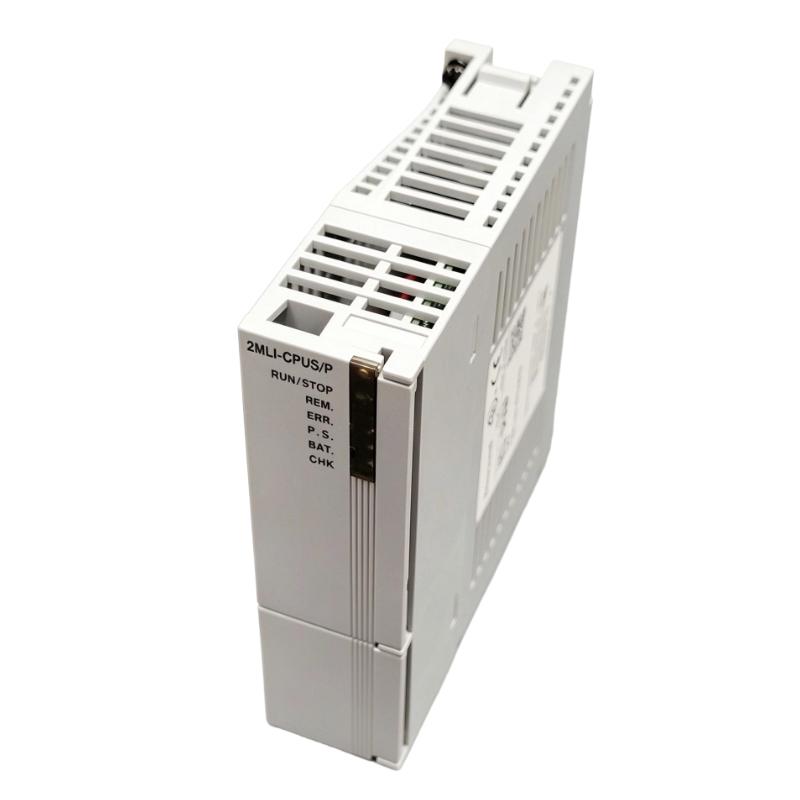
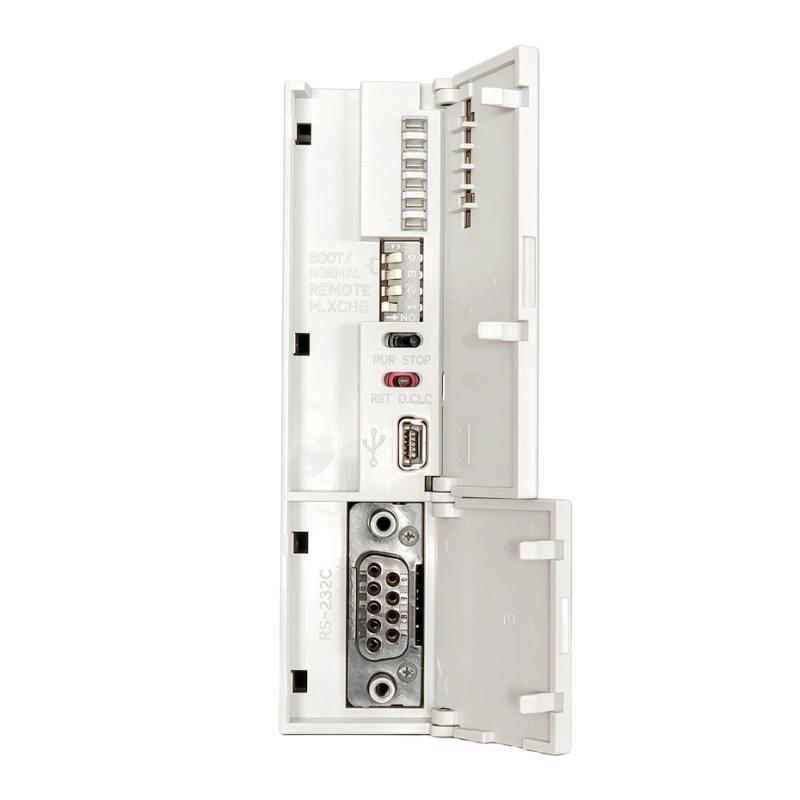
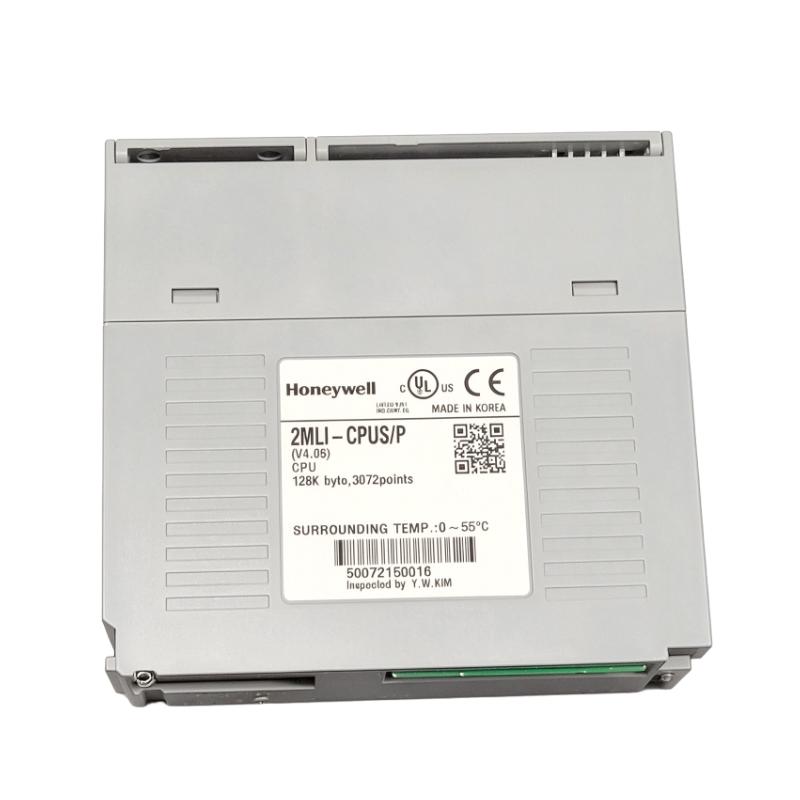
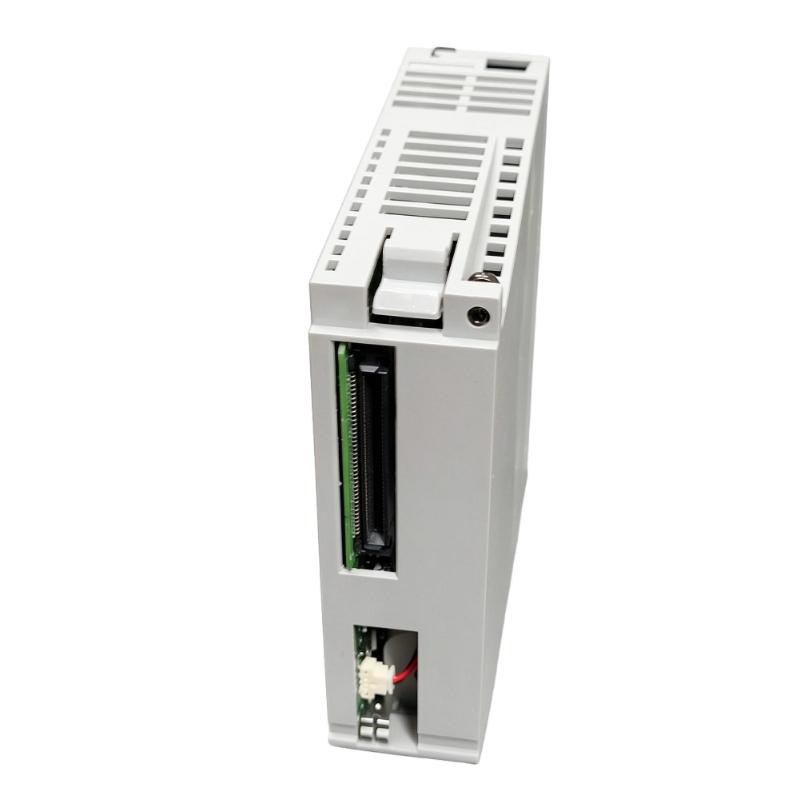
- Honeywell
- 2MLI-CPUS/P
- CPU Module
- USA
- 120 × 25 × 110 mm
- 0.13 kg
- Xiamen, China
- New & In Stock
- T/T, PayPal, Western Union
- 1 Year
- 1-3 Working Days
- DHL, UPS, TNT, FedEx and EMS.
- 24-Hour Service
- COO
- 7
Our advantage

Global Logistics
We have a 10-year logistics and express cooperation agreement, so our products can be shipped to any place in the world.

Brand new and original
Our products are imported in bulk from the place of origin. Because of the cooperative relationship, our products are all original and 100% new.

24-hour service
We provide 7*24 hours service to our customers. We will be there whenever you need us.

Price advantage
All our products are priced very favorably because we have our own warehouse and supply.
| Company Information | |||
| [email protected] | |||
| Mobile | +8615980777398 | ||
| +8615980777398 | |||
| 15980777398 |
Product Overview
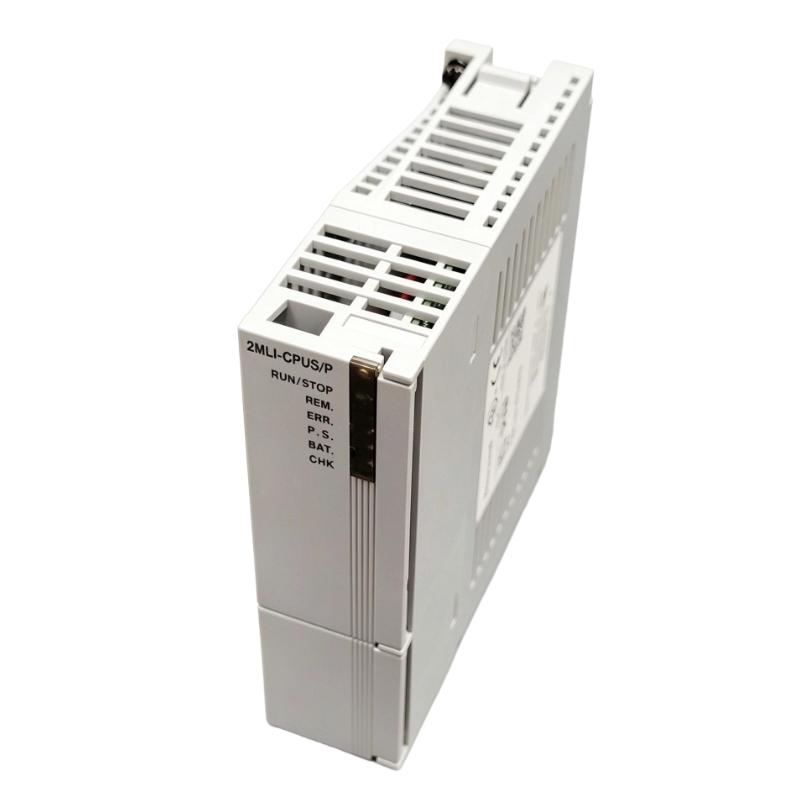
The Honeywell 2MLI-CPUS/P MasterLogic-200 CPU Module is a standard-performance programmable logic controller CPU for industrial automation systems requiring IEC-based control logic and redundant power supply support. It executes the PLC application, processes input data, manages internal variables, and coordinates output operations according to the configured control program.
Unlike a conventional configuration using a single power supply, the 2MLI-CPUS/P is specified for a non-redundant CPU arrangement with redundant power. This configuration is relevant to installations where maintaining the availability of the controller’s power supply is a priority, while the control system itself does not require a fully redundant CPU pair.
The model supports up to 768 I/O points and provides 640 KB of program memory. These characteristics make it suitable for control applications that require a standard CPU configuration with a defined I/O capacity rather than the larger processing and expansion capabilities of higher-performance MasterLogic-200 variants.
In a typical installation, the CPU receives data from digital and analog input modules, executes the application logic, and updates the output data used to control field equipment. The application may include equipment sequencing, interlocking, process monitoring, alarm handling, and communication with compatible supervisory systems.
When selecting the 2MLI-CPUS/P as a replacement, engineers should verify the existing CPU model, power-supply arrangement, I/O configuration, program compatibility, and communication requirements. The redundant power configuration does not by itself provide redundant CPU processing; the overall architecture must match the required level of control-system availability.
Technical Specifications
| Parameter | Specification |
|---|---|
| Manufacturer | Honeywell |
| Product Type | MasterLogic-200 CPU Module |
| Model | 2MLI-CPUS/P |
| Product Series | MasterLogic-200 |
| Module Type | Standard CPU, Non-Redundant CPU with Redundant Power |
| Programming Standard | IEC |
| Maximum I/O Points | 768 |
| Program Memory | 640 KB |
| System Architecture | Non-redundant CPU with redundant power supply |
| Dimensions | 120 × 25 × 110 mm |
| Weight | 0.13 kg |
Product Features
- Standard CPU configuration: Executes the PLC application for control systems using the standard MasterLogic-200 CPU architecture.
- Redundant power arrangement: Supports a system configuration with redundant power supplies while retaining a non-redundant CPU architecture.
- IEC programming support: Supports the IEC programming standard specified for this CPU variant.
- Defined I/O capacity: Supports up to 768 I/O points, making it suitable for applications within this capacity.
- 640 KB program memory: Provides program storage for the configured PLC application.
- Centralized control execution: Processes input data and executes the logic that determines equipment commands.
- Modular system integration: Works as the central processing component of a compatible MasterLogic-200 installation.
- Application-based operation: Supports control sequences, interlocks, status processing, and other functions implemented in the PLC program.
- Maintenance identification: The complete model number helps distinguish this redundant-power CPU variant from other MasterLogic-200 CPU configurations.
Working Principle
The 2MLI-CPUS/P executes the stored PLC application and coordinates the exchange of data between the controller program and connected I/O modules. Its primary function is to evaluate input conditions, execute programmed instructions, and update outputs according to the control logic.
The basic control sequence is:
Field Sensors → Input Modules → 2MLI-CPUS/P CPU → Output Modules → Controlled Equipment
Input modules acquire information from field instruments, switches, and equipment status contacts. The CPU reads the configured input data, evaluates conditions such as permissives, timers, counters, and interlocks, and determines which output commands should be issued. The output modules then operate compatible field devices according to the program.
The CPU’s 640 KB program memory provides storage for the application within the limits of the supported configuration. The maximum supported I/O capacity is 768 points, so engineers should check the complete system’s I/O requirements before selecting this model for a new installation or expansion.
The redundant power arrangement is a separate aspect of the controller architecture. It is intended to support power-supply availability, but it does not make the CPU itself redundant. If CPU failure must not interrupt control execution, a suitable redundant-controller architecture must be evaluated rather than relying on redundant power alone.
During commissioning, the hardware configuration and application program must match the installed controller. Incorrect I/O assignments, incompatible configuration settings, or an unsuitable program version can prevent the system from operating as intended. The CPU should therefore be tested with the actual installed modules and control sequence before the system is returned to service.
Role in the MasterLogic-200 Control Architecture
The 2MLI-CPUS/P serves as the central processing unit in a compatible MasterLogic-200 control system. It executes the application program and coordinates the data exchanged between input modules, output modules, and other configured system components.
A typical arrangement is:
Field Instruments → Input Modules → 2MLI-CPUS/P → Output Modules → Actuators and Process Equipment
| System Component | Function |
|---|---|
| 2MLI-CPUS/P CPU | Executes the PLC application and coordinates control operations |
| Compatible Power Supplies | Provide the required power arrangement for the controller system |
| Digital Input Modules | Acquire discrete equipment status and contact signals |
| Digital Output Modules | Operate compatible relays, solenoids, and other discrete loads |
| Analog Input Modules | Acquire process measurements from compatible transmitters |
| Analog Output Modules | Send analog commands to compatible control devices |
| RTD Input Modules | Acquire temperature readings from resistance temperature detectors |
| Thermocouple Input Modules | Convert thermocouple signals into digital temperature values |
| PLC Base and Backplane | Provide mounting and electrical interconnection for supported modules |
| Engineering Software | Supports program development, configuration, and diagnostics |
| Operator Interface | Displays process values, equipment status, and alarms through the configured system |
The CPU processes the control logic, while the associated I/O modules interface with the field. The power arrangement, base configuration, and module selection must be compatible with the exact system design. Applications requiring continued control execution after a CPU fault need a separate assessment of CPU redundancy and system failover requirements.
Industrial Applications
| Application | Typical Use |
|---|---|
| Manufacturing Automation | Executing machine sequences and coordinating production equipment |
| Packaging Machinery | Managing operating sequences, permissives, and equipment status |
| Material Handling | Coordinating conveyors, transfer equipment, and discrete control operations |
| Water Treatment | Processing instrument signals and controlling treatment equipment |
| Pumping Systems | Managing pump commands, operating conditions, and interlocks |
| HVAC Automation | Coordinating compatible ventilation, heating, and equipment-control functions |
| Industrial Utilities | Supervising auxiliary equipment through PLC logic |
| Process Automation | Processing field measurements and implementing programmed control responses |
| Production Lines | Coordinating machines and monitoring operating states |
| Equipment Modernization | Replacing a compatible CPU while retaining a verified MasterLogic-200 system configuration |
The 2MLI-CPUS/P is most appropriate when the application fits its standard CPU capabilities and maximum I/O capacity, and when redundant power is required without a fully redundant CPU arrangement. The actual selection should account for program requirements, field I/O, communication needs, and the consequences of a controller failure.
Installation and Maintenance
- Verify the model designation: Confirm that the installed or replacement controller is the Honeywell 2MLI-CPUS/P rather than another MasterLogic-200 CPU variant.
- Check the power architecture: Verify that the system is configured for the intended redundant power arrangement and that the required power modules are compatible with the installation.
- Back up the PLC program: Preserve the application program, hardware configuration, communication settings, and relevant project documentation before replacing the CPU.
- Review I/O capacity: Confirm that the configured I/O requirements do not exceed the specified maximum of 768 points for this CPU variant.
- Verify program compatibility: Check the programming standard, project configuration, and application requirements before transferring a program to the replacement controller.
- Inspect the installation environment: Check the control cabinet for contamination, moisture, excessive heat, and other conditions that could affect electronic equipment.
- Follow electrical safety procedures: Isolate the equipment as required and follow the applicable installation instructions before removing or inserting the CPU or working on power connections.
- Check the power-supply arrangement: Verify the installation and condition of the associated power modules and confirm that the intended redundant-power configuration is implemented correctly.
- Inspect module and base connections: Check seating, connectors, and backplane connections for damage or looseness before restoring power.
- Verify I/O assignments: Compare the physical module arrangement with the project configuration and confirm that input and output addresses correspond to the intended field devices.
- Perform controlled startup tests: Verify CPU status, power behavior, I/O operation, communication, interlocks, and representative control sequences before returning equipment to normal service.
- Document maintenance results: Record the CPU model, program version, power configuration, I/O assignments, test results, and any changes made during commissioning.
Follow the applicable Honeywell safety and installation procedures before servicing the controller. If the CPU fails to start or communicate, investigate the power arrangement, hardware configuration, program compatibility, and connection condition before concluding that the CPU is defective.
Compatible System Components
The 2MLI-CPUS/P is part of the Honeywell MasterLogic-200 modular PLC platform. Associated components must be selected according to the required power arrangement, I/O functions, and system configuration.
| Component | Function |
|---|---|
| Honeywell 2MLP-ACF1 | Power supply for compatible MasterLogic-200 configurations |
| Honeywell 2MLP-ACF2 | Power supply with a different output-current capacity |
| Honeywell 2MLI-D21A | Eight-point 24 V DC digital input module |
| Honeywell 2MLI-D22A | Sixteen-point 24 V DC digital input module |
| Honeywell 2MLF-RD4A | Four-channel RTD input module |
| Honeywell 2MLF-TC4S | Four-channel thermocouple input module |
| Honeywell 2MLF-DV4A | Four-channel analog voltage output module |
| Honeywell 2MLF-AC8A | Eight-channel analog current input module |
| Compatible MasterLogic-200 Base | Provides mounting and electrical interconnection for supported modules |
| PLC Engineering Software | Supports program configuration, monitoring, and troubleshooting |
Recommended Related Models
| Model | Product Type | Relevance |
|---|---|---|
| Honeywell 2MLI-CPUS | MasterLogic-200 Standard CPU Module | Standard CPU variant without the /P redundant-power designation |
| Honeywell 2MLI-CPUH | MasterLogic-200 High-Performance CPU Module | Higher-performance non-redundant CPU option |
| Honeywell 2MLI-CPUU | MasterLogic-200 Enhanced CPU Module | Enhanced CPU option for applications with different processing requirements |
| Honeywell 2MLP-ACF1 | MasterLogic-200 Power Supply | Power supply for compatible controller configurations |
| Honeywell 2MLP-ACF2 | MasterLogic-200 Power Supply | Alternative power supply with a different output-current capacity |
| Honeywell 2MLR-CPUH/T | MasterLogic-200 Redundant CPU Module | Fully redundant CPU architecture for applications with different availability requirements |
Key Advantages
- Supports a standard MasterLogic-200 CPU configuration with redundant power.
- Provides 640 KB of program memory for the configured PLC application.
- Supports up to 768 I/O points within the specified system configuration.
- Supports IEC-based PLC programming.
- Coordinates input processing, program execution, and output updates.
- Fits applications that require power-supply redundancy without a fully redundant CPU architecture.
Technical FAQs
What distinguishes the 2MLI-CPUS/P from the 2MLI-CPUS?
The 2MLI-CPUS/P is specified for a non-redundant CPU with redundant power, while the 2MLI-CPUS is the standard CPU variant without the /P designation. The power arrangement and supported system configuration should be checked before selecting one as a replacement for the other.
Does the 2MLI-CPUS/P provide CPU redundancy?
No. Its specified architecture is a non-redundant CPU with redundant power. Redundant power helps address power-supply availability, but it does not provide a second CPU to take over control execution if the primary CPU fails.
How should I determine whether the 2MLI-CPUS/P has sufficient capacity for an existing PLC application?
Check the configured I/O count, program requirements, communication needs, and supported system configuration. The model is specified for a maximum of 768 I/O points and 640 KB of program memory, so applications exceeding these limits require evaluation of another compatible CPU variant.
What should be checked if a replacement 2MLI-CPUS/P does not operate with the existing program?
Verify the exact CPU model, hardware configuration, I/O assignments, program compatibility, and power arrangement. Also check the controller status and connections before investigating a possible hardware fault.