

ProductPRODUCT
Featured products
Contact Us
- Woodward
- 9905-864
- Digital Steam Turbine Controller
- USA
- 263 x 58 x 28 mm
- 1.36 kg
- Xiamen, China
- New & In Stock
- T/T, PayPal, Western Union
- 1 Year
- 1-3 Working Days
- DHL, UPS, TNT, FedEx and EMS.
- 24-Hour Service
- COO
- 5
Our advantage

Global Logistics
We have a 10-year logistics and express cooperation agreement, so our products can be shipped to any place in the world.

Brand new and original
Our products are imported in bulk from the place of origin. Because of the cooperative relationship, our products are all original and 100% new.

24-hour service
We provide 7*24 hours service to our customers. We will be there whenever you need us.

Price advantage
All our products are priced very favorably because we have our own warehouse and supply.
| Company Information | |||
| [email protected] | |||
| Mobile | +8615980777398 | ||
| +8615980777398 | |||
| 15980777398 |
Product Overview
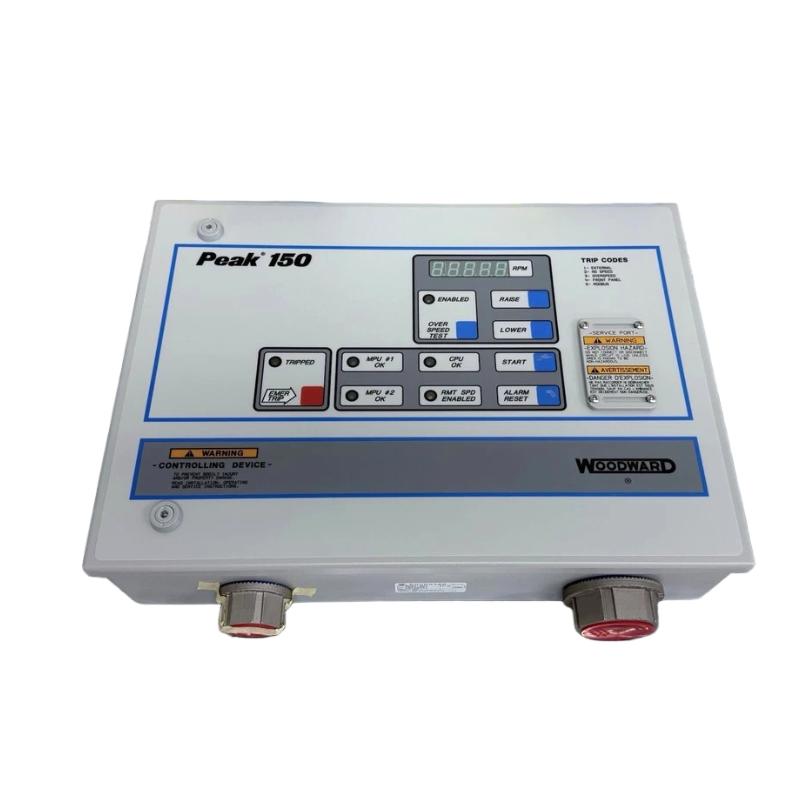
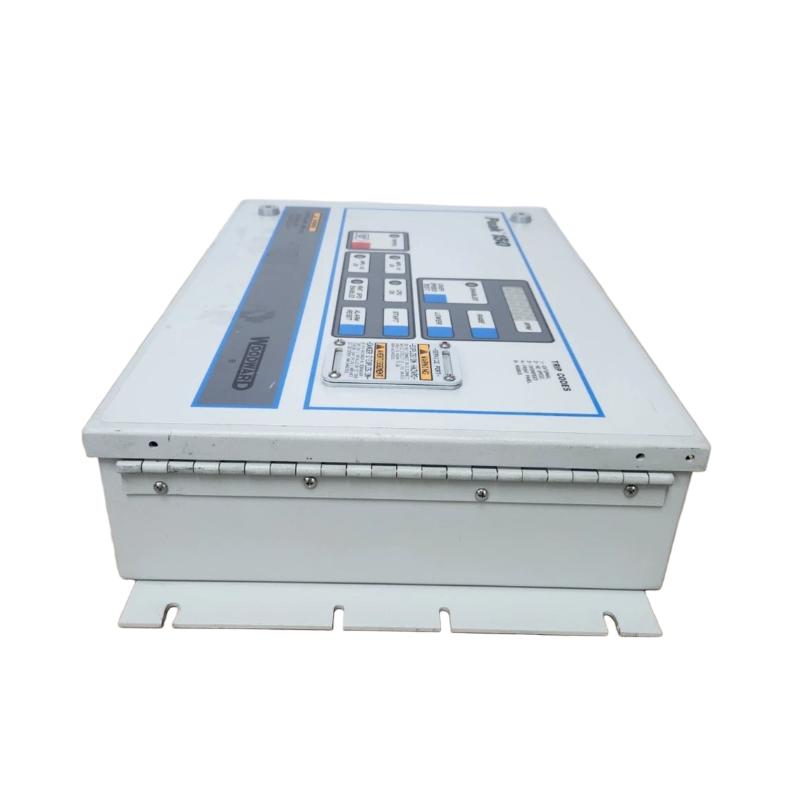
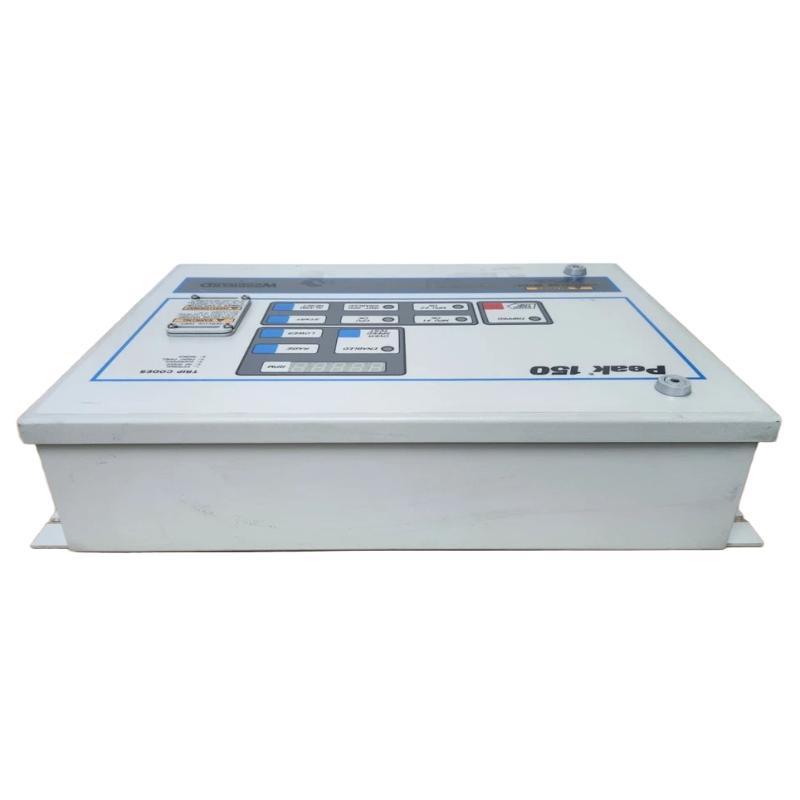
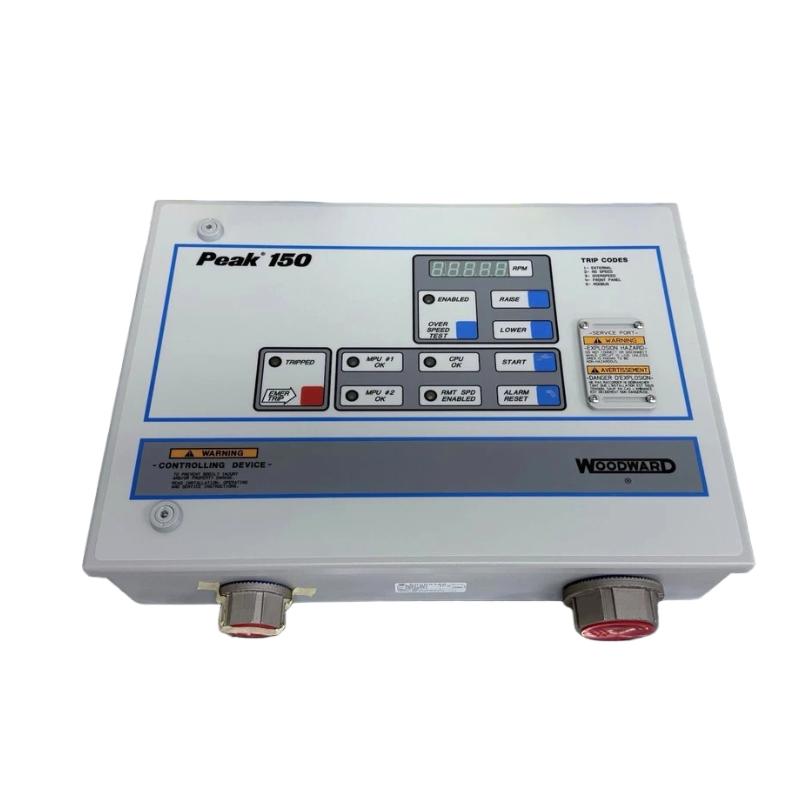
The Woodward 9905-864 Digital Steam Turbine Controller is a digital speed-control device from the Woodward Peak 150 series. It is designed for single-valve and single-valve-rack steam turbine applications where accurate speed regulation, remote speed adjustment, actuator control, and turbine protection are required.
Steam turbines are widely used as prime movers in industrial power generation and mechanical-drive systems. Their operating speed must be regulated according to the requirements of the driven equipment and the operating conditions of the steam system. A digital turbine controller performs this task by monitoring speed signals, processing control inputs, and adjusting the turbine’s governing valve through an actuator output.
The 9905-864 combines speed measurement, digital control logic, operator interface functions, and configurable input and output channels in one controller. It accepts signals from magnetic pickup sensors and remote speed-setting devices, processes operating commands, and provides outputs for turbine control and external monitoring.
This model is identified with an AC/DC power configuration and a NEMA 4X enclosure. Its documented electrical configuration is associated with 110 VAC / 125 VDC power, rather than the low-voltage 24 VDC versions available in other Peak 150 models. Correct power-supply verification is therefore essential when replacing an existing controller.
The controller is suitable for applications where a dedicated digital governor is required for a steam turbine. Its functions include speed regulation, remote speed setting, configurable readout signals, discrete operating commands, and relay-based status or shutdown interfaces.
The 9905-864 is a legacy industrial control product. When sourcing this model for maintenance or replacement, engineers should verify the complete part number, power configuration, terminal arrangement, programmed parameters, and compatibility with the existing turbine actuator and protection system.
Technical Specifications
| Parameter | Specification |
|---|---|
| Manufacturer | Woodward |
| Model | 9905-864 |
| Product Series | Peak 150 Digital Control |
| Product Type | Digital Steam Turbine Controller |
| Control Application | Single-valve and single-valve-rack steam turbines |
| Power Configuration | AC/DC model |
| AC Supply Configuration | 110 VAC nominal |
| DC Supply Configuration | 125 VDC nominal |
| Enclosure Rating | NEMA 4X |
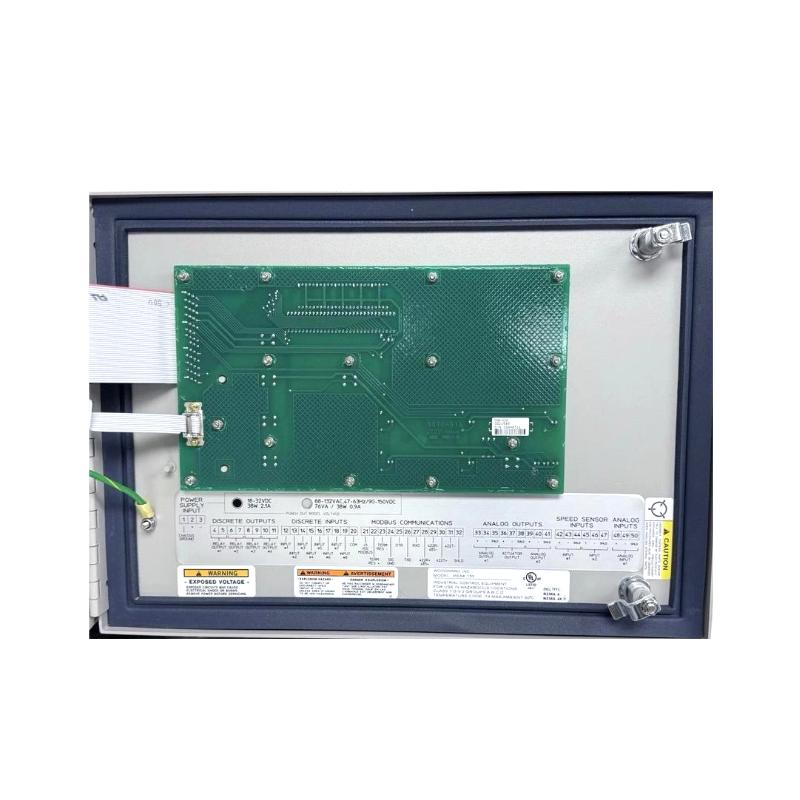
| Magnetic Pickup Inputs | 2 |
| Analog Input | 1 |
| Discrete Inputs | 8 |
| Analog Outputs | 2 |
| Actuator Outputs | 1 |
| Relay Outputs | 4 |
| Remote Speed Setting Input | 4–20 mA or 1–5 VDC |
| Actual Speed Output | Scalable 4–20 mA or 0–1 mA |
| Configurable Readout Output | Scalable 4–20 mA or 0–1 mA |
| Speed Control | Digital speed regulation |
| Operator Interface | Front keypad and LED indicators |
| Programming Device | Separate handheld programmer |
| Technical Manual | Woodward Manual 85565 |
| Dimensions Provided | 263 × 58 × 28 mm |
| Weight Provided | 1.36 kg |
| Product Status | Legacy / discontinued listing |
Important: The supplied dimensions differ substantially from published overall enclosure dimensions for the complete 9905-864 controller. Confirm whether 263 × 58 × 28 mm refers to a subassembly, accessory, or another measurement before using it for cabinet design or shipping documentation. The supplied weight is approximately 3 lb.
Function and Working Principle
The Woodward 9905-864 operates as a digital governor for steam turbines. It continuously evaluates turbine speed and operating commands, then adjusts the governing actuator to maintain the required operating condition.
1. Turbine Speed Measurement
The controller uses two magnetic pickup inputs to receive speed signals from the turbine shaft or an associated rotating target.
A magnetic pickup detects the passing of ferromagnetic teeth or another suitable rotating target. The resulting electrical pulses are related to shaft speed. The controller processes these pulses to calculate the turbine’s rotational speed.
Using the correct sensor arrangement and signal configuration is essential for reliable speed measurement. Sensor installation, air gap, wiring condition, and signal quality can all affect the accuracy of the measurement.
2. Digital Speed Regulation
The Peak 150 controller processes the measured speed and compares it with the configured speed reference.
If the measured speed differs from the target, the controller calculates an appropriate correction and adjusts the actuator output. The actuator changes the position of the turbine governing valve, regulating steam flow and influencing turbine speed.
This closed-loop process allows the turbine to respond to changes in load and operating conditions.
3. Remote Speed Setting
The 9905-864 supports remote speed-setting signals through a 4–20 mA or 1–5 VDC analog input.
This allows an external control system or operator station to provide a speed reference without directly changing the controller’s internal settings.
Remote speed adjustment is useful in installations where the turbine must coordinate with other machinery, maintain a specified process speed, or follow a plant-level operating command.
4. Actuator Control
The controller provides an actuator output for the turbine governing system. The output is used to regulate the actuator that positions the steam valve.
The actuator and valve arrangement must be compatible with the controller’s configured output characteristics. Incorrect actuator wiring, calibration, or direction settings can result in unstable operation or an incorrect valve response.
5. Discrete Operating Commands
The controller has eight discrete inputs for operating commands and control functions. These include functions such as start, raise, lower, trip, reset, idle, remote speed enable, and overspeed test, subject to the applicable configuration.
These inputs allow the controller to receive commands from operator stations, external switches, and associated control equipment.
6. Analog Monitoring Outputs
Two analog outputs provide configurable signals for external monitoring and control-system integration.
The actual speed output can be scaled as 4–20 mA or 0–1 mA. A configurable readout output can also be assigned to an appropriate monitored parameter.
These signals can be connected to compatible instrumentation, PLC analog input channels, or plant monitoring systems.
7. Relay Outputs and Shutdown Interfaces
Four relay outputs provide switching interfaces for selected operating conditions and external equipment.
Depending on the application configuration, relay contacts can be used for status indication, alarms, or interfacing with external control and shutdown circuits.
The turbine’s independent overspeed protection and emergency shutdown arrangements must be designed and tested according to the applicable safety requirements. The governor should not be treated as a substitute for an independent protective system.
Role in Industrial Control Systems
The 9905-864 is typically installed as part of a turbine control package. It coordinates speed measurement, operating commands, actuator movement, and external monitoring.
Steam Turbine Speed Control
The controller maintains the configured speed reference by adjusting steam admission through the governing valve.
This is important for turbine-driven pumps, compressors, generators, and other rotating machinery where operating speed directly affects equipment performance.
Integration with Plant PLC Systems
A plant PLC can exchange selected operating commands and monitoring signals with the Peak 150 controller through compatible hardwired interfaces.
For example, a PLC may provide a remote speed-setting signal, receive actual speed information, or monitor relay status.
The controller’s documented analog and discrete interfaces should be used as the basis for system integration. Do not assume that a particular fieldbus or Ethernet connection is available on this model.
Operator Station Integration
Operators may use a plant HMI or control-room interface to monitor turbine speed, operating status, and alarms.
The HMI can communicate with the plant PLC or other supervisory equipment, while the Woodward controller performs the dedicated turbine speed-control function.
Turbine Protection Coordination
The controller’s discrete inputs and relay outputs can participate in the broader turbine control and shutdown architecture.
The complete system may include independent overspeed protection, emergency trip devices, lubrication monitoring, vibration monitoring, and other protective equipment. Each function must be assigned and tested according to the turbine’s approved control and safety design.
Industrial Applications
The Woodward 9905-864 is designed for steam turbine control rather than general-purpose motor control. Its application should be evaluated according to turbine type, actuator arrangement, speed range, and protection requirements.
1. Industrial Steam Turbine Drives
Industrial steam turbines are used to provide mechanical power for pumps, compressors, fans, and other rotating equipment.
The 9905-864 can regulate turbine speed by processing magnetic pickup signals and adjusting the governing actuator. This supports stable operation when process demand changes.
2. Power Generation Equipment
Steam turbines used in industrial power-generation installations require coordinated speed control during startup, operation, and changes in operating conditions.
The Peak 150 controller can provide the dedicated governor functions required by compatible turbine configurations. Generator synchronization, load sharing, and plant-level electrical control must be handled by the complete generating-system design.
3. Pump and Compressor Turbine Drives
Some large industrial pumps and compressors are driven directly by steam turbines.
In these applications, turbine speed affects the output of the driven machine. The controller can adjust speed according to the selected reference and operating commands.
This is particularly relevant to process plants where mechanical drive equipment operates under changing flow, pressure, or production requirements.
4. Chemical and Petrochemical Facilities
Chemical and petrochemical plants often use steam turbines as mechanical drivers or auxiliary power sources.
A dedicated turbine governor can support stable operation of rotating machinery and coordinate with plant control systems through suitable analog and discrete interfaces.
5. Industrial Utility Systems
Steam turbines may be used in utility systems that provide mechanical power or support plant energy infrastructure.
The 9905-864 can be considered for compatible legacy installations where the existing turbine control architecture was designed around the Peak 150 series.
Installation and System Integration
Correct installation and commissioning are essential for reliable turbine control. The 9905-864 must be matched to the turbine’s sensors, actuator, power supply, and external protection system.
1. Verify the Power Supply
Confirm that the controller’s power configuration matches the available supply.
The 9905-864 is associated with a 110 VAC / 125 VDC configuration. Do not assume that it can be replaced directly by a 24 VDC Peak 150 variant.
Before energizing the unit, check the nameplate, wiring diagram, supply polarity where applicable, and manufacturer’s installation instructions.
2. Confirm the Mounting Arrangement
The supplied dimensions are 263 × 58 × 28 mm. However, published overall dimensions for the complete 9905-864 enclosure are approximately 483 × 310 × 105 mm.
This discrepancy must be resolved before panel design or replacement work. Use the exact controller’s mechanical drawing and mounting instructions to confirm the required installation space, cutout, clearances, and cable access.
The NEMA 4X enclosure designation applies to the specified controller enclosure when correctly installed. Maintain the enclosure’s sealing and cable-entry arrangements during installation.
3. Connect Magnetic Pickup Sensors
Connect the turbine speed sensors to the designated magnetic pickup inputs according to the wiring diagram.
Check sensor condition, cable shielding, wiring polarity where specified, and the mechanical air gap. Confirm that the controller receives stable speed pulses throughout the intended operating range.
Incorrect sensor signals can lead to unreliable speed measurement and poor turbine control.
4. Configure the Remote Speed Reference
If remote speed control is required, connect the 4–20 mA or 1–5 VDC signal to the correct analog input terminals.
Verify the selected signal type, scaling, signal common, and control logic. The external PLC or speed-setting device must generate a signal compatible with the controller configuration.
5. Check Actuator Compatibility
The actuator output must match the installed turbine actuator and governing-valve arrangement.
Confirm the output characteristics, wiring, actuator direction, calibration, and mechanical travel limits. Test the response carefully before attempting normal turbine operation.
6. Connect Discrete Inputs and Relay Outputs
Wire start, stop, raise, lower, reset, trip, and other required commands according to the approved control design.
Relay outputs should be connected to suitable external circuits with appropriate ratings and protection. Do not exceed the electrical ratings of the controller’s contacts.
7. Configure and Commission the Controller
The Peak 150 is configured using a separate handheld programmer. The applicable Woodward programming and installation procedures should be followed.
Before operating the turbine, verify speed-sensor scaling, speed references, control dynamics, actuator direction, critical-speed settings, trip logic, and other application-specific parameters.
Woodward’s Manual 85565 provides installation, operation, configuration, and troubleshooting information for the Peak 150 series.
Commissioning should be performed by qualified turbine-control personnel. The turbine should not be operated until the controller has been correctly programmed and the required protective functions have been tested.
Compatible System Components
The 9905-864 operates within a complete turbine control system. The following components may be used alongside it, subject to the turbine’s engineering design.
| Component | Function | Integration Considerations |
|---|---|---|
| Magnetic pickup sensors | Measure turbine shaft speed | Confirm sensor type, signal quality, mounting, and wiring |
| Turbine governing valve | Regulates steam admission | Must match the turbine’s flow and mechanical requirements |
| Electric or electrohydraulic actuator | Positions the governing valve | Verify actuator input and output characteristics |
| PLC | Coordinates plant-level commands | Use compatible analog and discrete interfaces |
| HMI or operator station | Displays speed and operating status | Integrate through the plant control architecture |
| Remote speed-setting device | Provides an external speed reference | Supports compatible 4–20 mA or 1–5 VDC signaling |
| Overspeed protection system | Provides independent turbine protection | Must be designed and tested separately as required |
| Relay interface circuits | Transfer controller status and commands | Check contact ratings and external circuit protection |
| Handheld programmer | Configures the Peak 150 controller | Use the appropriate programming device and manual |
| Power supply | Provides controller operating power | Verify the specified AC/DC configuration |
These components are examples of equipment used in a turbine-control installation. They are not necessarily supplied with the 9905-864.
Alternative Models and Replacement Considerations
The Peak 150 family includes several related models with different power-supply and enclosure configurations. Similar model numbers do not necessarily indicate direct interchangeability.
| Model | General Configuration | Replacement Considerations |
|---|---|---|
| 9905-857 | 24 VDC, NEMA 4, without Modbus | Different power-supply and enclosure configuration |
| 9905-858 | 110 VAC / 125 VDC, NEMA 4, without Modbus | Related power configuration, but enclosure rating differs |
| 9905-860 | 24 VDC, NEMA 4, with Modbus | Different supply and communication configuration |
| 9905-861 | 110 VAC / 125 VDC, NEMA 4, with Modbus | Communication and enclosure configuration differ |
| 9905-863 | 24 VDC, NEMA 4X, without Modbus | Similar enclosure class, but different supply voltage |
| 9905-866 | 24 VDC, NEMA 4X, with Modbus | Different supply and communication configuration |
| 9905-867 | 110 VAC / 125 VDC, NEMA 4X, with Modbus | Related configuration with Modbus capability |
The 9905-864 is the 110 VAC / 125 VDC, NEMA 4X Peak 150 version without Modbus. When selecting a replacement, verify:
- Complete Woodward part number.
- AC/DC power-supply requirements.
- Enclosure rating.
- Communication requirements.
- Magnetic pickup sensor configuration.
- Analog and discrete I/O assignments.
- Actuator output compatibility.
- Existing control logic and programmed parameters.
- Mounting dimensions and terminal layout.
A related Peak 150 model should not be treated as a plug-and-play replacement without checking the complete configuration and the turbine system’s wiring and control requirements.
Key Advantages
Dedicated Steam Turbine Control
The 9905-864 is designed specifically for compatible single-valve steam turbine applications, providing dedicated speed-governing functions.
Dual Magnetic Pickup Inputs
Two magnetic pickup inputs support turbine speed measurement using the configured sensor arrangement.
Remote Speed Adjustment
The controller accepts compatible 4–20 mA or 1–5 VDC remote speed-setting signals, allowing integration with external control equipment.
Multiple Control Interfaces
Its analog inputs, discrete inputs, analog outputs, actuator output, and relay outputs support communication with associated turbine and plant equipment.
NEMA 4X Enclosure
The specified enclosure configuration provides protection against environmental exposure when correctly installed and maintained.
Configurable Digital Control
The Peak 150 provides configurable speed-control functions and operator settings through its front interface and separate handheld programmer.
Established Legacy Platform
The controller is used in legacy turbine installations. Accurate identification of the original model can help maintenance teams preserve existing equipment configurations and plan appropriate replacements.
Technical FAQs
1. What is the Woodward 9905-864?
The Woodward 9905-864 is a Peak 150 digital steam turbine controller designed for single-valve and single-valve-rack turbine applications.
2. What is the power supply requirement?
This model is associated with a 110 VAC / 125 VDC power configuration. Always verify the unit’s nameplate and wiring documentation before connecting power.
3. How many speed sensor inputs does it have?
The controller has two magnetic pickup inputs for turbine speed measurement.
4. Does the 9905-864 support remote speed control?
Yes. It supports a remote speed-setting signal using 4–20 mA or 1–5 VDC, subject to the selected configuration and wiring requirements.
5. How many input and output channels are available?
The documented configuration includes one analog input, eight discrete inputs, two analog outputs, one actuator output, and four relay outputs, in addition to two magnetic pickup inputs.
6. Does the controller support Modbus?
The 9905-864 is listed as the Peak 150 NEMA 4X, 110 VAC / 125 VDC model without Modbus. Related model 9905-867 is the corresponding NEMA 4X configuration identified with Modbus. Verify communication requirements before selecting a replacement.
7. How is the Peak 150 programmed?
The controller is configured using a separate handheld programmer. Woodward Manual 85565 provides relevant setup, operating, and troubleshooting procedures.
8. Can it be connected to a PLC?
Yes. A PLC can exchange compatible analog and discrete signals with the controller. The exact interface depends on the control design and the available terminals. Do not assume Ethernet or a specific fieldbus connection is included.
9. Is the 9905-864 suitable for all steam turbines?
No. It is intended for compatible single-valve and single-valve-rack turbine applications. The turbine’s actuator, speed range, valve arrangement, control requirements, and protection system must be checked before selection.
10. What should be checked before purchasing a used controller?
Verify the complete part number, power configuration, enclosure condition, terminal condition, display and keypad operation, available test records, and any included accessories. For critical turbine applications, request suitable inspection and functional testing.
Procurement and Maintenance Recommendations
The Woodward 9905-864 is a specialized turbine-control component. Procurement should therefore be based on the exact model and the requirements of the installed turbine system.
Before purchasing, compare the nameplate information with the existing controller. Confirm the 110 VAC / 125 VDC configuration, NEMA 4X enclosure, input and output arrangement, and communication requirements. Check whether the controller is supplied with any programming accessories or other installation components.
For used or refurbished equipment, request clear photographs of the enclosure, nameplate, terminals, front panel, and internal condition where inspection is permitted. Confirm whether the unit has been functionally tested and whether its operating configuration is known.
During maintenance, inspect the magnetic pickup wiring, actuator connections, terminal condition, enclosure seals, and external control circuits. Review controller alarms and operating records as part of the turbine maintenance program.
Back up the existing configuration and document parameter changes. If the controller is replaced, verify the speed-sensor scaling, actuator direction, remote speed-setting range, and trip interfaces before returning the turbine to service.
Because turbine control is a safety-critical application, installation, programming, and commissioning should be carried out by qualified personnel using the applicable Woodward documentation and approved plant procedures.
Conclusion
The Woodward 9905-864 Peak 150 Digital Steam Turbine Controller is a dedicated digital governor for compatible single-valve steam turbine applications. It combines dual magnetic pickup inputs, analog and discrete control interfaces, an actuator output, and relay outputs to support turbine speed regulation and system integration.
Its 110 VAC / 125 VDC power configuration and NEMA 4X enclosure distinguish it from other Peak 150 variants. For maintenance and replacement projects, verifying the complete part number, power supply, I/O configuration, actuator compatibility, and programmed settings is essential.
Accurate product identification and careful commissioning help maintain reliable operation in industrial steam turbine systems.