

ProductPRODUCT
Featured products
Contact Us
- Schneider
- TWDDMM24DRF
- Digital I/O Module
- France
- 95 x 90 x 70 mm
- 0.14 kg
- Xiamen, China
- New & In Stock
- T/T, PayPal, Western Union
- 1 Year
- 1-3 Working Days
- DHL, UPS, TNT, FedEx and EMS.
- 24-Hour Service
- COO
- 2
Our advantage

Global Logistics
We have a 10-year logistics and express cooperation agreement, so our products can be shipped to any place in the world.

Brand new and original
Our products are imported in bulk from the place of origin. Because of the cooperative relationship, our products are all original and 100% new.

24-hour service
We provide 7*24 hours service to our customers. We will be there whenever you need us.

Price advantage
All our products are priced very favorably because we have our own warehouse and supply.
| Company Information | |||
| [email protected] | |||
| Mobile | +8615980777398 | ||
| +8615980777398 | |||
| 15980777398 |
1. Product Overview
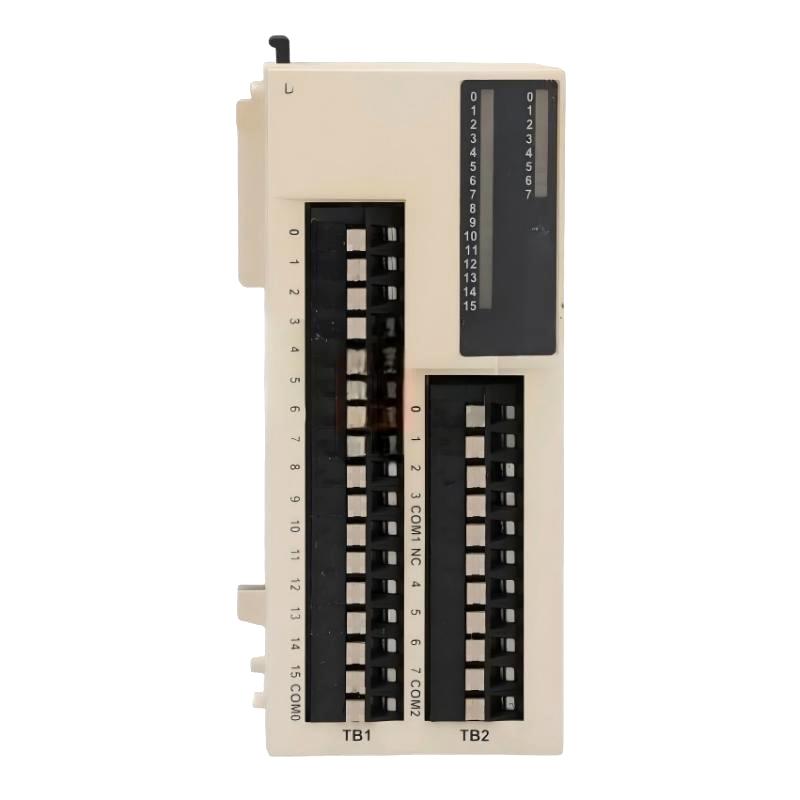
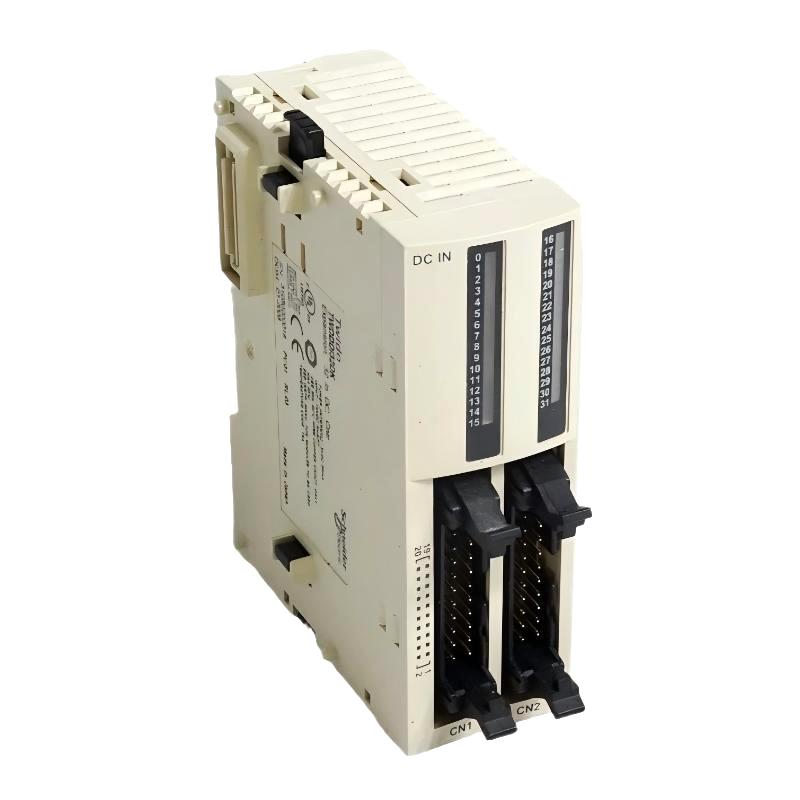
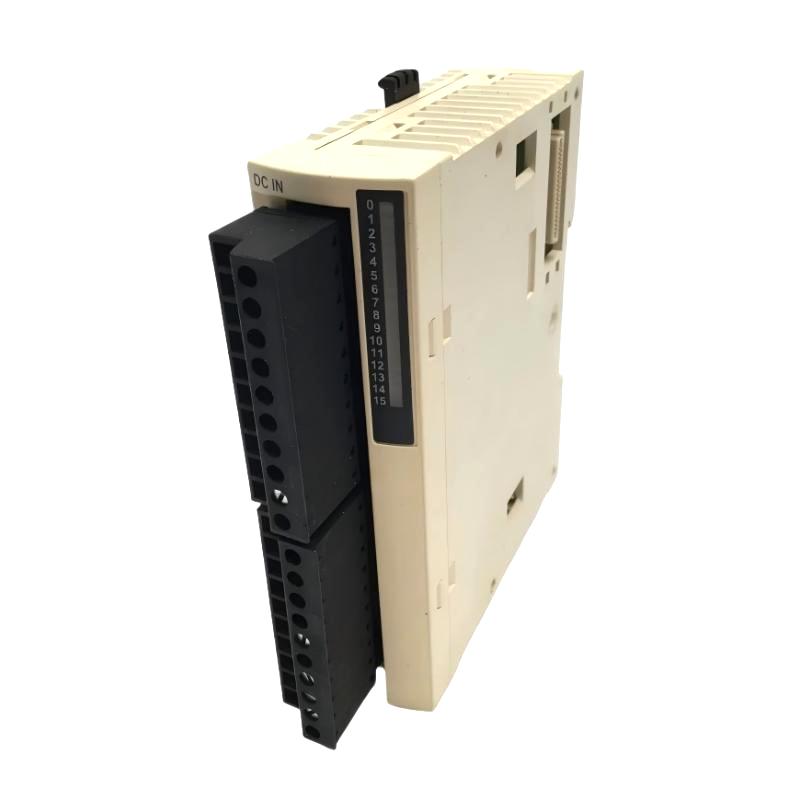
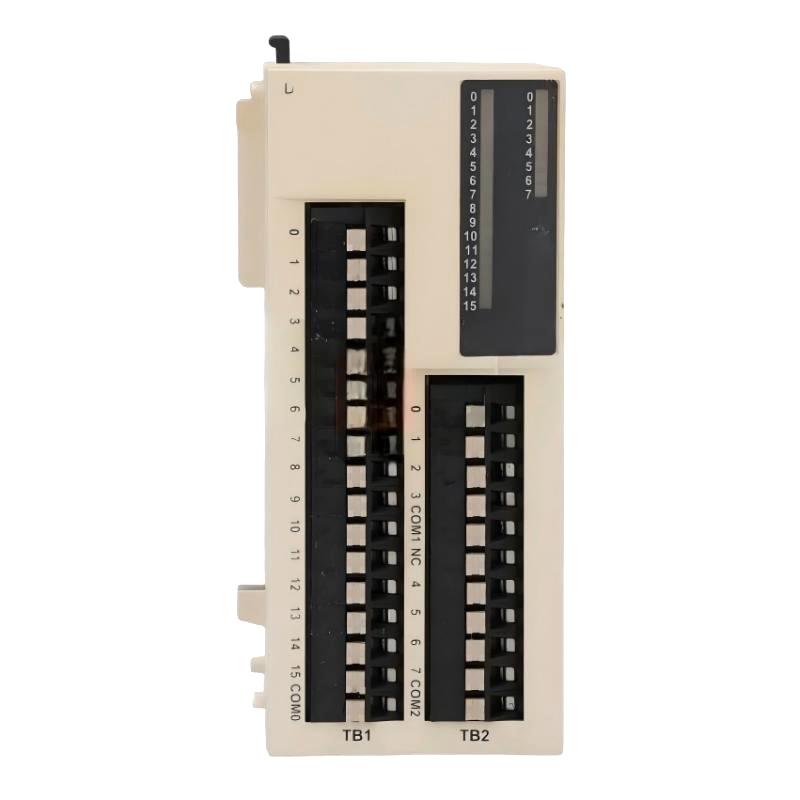
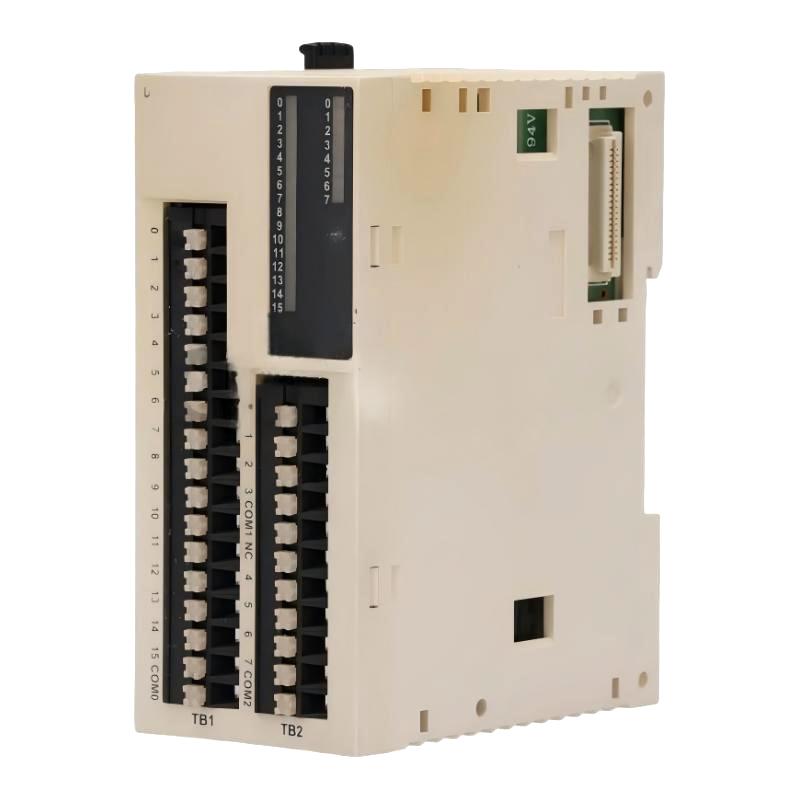
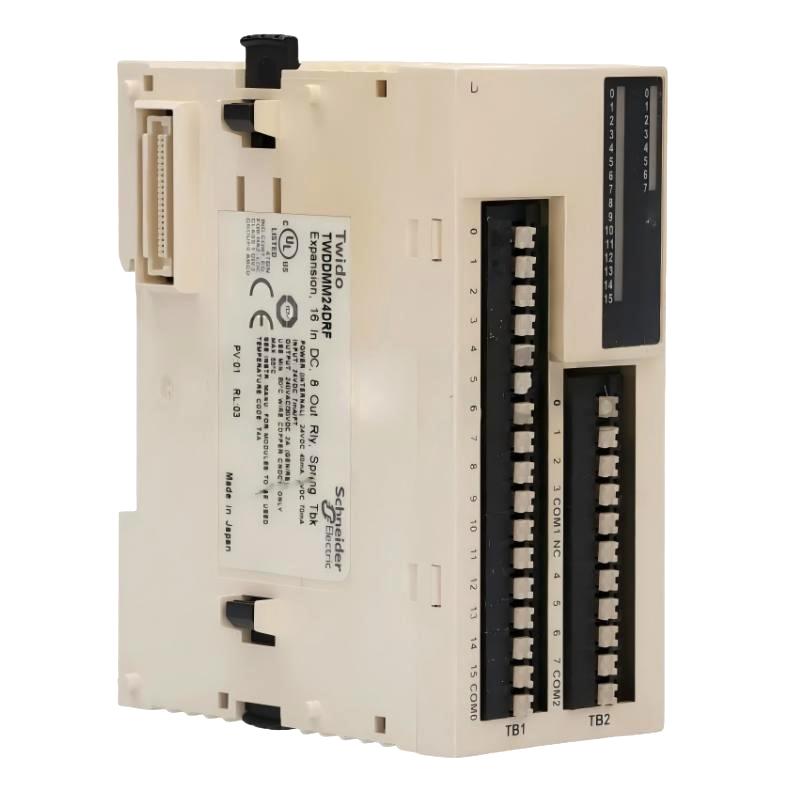
The Schneider Electric TWDDMM24DRF Digital I/O Module is a mixed digital input and output expansion module designed for the Modicon Twido programmable logic controller (PLC) platform. It combines 16 digital inputs and 8 relay outputs in one module, allowing a compatible PLC system to monitor field signals and control external equipment through a single I/O expansion unit.
In industrial automation, mixed I/O modules help reduce the number of separate components required for applications that need both signal acquisition and discrete output control. The input channels receive signals from devices such as push buttons, limit switches, proximity sensors, and machine-status contacts. The relay output channels switch compatible external circuits according to the PLC program.
The TWDDMM24DRF is designed for 24 V DC digital input signals and provides normally open relay outputs suitable for switching compatible AC or DC loads within the module’s rated limits. This combination makes it useful for control panels that need to monitor several operating conditions while also commanding valves, contactors, indicator circuits, and other control devices.
Typical applications include packaging machinery, conveyor systems, assembly equipment, production-line control, and general-purpose industrial automation. For facilities maintaining existing Twido installations, the TWDDMM24DRF may be an important spare part for restoring a control system without redesigning the entire I/O arrangement.
The TWDDMM24DRF belongs to a discontinued PLC product family. Buyers should confirm the complete model number, input and output configuration, terminal arrangement, product condition, and controller compatibility before purchasing a replacement.
2. Technical Specifications
| Parameter | Specification |
|---|---|
| Brand | Schneider Electric |
| Model | TWDDMM24DRF |
| Product Type | Mixed Digital Input/Output Module |
| Product Family | Modicon Twido |
| Digital Inputs | 16 |
| Digital Outputs | 8 |
| Input Rated Voltage | 24 V DC |
| Input Voltage Range | 20.4–28.8 V DC |
| Input Logic | Sink or source |
| Input Rated Current | Approximately 7 mA per input at 24 V DC |
| Input Impedance | Approximately 3.4 kΩ |
| Input Response Time | Approximately 4 ms |
| Output Technology | Relay |
| Output Contact Type | Normally open (NO) |
| Output Common Arrangement | 2 common groups, 4 outputs per common group |
| Maximum Output Current | 2 A per output, subject to load and derating limits |
| Maximum Common Current | 7 A per common group |
| Maximum Switching Voltage | Up to 240 V AC or 30 V DC, subject to applicable specifications |
| Input Isolation | Photocoupler isolation between input circuitry and internal circuitry |
| Protection Rating | IP20 |
| Operating Temperature | 0–55°C |
| Storage Temperature | -25–70°C |
| Dimensions | 95 × 90 × 70 mm, as provided; confirm whether these are product or packaging dimensions |
| Weight | 0.14 kg |
| Product Status | Discontinued |
| Potential Modernization Candidate | TM2DMM24DRF, subject to controller and configuration verification |
Specification note: The module’s published weight is approximately 140 g. The supplied dimensions of 95 × 90 × 70 mm should be verified before being used for cabinet-layout planning or shipping calculations. The actual module body is more compact than these supplied figures may suggest, so they could refer to packaging or an external measurement envelope.
3. Function and Working Principle
The TWDDMM24DRF combines two functions: receiving digital signals from field devices and switching external circuits through relay outputs. This mixed arrangement allows the PLC to collect operating information and initiate control actions using one expansion module.
3.1 Digital Input Signal Acquisition
The module provides 16 digital inputs for monitoring binary field signals. These inputs typically represent conditions such as ON/OFF, open/closed, present/absent, or ready/not ready.
The input section is designed for 24 V DC signals within the specified input voltage range. Compatible field devices can include:
- Push buttons and selector switches.
- Proximity and photoelectric sensors.
- Limit switches and position contacts.
- Motor starter auxiliary contacts.
- Valve position feedback contacts.
- Machine-ready and fault-status signals.
- Product detection and workpiece-presence sensors.
When a field device changes state, the corresponding input circuit detects the signal and makes the status available to the PLC program. The controller then evaluates the input according to the programmed logic.
The module supports sink or source input signals. The actual wiring arrangement must match the field device and the manufacturer’s connection diagram.
3.2 Relay Output Switching
The module provides eight normally open relay outputs. When the PLC activates an output, the corresponding relay contact changes state and closes the circuit, allowing a compatible external load to operate.
When the PLC deactivates the output, the contact returns to its normal open state, interrupting the circuit.
Relay outputs can be useful when the application requires switching different compatible circuit types. However, the actual voltage, current, load category, and switching frequency must remain within the module’s specified limits.
The relay outputs are not intended to supply motor power directly. Motors and larger loads require suitable contactors, starters, drives, and protective devices.
3.3 Combined Input and Output Operation
The main advantage of a mixed I/O module is that input and output functions can work together within a single control sequence.
For example, a PLC may receive a product-detection signal through one input channel. After checking other conditions, the program can activate a relay output to command an actuator or signal another machine section. A separate input can then confirm whether the expected operation has occurred.
This feedback-based arrangement helps the PLC coordinate machine sequences and detect abnormal operating conditions.
3.4 Input and Output Grouping
The 16 input channels and 8 relay output channels have separate wiring and electrical requirements. The output contacts are organized into two common groups, with four outputs per group.
This arrangement must be considered when wiring external loads. Loads connected to a common group may share current limits, so the total current must remain within the specified rating even when each individual output is below its own maximum.
4. Role in Industrial Automation Systems
The TWDDMM24DRF supports both the signal-acquisition and control-output functions of a PLC-based automation system.
4.1 Monitoring Machine Conditions
The 16 digital inputs allow the PLC to monitor multiple sensors, switches, and auxiliary contacts. The collected information can be used to determine whether equipment is ready, whether a product is present, or whether a machine has reached a required position.
These signals can also be displayed through a compatible human-machine interface (HMI), helping operators understand the current machine state.
4.2 Controlling External Devices
The eight relay outputs enable the PLC to switch compatible external circuits. Depending on the electrical requirements, these outputs may be used for control relays, indicator circuits, solenoid-valve circuits, or contactor control.
The output circuit must be designed to match the connected load. Relay output capability does not mean every AC or DC load can be connected without considering inrush current, inductive effects, switching frequency, and contact ratings.
4.3 Coordinating Production Sequences
Many automated machines rely on a sequence of actions and confirmations. The input channels can detect that a part has arrived or an actuator has reached its position, while relay outputs command the next operation.
This arrangement can support repeatable process sequencing, equipment coordination, and basic fault handling.
4.4 Supporting Troubleshooting
Because the module combines inputs and outputs, technicians can investigate both incoming signals and commanded external circuits during troubleshooting.
For example, if a machine does not start, maintenance personnel can verify whether the relevant input conditions are present, whether the PLC program is issuing the expected command, and whether the corresponding relay output contact changes state.
This systematic process can help distinguish field-device problems from wiring faults, programming issues, or module failures.
5. Industrial Applications
5.1 Packaging Machinery
Packaging equipment often requires several sensors to detect products, monitor guard or position switches, and confirm machine status. It also needs output signals to command actuators or interface circuits.
The TWDDMM24DRF can support these functions in a compatible Twido system, provided that the input signals and relay-controlled loads fall within its ratings.
5.2 Conveyor and Material Handling Systems
Conveyor systems may use digital inputs for product detection, limit switches, and motor feedback. Relay outputs can command suitable control circuits for conveyors, diverters, and auxiliary equipment.
For larger motors, the module should operate an appropriately rated contactor or drive interface rather than directly switching the motor’s power circuit.
5.3 Assembly and Processing Equipment
Assembly machines frequently use input signals to confirm component presence, fixture position, or actuator status. Relay outputs can then initiate compatible control actions when the required conditions are satisfied.
The combination of input monitoring and output switching makes the module suitable for selected machine-control tasks where a compact mixed I/O arrangement is desirable.
5.4 Pump and Auxiliary Equipment Panels
In appropriate control-panel designs, digital inputs can monitor pump status, pressure-switch contacts, selector switches, and fault indications. Relay outputs may be used to command external contactors or other suitable control devices.
Electrical ratings and the load’s characteristics must be verified before selecting the module for these applications.
5.5 General Manufacturing Automation
The TWDDMM24DRF may also be used in legacy manufacturing systems that require a combination of discrete signal monitoring and relay-based control. Examples include auxiliary machine functions, status monitoring, sequence control, and equipment interlocking.
Its suitability depends on the installed PLC architecture, I/O requirements, field wiring, and operating environment.
6. Installation and System Integration
Correct installation is essential for reliable operation. Before installing or replacing a TWDDMM24DRF, technicians should review the controller model, electrical drawings, I/O assignments, and load specifications.
6.1 Verify the PLC Platform
The TWDDMM24DRF belongs to the Modicon Twido family. Confirm that the installed controller and expansion arrangement support this module.
A mixed I/O module from another Schneider Electric product family should not be assumed to be directly interchangeable, even if it offers a similar number of inputs and outputs.
6.2 Check the Input Wiring
The digital inputs are designed for 24 V DC signals. Verify that each field device provides a compatible signal and that the sink/source wiring arrangement matches the module’s connection diagram.
Confirm the input common connections, terminal assignments, and polarity before restoring power.
6.3 Check Relay Output Ratings
Each relay output is rated for up to 2 A under specified conditions, and each common group has a maximum current rating of 7 A. Both limits must be considered when multiple outputs operate simultaneously.
Do not select a load based solely on its nominal current. Startup current, inductive behavior, load type, and switching frequency may affect the suitability of a relay contact.
6.4 Protect Inductive Loads
Relay coils, solenoid valves, and other inductive loads can generate voltage transients when switched. Use suitable suppression devices and wiring practices in accordance with the load and system design.
Appropriate protection can reduce electrical interference and help preserve relay-contact life.
6.5 Follow Safe Replacement Procedures
Isolate power before removing or installing the module. Follow the site’s electrical safety and lockout/tagout procedures, and verify that hazardous voltage has been removed.
After installation, inspect the terminals and wiring, restore power under controlled conditions, and confirm that the controller recognizes the module as expected.
6.6 Test Inputs and Outputs
Check each connected input to verify that the PLC receives the correct field-device state. Test the relay outputs using an approved commissioning procedure and confirm that the connected loads respond as intended.
Verify machine sequences, interlocks, alarms, and equipment status before returning the system to production.
6.7 Record Configuration Details
Document the module’s model number, input and output assignments, wiring configuration, load details, and replacement date. Retain the PLC program and I/O list so that future maintenance personnel can identify the purpose of each channel.
7. Compatible System Components
The TWDDMM24DRF is part of a broader control system. The following table identifies common component categories that may be used in a compatible installation.
| Component Category | Function | Compatibility Considerations |
|---|---|---|
| Modicon Twido PLC | Executes control logic and processes I/O states | Verify the exact controller model and expansion support |
| 24 V DC Power Supply | Supplies control power to suitable devices and circuits | Confirm voltage, current capacity, and grounding |
| Digital Sensors | Provide product, position, or status signals | Verify voltage, output type, and wiring |
| Push Buttons and Selector Switches | Provide operator commands | Confirm contact arrangement and input wiring |
| Interface Relays | Isolate or adapt selected control circuits | Verify coil voltage and contact ratings |
| Contactors and Motor Starters | Switch motor power circuits | Use appropriate control and protection arrangements |
| Solenoid Valves | Convert electrical commands into pneumatic or hydraulic actions | Check coil voltage, current, and transient suppression |
| Terminal Blocks | Organize field wiring | Confirm terminal ratings and conductor sizes |
| HMI or Operator Panel | Displays process status and accepts operator commands | Verify communication and PLC configuration |
| PLC Programming Software | Supports program maintenance and diagnostics | Confirm compatibility with the installed Twido controller |
These are component categories rather than a guarantee of direct compatibility with every product in each category. The final configuration must be checked against the actual PLC and wiring documentation.
8. Recommended Alternative Models and Replacement Considerations
The TWDDMM24DRF is a discontinued mixed I/O module. When the original part is unavailable, the replacement must provide the required combination of inputs and outputs while also matching the intended controller platform and electrical requirements.
| Model | Product Family | I/O Configuration | Replacement Consideration |
|---|---|---|---|
| TWDDMM24DRF | Modicon Twido | 16 digital inputs and 8 relay outputs | Original reference for an existing Twido installation |
| TM2DMM24DRF | Modicon TM2 | 16 digital inputs and 8 relay outputs | Similar I/O arrangement, but confirm controller support and configuration |
| Other supported mixed I/O modules | Depends on target PLC family | Varies by model | Must be evaluated against input count, output type, electrical ratings, and PLC compatibility |
8.1 TM2DMM24DRF as a Comparison Candidate
The TM2DMM24DRF provides a similar high-level arrangement of 16 digital inputs and 8 relay outputs. However, product-family compatibility must be confirmed before it is considered as a replacement.
Similar I/O counts do not guarantee that the module can be installed in the same controller, use the same wiring, or retain the same PLC configuration. Verify the target controller, mounting arrangement, terminal layout, I/O addressing, and program requirements.
8.2 Consider a Modern PLC Platform
For a longer-term modernization project, a newer PLC platform with suitable digital input and relay output modules may be more appropriate than maintaining a discontinued system.
A migration can involve replacing the controller, selecting new I/O modules, modifying wiring, updating the application program, and commissioning the complete machine. The scope should be assessed before selecting an alternative.
8.3 Confirm Output Type and Load Requirements
The TWDDMM24DRF uses relay outputs. A replacement that uses transistor outputs may not be electrically equivalent, even if the number of channels is similar.
Relay and transistor outputs differ in switching characteristics, supported load types, electrical isolation, leakage behavior, and maintenance requirements. The replacement must match the intended application rather than just the module’s general description.
9. Key Advantages
Combined Input and Output Functions
The module integrates 16 digital inputs and 8 relay outputs in one unit, supporting applications that need both signal acquisition and control switching.
Flexible Input Signal Arrangement
The inputs support compatible sink or source wiring, providing flexibility for suitable field devices when installed according to the hardware documentation.
Relay-Based Output Switching
Normally open relay contacts can switch compatible AC or DC control circuits within their rated limits. This can be useful where the application requires relay-contact switching rather than transistor outputs.
Organized I/O Configuration
A mixed module helps centralize related input and output points, simplifying I/O documentation and maintenance in an established control panel.
Useful for Legacy Equipment Maintenance
For existing Twido systems, an original module can help restore established automation functions without immediately requiring a complete PLC redesign.
Supports Structured Troubleshooting
Separate input and output points allow technicians to trace field signals and commanded actions during maintenance and fault diagnosis.
10. Technical FAQs
Q1: What is the Schneider TWDDMM24DRF?
The TWDDMM24DRF is a Schneider Electric Modicon Twido mixed digital I/O module with 16 digital inputs and 8 relay outputs.
Q2: How many inputs and outputs does it provide?
It provides 16 digital input channels and 8 relay output channels.
Q3: What is the input voltage?
The rated digital input voltage is 24 V DC, with a specified input range of 20.4–28.8 V DC.
Q4: Are the outputs relay or transistor outputs?
The outputs are normally open relay contacts. This is an important distinction when selecting a replacement or checking the suitability of a connected load.
Q5: What is the maximum output current?
The published maximum load current is 2 A per output, with a maximum of 7 A per common group. The applicable voltage, load category, and derating conditions must also be observed.
Q6: Is the TWDDMM24DRF discontinued?
Yes. It belongs to the discontinued Modicon Twido product family. Availability may depend on remaining stock and specialist industrial spare-parts suppliers.
Q7: Can the TM2DMM24DRF replace it?
The TM2DMM24DRF has a similar 16-input and 8-relay-output arrangement, but it belongs to the TM2 family. Do not assume direct interchangeability; verify the exact controller and expansion configuration.
Q8: Can the module directly control a motor?
It should not be used to switch motor power directly. Its relay outputs may command a suitable contactor, motor starter, or interface circuit when the control-circuit requirements are compatible.
Q9: What should be checked before purchasing a replacement?
Confirm the complete model number, product condition, terminal arrangement, input and output configuration, relay ratings, and compatibility with the existing controller. For used or refurbished stock, request clear product-label photographs and available functional test information.
Q10: Are the listed dimensions suitable for installation planning?
The supplied dimensions are 95 × 90 × 70 mm. Verify whether these describe the product body or packaging. For cabinet design, use the manufacturer’s mechanical drawing and allow the required clearance for wiring and installation.
11. Procurement and Replacement Considerations
Because the TWDDMM24DRF is discontinued, procurement should prioritize accurate identification and confirmation of the module’s condition.
Before ordering, consider the following:
- Exact model identification: Confirm that the label reads TWDDMM24DRF.
- I/O configuration: Verify the 16-input and 8-relay-output arrangement.
- Product condition: Clarify whether the unit is new, unused surplus, refurbished, or used.
- Terminal condition: Inspect the terminal block, housing, and mounting features for damage.
- Functional testing: Ask whether the input channels and relay outputs have been tested.
- Load compatibility: Confirm the voltage, current, and load category of every connected output circuit.
- Controller compatibility: Check the exact Twido controller model and expansion arrangement.
- Dimensions and shipping weight: Verify whether the listed measurements refer to the module itself or its packaging.
- Replacement planning: Compare the cost of sourcing the original module with the scope of a potential PLC modernization project.
For an existing machine, an original replacement may reduce changes to the control program and wiring. If a suitable original module cannot be sourced, any alternative should be evaluated against the complete electrical and control-system requirements.
12. Conclusion
The Schneider Electric TWDDMM24DRF Digital I/O Module is a mixed I/O expansion module designed for the Modicon Twido PLC platform. It combines 16 digital inputs with 8 normally open relay outputs, allowing a compatible controller to monitor field-device states and switch external control circuits.
Its combination of input acquisition and relay-based output switching makes it relevant to legacy automation systems that require both monitoring and discrete control functions. Although the module is discontinued, it may still be needed by maintenance teams supporting existing Twido installations.
Before purchasing or installing a replacement, verify the complete part number, controller compatibility, terminal arrangement, output ratings, and connected-load requirements. A suitable replacement must match the actual application and PLC architecture, not just the original module’s channel count.