

ProductPRODUCT
Featured products
Contact Us
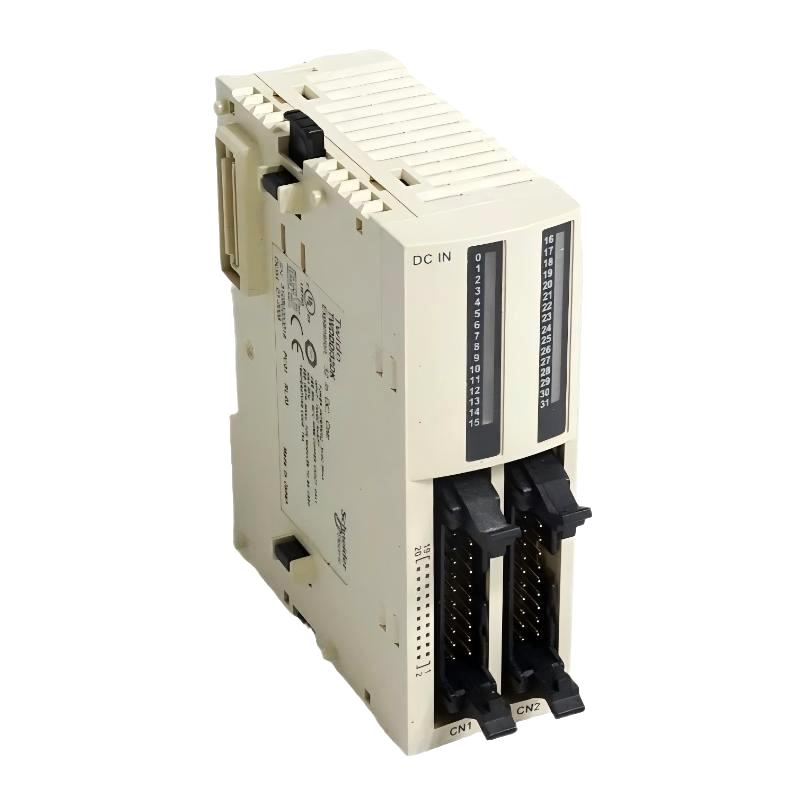
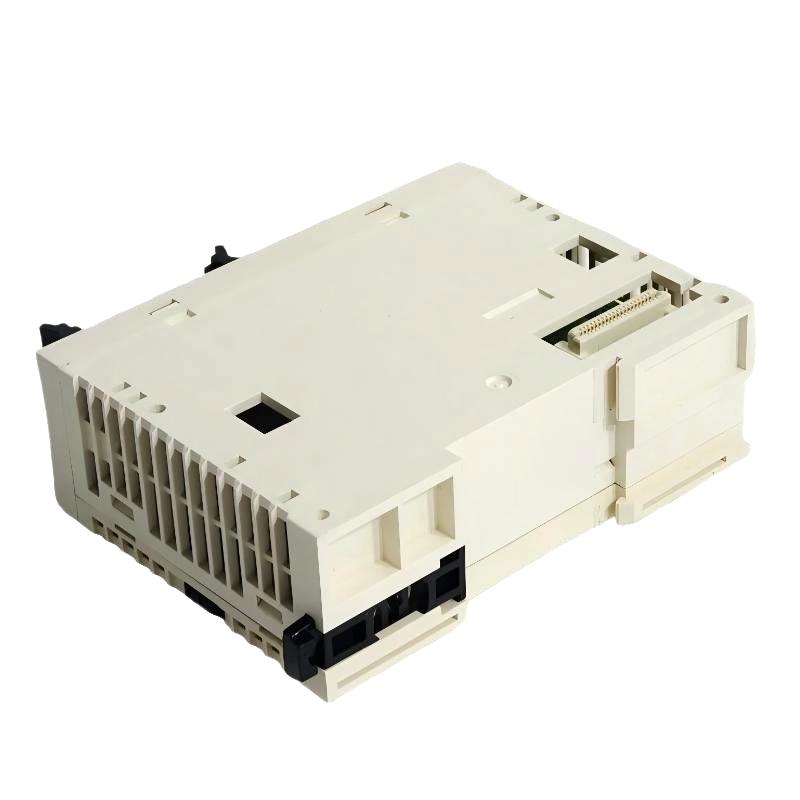
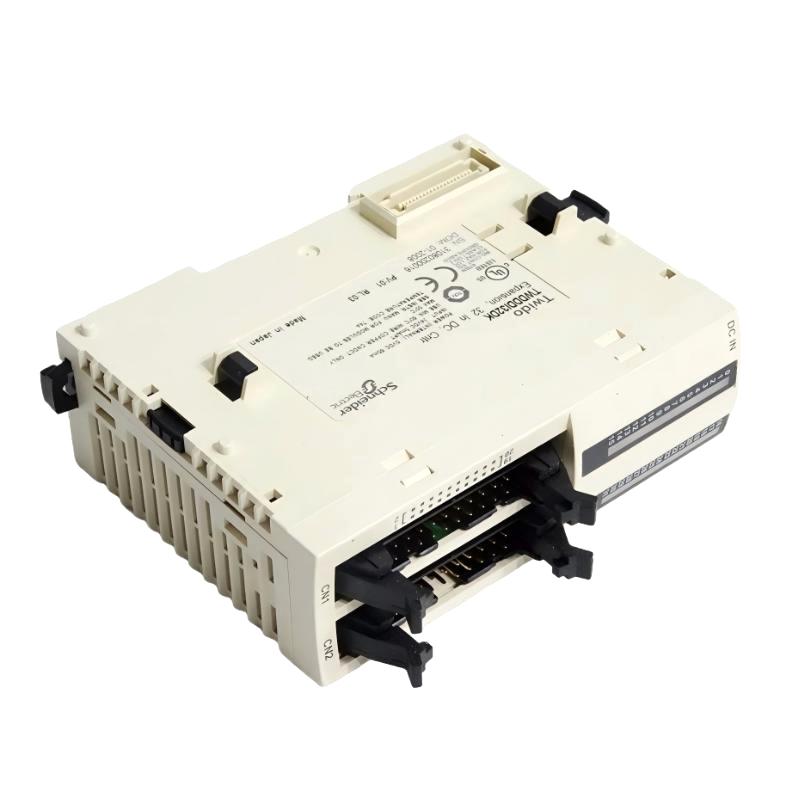
- Schneider
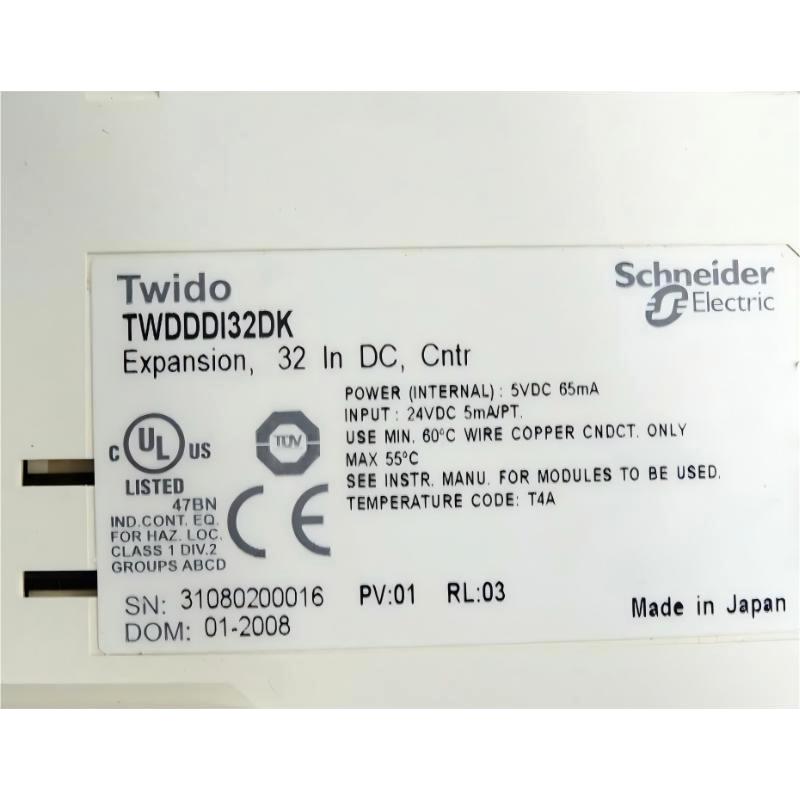
- TWDDDI32DK
- Digital Input Module
- France
- 81 x 70 x 23.5 mm
- 0.1 kg
- Xiamen, China
- New & In Stock
- T/T, PayPal, Western Union
- 1 Year
- 1-3 Working Days
- DHL, UPS, TNT, FedEx and EMS.
- 24-Hour Service
- COO
- 1
Our advantage

Global Logistics
We have a 10-year logistics and express cooperation agreement, so our products can be shipped to any place in the world.

Brand new and original
Our products are imported in bulk from the place of origin. Because of the cooperative relationship, our products are all original and 100% new.

24-hour service
We provide 7*24 hours service to our customers. We will be there whenever you need us.

Price advantage
All our products are priced very favorably because we have our own warehouse and supply.
| Company Information | |||
| [email protected] | |||
| Mobile | +8615980777398 | ||
| +8615980777398 | |||
| 15980777398 |
1. Product Overview
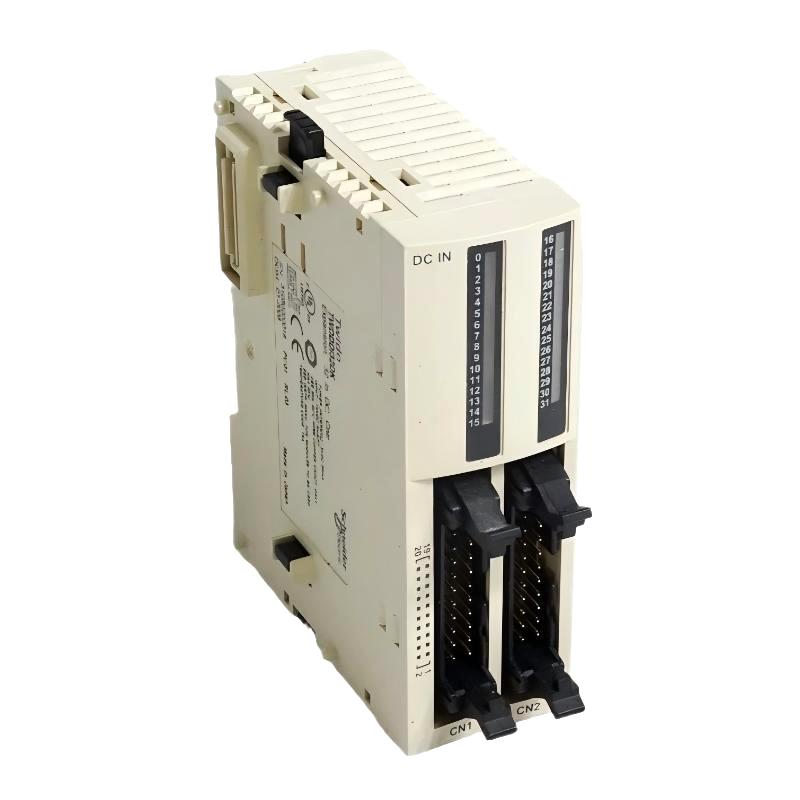
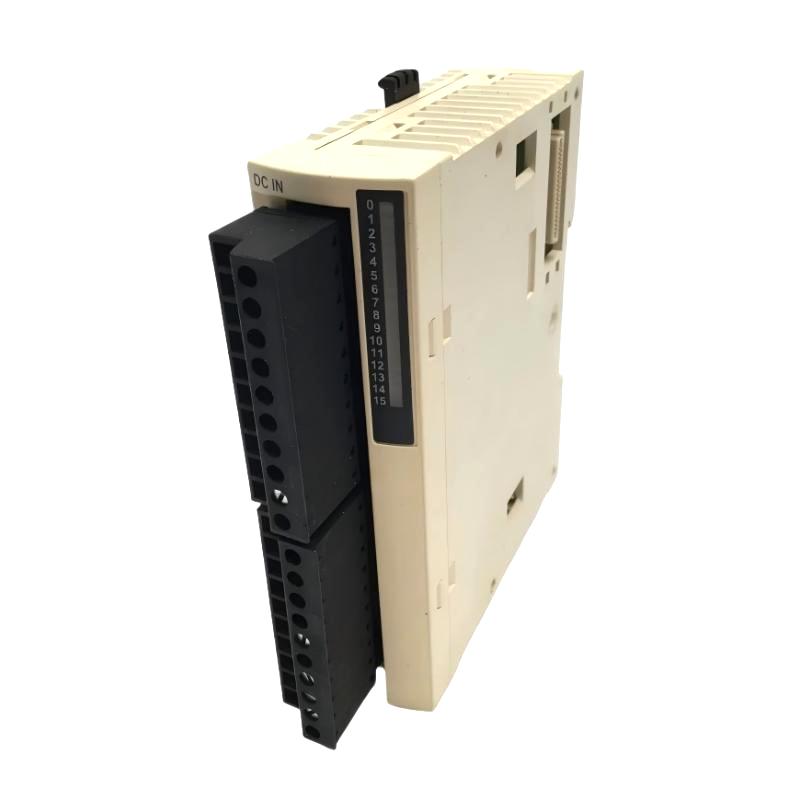
The Schneider Electric TWDDDI32DK Digital Input Module is a discrete input expansion module designed for the Modicon Twido programmable logic controller (PLC) platform. It provides 32 digital input channels for collecting ON/OFF signals from compatible industrial field devices, including proximity sensors, photoelectric sensors, limit switches, push buttons, selector switches, and equipment status contacts.
In industrial automation systems, digital input modules form the interface between field devices and PLC control logic. They allow a controller to monitor machine conditions, detect changes in equipment status, and coordinate automated operations according to a programmed sequence. By consolidating multiple field signals into a single module, the TWDDDI32DK supports organized I/O configuration and efficient machine monitoring.
The TWDDDI32DK is designed for 24 V DC digital signal acquisition and features a connector-based interface. Its 32-channel capacity makes it suitable for applications that need to collect numerous discrete signals without allocating a separate module to each small group of inputs. Typical applications include packaging equipment, conveyor systems, assembly machinery, production lines, and other automated installations built around compatible Twido PLC hardware.
For industrial maintenance teams, the TWDDDI32DK can be relevant when maintaining existing Twido control systems or sourcing replacement components for legacy machinery. However, the model has been discontinued, so buyers should verify the exact part number, connector arrangement, condition, and system compatibility before purchasing.
2. Technical Specifications
| Parameter | Specification |
|---|---|
| Brand | Schneider Electric |
| Model | TWDDDI32DK |
| Product Type | Digital Input Module |
| Product Family | Modicon Twido |
| Number of Digital Inputs | 32 |
| Rated Input Voltage | 24 V DC |
| Input Voltage Range | 20.4–28.8 V DC |
| Input Signal Type | Discrete ON/OFF signals |
| Input Logic | Sink or source |
| Input Current | Approximately 5 mA per input at 24 V DC |
| Input Impedance | Approximately 4.4 kΩ |
| Input Filter Time | Approximately 8 ms for ON and OFF states |
| Number of Common Lines | 2, serving groups of 16 inputs |
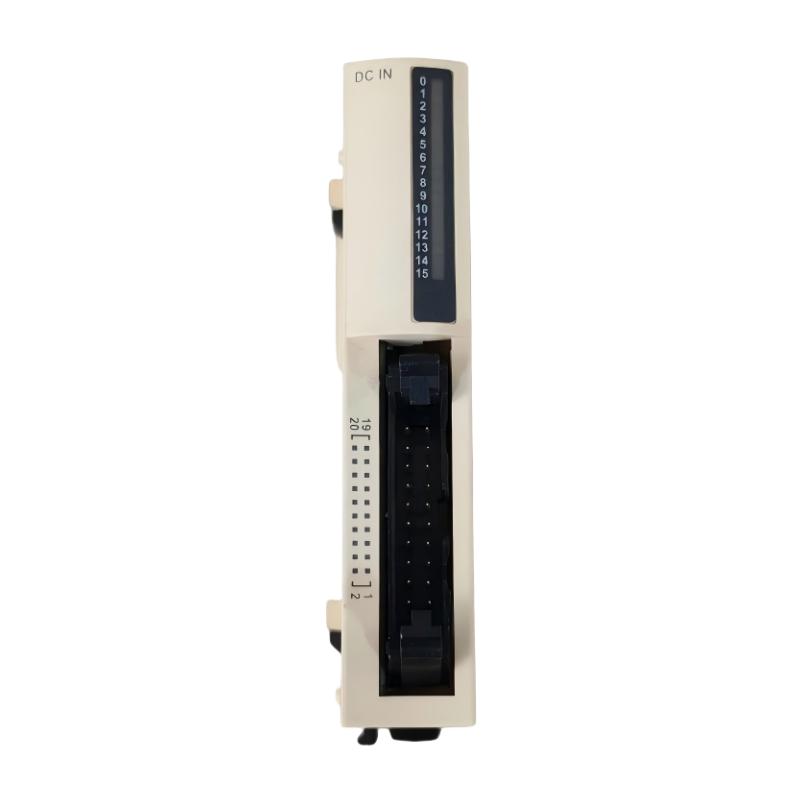
| Field Connection | Two HE-10 connectors |
| Input Isolation | Photocoupler isolation between input signals and internal circuitry |
| Protection Rating | IP20 |
| Operating Temperature | 0–55°C |
| Storage Temperature | -25–70°C |
| Dimensions | 81 × 70 × 23.5 mm, as provided |
| Weight | 0.1 kg |
| Product Status | Discontinued |
| Potential Modernization Candidate | TM3DI32, subject to compatibility verification |
Specification note: The dimensions above follow the supplied product information. Confirm the measurement order and whether the figures describe the module body or its overall envelope before using them for mechanical design. Electrical specifications should also be checked against the applicable hardware documentation and the installed system configuration.
3. Function and Working Principle
The primary function of the TWDDDI32DK is to receive discrete signals from field devices and make their states available to a compatible Twido PLC. Each input channel represents a binary condition, such as a switch being open or closed, a sensor detecting an object, or a machine component reaching a particular position.
The module is designed for 24 V DC input signals. When a compatible field device changes its output state, the corresponding input circuit detects the electrical signal. The module then makes the input state available to the PLC, where the application program evaluates it and determines the appropriate response.
For example, a photoelectric sensor may detect a product approaching a conveyor transfer point. The sensor sends a digital signal to the input module, and the PLC uses that signal to coordinate the conveyor, stop a mechanism, or initiate the next operation in a production sequence.
3.1 Acquisition of Multiple Digital Signals
The TWDDDI32DK provides 32 input channels, allowing it to collect information from multiple field devices. This capacity can simplify I/O organization in applications with numerous sensors, switches, and auxiliary equipment contacts.
Possible input signals include:
- Start and stop push buttons.
- Selector switches and operator commands.
- Proximity and photoelectric sensor outputs.
- Limit switches and position feedback.
- Motor starter auxiliary contacts.
- Valve position feedback signals.
- Product-presence and workpiece-detection signals.
- Machine-ready and equipment-fault contacts.
Each input must be wired according to the module’s electrical requirements and the field device’s output type.
3.2 Input Signal Conditioning
The module’s input circuitry determines whether a signal represents a valid ON or OFF state. Input filtering helps reduce the effect of brief electrical fluctuations and switching disturbances.
The specified input filter time is approximately 8 ms for each state. This is suitable for many general industrial monitoring and sequencing tasks, but it should be considered when designing applications that require very fast event detection.
The module should not be assumed to provide high-speed counting or specialized motion-control functions. Applications requiring precise pulse measurement or high-frequency signal processing should use hardware specifically designed for those purposes.
3.3 Sink and Source Input Compatibility
The TWDDDI32DK supports sink or source input logic. This provides flexibility when interfacing with compatible field devices, but the wiring arrangement must be selected correctly.
Technicians should verify the sensor output type, common-line arrangement, polarity, and wiring diagram before commissioning. Incorrect wiring may prevent an input from changing state or may damage the module if its electrical ratings are exceeded.
3.4 Communication with the PLC Program
The input module provides field information; the PLC program determines how the machine responds. Depending on the application, input states may be used for sequence control, interlocking, status indication, alarm handling, or basic equipment diagnostics.
This separation between signal acquisition and application logic allows control engineers to organize the system into clear functional sections and makes it easier to investigate individual input problems.
4. Role in Industrial Control Systems
The TWDDDI32DK supports the field-signal acquisition layer of a PLC-based control system. Its purpose is to make discrete equipment states available to the controller so that programmed logic can coordinate machine operations.
4.1 Machine Status Monitoring
Industrial machines often contain numerous switches and sensors that indicate whether components are in the correct position or whether equipment is ready to operate. The module collects these signals and allows the PLC to present operating status through an HMI, indicator lights, or other configured interfaces.
4.2 Production Sequence Management
Automated manufacturing processes commonly depend on a sequence of confirmed conditions. A PLC may wait for a sensor to detect a component, verify that a cylinder has reached its end position, or confirm that a downstream station is ready before advancing the sequence.
The TWDDDI32DK can collect the discrete signals required for these operations when installed in a compatible system.
4.3 Equipment Interlocking
Interlocking logic prevents selected operations from proceeding unless the necessary conditions are satisfied. For example, a controller may require confirmation that a machine guard is closed or that a conveyor section is available before enabling the next operation.
Standard digital input modules are not, by themselves, certified safety systems. Emergency-stop and other safety-critical functions must be implemented using appropriate safety-rated devices and control architectures.
4.4 Fault Detection and Maintenance
Input states can help maintenance personnel determine whether a field device is operating correctly. If an expected signal is missing, technicians can check the sensor, cable, connector, common wiring, input channel, and PLC configuration in a structured sequence.
This approach can help identify whether a fault originates in the field device, the wiring, the module, or the control program.
5. Industrial Applications
5.1 Packaging and Processing Machinery
Packaging machines use digital inputs to detect products, monitor guards, verify actuator positions, and coordinate machine movements. With 32 input channels, the TWDDDI32DK can support installations that require numerous discrete feedback signals.
Applications may include carton packaging, filling equipment, labeling machines, and automated product-handling stations.
5.2 Conveyor and Material Handling Systems
Conveyor installations commonly use photoelectric sensors, proximity sensors, limit switches, and motor-status contacts. The module can collect these signals for product detection, transfer sequencing, accumulation monitoring, and equipment status indication.
In a multi-zone conveyor, the PLC may use several input signals to determine whether each zone is occupied and whether a downstream section can accept additional products.
5.3 Assembly and Inspection Equipment
Assembly systems frequently need to verify workpiece presence, fixture position, pneumatic actuator status, and completion of individual process steps. The TWDDDI32DK can collect these discrete signals for use in PLC sequence logic.
Where an inspection device provides a compatible digital output, its pass/fail or ready/busy signal may also be monitored through a suitable input channel.
5.4 Motor Control and Auxiliary Equipment
Motor control panels often include auxiliary contacts that indicate whether a contactor is energized or whether an overload relay has tripped. The input module can receive compatible status contacts and provide this information to the PLC.
The module does not directly drive motor power circuits. Motors and other loads require suitable starters, contactors, drives, and protective devices.
5.5 General Manufacturing Automation
The module may also be used in compatible legacy Twido systems for machine monitoring, operator command acquisition, process sequencing, and equipment status collection.
Its suitability depends on the existing PLC architecture, field signal requirements, environmental conditions, and the availability of the correct module.
6. Installation and System Integration
Correct installation is essential for reliable input acquisition. Before installing or replacing a TWDDDI32DK, technicians should review the system drawings, controller model, expansion configuration, and field wiring.
6.1 Confirm PLC Compatibility
The TWDDDI32DK belongs to the Modicon Twido product family. It should be installed only in a controller and expansion arrangement that supports the module.
Do not assume that a module can be connected directly to another Schneider Electric PLC family simply because the newer system also supports 24 V DC digital inputs.
6.2 Verify the Power and Signal Requirements
Confirm that the connected field devices operate within the specified input voltage range of 20.4–28.8 V DC. Check the sensor output type and the common-line wiring arrangement before applying power.
Do not connect signals that exceed the module’s electrical ratings.
6.3 Inspect the HE-10 Connectors
The TWDDDI32DK uses two HE-10 field connectors. Inspect the connectors for damaged pins, contamination, looseness, or signs of overheating.
Confirm that the mating connectors, cables, pin assignments, and field wiring match the original installation. A connector that physically fits should not automatically be considered electrically compatible.
6.4 Observe Input Grouping
The 32 input channels are arranged in two groups of 16, each with a common line. Correct common wiring is essential for proper operation.
During replacement, use the original wiring diagram and I/O list to verify that every signal is connected to the intended channel and common group.
6.5 Follow Electrical Safety Procedures
Isolate power according to the site’s electrical safety procedures before removing or installing the module. Apply the required lockout/tagout procedure and verify that hazardous voltage has been removed.
After installation, restore power under controlled conditions and check the module’s operation before returning the machine to normal production.
6.6 Test the Input Channels
Test the connected field devices and confirm that the corresponding PLC input states change correctly. Verify the operation of alarms, sequence logic, and interlocks before releasing the equipment for production.
Where possible, compare the observed channel states with the original I/O list and machine electrical drawings.
6.7 Maintain Configuration Records
Record the module model, installation location, connector details, wiring assignments, and any replacement work. Retaining the original PLC program and I/O mapping can be particularly valuable when maintaining legacy automation equipment.
7. Compatible System Components
The TWDDDI32DK is typically one part of a broader control system. The following table identifies component categories that may be used with a compatible installation.
| Component Category | Function | Compatibility Considerations |
|---|---|---|
| Modicon Twido PLC | Executes application logic and processes input states | Confirm the exact controller model and expansion support |
| 24 V DC Power Supply | Supplies control power to suitable field devices and system components | Verify voltage, current capacity, and grounding requirements |
| Proximity Sensors | Detect objects or component positions | Check output type, polarity, and voltage |
| Photoelectric Sensors | Detect products and objects on automated equipment | Verify output configuration and switching characteristics |
| Limit Switches | Provide mechanical position feedback | Confirm contact arrangement and wiring |
| Motor Starters and Contactors | Switch motor power and provide auxiliary status contacts | Use suitable control circuits and protective devices |
| Terminal Blocks | Organize field wiring | Verify terminal assignments and wire sizes |
| HE-10 Connector Cables | Connect field signals to the module | Confirm pinout, cable construction, and connector compatibility |
| HMI or Operator Panel | Displays equipment status and operator commands | Verify the communication method and PLC configuration |
| PLC Programming Software | Supports program maintenance and diagnostics | Confirm compatibility with the installed Twido controller and software version |
This table describes functional component categories, not a guarantee of direct compatibility with every product in each category. Confirm the exact hardware configuration before installation.
8. Recommended Alternative Models and Replacement Considerations
The TWDDDI32DK is a discontinued product. Schneider Electric’s product information states that the model has not been assigned a direct replacement under the same reference. If the original module is unavailable, the replacement decision should consider whether the goal is to restore an existing Twido installation or migrate to a newer PLC platform.
| Model | Product Family | Potential Role | Important Consideration |
|---|---|---|---|
| TWDDDI32DK | Modicon Twido | Original 32-input, 24 V DC module | Best match for an existing installation when an authentic, compatible unit is available |
| TM3DI32 | Modicon TM3 | Modern 32-input digital module | Potential modernization candidate for compatible M2xx controllers; not a direct Twido drop-in replacement |
| TM2DDI32DK | Modicon TM2 | 32-input, 24 V DC module | Different PLC platform; verify controller compatibility and expansion requirements |
| Other supported 32-channel digital input modules | Depends on the selected PLC family | May provide equivalent input capacity | Electrical, mechanical, software, and wiring compatibility must be evaluated |
8.1 TM3DI32 as a Modernization Candidate
The TM3DI32 is a modern 32-channel digital input module designed for compatible Modicon M2xx controllers. It offers a similar high-level function: collecting 24 V DC discrete signals for a PLC.
However, similarity in channel count and input voltage does not make the TM3DI32 a direct replacement for the TWDDDI32DK. The modules belong to different product families and may differ in mounting, expansion connections, wiring, software configuration, and controller support.
A migration assessment should verify the target controller, input addressing, connector and cable arrangement, mechanical installation, application logic, and commissioning requirements.
8.2 Why the TM2DDI32DK Is Not Automatically Interchangeable
The TM2DDI32DK also provides 32 digital inputs, but it belongs to the Modicon TM2 family. Its original controller compatibility differs from that of the Twido module.
A matching channel count is only one part of replacement selection. The receiving PLC, expansion bus, physical interface, electrical characteristics, and programming environment must all be considered.
8.3 Choose Between Repair and Modernization
For a machine that remains operational and uses a Twido controller, sourcing the exact TWDDDI32DK may minimize changes to the existing program and wiring.
For a longer-term modernization project, a newer PLC platform may provide a better support path. However, migration can require controller replacement, I/O mapping changes, wiring modifications, program conversion, and full functional testing.
The correct approach depends on equipment condition, downtime constraints, spare-parts availability, and the intended service life of the installation.
9. Key Advantages
32 Digital Input Channels
The module provides 32 input channels in one unit, supporting installations with a relatively high number of discrete field signals.
24 V DC Signal Compatibility
The module is designed for a common industrial control voltage and can interface with compatible sensors, switches, and auxiliary contacts.
Flexible Sink or Source Logic
Support for sink or source input arrangements allows integration with compatible field devices, provided the wiring and common-line configuration are correct.
Organized Connector-Based Wiring
The HE-10 connector interface supports grouped signal connections. Correctly assembled cables and documented pin assignments can make installation and maintenance more systematic.
Photocoupler Isolation
Photocoupler isolation between the input circuitry and internal logic helps separate field signal circuits from internal module circuitry. It does not eliminate the need for correct grounding, wiring, and electrical protection.
Support for Legacy Equipment
For existing Twido installations, an exact replacement module may help maintain established automation equipment without immediately redesigning the entire control system.
10. Technical FAQs
Q1: What is the Schneider TWDDDI32DK?
The TWDDDI32DK is a Schneider Electric Modicon Twido digital input module designed to receive 32 discrete signals at 24 V DC.
Q2: How many input channels does it provide?
It provides 32 digital input channels arranged in two groups of 16, with two common lines.
Q3: What is the input voltage range?
The specified input voltage range is 20.4–28.8 V DC. The actual field wiring must follow the module’s electrical requirements.
Q4: What type of connector does it use?
The TWDDDI32DK uses two HE-10 connectors for field input connections. Verify connector pin assignments and cable compatibility before replacing the module.
Q5: Is the TWDDDI32DK discontinued?
Yes. Schneider Electric product information lists the TWDDDI32DK as discontinued. Its availability may depend on remaining inventory and specialist industrial spare-parts suppliers.
Q6: Does it have a direct replacement?
Schneider Electric’s product information states that the TWDDDI32DK has not been replaced by a direct equivalent under a designated replacement reference. The TM3DI32 may be considered for modernization, but only after confirming the target PLC platform and system requirements.
Q7: Can the TM3DI32 be installed in place of the TWDDDI32DK?
Not as an assumed plug-and-play replacement. The TM3DI32 is designed for compatible Modicon M2xx controllers, while the TWDDDI32DK belongs to the Twido family. A platform migration and compatibility assessment may be required.
Q8: Can it be used with Modicon M340 or M580 PLCs?
The TWDDDI32DK should not be assumed to be directly compatible with M340 or M580 systems. Those platforms use their own supported I/O architectures. A suitable module must be selected for the target controller and application.
Q9: What should be checked before purchasing a used or surplus module?
Confirm the complete model number, product label, connector condition, housing condition, and seller’s testing information. If the unit is intended to replace a failed module, also verify the existing controller model and I/O wiring.
Q10: Are the supplied dimensions and weight suitable for shipping calculations?
The supplied data lists dimensions of 81 × 70 × 23.5 mm and a weight of 0.1 kg. Verify the measurement order and whether the dimensions describe the product body or packaging before using them for shipping or cabinet design.
11. Procurement and Replacement Considerations
Because the TWDDDI32DK is discontinued, purchasing decisions should focus on accurate identification, product condition, and compatibility with the existing automation system.
Before ordering, buyers should consider the following points:
- Exact part number: Confirm that the product label reads TWDDDI32DK rather than a similar Twido or Modicon model.
- Product condition: Clarify whether the unit is new, unused surplus, refurbished, or used.
- Connector condition: Inspect the HE-10 connectors and ensure that the pins and housing are undamaged.
- Functional testing: Ask whether the input channels have been tested and whether test information is available.
- Compatibility: Verify the installed PLC model, expansion arrangement, field wiring, and I/O mapping.
- Dimensions and weight: Confirm whether the listed figures refer to the product itself or packaged shipping measurements.
- Replacement strategy: If the original unit is unavailable, compare the cost and risk of sourcing a legacy spare against the requirements of a PLC modernization project.
- Maintenance records: Retain product identification, test records, and installation details to support future maintenance.
For existing industrial machinery, selecting the correct spare module can reduce unplanned downtime and limit changes to the original control design. A replacement should nevertheless be evaluated as part of the complete PLC system rather than on its input count alone.
12. Conclusion
The Schneider Electric TWDDDI32DK Digital Input Module is a 32-channel, 24 V DC discrete input module designed for the Modicon Twido PLC platform. With two HE-10 connectors and support for sink or source input logic, it is intended to collect multiple digital signals from compatible sensors, switches, and equipment-status contacts.
Although the TWDDDI32DK has been discontinued, it remains relevant to organizations maintaining existing Twido-based automation systems. Correct part-number identification, connector inspection, input wiring verification, and controller compatibility checks are essential when sourcing a replacement.
For maintenance teams and industrial spare-parts buyers, the TWDDDI32DK can serve as an original replacement option when a suitable unit is available. Where the long-term goal is modernization, alternatives such as the TM3DI32 should be evaluated against the target PLC architecture, wiring requirements, software configuration, and commissioning needs before a migration decision is made.