

ProductPRODUCT
Featured products
Contact Us
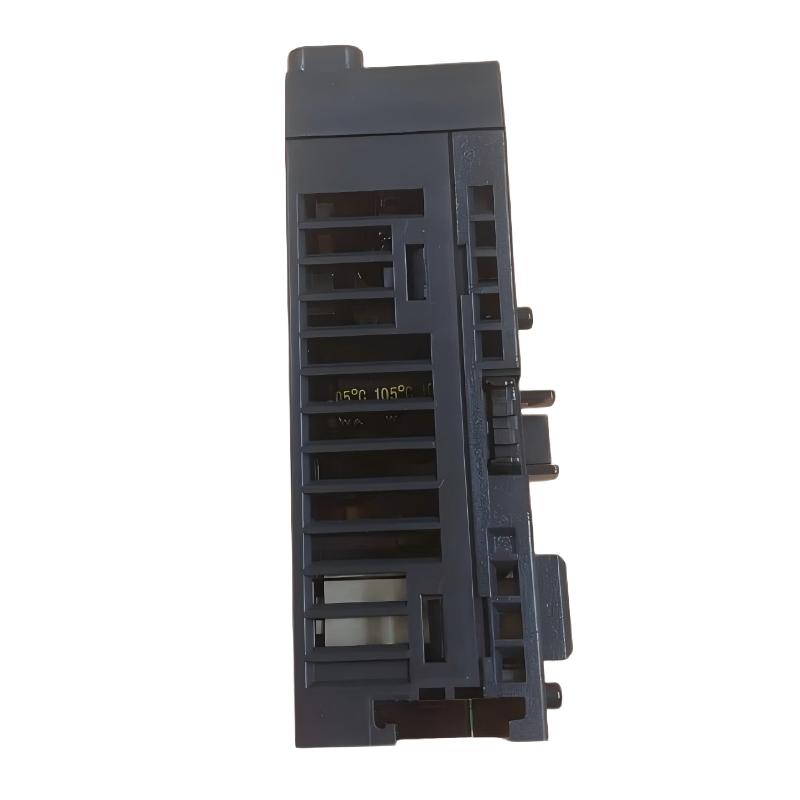
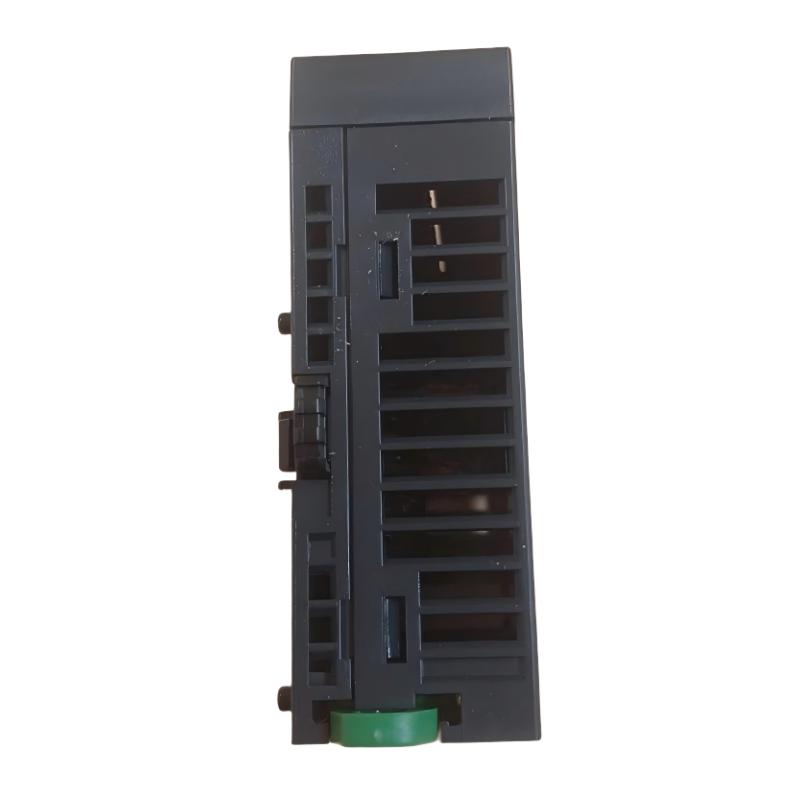
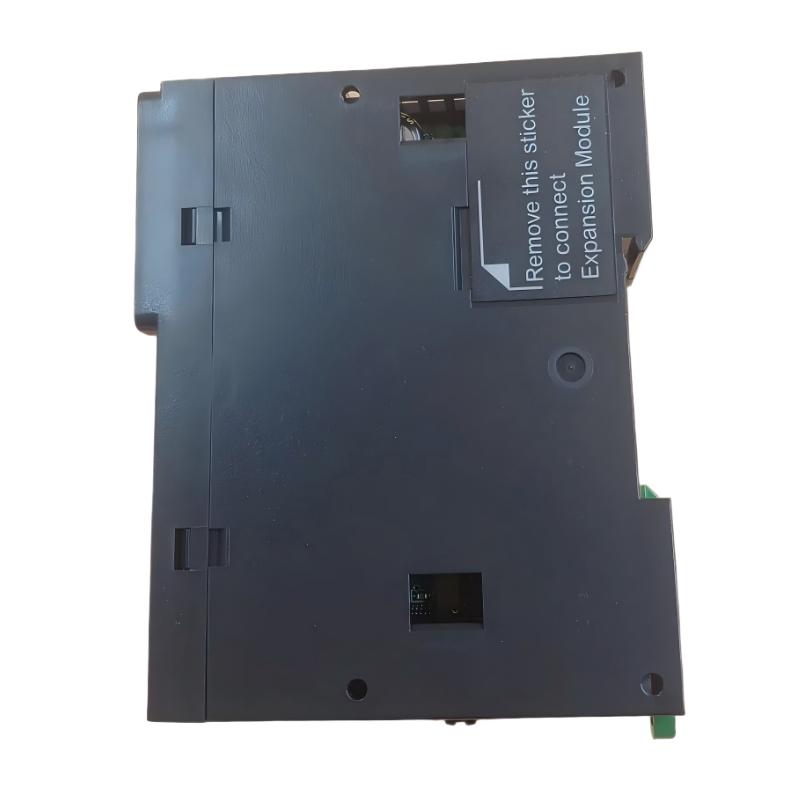
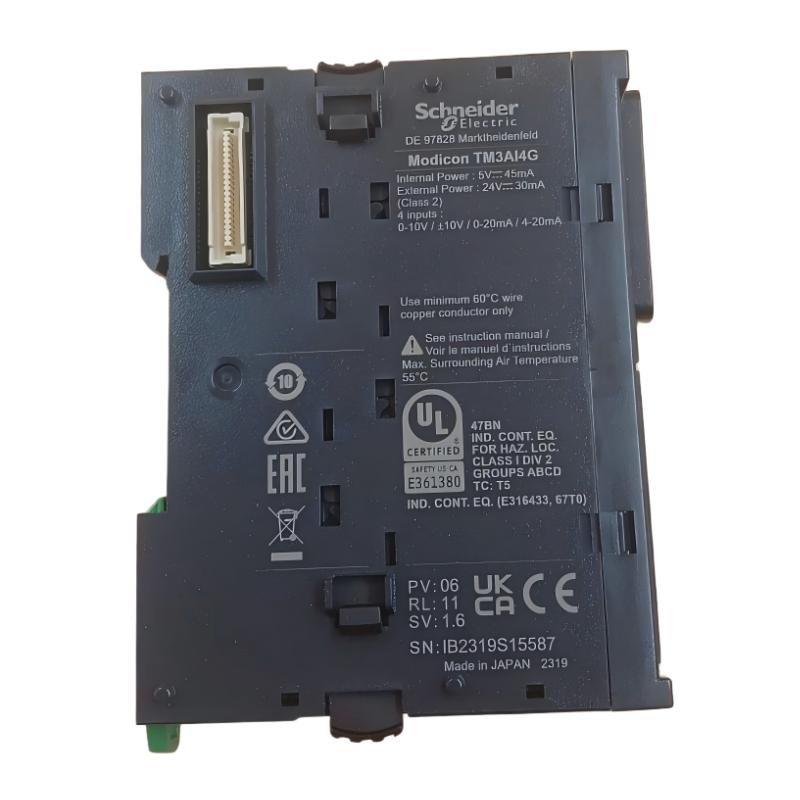
- Schneider
- TM3AI4G
- Analog Input Module
- France
- 125 x 105 x 75 mm
- 0.1 kg
- Xiamen, China
- New & In Stock
- T/T, PayPal, Western Union
- 1 Year
- 1-3 Working Days
- DHL, UPS, TNT, FedEx and EMS.
- 24-Hour Service
- COO
- 2
Our advantage

Global Logistics
We have a 10-year logistics and express cooperation agreement, so our products can be shipped to any place in the world.

Brand new and original
Our products are imported in bulk from the place of origin. Because of the cooperative relationship, our products are all original and 100% new.

24-hour service
We provide 7*24 hours service to our customers. We will be there whenever you need us.

Price advantage
All our products are priced very favorably because we have our own warehouse and supply.
| Company Information | |||
| [email protected] | |||
| Mobile | +8615980777398 | ||
| +8615980777398 | |||
| 15980777398 |
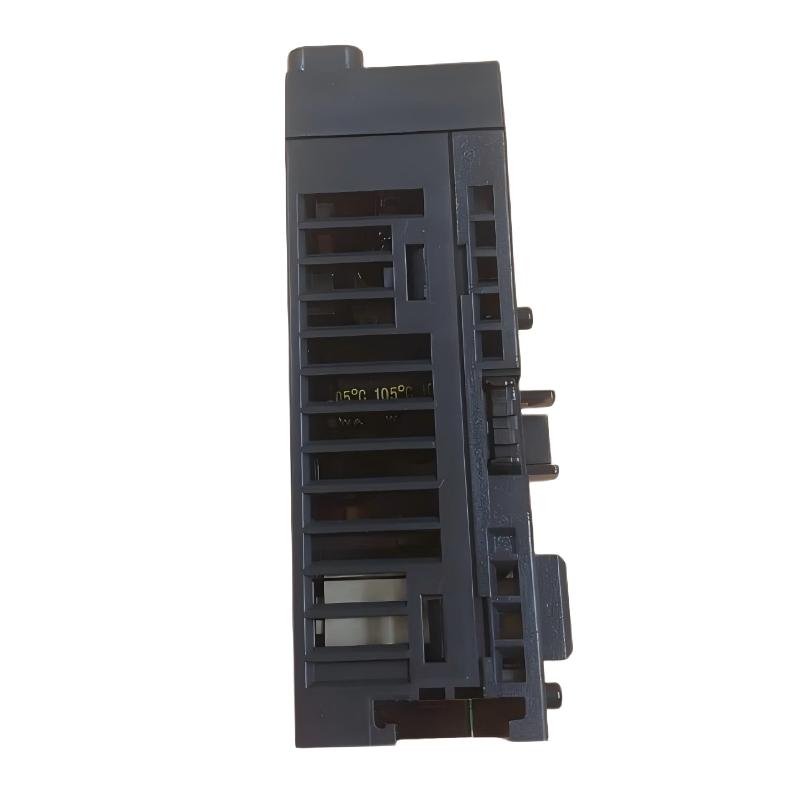
1. Product Overview
The Schneider Electric TM3AI4G is a four-channel analog input expansion module designed for industrial automation and PLC-based control systems. Part of the Modicon TM3 product range, it enables compatible programmable logic controllers (PLCs) to acquire analog signals from field instruments and use the measured values for monitoring, process regulation, and machine control.
Unlike digital input modules, which detect discrete ON/OFF states, analog input modules measure continuously varying electrical signals. The TM3AI4G supports voltage input ranges of 0–10 V DC and -10–+10 V DC, as well as current input ranges of 0–20 mA and 4–20 mA. These signals are commonly used by industrial sensors, pressure transmitters, flow meters, level instruments, and other process-monitoring devices.
The module provides four analog input channels with 12-bit resolution, or 11 bits plus sign for bipolar measurements. Its spring-terminal connection system supports field wiring, while the compact design makes it suitable for control cabinets and distributed machine-control applications.
The TM3AI4G is designed for integration with compatible Schneider Electric Modicon controllers, including supported M221, M241, M251, and M262 configurations. It can help extend the measurement capabilities of a PLC without requiring a complete redesign of the control system.
For engineers and industrial equipment buyers, the TM3AI4G is a useful option when additional analog measurement channels are required. Correct configuration of the input type, wiring, signal range, and PLC scaling is essential to achieve reliable measurements.
2. Technical Specifications
| Parameter | Details |
|---|---|
| Manufacturer | Schneider Electric |
| Model Number | TM3AI4G |
| Product Type | Analog Input Expansion Module |
| Product Range | Modicon TM3 |
| Number of Analog Inputs | 4 |
| Input Signal Types | Voltage and current |
| Voltage Input Ranges | 0–10 V DC; -10–+10 V DC |
| Current Input Ranges | 0–20 mA; 4–20 mA |
| Resolution | 12 bits, or 11 bits + sign |
| Rated Supply Voltage | 24 V DC |
| Permitted Supply Voltage Range | 20.4–28.8 V DC |
| Terminal Type | Removable spring terminal block |
| Input Type | Single-ended |
| Conversion Method | Sigma-delta analog-to-digital conversion |
| Sampling Duration | 1 ms per enabled channel |
| Maximum Accuracy at 25°C | ±0.2% of full scale under specified conditions |
| Repeatability | ±0.5% of full scale |
| Nonlinearity | ±0.2% of full scale in the referenced hardware documentation |
| Input Impedance | At least 1 MΩ for voltage inputs; maximum 50 Ω for current inputs |
| Input Filtering | Software-configurable, 0–10 seconds |
| Input-to-Internal-Logic Isolation | 500 V AC under specified test conditions |
| External Supply-to-Input Isolation | 1500 V AC under specified test conditions |
| Cable Recommendation | Shielded twisted-pair cable, maximum 30 m |
| Protection Rating | IP20 |
| Status Indicator | Green PWR LED |
| Mounting | Compatible DIN rail or panel mounting arrangement, subject to installation instructions |
| Standard Module Dimensions (H × W × D) | Approximately 90 × 23.6 × 70 mm |
| Weight | Approximately 0.10 kg |
| Compatible Controller Families | Supported Modicon M221, M241, M251, and M262 configurations |
| Typical Applications | Process measurement, sensor monitoring, machine automation, analog signal acquisition |
Dimensional note: The dimensions supplied in the product request are 125 × 105 × 75 mm. Schneider Electric’s published dimensions for the TM3AI4G module itself are approximately 90 × 23.6 × 70 mm, with a weight of approximately 0.10 kg. The larger dimensions may refer to packaging or another measurement convention and should be checked before publication.
3. Function and Working Principle
The primary function of the TM3AI4G is to acquire analog signals from industrial instruments, convert those signals into digital values, and make the resulting data available to a compatible PLC.
This process enables a control program to monitor physical conditions and make decisions based on measured process values.
3.1 Analog Signal Acquisition
Industrial instruments often represent measured variables as electrical signals. For example, a pressure transmitter may produce a 4–20 mA signal, while a position sensor or signal conditioner may provide a voltage output.
The TM3AI4G accepts supported voltage and current input signals. Each channel must be configured according to the signal type and measurement range of the connected instrument.
Correct configuration is essential. If a channel is physically wired for voltage but configured for current, the analog input circuit may be damaged. The actual wiring and software settings must therefore be checked together before energizing the system.
3.2 Analog-to-Digital Conversion
The module uses analog-to-digital conversion to translate the incoming electrical signal into a numerical value that the PLC can process.
Its 12-bit resolution provides 4096 discrete conversion levels for a unipolar range. For bipolar voltage measurement, the representation uses 11 bits plus a sign.
The PLC application can scale the converted value into engineering units, such as degrees Celsius, bar, liters per minute, millimeters, or percentage of operating range.
The practical measurement accuracy depends not only on the module’s resolution but also on sensor accuracy, electrical noise, wiring quality, calibration, and signal conditioning.
3.3 Voltage and Current Input Modes
The TM3AI4G supports four principal analog input ranges:
- 0–10 V DC: Suitable for compatible voltage-output instruments.
- -10–+10 V DC: Suitable for bipolar voltage signals.
- 0–20 mA: Suitable for instruments using a 0–20 mA current signal.
- 4–20 mA: Widely used for industrial process transmitters.
Each channel should be configured to match its connected instrument. The selected input range determines how the measured signal is interpreted and scaled by the PLC program.
3.4 Input Filtering and Signal Stability
Industrial analog signals may contain electrical noise caused by motors, variable-frequency drives, switching devices, and long cable runs. The TM3AI4G supports configurable software input filtering to reduce the influence of short-term signal variations.
Filtering can improve stability but may also increase response time. The filter setting should therefore be selected according to the dynamics of the process being measured.
For slowly changing variables, such as tank level or ambient temperature, stronger filtering may be appropriate. Faster processes may require a shorter filter time to preserve useful measurement response.
3.5 Diagnostic Information
The module and its controller configuration provide information that can help identify input conditions and diagnostic states. Depending on the configuration, the application can use channel status information to detect out-of-range signals or other input-related conditions.
These functions help maintenance personnel investigate wiring faults, incorrect sensor ranges, and abnormal measurements. Diagnostic handling should be configured and tested as part of the PLC application.
4. Role in Industrial Control Systems
The TM3AI4G serves as an analog measurement interface between field instruments and a PLC. It allows the controller to process real-world measurements and use them for monitoring, alarms, sequencing, and closed-loop control.
4.1 Expanding PLC Measurement Capacity
A control system may require additional analog channels as more sensors and instruments are installed. The TM3AI4G provides four input channels in one expansion module, allowing supported controllers to acquire additional measurements.
This can reduce the need for a separate analog acquisition system when the existing PLC platform supports the module.
Before installation, engineers should confirm the controller model, available expansion capacity, power requirements, and supported hardware configuration.
4.2 Process Monitoring and Regulation
Analog measurements are important in systems where physical variables change continuously. Examples include pressure, flow, liquid level, temperature represented by a signal conditioner, and equipment position.
The TM3AI4G transfers these measurements to the PLC, where the control program can compare them with configured operating limits or setpoints.
The controller can then generate alarms, adjust operating sequences, or command suitable actuators through other output modules.
4.3 Integration with HMI and SCADA Systems
After the analog values have been acquired and processed by the PLC, the application can make relevant information available to a compatible human-machine interface (HMI) or supervisory control and data acquisition (SCADA) system.
Operators can use these values to monitor process trends, review operating conditions, and identify deviations from normal operation.
The TM3AI4G itself is an input module; communication with an HMI or SCADA system is handled through the wider controller and communication architecture.
4.4 Support for Automated Control Loops
In a closed-loop control system, an analog input module provides measurement feedback to the controller. The PLC compares the measured value with the desired setpoint and executes the configured control algorithm.
For example, a pressure transmitter can provide feedback to a PLC that regulates a pump or valve through suitable control equipment.
The TM3AI4G supplies the measurement input, while the controller, application program, and output devices perform the broader control function.
4.5 Maintenance and System Expansion
For existing Modicon TM3 installations, adding or replacing an analog input module can help maintain measurement availability and support changes to the machine or process.
Before replacement, verify the complete part number, terminal type, input configuration, and controller compatibility. The spring-terminal version TM3AI4G should not be confused with the screw-terminal version TM3AI4, even though their principal analog measurement ranges are similar.
5. Industrial Applications
5.1 Manufacturing Automation
Manufacturing systems often use analog sensors to monitor equipment position, pressure, force, flow, or other process variables. The TM3AI4G can acquire supported voltage and current signals from compatible instruments.
The PLC can then use these values to coordinate machine operations, detect abnormal conditions, and maintain process consistency.
5.2 Water and Wastewater Treatment
Water treatment equipment uses instruments to monitor flow, pressure, and liquid level. Many industrial transmitters provide standardized 4–20 mA signals for reliable transmission to control systems.
The TM3AI4G can acquire supported signals from these instruments, allowing the PLC to process measurements and coordinate pumps, valves, and alarms through suitable output devices.
The module does not directly control those devices; it supplies measurement data to the wider control system.
5.3 Packaging and Processing Machinery
Packaging and processing machines may require analog measurements for pressure regulation, material monitoring, tension measurement, or position feedback.
By collecting these signals, the TM3AI4G can support PLC applications that require continuous measurement rather than simple digital state detection.
The selected sensor and input configuration must match the module’s supported voltage or current range.
5.4 HVAC and Building Equipment
Industrial HVAC equipment may use analog transmitters to measure pressure, flow, or other operating variables. The TM3AI4G can acquire compatible electrical signals from these instruments in a supported PLC configuration.
The controller can use the measurements to coordinate fans, pumps, valves, and alarms through suitable control interfaces.
Sensor output characteristics and the required environmental conditions should be evaluated before installation.
5.5 Energy and Utility Systems
Utility equipment and auxiliary industrial systems often monitor pressure, flow, and other electrical or process variables. Analog input modules allow the PLC to collect these measurements for equipment monitoring and process coordination.
The TM3AI4G may be suitable where its four channels, input ranges, resolution, and controller compatibility meet the application’s requirements.
5.6 General Process Automation
In general process-control applications, the TM3AI4G can connect compatible instruments to a PLC for monitoring and control. Typical signals include 0–10 V, -10–+10 V, 0–20 mA, and 4–20 mA.
The actual suitability of the module depends on the connected instrument, required measurement performance, electrical environment, and control-system configuration.
6. Installation and System Integration
Proper installation is essential for measurement accuracy, electrical reliability, and long-term service.
6.1 Controller Compatibility
The TM3AI4G is designed for supported Modicon M221, M241, M251, and M262 controller configurations. The exact controller model and hardware arrangement must be checked against the applicable compatibility documentation.
Before installation, confirm that the controller has sufficient expansion capacity and that the module is supported by the selected programming environment.
6.2 Mounting and Cabinet Layout
The published module dimensions are approximately 90 × 23.6 × 70 mm, and the weight is approximately 0.10 kg.
The module supports the mounting arrangements specified for the Modicon TM3 product family, including compatible DIN rail or panel mounting arrangements. Follow the manufacturer’s installation instructions for the required orientation, clearances, and mechanical support.
Allow adequate space for the removable spring terminals, cable routing, and maintenance access.
6.3 Analog Input Wiring
The TM3AI4G uses removable spring-terminal connections. Use the official terminal diagram to identify the input terminals and supply connections.
Recommended wiring practices include:
- Use shielded twisted-pair cable for analog signals.
- Keep signal cables away from high-current and high-noise wiring where practical.
- Observe the specified maximum cable length of 30 m.
- Verify the signal polarity and terminal assignment.
- Confirm that the channel is configured for the same signal type used in the physical wiring.
- Ensure that sensor output ranges match the selected input range.
- Inspect terminal connections before applying power.
Incorrect wiring or incorrect channel configuration may cause measurement errors or damage to the analog input circuit.
6.4 Power Supply Requirements
The module uses a nominal 24 V DC supply, with a specified permitted range of 20.4–28.8 V DC.
The power supply must be suitable for the module and the wider I/O system. Confirm the applicable current requirements, grounding arrangement, and controller expansion architecture before energizing the installation.
6.5 Software Configuration
Configure each analog input channel in the supported programming environment. Select the correct input mode and measurement range, and apply the required scaling to convert raw values into engineering units.
For example, a 4–20 mA pressure transmitter may be scaled to represent a pressure range from zero to the transmitter’s full-scale value. The scaling parameters must match the instrument’s actual calibration and configured range.
Input filtering should also be selected according to the process response requirements.
6.6 Commissioning and Testing
A structured commissioning procedure helps verify correct operation:
- Confirm the module model and controller compatibility.
- Inspect the module, terminals, and mounting arrangement.
- Verify the 24 V DC supply and grounding.
- Check the sensor wiring and signal type.
- Confirm the software configuration for each channel.
- Apply known test signals where appropriate.
- Verify the displayed or processed engineering values.
- Check diagnostic information and out-of-range behavior.
- Document channel assignments and scaling parameters.
Testing should be performed by qualified personnel in accordance with the applicable electrical safety procedures.
7. Compatible System Components
The TM3AI4G is designed to operate within a compatible Modicon TM3 automation architecture. The following component categories may form part of a complete system.
| Component Type | Function | Compatibility Considerations |
|---|---|---|
| Modicon M221 Controller | Executes PLC logic and processes input data | Confirm the exact controller and supported expansion configuration |
| Modicon M241 Controller | Provides machine-control and communication functions | Verify hardware and software compatibility |
| Modicon M251 Controller | Supports distributed machine-control architectures | Check the supported I/O arrangement |
| Modicon M262 Controller | Provides advanced machine-control capabilities | Confirm the applicable TM3 expansion configuration |
| 24 V DC Power Supply | Supplies the module and relevant control circuits | Match the permitted voltage range and system power requirements |
| Analog Sensors and Transmitters | Provide voltage or current measurement signals | Match the supported input ranges and wiring requirements |
| Pressure and Flow Transmitters | Supply process measurement signals | Verify 0–10 V, -10–+10 V, 0–20 mA, or 4–20 mA compatibility |
| Spring-Terminal Wiring Accessories | Provide field connections | Use the appropriate terminal and conductor sizes |
| HMI or SCADA System | Displays and supervises processed PLC data | Integration is through the compatible controller and communications network |
Compatibility should always be verified against the controller’s hardware documentation and the applicable Schneider Electric system configuration instructions.
8. Recommended Alternative Models
The best alternative depends on the required channel count, resolution, input types, terminal style, and controller platform.
| Model | Type | Key Feature | Application |
|---|---|---|---|
| TM3AI4G | Analog input module | 4 voltage/current inputs, spring terminals, 12-bit resolution | Existing installations requiring the original spring-terminal model |
| TM3AI4 | Analog input module | 4 voltage/current inputs, screw terminals, 12-bit resolution | Applications requiring screw-terminal connections |
| TM3AI2H | High-resolution analog input module | 2 voltage/current inputs with 16-bit resolution, or 15 bits + sign | Applications requiring higher analog resolution with fewer channels |
| TM3AI2HG | High-resolution analog input module | 2 voltage/current inputs with spring terminals and 16-bit resolution, or 15 bits + sign | Applications requiring spring-terminal wiring and higher resolution |
| TM3AI8 | Analog input module | 8 voltage/current inputs, 12-bit resolution | Applications requiring more analog channels |
| TM3AI8G | Analog input module | 8 voltage/current inputs with spring terminals | Applications requiring additional analog inputs and spring-terminal wiring |
These models belong to the wider Modicon TM3 analog input family, but they are not all direct replacements for the TM3AI4G. Confirm controller support, input range, resolution, terminal type, wiring, and software configuration before selecting an alternative.
9. Key Advantages
9.1 Four Analog Input Channels
The TM3AI4G provides four input channels for acquiring supported voltage and current signals. This arrangement can accommodate multiple field instruments within one compact expansion module.
9.2 Support for Standard Industrial Signals
The module supports 0–10 V, -10–+10 V, 0–20 mA, and 4–20 mA input ranges. These interfaces are commonly used in industrial measurement and process-control applications.
9.3 12-Bit Measurement Resolution
Its 12-bit resolution, or 11 bits plus sign for bipolar measurements, provides digital representation of the incoming analog signals for PLC processing.
Actual measurement performance depends on the module’s accuracy specifications, sensor characteristics, electrical noise, and system calibration.
9.4 Spring-Terminal Connections
The removable spring-terminal blocks support field wiring and can simplify connection and maintenance procedures when used with suitable conductors and installation practices.
9.5 Compact Installation
The module’s published dimensions of approximately 90 × 23.6 × 70 mm and weight of approximately 0.10 kg make it suitable for space-conscious control-panel layouts.
9.6 Integration with Modicon Controllers
The TM3AI4G is designed for supported Modicon M221, M241, M251, and M262 configurations. It provides a practical method of adding analog measurement channels to a compatible PLC-based control system.
9.7 Configurable Signal Filtering
Software-configurable filtering allows engineers to balance measurement stability and response time according to the process requirements.
10. Technical FAQs
Q1: What is the Schneider TM3AI4G?
The TM3AI4G is a four-channel analog input expansion module from Schneider Electric’s Modicon TM3 range. It acquires supported voltage and current signals for processing by a compatible PLC.
Q2: How many analog input channels does the TM3AI4G provide?
It provides four analog input channels.
Q3: Which input signals does the TM3AI4G support?
The supported ranges are 0–10 V DC, -10–+10 V DC, 0–20 mA, and 4–20 mA. Each channel must be configured according to the connected instrument and actual wiring.
Q4: What is the resolution of the TM3AI4G?
The module has 12-bit resolution, or 11 bits plus sign for bipolar measurements.
Q5: What power supply does the module require?
The nominal supply voltage is 24 V DC, with a specified permitted range of 20.4–28.8 V DC.
Q6: Which PLC controllers are compatible with the TM3AI4G?
The module is designed for supported Modicon M221, M241, M251, and M262 configurations. Verify the exact controller model and expansion arrangement before installation.
Q7: What is the difference between TM3AI4 and TM3AI4G?
Both are four-channel analog input modules with similar principal voltage and current ranges. The TM3AI4 uses removable screw terminals, while the TM3AI4G uses removable spring terminals.
Q8: What cable should be used for analog inputs?
Schneider Electric recommends shielded twisted-pair cable, with a specified maximum cable length of 30 m. Correct routing and shielding practices help reduce electrical interference.
Q9: Can the TM3AI4G measure temperature directly?
The TM3AI4G accepts supported voltage and current signals. A temperature transmitter or signal conditioner can be used when it converts the sensor measurement into one of those supported ranges. Direct thermocouple and RTD input applications generally require a module specifically designed for temperature measurement, such as an appropriate TM3TI-series model.
Q10: What happens if the input range is configured incorrectly?
Incorrect configuration can produce inaccurate or invalid measurements. If a channel is wired for voltage but configured for current, the analog input circuit may be damaged. Verify the wiring and software configuration together before applying power.
Q11: Can the TM3AI4G replace the TM3AI4?
The modules have similar core analog input functions, but they use different terminal styles. Before substituting one for the other, confirm the wiring arrangement, cabinet layout, controller compatibility, and installation requirements.
Q12: What should buyers check before purchasing the TM3AI4G?
Confirm the complete part number, input ranges, terminal type, physical dimensions, condition, authenticity, controller compatibility, and supplier warranty. For replacement projects, compare the module with the installed unit and original system documentation.
11. Conclusion
The Schneider Electric TM3AI4G is a four-channel analog input expansion module designed to acquire voltage and current signals in compatible PLC-based automation systems. With support for 0–10 V, -10–+10 V, 0–20 mA, and 4–20 mA signals, it provides a flexible interface for industrial sensors and process transmitters.
Its 12-bit resolution, removable spring-terminal connections, configurable input filtering, and integration with supported Modicon controllers make it suitable for a range of machine automation and process-monitoring applications.
For reliable performance, engineers should verify controller compatibility, configure each input channel correctly, use suitable shielded wiring, and apply appropriate signal scaling in the PLC program. Buyers should also confirm the module’s actual physical dimensions, electrical requirements, and product condition before procurement.
Selecting the correct analog input module and following the manufacturer’s installation guidance helps maintain accurate measurement, reliable signal acquisition, and effective integration within industrial control systems.