

ProductPRODUCT
Featured products
Contact Us
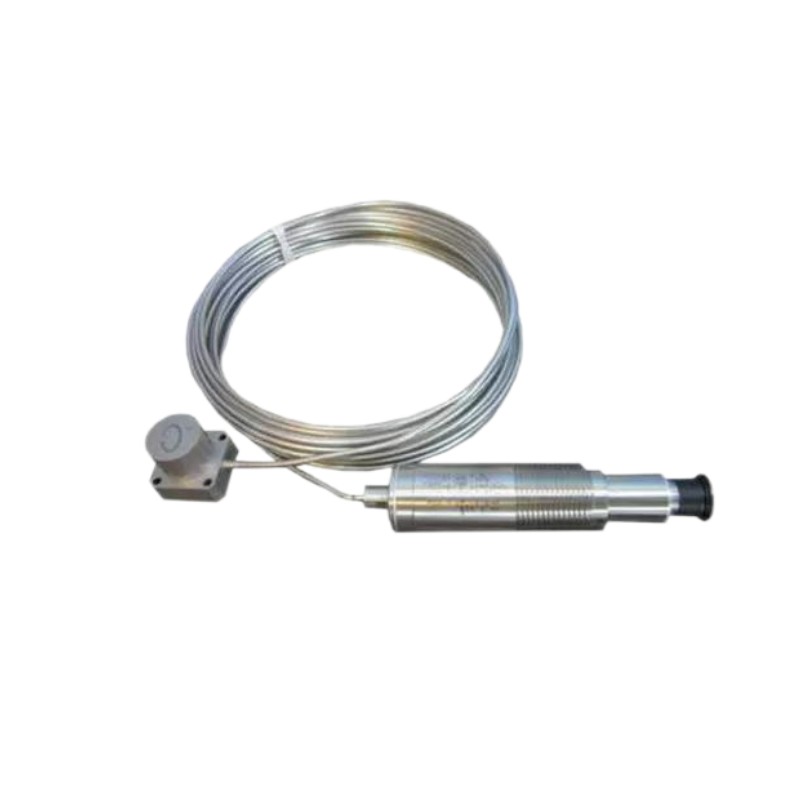
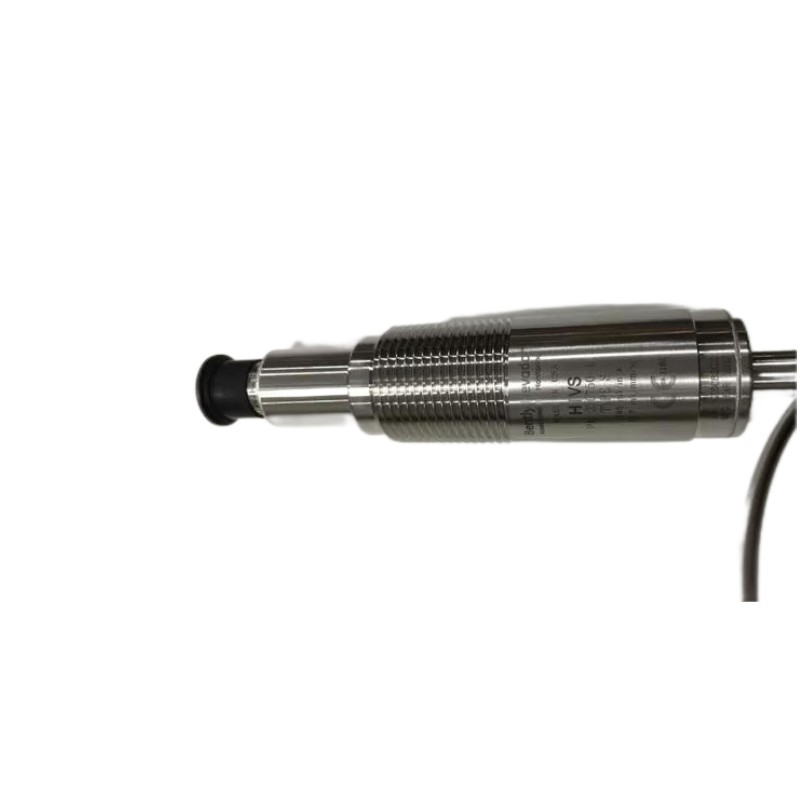
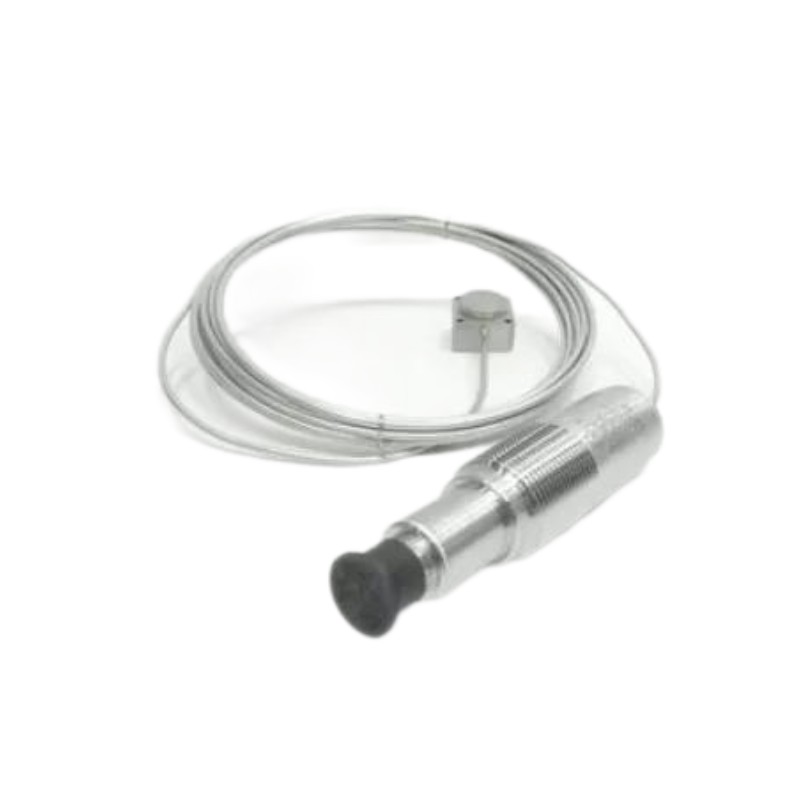
- Bently Nevada
- 330750-60-05
- High Temperature Velomitor Velocity Sensor
- USA
- 33.4 mm × 152.1 mm
- 0.95kg
- Xiamen, China
- New & In Stock
- T/T, PayPal, Western Union
- 1 Year
- 1-3 Working Days
- DHL, UPS, TNT, FedEx and EMS.
- 24-Hour Service
- COO
- 4
Our advantage

Global Logistics
We have a 10-year logistics and express cooperation agreement, so our products can be shipped to any place in the world.

Brand new and original
Our products are imported in bulk from the place of origin. Because of the cooperative relationship, our products are all original and 100% new.

24-hour service
We provide 7*24 hours service to our customers. We will be there whenever you need us.

Price advantage
All our products are priced very favorably because we have our own warehouse and supply.
| Company Information | |||
| [email protected] | |||
| Mobile | +8615980777398 | ||
| +8615980777398 | |||
| 15980777398 |
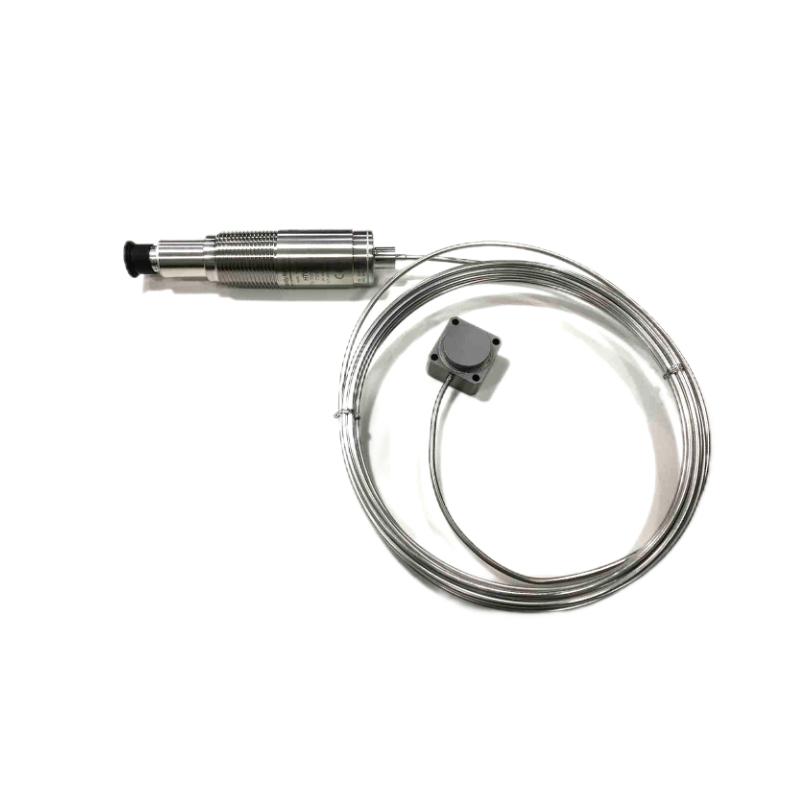
Bently Nevada 330750-60-05 High Temperature Velomitor System — Product Overview and Technical Specifications
1. Product Introduction
The Bently Nevada 330750-60-05 High Temperature Velomitor System is an industrial vibration velocity sensor designed for machinery operating in high-temperature environments. It is intended to measure vibration transmitted through machine housings, bearing supports, and other suitable mounting surfaces, helping maintenance teams assess equipment condition and identify changes in vibration behavior.
The 330750 series uses a split-design construction that separates the sensing head from the signal-conditioning electronics. The sensing head and its integral hardline cable can be installed in areas where temperatures reach 400°C (752°F), while the electronics are positioned in a cooler location within their operating-temperature limit.
This arrangement makes the system suitable for monitoring equipment where conventional vibration sensors may be limited by the temperature tolerance of their integrated electronics. It also avoids an intermediate connector between the sensing head and the electronics, reducing one potential source of connection-related failure.
The 330750-60-05 is configured with a 6-metre integral cable and multiple hazardous-area approvals associated with the -05 suffix. Its main purpose is to provide a vibration velocity signal for use in a compatible monitoring or machinery-protection system.
2. Brand and Product Series
| Item | Description |
|---|---|
| Brand | Bently Nevada |
| Model | 330750-60-05 |
| Product name | High Temperature Velomitor System |
| Product series | 330750 High Temperature Velomitor |
| Sensor technology | Piezoelectric integrating accelerometer used for vibration velocity measurement |
| Primary measurement | Machine casing and structural vibration velocity |
| Cable configuration | 6 m integral hardline cable |
| Sensing-head temperature limit | Up to 400°C (752°F) |
| Electronics temperature limit | Up to 121°C (250°F) |
| Approval suffix | -05: multiple approvals, including CSA, ATEX, and IECEx |
| Typical system role | Vibration monitoring and machinery-condition assessment |
The product is primarily intended for industrial users who need reliable vibration measurements at locations exposed to high surface temperatures. Its suitability for a specific machine depends on the mounting point, vibration characteristics, monitoring-system input requirements, cable routing, and hazardous-area installation requirements.
3. Detailed Technical Parameters
The following table summarizes the principal specifications associated with the 330750 high-temperature sensor family. Values should be checked against the exact revision of the equipment documentation before being used for engineering design or safety-critical commissioning.
| Parameter | Specification |
|---|---|
| Model | 330750-60-05 |
| Brand | Bently Nevada |
| Series | 330750 High Temperature Velomitor |
| Product type | High Temperature Velomitor System |
| Measurement principle | Piezoelectric vibration sensing with integrated signal conditioning in a separate electronics section |
| Measurement quantity | Vibration velocity |
| Nominal sensitivity | 5.7 mV/mm/s (145 mV/in/s), ±5% |
| Frequency response | 15–2,000 Hz, ±3 dB |
| Higher-accuracy frequency band | 20–1,000 Hz, ±0.9 dB |
| Sensing-head maximum operating temperature | 400°C (752°F) |
| Integral-cable maximum operating temperature | 400°C (752°F) |
| Electronics maximum operating temperature | 121°C (250°F) |
| Cable length | 6 m |
| Maximum cable length stated for the sensor family | Up to 305 m (1,000 ft), subject to application and cable-capacitance conditions |
| Output bias voltage | −12 ±2 VDC |
| Broadband noise | Approximately 0.127 mm/s RMS over the specified 15 Hz–2 kHz band |
| Amplitude linearity | Approximately ±2% up to 152 mm/s peak |
| Mounted resonance | Greater than 5 kHz |
| Transverse sensitivity | Less than 5% |
| Case isolation | Case-isolated design |
| Sensor-head material | 300-series stainless steel |
| Connector | Hermetically sealed, 2-pin MIL-C-5015 receptacle |
| Minimum cable bend radius | Approximately 51 mm |
| Sensor-head diameter | Approximately 25.4 mm |
| Electronics housing diameter | Approximately 33.4 mm |
| Electronics housing length | Approximately 152.1 mm |
| Cable diameter | Approximately 3.2 mm |
| Overall dimensions | Assembly-dependent; cable length and mounting arrangement affect the overall installed envelope |
| Typical assembled weight for the 6 m version | Approximately 0.953 kg |
| Hazardous-area approvals | CSA, ATEX, and IECEx for the applicable -05 configuration |
Dimensional note: The 25.4 mm sensor-head diameter and the electronics housing dimensions describe individual sections of the assembly, not a single overall length. The integral cable is 6 m long and is routed separately during installation. Allow sufficient space for the electronics housing, mounting hardware, connector access, and the required cable bend radius.
Weight note: The 0.953 kg figure is a typical assembled-unit value associated with the 6 m configuration. Shipping weight and packaged dimensions may be considerably different because they include packaging and accessories.
4. Product Applications
4.1 Power generation
The 330750-60-05 can be used to monitor vibration on suitable turbine casings, hot-section auxiliary equipment, boiler-related rotating machinery, and other high-temperature assets in power-generation facilities.
In these applications, vibration velocity trends can help maintenance personnel identify changes associated with mechanical looseness, imbalance, alignment problems, bearing-support deterioration, or changes in operating conditions. The sensor should be mounted at a location where the machine’s casing vibration meaningfully reflects the condition being monitored.
4.2 Petrochemical and refining facilities
Refineries and petrochemical plants often operate pumps, compressors, fans, and other rotating machinery near heated process equipment. The high-temperature sensing head allows vibration measurements at suitable hot surfaces while the electronics remain in a cooler location.
Typical applications include hot-oil pump skids, process-gas compressor supports, furnace-related fans, and other equipment where the mounting surface exceeds the temperature limits of conventional integrated sensors.
4.3 Steel and metal processing
Steel mills and metal-processing facilities use equipment exposed to radiant heat, high ambient temperatures, dust, and continuous mechanical loading. The 330750-60-05 may be considered for vibration monitoring on suitable motors, fans, drive assemblies, and machine structures where high surface temperature is the principal sensor-selection constraint.
The installation must still protect the cooler electronics from excessive ambient temperature and avoid exposing the integral cable to mechanical damage.
4.4 Industrial pumps and compressors
Vibration monitoring is commonly used to establish a baseline for rotating equipment and identify changes over time. A velocity sensor such as the 330750-60-05 can support condition-monitoring programs for selected pumps, compressors, fans, and motors.
Potentially useful indicators include:
-
Increasing overall vibration velocity.
-
Changes in vibration after maintenance or component replacement.
-
Differences between operating speeds or load conditions.
-
Abnormal vibration trends that warrant further diagnostic investigation.
The sensor does not independently identify every fault. Diagnosis normally requires trend analysis, operating data, machine knowledge, and, where appropriate, additional vibration measurements.
4.5 Machinery condition-monitoring systems
The sensor can serve as a field measurement component in a compatible machinery-monitoring installation. Before connecting it to a monitoring rack or data-acquisition system, verify the required sensitivity, input impedance, bias-voltage compatibility, channel configuration, cable characteristics, and hazardous-area installation requirements.
Compatibility should be confirmed for the complete measurement chain rather than assumed from the sensor model alone.
5. Product Advantages
5.1 High-temperature sensing capability
The key feature of the 330750 series is its ability to place the sensing head on a suitable surface reaching up to 400°C. This expands installation options for hot machinery and reduces the need to select a sensor whose electronics must operate directly at the measurement point.
5.2 Separation of the sensing head and electronics
The sensor’s split construction allows the sensing head to be installed in a hotter area while the signal-conditioning electronics are located in a cooler area.
This design is particularly useful when the machine’s mounting surface is too hot for conventional integrated vibration sensors. The electronics must nevertheless remain within their specified operating temperature.
5.3 Integral hardline cable
The sensing head and electronics are permanently connected by an integral cable assembly. Eliminating an intermediate connection between these sections removes one potential source of loose or degraded connections.
Correct cable routing remains important. The cable should be protected against crushing, abrasion, excessive bending, and contact with surfaces beyond its rated temperature.
5.4 Stable vibration velocity measurement
The specified sensitivity of 5.7 mV/mm/s allows the sensor’s output voltage to represent vibration velocity over its operating frequency range. This is useful for machinery-monitoring programs that trend vibration velocity rather than relying solely on isolated spot measurements.
5.5 Broad operating frequency range
The specified 15–2,000 Hz frequency response supports a range of industrial vibration-monitoring applications. The frequency range actually useful for a particular machine depends on the monitored component, operating speed, sensor mounting, monitoring-system settings, and the diagnostic objective.
5.6 Stainless-steel construction
The stainless-steel case is intended for industrial service. It provides a durable mechanical enclosure, although suitability for corrosive chemicals, washdown, or other special environmental conditions must be confirmed separately.
5.7 Hazardous-area approval options
The -05 configuration is associated with multiple approvals, including CSA, ATEX, and IECEx. These approvals can be important in classified industrial areas.
The exact certificate, gas or dust classification, temperature class, installation conditions, and approval applicability should be checked against the unit’s identification and the governing site requirements before installation.
5.8 Useful for condition-based maintenance
When used with an appropriate monitoring system, the sensor can provide vibration information for trending and maintenance decisions. A consistent baseline and correctly configured monitoring thresholds can help maintenance teams identify developing changes before they lead to unplanned equipment downtime.
6. Recommended Models in the Same Series or Closely Related Families
The following models are alternatives worth considering when selecting a high-temperature vibration sensor. Cable length, mounting arrangement, approvals, and exact model suffix should be confirmed before ordering.
The weights for the 330750 cable-length variants below are approximate typical assembled-unit estimates, based on the nominal 330750 configuration and the additional cable length. They are not substitutes for a model-specific dimensional drawing or weight specification.
| Model | Product type / configuration | Cable length | Key parameters | Dimensions | Weight (kg) |
|---|---|---|---|---|---|
| 330750-20-05 | High Temperature Velomitor System | 2 m | Sensitivity 5.7 mV/mm/s ±5%; sensing head up to 400°C; multiple approvals | Sensor head Ø25.4 mm; electronics housing Ø33.4 × 152.1 mm; cable Ø3.2 mm | Approx. 0.635 |
| 330750-40-05 | High Temperature Velomitor System | 4 m | Same basic 330750 sensor performance; shorter integral cable | Sensor head Ø25.4 mm; electronics housing Ø33.4 × 152.1 mm; cable Ø3.2 mm | Approx. 0.794 |
| 330750-60-05 | High Temperature Velomitor System | 6 m | Sensitivity 5.7 mV/mm/s ±5%; frequency response 15–2,000 Hz ±3 dB; head up to 400°C | Sensor head Ø25.4 mm; electronics housing Ø33.4 × 152.1 mm; cable Ø3.2 mm | Approx. 0.953 |
| 330750-80-05 | High Temperature Velomitor System | 8 m | Same basic 330750 sensor performance; longer integral cable | Sensor head Ø25.4 mm; electronics housing Ø33.4 × 152.1 mm; cable Ø3.2 mm | Approx. 1.111 |
| 330752 series | Related high-temperature Velomitor configuration | Depends on ordering code | High-temperature vibration velocity sensing; confirm mounting style, cable option, and approvals against the exact part number | Dimensions depend on the 330752 configuration; obtain the applicable drawing | Confirm exact configuration |
Model selection guidance
-
330750-20-05: Consider when the sensor head and electronics can be installed relatively close together and a 2 m cable provides sufficient routing allowance.
-
330750-40-05: A possible alternative when the installation requires a moderate cable run.
-
330750-60-05: Suitable to consider when the 6 m cable meets the physical routing requirements and the high-temperature performance matches the application.
-
330750-80-05: Consider where an 8 m cable is required, while checking the routing path, cable support, and total cable capacitance.
-
330752 series: Consider only after confirming the exact configuration and mounting requirements. Do not assume that all 330752 variants are mechanically interchangeable with the 330750.
The cable-length suffix is an important selection factor, but it is not the only one. A replacement must also match the mounting arrangement, electrical interface, measurement sensitivity, approval requirements, and monitoring-system configuration.
7. Five Related or Commonly Used Models from the Same Brand
The following products cover several related vibration-monitoring applications. They are not all direct substitutes for the 330750-60-05: some are intended for conventional-temperature velocity sensing, while others are accelerometers or different sensor configurations.
For these models, exact dimensions and weights can depend on the particular variant, connector, mounting hardware, and cable option. Where a single verified figure is not available here, the table identifies the information that must be confirmed instead of assigning an unsupported value.
| Model | Product family / type | Typical application | Principal technical consideration | Dimensions | Weight (kg) |
|---|---|---|---|---|---|
| 330500 | Velomitor piezoelectric velocity sensor | General industrial casing-vibration monitoring | Conventional velocity-sensor design; check the operating-temperature limit and the exact output specifications | Model-specific housing and mounting drawing required | Confirm exact variant |
| 330525 | Velomitor XA piezoelectric velocity sensor | Industrial machinery vibration monitoring | Check sensitivity, frequency response, mounting arrangement, and environmental ratings for the selected configuration | Model-specific drawing required | Confirm exact variant |
| 330400 | Industrial accelerometer family | Acceleration-based vibration measurement | Select according to required acceleration range, frequency response, mounting method, and compatible monitoring input | Confirm sensor and mounting configuration | Confirm exact variant |
| 330425 | Industrial accelerometer family | Machinery vibration monitoring where acceleration data is required | Verify the exact sensor version, electrical interface, frequency range, and installation requirements | Confirm sensor and mounting configuration | Confirm exact variant |
| 190501 | Velomitor CT velocity sensor | Industrial machinery vibration monitoring | Check the particular installation’s sensitivity, temperature requirements, connector, and mounting arrangement | Model-specific drawing required | Confirm exact variant |
How these alternatives compare with the 330750-60-05
The 330750-60-05 is most distinctive when a high-temperature sensing surface is the primary requirement. A conventional velocity sensor may be more appropriate where the mounting temperature is within its rating and a simpler installation is sufficient.
An accelerometer may be preferred where acceleration is the required measurement quantity or where the monitoring strategy and diagnostic methods are built around acceleration data. The measurement quantity should be selected according to the machine, monitoring objective, and channel configuration—not merely because one model belongs to the same brand.
The 190501 and other velocity-sensor options may be worth evaluating for applications where their specific mounting and environmental characteristics better match the installation. Exact interchangeability should always be established from the technical specifications and system requirements.
8. Installation and Selection Considerations
8.1 Mounting surface
The sensor must be mounted securely on a suitable surface that transmits the vibration of interest. A poor mounting surface, loose fasteners, unsuitable mounting hardware, or excessive local resonance can distort the measured signal.
Before installation, confirm the required mounting pattern and fastener specification from the applicable drawing.
8.2 Cable routing
The 6 m integral cable should be routed so that it does not experience excessive bending, abrasion, crushing, or unapproved exposure to hot surfaces. The minimum bend radius is approximately 51 mm.
The cable should also be supported appropriately so that its weight and movement do not place unnecessary mechanical stress on the sensor or electronics connection.
8.3 Temperature management
The 400°C rating applies to the sensing head and integral cable under the specified conditions. The electronics section has a lower maximum operating temperature of 121°C.
The installation should therefore be planned around the temperature of each section rather than assuming that the complete assembly can operate at 400°C.
8.4 Electrical compatibility
Confirm the monitoring-system input requirements, nominal sensitivity, bias voltage, cable characteristics, and connector compatibility. Incorrect electrical configuration can lead to inaccurate measurements, abnormal channel readings, or an unusable signal.
8.5 Hazardous-area requirements
Where the equipment is installed in a classified area, confirm the actual approval markings on the supplied unit and verify that they meet the site’s classification and installation rules. A model suffix alone should not be treated as a substitute for checking the applicable certificate and installation conditions.
8.6 Baseline and maintenance
After installation, establish a baseline under known machine operating conditions. Record the operating speed, load, sensor position, and other relevant conditions so that later measurements can be compared meaningfully.
Changes in vibration should be investigated in context. A higher reading does not automatically identify a particular fault, and a normal overall vibration value does not guarantee that every machine component is in good condition.
9. Summary
The Bently Nevada 330750-60-05 High Temperature Velomitor System is a high-temperature vibration velocity sensor with a 6 m integral cable. Its separated sensing head and signal-conditioning electronics allow the sensing head to be installed on suitable surfaces up to 400°C, while the electronics remain within their lower temperature limit.
Its principal selection factors are the high-temperature capability, 5.7 mV/mm/s nominal sensitivity, 15–2,000 Hz frequency response, 6 m cable length, mounting dimensions, electrical compatibility, and applicable hazardous-area approvals.
When choosing an alternative, start by confirming the required cable length and mounting geometry, then compare the temperature rating, sensitivity, frequency response, output interface, approvals, and monitoring-system requirements. The exact dimensional drawing and weight for the ordered configuration should be confirmed before installation or replacement.