

ProductPRODUCT
Featured products
Contact Us
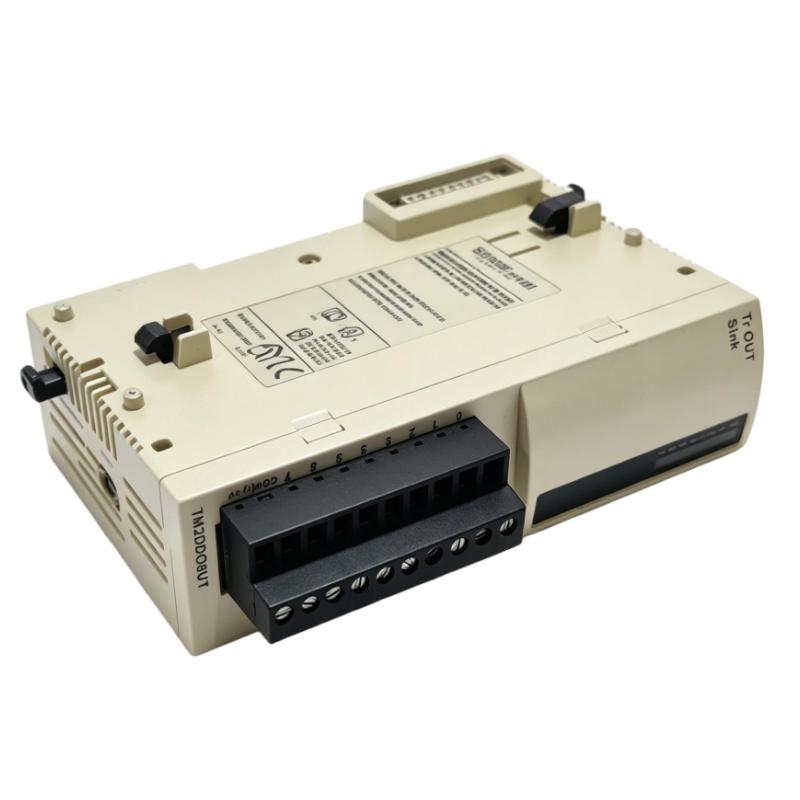
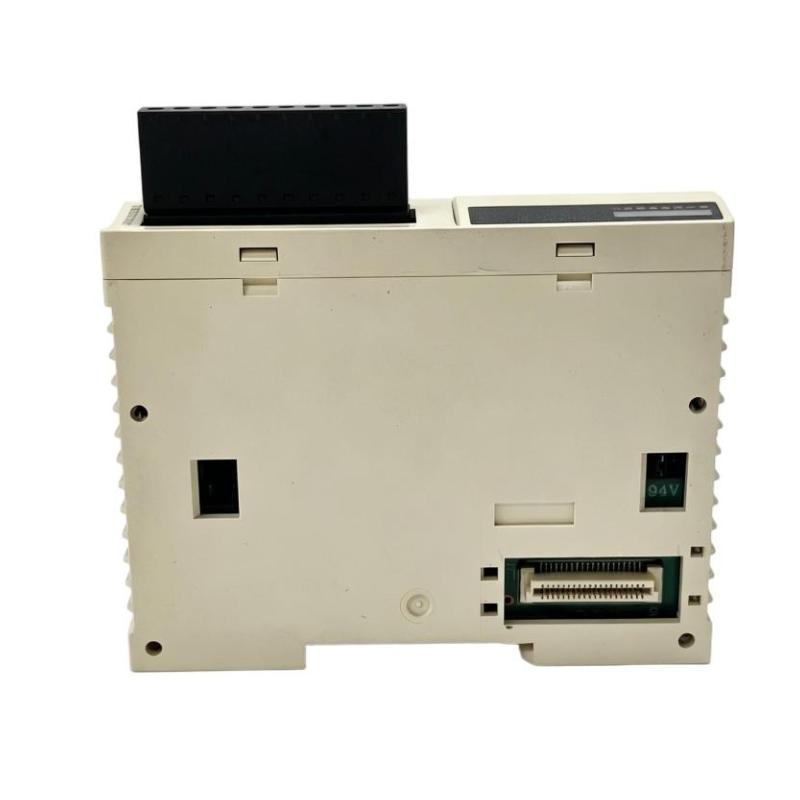
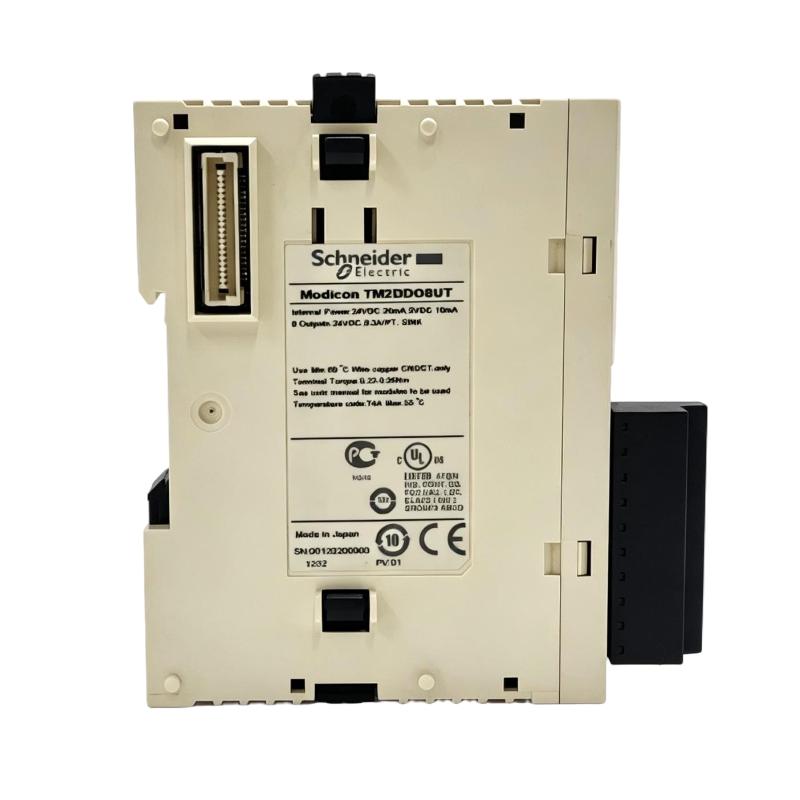
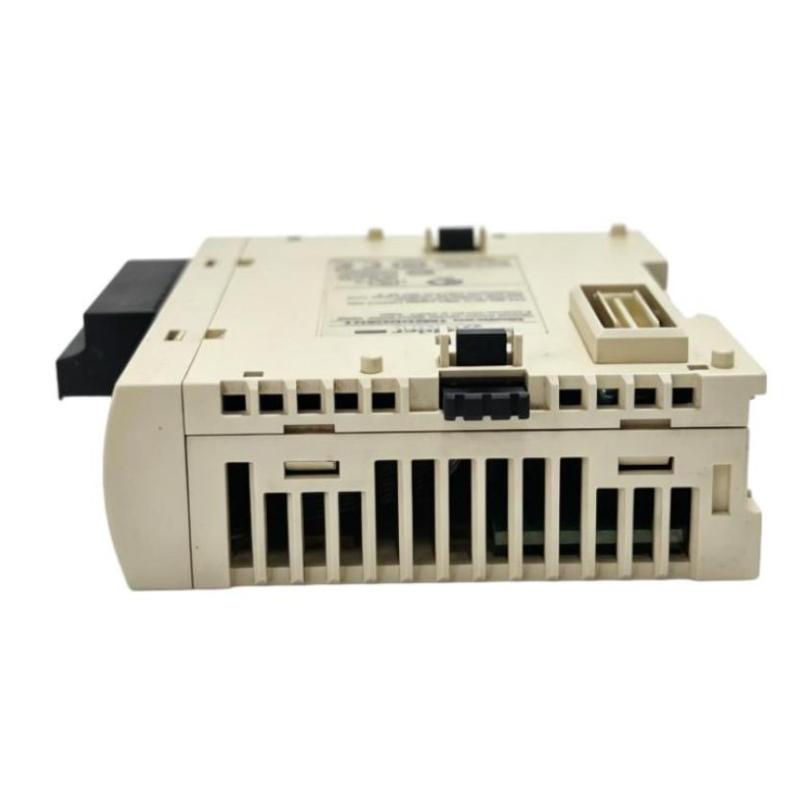
- Schneider
- TM2DDO8UT
- Discrete Output Module
- France
- 84.6 x 90 x 27.3 mm
- 0.085 kg
- Xiamen, China
- New & In Stock
- T/T, PayPal, Western Union
- 1 Year
- 1-3 Working Days
- DHL, UPS, TNT, FedEx and EMS.
- 24-Hour Service
- COO
- 3
Our advantage

Global Logistics
We have a 10-year logistics and express cooperation agreement, so our products can be shipped to any place in the world.

Brand new and original
Our products are imported in bulk from the place of origin. Because of the cooperative relationship, our products are all original and 100% new.

24-hour service
We provide 7*24 hours service to our customers. We will be there whenever you need us.

Price advantage
All our products are priced very favorably because we have our own warehouse and supply.
| Company Information | |||
| [email protected] | |||
| Mobile | +8615980777398 | ||
| +8615980777398 | |||
| 15980777398 |
1. Product Overview
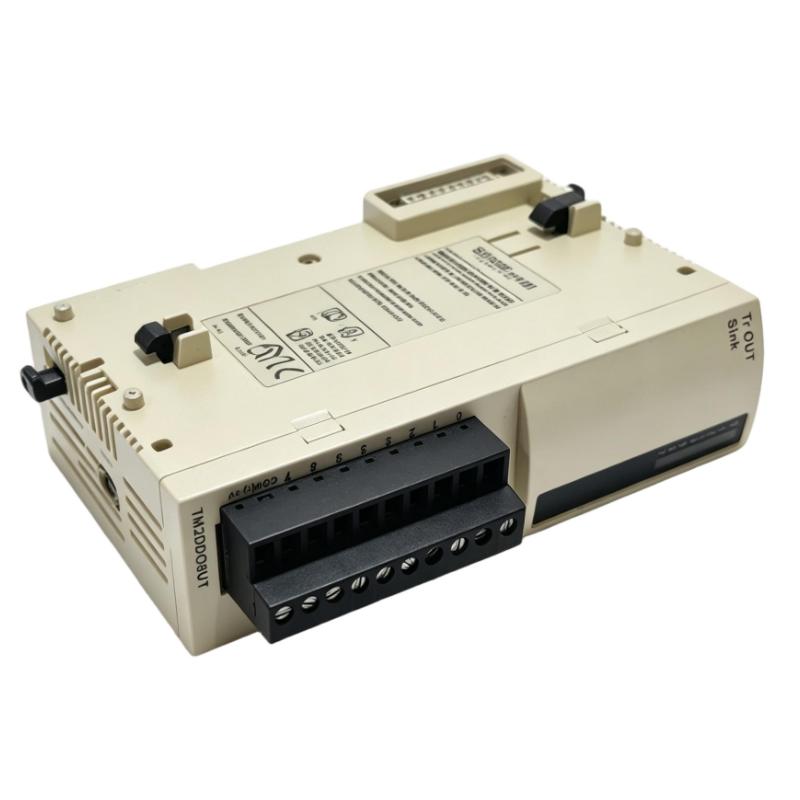
The Schneider Electric TM2DDO8UT is identified as a discrete output module intended for industrial automation and PLC-based control applications. Discrete output modules provide the interface between a programmable logic controller (PLC) and external devices, allowing programmed control logic to operate compatible field equipment.
In industrial environments, digital output modules are commonly used to manage indicator lamps, interface relays, solenoid valves, and other devices that respond to discrete ON/OFF signals. Their role is to translate controller commands into electrical switching actions that support automated machine sequences and equipment operation.
The TM2DDO8UT has supplied dimensions of 84.6 × 90 × 27.3 mm and a weight of approximately 0.085 kg. Its compact physical design is relevant to control-cabinet planning, equipment maintenance, and replacement-part identification.
Before integrating the TM2DDO8UT into an existing system, engineers should verify its exact output configuration, rated voltage, output current, connector arrangement, and supported controller models. These specifications should be taken from documentation for the exact part number rather than inferred from similar Schneider Electric modules.
For industrial buyers, confirming the complete product reference and condition is particularly important when sourcing components for established PLC installations. Accurate identification helps reduce the risk of selecting a module that does not match the original system requirements.
2. Technical Specifications
| Parameter | Details |
|---|---|
| Manufacturer | Schneider Electric |
| Model Number | TM2DDO8UT |
| Product Type | Discrete Output Module |
| Product Family | Modicon TM2 series identification to be verified |
| I/O Function | Digital Output |
| Number of Output Channels | Verify against the official model-specific datasheet |
| Output Technology | Verify against the official model-specific datasheet |
| Rated Output Voltage | Verify against the official model-specific datasheet |
| Rated Output Current | Verify against the official model-specific datasheet |
| Output Logic | Verify against the official model-specific datasheet |
| Electrical Connection | Verify against the official hardware documentation |
| Mounting Method | Verify against the official installation documentation |
| Dimensions | 84.6 × 90 × 27.3 mm |
| Weight | 0.085 kg |
| Typical Applications | PLC-controlled equipment, discrete switching, industrial machine automation |
| Controller Compatibility | Confirm using the supported hardware documentation |
| Product Lifecycle Status | Verify current regional availability and lifecycle information |
Technical note: The exact electrical characteristics of the TM2DDO8UT should be confirmed before installation or purchase. Specifications from the TM2DDO16UT, TM2DDO16TK, or other similarly named output modules must not be assumed to apply to this model.
3. Function and Working Principle
The primary function of a discrete output module is to convert commands generated by a PLC program into electrical switching signals for compatible external equipment. The precise operating principle of the TM2DDO8UT depends on its documented output technology and circuit configuration.
3.1 Digital Output Signal Processing
A PLC executes programmed logic based on input signals, operator commands, timers, and machine operating conditions. When the program requires an output to change state, the controller updates the corresponding output command.
The output module responds by changing the electrical state of the relevant channel. A compatible field device then responds to that signal, enabling the control system to initiate or stop a specific operation.
3.2 Control of External Devices
Discrete output modules are commonly used to operate devices with defined ON and OFF states. Depending on the module’s actual electrical specifications, these may include:
- Industrial indicator lamps
- Interface relays
- Compatible solenoid valves
- Auxiliary control circuits
- Equipment status indicators
- Discrete command interfaces
The selected load must match the output module’s rated voltage, current, output logic, and switching characteristics. Devices exceeding the module’s electrical ratings require an appropriately rated interface device.
3.3 Integration with PLC Programs
The output channels are assigned to control functions within the PLC application. When the program conditions are satisfied, the corresponding output command is activated.
Correct channel addressing and wiring are essential. An incorrect output assignment can cause the wrong device to operate, while incorrect wiring may prevent a field device from responding as expected.
3.4 Electrical Protection and Load Management
The available protection functions of the TM2DDO8UT must be verified in its official documentation. Overload protection, short-circuit protection, reverse-polarity protection, and automatic recovery should not be assumed without model-specific confirmation.
Suitable circuit protection, correct conductor sizing, and appropriate load selection remain important parts of a reliable industrial installation.
4. Role in Industrial Control Systems
The TM2DDO8UT is intended to be evaluated as a discrete output interface in a compatible automation architecture. Its role is to connect the PLC’s logical decisions with external electrical devices.
4.1 PLC Output Expansion
A PLC-based machine may require more discrete outputs than are available directly on its controller. Supported expansion modules can provide additional channels for operating field devices and coordinating machine functions.
Before selecting the TM2DDO8UT for output expansion, confirm that the exact controller supports this model and that the required hardware and software configuration is available.
4.2 Machine Sequence Control
Industrial machines often operate through programmed sequences involving positioning, transfer, clamping, signaling, and other operations. Discrete output signals allow the PLC to coordinate compatible devices throughout these sequences.
The suitability of the TM2DDO8UT for a particular machine depends on its verified channel count, output type, voltage rating, current capacity, and controller compatibility.
4.3 Interface Between Control Logic and Field Devices
PLC programs operate on logical states, while field devices require electrical signals appropriate to their design. A discrete output module provides the interface between these two layers of an automation system.
During system design, engineers must account for output polarity, common wiring, load current, field-device requirements, and any necessary interface components.
4.4 Maintenance of Existing Automation Equipment
For facilities maintaining legacy automation systems, matching the exact output-module reference is important when replacing a failed component. Similar model numbers do not necessarily indicate identical electrical characteristics or interchangeable connectors.
Before purchasing a TM2DDO8UT, compare its full part number with the installed module and original equipment documentation. Also verify the unit’s condition, authenticity, availability, and compatibility with the target system.
5. Industrial Applications
5.1 Manufacturing Automation
Manufacturing machinery uses discrete output signals to coordinate equipment operation and communicate operating status. Depending on its verified specifications, a compatible output module may be used with indicator lamps, interface relays, and auxiliary control circuits.
5.2 Packaging Machinery
Packaging systems rely on PLC-controlled sequences for feeding, positioning, sealing, cutting, and product transfer. Discrete output modules can provide commands to compatible devices used in these processes.
The TM2DDO8UT should be selected for such applications only after its output capacity and electrical characteristics have been confirmed.
5.3 Material Handling Systems
Conveyors, transfer equipment, and sorting machines use discrete signals to coordinate different stages of material movement. Output modules may control compatible interface devices for indicators, diverters, and auxiliary mechanisms.
Motors and other high-current loads generally require suitable contactors, motor starters, drives, or interface equipment rather than direct connection to a standard PLC output.
5.4 Industrial Process Equipment
Process skids and auxiliary systems may use discrete outputs to operate compatible valves, provide equipment-status signals, and coordinate local control functions.
The module’s application suitability depends on the requirements of the field devices and the specifications of the control architecture. Standard discrete output modules should not be treated as safety-rated outputs unless explicitly designed and certified for the intended safety function.
5.5 Legacy PLC System Support
In existing automation installations, replacing a faulty output module with the correct supported part can help restore machine operation while preserving the original control architecture.
However, the replacement must be compatible with the controller, wiring arrangement, application configuration, and electrical loads. Exact model verification is especially important when working with older product families.
6. Installation and System Integration
Correct installation and configuration are essential for dependable operation and equipment protection.
6.1 Verify Controller Compatibility
Before installation, confirm the supported PLC family, hardware revision, expansion configuration, and programming environment. The product-family designation alone is not sufficient to establish compatibility.
For replacement projects, compare the complete model number and electrical characteristics with the original module.
6.2 Mounting and Cabinet Layout
The supplied dimensions of the TM2DDO8UT are 84.6 × 90 × 27.3 mm, with a weight of approximately 0.085 kg. These values can be used for preliminary space planning.
The exact mounting method, installation orientation, and clearance requirements should be confirmed using the official hardware instructions. Allow adequate room for connectors, wiring, ventilation, and future maintenance.
6.3 Electrical Wiring
Use the official wiring diagram for the exact TM2DDO8UT model. Do not assume that its connector pinout, supply arrangement, or output common configuration matches another Schneider Electric module.
Before connecting field wiring:
- Confirm the complete module reference.
- Verify the required supply voltage and output configuration.
- Check the connector type and pin assignments.
- Match connected loads to the documented electrical ratings.
- Use appropriately rated conductors and connectors.
- Provide suitable external circuit protection.
- Verify polarity and common wiring.
- Inspect all connections before energizing the equipment.
Electrical installation and maintenance should be performed by qualified personnel following the applicable safety procedures.
6.4 Field Load Compatibility
Before connecting a field device, determine its operating voltage, steady-state current, inrush current, and switching requirements. Compare these values with the module’s documented limits.
If a load exceeds the output module’s rated capacity, use a suitable interface relay, contactor, or other switching device. Inductive loads may also require suppression components, depending on the circuit design and manufacturer’s recommendations.
6.5 Software Configuration and Commissioning
Configure the module using the programming environment and hardware configuration supported by the target PLC. Assign the output addresses according to the application program and confirm that each address corresponds to the intended field device.
A commissioning procedure should include:
- Confirm the model number and physical condition.
- Verify PLC and module compatibility.
- Inspect the connector and field wiring.
- Check the power supply and external protection.
- Confirm the output configuration and addressing.
- Test outputs under controlled conditions.
- Verify the response of connected equipment.
- Investigate unexpected switching or fault behavior.
- Document the final wiring and configuration.
7. Compatible System Components
The TM2DDO8UT should be used only with components and controllers that explicitly support the exact model.
| Component Type | Function | Compatibility Considerations |
|---|---|---|
| Compatible Schneider Electric PLC | Executes the control program and manages I/O | Verify the exact supported module reference |
| Supported I/O Expansion Interface | Integrates the output module into the control system | Confirm the hardware expansion architecture |
| Industrial Power Supply | Provides the required electrical supply | Match the documented voltage and current requirements |
| Field Wiring and Connector Assembly | Connects output channels to external equipment | Follow the official connector and pinout diagram |
| Interface Relays | Allows control of suitable external loads | Verify coil requirements and contact ratings |
| Solenoid Valves | Provides electrically controlled actuation | Confirm output type and current compatibility |
| Indicator Lamps | Displays equipment status | Match the lamp’s voltage and current requirements |
| Mounting Hardware | Supports installation in the control cabinet | Follow the specified mounting instructions |
Before ordering associated components, verify the module’s exact electrical specifications and the controller’s supported hardware list. This helps prevent integration problems caused by incorrect connectors, incompatible output logic, or unsupported I/O configurations.
8. Recommended Alternative Models
If the TM2DDO8UT is unavailable, an alternative should be selected according to the actual system requirements rather than physical size or a similar product name.
| Model / Range | Type | Key Feature | Application |
|---|---|---|---|
| Schneider TM2DDO8UT | Original discrete output module | Exact model reference for identification | Replacement in a verified compatible installation |
| Schneider TM2 Discrete Output Modules | Legacy discrete output range | Multiple configurations may be available across the family | Maintenance of supported legacy automation systems |
| Schneider Modicon TM3 Output Modules | Discrete output expansion range | Different output configurations are available | Modernization projects using supported controllers |
| Schneider PLC-Compatible Output Modules | Discrete output modules | Electrical characteristics vary by model | New installations and replacement planning |
Important: The alternatives listed above are product families or comparison candidates, not confirmed direct replacements. A suitable replacement must match the controller platform, channel count, output technology, voltage and current ratings, connector arrangement, mounting requirements, and software configuration.
Do not substitute a TM2-series module with a TM3-series model without checking the manufacturer’s compatibility and migration documentation.
9. Key Advantages
9.1 Compact Physical Dimensions
With supplied dimensions of 84.6 × 90 × 27.3 mm, the TM2DDO8UT can be evaluated for installations where control-cabinet space is limited.
9.2 Lightweight Construction
The stated weight of approximately 0.085 kg supports straightforward handling during inspection and replacement, subject to the module’s installation requirements.
9.3 Discrete Signal Interface
As a discrete output module, it serves the general purpose of connecting programmed control logic with compatible field devices.
9.4 Potential Value in Maintenance Projects
Identifying the exact part number helps maintenance teams distinguish the required component from similar-looking modules and reduces the risk of selecting an incompatible replacement.
9.5 Support for Structured Automation Design
When the model’s specifications and controller compatibility are verified, the module can be assessed as part of a structured PLC output architecture for suitable industrial applications.
9.6 Improved Procurement Accuracy
Confirming the model-specific electrical characteristics, connector details, product condition, and lifecycle status before purchasing helps reduce procurement errors and installation delays.
10. Technical FAQs
Q1: What is the Schneider TM2DDO8UT?
The Schneider Electric TM2DDO8UT is identified as a discrete output module. Its exact product-family classification and technical characteristics should be confirmed against official documentation for the complete model reference.
Q2: What are the dimensions of the TM2DDO8UT?
The supplied dimensions are 84.6 × 90 × 27.3 mm, and the stated weight is approximately 0.085 kg. Confirm the manufacturer’s dimension convention before using these values for a mechanical layout.
Q3: How many output channels does the TM2DDO8UT have?
The channel count has not been independently confirmed here for the exact TM2DDO8UT reference. Verify the official product datasheet rather than inferring the number from the model name.
Q4: What is the rated output voltage?
The rated output voltage should be confirmed using the model-specific technical documentation before connecting the module to a supply or field device.
Q5: What type of output technology does the TM2DDO8UT use?
The output technology and switching logic must be verified against the official documentation. Do not assume that this model shares the output characteristics of another module in the Schneider Electric TM2 range.
Q6: Is the TM2DDO8UT compatible with every Schneider Electric PLC?
No. Compatibility depends on the supported controller family, hardware configuration, and I/O expansion architecture. Confirm that the target PLC explicitly supports the exact module.
Q7: Can the TM2DDO8UT replace another TM2 output module?
Not automatically. Different models may have different output configurations, electrical ratings, connector assignments, and compatibility requirements. Compare the original and replacement specifications before installation.
Q8: What should buyers check before purchasing?
Verify the full part number, electrical specifications, connector type, compatibility, physical condition, authenticity, lifecycle status, and supplier warranty. For used or refurbished units, request clear photographs and information about testing and storage conditions.
Q9: Can the module drive motors directly?
Do not connect a motor directly unless the exact product documentation explicitly permits the intended load. Motor circuits generally require appropriately rated switching or drive equipment.
Q10: What information is required to select a replacement?
The key information includes the original module reference, PLC model, number of required outputs, output voltage, output technology, current requirements, connector pinout, and application configuration. These details help determine whether a proposed alternative is electrically and mechanically suitable.
11. Conclusion
The Schneider Electric TM2DDO8UT is identified as a discrete output module for industrial automation applications. Its supplied dimensions of 84.6 × 90 × 27.3 mm and weight of approximately 0.085 kg provide useful physical information for control-cabinet planning and replacement-part identification.
For successful integration, however, its exact electrical specifications and controller compatibility must be verified against official documentation. Similar product references should not be treated as proof of identical output characteristics or direct interchangeability.
Before purchasing or installing the TM2DDO8UT, confirm its output configuration, rated voltage, current limits, connector arrangement, supported controller models, and current availability. Accurate verification helps ensure that the selected component meets the requirements of the industrial control system.