

ProductPRODUCT
Featured products
Contact Us
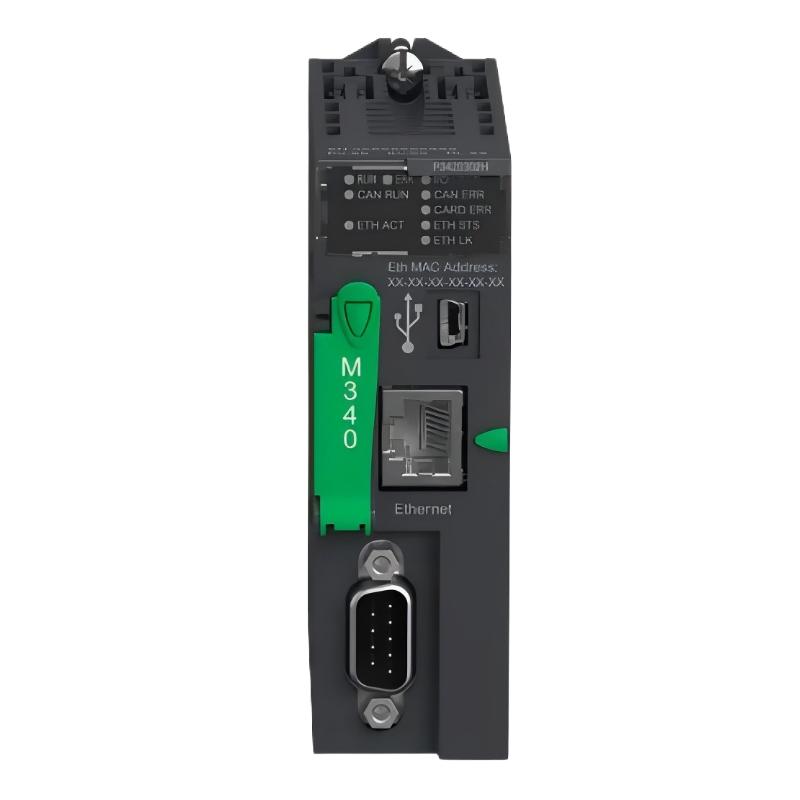
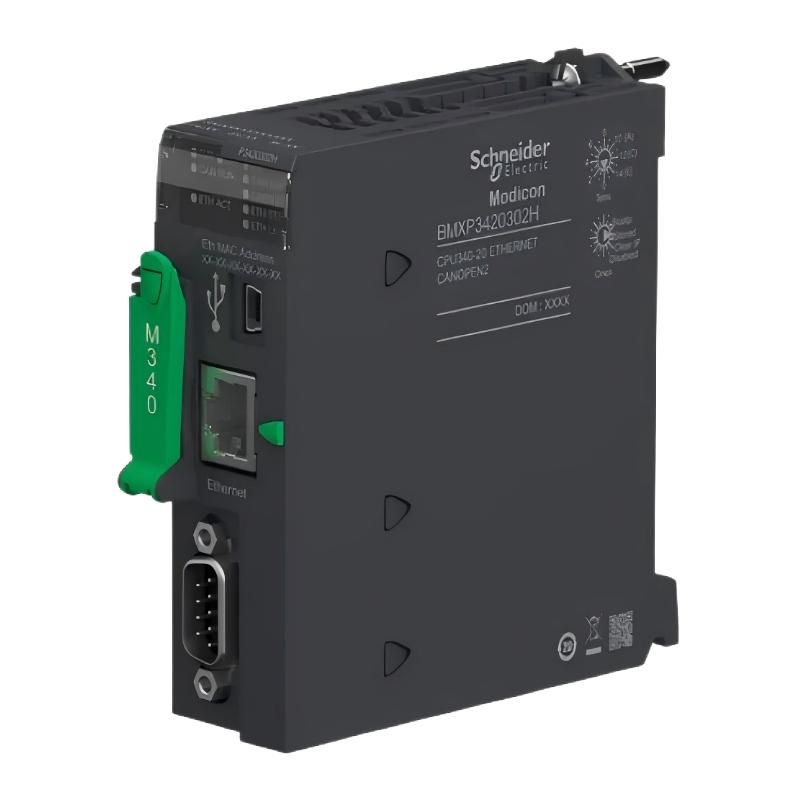
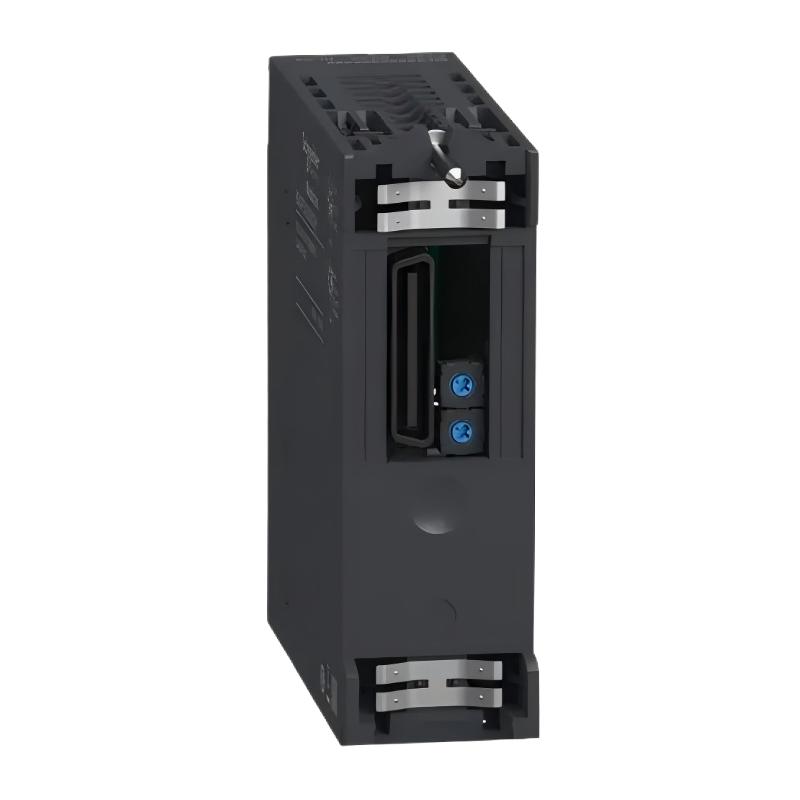
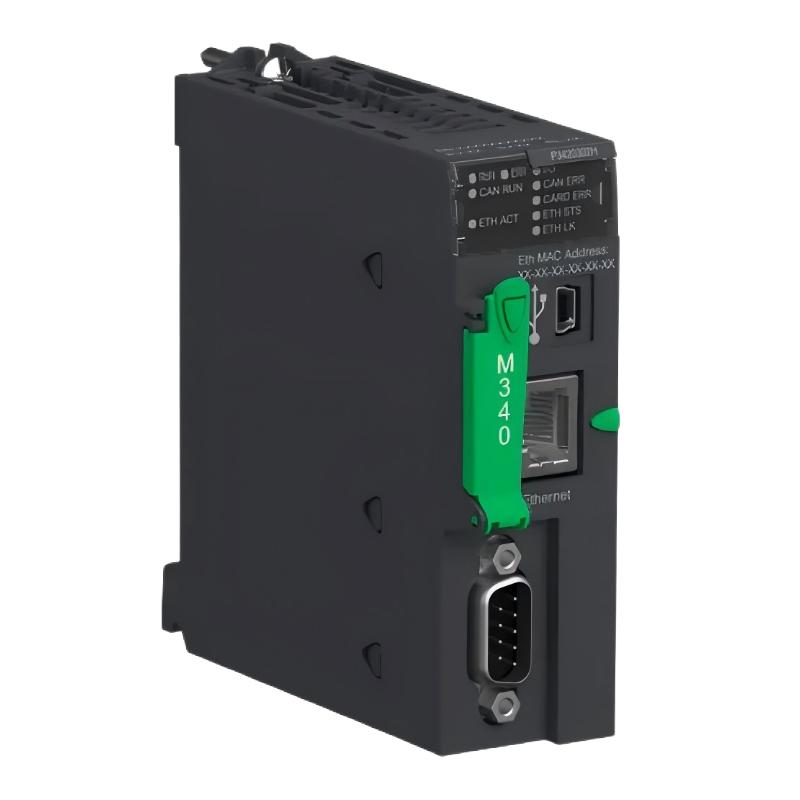
- Schneider
- BMXP3420302H
- Processor Module
- France
- 104 x 100 x 33 mm
- 0.215 kg
- Xiamen, China
- New & In Stock
- T/T, PayPal, Western Union
- 1 Year
- 1-3 Working Days
- DHL, UPS, TNT, FedEx and EMS.
- 24-Hour Service
- COO
- 6
Our advantage

Global Logistics
We have a 10-year logistics and express cooperation agreement, so our products can be shipped to any place in the world.

Brand new and original
Our products are imported in bulk from the place of origin. Because of the cooperative relationship, our products are all original and 100% new.

24-hour service
We provide 7*24 hours service to our customers. We will be there whenever you need us.

Price advantage
All our products are priced very favorably because we have our own warehouse and supply.
| Company Information | |||
| [email protected] | |||
| Mobile | +8615980777398 | ||
| +8615980777398 | |||
| 15980777398 |
Product Overview
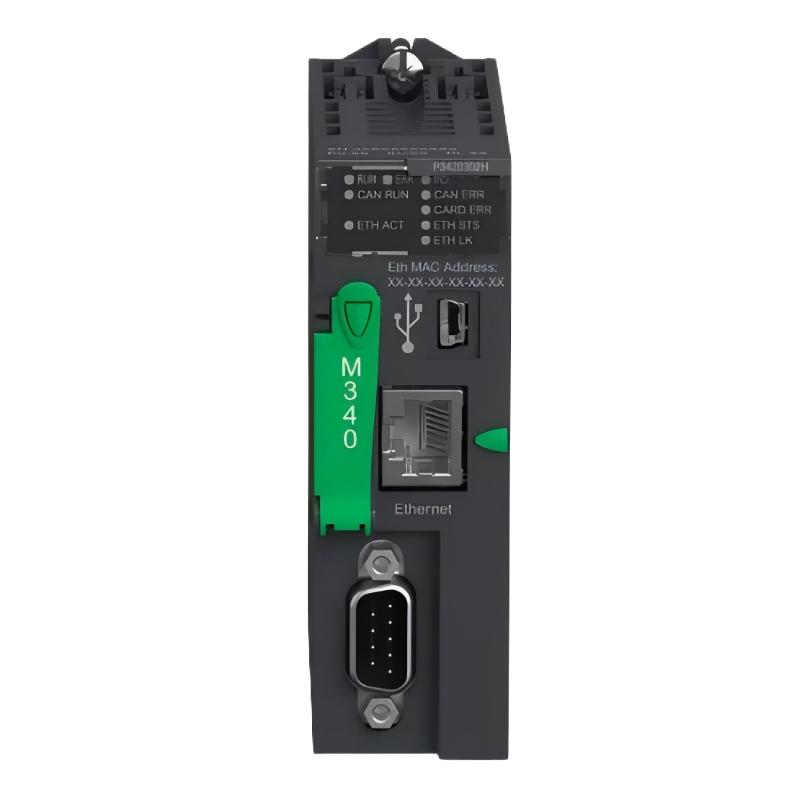
The Schneider BMXP3420302H Processor Module is an industrial PLC processor component designed to serve as the central processing element within a compatible Schneider Electric automation system. In a PLC architecture, the processor executes the programmed control logic, coordinates input and output operations, and manages interactions between the controller and associated automation equipment.
Industrial control systems depend on reliable processing to coordinate machines and processes. Sensors provide information about operating conditions, I/O modules transfer field signals, and the PLC processor evaluates this information according to the application program. The processor then determines the required control actions and coordinates the corresponding outputs.
The BMXP3420302H has listed dimensions of 104 × 100 × 33 mm and a weight of 0.215 kg. Its compact form factor is suitable for integration into industrial PLC racks and control cabinets where space, wiring organization, and service accessibility are important considerations.
The processor can form part of a larger automation architecture incorporating power supplies, digital and analog I/O modules, communication modules, terminal systems, operator interfaces, sensors, actuators, and industrial networks. Exact system capabilities depend on the installed hardware configuration and application requirements.
Technical Specifications
| Parameter | Specification |
|---|---|
| Manufacturer | Schneider Electric |
| Model | BMXP3420302H |
| Product Type | Processor Module |
| Application | PLC / Industrial Automation Control |
| Primary Function | PLC Program Execution and Control Processing |
| Dimensions | 104 × 100 × 33 mm |
| Weight | 0.215 kg |
| Installation | Industrial PLC System / Control Cabinet |
| Product Category | PLC Processor Module |
| System Role | Central Control and Processing |
The exact processing performance, memory resources, communication functions, supported programming features, firmware requirements, and environmental specifications should be verified against the applicable hardware revision and system documentation before installation or replacement.
What Is the Schneider BMXP3420302H?
The Schneider BMXP3420302H is a PLC processor module that serves as a central control element in a compatible Schneider Electric automation system.
Unlike a dedicated input or output module, the processor is responsible for executing the control application. It receives information from the PLC’s input structure, evaluates programmed logic, and coordinates the outputs required to control the connected process.
A simplified PLC architecture can be represented as:
Field Devices → I/O Modules → BMXP3420302H → Output Modules → Actuators
For systems with network communication, the architecture can also include:
BMXP3420302H → Communication Infrastructure → HMI / SCADA / Other Automation Equipment
This allows the processor to coordinate local control functions while participating in a larger automation system.
PLC Processor Working Principle
The processor operates as the central execution element of the PLC control cycle.
Input Data
Information from sensors, switches, instruments, and other devices is made available to the controller through the appropriate input architecture.
Program Execution
The processor executes the user-defined PLC application.
Depending on the application, the program may include:
- Sequential logic
- Interlocking
- Timers
- Counters
- Mathematical operations
- Equipment states
- Alarm handling
- Data processing
- Communication functions
Output Decisions
Based on the current inputs and application logic, the processor determines the required output states.
These commands are then transferred through the appropriate output modules or control interfaces.
Repeated Control Cycle
The controller continuously repeats the processing cycle while the automation system is operating.
A simplified sequence is:
Input Acquisition → Program Execution → Output Processing → Communication / Diagnostics → Repeat
This continuous cycle allows the PLC to respond to changes in machine and process conditions.
Main Functions of the BMXP3420302H
Centralized PLC Processing
The processor provides the computational core of the automation system.
Application Logic Execution
It executes programmed control instructions used to operate the machine or industrial process.
I/O Coordination
The processor coordinates information exchanged between the PLC and its associated I/O modules.
Sequence Management
PLC programs can use the processor to manage machine sequences and operating states.
Control Interlocking
The processor can execute programmed interlocks that coordinate equipment operation according to the application design.
Diagnostic Coordination
The processor participates in the control system’s diagnostic architecture, allowing maintenance personnel to investigate system conditions.
Role in Industrial Automation
The processor acts as the link between the programmed automation strategy and the physical industrial process.
A typical control architecture may be organized as:
Sensors → Input Modules → PLC Processor → Output Modules → Actuators
A networked architecture can extend this arrangement:
PLC Processor → Ethernet / Industrial Network → HMI / SCADA / Supervisory Equipment
Within this structure, the BMXP3420302H can support control functions such as:
- Machine sequencing
- Process control
- Equipment coordination
- Interlocking
- Alarm management
- Data processing
- I/O management
- Communication coordination
- System diagnostics
The exact functions available depend on the complete PLC platform and configured application.
Industrial Applications
Machine Control
PLC processor modules are widely used in automated machines where programmed logic coordinates sensors, actuators, motors, and operating sequences.
Manufacturing Systems
Manufacturing equipment can use PLC processors to coordinate production stations and material-handling operations.
Packaging Machinery
Packaging applications often require coordinated sequences involving sensors, motors, valves, and other machine components.
Material Handling
Conveyor systems, transfer stations, sorting equipment, and other material-handling applications can use PLC-based control architectures.
Process Automation
Industrial processes can use programmable controllers to coordinate pumps, valves, motors, instrumentation, and process sequences.
Utility Equipment
PLC control systems can also be used for equipment monitoring and automation in utility and infrastructure installations.
PLC System Architecture
The BMXP3420302H should be installed as part of a complete PLC architecture.
| Component | Typical Function |
|---|---|
| Power Supply | Provides system power |
| Processor Module | Executes PLC application logic |
| Digital Input Module | Receives discrete signals |
| Digital Output Module | Controls discrete devices |
| Analog Input Module | Receives analog process measurements |
| Analog Output Module | Provides analog control signals |
| Communication Module | Connects the PLC to external networks |
| Terminal System | Provides field wiring interfaces |
| HMI | Provides operator interaction |
| SCADA System | Provides supervisory monitoring |
| Sensors | Detect physical process conditions |
| Actuators | Perform physical process actions |
The exact combination of modules should be determined according to the specific automation application.
Installation Guidelines
Verify the Processor Model
Before installation, confirm the complete product designation:
Schneider BMXP3420302H
The processor should be matched with the intended PLC architecture.
Inspect the Hardware
Check the module for visible damage and verify that its mechanical and electrical interfaces are in acceptable condition.
Install in the Correct PLC Location
The processor should be installed according to the applicable PLC rack and system arrangement.
Verify Power Supply
Before energizing the PLC system, verify that the associated power supply and wiring are appropriate for the installation.
Check Associated Modules
Confirm that the installed I/O and communication modules correspond with the planned hardware configuration.
Inspect Wiring
Check power, field, communication, and control wiring before commissioning.
PLC Program Configuration
Hardware installation alone does not complete the commissioning process. The PLC application and hardware configuration must also correspond with the actual installation.
Typical engineering tasks may include:
- Defining input conditions
- Configuring outputs
- Creating machine sequences
- Implementing interlocks
- Configuring timers and counters
- Processing analog information
- Creating alarm conditions
- Managing equipment states
- Establishing communication functions
The exact programming tools, supported languages, and software requirements should be confirmed for the specific Schneider Electric PLC platform.
Commissioning Procedure
A systematic commissioning process helps reduce startup problems.
Step 1: Confirm Hardware
Verify the BMXP3420302H processor and its position in the PLC system.
Step 2: Inspect the Rack
Check the processor, power supply, I/O modules, and communication equipment.
Step 3: Verify Wiring
Inspect field wiring, control wiring, power connections, and communication connections.
Step 4: Verify the Application Program
Confirm that the correct PLC application and configuration have been prepared.
Step 5: Energize the System
Power the PLC system according to the applicable commissioning procedure.
Step 6: Check Processor Diagnostics
Review available diagnostic information for startup errors or abnormal system conditions.
Step 7: Test Inputs and Outputs
Verify that input information is correctly detected and output commands produce the expected responses.
Step 8: Test the Machine or Process
Run the controlled equipment through its intended operating sequence under controlled conditions.
Troubleshooting the BMXP3420302H
Processor Does Not Start
If the PLC processor does not start normally, inspect:
- Power supply
- Processor installation
- Rack connections
- Hardware configuration
- System diagnostics
- Application configuration
The processor should not be replaced until the surrounding system has been checked.
I/O Signals Are Incorrect
If inputs or outputs do not behave as expected, inspect:
- I/O module configuration
- Field wiring
- Sensor signals
- Output circuits
- PLC program logic
- Associated power supplies
The problem may originate outside the processor.
Unexpected Machine Operation
Unexpected behavior can result from:
- Incorrect PLC logic
- Incorrect input information
- Output wiring problems
- Sensor faults
- Actuator faults
- Communication problems
- Configuration errors
The complete control chain should be evaluated.
Communication Failure
If the PLC cannot communicate with another device, inspect the communication module, network connections, addressing, configuration, and connected equipment.
Intermittent Operation
Intermittent problems may be associated with:
- Loose connections
- Power instability
- Wiring faults
- Environmental conditions
- Communication issues
- Configuration problems
Available diagnostics should be reviewed before replacing the processor.
Maintenance Recommendations
Regular inspection of the PLC system can help maintain reliable operation.
Check Module Connections
Ensure that processor and rack connections remain secure.
Inspect the Control Cabinet
Maintain suitable cabinet conditions for industrial electronic equipment.
Monitor Diagnostics
Repeated warnings or faults should be investigated to determine their underlying cause.
Maintain PLC Program Backups
Keep a verified backup of the current application and hardware configuration.
Record System Modifications
Document hardware replacements, software changes, and configuration updates.
Inspect Associated Wiring
Field and communication wiring should be inspected when faults indicate possible connection problems.
Physical Dimensions and Weight
The Schneider BMXP3420302H has listed dimensions of:
104 × 100 × 33 mm
The listed weight is:
0.215 kg
These specifications are useful for:
- PLC rack planning
- Control cabinet design
- Equipment handling
- Transportation
- Warehouse management
- Replacement planning
The physical envelope should be considered together with connection clearance, wiring space, ventilation, and service access.
Replacement Considerations
When replacing a Schneider BMXP3420302H, technicians should verify the complete model designation.
Important considerations include:
- Processor model
- PLC platform
- Rack configuration
- Power supply
- Installed I/O modules
- Communication modules
- Application program
- Hardware configuration
- Firmware requirements where applicable
A processor with a similar physical appearance or similar dimensions should not automatically be treated as an interchangeable replacement.
After replacement, the PLC hardware configuration, application program, I/O functions, communications, diagnostics, and machine sequence should be tested before the equipment returns to normal production.
Engineering Best Practices
Keep a Verified PLC Backup
Maintain current copies of the PLC program and configuration in a controlled engineering environment.
Document the Hardware Configuration
Record the processor, power supply, I/O modules, communication modules, and field connections.
Label Field Connections
Clear identification of wiring and devices makes troubleshooting more efficient.
Test Program Changes
Application changes should be verified before being deployed to production equipment.
Monitor PLC Diagnostics
Diagnostic information can provide valuable clues when investigating processor or system problems.
Maintain Service Access
Ensure that the processor and associated PLC modules can be inspected and serviced without unnecessary obstruction.
Keep Documentation Current
Wiring diagrams, PLC programs, hardware lists, and actual installation should remain synchronized.
Key Advantages
The Schneider BMXP3420302H Processor Module provides several practical benefits within a compatible PLC automation architecture:
- Centralized PLC program execution
- Supports programmable industrial control
- Coordinates associated I/O modules
- Suitable for machine and process automation
- Compact 104 × 100 × 33 mm dimensions
- Listed weight of 0.215 kg
- Suitable for control cabinet integration
- Supports structured PLC architectures
- Provides the central processing function of the control system
- Can participate in larger automation and communication systems
Technical FAQs
What is the Schneider BMXP3420302H?
The Schneider BMXP3420302H is a PLC Processor Module designed to execute control programs and coordinate the operation of a compatible Schneider Electric automation system.
What is the main function of the BMXP3420302H?
Its main function is to execute the PLC application logic and coordinate information exchanged between the controller, I/O modules, communication equipment, and connected field devices.
What are the dimensions of the BMXP3420302H?
The listed dimensions are 104 × 100 × 33 mm.
How much does the BMXP3420302H weigh?
The listed weight is 0.215 kg.
Is the BMXP3420302H an input or output module?
No. It is a processor module. Input and output modules provide the interface between the PLC system and field devices, while the processor executes the control application.
What can cause a processor system to fail to start?
Possible causes include power problems, incorrect rack configuration, connection issues, configuration errors, application problems, or processor-related hardware faults.
Should the PLC program be backed up before processor replacement?
Yes. A verified backup of the PLC application and relevant configuration is an important part of processor replacement planning.
Can another processor with the same physical dimensions replace the BMXP3420302H?
Not necessarily. Compatibility depends on the complete model designation, PLC platform, rack architecture, software configuration, and system requirements.
What should be checked after processor replacement?
The hardware configuration, PLC program, I/O operation, communication functions, diagnostics, and controlled machine sequence should be verified before normal operation resumes.
Conclusion
The Schneider BMXP3420302H Processor Module is a central PLC processing component designed to execute automation programs and coordinate control functions within a compatible industrial automation system. It provides the processing foundation between the application logic and the associated I/O, communication, and field-device infrastructure.
With listed dimensions of 104 × 100 × 33 mm and a weight of 0.215 kg, the BMXP3420302H provides a compact form factor for PLC rack and control-cabinet applications.
Reliable performance depends on the complete automation architecture. Correct power, rack installation, I/O configuration, PLC programming, field wiring, communications, diagnostics, and commissioning all contribute to stable operation.
For installation, maintenance, or replacement, the complete Schneider BMXP3420302H model designation should be verified against the intended PLC system. Maintaining accurate configuration records, verified program backups, and systematic commissioning procedures can help support dependable industrial automation operation.