

ProductPRODUCT
Featured products
Contact Us
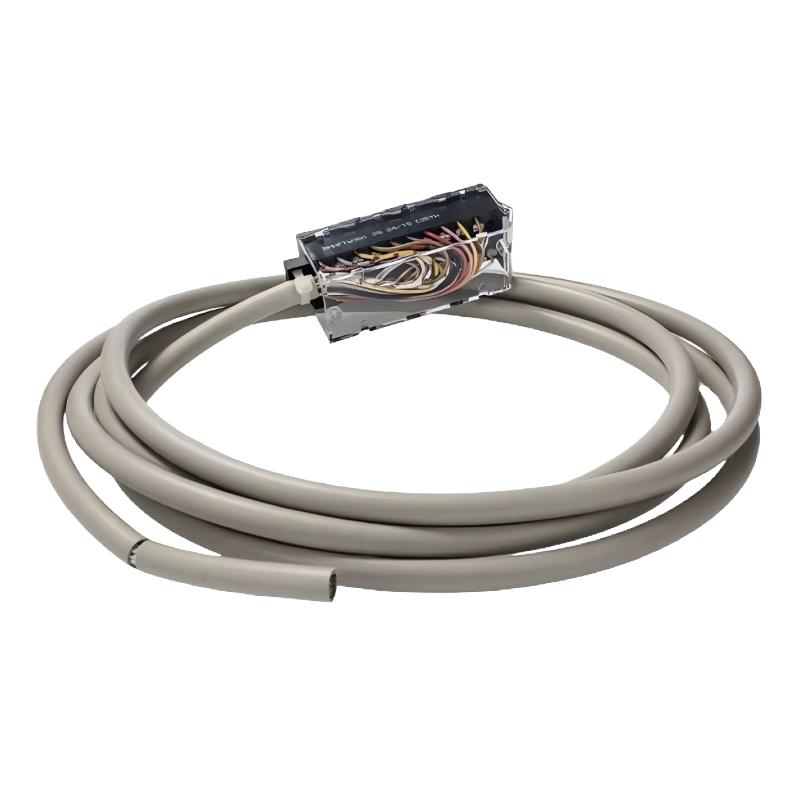
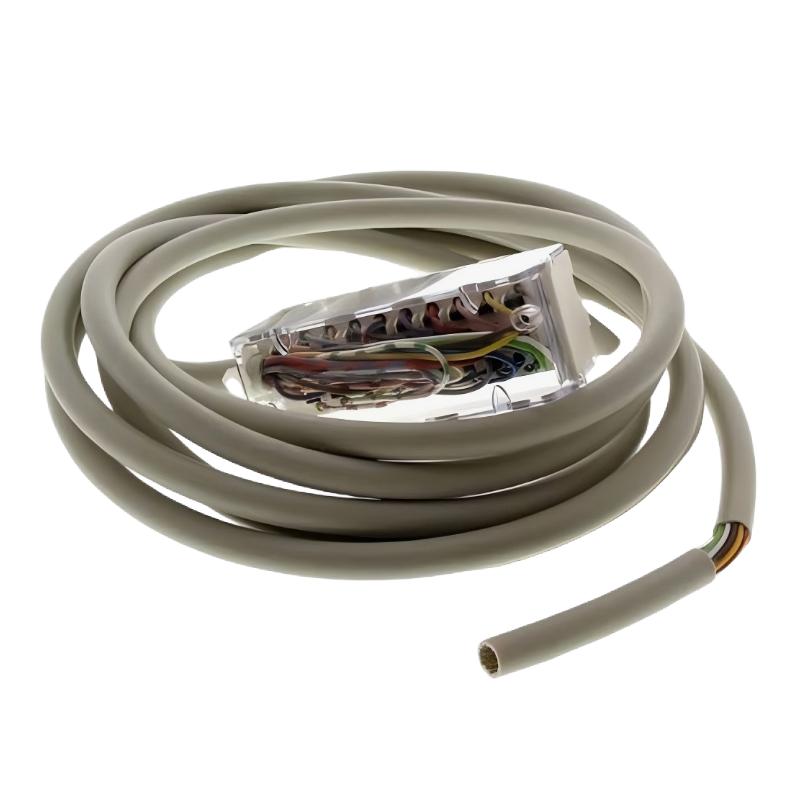
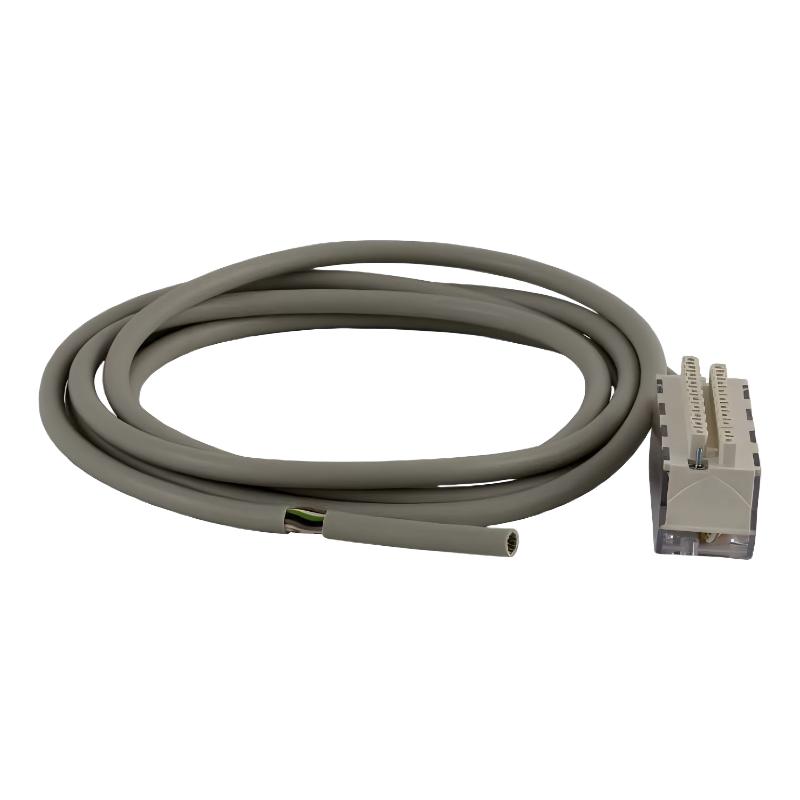
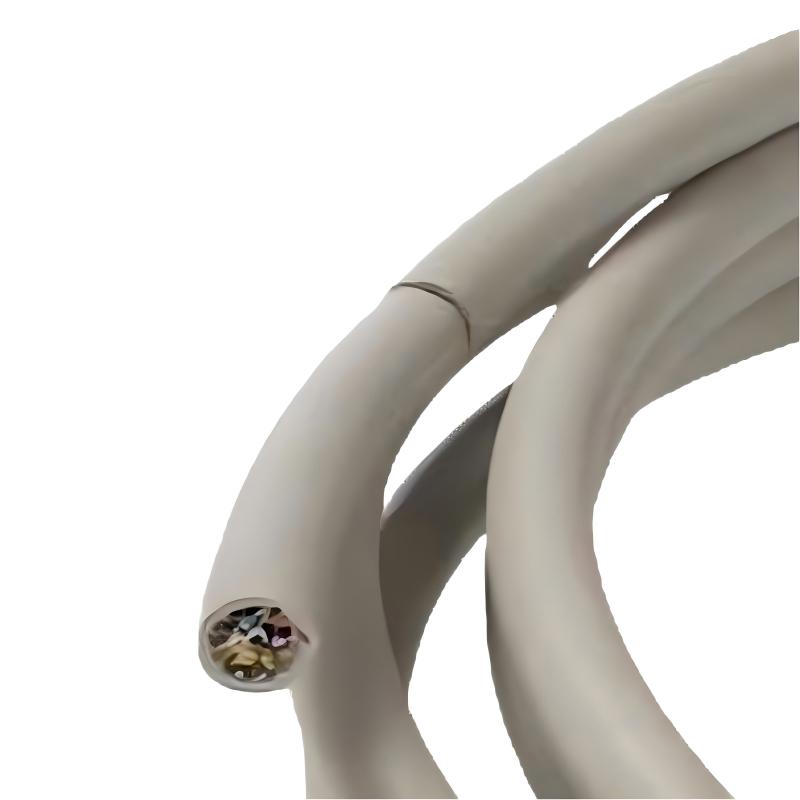
- Schneider
- BMXFTW301
- Preformed Cable Sleeve
- France
- 3 meters
- 0.85 kg
- Xiamen, China
- New & In Stock
- T/T, PayPal, Western Union
- 1 Year
- 1-3 Working Days
- DHL, UPS, TNT, FedEx and EMS.
- 24-Hour Service
- COO
- 7
Our advantage

Global Logistics
We have a 10-year logistics and express cooperation agreement, so our products can be shipped to any place in the world.

Brand new and original
Our products are imported in bulk from the place of origin. Because of the cooperative relationship, our products are all original and 100% new.

24-hour service
We provide 7*24 hours service to our customers. We will be there whenever you need us.

Price advantage
All our products are priced very favorably because we have our own warehouse and supply.
| Company Information | |||
| [email protected] | |||
| Mobile | +8615980777398 | ||
| +8615980777398 | |||
| 15980777398 |
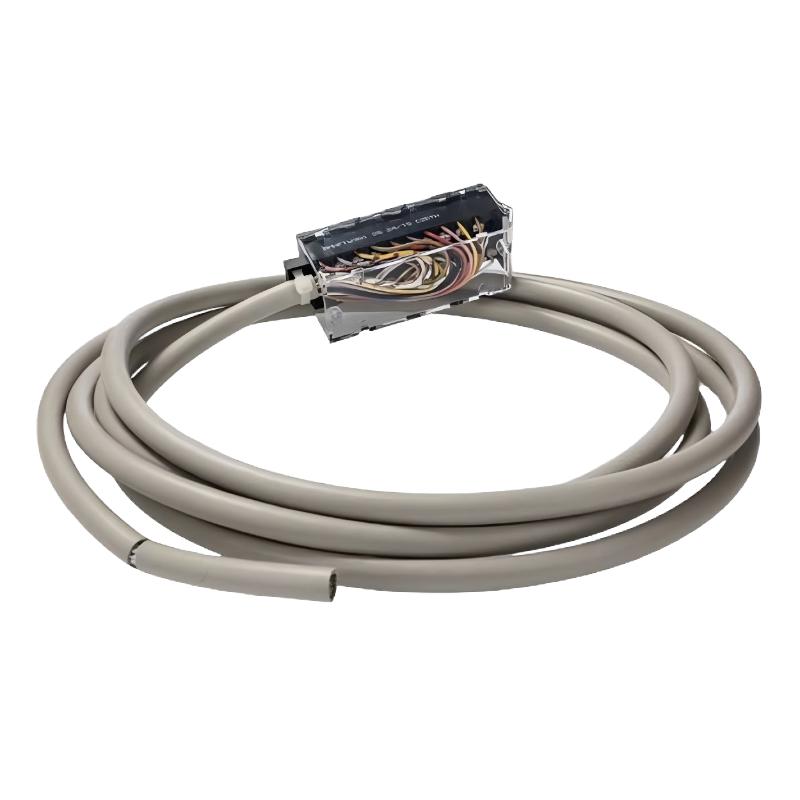
Product Overview
The Schneider BMXFTW301 Preformed Cable Sleeve is a cable management and protection component designed for industrial automation installations where organized cable routing, mechanical protection, and reliable wiring management are important. With a specified cable length of 3 meters and a weight of 0.85 kg, the BMXFTW301 provides a practical solution for managing cables within control cabinets, PLC systems, automation panels, and related industrial electrical installations.
In modern automation systems, cables frequently connect PLC modules, I/O assemblies, communication equipment, terminal interfaces, sensors, actuators, and other control components. Without appropriate cable management, wiring can become difficult to identify, inspect, maintain, and replace. A preformed cable sleeve helps organize the cable path while providing an additional layer of physical protection around the cable arrangement.
The BMXFTW301 can be considered as part of the Schneider Electric cable-management ecosystem used around industrial control equipment. Its 3-meter length makes it suitable for installations where a defined cable-management path is required between equipment locations.
For industrial engineers and maintenance technicians, cable accessories such as the BMXFTW301 are important because reliable automation performance depends not only on PLC modules and control hardware but also on proper physical installation of the associated wiring.
Technical Specifications
| Parameter | Specification |
|---|---|
| Manufacturer | Schneider Electric |
| Model | BMXFTW301 |
| Product Type | Preformed Cable Sleeve |
| Cable Length | 3 meters |
| Weight | 0.85 kg |
| Application | Industrial Cable Management |
| Typical Installation | PLC Systems, Control Cabinets, Automation Equipment |
| Primary Function | Cable organization and physical protection |
The 3-meter cable length and 0.85 kg weight are the specified product parameters provided for this BMXFTW301 configuration.
Specific characteristics such as sleeve diameter, material composition, environmental rating, temperature range, cable capacity, bending radius, and other mechanical properties should be confirmed against the applicable product documentation or the actual hardware before engineering approval.
What Is the Schneider BMXFTW301?
The Schneider BMXFTW301 is a Preformed Cable Sleeve intended to support organized cable installation in industrial automation environments.
A cable sleeve is generally used to gather, guide, protect, or organize cables along a defined route. In an industrial control cabinet, multiple cables may run between PLC racks, terminal blocks, field devices, communication interfaces, and other equipment. Proper organization reduces cable congestion and makes future inspection easier.
The BMXFTW301 has a specified 3-meter cable length, providing a relatively long routing section for installations where the cable-management path extends between different equipment locations.
Its 0.85 kg weight should also be considered when planning inventory handling, installation logistics, and replacement requirements.
The sleeve itself should not be confused with a PLC communication cable or an electrical signal cable. Its primary purpose is cable management and protection rather than active signal processing.
Function of the BMXFTW301 Preformed Cable Sleeve
The BMXFTW301 can contribute to an automation installation in several practical ways.
Cable Organization
Industrial control systems can contain a large number of conductors and cables. Organizing these cables into defined routes helps prevent unnecessary cable crossings and reduces cabinet congestion.
Physical Cable Protection
A suitable cable sleeve can provide an additional protective layer around cables against normal mechanical contact and routing-related stresses.
The actual protection level depends on the construction and installation environment and should not be assumed without confirming the product specifications.
Improved Cable Routing
A defined cable route makes wiring easier to install and inspect. The 3-meter length of the BMXFTW301 can support longer cable-management paths within or between suitable equipment locations.
Easier Maintenance
Well-organized cables are easier for maintenance personnel to trace. This can reduce the time required to identify a cable during troubleshooting or equipment replacement.
Improved Cabinet Appearance
Although appearance is not the primary engineering objective, organized cable routing can significantly improve the overall structure of a control cabinet and make maintenance work more efficient.
Importance of Cable Management in Industrial Automation
Cable management is an important part of reliable industrial automation design.
A typical control system may contain:
- PLC processors
- Digital input modules
- Digital output modules
- Analog input modules
- Analog output modules
- Communication modules
- Remote I/O equipment
- HMI panels
- Sensors
- Actuators
- Motor control equipment
- Variable speed drives
- Safety devices
- Terminal blocks
- Power supplies
- Industrial communication cables
All of these devices may require different wiring routes.
Poorly managed wiring can make it difficult to identify individual cables and may increase the risk of mechanical damage, accidental disconnection, or maintenance errors.
Using suitable cable-management accessories helps create a more structured installation.
Role in Schneider PLC Systems
The BMXFTW301 can be used as part of the physical wiring infrastructure surrounding Schneider automation equipment.
In a PLC installation, cables may run between:
PLC Rack → I/O Modules → Terminal Connections → Field Devices
Other wiring paths may include:
PLC → Communication Equipment → Remote I/O
or:
Control Cabinet → Field Junction → Sensors / Actuators
The cable sleeve does not perform the control function itself. Instead, it supports the physical organization and protection of the wiring associated with the control system.
This distinction is important when selecting replacement components. The BMXFTW301 should be evaluated as a cable-management component rather than as an electrical control module.
3-Meter Cable Length
One of the key specified characteristics of the BMXFTW301 is its 3-meter cable length.
A 3-meter routing length can be useful in applications where cables must travel between equipment positions without requiring multiple shorter cable-management sections.
When planning an installation, engineers should consider:
- Distance between connected equipment
- Cabinet dimensions
- Cable entry locations
- Routing direction
- Required service loops
- Bend requirements
- Access for maintenance
- Separation between different cable categories
The full 3-meter length should not automatically be assumed to be usable as a straight routing distance. Installation geometry, routing constraints, and required service allowance should be considered during cabinet design.
Installation Guidelines
Correct installation helps ensure that the BMXFTW301 performs its intended cable-management function.
1. Inspect the Cable Sleeve
Before installation, inspect the BMXFTW301 for visible damage.
Check for:
- Cuts
- Deformation
- Abrasion
- Packaging damage
- Contamination
- Unusual bending or compression
Any damaged component should be evaluated before being installed in an operating automation system.
2. Plan the Cable Route
Determine the intended routing path before installing the sleeve.
The route should avoid unnecessary sharp bends and should provide sufficient access for inspection and maintenance.
3. Avoid Excessive Mechanical Stress
The sleeve should not be subjected to unnecessary pulling, twisting, crushing, or excessive bending.
The installation method should remain consistent with the physical characteristics of the actual sleeve and the surrounding equipment.
4. Maintain Organized Cable Routing
Where multiple cables are routed together, maintain a consistent arrangement.
Avoid creating excessive cable congestion at cabinet entrances, terminal areas, or connector locations.
5. Protect Cable Connections
Cable-management components should not place excessive mechanical force on connectors or terminal connections.
Connections should remain properly supported and accessible.
Cable Routing and Cabinet Design
The BMXFTW301 can be incorporated into a broader cable-management strategy.
A well-designed control cabinet normally separates wiring according to function and electrical characteristics where required.
Typical groups may include:
- Power wiring
- Motor wiring
- Digital I/O wiring
- Analog signals
- Communication wiring
- Safety circuits
- Instrumentation wiring
The exact separation requirements depend on the system design and applicable electrical standards.
The cable sleeve should therefore be used as part of the overall wiring strategy rather than as a substitute for correct EMC design.
Power and Signal Cable Separation
Industrial automation systems can contain both high-power and low-level signal circuits.
For example, a cabinet may contain:
- AC power cables
- Motor cables
- Variable speed drive wiring
- Analog sensor cables
- Communication cables
- PLC I/O wiring
Where electrical noise or electromagnetic compatibility is a concern, these cable categories may need appropriate physical separation.
The BMXFTW301 can help maintain organized routing, but the sleeve itself should not be considered an EMC solution unless its specific construction and application are documented for that purpose.
Good system design should consider:
- Cable separation
- Grounding
- Shielding
- Cable routing
- Connector installation
- Cabinet layout
- Noise sources
Application in Control Cabinets
Control cabinets often contain a high density of automation components.
A typical Schneider automation cabinet may include:
Power Supply → PLC CPU → I/O Modules → Terminal Blocks → Field Wiring
Additional communication equipment may connect the PLC to:
- Remote I/O
- HMIs
- Industrial Ethernet equipment
- Drives
- Distributed control devices
- Supervisory systems
Cable sleeves can help maintain an organized transition between these components.
The 3-meter BMXFTW301 can be useful when the required cable-management route is longer than a short cabinet interconnection.
Application in Industrial Automation Equipment
The BMXFTW301 may be considered for cable-management applications associated with:
PLC Control Systems
PLC installations frequently contain a large number of I/O and communication cables. Organized routing simplifies maintenance and inspection.
Control Panels
Control panels require structured cable paths to maintain accessibility and reduce wiring congestion.
Remote I/O Systems
Remote I/O installations can involve longer physical cable routes between the controller and field equipment.
Machine Automation
Automated machinery can contain sensors, actuators, control panels, and distributed electrical equipment that require organized cable routing.
Industrial Equipment Upgrades
During modernization projects, new cables may need to be integrated into an existing cabinet. Proper cable management can help accommodate additional wiring without creating excessive congestion.
Troubleshooting Cable Sleeve Installation
The BMXFTW301 is a passive cable-management component, so troubleshooting generally focuses on its physical condition and installation rather than electronic diagnostics.
Cable Movement or Poor Organization
Possible causes include:
- Incorrect installation
- Insufficient securing
- Excessive cable loading
- Improper routing
- Mechanical movement
The cable arrangement should be inspected and reorganized where necessary.
Sleeve Damage
Damage may result from:
- Sharp edges
- Excessive bending
- Mechanical abrasion
- Improper installation
- Contact with moving equipment
- Excessive compression
The surrounding installation should be inspected to identify the cause before replacing the sleeve.
Cable Congestion
If cables remain difficult to organize, review the entire routing strategy rather than simply adding additional sleeves.
Consider:
- Cable grouping
- Cabinet layout
- Entry and exit points
- Power/signal separation
- Service access
- Available routing space
Preventive Maintenance
Regular inspection of cable-management components can help maintain the physical reliability of an automation installation.
Recommended checks include:
Visual Inspection
Look for:
- Cracks
- Abrasion
- Deformation
- Loose sections
- Contamination
- Mechanical interference
Cable Condition
Inspect the cables inside or around the sleeve for signs of:
- Insulation damage
- Excessive bending
- Abrasion
- Pulling stress
- Connector strain
Routing Condition
Verify that the original cable route has not been disturbed during maintenance or equipment modifications.
Cabinet Cleanliness
Dust, oil, moisture, and other contaminants should be controlled according to the requirements of the installation environment.
Replacement Considerations
When replacing a Schneider BMXFTW301 Preformed Cable Sleeve, the complete model number should be verified.
Important identification information includes:
- Manufacturer
- Product model
- Product type
- Cable length
- Physical condition
- Existing installation arrangement
- Host automation equipment
The specified BMXFTW301 cable length is 3 meters, while the specified product weight is 0.85 kg.
A replacement should not be selected solely based on visual similarity. Cable-management products can differ in dimensions, construction, routing capability, and intended installation method.
Physical Length and Weight
The physical parameters provided for the BMXFTW301 are:
Cable Length: 3 meters
Weight: 0.85 kg
These values are useful for:
- Inventory planning
- Shipping calculations
- Cabinet installation planning
- Replacement logistics
- Spare-parts management
- Equipment documentation
The 0.85 kg value should be treated as the supplied product weight for this item and should not be interpreted as an electrical load rating or cable capacity.
Storage and Handling
Proper storage helps preserve cable-management components before installation.
The BMXFTW301 should be protected from conditions that could cause unnecessary mechanical damage or contamination.
Recommended handling practices include:
- Keep the product protected during transportation.
- Avoid excessive compression.
- Avoid sharp bending during storage.
- Keep the component clean.
- Do not place heavy objects on the sleeve.
- Inspect the product before installation.
Long-term storage conditions should follow the applicable Schneider product and facility requirements.
Engineering Best Practices
Several practices can improve the reliability of an installation using the BMXFTW301.
Plan Cable Routes Before Installation
Cable routing should be considered during cabinet and machine design rather than after all components have been installed.
Allow Maintenance Access
Do not route cables so tightly that technicians cannot inspect or replace equipment.
Avoid Connector Stress
Cable-management components should support organization without transferring unnecessary force to connectors.
Keep Wiring Identifiable
Cable labels and documentation should remain accessible after the sleeve and other cable-management components are installed.
Maintain Consistent Routing
A consistent routing strategy makes future troubleshooting easier.
Document Modifications
When cables are added or rerouted, update cabinet drawings and maintenance documentation where applicable.
Compatible Automation Components
The BMXFTW301 can be considered alongside various Schneider automation components, depending on the actual installation.
Typical categories include:
- Modicon PLC CPUs
- Modicon I/O modules
- Analog input modules
- Analog output modules
- Digital input modules
- Digital output modules
- Communication modules
- Remote I/O systems
- Terminal blocks
- Industrial Ethernet equipment
- Control cabinets
- HMI systems
- Sensors and actuators
Compatibility in this context primarily concerns physical installation and cable-management requirements. The sleeve should not be assumed to provide electrical compatibility with any particular PLC module.
Key Advantages
3-Meter Cable Length
The specified 3-meter length provides a practical cable-management section for installations requiring longer routing paths.
Cable Organization
The BMXFTW301 supports a more structured approach to industrial cable routing.
Physical Cable Management
A properly installed sleeve can help reduce unnecessary exposure of cables to mechanical contact and routing-related stress.
Maintenance-Friendly Installation
Organized wiring makes cable tracing, inspection, and maintenance easier.
Suitable for Industrial Automation
The component can be incorporated into PLC cabinets, control panels, and other industrial automation installations where suitable cable management is required.
Defined Product Weight
With a specified weight of 0.85 kg, the BMXFTW301 can be accounted for during inventory and installation planning.
Technical FAQs
What is the Schneider BMXFTW301?
The Schneider BMXFTW301 is a Preformed Cable Sleeve used for cable organization and physical cable-management applications in industrial automation installations.
What is the cable length of the BMXFTW301?
The specified cable length is 3 meters.
How much does the BMXFTW301 weigh?
The specified weight is 0.85 kg.
Is the BMXFTW301 a PLC module?
No. The BMXFTW301 is a cable-management component rather than a PLC CPU, I/O module, or communication module.
What is the purpose of a preformed cable sleeve?
A preformed cable sleeve is generally used to organize and provide physical protection for cables along a defined routing path.
Can the BMXFTW301 be used with Schneider PLC systems?
It can be used as part of the physical cable-management arrangement around suitable Schneider automation equipment. Exact installation suitability should be confirmed based on the actual cabinet and cable-routing design.
Does the BMXFTW301 provide electrical signal conversion?
No. Its primary role is cable management and physical protection rather than electrical signal processing.
What should be checked before installation?
The product condition, routing path, cable arrangement, mechanical clearances, connector access, and overall cabinet layout should be checked before installation.
Can the BMXFTW301 replace another cable sleeve?
A replacement should be based on the exact model and physical requirements of the application. Similar-looking cable sleeves should not automatically be considered interchangeable.
Conclusion
The Schneider BMXFTW301 Preformed Cable Sleeve is a cable-management component intended to support organized and protected wiring in industrial automation environments. With a specified 3-meter cable length and 0.85 kg weight, it provides a defined routing solution for control cabinets, PLC installations, automation equipment, and related industrial electrical systems.
Effective cable management is an important part of reliable automation engineering. Properly organized wiring improves accessibility, simplifies maintenance, reduces unnecessary mechanical stress, and makes future troubleshooting more efficient.
The BMXFTW301 should be installed as part of a complete cable-routing strategy that considers cabinet layout, cable separation, connector protection, mechanical clearance, maintenance access, and the specific requirements of the automation system.
For replacement and engineering work, the complete BMXFTW301 model designation should be verified before installation. The supplied 3-meter cable length and 0.85 kg weight should also be retained in inventory and equipment documentation to ensure accurate identification and replacement planning.