

ProductPRODUCT
Featured products
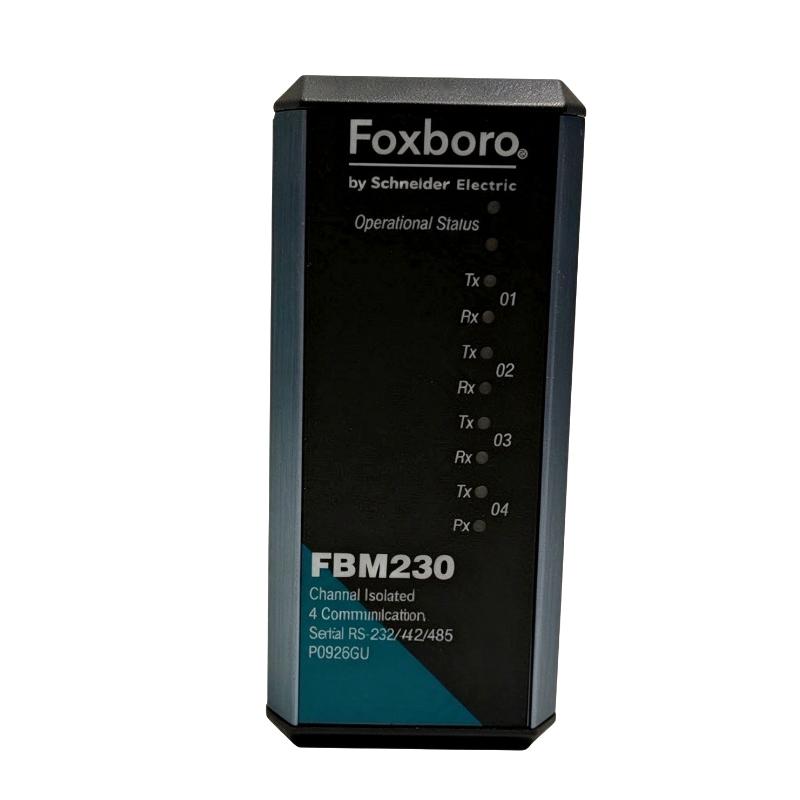
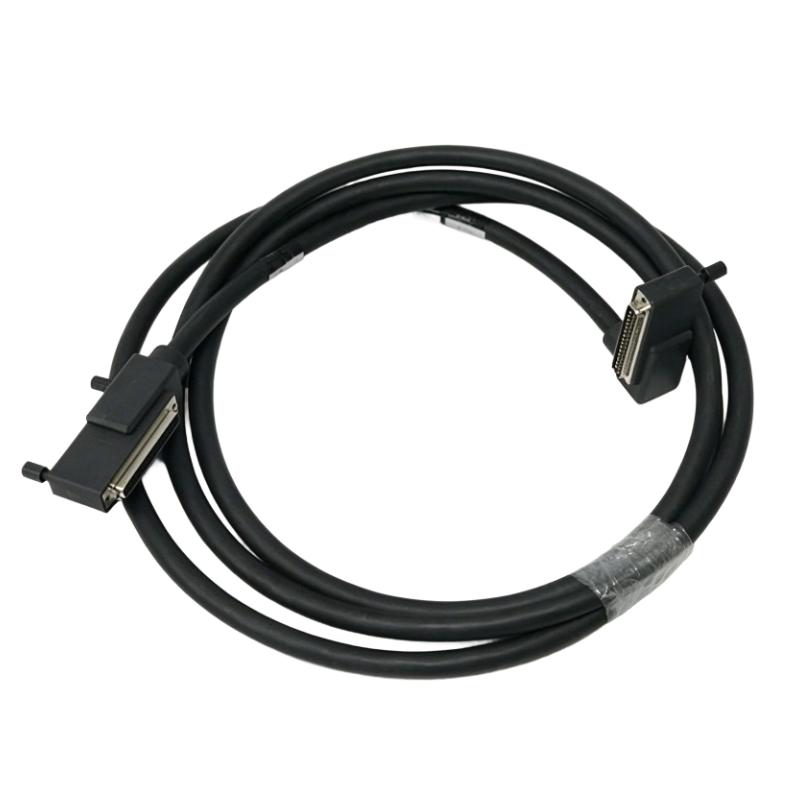
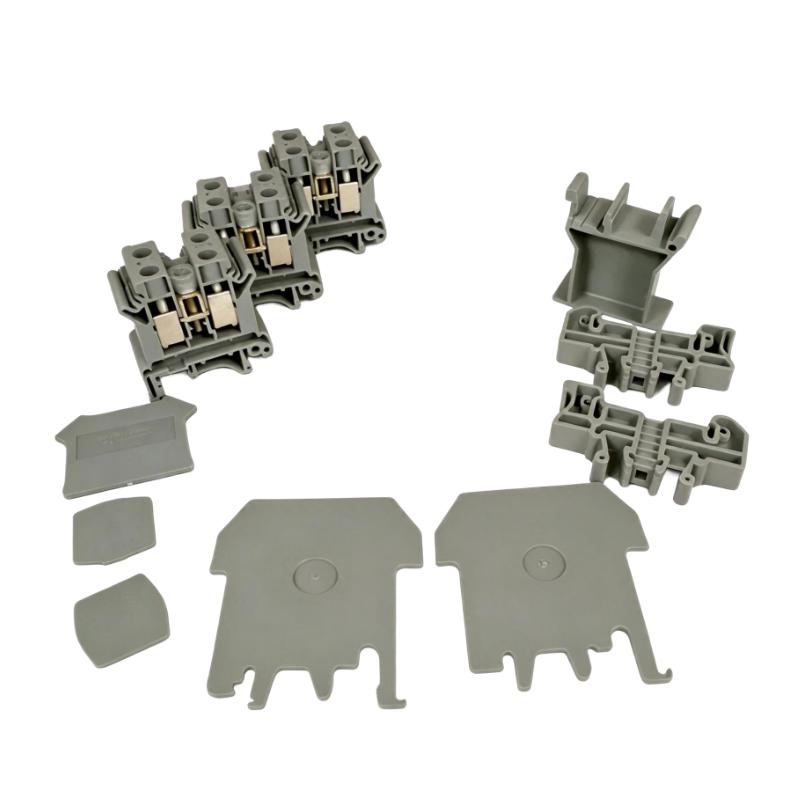
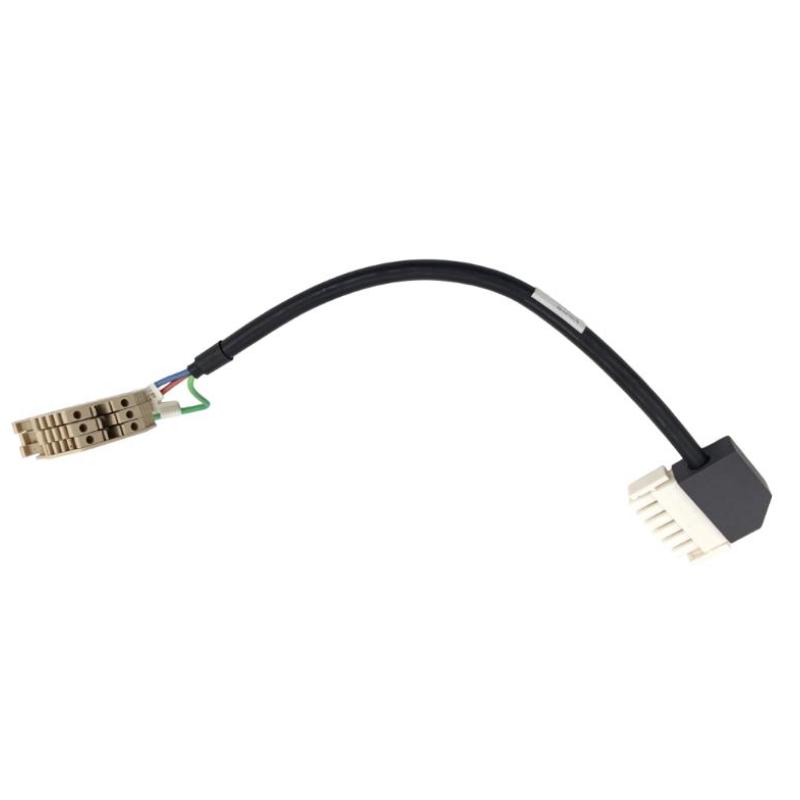
Contact Us
- Foxboro
- FBM211 P0914TN
- Differential Input Interface Module
- USA
- 114 x 45 x 104 mm
- 0.284 kg
- Xiamen, China
- New & In Stock
- T/T, PayPal, Western Union
- 1 Year
- 1-3 Working Days
- DHL, UPS, TNT, FedEx and EMS.
- 24-Hour Service
- COO
- 3
Our advantage

Global Logistics
We have a 10-year logistics and express cooperation agreement, so our products can be shipped to any place in the world.

Brand new and original
Our products are imported in bulk from the place of origin. Because of the cooperative relationship, our products are all original and 100% new.

24-hour service
We provide 7*24 hours service to our customers. We will be there whenever you need us.

Price advantage
All our products are priced very favorably because we have our own warehouse and supply.
| Company Information | |||
| [email protected] | |||
| Mobile | +8615980777398 | ||
| +8615980777398 | |||
| 15980777398 |
Product Overview
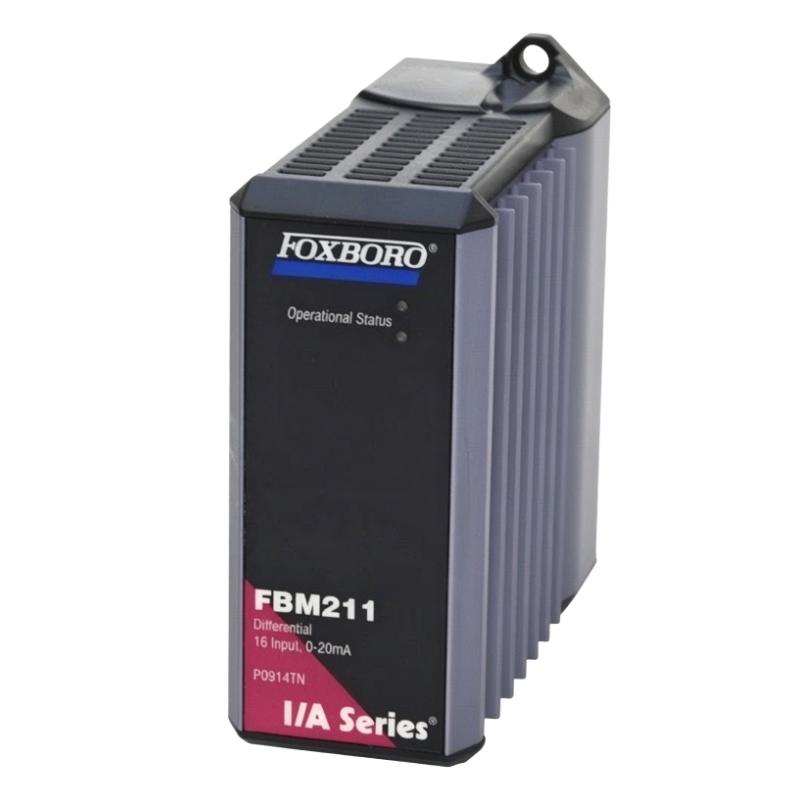
The Foxboro FBM211 P0914TN Differential Input Interface Module is an analog input module designed for the Foxboro I/A Series Distributed Control System (DCS). It provides 16 isolated and independent input channels for acquiring process signals from field instruments and transmitting the measured information to the control system.
In industrial process automation, accurate signal acquisition is essential for monitoring operating conditions and maintaining stable production. Sensors and transmitters measure variables such as pressure, flow, temperature, and level, while analog input modules receive their electrical signals and make the information available to controllers and operator stations.
The FBM211 is designed for 0 to 20 mA DC input signals, with an input range of 0 to 20.4 mA per channel. Its differential input arrangement supports measurement of signals while reducing the influence of common-mode electrical interference. Each input channel operates independently, allowing multiple field signals to be monitored through one module.
The module is installed on a Foxboro modular baseplate and connects to field wiring through a compatible termination assembly and termination cable. This arrangement separates the field wiring interface from the control module, supporting organized installation and maintenance.
The FBM211 P0914TN is used in process-control environments where reliable analog signal acquisition is required. Typical applications include chemical processing, oil and gas facilities, power generation, water treatment, and other continuous industrial operations.
Technical Specifications
| Parameter | Specification |
|---|---|
| Brand | Foxboro |
| Manufacturer | Schneider Electric |
| Model | FBM211 |
| Part Number | P0914TN |
| Product Type | Differential Analog Input Interface Module |
| System | Foxboro I/A Series DCS |
| Number of Input Channels | 16 |
| Input Signal | 0–20 mA DC |
| Input Range | 0–20.4 mA DC per channel |
| Channel Configuration | Isolated and independent |
| Input Current Limit | 33 mA per channel |
| Input Channel Impedance | Approximately 61.9 Ω |
| Conversion Method | Multiplexed Sigma-Delta A/D conversion |
| Common-Mode Rejection | Greater than 100 dB at 50/60 Hz |
| Normal-Mode Rejection | Greater than 35 dB at 50/60 Hz |
| Accuracy | Approximately ±0.03% of span, including linearity |
| Module Power Supply | 24 V DC system supply |
| Maximum Power Consumption | Depends on input configuration and operating conditions |
| Mounting | Foxboro modular baseplate |
| Termination Connection | Compatible termination assembly and cable |
| Cable Connector | 37-pin male D-subminiature |
| Dimensions | 114 × 45 × 104 mm |
| Weight | 0.284 kg |
| Operating Temperature | -20 to +70°C |
| Storage Temperature | -40 to +70°C |
Note: The listed dimensions use the 114 mm height that includes mounting lugs. Termination assemblies and cables are separate components unless specifically included in the order.
Function and Working Principle
The FBM211 receives analog current signals from field instruments and converts them into digital information that can be processed by the Foxboro control system.
1. Differential Analog Signal Acquisition
The module uses differential input circuitry to measure the electrical difference between the two signal conductors. This arrangement helps reduce the influence of electrical noise that appears similarly on both conductors.
Differential measurement is useful in industrial environments where motors, drives, switching equipment, and long cable runs can introduce electrical interference.
The quality of the measurement still depends on proper cable selection, grounding, shielding, and field wiring practices.
2. Sixteen Independent Input Channels
The FBM211 provides 16 isolated and independent analog input channels. Each channel can receive a separate current signal from a compatible field device.
For example, a process installation may use several transmitters to monitor pressure, flow, or other operating variables. The module collects these signals and makes the resulting measurement data available to the DCS.
The channel arrangement helps reduce the need for separate input modules when multiple compatible current signals must be acquired in one control-system location.
3. 0–20 mA Signal Measurement
The module is designed for a 0–20 mA DC input range, with a specified measurement range extending to 20.4 mA per channel.
Current-loop signals are widely used in industrial instrumentation because they can provide reliable transmission over practical cable distances when properly designed. The FBM211 receives these signals and converts them into digital values for control-system processing.
A 4–20 mA transmitter can also operate within the module’s input range when the channel and control-system scaling are configured appropriately. The lower end of the measurement range must be interpreted according to the transmitter’s configured signal convention.
4. Analog-to-Digital Conversion
The FBM211 uses a multiplexed Sigma-Delta analog-to-digital conversion method. This process converts incoming analog current measurements into digital values that can be handled by the control system.
The controller can then use these values for process displays, alarm calculations, control strategies, historical records, and operator monitoring.
5. Noise Rejection and Measurement Stability
Industrial measurement circuits can be affected by common-mode and normal-mode electrical noise. The FBM211’s differential input design and specified rejection characteristics help support stable measurement under suitable installation conditions.
Common-mode rejection is particularly relevant when field instruments and control equipment are separated by long cable runs or operate near electrically noisy machinery.
Role in Industrial Control Systems
The FBM211 is an input interface component within the Foxboro I/A Series DCS architecture. It provides the connection between field instrumentation and the control system’s data-processing functions.
Field Instrument Interface
Field transmitters generate electrical signals representing measured process variables. The FBM211 receives compatible current signals through its associated termination assembly.
The module’s 16 channels allow multiple instruments to share one input interface, helping organize field signal acquisition within a control cabinet.
DCS Process Monitoring
After converting the analog measurements into digital data, the module makes the information available to the associated control-system architecture.
Operators can use these measurements to monitor process conditions, identify abnormal operating states, and assess equipment performance.
Process Control
The measurements acquired by the FBM211 may be used by control strategies implemented in the DCS. For example, a controller can use a flow measurement to regulate a valve or use a pressure measurement to maintain a process within a defined operating range.
The module performs signal acquisition; the control logic and output actions are handled by the relevant controllers and output equipment.
Alarm and Event Management
Analog input values can be used by the DCS to generate alarms when configured limits are exceeded. These alarms help operators identify abnormal process conditions and respond before they develop into more serious operating problems.
The alarm thresholds and response logic are configured within the control application rather than being determined by the input module alone.
Industrial Applications
The Foxboro FBM211 can be used in process-control installations that require multiple isolated analog current inputs.
1. Oil and Gas Processing
Oil and gas facilities use current-loop transmitters to monitor pressure, flow, and other process variables throughout production and processing equipment.
The FBM211 can collect compatible signals from field instruments and provide measurement data to the DCS for monitoring and process control.
2. Chemical and Petrochemical Plants
Chemical production involves many process variables that must be monitored continuously. Pressure, flow, and other instrument readings are important for maintaining operating conditions.
The module’s 16 independent channels allow several compatible transmitters to be connected through one input module.
3. Power Generation
Power plants rely on instrumentation to monitor auxiliary systems, cooling circuits, fuel systems, and other process equipment.
The FBM211 can serve as an analog input interface for compatible current-output instruments in these applications.
4. Water and Wastewater Treatment
Water treatment facilities use transmitters to monitor process conditions throughout filtration, pumping, chemical dosing, and treatment operations.
The FBM211 can collect current-loop measurements and provide the information to the DCS for process supervision.
5. Industrial Manufacturing
Manufacturing plants may use analog transmitters to monitor pressure, flow, and other process conditions in production equipment.
The module can support centralized acquisition of these signals where a Foxboro I/A Series system is installed.
Installation and System Integration
Correct installation is essential for measurement accuracy, system compatibility, and long-term reliability.
1. Verify the Module and System Compatibility
Before installation, confirm that the module is FBM211 with the correct part number, P0914TN. Check the installed Foxboro I/A Series system architecture and confirm that the intended baseplate and associated hardware support this module.
Do not assume that every FBM module can be installed in the same position or used with the same termination components.
2. Install on the Modular Baseplate
The FBM211 mounts on a compatible Foxboro modular baseplate. Depending on the baseplate design, the assembly can be installed on a DIN rail or mounted horizontally in a 19-inch rack using the appropriate mounting kit.
Ensure that the module is correctly seated and secured. Follow the applicable system installation instructions before applying power.
3. Connect the Termination Assembly
Field wiring is connected through a compatible termination assembly. The termination assembly provides the connection points for field signals and interfaces with the FBM through the designated termination cable.
The FBM211 uses a 37-pin male D-subminiature cable connection. Confirm the correct cable type, termination assembly part number, and wiring arrangement before connecting the module.
4. Verify Field Signal Wiring
Check each input channel against the control-system wiring documentation. Confirm signal polarity, current-loop configuration, field-device power arrangements, and grounding requirements.
Incorrect wiring can cause unstable readings, missing signals, or inaccurate measurements.
5. Configure Input Scaling
The DCS application must be configured to interpret the incoming current signals correctly. For example, a transmitter configured for a 4–20 mA range requires suitable engineering-unit scaling so that the control system displays the intended process variable.
Verify the transmitter’s configured range, channel assignment, scaling values, and alarm limits during commissioning.
6. Test Channel Operation
After installation, test each connected input channel using an appropriate signal source or field instrument. Confirm that the DCS receives the expected values and that the displayed engineering units are correct.
Check for abnormal readings, unstable signals, wiring problems, and channel-specific faults before returning the system to normal operation.
Compatible System Components
The FBM211 operates as part of a Foxboro I/A Series input subsystem. The following components may be required depending on the installation design.
| Component | Function | Integration Considerations |
|---|---|---|
| Foxboro modular baseplate | Mechanical and electrical mounting for the FBM | Confirm baseplate compatibility |
| Foxboro termination assembly | Provides field wiring connection points | Select the correct FBM211 termination assembly |
| Termination cable | Connects the termination assembly to the module | Confirm the required cable type and connector |
| Field transmitters | Generate analog current signals | Verify 0–20 mA or compatible 4–20 mA configuration |
| 24 V DC power supply | Supports the associated control-system power requirements | Verify system power distribution requirements |
| Foxboro controller | Executes process-control logic | Confirm compatibility with the installed I/A Series architecture |
| DCS operator station | Displays measurements, alarms, and process information | Configure channel tags and engineering-unit scaling |
| Field wiring and shield accessories | Connect instruments to the termination assembly | Follow grounding and shielding requirements |
These components are not necessarily included with the FBM211 module. Confirm the complete bill of materials before ordering.
Alternative Models and Replacement Considerations
When replacing an FBM211, the replacement must match the original input function and the installed Foxboro system configuration.
| Alternative or Related Product | Consideration |
|---|---|
| Foxboro FBM211 RH914TN | Later part-number reference associated with the FBM211; verify hardware and system compatibility |
| Foxboro FBM201 | Different analog input module; compare channel configuration and signal requirements |
| Foxboro FBM202 | Related input module with different signal functionality; not an automatic substitute |
| Foxboro FBM212 | Designed for thermocouple and millivolt input applications rather than the FBM211’s 0–20 mA current input |
| Other Foxboro analog input modules | Select according to signal type, channel count, isolation, baseplate, and termination requirements |
Before selecting a replacement, check:
- Full model and part number.
- Number of input channels.
- Supported signal range.
- Differential or other input configuration.
- Channel isolation requirements.
- Accuracy and noise-rejection requirements.
- Baseplate compatibility.
- Termination assembly and cable part numbers.
- DCS hardware and software compatibility.
- Availability of configuration and commissioning documentation.
A module with the same physical dimensions may have a different signal function or connection arrangement. Electrical and system compatibility must be confirmed before substitution.
Key Advantages
Sixteen Independent Input Channels
The FBM211 provides 16 input channels for collecting multiple compatible analog current signals through one module.
Differential Measurement
Its differential input arrangement helps reduce the influence of common-mode electrical interference, supporting measurement reliability in industrial environments.
Wide Industrial Application
The 0–20 mA input function is suitable for many process transmitters used in oil and gas, chemical processing, power generation, and water treatment.
Accurate Signal Conversion
The module’s analog-to-digital conversion supports the transfer of field measurements into the DCS for process monitoring and control.
Modular System Integration
Installation on a Foxboro modular baseplate and connection through a dedicated termination assembly support organized system architecture.
Established I/A Series Platform
The FBM211 is designed for use within Foxboro I/A Series installations, making it relevant to maintenance and spare-parts requirements in existing process-control systems.
Technical FAQs
1. What is the Foxboro FBM211 P0914TN?
The FBM211 P0914TN is a 16-channel differential analog input module for the Foxboro I/A Series DCS. It receives current signals from compatible field instruments.
2. What type of input signal does the FBM211 support?
It supports 0–20 mA DC input signals, with a specified input range of 0–20.4 mA per channel. A compatible 4–20 mA transmitter can be used when the channel and DCS scaling are configured correctly.
3. How many input channels does the FBM211 have?
The module provides 16 isolated and independent input channels. Each channel can receive a separate compatible analog current signal.
4. What does differential input mean?
Differential input measures the electrical difference between two signal conductors. This arrangement helps reduce the influence of common-mode noise that appears on both conductors.
5. What is the weight of the FBM211 P0914TN?
The module weighs approximately 0.284 kg. The weight of the associated termination assembly and cable is separate.
6. What are the dimensions of this module?
The supplied dimensions are 114 × 45 × 104 mm. The 114 mm height includes the mounting lugs; the module body height is approximately 102 mm.
7. Does the FBM211 require a termination assembly?
Yes. The module is designed to work with a compatible termination assembly and termination cable for connecting field wiring. Confirm the correct accessories for the installed configuration.
8. Can the FBM211 be used with 4–20 mA transmitters?
Yes, provided the transmitter’s signal range is within the module’s supported input range and the DCS channel is configured with the correct engineering-unit scaling.
9. What is the difference between P0914TN and RH914TN?
P0914TN is an earlier part-number reference for the FBM211. More recent Foxboro documentation identifies RH914TN as a superseding part number. Before replacement, verify the hardware revision and compatibility with the existing baseplate and termination components.
10. What should be checked before purchasing a replacement FBM211?
Confirm the complete part number, module condition, channel functionality, baseplate compatibility, termination assembly, cable type, and system requirements. For critical applications, request suitable functional test information before installation.
Procurement and Maintenance Recommendations
When purchasing the Foxboro FBM211 P0914TN, verify the full part number and confirm that the module matches the installed I/A Series system. The FBM211’s 16-channel differential input function is important, but the associated baseplate, termination assembly, and cable are equally relevant to successful integration.
For used or surplus modules, request clear photographs of the product label, connectors, and circuit-board condition. Confirm the module’s testing status, storage condition, warranty, and return terms. If the unit is intended for a critical process, functional verification should be completed before it is installed in the operating system.
During maintenance, inspect the module seating, baseplate connections, termination cable, and field wiring. Check for loose connections, damaged insulation, contamination, or signs of overheating. Periodically verify channel readings against suitable reference instruments when required by the plant’s maintenance procedures.
Keep the channel assignment, transmitter range, engineering-unit scaling, and alarm configuration documented. This information helps reduce commissioning time when a module is replaced and supports consistent process measurement.
Conclusion
The Foxboro FBM211 P0914TN Differential Input Interface Module is a 16-channel analog input component designed for the Foxboro I/A Series DCS. It accepts 0–20 mA DC signals from compatible field instruments and uses differential measurement and analog-to-digital conversion to provide process data to the control system.
With its isolated input channels, modular mounting arrangement, and support for industrial current-loop instrumentation, the FBM211 is suitable for a range of process-monitoring applications. For maintenance and replacement projects, verifying the module part number, baseplate, termination assembly, and cable configuration is essential to ensure reliable integration.