

ProductPRODUCT
Featured products
Contact Us
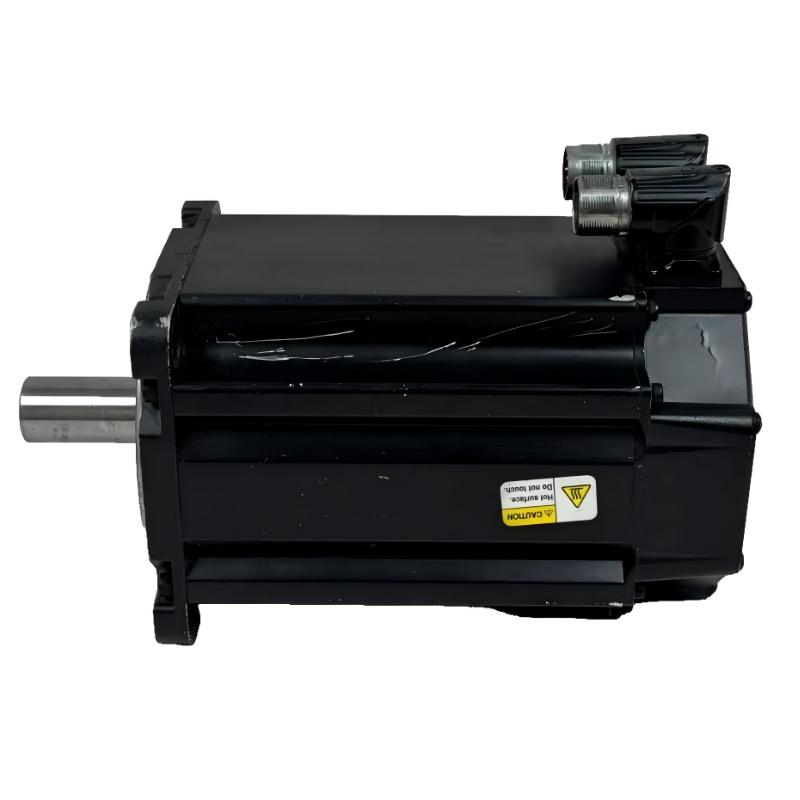
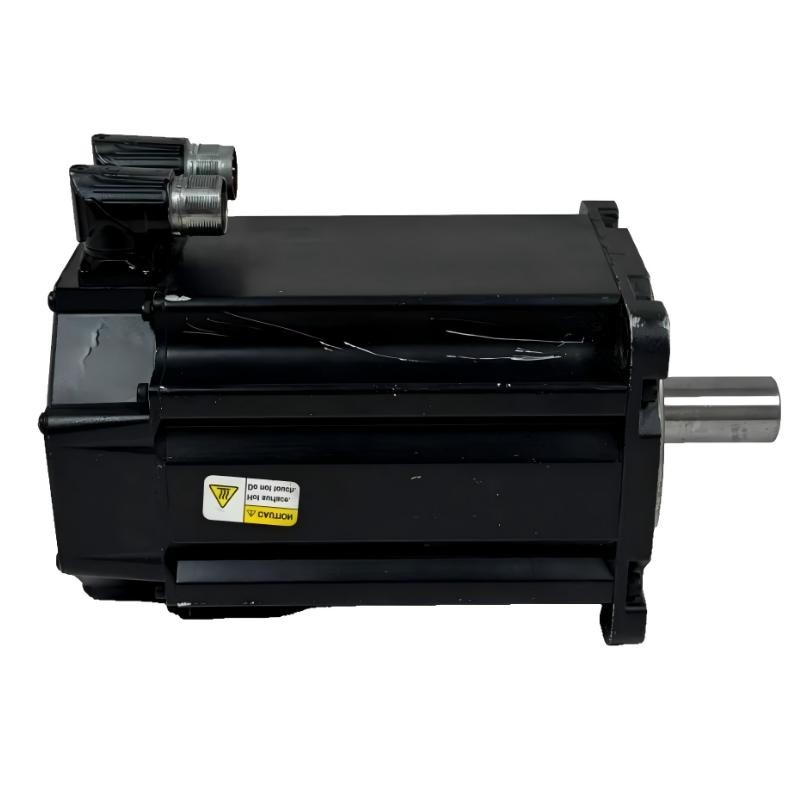
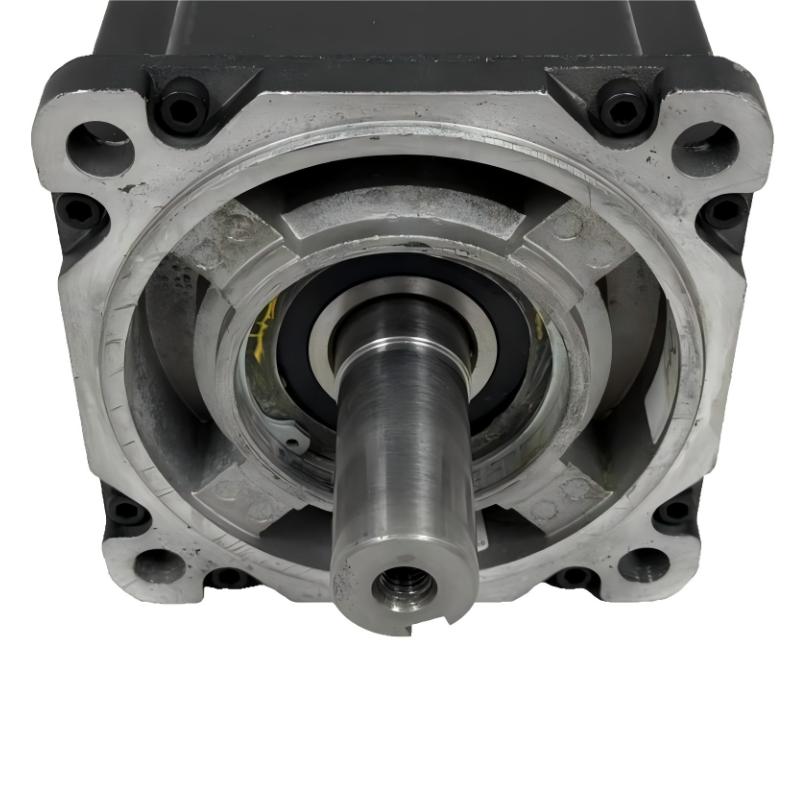
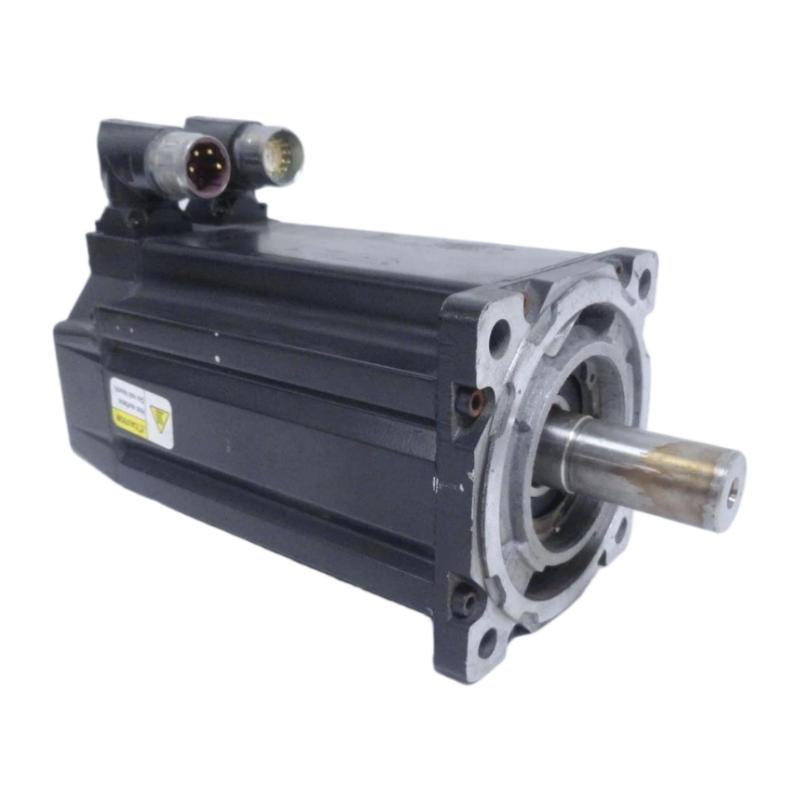
- Allen Bradley
- MPL-B520K-MJ72AA
- Low-Inertia Brushless Servo Motors Product
- USA
- 138 mm × 87 mm × 105 mm
- 9.8kg
- Xiamen, China
- New & In Stock
- T/T, PayPal, Western Union
- 1 Year
- 1-3 Working Days
- DHL, UPS, TNT, FedEx and EMS.
- 24-Hour Service
- COO
- 14
Our advantage

Global Logistics
We have a 10-year logistics and express cooperation agreement, so our products can be shipped to any place in the world.

Brand new and original
Our products are imported in bulk from the place of origin. Because of the cooperative relationship, our products are all original and 100% new.

24-hour service
We provide 7*24 hours service to our customers. We will be there whenever you need us.

Price advantage
All our products are priced very favorably because we have our own warehouse and supply.
| Company Information | |||
| [email protected] | |||
| Mobile | +8615980777398 | ||
| +8615980777398 | |||
| 15980777398 |
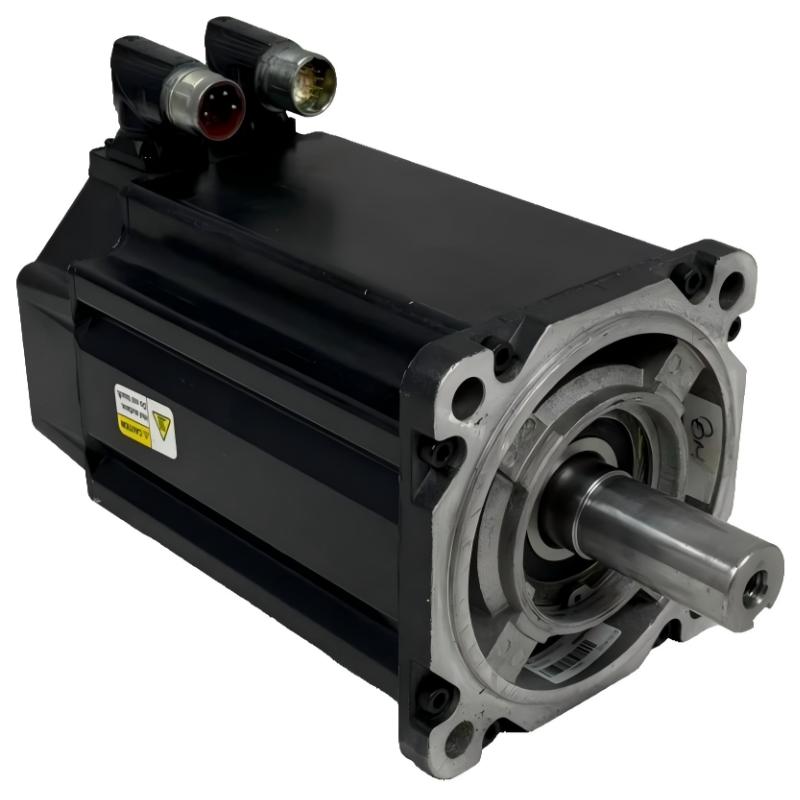
Allen-Bradley MPL-B520K-MJ72AA Servo Motor – Technical Specifications, Applications, Advantages and Model Selection Guide
1. Product Overview
The MPL-B520K-MJ72AA is a low-inertia brushless AC servo motor in the Allen-Bradley MP-Series MPL family.
It is a 460 V class, 4000 rpm, multi-turn high-resolution servo motor designed for industrial motion-control applications requiring fast acceleration, accurate positioning, controlled deceleration, and repeatable machine cycles.
The motor uses a 165 mm frame size and a 50.8 mm magnetic stack length.
It has a rated speed of 4000 rpm, approximately 10.7 N·m continuous torque, approximately 23.2 N·m peak torque, and approximately 3.5 kW rated output power.
The motor incorporates a multi-turn high-resolution absolute encoder, providing detailed rotor-position feedback over multiple revolutions.
The mechanical interface uses a keyed shaft extension, making it suitable for conventional couplings, pulleys, gearboxes, timing-belt systems, screw mechanisms, and other industrial transmission components.
The motor is configured without an integral brake.
A SpeedTEC DIN right-angle connector is used for the motor connection, with approximately 180° rotational adjustment to assist cable routing in machine installations.
The motor uses IEC metric mounting and free mounting holes in the Type FF configuration.
2. Brand and Product Series
| Item | Specification |
|---|---|
| Brand | Allen-Bradley |
| Product Family | MP-Series |
| Product Series | MPL Low-Inertia Brushless Servo Motors |
| Product Type | Rotary servo motor |
| Model | MPL-B520K-MJ72AA |
| Voltage Class | 460 V AC |
| Motor Type | Low-inertia brushless AC servo motor |
| Feedback | Multi-turn high-resolution absolute encoder |
| Shaft | Keyed shaft extension |
| Brake | No integral brake |
| Connector | SpeedTEC DIN |
| Mounting | IEC metric |
| Frame Size | 165 mm |
| Magnetic Stack | 50.8 mm |
| Rated Speed | 4000 rpm |
| Continuous Torque | Approx. 10.7 N·m |
| Peak Torque | Approx. 23.2 N·m |
| Rated Output Power | Approx. 3.5 kW |
| Approx. Weight | 9.8 kg |
The MPL family is the low-inertia portion of the MP-Series rotary servo motor range.
The design objective of this motor family is to provide high torque density and fast dynamic response while maintaining a relatively compact motor construction.
The B520K configuration is a particularly useful combination for applications requiring 4000 rpm operation with a moderate continuous torque requirement.
3. Detailed Technical Parameters
| Parameter | MPL-B520K-MJ72AA |
|---|---|
| Model | MPL-B520K-MJ72AA |
| Brand | Allen-Bradley |
| Series | MP-Series MPL |
| Product Type | Low-inertia brushless rotary servo motor |
| Voltage | 460 V AC class |
| Frame Size | 165 mm / 6.50 in |
| Magnetic Stack Length | 50.8 mm / 2.0 in |
| Rated Speed | 4000 rpm |
| Speed at Rated Output | Approx. 3500 rpm |
| Continuous Stall Torque | Approx. 10.7 N·m |
| Peak Stall Torque | Approx. 23.2 N·m |
| Rated Output Power | Approx. 3.5 kW |
| Rotor Inertia | Approx. 0.000783 kg·m² |
| Feedback | Multi-turn high-resolution encoder |
| Feedback Type | Absolute multi-turn feedback |
| Shaft Configuration | Keyed shaft extension |
| Shaft Seal | No shaft seal in standard configuration |
| Brake | No integral brake |
| Connector | SpeedTEC DIN connector |
| Connector Configuration | Right-angle |
| Connector Adjustment | Approximately 180° rotatable |
| Mounting | IEC metric |
| Mounting Hole Style | Free mounting holes, Type FF |
| Motor Housing Class | IP50 class standard configuration |
| Optional Sealing | IP66-class configuration possible with appropriate sealing arrangement |
| Approximate Weight | 9.8 kg |
| Frame Width Class | 165 mm |
| Magnetic Stack | 50.8 mm |
| Application | Industrial servo motion control |
The 10.7 N·m continuous torque rating is the primary reference for continuous machine loading.
The 23.2 N·m peak torque capability is intended for short-duration acceleration, deceleration, transient loading, and dynamic motion requirements.
The approximately 0.000783 kg·m² rotor inertia is an important specification for applications requiring frequent speed changes.
4. Dimensions and Weight
The principal dimensional characteristics of the motor are its 165 mm frame size and 50.8 mm magnetic stack length.
| Mechanical Parameter | Specification |
|---|---|
| Model | MPL-B520K-MJ72AA |
| Frame Size | 165 mm |
| Frame Size | 6.50 in |
| Magnetic Stack Length | 50.8 mm |
| Magnetic Stack Length | 2.0 in |
| Mounting Standard | IEC metric |
| Mounting Hole Configuration | Free mounting holes, Type FF |
| Shaft | Keyed shaft extension |
| Connector | SpeedTEC DIN, right-angle |
| Connector Rotation | Approximately 180° |
| Approximate Motor Weight | 9.8 kg |
| Approximate Weight in lb | Approximately 21.6 lb |
| Overall Mechanical Envelope | Verify using the applicable mechanical drawing |
The 9.8 kg approximate weight should be considered during machine-frame design and installation.
The exact flange dimensions, shaft diameter, shaft projection, bolt-hole dimensions, connector envelope, and total motor length should be taken from the appropriate mechanical drawing when fabricating a new machine.
5. Product Introduction
The MPL-B520K-MJ72AA is designed for closed-loop industrial motion control.
The motor uses permanent-magnet technology and a low-inertia rotor construction.
The servo drive continuously monitors motor feedback and regulates torque, velocity, and position according to the machine motion profile.
This allows the motor to perform operations such as rapid acceleration, high-speed travel, controlled deceleration, precise stopping, and repeated positioning.
The 4000 rpm speed class makes the motor particularly useful for applications where cycle time and dynamic response are important.
The motor is not primarily intended to operate like a conventional fixed-speed industrial motor.
Its main purpose is controlled motion.
Typical machine functions include indexing, feeding, positioning, synchronization, transfer, cutting, winding, conveying, and coordinated multi-axis movement.
6. Low-Inertia Design
The low-inertia design is one of the most important characteristics of the MPL-B520K-MJ72AA.
The rotor inertia is approximately 0.000783 kg·m².
A low rotor inertia means that less torque is required to accelerate the motor’s own rotating mass.
This is beneficial when the machine repeatedly changes speed.
For example, an indexing mechanism may start from zero speed, accelerate rapidly, reach operating speed, decelerate, stop accurately, remain stationary briefly, and then repeat the cycle.
In this type of application, motor inertia directly affects dynamic response.
The low-inertia design can therefore contribute to shorter acceleration and deceleration periods when the load, drive, and mechanical transmission are properly matched.
7. 4000 rpm High-Speed Operation
The 4000 rpm rated speed is a major feature of the B520K configuration.
Compared with 3000 rpm servo motors, the B520K can be advantageous where the machine requires a higher motor speed.
High motor speed can also be useful when a mechanical reduction system is installed.
For example, a gearbox or belt reduction can convert the motor’s high-speed operation into lower output speed with increased mechanical torque at the machine shaft.
The transmission ratio should be selected based on the required output speed, load torque, reflected inertia, mechanical efficiency, and positioning requirements.
8. Continuous Torque
The continuous torque rating is approximately 10.7 N·m.
This is the key value to use when evaluating the motor for continuous machine operation.
If a machine requires approximately 5 to 8 N·m continuously, the motor may have reasonable torque margin.
If the machine requires approximately 10 N·m continuously, the application is much closer to the motor’s continuous capability and should be evaluated carefully for ambient temperature, duty cycle, speed, cooling, and RMS torque.
The continuous torque requirement should therefore be calculated from the complete machine motion profile.
9. Peak Torque
The approximate peak torque is 23.2 N·m.
Peak torque provides additional short-duration capacity for acceleration and deceleration.
For example, a machine may require only 8 N·m during steady-state movement but require 18 N·m during acceleration.
In such a case, the peak torque rating becomes important.
Peak torque should not be interpreted as a continuous operating rating.
If a machine repeatedly operates close to the peak torque limit, the effective RMS torque and thermal duty cycle must be evaluated.
10. Rated Output Power
The motor is approximately a 3.5 kW servo motor.
This places the B520K in a useful mid-power range within the MPL family.
It is larger in frame size than many 130 mm motors but uses a relatively short 50.8 mm magnetic stack.
This combination allows the motor to provide a high-speed operating point without using the longer magnetic stacks associated with higher continuous-torque motors.
The motor is therefore suitable for applications where speed and dynamic response are more important than maximum continuous torque.
11. Multi-Turn High-Resolution Encoder
The MPL-B520K-MJ72AA uses a multi-turn high-resolution absolute encoder.
This feedback system provides detailed rotor-position information and tracks position across multiple revolutions.
Multi-turn feedback is useful for applications where the motor can rotate through many revolutions while the machine still needs accurate position information.
Typical examples include:
- Screw-driven linear axes
- Rotary indexing systems
- Gearbox-driven axes
- Long-travel positioning systems
- Winding equipment
- Conveyor positioning
- Material handling
- Multi-axis automation
High-resolution feedback also helps the drive maintain accurate velocity and position control.
12. Absolute Feedback Advantages
The absolute nature of the feedback system is useful because the control system can retain detailed position information without treating the motor as a simple incremental feedback device.
This can reduce the need for repetitive reference procedures in appropriately designed systems.
However, actual machine behavior after power interruption depends on the complete servo architecture, controller configuration, safety system, and machine application.
Absolute feedback should therefore be considered one part of the overall position-control system.
13. Keyed Shaft Extension
The motor has a keyed shaft extension.
The keyed shaft is a conventional industrial mechanical interface.
It is compatible with a wide range of mechanical transmission components.
Typical applications include:
- Flexible couplings
- Timing pulleys
- Gearboxes
- Gear reducers
- Screw drives
- Rollers
- Conveyor drives
- Rotary indexing mechanisms
- Industrial transmission assemblies
The coupling and shaft must be correctly aligned.
Incorrect alignment can introduce excessive radial or axial loading and can reduce bearing life.
14. No Integral Brake
The MPL-B520K-MJ72AA is a no-brake configuration.
This is an important selection characteristic.
For horizontal axes where the load remains mechanically stable when the motor is not energized, the no-brake configuration can be suitable.
For vertical axes, however, the designer must determine whether gravity can cause movement after motor torque is removed.
If the load must be held mechanically when power is removed, an appropriate brake-equipped motor or separate mechanical holding system should be considered.
15. SpeedTEC DIN Connector
The motor uses a SpeedTEC DIN connector in a right-angle configuration.
The connector can be rotated approximately 180°.
This is useful when the motor is installed in a compact machine structure.
Cable routing can be directed away from:
- Moving components
- Machine guards
- Adjacent motors
- Gearboxes
- Frames
- Cable carriers
The connector should not be used as a structural support for the motor cable.
16. IEC Metric Mounting
The motor uses an IEC metric mounting configuration with free mounting holes.
This is useful for machine builders using metric mechanical structures.
The motor should be mounted to a rigid and properly machined surface.
A weak or flexible mounting structure can introduce:
- Vibration
- Mechanical resonance
- Coupling misalignment
- Positioning errors
- Increased bearing load
- Additional servo tuning difficulty
The mounting surface should therefore be sufficiently rigid for the intended acceleration and load.
17. Main Product Advantages
17.1 4000 rpm Speed Capability
The 4000 rpm speed rating provides a high-speed operating point for demanding motion applications.
It is particularly useful where the machine needs rapid movement or short cycle times.
17.2 Low Rotor Inertia
The low rotor inertia helps the motor respond rapidly to changes in commanded speed.
This is valuable in repetitive indexing and positioning systems.
17.3 Multi-Turn Absolute Feedback
The multi-turn high-resolution encoder provides detailed position information across multiple revolutions.
This is useful for rotary and linear mechanical systems where the motor may rotate many turns during a machine movement.
17.4 3.5 kW Power Class
The approximately 3.5 kW output provides a useful power level for medium-sized industrial servo axes.
17.5 10.7 N·m Continuous Torque
The continuous torque rating is suitable for a broad range of industrial positioning applications.
17.6 23.2 N·m Peak Torque
The peak torque capacity provides additional short-duration torque for acceleration and transient load conditions.
17.7 Keyed Shaft
The keyed shaft is compatible with many conventional industrial mechanical drive systems.
17.8 No-Brake Construction
The no-brake configuration is appropriate for non-braking axes and avoids the additional electrical and mechanical requirements of an integral motor brake.
17.9 Rotatable Right-Angle Connector
The rotatable connector helps simplify motor cable routing in compact equipment.
17.10 Metric Mounting
The IEC metric mounting arrangement is convenient for industrial machine structures based on metric dimensions.
18. Typical Industrial Applications
The MPL-B520K-MJ72AA is suitable for a wide range of servo-controlled machinery.
Its strongest application areas are systems requiring:
- High rotational speed
- Accurate position control
- Rapid acceleration
- Rapid deceleration
- Repetitive indexing
- Multi-axis synchronization
- High cycle rates
- Multi-turn position tracking
19. Packaging Machinery
Packaging machinery is one of the most suitable application areas for a high-speed low-inertia servo motor.
Typical applications include:
- Product indexing
- Film feeding
- Film cutting
- Sealing mechanisms
- Carton positioning
- Label positioning
- Conveyor synchronization
- Rotary cutters
- Product transfer
The 4000 rpm capability can help increase machine cycle rate when the mechanical system is correctly designed.
The multi-turn encoder is useful where the motor must remain synchronized with other machine axes.
20. Material Handling
Material-handling equipment often requires repeated acceleration and deceleration.
The B520K motor can be used in:
- Transfer systems
- High-speed conveyors
- Sorting equipment
- Positioning mechanisms
- Pick-and-place equipment
- Product feeders
- Rotary transfer stations
The low rotor inertia is particularly useful when the machine performs many short movements.
21. Automated Assembly
Automated assembly systems commonly use servo motors for controlled positioning.
The MPL-B520K-MJ72AA can be used for:
- Component positioning
- Part insertion
- Assembly indexing
- Automated fastening axes
- Transfer mechanisms
- Rotary positioning
- Machine fixtures
- Component alignment
The required torque should be calculated from the actual assembly load and acceleration profile.
22. Machine Tools
The motor can be considered for machine-tool auxiliary axes requiring high-speed servo positioning.
Potential applications include:
- Feed mechanisms
- Positioning axes
- Rotary tables
- Tool positioning
- Automated fixtures
- Material handling within machine tools
The suitability depends on the actual axis torque, speed, inertia, mechanical transmission, and duty cycle.
23. Printing and Converting Equipment
Printing and converting machinery often requires accurate synchronization between rollers and other moving components.
The B520K can be used for:
- Web feeding
- Roller positioning
- Film handling
- Slitting
- Cutting
- Registration
- Tension-control mechanisms
- High-speed indexing
The multi-turn encoder is useful for maintaining accurate rotational position relationships.
24. Textile Machinery
The motor can also be used in textile production machinery.
Potential applications include:
- Winding
- Spooling
- Yarn feeding
- Cutting
- Positioning
- Material handling
- Rotary mechanisms
Textile machinery frequently requires repeated changes in speed, making the low-inertia design useful.
25. Electronics Manufacturing
Electronics manufacturing equipment often requires precise and repeatable movement.
Potential applications include:
- PCB transfer
- Component handling
- Inspection positioning
- Assembly mechanisms
- Precision feeders
- Automated transfer systems
- Rotary indexing
The motor’s multi-turn feedback can be useful where the mechanism requires precise rotational position information.
26. Winding and Reel Systems
The motor can be considered for controlled winding and reel mechanisms where accurate position and speed control are required.
Applications may include:
- Cable handling
- Material winding
- Film winding
- Spooling
- Roll positioning
The actual application must also account for changing reel diameter and changing load inertia.
27. Screw-Driven Linear Axes
The motor can drive a ball screw or similar rotary-to-linear mechanism.
A servo drive controls motor position while the screw converts rotation into linear movement.
The relationship between motor speed and linear speed depends on screw pitch and transmission ratio.
For example:
Linear Speed = Motor Speed × Screw Lead ÷ Transmission Ratio
The required motor torque depends on:
- Linear force
- Screw lead
- Screw efficiency
- Acceleration
- Load inertia
- Mechanical friction
The 4000 rpm capability can be useful in high-speed linear positioning systems.
28. Gearbox-Driven Axes
A gearbox can be installed between the motor and machine load.
This can allow the motor to operate at high speed while the machine operates at a lower output speed.
The gearbox also changes the load inertia reflected to the motor.
The correct gear ratio should therefore consider both output torque and reflected inertia.
Low-backlash gearboxes are generally preferred for high-accuracy servo positioning.
29. Belt-Driven Axes
The keyed shaft is suitable for a timing pulley and belt transmission.
Belt-driven servo axes are common in:
- Linear transfer systems
- Conveyor positioning
- Pick-and-place machines
- Packaging machines
- Material handling
- Automated assembly
The pulley ratio determines the relationship between motor speed and linear travel.
Belt tension and radial shaft loading must also be considered.
30. Rotary Indexing
Rotary indexing systems require the motor to repeatedly accelerate, decelerate, and stop at precise positions.
The B520K’s combination of:
- 4000 rpm speed
- Low rotor inertia
- 23.2 N·m peak torque
- Multi-turn feedback
makes it suitable for this type of motion when the load requirements remain within the motor’s ratings.
31. Dynamic Motion Performance
The motor is particularly useful for applications where the motion profile is dynamic.
A typical cycle may be:
Start → Accelerate → High-Speed Travel → Decelerate → Position → Dwell → Reverse → Repeat
The low rotor inertia helps reduce the torque required to accelerate the motor itself.
The servo drive then uses feedback information to regulate motor position and velocity.
The overall response depends on the motor, drive, mechanical load, transmission, machine rigidity, and tuning parameters.
32. Load Inertia and Motor Sizing
Motor sizing should begin with the actual mechanical load.
The following parameters should be determined:
- Load mass
- Load radius
- Load inertia
- Required acceleration
- Required deceleration
- Operating speed
- Cycle time
- Duty cycle
- Mechanical transmission ratio
- Friction
- Required positioning accuracy
The motor should then be checked for both continuous and peak torque requirements.
A motor that meets the peak torque requirement but exceeds its continuous thermal capacity is not properly sized.
33. Continuous Torque and RMS Torque
For cyclic applications, RMS torque is more meaningful than simply looking at maximum torque.
A machine may have:
- Low torque during dwell
- Moderate torque during travel
- High torque during acceleration
- Negative torque during braking
The RMS value of these torque periods determines the thermal loading of the motor.
This is especially important when the machine operates continuously at high production rates.
34. Acceleration and Deceleration
The motor’s peak torque allows it to provide higher torque during acceleration than during normal steady-state operation.
The basic relationship is:
T = J × α
Where:
- T = required torque
- J = total reflected inertia
- α = angular acceleration
This relationship demonstrates why the load inertia and acceleration requirement must be considered together.
Increasing acceleration time reduces the instantaneous torque requirement.
35. Servo Drive Selection
The servo drive should be matched to the motor’s electrical and feedback requirements.
Important considerations include:
| Drive Selection Factor | Requirement |
|---|---|
| Motor Voltage | Compatible with 460 V class motor |
| Continuous Current | Sufficient for motor continuous operation |
| Peak Current | Sufficient for acceleration torque |
| Feedback | Compatible with multi-turn high-resolution feedback |
| Speed | Supports 4000 rpm operation |
| Torque | Supports approximately 10.7 N·m continuous and 23.2 N·m peak |
| Regeneration | Suitable for machine deceleration energy |
| Controller | Compatible with the machine motion controller |
| Safety | Suitable for required machine safety functions |
Correct drive sizing is essential for achieving the expected motor performance.
36. Regenerative Energy
High-speed servo applications can generate regenerative energy during deceleration.
When the motor rapidly reduces speed or decelerates a high-inertia load, mechanical energy is transferred back toward the servo drive.
The drive system must be capable of managing this energy.
Depending on the machine, regenerative energy may be handled through the drive’s internal circuitry or through an appropriate external regenerative solution.
This should be evaluated during system design.
37. Vertical Axis Considerations
The no-brake configuration is an important consideration for vertical axes.
If the load can move downward under gravity when motor torque is removed, the motor itself should not be treated as a mechanical holding device.
A vertical machine may require:
- Mechanical brake
- Counterbalance
- External holding mechanism
- Safety-rated braking arrangement
- Brake-equipped servo motor
The appropriate solution depends on the machine’s safety architecture.
38. Installation Considerations
Before installing the motor, verify:
- Mounting dimensions
- Shaft dimensions
- Coupling compatibility
- Motor orientation
- Connector clearance
- Cable routing
- Grounding
- Servo drive compatibility
- Feedback wiring
- Mechanical alignment
- Load inertia
- Required brake function
The motor should be mounted on a rigid surface.
The shaft should be aligned with the driven equipment before the coupling is tightened.
39. Mechanical Alignment
Poor shaft alignment is one of the most common causes of unnecessary mechanical loading.
Incorrect alignment can lead to:
- Bearing wear
- Coupling failure
- Vibration
- Noise
- Temperature increase
- Positioning errors
- Reduced motor life
A flexible coupling does not eliminate the need for proper alignment.
It is intended to accommodate limited misalignment, not compensate for poor installation.
40. Cable Routing
The SpeedTEC DIN connector allows flexible cable orientation.
The approximately 180° rotational capability can be useful when installing the motor inside a compact enclosure.
Cable routing should prevent:
- Excessive bending
- Crushing
- Abrasion
- Sharp bends
- Continuous connector loading
- Interference with moving machine parts
Where the motor cable moves continuously, the cable should be suitable for the required flexing duty.
41. Maintenance
The motor is intended for industrial service, but the complete mechanical system should be inspected periodically.
Maintenance checks can include:
- Motor mounting
- Coupling condition
- Shaft condition
- Bearing noise
- Vibration
- Connector condition
- Feedback cable
- Motor temperature
- Machine positioning accuracy
- Mechanical backlash
- Gearbox condition
- Belt tension
Servo faults are not always caused by the motor.
Mechanical wear, encoder wiring, drive parameters, grounding, machine resonance, and transmission problems can all produce servo-related symptoms.
42. Servo Tuning
Servo tuning should be performed after the machine’s mechanical system has been assembled.
Important factors include:
- Motor inertia
- Load inertia
- Gear ratio
- Coupling stiffness
- Belt stiffness
- Mechanical resonance
- Friction
- Backlash
- Acceleration
- Deceleration
- Position loop gain
- Velocity loop gain
A rigid machine structure generally makes high-performance servo tuning easier.
43. Positioning Accuracy
The high-resolution encoder provides the servo drive with detailed motor-position information.
However, motor feedback alone does not guarantee machine-level positioning accuracy.
Mechanical backlash, gearbox compliance, belt stretch, coupling flexibility, frame deformation, and thermal expansion can affect the final machine position.
For precision applications, the entire mechanical transmission should therefore be evaluated.
44. Product Advantages for Machine Builders
The MPL-B520K-MJ72AA provides several practical advantages for machine builders.
Its 4000 rpm operating speed supports high-speed machine cycles.
Its low rotor inertia supports fast dynamic response.
Its multi-turn high-resolution encoder provides detailed position information.
Its keyed shaft provides a familiar mechanical interface.
Its no-brake configuration is suitable for horizontal axes and other applications that do not require a motor-mounted holding brake.
Its rotatable right-angle connector provides flexibility during machine construction.
Its 165 mm frame provides a substantial mechanical mounting platform.
Its 3.5 kW output class places it between smaller compact servo motors and larger high-torque motor configurations.
45. Five Same-Series or Closely Related Models
The following models are useful when comparing configurations within the B520K and closely related MPL motor families.
| Model | Speed | Continuous Torque | Peak Torque | Rated Power | Feedback | Shaft | Brake | Frame / Stack | Approx. Weight |
|---|---|---|---|---|---|---|---|---|---|
| MPL-B520K-MJ72AA | 4000 rpm | 10.7 N·m | 23.2 N·m | 3.5 kW | Multi-turn high-resolution | Keyed | No | 165 / 50.8 mm | 9.8 kg |
| MPL-B520K-MJ74AA | 4000 rpm | 10.7 N·m | 23.2 N·m | 3.5 kW | Multi-turn high-resolution | Keyed | 24 V DC | 165 / 50.8 mm | Approx. 13.9 kg |
| MPL-B520K-MK72AA | 4000 rpm | 10.7 N·m | 23.2 N·m | 3.5 kW | Multi-turn high-resolution | Keyless | No | 165 / 50.8 mm | Approx. 9–11 kg |
| MPL-B520K-MK74AA | 4000 rpm | 10.7 N·m | 23.2 N·m | 3.5 kW | Multi-turn high-resolution | Keyless | 24 V DC | 165 / 50.8 mm | Approx. 13–14 kg |
| MPL-B540K-MJ72AA | 4000 rpm | Approx. 19.4 N·m | Approx. 48.6 N·m | 5.4 kW | Multi-turn high-resolution | Keyed | No | 165 / 101.6 mm class | Approx. 15 kg |
The first four models are especially useful because they allow the designer to change the shaft and brake configuration without moving away from the B520K performance platform.
The MPL-B520K-MJ72AA is the keyed, multi-turn, no-brake configuration.
The MPL-B520K-MJ74AA adds an integral holding brake.
The MPL-B520K-MK72AA changes the shaft interface from keyed to keyless.
The MPL-B520K-MK74AA combines a keyless shaft with an integral brake.
The MPL-B540K-MJ72AA moves to a longer magnetic stack and substantially higher torque capacity.
46. Five Popular Allen-Bradley Servo Models for Comparison
The following models provide useful comparison points across the broader MP-Series MPL range.
| Model | Speed | Continuous Torque | Peak Torque | Rated Power | Feedback | Shaft | Brake | Frame / Stack | Approx. Weight |
|---|---|---|---|---|---|---|---|---|---|
| MPL-B430P-MJ74AA | 5000 rpm | Approx. 6.55 N·m | Approx. 19.8 N·m | Approx. 2.2 kW | Multi-turn high-resolution | Keyed | 24 V DC | 115 mm class | Approx. 5.5 kg |
| MPL-B4530F-MJ74AA | 3000 rpm | Approx. 8.25 N·m | Approx. 20.3 N·m | Approx. 2.1 kW | Multi-turn high-resolution | Keyed | 24 V DC | 130 / 76.2 mm | Approx. 7.3 kg |
| MPL-B4540F-MJ74AA | 3000 rpm | Approx. 10.2 N·m | Approx. 27.1 N·m | Approx. 2.6 kW | Multi-turn high-resolution | Keyed | 24 V DC | 130 / 101.6 mm | Approx. 8.6 kg |
| MPL-B4560F-MJ74AA | 3000 rpm | Approx. 14.1 N·m | Approx. 34.4 N·m | Approx. 3.2 kW | Multi-turn high-resolution | Keyed | 24 V DC | 130 / 152.4 mm | Approx. 11.8 kg |
| MPL-B540K-MJ74AA | 4000 rpm | Approx. 19.4 N·m | Approx. 48.6 N·m | Approx. 5.4 kW | Multi-turn high-resolution | Keyed | 24 V DC | 165 mm / longer stack | Approx. 15 kg |
These five models cover a useful range of speed, torque, frame size, and power.
The MPL-B430P-MJ74AA is more compact and offers higher speed.
The MPL-B4530F-MJ74AA and MPL-B4540F-MJ74AA provide lower power levels and smaller 130 mm-class frames.
The MPL-B4560F-MJ74AA provides more continuous and peak torque than the B520K while operating at 3000 rpm.
The MPL-B540K-MJ74AA provides substantially greater torque and power while remaining in the 165 mm frame family.
47. Same-Series Configuration Selection
| Requirement | Recommended Model |
|---|---|
| Multi-turn + keyed + no brake | MPL-B520K-MJ72AA |
| Multi-turn + keyed + brake | MPL-B520K-MJ74AA |
| Multi-turn + keyless + no brake | MPL-B520K-MK72AA |
| Multi-turn + keyless + brake | MPL-B520K-MK74AA |
| Single-turn + keyed + no brake | MPL-B520K-SJ72AA |
| Single-turn + keyed + brake | MPL-B520K-SJ74AA |
| Single-turn + keyless + no brake | MPL-B520K-SK72AA |
| Single-turn + keyless + brake | MPL-B520K-SK74AA |
| Higher continuous torque | MPL-B540K-MJ72AA / MJ74AA |
| Smaller frame | MPL-B4540F / MPL-B4560F family |
48. Model Number Interpretation
The catalog number MPL-B520K-MJ72AA identifies the motor’s major configuration characteristics.
| Model Code | Configuration |
|---|---|
| MPL | MPL low-inertia brushless servo motor family |
| B | 460 V class |
| 5 | 165 mm frame size |
| 20 | 50.8 mm magnetic stack |
| K | 4000 rpm speed class |
| M | Multi-turn high-resolution encoder |
| J | Keyed shaft extension |
| 7 | SpeedTEC DIN connector, right-angle, rotatable |
| 2 | No brake |
| AA | Standard factory configuration |
This coding structure makes it possible to distinguish the motor from other B520K configurations that use different feedback, shaft, connector, or brake arrangements.
49. Comparison With MPL-B520K-MJ74AA
The MPL-B520K-MJ74AA is one of the closest alternatives to the MPL-B520K-MJ72AA.
The principal difference is the brake configuration.
| Feature | MPL-B520K-MJ72AA | MPL-B520K-MJ74AA |
|---|---|---|
| Speed | 4000 rpm | 4000 rpm |
| Continuous Torque | 10.7 N·m | 10.7 N·m |
| Peak Torque | 23.2 N·m | 23.2 N·m |
| Power | Approx. 3.5 kW | Approx. 3.5 kW |
| Feedback | Multi-turn high-resolution | Multi-turn high-resolution |
| Shaft | Keyed | Keyed |
| Brake | No | 24 V DC brake |
| Frame | 165 mm | 165 mm |
| Stack | 50.8 mm | 50.8 mm |
| Weight | Approx. 9.8 kg | Approx. 13.9 kg |
The MJ72AA is preferable when no motor-mounted brake is required.
The MJ74AA is more appropriate where a motor-mounted holding brake is required.
50. Comparison With MPL-B520K-MK72AA
The main difference between the MJ72AA and MK72AA is the shaft configuration.
| Feature | MPL-B520K-MJ72AA | MPL-B520K-MK72AA |
|---|---|---|
| Speed | 4000 rpm | 4000 rpm |
| Continuous Torque | 10.7 N·m | 10.7 N·m |
| Peak Torque | 23.2 N·m | 23.2 N·m |
| Feedback | Multi-turn | Multi-turn |
| Shaft | Keyed | Keyless |
| Brake | No | No |
| Frame | 165 mm | 165 mm |
| Stack | 50.8 mm | 50.8 mm |
The correct choice depends primarily on the mechanical transmission interface.
51. Packaging Machine Selection
For packaging equipment, the B520K can be considered for:
- Product feeding
- Film feeding
- Indexing
- Rotary cutting
- Label positioning
- Sealing mechanisms
- Conveyor synchronization
- Product transfer
The motor’s high-speed capability is particularly useful when the machine needs short cycle times.
52. Material Handling Selection
For material handling, the motor can provide controlled acceleration and deceleration for:
- Conveyor positioning
- Transfer systems
- Sorting mechanisms
- Product handling
- Indexing stations
- Pick-and-place mechanisms
The final selection should be based on actual load inertia and acceleration requirements.
53. High-Speed Indexing Selection
High-speed indexing is one of the more suitable applications for this motor.
The combination of:
4000 rpm + low rotor inertia + 23.2 N·m peak torque + multi-turn feedback
provides a useful configuration for machines that repeatedly move between defined positions.
The mechanical transmission must still be designed to withstand the acceleration and deceleration forces.
54. Advantages Compared With Larger Motors
Compared with a longer-stack, higher-torque motor, the B520K configuration can offer:
- Lower motor weight
- Lower rotor inertia
- High-speed operation
- Smaller electromagnetic stack
- Lower mechanical load on the machine structure
- Reduced oversizing when very high torque is not required
A larger motor should be selected when continuous or peak torque requirements exceed the B520K’s practical operating range.
55. Advantages Compared With Smaller Motors
Compared with smaller 130 mm-class motors, the B520K provides:
- Higher power class
- Larger frame structure
- 4000 rpm operation
- Higher continuous output than many compact motors
- Greater mechanical mounting capacity
- Greater application flexibility for medium-power axes
The trade-off is increased physical size and motor weight.
56. Maintenance and Replacement Considerations
When replacing an existing servo motor with an MPL-B520K-MJ72AA, the following characteristics should be checked carefully:
- Exact catalog number
- Voltage class
- Frame size
- Magnetic stack
- Rated speed
- Continuous torque
- Peak torque
- Feedback type
- Shaft type
- Brake configuration
- Connector configuration
- Mounting dimensions
- Cable compatibility
- Servo-drive compatibility
A motor with a similar frame size is not necessarily a direct replacement.
Feedback configuration is especially important.
A multi-turn encoder motor should not automatically be replaced by a single-turn model without checking the complete control system.
57. Electrical System Considerations
The motor is intended for a 460 V class servo system.
The servo drive must be capable of supplying the required motor voltage and current.
The electrical system should also account for:
- Motor cable
- Feedback cable
- Grounding
- Shielding
- Regenerative energy
- Peak current
- Continuous current
- Motor temperature
- Drive overload capability
Proper cable selection is particularly important for servo systems because the feedback signal must remain reliable in an electrically noisy industrial environment.
58. Environmental Considerations
The standard motor configuration is generally associated with an IP50 housing class, while additional sealing arrangements can provide a higher protection configuration where applicable.
The actual environmental requirement should be evaluated based on:
- Dust
- Moisture
- Oil
- Coolant
- Temperature
- Chemical exposure
- Washdown requirements
- Installation orientation
- Shaft sealing requirements
The motor should be selected with the appropriate environmental configuration rather than relying on the base model alone.
59. Mechanical Protection
The motor should be protected from unnecessary impact, contamination, and mechanical overload.
The shaft should not be hammered during coupling installation.
The motor should not be used to support loads that are not appropriate for its shaft and bearings.
Any external radial or axial loads should remain within the applicable mechanical limits.
60. Overall Technical Assessment
The MPL-B520K-MJ72AA is a high-speed, low-inertia servo motor designed around a 4000 rpm operating class.
Its key performance figures are approximately:
10.7 N·m continuous torque
23.2 N·m peak torque
3.5 kW rated output
0.000783 kg·m² rotor inertia
165 mm frame
50.8 mm magnetic stack
9.8 kg approximate weight
The motor’s multi-turn high-resolution absolute encoder makes it suitable for applications requiring detailed position feedback across multiple revolutions.
The keyed shaft provides a conventional mechanical interface.
The no-brake configuration makes it appropriate for applications where the motor does not need to provide mechanical holding after power removal.
The SpeedTEC DIN right-angle connector provides practical cable-routing flexibility.
61. Recommended Applications at a Glance
| Application | Suitability | Main Reason |
|---|---|---|
| High-speed indexing | High | 4000 rpm and low inertia |
| Packaging | High | Fast repeated motion |
| Material handling | High | Dynamic acceleration and positioning |
| Automated assembly | High | Multi-turn feedback and positioning |
| Rotary indexing | High | High-speed controlled movement |
| Printing/converting | High | Speed synchronization |
| Winding | High | Speed and position control |
| Screw-driven axis | High | Multi-turn feedback |
| Belt-driven axis | High | Keyed shaft and high speed |
| Horizontal conveyor axis | High | No-brake configuration suitable |
| Vertical axis | Conditional | Holding brake may be required |
| Very high continuous torque | Conditional | Consider larger motor |
| Small compact machine | Conditional | 165 mm frame may be excessive |
62. Final Product Summary
The MPL-B520K-MJ72AA is a 460 V class, 4000 rpm, 3.5 kW low-inertia brushless servo motor belonging to the Allen-Bradley MP-Series MPL family.
Its main characteristics are a 165 mm frame, 50.8 mm magnetic stack, multi-turn high-resolution absolute encoder, keyed shaft, SpeedTEC DIN right-angle connector, IEC metric mounting, and no integral brake.
The approximately 10.7 N·m continuous torque provides the motor’s primary operating capability, while the approximately 23.2 N·m peak torque supports short-duration acceleration and transient load conditions.
The approximately 0.000783 kg·m² rotor inertia is particularly important for dynamic applications.
The motor is therefore well suited to machines that require frequent acceleration and deceleration rather than simple constant-speed operation.
Typical applications include packaging machinery, material handling, automated assembly, indexing systems, printing and converting machinery, textile machinery, winding equipment, high-speed positioning, screw-driven linear axes, belt-driven axes, and other industrial automation equipment.
The principal selection advantages of the MPL-B520K-MJ72AA are its 4000 rpm speed capability, low-inertia response, 3.5 kW power class, multi-turn feedback, keyed shaft, and practical no-brake configuration.
When selecting this motor for a machine, the most important parameters to verify are the required continuous torque, peak torque, RMS torque, operating speed, acceleration time, load inertia, transmission ratio, feedback requirements, shaft configuration, brake requirements, environmental conditions, and exact mechanical mounting dimensions.
For applications requiring the same general motor platform but a different mechanical configuration, the MPL-B520K-MJ74AA provides a brake-equipped alternative, while the MPL-B520K-MK72AA provides a keyless-shaft alternative.
For applications requiring substantially higher torque, the MPL-B540K family is the more appropriate direction.
For applications requiring a smaller frame and lower power, the MPL-B4530F or MPL-B4540F families can provide a more compact solution.
Overall, the MPL-B520K-MJ72AA is best suited to industrial motion systems where high-speed operation, low dynamic inertia, multi-turn absolute feedback, conventional keyed mechanical transmission, and accurate closed-loop control are the primary requirements.