

ProductPRODUCT
Featured products
Contact Us
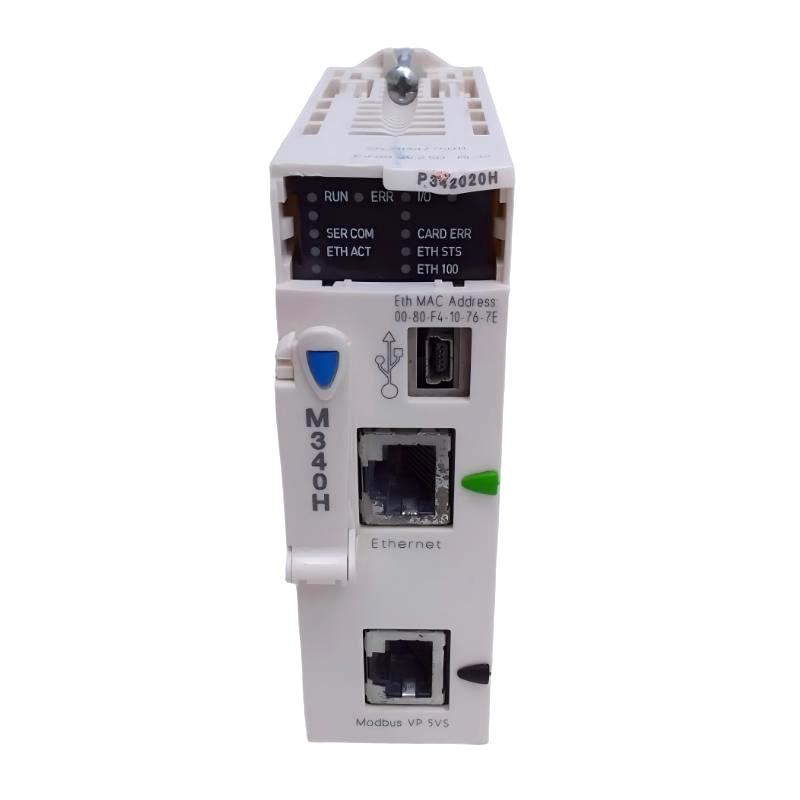
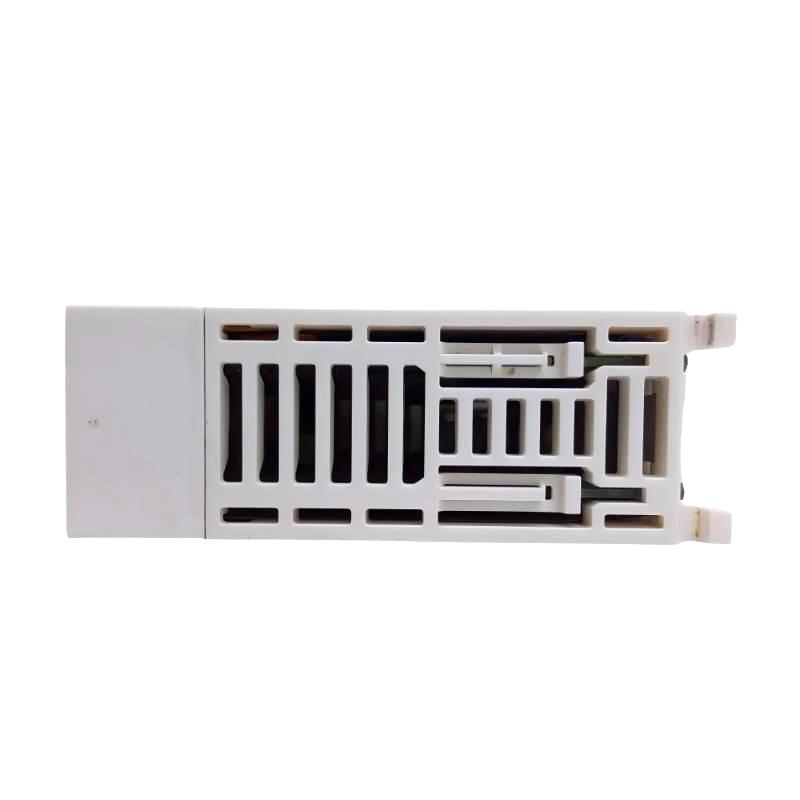
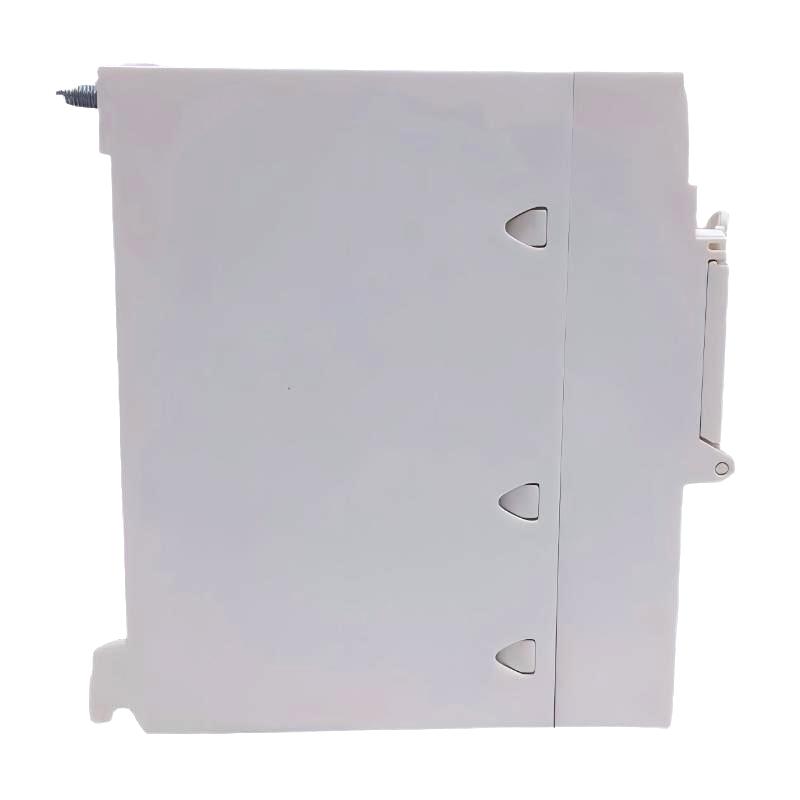
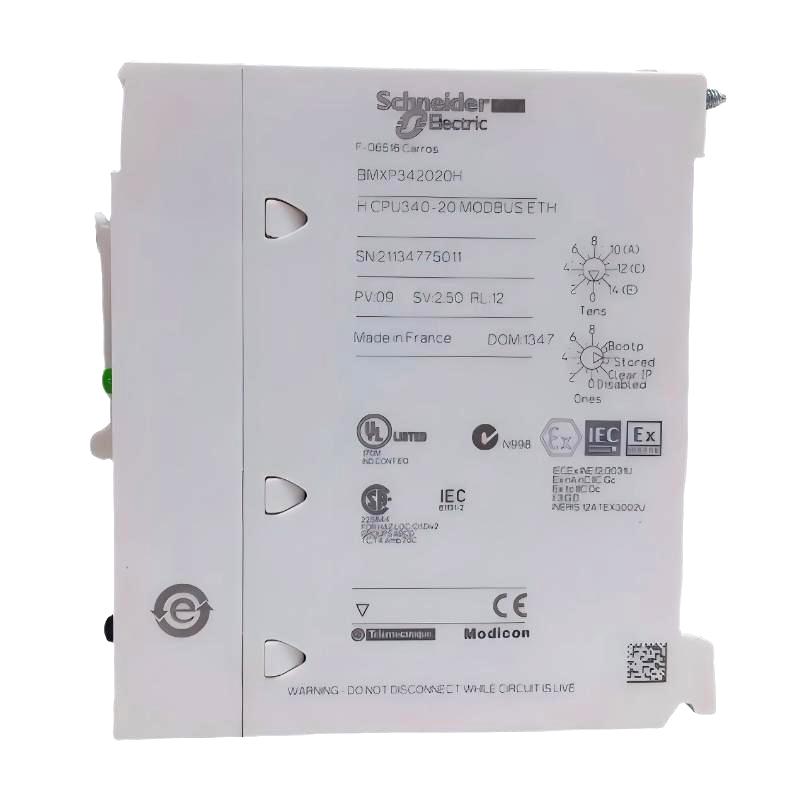
- Schneider
- BMXP342020H
- Processor Module
- France
- 104 x 100 x 33 mm
- 0.205 kg
- Xiamen, China
- New & In Stock
- T/T, PayPal, Western Union
- 1 Year
- 1-3 Working Days
- DHL, UPS, TNT, FedEx and EMS.
- 24-Hour Service
- COO
- 8
Our advantage

Global Logistics
We have a 10-year logistics and express cooperation agreement, so our products can be shipped to any place in the world.

Brand new and original
Our products are imported in bulk from the place of origin. Because of the cooperative relationship, our products are all original and 100% new.

24-hour service
We provide 7*24 hours service to our customers. We will be there whenever you need us.

Price advantage
All our products are priced very favorably because we have our own warehouse and supply.
| Company Information | |||
| [email protected] | |||
| Mobile | +8615980777398 | ||
| +8615980777398 | |||
| 15980777398 |
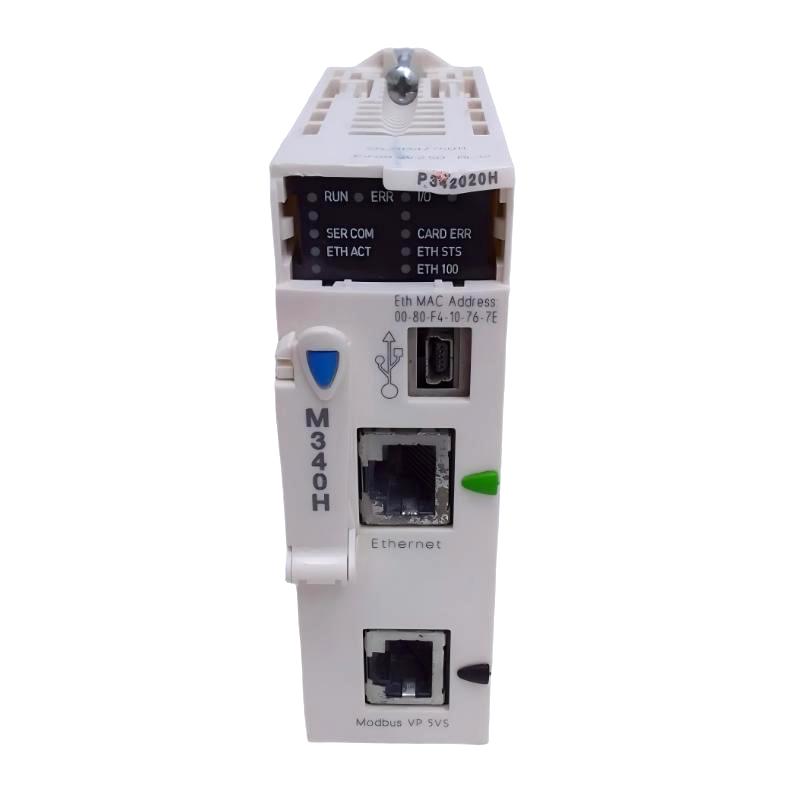
Product Overview
The Schneider BMXP342020H Processor Module is an industrial PLC processor component designed to serve as a central processing element within a compatible Schneider Electric automation system. As the processing unit of a PLC architecture, the processor module is responsible for executing the programmed control logic and coordinating the exchange of information between the controller, I/O modules, communication equipment, and connected field devices.
In industrial automation, the processor is the central decision-making element of the control system. It receives information from input devices, processes the programmed application logic, and determines the appropriate control actions for connected outputs and equipment. Reliable processor operation is therefore essential for maintaining stable machine and process control.
The BMXP342020H has listed dimensions of 104 × 100 × 33 mm and a weight of 0.205 kg. Its compact form factor allows it to be incorporated into PLC control architectures where efficient cabinet utilization and organized module installation are important.
The processor module can form part of a broader automation system containing power supplies, I/O modules, communication modules, terminal equipment, field devices, operator interfaces, and industrial networks. Exact system functionality depends on the PLC platform, hardware configuration, application program, and associated modules.
Technical Specifications
| Parameter | Specification |
|---|---|
| Manufacturer | Schneider Electric |
| Model | BMXP342020H |
| Product Type | Processor Module |
| Application | PLC / Industrial Automation Control |
| Primary Function | PLC Program Execution and Control Processing |
| Dimensions | 104 × 100 × 33 mm |
| Weight | 0.205 kg |
| Installation | Industrial PLC System / Control Cabinet |
| Product Category | PLC Processor Module |
| System Role | Central Control and Processing |
The exact processor performance, memory capacity, communication interfaces, supported programming functions, firmware requirements, and environmental specifications should be verified against the applicable hardware revision and system documentation before engineering or replacement work.
What Is the Schneider BMXP342020H?
The Schneider BMXP342020H is a PLC processor module used as the central processing component of a compatible industrial automation system.
A PLC system normally consists of several functional sections:
Power Supply → Processor → I/O Modules → Field Devices
Additional communication modules can extend the architecture:
Processor → Communication Network → HMI / SCADA / Remote Equipment
The processor receives input information, executes the user-defined control program, and generates the required control decisions.
For example, a PLC application may monitor sensors, evaluate programmed conditions, control outputs, manage sequences, and communicate process information to operator or supervisory systems.
The processor therefore provides the computational foundation for the automation application.
PLC Processor Working Principle
A PLC processor generally operates through a repeated control cycle.
Input Processing
The controller obtains the current state of connected input information.
Inputs may originate from:
- Proximity sensors
- Limit switches
- Push buttons
- Process instruments
- Analog measurement devices
- Remote I/O systems
- Other networked automation equipment
Program Execution
The processor executes the user-defined PLC application according to its programmed logic.
The application can contain:
- Sequential control
- Interlocking logic
- Timers
- Counters
- Mathematical operations
- Data processing
- Alarm logic
- Equipment coordination
Output Processing
After evaluating the control program, the processor determines the required output states.
These commands can be transferred to connected output modules and subsequently to actuators or other equipment.
Communication Processing
The PLC processor can also participate in communication activities with compatible system components, depending on the installed architecture.
A simplified control cycle can therefore be represented as:
Inputs → Program Execution → Control Decisions → Outputs → Communication / Diagnostics
This cycle is repeated continuously while the PLC system is operating.
Main Functions of the BMXP342020H
Central PLC Processing
The primary role of the processor is to execute the automation program and coordinate system operation.
Control Logic Execution
The processor evaluates programmed conditions and generates control decisions.
I/O Coordination
It works with associated I/O modules to exchange information between the PLC and the physical process.
Sequence Control
PLC programs can use processor resources to coordinate machine sequences and operating steps.
Equipment Interlocking
Control logic can implement interlocks designed to prevent incompatible or unsafe operating states within the application.
System Diagnostics
Processor-based control architectures can provide diagnostic information that assists maintenance personnel in identifying system abnormalities.
Role in Industrial Automation
The processor is the central control element connecting the software logic of an automation system with its physical equipment.
A typical architecture can be represented as:
Sensors → Input Modules → BMXP342020H → Output Modules → Actuators
Communication equipment can extend the architecture:
BMXP342020H → Industrial Network → HMI / SCADA / Other Controllers
This architecture allows the PLC to coordinate different parts of an industrial process.
The processor can therefore support functions such as:
- Machine sequencing
- Process control
- Equipment interlocking
- Production coordination
- Alarm handling
- Data processing
- I/O management
- Communication coordination
- System diagnostics
The exact capabilities depend on the configured PLC platform and application.
Industrial Applications
Machine Automation
PLC processor modules are commonly used in automated machinery where programmed logic controls motors, actuators, sensors, and machine sequences.
Manufacturing Lines
Production lines can use PLC processors to coordinate multiple stations and process steps.
Material Handling
Conveyors, transfer systems, sorting equipment, and automated handling systems can use PLC-based control architectures.
Process Control
Industrial processes can use programmable controllers to coordinate pumps, valves, motors, instrumentation, and other process equipment.
Packaging Machinery
Packaging systems often require precise sequencing and coordination between sensors, actuators, and machine mechanisms.
Building and Utility Systems
PLC-based control systems can also be used for equipment monitoring and automation in utility and infrastructure applications.
PLC System Architecture
The BMXP342020H should be considered as part of a complete PLC system rather than as an isolated component.
A typical architecture may contain:
| System Component | Typical Function |
|---|---|
| Power Supply | Provides electrical power to the PLC system |
| Processor Module | Executes application logic |
| Digital Input Module | Receives discrete field signals |
| Digital Output Module | Controls discrete field devices |
| Analog Input Module | Receives analog measurements |
| Analog Output Module | Provides analog control signals |
| Communication Module | Connects the PLC to external networks |
| Terminal / Wiring System | Provides field wiring connections |
| HMI | Operator monitoring and control |
| SCADA System | Supervisory monitoring |
| Sensors | Detect process conditions |
| Actuators | Perform physical control actions |
The exact system configuration should be determined from the requirements of the automation application.
Installation Guidelines
1. Verify the Processor Model
Before installation, confirm the complete product identification:
Schneider BMXP342020H
The processor should be matched to the intended PLC system architecture.
2. Inspect the Module
Check the processor for visible damage and inspect its mechanical and electrical interfaces before installation.
3. Install in the Correct PLC Position
The module should be installed according to the applicable PLC rack and system architecture.
4. Verify the Power System
Before energizing the PLC, verify that the associated power supply and system wiring are appropriate for the installation.
5. Install Associated Modules
Confirm that I/O and communication modules are installed in their intended positions and that the system configuration matches the engineering design.
6. Check Wiring
Inspect field wiring and module connections before commissioning the controller.
PLC Program Configuration
The processor module is only one part of the control system. The application program must also be configured correctly.
Typical programming tasks may include:
- Defining input conditions
- Configuring output logic
- Creating control sequences
- Establishing interlocks
- Setting timers and counters
- Processing analog information
- Managing alarms
- Implementing equipment states
- Configuring communication functions
The actual programming environment and supported programming languages should be confirmed for the specific Schneider Electric PLC platform.
Commissioning Procedure
A structured commissioning process can help prevent startup problems.
Step 1: Verify Hardware
Confirm the BMXP342020H model and its installation position.
Step 2: Check the PLC Rack
Verify the associated power supply, processor, I/O modules, and communication equipment.
Step 3: Inspect Wiring
Check power, field, communication, and control wiring.
Step 4: Verify the Application
Confirm that the correct PLC program and configuration have been prepared for the machine or process.
Step 5: Power the System
Energize the PLC system according to the applicable commissioning procedure.
Step 6: Check Diagnostics
Review processor and system diagnostic information for abnormal conditions.
Step 7: Test I/O
Verify that input signals are correctly detected and that output commands produce the expected equipment response.
Step 8: Test the Process Sequence
Run the automation system through its intended operating sequence under controlled conditions.
Troubleshooting the BMXP342020H
PLC Does Not Start
If the controller does not start correctly, inspect:
- Power supply
- Processor installation
- Module connections
- Rack configuration
- System diagnostics
- Application configuration
A processor startup problem does not necessarily indicate processor failure.
I/O Not Responding
If the processor appears operational but field devices do not respond, check:
- I/O module configuration
- Field wiring
- Input signals
- Output connections
- Program logic
- Associated power circuits
Unexpected Machine Behavior
Unexpected control behavior may result from:
- Incorrect program logic
- Incorrect input signals
- Incorrect output wiring
- Configuration errors
- Communication problems
- Sensor faults
- Actuator faults
The complete control chain should be investigated.
Communication Problems
If the PLC cannot communicate with other equipment, inspect the applicable communication module, network connection, addressing, configuration, and connected devices.
Intermittent Operation
Intermittent PLC behavior can be associated with:
- Loose connections
- Power instability
- Wiring problems
- Environmental conditions
- Communication faults
- Module configuration issues
System diagnostics should be reviewed before replacing the processor.
Maintenance Recommendations
Regular maintenance can help preserve reliable PLC operation.
Inspect Module Connections
Check that processor and rack connections remain secure.
Check Cabinet Conditions
The control cabinet should be maintained in a suitable condition for industrial electronic equipment.
Monitor PLC Diagnostics
Repeated system warnings or communication faults should be investigated.
Maintain Program Backups
Keep an approved backup of the PLC application and configuration so that recovery is possible if hardware replacement becomes necessary.
Document System Changes
Any hardware or software modification should be recorded to maintain an accurate system configuration.
Physical Dimensions and Weight
The Schneider BMXP342020H has listed dimensions of:
104 × 100 × 33 mm
Its listed weight is:
0.205 kg
These physical specifications are useful for:
- PLC cabinet design
- Rack layout
- Equipment handling
- Transportation
- Inventory management
- Replacement planning
When designing the installation, the stated dimensions should be considered together with module connection space, wiring clearance, ventilation, and maintenance access.
Replacement Considerations
When replacing a Schneider BMXP342020H, the complete model designation should be verified.
Important considerations include:
- Processor model
- PLC platform
- Rack configuration
- Associated power supply
- I/O modules
- Communication modules
- Application program
- Hardware configuration
- Firmware requirements where applicable
A processor module with a similar physical appearance should not automatically be considered a compatible replacement.
Before returning the system to operation, the replacement should be commissioned and the PLC application should be verified under controlled conditions.
Engineering Best Practices
Maintain a Complete PLC Backup
Store current application programs and configuration information in an approved engineering environment.
Document the Hardware Architecture
Record the processor, power supply, I/O modules, communication modules, and wiring configuration.
Use Clear Module Identification
Label PLC components and field connections to simplify maintenance.
Test Changes Before Production
Program or hardware changes should be tested systematically before deployment to a production machine.
Monitor Diagnostics
PLC diagnostic information can provide valuable clues when investigating abnormal operation.
Maintain Service Access
The processor and associated modules should remain accessible for inspection and maintenance.
Keep Configuration Consistent
Hardware configuration, PLC software, wiring diagrams, and actual installation should remain synchronized.
Key Advantages
The Schneider BMXP342020H Processor Module provides several practical advantages as a central PLC processing component:
- Centralized PLC program execution
- Supports industrial automation control architectures
- Coordinates I/O and control logic
- Suitable for machine and process automation
- Compact 104 × 100 × 33 mm dimensions
- Listed weight of only 0.205 kg
- Supports structured PLC system architectures
- Can operate with associated I/O and communication equipment
- Suitable for control cabinet integration
- Provides the processing foundation for programmable automation applications
Technical FAQs
What is the Schneider BMXP342020H?
The Schneider BMXP342020H is a PLC processor module designed to serve as the central processing component of a compatible Schneider Electric automation system.
What is the main function of the BMXP342020H?
Its primary function is to execute the PLC application program and coordinate control operations between the processor, I/O modules, communication equipment, and connected field devices.
What are the dimensions of the BMXP342020H?
The listed dimensions are 104 × 100 × 33 mm.
How much does the BMXP342020H weigh?
The listed weight is 0.205 kg.
Is the BMXP342020H an I/O module?
No. It is identified as a processor module. I/O modules perform the direct interface functions for field signals, while the processor executes the control program and coordinates the system.
What can cause a PLC processor system to stop operating?
Potential causes include power problems, incorrect configuration, application-program issues, module connection problems, communication faults, or processor-related hardware problems.
Should the PLC program be backed up before processor replacement?
Yes. Maintaining a verified backup of the PLC application and configuration is an important part of processor replacement planning.
Can another Schneider processor with similar dimensions replace the BMXP342020H?
Physical dimensions alone are not sufficient to establish compatibility. The complete processor model, PLC platform, rack architecture, software configuration, and system requirements should be verified.
What should be checked after replacing the processor?
The hardware configuration, PLC application, I/O operation, communication functions, diagnostics, and machine sequence should all be checked before returning the system to normal operation.
Conclusion
The Schneider BMXP342020H Processor Module is a central PLC processing component designed to execute automation programs and coordinate control operations within a compatible industrial automation architecture. The processor provides the connection between programmed control logic and the broader PLC system containing I/O modules, communication equipment, sensors, actuators, and supervisory devices.
With listed dimensions of 104 × 100 × 33 mm and a weight of 0.205 kg, the BMXP342020H offers a compact physical format for PLC control-system integration and cabinet installation.
Reliable PLC operation depends on the complete system rather than the processor alone. Correct hardware configuration, power supply, I/O installation, application programming, field wiring, communication setup, and commissioning all contribute to dependable automation performance.
For installation or replacement, the complete Schneider BMXP342020H model should be verified against the intended PLC architecture. Proper configuration, program backup, systematic commissioning, and regular maintenance can help maintain stable operation of the industrial control system.