Product Overview
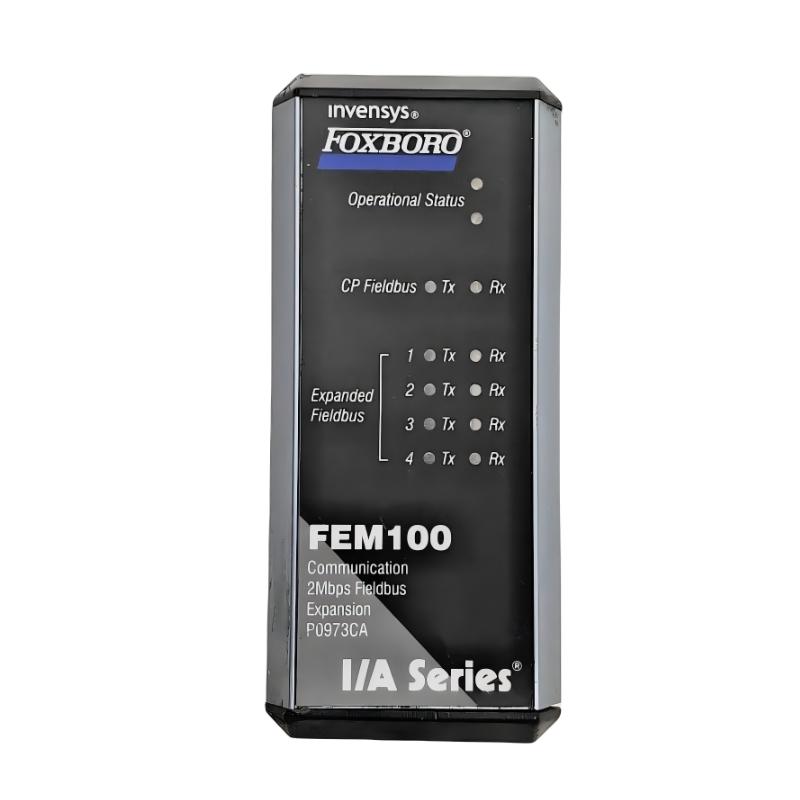
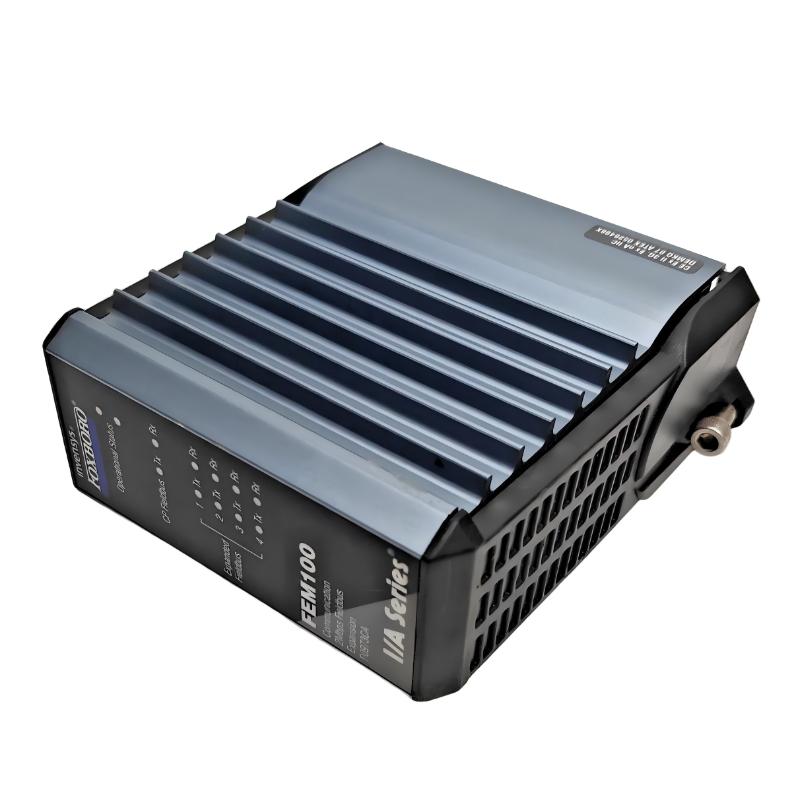
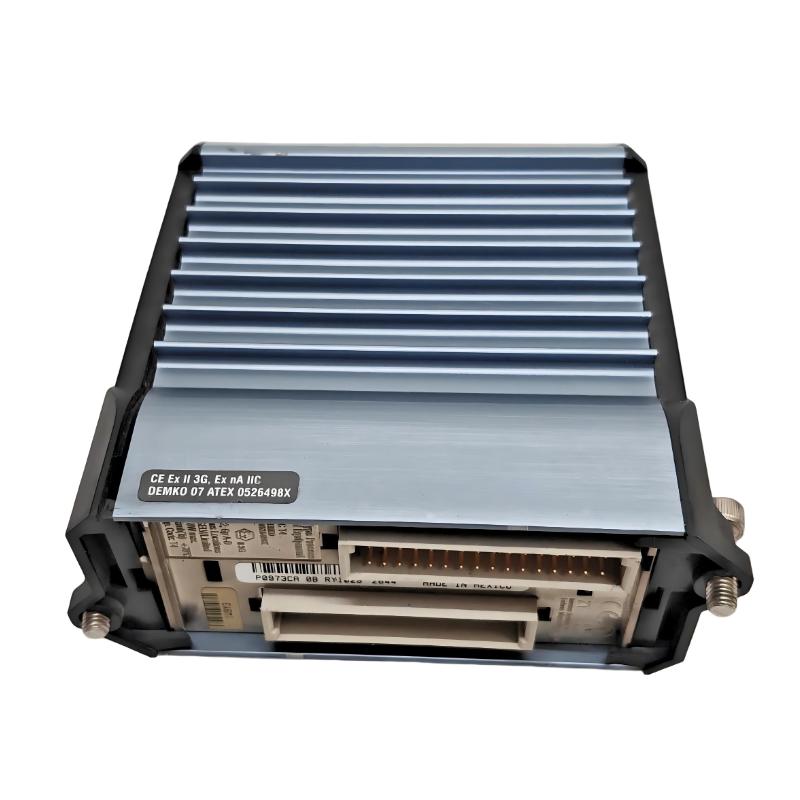
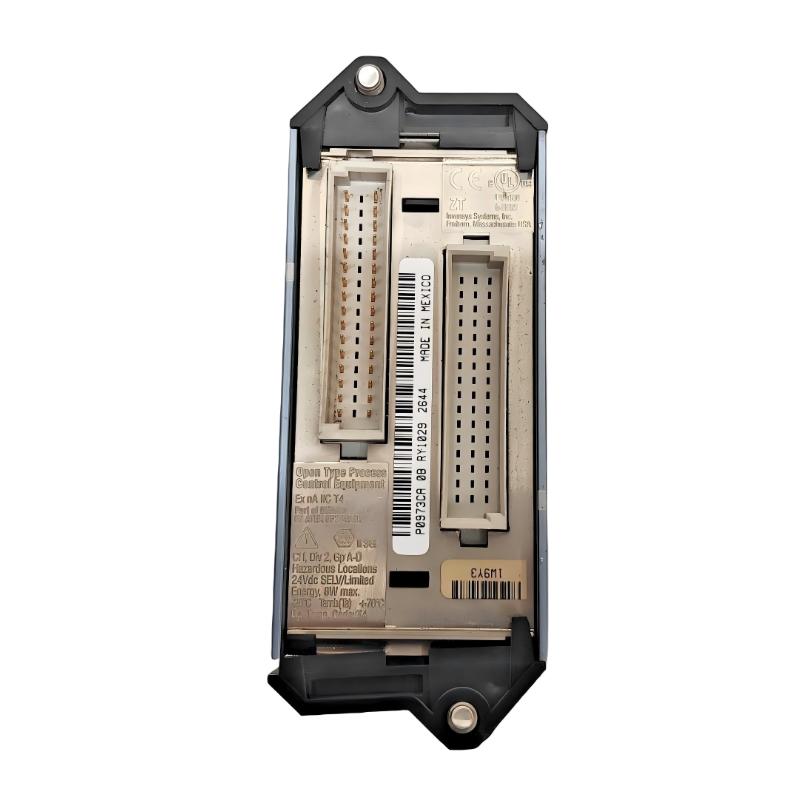
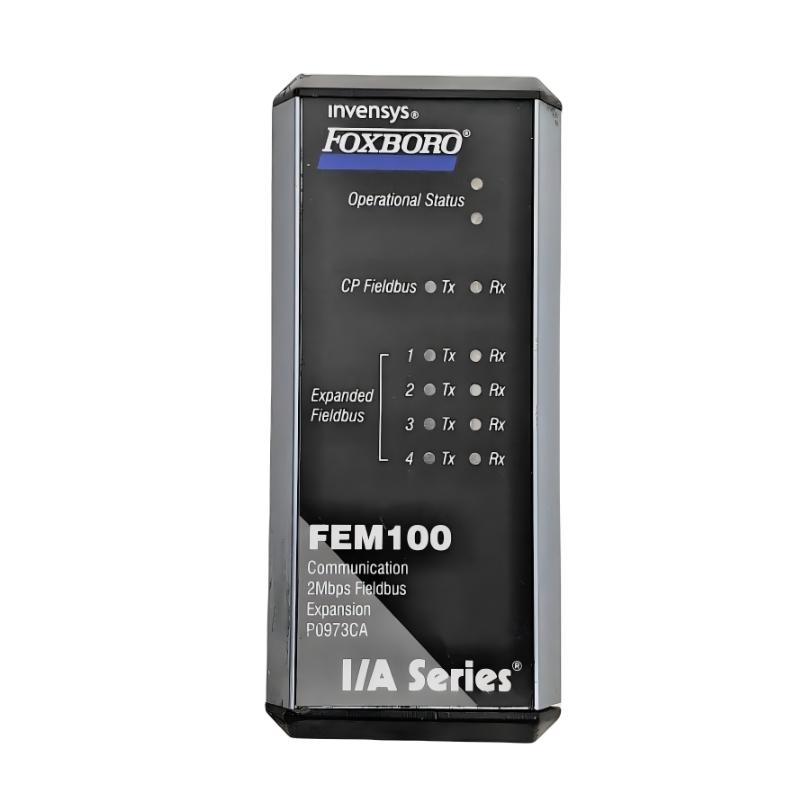
The Foxboro FEM100 P0973CA Fieldbus Expansion Module is a specialized communication and fieldbus infrastructure component designed for Foxboro I/A Series distributed control system (DCS) architectures. Its primary purpose is to expand the fieldbus connection capability of a control system, allowing additional Fieldbus Modules (FBMs) to be incorporated into a distributed automation architecture.
In a large industrial control system, the number of I/O modules connected to one control processor may exceed the capacity of a basic fieldbus arrangement. The FEM100 provides an expansion layer that allows the fieldbus architecture to accommodate additional FBMs while maintaining communication between field devices and the control processor.
The module is particularly useful in distributed process-control applications where a large number of analog, digital, measurement, monitoring, and control signals must be integrated into the DCS.
The FEM100 P0973CA is not a standalone controller. Instead, it works as part of the fieldbus infrastructure between the control processor or fieldbus interface and additional fieldbus segments or FBMs.
The supplied dimensions of the module are 114 × 44.6 × 105 mm, with an approximate weight of 0.6 kg. Its compact industrial form factor allows it to be installed within appropriately designed Foxboro control-system enclosures.
Technical Specifications
| Parameter |
Details |
| Manufacturer |
Foxboro |
| Model |
FEM100 |
| Part Number |
P0973CA |
| Product Type |
Fieldbus Expansion Module |
| System |
Foxboro I/A Series |
| Main Function |
Fieldbus Expansion |
| Communication Function |
Fieldbus Segment Expansion |
| Application |
Distributed I/O and Process Control |
| Associated Equipment |
Fieldbus Modules (FBMs) |
| Installation |
Industrial Control Cabinet |
| Dimensions |
114 × 44.6 × 105 mm |
| Weight |
Approx. 0.6 kg |
| Environment |
Industrial |
| System Role |
Communication / I/O Infrastructure |
| Typical Application |
DCS Fieldbus Expansion |
Function and Working Principle
The primary function of the FEM100 P0973CA is to expand the fieldbus architecture of a compatible Foxboro DCS.
A simplified arrangement can be represented as:
Control Processor
↓
Fieldbus Interface
↓
FEM100 Fieldbus Expansion Module
↓
Additional Fieldbus Infrastructure
↓
Fieldbus Modules
↓
Field Devices
The FEM100 provides an additional communication path within the fieldbus architecture. This allows a larger number of FBMs to be incorporated into a distributed control installation.
Fieldbus Modules perform the actual field signal interface functions. Depending on their type, FBMs can process:
- Analog inputs
- Analog outputs
- Digital inputs
- Digital outputs
- Pulse signals
- Specialized measurement signals
- Process instrumentation signals
The FEM100 supports the infrastructure required to connect these distributed I/O components to the DCS control-processing layer.
What Is the Foxboro FEM100 P0973CA Used For?
The Foxboro FEM100 P0973CA is used when the fieldbus architecture requires additional capacity or expansion beyond a basic fieldbus arrangement.
Typical applications include:
- Large DCS installations
- Distributed I/O systems
- Process-control expansion
- Additional FBM installation
- Large process units
- Remote I/O architectures
- Multi-area process control
- Expanded field instrumentation
For example, a refinery may have hundreds or thousands of field signals distributed across multiple process units. Rather than connecting every I/O module through a single limited fieldbus arrangement, the system can use expansion architecture to organize FBMs into multiple fieldbus groups.
The FEM100 can therefore contribute to a more scalable system design.
Role in Industrial Control Systems
The FEM100 occupies an important position between the DCS processing layer and distributed field I/O.
A typical architecture may be represented as:
Field Instruments
↓
FBMs
↓
FEM100 Fieldbus Expansion
↓
Fieldbus Interface
↓
FCP / Control Processor
↓
Control Network
↓
Operator Workstations
The module itself does not execute the main process-control algorithms. That function belongs to the field control processor or other compatible control-processing equipment.
Instead, the FEM100 provides the communication infrastructure needed to support expanded fieldbus connectivity.
This separation of functions is important in DCS architecture:
- Control Processor: Executes control strategy
- FBM: Interfaces with field signals
- FEM100: Expands fieldbus architecture
- Communication Interface: Connects fieldbus infrastructure to the DCS network
- Operator Station: Provides process visualization and operator interaction
Fieldbus Expansion Capability
The primary advantage of a fieldbus expansion module is increased system capacity.
A basic fieldbus installation may be sufficient for a small process unit. As the system grows, additional I/O modules may be required.
An expansion architecture can provide:
Base Fieldbus
FEM100 Expansion
Additional FBMs
=
Larger Distributed I/O System
This approach allows engineers to divide field I/O into logical groups.
For example, a plant could organize I/O according to:
- Process unit
- Production line
- Equipment type
- Physical plant area
- Control function
- Instrument type
This can make a large DCS installation easier to design, troubleshoot, and maintain.
Industrial Applications
The Foxboro FEM100 is suitable for industrial applications where large quantities of field I/O must be integrated into a distributed control architecture.
Oil and Gas
Oil and gas facilities have extensive instrumentation for:
- Pressure
- Temperature
- Flow
- Level
- Valve position
- Equipment monitoring
The FEM100 can support the expanded fieldbus infrastructure required by these applications.
Refining
Refineries contain numerous process units, each requiring large quantities of I/O.
Fieldbus expansion can help organize I/O across:
- Distillation systems
- Pump systems
- Compressor units
- Heat exchangers
- Storage systems
- Utility systems
Petrochemical
Petrochemical facilities often require large DCS architectures with many distributed field devices. Fieldbus expansion modules can help accommodate additional I/O capacity.
Chemical Processing
Chemical plants require continuous monitoring and control of process variables. Expanded fieldbus architecture allows more field instruments to be integrated into the DCS.
Power Generation
Power-generation systems use extensive instrumentation for turbines, generators, boilers, cooling systems, and auxiliary equipment.
Water and Wastewater
Large treatment facilities may require distributed I/O for:
- Pumps
- Valves
- Flow meters
- Level sensors
- Chemical dosing
- Filtration systems
Installation and System Integration
Proper installation of the FEM100 P0973CA is important for reliable fieldbus communication.
A general installation procedure includes:
- Verify the complete FEM100 model and part number.
- Confirm compatibility with the existing Foxboro system.
- Inspect the module for physical damage.
- Confirm the appropriate mounting hardware.
- Install the module in the designated position.
- Connect the required power supply.
- Connect the fieldbus interfaces.
- Verify cable routing and termination.
- Check all physical connections.
- Apply power to the system.
- Verify module status.
- Confirm communication with the connected fieldbus architecture.
- Verify communication with associated FBMs.
- Check DCS diagnostics.
- Perform functional testing before placing the system into normal operation.
The actual installation procedure should follow the configuration of the specific Foxboro system.
Fieldbus Wiring Considerations
Fieldbus communication requires careful attention to physical installation.
Engineers should verify:
- Correct cable type
- Correct termination
- Proper connector installation
- Cable routing
- Shielding where applicable
- Grounding
- Separation from high-voltage power cables
- Mechanical protection
- Cable length
- Environmental conditions
Communication problems can sometimes appear to be FEM100 hardware failures when the actual problem is related to fieldbus cabling or termination.
For this reason, cable inspection should be part of the initial troubleshooting process.
Compatible System Components
The FEM100 normally operates together with several other Foxboro DCS components.
| Component |
Function |
| FEM100 P0973CA |
Fieldbus Expansion |
| FCP270 |
Field Control Processing |
| FCP280 |
Field Control Processing |
| FBI100 |
Fieldbus Interface |
| FBI200 |
Fieldbus Interface |
| FCM100Et |
Fieldbus Communication |
| FBM Series Modules |
Field I/O |
| Power Modules |
System Power |
| Fiber-Optic Network Equipment |
Control-Network Communication |
| Field Instruments |
Process Measurement |
| Control Valves |
Final Control |
| Engineering Workstation |
System Configuration |
| Operator Workstation |
Process Monitoring |
The actual compatibility depends on the Foxboro system generation and fieldbus architecture.
Maintenance and Inspection
The FEM100 should be included in the preventive-maintenance program for the DCS.
Recommended inspection items include:
| Inspection Item |
Purpose |
| Power Connection |
Verify stable power |
| Status Indicators |
Check operating condition |
| Fieldbus Connections |
Verify communication |
| Cable Condition |
Detect physical damage |
| Connectors |
Check secure connection |
| Grounding |
Maintain communication integrity |
| Cabinet Temperature |
Prevent overheating |
| Ventilation |
Maintain suitable environment |
| Module Housing |
Detect physical damage |
| DCS Diagnostics |
Identify communication faults |
Regular inspection can help prevent intermittent fieldbus communication problems.
Common Troubleshooting Symptoms
| Symptom |
Possible Cause |
| FBMs Not Detected |
Fieldbus communication problem |
| Expansion Segment Offline |
FEM100 or fieldbus fault |
| Intermittent I/O Communication |
Cable or connection problem |
| Multiple FBMs Lost |
Common fieldbus infrastructure problem |
| Communication Alarm |
Network or interface issue |
| Module Status Abnormal |
Power or hardware fault |
| Field Data Missing |
FBM or communication problem |
| DCS Cannot See Additional I/O |
Incorrect expansion configuration |
| Communication Drops Randomly |
Cable, termination, or environmental issue |
| Complete Segment Failure |
Power, interface, or FEM100 problem |
The location of the failure is important. If multiple FBMs on the same expansion path fail simultaneously, engineers should inspect the common fieldbus infrastructure before replacing individual FBMs.
Troubleshooting Procedure
Step 1: Check Power
Verify that the FEM100 receives the required operating power.
Step 2: Check Module Status
Inspect the available status indicators and identify abnormal conditions.
Step 3: Check Fieldbus Connections
Inspect all fieldbus connectors and cables.
Step 4: Check Termination
Verify that the fieldbus segment is correctly terminated according to the system design.
Step 5: Check Associated FBMs
Determine whether the problem affects one FBM or multiple modules.
Step 6: Check the Fieldbus Interface
Inspect the upstream fieldbus interface and communication path.
Step 7: Check Configuration
Verify that the FEM100 and associated fieldbus components are correctly configured in the DCS.
Step 8: Review System Diagnostics
Use the DCS diagnostic system to determine whether the failure is associated with the FEM100, fieldbus, FBM, or upstream communication equipment.
Recommended Alternative Models
| Model |
Product Type |
Key Feature |
Typical Application |
| FEM100 P0973CA |
Fieldbus Expansion Module |
Fieldbus Expansion |
Foxboro DCS |
| FBI100 |
Fieldbus Interface |
Fieldbus Connectivity |
I/A Series |
| FBI200 |
Fieldbus Interface |
Expanded Fieldbus Integration |
DCS |
| FCM100Et |
Communication Module |
Fieldbus Communication |
Distributed I/O |
| FCP270 |
Field Control Processor |
Distributed Process Control |
I/A Series |
| FCP280 |
Field Control Processor |
Advanced Field Control |
Foxboro Evo |
| FBM Series |
Fieldbus Modules |
Field Signal Interface |
Process Automation |
| Fieldbus Expansion Hardware |
Communication Infrastructure |
I/O Expansion |
Large DCS Installations |
A replacement should be selected based on fieldbus architecture, system generation, module compatibility, communication requirements, and installed configuration rather than physical dimensions alone.
Key Advantages
- Designed for Foxboro DCS fieldbus architecture
- Provides fieldbus expansion capability
- Supports distributed I/O architectures
- Allows additional FBMs to be integrated
- Helps build scalable DCS installations
- Supports organized field I/O distribution
- Suitable for large process-control systems
- Compact industrial design
- Dimensions of 114 × 44.6 × 105 mm
- Approximate weight of 0.6 kg
- Suitable for control cabinets
- Supports modular system expansion
- Helps reduce limitations of basic fieldbus configurations
- Suitable for continuous industrial applications
Technical FAQs
What is the Foxboro FEM100 P0973CA?
The Foxboro FEM100 P0973CA is a Fieldbus Expansion Module designed to expand the fieldbus infrastructure of compatible Foxboro DCS installations.
What is the main function of the FEM100?
Its primary function is to provide additional fieldbus connectivity so that more compatible Fieldbus Modules can be incorporated into the control system.
Is the FEM100 a controller?
No. The FEM100 is a fieldbus infrastructure module. Process-control algorithms are executed by compatible control processors such as field control processors.
What are the dimensions?
The supplied dimensions are:
114 × 44.6 × 105 mm
What is the weight?
The supplied weight is:
Approximately 0.6 kg
Why is fieldbus expansion necessary?
Large DCS installations may require more I/O modules than can be supported by a basic fieldbus configuration. An expansion architecture allows additional field I/O to be incorporated into the system.
What modules can be connected through the expanded fieldbus architecture?
The architecture is designed to support compatible Foxboro Fieldbus Modules and associated fieldbus infrastructure.
Can the FEM100 replace an FBM?
No. An FBM provides the actual field I/O interface, while the FEM100 provides fieldbus expansion infrastructure.
Can the FEM100 replace an FCP270?
No. The FCP270 is a field control processor that executes process-control strategies. The FEM100 performs fieldbus expansion functions.
What should be checked before replacement?
Verify the exact part number, Foxboro system generation, fieldbus architecture, connected FBMs, mounting arrangement, power requirements, communication connections, and configuration.
Conclusion
The Foxboro FEM100 P0973CA Fieldbus Expansion Module is an important component for expanding fieldbus infrastructure in compatible Foxboro I/A Series distributed control systems. It provides the communication and expansion layer required when a process-control installation needs to integrate additional Fieldbus Modules beyond the capacity of a basic fieldbus arrangement.
The FEM100 does not execute control algorithms itself. Instead, it works together with field control processors, fieldbus interfaces, FBMs, communication modules, and other DCS infrastructure. This division of responsibilities allows the control architecture to remain modular and scalable.
For large process plants, fieldbus expansion can be particularly valuable because hundreds or thousands of field signals may need to be connected to the DCS. By providing additional fieldbus infrastructure, the FEM100 helps engineers organize distributed I/O according to process area, equipment group, physical location, or control function.
The product information supplied for this model identifies the Foxboro FEM100 P0973CA with dimensions of 114 × 44.6 × 105 mm and an approximate weight of 0.6 kg.
The module is suitable for industrial applications including oil and gas, refining, petrochemical processing, chemical manufacturing, power generation, water treatment, and other process-automation environments.
For system integrators and maintenance engineers, the FEM100 P0973CA should always be evaluated as part of the complete Foxboro fieldbus architecture. Before installation or replacement, engineers should verify system generation, fieldbus interfaces, connected FBMs, power arrangements, network configuration, and the overall DCS design.
Overall, the Foxboro FEM100 P0973CA Fieldbus Expansion Module provides a practical way to extend distributed field I/O infrastructure and support scalable, organized, and reliable process-control system architectures.