

ProductPRODUCT
Featured products
Contact Us
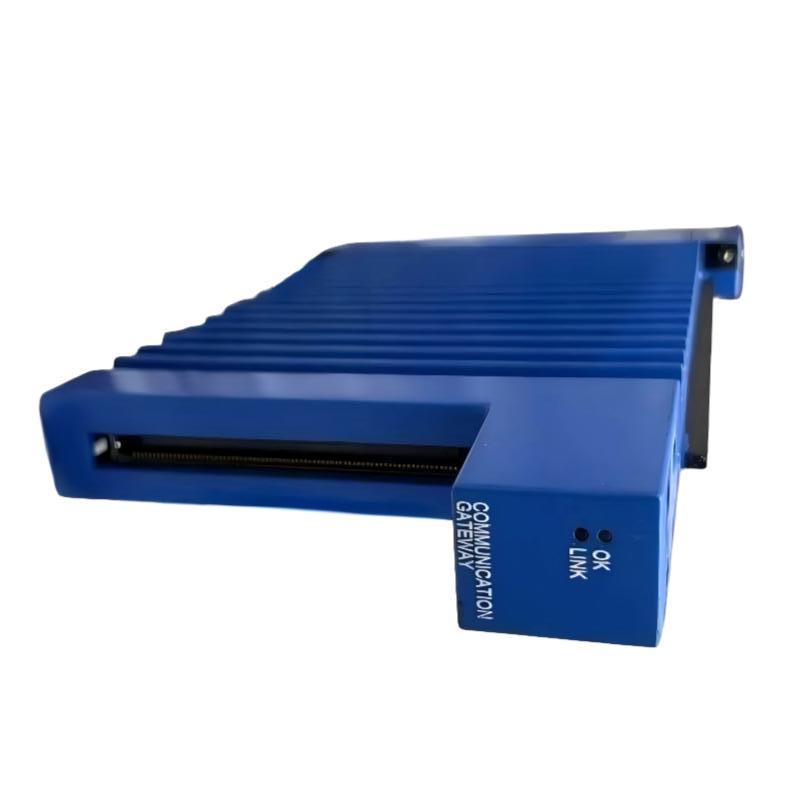
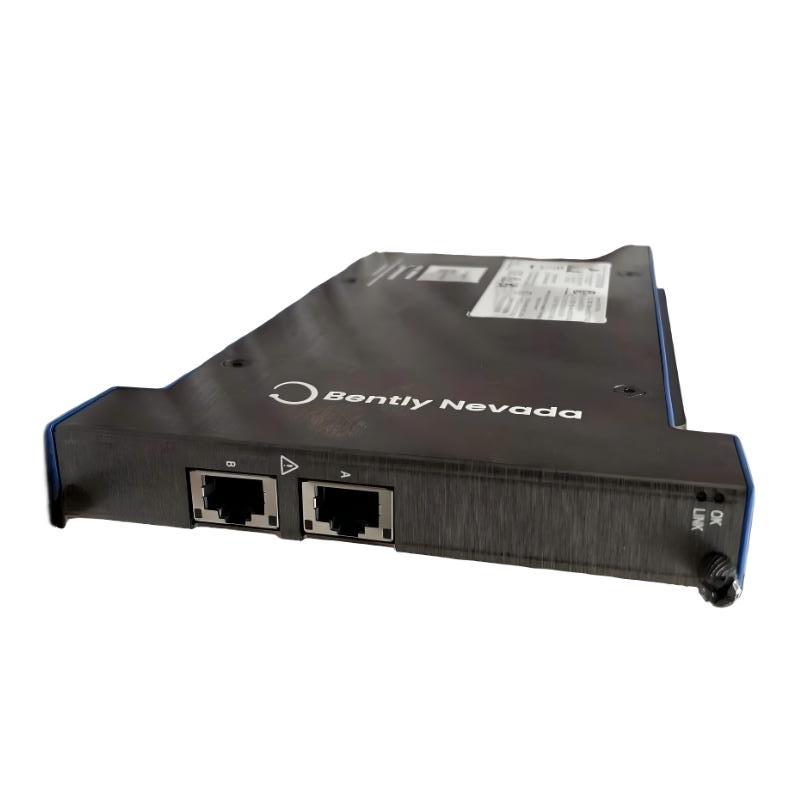
- Bently Nevada
- 60R/CGW01
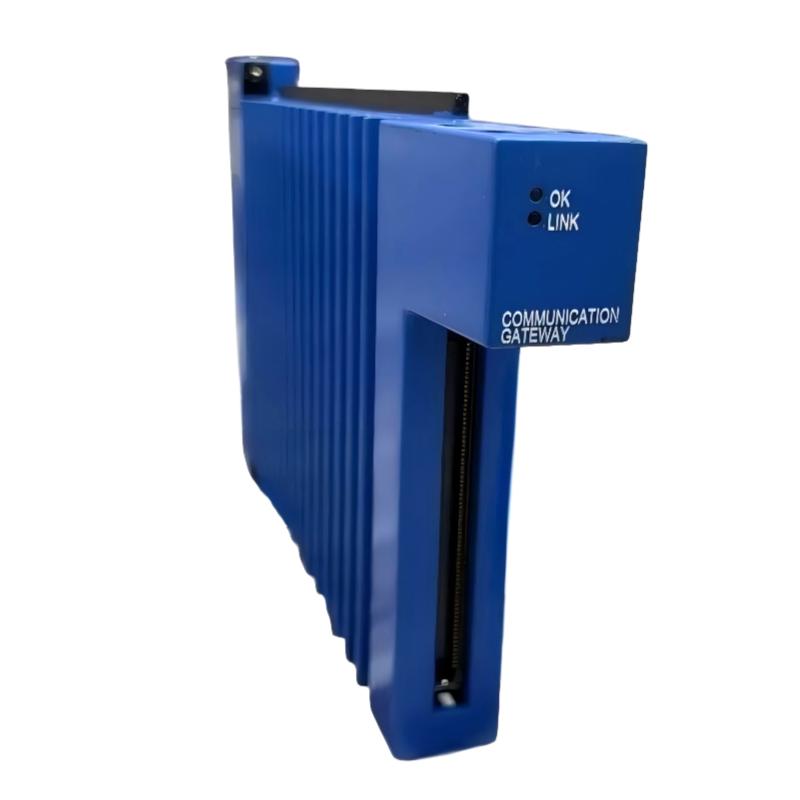
- Communication Gateway Module
- USA
- 132.1 × 20.3 × 245.6 mm
- 1.2 kg
- Xiamen, China
- New & In Stock
- T/T, PayPal, Western Union
- 1 Year
- 1-3 Working Days
- DHL, UPS, TNT, FedEx and EMS.
- 24-Hour Service
- COO
- 87
Our advantage

Global Logistics
We have a 10-year logistics and express cooperation agreement, so our products can be shipped to any place in the world.

Brand new and original
Our products are imported in bulk from the place of origin. Because of the cooperative relationship, our products are all original and 100% new.

24-hour service
We provide 7*24 hours service to our customers. We will be there whenever you need us.

Price advantage
All our products are priced very favorably because we have our own warehouse and supply.
| Company Information | |||
| [email protected] | |||
| Mobile | +8615980777398 | ||
| +8615980777398 | |||
| 15980777398 |
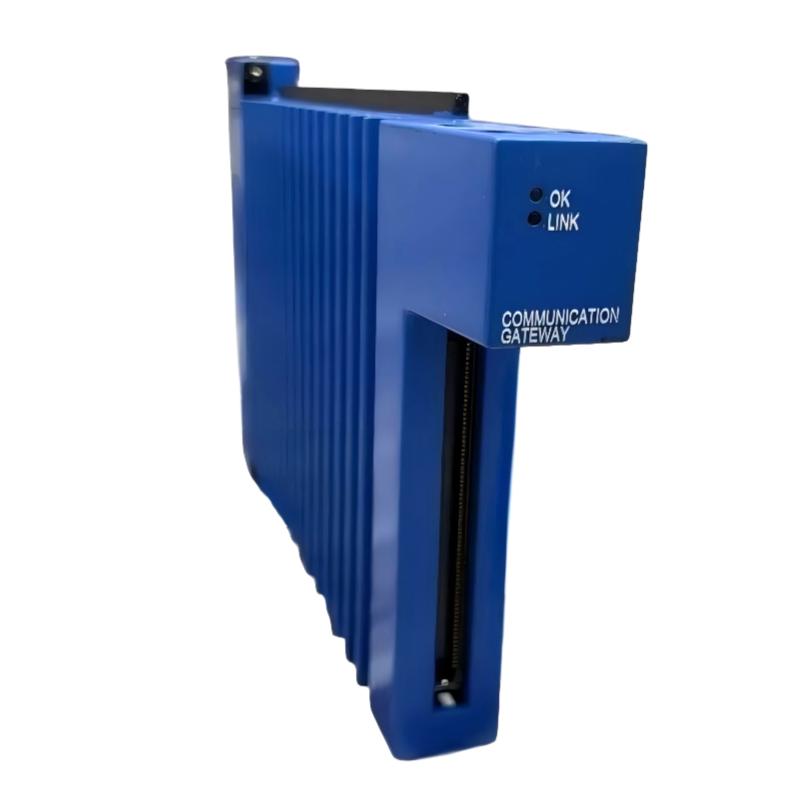
Product Overview
The Bently Nevada 60R/CGW01 Communication Gateway Module is an Ethernet communication interface used within the Orbit 60 Series condition monitoring platform. Its primary function is to make monitoring information available to external industrial control and supervisory systems.
Unlike an Orbit 60 input module, which handles field measurement signals, the 60R/CGW01 operates at the communication level. It connects the condition monitoring system with equipment such as PLCs, DCS systems, HMIs, industrial computers, and plant networks.
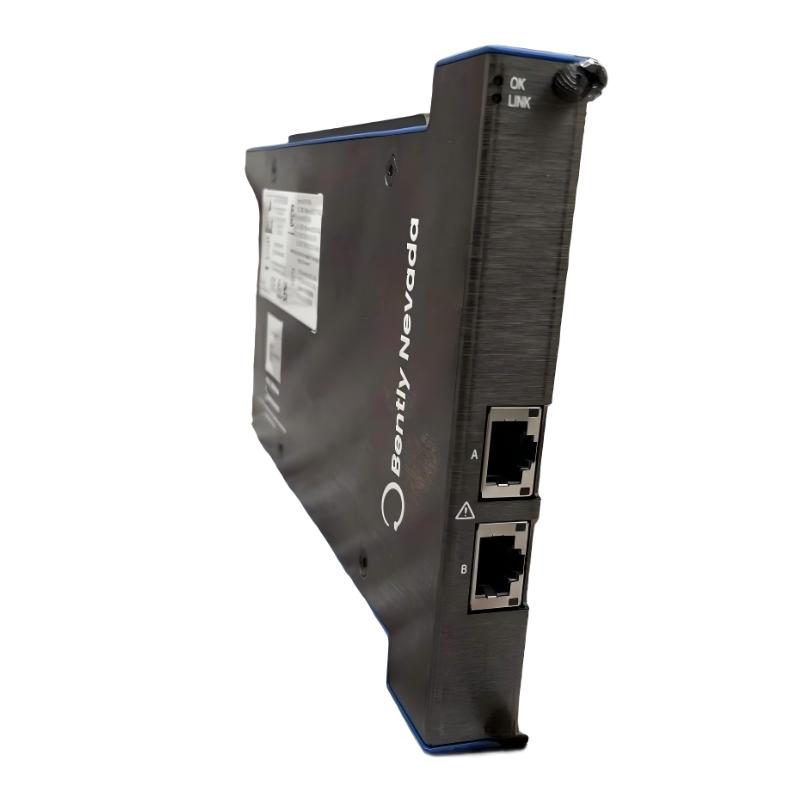
The module uses Ethernet communication and provides two RJ-45 network interfaces. This allows monitoring data, machine status, alarms, and other configured information to be exchanged with external automation equipment.
For example, a vibration monitoring system may detect an abnormal machine condition inside the Orbit 60 platform. The 60R/CGW01 can make the relevant status or alarm information available to the plant control system, allowing the PLC or DCS to react without requiring a direct connection to every individual monitoring channel.
The module is therefore an important interface between the machine-condition monitoring layer and the plant automation layer. It does not replace the vibration acquisition modules or condition-monitoring processor; instead, it provides the communication path through which processed information reaches other systems.
Technical Specifications
| Parameter | Specification |
|---|---|
| Manufacturer | Bently Nevada |
| Product Series | Orbit 60 |
| Model | 60R/CGW01 |
| Product Type | Communication Gateway Module |
| Communication Type | Ethernet |
| Ethernet Ports | 2 |
| Ethernet Connector | RJ-45 |
| Ethernet Speed | 10/100/1000 Base-T |
| Communication Protocols | Modbus TCP/IP, EGD, PROFINET |
| Modbus Function | Server |
| PROFINET Role | PROFINET Device |
| PROFINET Conformance | Class B |
| PROFINET Real-Time Class | Class 1 |
| Maximum PROFINET Output Data | 1408 bytes |
| Maximum Ethernet Cable Length | 100 m |
| Typical Power Consumption | 6.8 W |
| Maximum Power Consumption | 10.2 W |
| Chassis Occupancy | 1 Slot |
| Operating Temperature | -30°C to +70°C |
| Storage Temperature | -40°C to +85°C |
| Relative Humidity | 0–95%, non-condensing |
| Dimensions | 132.1 × 20.3 × 245.6 mm |
| Weight | 1.2 kg |
Product Features
The 60R/CGW01 is intended for installations where condition-monitoring information needs to be incorporated into a larger industrial Ethernet architecture.
Its two Ethernet interfaces make it suitable for network integration without requiring a separate external communication converter. The module can communicate with different automation environments depending on the protocol selected and the configuration of the receiving control system.
Key characteristics include:
- Orbit 60 Series communication gateway
- Two RJ-45 Ethernet ports
- 10/100/1000 Base-T Ethernet
- Modbus TCP/IP communication
- EGD communication
- PROFINET device functionality
- One-slot installation within the Orbit 60 chassis
- Up to 1408 bytes of PROFINET output data
- Maximum Ethernet cable length of 100 m
- Typical power consumption of 6.8 W
- Maximum power consumption of 10.2 W
- Industrial operating temperature range
- Module status indication
- Network communication status indication
- Suitable for PLC and DCS integration
- Suitable for HMI and supervisory applications
- Dimensions of 132.1 × 20.3 × 245.6 mm
- Weight of 1.2 kg
A key advantage of this architecture is that the external control system does not need to directly manage the underlying measurement hardware. The gateway handles the communication boundary between the Orbit 60 monitoring environment and the plant network.
Working Principle
The communication structure can be simplified as:
Sensors / Monitoring Modules → Orbit 60 Processing → 60R/CGW01 → Industrial Ethernet → PLC / DCS / HMI
The Orbit 60 system acquires and processes information from connected monitoring channels. Depending on the system configuration, this information can include vibration-related measurements, machine status, alarms, and other condition-monitoring data.
The 60R/CGW01 receives the information available from the Orbit 60 system and presents selected data through the configured communication protocol.
For a Modbus TCP/IP installation, an external PLC or supervisory computer can communicate with the gateway as a Modbus server.
In a PROFINET installation, the CGW01 operates as a PROFINET device and exchanges configured process data with the PLC.
The EGD option provides another communication path for compatible control architectures.
The gateway therefore does not normally perform the actual vibration measurement itself. Instead, it translates or exposes system information in a format that the external automation system can understand.
This separation simplifies system architecture. The condition-monitoring system can concentrate on acquiring and evaluating machine data, while the gateway handles communication with the wider control network.
Role in an Industrial Condition Monitoring System
The 60R/CGW01 occupies the communication layer between the Orbit 60 monitoring platform and the plant automation network.
A typical architecture looks like:
Machine → Sensors → Orbit 60 Monitoring Hardware → 60R/CGW01 → Ethernet Network → Control System
This arrangement is useful in applications where vibration monitoring and process control are separate systems but still need to exchange information.
For example, a compressor may have vibration monitoring handled by the Orbit 60 system while the main process control is handled by a DCS. The gateway can make selected machine-condition information available to the DCS so that operators can view machine status alongside process variables.
The same principle applies to PLC-controlled machinery. A PLC can receive configured monitoring information and use it for alarm handling, interlocks, machine-status indication, or maintenance-related logic.
Because the gateway is positioned between two functional systems, its configuration must match both sides of the communication link.
Industrial Applications
The 60R/CGW01 is suitable for industrial plants where machine-condition information needs to be integrated into an Ethernet-based automation environment.
| Application | Typical Use |
|---|---|
| Turbomachinery Monitoring | Transfers machine-condition information to control systems |
| Rotating Equipment | Provides monitoring status to PLC or DCS platforms |
| Compressor Systems | Connects condition monitoring with process control |
| Pump Monitoring | Makes machine alarms available to supervisory systems |
| Power Generation | Integrates equipment condition data with plant automation |
| Oil and Gas | Supports machinery monitoring and control-system integration |
| Industrial Manufacturing | Transfers equipment status to PLC/HMI systems |
| Predictive Maintenance | Makes condition-monitoring information available to higher-level systems |
The actual data exchanged depends on the Orbit 60 configuration and the communication protocol used by the receiving system.
Installation and Maintenance
The 60R/CGW01 should be installed in the appropriate Orbit 60 chassis slot and connected to a properly configured Ethernet network.
Before commissioning, the communication architecture should be defined clearly. The PLC, DCS, or other host must use a protocol supported by the gateway, and the required network parameters and data mapping must be configured correctly.
For maintenance personnel, it is useful to separate communication problems into three areas: module condition, physical network connection, and protocol configuration.
Recommended checks include:
- Confirm the complete 60R/CGW01 model.
- Verify the required system configuration.
- Confirm the correct Orbit 60 chassis installation.
- Check the module seating and connector condition.
- Inspect both RJ-45 Ethernet connections.
- Check Ethernet link status.
- Verify IP address configuration.
- Check subnet and network parameters.
- Confirm the selected communication protocol.
- Verify PLC or DCS configuration.
- Check data mapping between the gateway and host system.
- Inspect Ethernet cables and connectors.
- Check network switches and communication paths.
- Monitor module status indicators.
- Review communication diagnostics.
- Confirm that expected monitoring values are updating correctly.
If the gateway appears operational but the PLC receives no data, replacing the module should not be the first troubleshooting step. Incorrect IP settings, mismatched protocol configuration, invalid data mapping, network switch problems, or a damaged Ethernet cable can produce the same symptom.
Related Components
The 60R/CGW01 normally operates as part of a larger Orbit 60 and plant-control architecture.
| Component | Function |
|---|---|
| Orbit 60 Chassis | Provides the physical and electrical platform for monitoring modules |
| Orbit 60 CMM | Performs condition-monitoring processing |
| Orbit 60 Input Modules | Acquire vibration and other machine-condition signals |
| Orbit 60 Power Module | Supplies system power |
| Orbit 60 Interface Modules | Support system-level integration |
| Industrial Ethernet Switch | Connects the gateway to the plant network |
| PLC | Receives monitoring information for control logic |
| DCS | Integrates machine data into process control |
| HMI | Displays machine status, alarms, and measurements |
| Historian | Stores selected monitoring information |
| Ethernet Cable | Provides the physical communication connection |
The gateway should not be confused with the measurement hardware. If the monitoring channel itself has no valid measurement, the communication gateway cannot create that measurement; it can only communicate information made available by the Orbit 60 system.
Recommended Related Models
The following products are relevant when building or maintaining an Orbit 60 communication and condition-monitoring system.
| Model / Component | Product Type | Typical Application |
|---|---|---|
| Bently Nevada 60R/CGW01 | Ethernet Communication Gateway | PLC, DCS, and Ethernet network integration |
| Bently Nevada 60R/CGW02 | Communication Gateway | Alternative communication architecture |
| Bently Nevada 60R/CMM01 | Condition Monitoring Module | Machine-condition data processing |
| Bently Nevada 60R/SIM01 | System Interface Module | Orbit 60 system integration |
| Bently Nevada 60R/PIM01 | Power Interface Module | Orbit 60 system power interface |
| Bently Nevada Orbit 60 Chassis | System Chassis | Installation of Orbit 60 modules |
The 60R/CGW02 can be considered when the project requires a different communication interface. The 60R/CMM01, on the other hand, serves a different purpose and should be selected when the requirement is condition-monitoring processing rather than external network communication.
For replacement work, the original communication protocol, PLC or DCS platform, network topology, and existing data mapping should be checked before selecting another gateway.
Key Advantages
- Designed for Orbit 60 Series communication integration.
- Two independent RJ-45 Ethernet interfaces.
- Supports 10/100/1000 Base-T Ethernet.
- Supports Modbus TCP/IP.
- Supports EGD communication.
- Supports PROFINET device operation.
- Suitable for PLC and DCS integration.
- Provides a communication bridge between monitoring and automation systems.
- One-slot Orbit 60 chassis installation.
- Supports up to 1408 bytes of PROFINET output data.
- Suitable for industrial Ethernet networks.
- Compact 132.1 × 20.3 × 245.6 mm construction.
- Lightweight 1.2 kg design.
- Suitable for condition-monitoring system expansion and replacement.
Technical FAQs
How should the 60R/CGW01 be integrated when the vibration system and DCS use different communication architectures?
The gateway should be treated as the interface between the two systems. The Orbit 60 side supplies the configured monitoring information, while the CGW01 exposes that information using a protocol supported by the DCS. The protocol, network addressing, and data mapping should be established before commissioning.
What is the significance of the two Ethernet ports on the CGW01?
The two network interfaces allow the module to participate in an appropriate Ethernet architecture without relying on a single physical connection. The exact network arrangement should follow the site’s topology and communication requirements rather than assuming that both ports must always be used.
Why can monitoring values remain available inside Orbit 60 while the PLC shows stale data?
This usually indicates that the measurement path and communication path should be investigated separately. If Orbit 60 continues to display valid information, attention should move toward Ethernet link status, IP configuration, PLC communication settings, protocol mapping, or network infrastructure.
What should be verified before replacing a 60R/CGW01 with another communication module?
First identify the host system and protocol currently in use. Then verify the Orbit 60 chassis compatibility, network interface, protocol support, data capacity, configuration requirements, and existing PLC or DCS mapping. A module that physically fits the chassis is not necessarily a functional communication replacement.