

ProductPRODUCT
Featured products
Contact Us
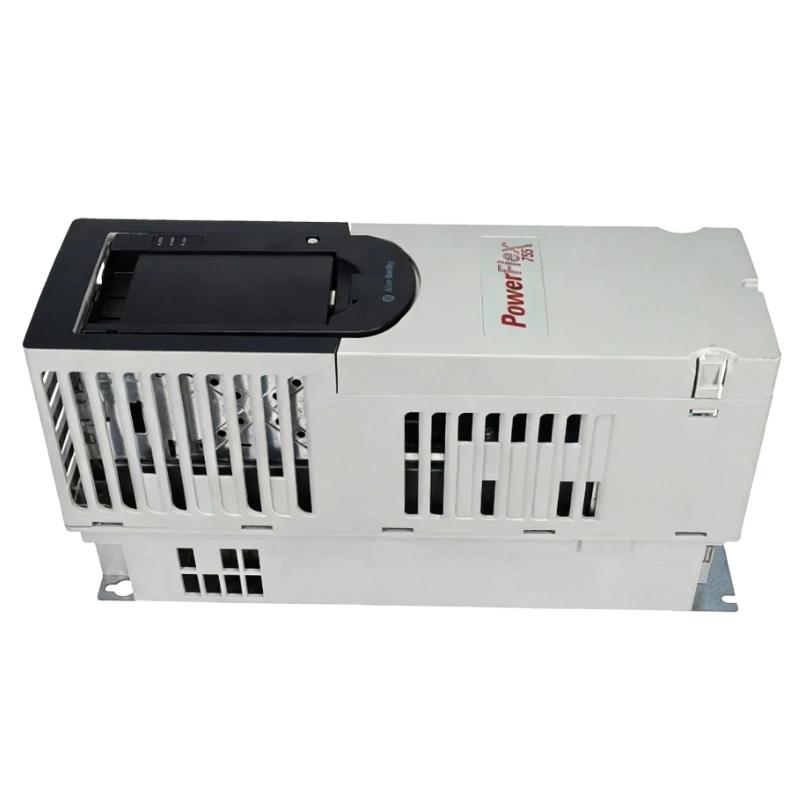
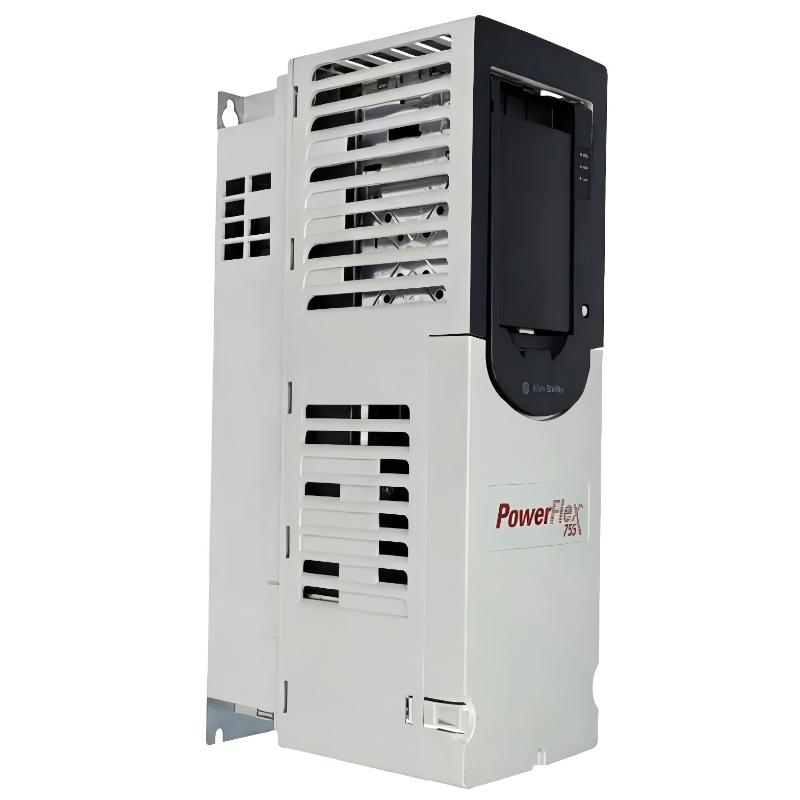
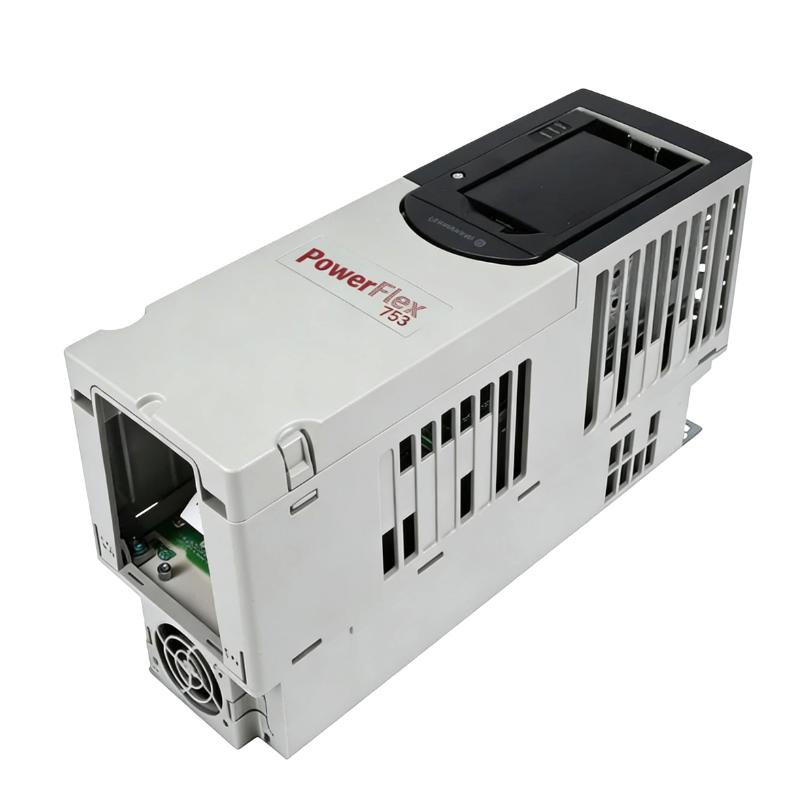
- Allen Bradley
- 20G11RC5P0JA0NNNNN
- PowerFlex AC Drive
- USA
- 400.5 × 110 × 211 mm
- 6kg
- Xiamen, China
- New & In Stock
- T/T, PayPal, Western Union
- 1 Year
- 1-3 Working Days
- DHL, UPS, TNT, FedEx and EMS.
- 24-Hour Service
- COO
- 61
Our advantage

Global Logistics
We have a 10-year logistics and express cooperation agreement, so our products can be shipped to any place in the world.

Brand new and original
Our products are imported in bulk from the place of origin. Because of the cooperative relationship, our products are all original and 100% new.

24-hour service
We provide 7*24 hours service to our customers. We will be there whenever you need us.

Price advantage
All our products are priced very favorably because we have our own warehouse and supply.
| Company Information | |||
| [email protected] | |||
| Mobile | +8615980777398 | ||
| +8615980777398 | |||
| 15980777398 |
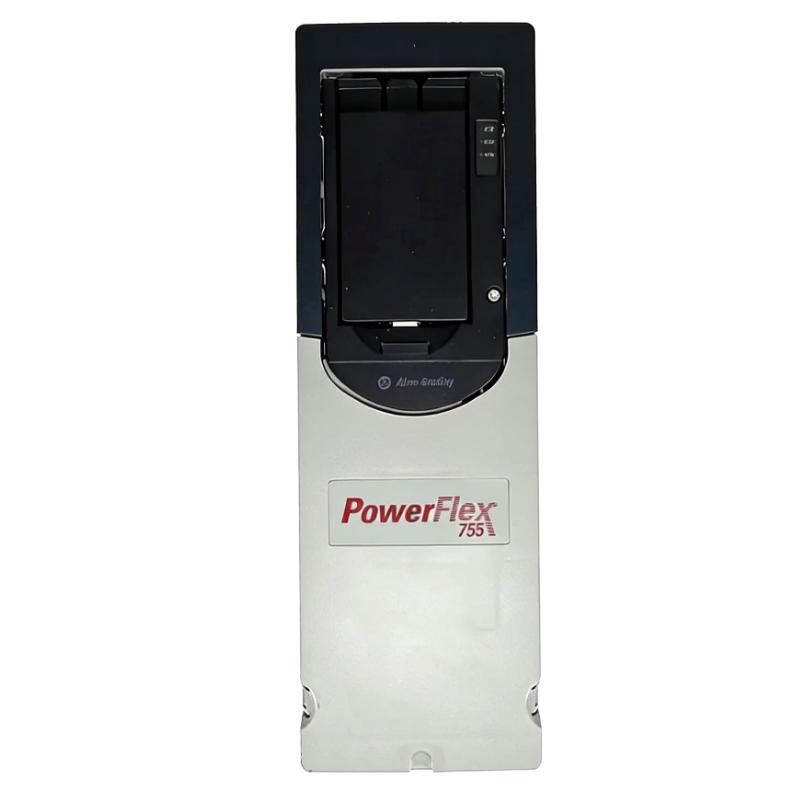
Allen-Bradley 20G11RC5P0JA0NNNNN
PowerFlex 755 AC Drive — Detailed Product Information, Technical Parameters, Applications, Advantages and Related Models
1. Product Overview
The 20G11RC5P0JA0NNNNN is an industrial AC variable frequency drive belonging to the PowerFlex 755 product series.
It is designed for three-phase AC motor speed control and is particularly suitable for industrial machinery that requires adjustable speed, controlled acceleration and deceleration, motor protection, process control and automation-system communication.
This model is a 400 VAC, three-phase, 5 A, Frame 1 AC drive.
Its normal-duty rating is approximately 2.2 kW, while its heavy-duty rating is approximately 1.5 kW.
The drive uses forced-air cooling and an IP20 / NEMA/UL Open Type enclosure arrangement.
It is supplied without a Human Interface Module, meaning that the standard configuration is a blank/no-HIM configuration.
The model also incorporates an internal dynamic braking transistor, an AC input with precharge and DC bus terminals, filtering with the CM jumper installed, and an embedded EtherNet/IP communication interface.
This combination makes the drive suitable for a wide range of industrial applications, including conveyors, pumps, fans, feeders, packaging machines, material-handling systems and general-purpose production machinery.
2. Brand and Product Series
| Item | Specification |
|---|---|
| Brand | Allen-Bradley |
| Product family | PowerFlex |
| Product series | PowerFlex 755 |
| Series family | PowerFlex 750-Series |
| Product type | AC Variable Frequency Drive |
| Drive category | Industrial AC Drive |
| Cooling method | Forced Air |
| Voltage class | 400 VAC |
| Input | Three-phase AC |
| Output current | 5 A |
| Normal-duty rating | 2.2 kW |
| Heavy-duty rating | 1.5 kW |
| Frame size | Frame 1 |
| Enclosure | IP20 |
| Enclosure type | NEMA/UL Open Type |
| Communication | Embedded EtherNet/IP |
| Dynamic braking | Internal DB transistor |
| HIM | Blank / No HIM |
| Input type | AC input with precharge and DC terminals |
| Filtering | Filtered, CM jumper installed |
| Typical installation | Industrial control cabinet |
The PowerFlex 755 series is positioned as a high-function industrial drive family.
Compared with smaller general-purpose drives, this series provides a broader range of control, communication, feedback, diagnostics and expansion possibilities.
The 20G11RC5P0JA0NNNNN therefore works particularly well in machinery where the drive needs to be part of the overall automation system rather than operating as an isolated motor controller.
3. Complete Product Parameter Table
| Parameter | Specification |
|---|---|
| Model | 20G11RC5P0JA0NNNNN |
| Brand | Allen-Bradley |
| Product series | PowerFlex 755 |
| Product family | PowerFlex 750-Series |
| Product type | AC Variable Frequency Drive |
| Input voltage | 400 VAC class |
| Input phase | 3-phase |
| Input frequency | 50/60 Hz |
| Output phase | 3-phase |
| Rated output current | 5 A |
| Normal-duty motor rating | 2.2 kW |
| Heavy-duty motor rating | 1.5 kW |
| Normal-duty overload | Approximately 110% for 60 s / 150% for 3 s |
| Heavy-duty overload | Approximately 150% for 60 s / 180% for 3 s |
| Frame | Frame 1 |
| Cooling | Forced air |
| Enclosure | IP20 |
| Enclosure style | NEMA/UL Open Type |
| Input arrangement | AC input with precharge |
| DC bus terminals | Yes |
| Dynamic braking transistor | Yes |
| EMC filtering | Filtered |
| CM jumper | Installed |
| Communication | Embedded EtherNet/IP |
| HIM | Blank / No HIM |
| PID control | Supported |
| V/Hz control | Supported |
| Sensorless vector control | Supported |
| Flux vector control | Supported |
| Auto tuning | Supported |
| Flying start | Supported |
| Acceleration control | Programmable |
| Deceleration control | Programmable |
| Motor overload protection | Supported |
| Electronic thermal protection | Supported |
| Approx. height | 400.5 mm |
| Approx. width | 110 mm |
| Approx. depth | 211 mm |
| Approx. dimensions | 400.5 × 110 × 211 mm |
| Approx. weight (kg) | 6 kg |
| Installation orientation | Vertical |
| Typical installation | Electrical cabinet |
| Main applications | Conveyors, pumps, fans, feeders, packaging and material handling |
4. Electrical Parameters
| Electrical Parameter | Specification |
|---|---|
| Model | 20G11RC5P0JA0NNNNN |
| Voltage class | 400 VAC |
| Nominal input voltage | 400 VAC |
| Input phase | Three-phase |
| Input frequency | 50/60 Hz |
| Output phase | Three-phase |
| Rated output current | 5.0 A |
| Normal-duty power | 2.2 kW |
| Heavy-duty power | 1.5 kW |
| Normal-duty continuous current | 5.0 A |
| Heavy-duty continuous current | Approx. 3.5 A |
| Normal-duty 60-second overload | Approx. 6.0 A |
| Normal-duty 3-second overload | Approx. 8.0 A |
| Heavy-duty 60-second overload | Approx. 5.0 A |
| Heavy-duty 3-second overload | Approx. 6.0 A |
| Input type | AC input with precharge |
| DC terminals | Yes |
| DC bus voltage | Approximately 513–540 VDC at nominal 400 VAC input |
| Dynamic braking | Internal transistor |
| EMC filtering | Yes |
| Motor overload protection | Yes |
| Current limit | Programmable |
| Output voltage | Variable |
| Output frequency | Variable |
| PWM control | Yes |
The 5 A output rating is one of the most important selection parameters for this model.
When selecting the drive for a motor, the motor nameplate current should be compared with the applicable drive current rating.
Motor power in kilowatts is useful for initial selection, but it should not be used as the only selection criterion.
The actual motor current, duty cycle, acceleration requirements and mechanical load should also be considered.
5. Normal-Duty Rating
For normal-duty operation, the drive is rated at approximately:
2.2 kW / 5.0 A
This rating is suitable for applications where the motor operates under a relatively normal load profile.
Typical normal-duty applications include:
- Fans
- Pumps
- Conveyors
- Small material-handling systems
- Feeders
- Packaging equipment
- General rotating machinery
For these applications, the drive can provide adjustable speed while maintaining controlled acceleration and deceleration.
The normal-duty overload capability also allows the drive to handle temporary increases in load within the specified limits.
6. Heavy-Duty Rating
The heavy-duty rating is approximately:
1.5 kW / 3.5 A
Heavy-duty operation should be considered when the machine requires greater overload capability or higher torque during demanding operating conditions.
Examples can include:
- Loaded conveyors
- Feed mechanisms
- Material-handling equipment
- High-inertia machines
- Repeated acceleration and deceleration
- Machines with higher starting torque requirements
The important point is that the normal-duty and heavy-duty ratings are not interchangeable.
A motor may have a nominal power rating that appears suitable, but if the machine has high starting torque or frequent overload conditions, the heavy-duty rating may become the more appropriate selection criterion.
7. Physical Dimensions and Weight
The 20G11RC5P0JA0NNNNN uses the compact Frame 1 mechanical configuration.
| Mechanical Parameter | Specification |
|---|---|
| Model | 20G11RC5P0JA0NNNNN |
| Frame size | Frame 1 |
| Mounting | Panel / cabinet mounting |
| Installation direction | Vertical |
| Cooling | Forced air |
| Enclosure | IP20 |
| Height | Approx. 400.5 mm |
| Width | Approx. 110 mm |
| Depth | Approx. 211 mm |
| Approx. height | 15.77 in |
| Approx. width | 4.33 in |
| Approx. depth | 8.31 in |
| Overall approximate size | 400.5 × 110 × 211 mm |
| Approx. weight (kg) | 6 kg |
| Approx. weight | 13.2 lb |
The approximate overall dimensions are:
400.5 mm × 110 mm × 211 mm
The approximate product weight is:
6 kg
These figures should be regarded as product-package reference values for engineering and preliminary cabinet planning.
When designing a control cabinet, additional clearance should be provided for airflow, power cables, control cables, terminals and maintenance access.
8. Product Introduction
The 20G11RC5P0JA0NNNNN is designed to regulate the speed and operating behavior of three-phase AC motors.
A conventional motor connected directly to a fixed-frequency power supply generally operates at a relatively fixed speed.
An AC drive changes the frequency and voltage supplied to the motor.
This makes it possible to control the motor according to the actual requirements of the machine.
For example, a conveyor does not always need to run at maximum speed.
With a variable frequency drive, the conveyor speed can be increased or reduced according to the production process.
Similarly, a pump can operate at a lower speed when process demand is low and increase speed when demand rises.
A fan can also reduce speed when less airflow is required.
This flexibility is one of the main reasons industrial variable frequency drives are widely used.
9. Main Control Functions
9.1 V/Hz Control
V/Hz control is a relatively straightforward motor-control method.
It is suitable for applications where the load does not require advanced torque control.
Typical applications include:
- Fans
- Pumps
- Basic conveyors
- Air-handling systems
- Simple rotating equipment
It is often selected when the primary requirement is reliable and adjustable motor speed.
9.2 Sensorless Vector Control
Sensorless vector control provides better motor performance than basic V/Hz control in many applications.
It can provide improved torque control, especially at lower speeds.
This makes it useful for:
- Conveyors
- Feeders
- Material handling
- Machine tools
- Production machinery
- Variable-load applications
The actual performance depends on motor parameters, drive tuning and machine characteristics.
9.3 Flux Vector Control
The PowerFlex 755 platform supports advanced vector-control functions.
These functions can be useful when accurate motor torque and speed control are important.
Applications may include:
- High-performance conveyors
- Material handling
- Position-related machinery
- Industrial processing equipment
- Machines requiring better low-speed control
Feedback devices can also be used in suitable configurations when the application requires more precise control.
10. Embedded EtherNet/IP Communication
One of the major advantages of this model is its embedded EtherNet/IP communication capability.
The drive can communicate with a control system without requiring a separate external communication module for basic EtherNet/IP integration.
The control system can exchange information such as:
| Information | Typical Purpose |
|---|---|
| Start command | Start motor |
| Stop command | Stop motor |
| Speed reference | Set motor speed |
| Direction command | Forward/reverse control |
| Actual speed | Motor monitoring |
| Output current | Load monitoring |
| Drive status | Machine sequencing |
| Fault status | Troubleshooting |
| Warning status | Preventive maintenance |
| Parameter information | Configuration |
| Diagnostic information | Maintenance |
This makes the drive suitable for automated production lines.
It can become an integrated part of the machine control architecture rather than operating as an independent device.
11. Dynamic Braking
The model includes an internal dynamic braking transistor.
Dynamic braking is useful when a motor must decelerate quickly or when the machine has significant rotating inertia.
When the motor decelerates, mechanical energy can be returned to the drive’s DC bus.
The braking system can direct this energy to an appropriately selected braking resistor.
The resistor converts the energy into heat.
This can provide better stopping performance than simply relying on a long deceleration ramp.
Dynamic braking can be particularly useful for:
- High-inertia conveyors
- Material-handling equipment
- Feeders
- Repetitive start/stop machinery
- Rotating equipment
- Machines requiring faster stopping
The braking resistor must be selected according to the actual braking energy, braking frequency and required stopping time.
12. PID Process Control
The PowerFlex 755 platform supports PID control.
This is useful for applications where motor speed needs to respond automatically to process feedback.
For example, in a pressure-control application:
- A pressure sensor measures the actual pressure.
- The measured value is sent to the control system or drive.
- The drive compares the actual value with the desired setpoint.
- The drive adjusts motor speed.
- Motor speed changes the pump output.
- The pressure moves toward the required setpoint.
This principle can also be applied to:
- Flow control
- Pressure control
- Airflow control
- Water circulation
- Cooling systems
- Process systems
13. Applications
13.1 Conveyor Systems
The 20G11RC5P0JA0NNNNN is well suited to small industrial conveyor systems within its current and power rating.
A conveyor can benefit from:
- Adjustable speed
- Smooth acceleration
- Smooth deceleration
- Reduced mechanical shock
- Network control
- Motor protection
- Drive diagnostics
The acceleration and deceleration ramps can be programmed according to the mechanical characteristics of the conveyor.
This can help reduce sudden stress on belts, couplings, gearboxes and mechanical components.
13.2 Pumps
Pump applications are another important use for variable frequency drives.
Instead of operating the motor continuously at full speed, the drive can adjust motor speed according to process demand.
Typical applications include:
- Water circulation
- Cooling-water systems
- Industrial fluid transfer
- Pressure-control systems
- Process pumping
- Utility pumping
PID control can be particularly useful when pressure or flow must be maintained automatically.
13.3 Fans and Blowers
Fans frequently operate at different load requirements.
A drive can reduce the motor speed when full airflow is not required.
This can provide more flexible operation.
Typical applications include:
- Industrial ventilation
- Exhaust systems
- Cooling equipment
- Process-air systems
- Factory ventilation
- Equipment cooling
13.4 Packaging Machinery
Packaging machinery often requires controlled motor speed.
The drive can be used for:
- Product conveyors
- Feed rollers
- Material feeders
- Film-handling systems
- Small rotating mechanisms
- Auxiliary motors
The embedded network communication can also allow the machine controller to coordinate the motor with other machine functions.
13.5 Material Handling
Material-handling systems often require controlled acceleration and stopping.
Sudden acceleration can cause products to shift.
Sudden stopping can produce mechanical stress.
The drive can therefore be configured with suitable acceleration and deceleration ramps.
Dynamic braking can also be used when required.
Potential applications include:
- Roller conveyors
- Transfer systems
- Sorting equipment
- Feed systems
- Material transfer machinery
- Production-line handling equipment
13.6 Feeders
Feeders often require adjustable and stable motor speed.
The drive can control feeder speed according to production requirements.
Potential applications include:
- Product feeders
- Material feeders
- Packaging feeders
- Production-line feeders
- Dosing-related machinery
The actual suitability depends on motor current and load characteristics.
13.7 Small Mixers
Small industrial mixers may require controlled acceleration and sufficient starting torque.
Vector-control functions can be useful in these applications.
However, mixer applications should be evaluated carefully because the starting load can be substantially higher than the steady-state load.
14. Main Product Advantages
14.1 5 A Output Capacity
The 5 A output rating makes the drive suitable for motors in the approximately 2.2 kW normal-duty range.
This provides a practical capacity for many small industrial machines.
14.2 400 VAC Three-Phase Design
The 400 VAC three-phase configuration makes the drive suitable for common industrial three-phase motor systems.
It is appropriate for machinery designed around 400 VAC-class electrical systems.
14.3 Compact Frame 1 Construction
The Frame 1 configuration provides a relatively compact physical package.
This is valuable when cabinet space is limited.
The approximate dimensions are:
400.5 × 110 × 211 mm
with an approximate weight of:
6 kg.
14.4 Embedded EtherNet/IP
The embedded communication capability allows the drive to integrate into an industrial automation network.
This can reduce the need for extensive hardwired control signals.
14.5 Dynamic Braking
The internal braking transistor provides additional flexibility for applications requiring controlled stopping.
14.6 Multiple Motor-Control Modes
The drive can support several control methods.
This means the same product platform can be used for simple applications and more demanding industrial machinery.
14.7 PID Function
PID capability makes the drive suitable for process-control applications.
It can automatically adjust motor speed based on feedback.
14.8 Diagnostic Capability
Drive status, warning and fault information can help maintenance personnel identify operating problems.
This can reduce troubleshooting time.
14.9 Programmable Acceleration and Deceleration
Acceleration and deceleration times can be adjusted according to the machine.
This helps provide smoother operation.
15. Environmental and Installation Parameters
| Parameter | Specification |
|---|---|
| Model | 20G11RC5P0JA0NNNNN |
| Enclosure | IP20 |
| Enclosure type | NEMA/UL Open Type |
| Cooling | Forced air |
| Installation | Indoor / protected cabinet |
| Mounting orientation | Vertical |
| Standard operating temperature | Approximately 0–50 °C |
| Storage temperature | Approximately -40–70 °C |
| Relative humidity | Non-condensing |
| Pollution degree | 1 or 2, depending on installation conditions |
| Outdoor installation | Requires additional suitable enclosure |
| Water exposure | Not suitable without additional protection |
| Heavy dust environment | Additional cabinet protection recommended |
| Corrosive environment | Additional environmental protection may be required |
| Cabinet ventilation | Required |
| Heat dissipation | Must be considered |
The IP20 enclosure is intended for installation inside a suitable electrical enclosure.
It should not be treated as a waterproof or outdoor enclosure.
If the installation environment contains water, oil mist, corrosive gases, conductive dust or significant airborne contaminants, additional environmental protection should be provided.
16. Cabinet Installation
The drive should normally be installed vertically.
The control cabinet should provide enough room for:
- Power cables
- Motor cables
- Control wiring
- Network cables
- Air circulation
- Heat dissipation
- Maintenance access
- Terminal access
The drive itself is approximately:
400.5 mm high
110 mm wide
211 mm deep
The cabinet should be larger than these dimensions.
Additional space is necessary around the drive.
The final cabinet size should also take into account other equipment such as circuit breakers, contactors, terminal blocks, PLC equipment, communication equipment and cooling equipment.
17. Heat Management
AC drives generate heat during operation.
Heat is produced by:
- Power semiconductor losses
- Switching losses
- Internal electronic components
- Cooling fan operation
- Electrical conversion losses
The forced-air cooling system removes heat from the drive.
If several drives are installed in one cabinet, the total heat generated by all drives should be calculated.
Poor cabinet ventilation can increase internal temperature.
Higher temperatures can reduce equipment life and may cause thermal protection to activate.
Therefore, cabinet airflow is an important part of drive installation.
18. Motor Protection
The drive provides several protection and monitoring functions.
These may include:
- Electronic motor overload protection
- Overcurrent protection
- Overvoltage monitoring
- Undervoltage monitoring
- Thermal monitoring
- Ground-fault-related protection
- Output short-circuit protection
- Stall-related protection
- Drive fault monitoring
Correct motor nameplate data should be entered during commissioning.
Important motor information includes:
- Rated voltage
- Rated current
- Rated frequency
- Rated speed
- Motor power
- Motor configuration
- Motor control mode
Correct configuration is important for obtaining reliable motor performance.
19. Motor Selection
The drive should be selected according to the actual motor requirements.
| Motor Parameter | Importance |
|---|---|
| Motor voltage | Critical |
| Motor current | Very critical |
| Motor power | Important |
| Motor frequency | Required |
| Motor speed | Important |
| Motor type | Important |
| Starting torque | Important |
| Load inertia | Important |
| Duty cycle | Important |
| Acceleration time | Important |
| Deceleration time | Important |
| Braking requirement | Important |
| Encoder requirement | Application dependent |
| Cable length | Installation dependent |
The motor’s rated current should always be checked carefully.
A motor with a nominal power rating of 2.2 kW may have different rated current values depending on its voltage and design.
Therefore, power rating alone is not enough to determine compatibility.
20. Five Recommended Same-Series or Related Models
The following models are suitable candidates for comparison when selecting another drive in the same general PowerFlex 755 family.
They cover lower and higher power levels around the target model.
| Model | Series | Voltage Class | Output Current | Normal-Duty Rating | Heavy-Duty Rating | Frame | Approx. Dimensions H×W×D | Weight (kg) |
|---|---|---|---|---|---|---|---|---|
| 20G11RC3P5AA0NNNNN | PowerFlex 755 | 400 VAC | 3.5 A | 1.5 kW | 0.75 kW | 1 | Approx. 400.5 × 110 × 211 mm | Approx. 6 kg |
| 20G11RC3P5JA0NNNNN | PowerFlex 755 | 400 VAC | 3.5 A | 1.5 kW | 0.75 kW | 1 | Approx. 400.5 × 110 × 211 mm | Approx. 6 kg |
| 20G11RC5P0AA0NNNNN | PowerFlex 755 | 400 VAC | 5.0 A | 2.2 kW | 1.5 kW | 1 | Approx. 400.5 × 110 × 211 mm | Approx. 6 kg |
| 20G11RC8P7AA0NNNNN | PowerFlex 755 | 400 VAC | 8.7 A | 4.0 kW | 2.2 kW | 1 | Approx. 400.5 × 110 × 211 mm | Approx. 6 kg |
| 20G11RC011AA0NNNNN | PowerFlex 755 | 400 VAC | 11.5 A | 5.5 kW | 4.0 kW | 1 | Approx. 400.5 × 110 × 211 mm | Approx. 6 kg |
The closest electrical alternative to the target model is the 20G11RC5P0AA0NNNNN.
Both are 5 A, 400 VAC-class, Frame 1 PowerFlex 755 drives.
The main difference is in the configuration represented by the catalog-number suffix.
The 20G11RC3P5 models provide lower current capacity.
The 20G11RC8P7 model provides higher capacity.
The 20G11RC011 model provides an additional step upward for larger motors.
21. Same-Series Comparison
| Parameter | 20G11RC3P5AA0NNNNN | 20G11RC3P5JA0NNNNN | 20G11RC5P0AA0NNNNN | 20G11RC5P0JA0NNNNN | 20G11RC8P7AA0NNNNN |
|---|---|---|---|---|---|
| Series | PowerFlex 755 | PowerFlex 755 | PowerFlex 755 | PowerFlex 755 | PowerFlex 755 |
| Voltage | 400 VAC | 400 VAC | 400 VAC | 400 VAC | 400 VAC |
| Output current | 3.5 A | 3.5 A | 5.0 A | 5.0 A | 8.7 A |
| Normal-duty power | 1.5 kW | 1.5 kW | 2.2 kW | 2.2 kW | 4.0 kW |
| Heavy-duty power | 0.75 kW | 0.75 kW | 1.5 kW | 1.5 kW | 2.2 kW |
| Frame | 1 | 1 | 1 | 1 | 1 |
| Cooling | Forced air | Forced air | Forced air | Forced air | Forced air |
| Enclosure | IP20 | IP20 | IP20 | IP20 | IP20 |
| Dynamic braking | Yes | Yes | Yes | Yes | Yes |
| EtherNet/IP | Embedded | Embedded | Embedded | Embedded | Embedded |
| Approx. height | 400.5 mm | 400.5 mm | 400.5 mm | 400.5 mm | 400.5 mm |
| Approx. width | 110 mm | 110 mm | 110 mm | 110 mm | 110 mm |
| Approx. depth | 211 mm | 211 mm | 211 mm | 211 mm | 211 mm |
| Approx. weight (kg) | 6 kg | 6 kg | 6 kg | 6 kg | 6 kg |
22. Five Popular Models from the Same Brand
The following models are useful alternatives from the same brand portfolio.
They are not direct replacements in every application.
The correct choice depends on motor voltage, motor current, power, control requirements, communication requirements and environmental conditions.
| Model | Product Series | Voltage Class | Approx. Output Current | Approx. Power Class | Main Application | Approx. Dimensions H×W×D | Weight (kg) |
|---|---|---|---|---|---|---|---|
| 25B-D2P3N104 | PowerFlex 525 | 400 VAC class | 2.3 A | 0.75 kW | Small machinery, fans, pumps | Approx. 200 × 90 × 180 mm | Approx. 2 kg |
| 25B-D4P0N104 | PowerFlex 525 | 400 VAC class | 4.0 A | 1.5 kW | Conveyors, pumps, fans | Approx. 200 × 90 × 180 mm | Approx. 2–3 kg |
| 25B-D6P0N104 | PowerFlex 525 | 400 VAC class | 6.0 A | 2.2 kW | General industrial machinery | Approx. 200 × 90 × 180 mm | Approx. 2–3 kg |
| 25C-D2P3N104 | PowerFlex 523 | 400 VAC class | 2.3 A | 0.75 kW | Basic motor control | Approx. 200 × 90 × 180 mm | Approx. 2 kg |
| 25C-D4P0N104 | PowerFlex 523 | 400 VAC class | 4.0 A | 1.5 kW | Small industrial machinery | Approx. 200 × 90 × 180 mm | Approx. 2–3 kg |
The PowerFlex 525 models are attractive where cabinet space is limited and a compact drive is preferred.
The PowerFlex 523 models are better suited to straightforward applications where advanced drive functions are not necessary.
The PowerFlex 755 remains the stronger choice when the application requires advanced control, extensive diagnostics, flexible feedback options or a broader automation architecture.
23. PowerFlex 755 vs. PowerFlex 525 vs. PowerFlex 523
| Feature | PowerFlex 755 | PowerFlex 525 | PowerFlex 523 |
|---|---|---|---|
| Application level | Advanced industrial | Compact industrial | General-purpose compact |
| Physical size | Larger | Smaller | Smaller |
| Control capability | Advanced | Advanced for compact class | General-purpose |
| Communication capability | High | High | Standard |
| Expansion capability | High | Moderate | More limited |
| Feedback options | Extensive | More limited | Basic |
| Diagnostics | Advanced | Good | Standard |
| Suitable for complex machinery | Excellent | Good | Moderate |
| Suitable for simple machinery | Yes | Excellent | Excellent |
| Cabinet space | Higher | Lower | Lower |
| Typical positioning | Machine and process applications | Compact machines | Basic machines |
24. Conveyor Application
A production conveyor driven by a 2.2 kW motor is a typical example.
The motor can be started gradually rather than being connected directly to full line voltage.
The drive can increase frequency progressively.
The conveyor then accelerates smoothly.
When the conveyor needs to stop, the drive can reduce frequency according to the programmed deceleration ramp.
If the conveyor has substantial inertia, dynamic braking can be considered.
This approach can provide:
- Smooth starting
- Smooth stopping
- Adjustable production speed
- Reduced mechanical shock
- Better machine synchronization
- Network control
- Drive diagnostics
25. Pump Application
Consider an industrial pump that needs to maintain a target pressure.
A pressure sensor measures actual system pressure.
The drive uses PID control to compare the measured pressure with the target.
If pressure is too low, motor speed can increase.
If pressure is too high, motor speed can decrease.
This provides variable-speed control instead of continuously operating the motor at full speed.
The result is a more flexible pumping system.
Typical applications include:
- Water circulation
- Cooling systems
- Industrial process systems
- Pressure boosting
- Fluid transfer
- Utility systems
26. Fan Application
Industrial fans frequently experience changing airflow requirements.
Running continuously at full speed may not always be necessary.
The drive can reduce the motor speed when airflow demand decreases.
When demand increases, the speed can be increased.
This makes the drive useful for:
- Factory ventilation
- Exhaust systems
- Cooling fans
- Air-handling equipment
- Process ventilation
- Industrial air circulation
27. Packaging Machine Application
Packaging equipment often requires precise coordination between several motors.
One motor may drive a conveyor.
Another motor may control product feeding.
Another may drive rollers.
The drive can receive speed commands through the automation system.
This allows machine functions to be synchronized.
Typical advantages include:
- Adjustable motor speed
- Controlled acceleration
- Controlled deceleration
- Network-based commands
- Drive status monitoring
- Fault reporting
- Flexible machine configuration
28. Material Handling Application
Material-handling equipment can benefit from gradual acceleration and controlled deceleration.
For example, a loaded conveyor may require a significant amount of torque during startup.
If the motor is started abruptly, the mechanical system may experience unnecessary stress.
The drive can gradually increase motor output.
Similarly, during stopping, the drive can use a controlled deceleration ramp.
If the machine has high inertia, dynamic braking can provide additional stopping capability.
29. Feeder Application
A feeder often needs to operate at a stable and adjustable speed.
The drive can provide the required speed reference.
The machine controller can change the speed according to production requirements.
Potential feeder applications include:
- Product feeding
- Material feeding
- Packaging lines
- Dosing systems
- Production-line feeding
- Small processing equipment
30. Advantages for Machine Builders
The PowerFlex 755 platform provides a consistent drive architecture.
This can be useful for machine builders who need to create multiple machine configurations.
Potential benefits include:
- Standardized drive family
- Consistent programming approach
- Network integration
- Reusable control concepts
- Flexible motor-control methods
- Diagnostic information
- Optional feedback functions
- Expansion capability
- Easier commissioning
- Simplified maintenance
If a machine manufacturer uses several different motor sizes, related models in the same series can provide a consistent engineering platform.
31. Advantages for End Users
For machine operators and maintenance personnel, the drive provides several practical benefits.
Adjustable Speed
The motor can operate at different speeds according to production requirements.
Smooth Starting
Acceleration can be programmed instead of applying full motor speed immediately.
Controlled Stopping
The motor can decelerate according to the programmed ramp.
Network Monitoring
Drive operating conditions can be monitored through the automation system.
Fault Information
Drive faults and warnings can assist maintenance personnel.
Process Control
PID functions can be used for pressure, flow and similar process applications.
Dynamic Braking
The braking transistor provides additional stopping flexibility.
Motor Protection
Electronic protection functions help monitor motor operating conditions.
32. Replacement and Selection Considerations
When replacing an existing drive, the catalog number should not be selected based solely on motor horsepower.
The following parameters should be checked.
| Selection Item | What Should Be Checked |
|---|---|
| Voltage | 400 VAC class |
| Input phase | Three-phase |
| Motor current | Must be within drive rating |
| Normal-duty power | Approximately 2.2 kW |
| Heavy-duty power | Approximately 1.5 kW |
| Frame | Frame 1 |
| Enclosure | IP20 |
| Communication | EtherNet/IP requirements |
| Braking | Confirm braking requirement |
| Filtering | Confirm electrical system requirements |
| HIM | Confirm whether a keypad is required |
| Feedback | Confirm encoder requirements |
| Control method | V/Hz, vector or other required mode |
| Cabinet space | Check dimensions |
| Cooling | Check cabinet airflow |
| Motor cable | Check cable requirements |
| Environmental conditions | Check temperature, dust, moisture and altitude |
| Parameters | Transfer and verify configuration |
The suffix of the catalog number is important.
Two drives may have similar electrical ratings but differ in filtering, braking, interface or other configuration details.
Therefore, the complete catalog number should be checked when selecting a replacement.
33. Recommended Model Selection by Motor Size
| Motor Requirement | Recommended Drive Class |
|---|---|
| Around 0.75 kW | 20G11RC2P1 class |
| Around 1.5 kW | 20G11RC3P5 class |
| Around 2.2 kW | 20G11RC5P0 class |
| Around 4.0 kW | 20G11RC8P7 class |
| Around 5.5 kW | 20G11RC011 class |
These are general selection ranges.
The final selection should always be based on actual motor current and application duty.
34. Detailed Product Advantages
| Advantage | Description |
|---|---|
| 5 A output | Suitable for a range of small industrial motors |
| 2.2 kW normal-duty rating | Useful for general industrial loads |
| 1.5 kW heavy-duty rating | Supports more demanding load profiles |
| 400 VAC | Suitable for common three-phase industrial systems |
| Frame 1 | Compact drive construction |
| IP20 | Suitable for protected control-cabinet installation |
| Forced air | Effective thermal management |
| Embedded EtherNet/IP | Convenient network integration |
| Dynamic braking transistor | Supports controlled braking applications |
| PID | Useful for process control |
| Vector control | Improved motor control |
| V/Hz | Simple control for basic loads |
| Diagnostics | Easier maintenance |
| Programmable ramps | Controlled acceleration and deceleration |
| Expansion capability | Flexible system configuration |
| No standard HIM | Useful for network-controlled applications |
35. Technical Parameter Summary
| Category | 20G11RC5P0JA0NNNNN |
|---|---|
| Brand | Allen-Bradley |
| Series | PowerFlex 755 |
| Family | PowerFlex 750-Series |
| Product type | AC Variable Frequency Drive |
| Input voltage | 400 VAC |
| Input phase | 3-phase |
| Input frequency | 50/60 Hz |
| Output current | 5.0 A |
| Normal-duty rating | 2.2 kW |
| Heavy-duty rating | 1.5 kW |
| Heavy-duty continuous current | Approx. 3.5 A |
| Frame | Frame 1 |
| Cooling | Forced air |
| Enclosure | IP20 |
| Enclosure type | NEMA/UL Open Type |
| AC input | Yes |
| Precharge | Yes |
| DC bus terminals | Yes |
| Dynamic braking transistor | Yes |
| EMC filtering | Yes |
| CM jumper | Installed |
| EtherNet/IP | Embedded |
| HIM | Blank / No HIM |
| PID | Supported |
| V/Hz | Supported |
| Sensorless vector | Supported |
| Flux vector | Supported |
| Auto tuning | Supported |
| Flying start | Supported |
| Electronic overload protection | Supported |
| Programmable acceleration | Yes |
| Programmable deceleration | Yes |
| Approx. height | 400.5 mm |
| Approx. width | 110 mm |
| Approx. depth | 211 mm |
| Approx. dimensions | 400.5 × 110 × 211 mm |
| Approx. weight (kg) | 6 kg |
| Mounting | Vertical |
| Main applications | Conveyors, pumps, fans, feeders, packaging, material handling |
36. Five Closely Related Models — Quick Reference
| Model | Output Current | Normal Duty | Heavy Duty | Voltage | Frame | Dimensions | Weight (kg) |
|---|---|---|---|---|---|---|---|
| 20G11RC3P5AA0NNNNN | 3.5 A | 1.5 kW | 0.75 kW | 400 VAC | 1 | Approx. 400.5 × 110 × 211 mm | 6 kg |
| 20G11RC3P5JA0NNNNN | 3.5 A | 1.5 kW | 0.75 kW | 400 VAC | 1 | Approx. 400.5 × 110 × 211 mm | 6 kg |
| 20G11RC5P0AA0NNNNN | 5.0 A | 2.2 kW | 1.5 kW | 400 VAC | 1 | Approx. 400.5 × 110 × 211 mm | 6 kg |
| 20G11RC8P7AA0NNNNN | 8.7 A | 4.0 kW | 2.2 kW | 400 VAC | 1 | Approx. 400.5 × 110 × 211 mm | 6 kg |
| 20G11RC011AA0NNNNN | 11.5 A | 5.5 kW | 4.0 kW | 400 VAC | 1 | Approx. 400.5 × 110 × 211 mm | 6 kg |
37. Five Popular Related Models — Quick Reference
| Model | Series | Voltage Class | Current Class | Power Class | Typical Application | Approx. Dimensions | Weight (kg) |
|---|---|---|---|---|---|---|---|
| 25B-D2P3N104 | PowerFlex 525 | 400 VAC | 2.3 A | 0.75 kW | Small machinery | Approx. 200 × 90 × 180 mm | Approx. 2 kg |
| 25B-D4P0N104 | PowerFlex 525 | 400 VAC | 4.0 A | 1.5 kW | Pumps, fans, conveyors | Approx. 200 × 90 × 180 mm | Approx. 2–3 kg |
| 25B-D6P0N104 | PowerFlex 525 | 400 VAC | 6.0 A | 2.2 kW | Industrial machinery | Approx. 200 × 90 × 180 mm | Approx. 2–3 kg |
| 25C-D2P3N104 | PowerFlex 523 | 400 VAC | 2.3 A | 0.75 kW | Basic motor control | Approx. 200 × 90 × 180 mm | Approx. 2 kg |
| 25C-D4P0N104 | PowerFlex 523 | 400 VAC | 4.0 A | 1.5 kW | Small machinery | Approx. 200 × 90 × 180 mm | Approx. 2–3 kg |
38. Overall Product Evaluation
The 20G11RC5P0JA0NNNNN is a versatile industrial AC drive for three-phase motor applications.
Its 400 VAC input class, 5 A output current, 2.2 kW normal-duty rating and 1.5 kW heavy-duty rating place it in a useful range for small and medium industrial machinery.
Its Frame 1 construction provides a relatively compact package.
The approximate dimensions are:
400.5 × 110 × 211 mm
and the approximate weight is:
6 kg.
The embedded EtherNet/IP interface makes it particularly suitable for automated production systems.
The drive can receive commands from a controller and provide operating and diagnostic information back to the control system.
The dynamic braking transistor provides additional flexibility when the machine requires controlled stopping.
The multiple motor-control methods allow the same drive platform to be used for simple V/Hz applications as well as more demanding vector-control applications.
PID functionality expands the possible application range into process-control systems such as pumps, fans and fluid-handling equipment.
The IP20 enclosure means the drive should normally be installed inside an appropriate electrical cabinet.
Good cabinet ventilation is important because the drive uses forced-air cooling and generates heat during normal operation.
For a lower-power application, a 20G11RC3P5 configuration may be considered.
For a higher-power application, the 20G11RC8P7 or 20G11RC011 configurations may provide additional capacity.
For compact machines where a smaller drive package is preferred, the PowerFlex 525 family can be an alternative.
For simpler motor-control applications, the PowerFlex 523 family can also be considered.
39. Final Product Specification Sheet
| Category | Specification |
|---|---|
| Model | 20G11RC5P0JA0NNNNN |
| Brand | Allen-Bradley |
| Product family | PowerFlex |
| Product series | PowerFlex 755 |
| Series family | PowerFlex 750-Series |
| Product type | Industrial AC Variable Frequency Drive |
| Voltage class | 400 VAC |
| Input | Three-phase AC |
| Output | Three-phase variable-frequency AC |
| Input frequency | 50/60 Hz |
| Rated output current | 5.0 A |
| Normal-duty power | 2.2 kW |
| Heavy-duty power | 1.5 kW |
| Heavy-duty continuous current | Approx. 3.5 A |
| Frame size | Frame 1 |
| Cooling | Forced air |
| Enclosure | IP20 |
| Enclosure type | NEMA/UL Open Type |
| AC input with precharge | Yes |
| DC bus terminals | Yes |
| Dynamic braking transistor | Yes |
| Filtering | Yes |
| CM jumper | Installed |
| Embedded EtherNet/IP | Yes |
| HIM | Blank / No HIM |
| V/Hz | Yes |
| Sensorless vector | Yes |
| Flux vector | Yes |
| PID | Yes |
| Auto tuning | Yes |
| Flying start | Yes |
| Electronic motor overload | Yes |
| Programmable acceleration | Yes |
| Programmable deceleration | Yes |
| Approx. height | 400.5 mm |
| Approx. width | 110 mm |
| Approx. depth | 211 mm |
| Approx. dimensions | 400.5 × 110 × 211 mm |
| Approx. weight (kg) | 6 kg |
| Installation | Vertical cabinet mounting |
| Typical applications | Conveyors, pumps, fans, feeders, packaging and material handling |
40. Conclusion
The 20G11RC5P0JA0NNNNN is an industrial PowerFlex 755 AC drive designed for flexible three-phase motor control.
Its main electrical characteristics are a 400 VAC three-phase input, 5.0 A output current, approximately 2.2 kW normal-duty capability and approximately 1.5 kW heavy-duty capability.
The drive is built in a Frame 1 package and uses forced-air cooling.
Its approximate dimensions are 400.5 × 110 × 211 mm, with an approximate weight of 6 kg.
The model is particularly suitable for industrial machinery that requires more than basic motor speed adjustment.
Its embedded EtherNet/IP communication capability makes it convenient for integration into automated control systems.
Its dynamic braking transistor provides additional flexibility for machines requiring controlled deceleration.
Its PID functionality makes it suitable for process-related applications.
Its V/Hz, sensorless vector and advanced vector-control capabilities allow the drive to accommodate different levels of motor-control requirements.
For conveyors, it can provide smooth acceleration and adjustable operating speed.
For pumps, it can regulate motor speed according to process requirements.
For fans, it can provide variable airflow control.
For feeders and packaging machines, it can provide stable and adjustable motor operation.
For material-handling systems, controlled acceleration, deceleration and braking can help reduce mechanical stress.
The most important considerations when selecting this model are motor voltage, motor current, motor power, load type, duty cycle, acceleration and deceleration requirements, braking requirements, environmental conditions, cabinet dimensions and communication requirements.
For applications requiring a lower capacity, the 3.5 A models can be considered.
For applications requiring more capacity, the 8.7 A and 11.5 A configurations provide higher output capability.
For compact and less demanding machines, smaller PowerFlex families can be considered.
Overall, the 20G11RC5P0JA0NNNNN is a practical choice for industrial motor-control systems that require adjustable speed, network communication, controlled acceleration and deceleration, dynamic braking, diagnostics and flexible motor-control functions.