

ProductPRODUCT
Featured products
Contact Us
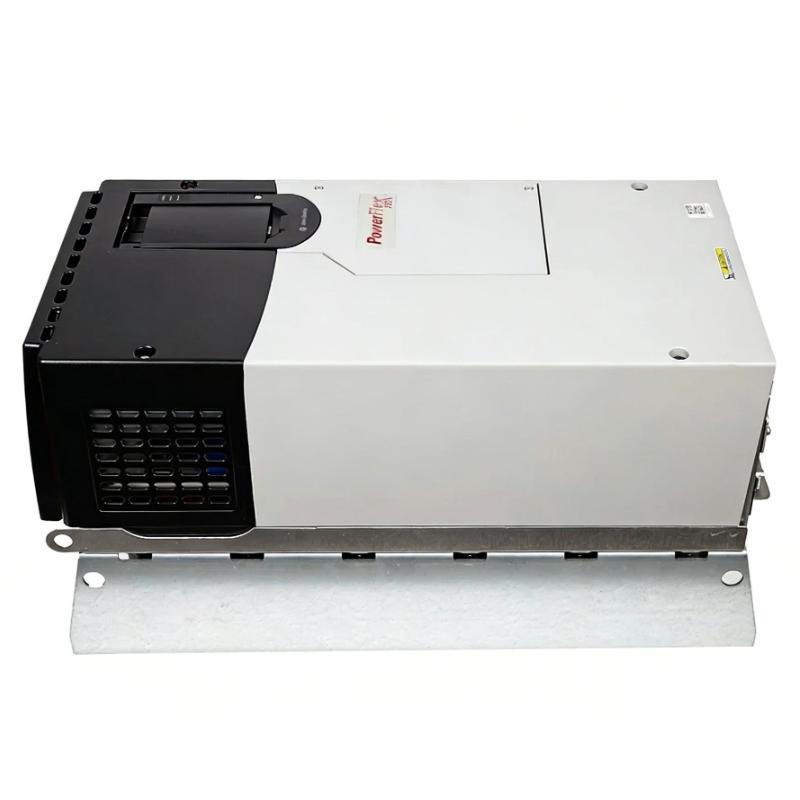
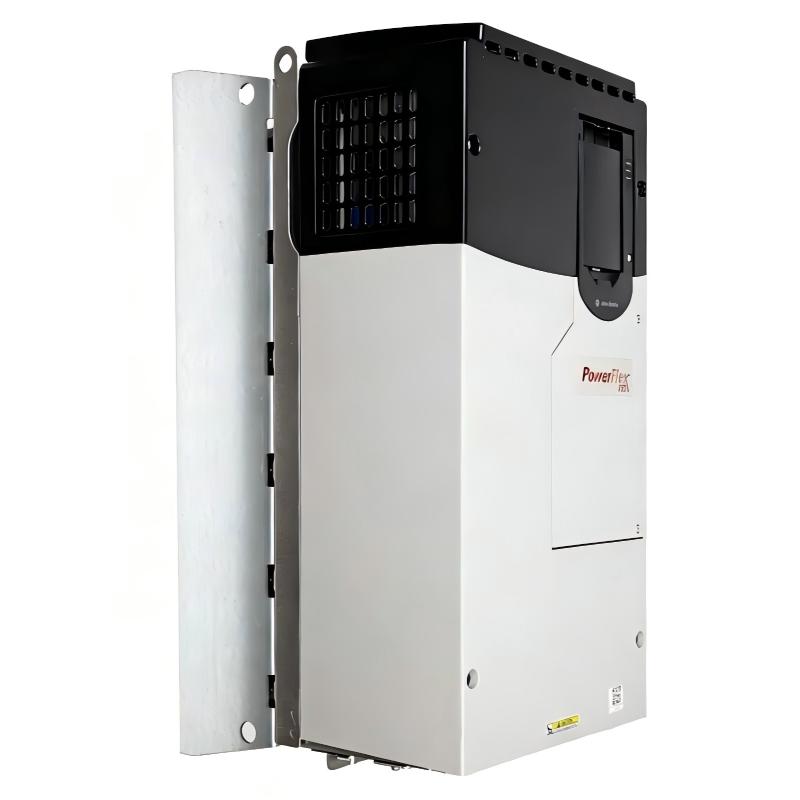
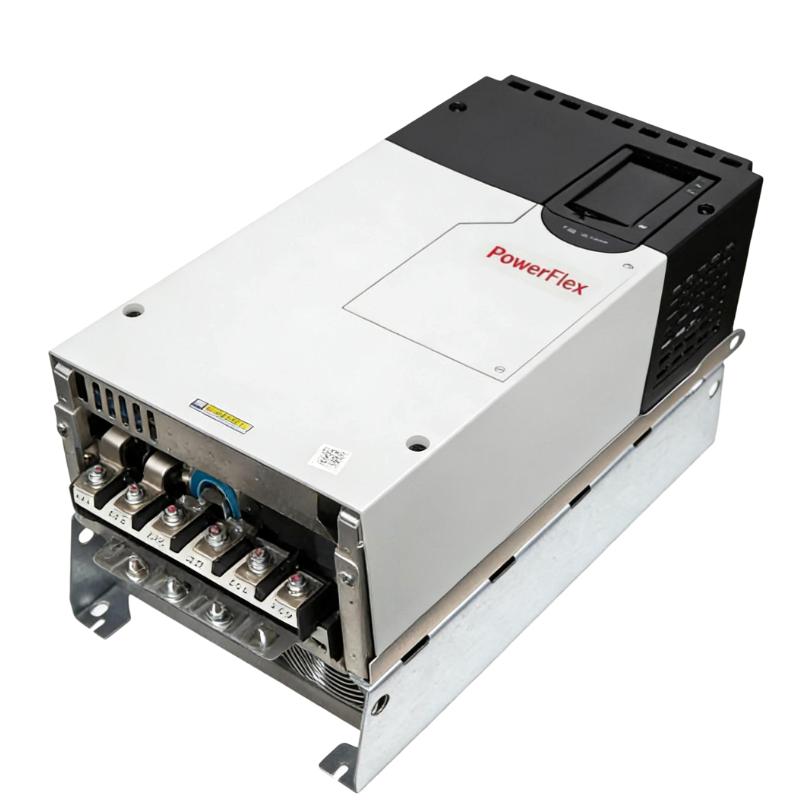
- Allen Bradley
- 20F1ANF212AA0NNNNN
- PowerFlex AC Drive
- USA
- 881.5 × 430 × 349.6 mm
- 108.9kg
- Xiamen, China
- New & In Stock
- T/T, PayPal, Western Union
- 1 Year
- 1-3 Working Days
- DHL, UPS, TNT, FedEx and EMS.
- 24-Hour Service
- COO
- 41
Our advantage

Global Logistics
We have a 10-year logistics and express cooperation agreement, so our products can be shipped to any place in the world.

Brand new and original
Our products are imported in bulk from the place of origin. Because of the cooperative relationship, our products are all original and 100% new.

24-hour service
We provide 7*24 hours service to our customers. We will be there whenever you need us.

Price advantage
All our products are priced very favorably because we have our own warehouse and supply.
| Company Information | |||
| [email protected] | |||
| Mobile | +8615980777398 | ||
| +8615980777398 | |||
| 15980777398 |
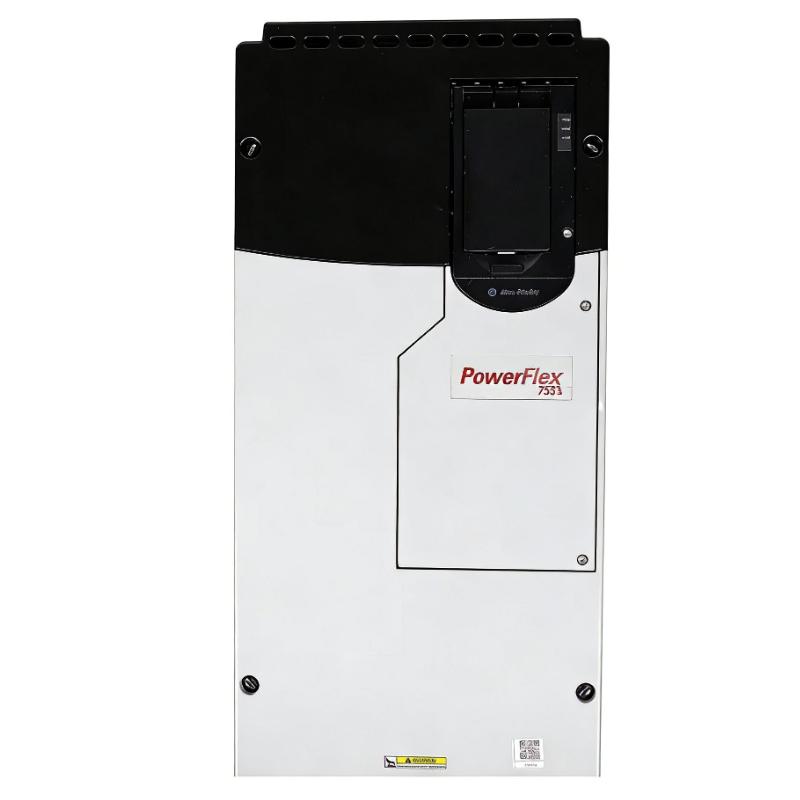
Allen-Bradley 20F1ANF212AA0NNNNN — Detailed Product Specifications, Product Introduction, Applications, Advantages and Related Models
1. Product Overview
The 20F1ANF212AA0NNNNN is a high-power PowerFlex 753 AC drive designed for large three-phase industrial motors.
It is a 690 VAC, three-phase, 212 A air-cooled variable frequency drive with a 200 kW Normal Duty rating and a 160 kW Heavy Duty rating.
This is a Frame 7 drive intended for large industrial motor-control applications where a conventional fixed-speed starter does not provide enough flexibility.
The drive can provide controlled motor starting, adjustable speed, controlled acceleration and deceleration, process regulation and integration with industrial automation systems.
The model belongs to the larger-capacity section of the PowerFlex 753 family. It is one step above the 171 A class and is therefore suitable when the motor current or power requirement exceeds what a 171 A drive can comfortably provide.
A particularly important point about this exact catalog number is its AA configuration. The model includes an internal dynamic-braking transistor, making it different from the corresponding no-braking configuration.
The product is an open-type, air-cooled industrial drive intended for installation in a suitable electrical enclosure.
2. Brand and Product Series
| Item | Specification |
|---|---|
| Brand | Allen-Bradley |
| Product Family | PowerFlex |
| Product Series | PowerFlex 753 |
| Product Type | Air-Cooled AC Drive |
| Catalog Number | 20F1ANF212AA0NNNNN |
| Drive Classification | Architecture-Class Industrial AC Drive |
| Voltage Class | 690 VAC |
| Input Phase | 3 Phase |
| Output Phase | 3 Phase |
| Normal Duty Current | 212 A |
| Normal Duty Power | 200 kW |
| Heavy Duty Current | 171 A |
| Heavy Duty Power | 160 kW |
| Frame Size | Frame 7 |
| Cooling | Forced Air |
| Enclosure | Open Type |
| Protection Class | IP20 class / open-type construction |
| Input Configuration | AC Input with Precharge |
| DC Terminals | None |
| Dynamic Braking | Yes |
| Internal DB Transistor | Yes |
| Embedded I/O | Yes |
| PID Control | Yes |
| HIM | Blank / No HIM |
| Integrated Motion | No |
| Typical Installation | Electrical cabinet / industrial panel |
3. Detailed Technical Parameters
| Parameter | Specification |
|---|---|
| Model | 20F1ANF212AA0NNNNN |
| Brand | Allen-Bradley |
| Series | PowerFlex 753 |
| Product Type | AC Variable Frequency Drive |
| Input Voltage | 690 VAC |
| Input Phase | 3 Phase |
| Output Phase | 3 Phase |
| Nominal Output Current | 212 A |
| Normal Duty Current | 212 A |
| Normal Duty Power | 200 kW |
| Heavy Duty Current | 171 A |
| Heavy Duty Power | 160 kW |
| Input Frequency | 50/60 Hz class |
| Input Type | AC Input with Precharge |
| DC Terminals | No |
| Frame | Frame 7 |
| Cooling | Forced Air |
| Enclosure | Open Type |
| Protection | IP20 class / open type |
| Dynamic Braking | Yes |
| Internal Dynamic-Braking Transistor | Yes |
| Embedded I/O | Yes |
| PID Control | Yes |
| Integrated Motion | No |
| HIM | Blank / No HIM |
| Mounting | Surface / cabinet installation |
| Control | Variable-frequency AC motor control |
| Suitable Motor Type | Large three-phase AC motors |
| Normal Duty Application | Variable-torque and suitable industrial loads |
| Heavy Duty Application | Constant-torque and demanding industrial loads |
| Height | 881.5 mm |
| Width | 430 mm |
| Depth | 349.6 mm |
| Dimensions H × W × D | 881.5 × 430 × 349.6 mm |
| Approx. Weight | Approximately 72.6–108.9 kg |
| Cooling Type | Forced Air |
| Installation Environment | Industrial electrical enclosure |
| Typical Motor Range | Large industrial motors up to approximately 200 kW ND |
The Frame 7 dimensions are approximately 881.5 mm high × 430 mm wide × 349.6 mm deep.
The weight can vary according to the detailed configuration and installed hardware. A practical Frame 7 figure is approximately 72.6–108.9 kg, so cabinet structure, lifting equipment and maintenance access should be designed accordingly.
4. Product Introduction
The 20F1ANF212AA0NNNNN is designed for high-power motor applications where accurate speed control and controlled motor operation are required.
A conventional motor starter generally allows a motor to start and stop, but it does not provide the same level of speed control.
A variable frequency drive changes the frequency and voltage supplied to the motor, allowing the motor to operate at different speeds.
This can provide several practical benefits.
The motor can start smoothly instead of receiving an abrupt full-speed command.
The motor can accelerate according to a programmed ramp.
The motor can operate at reduced speed when the process does not require full output.
The motor can decelerate in a controlled manner.
Process feedback can also be used to automatically adjust motor speed.
For a large industrial installation, these functions can improve process control and reduce mechanical stress.
5. What the 212 A Rating Means
The 212 A rating is one of the most important specifications of this drive.
It indicates that the drive belongs to a substantially higher current class than the 171 A version.
The basic power ratings are:
| Duty | Current | Power |
|---|---|---|
| Normal Duty | 212 A | 200 kW |
| Heavy Duty | 171 A | 160 kW |
The drive can therefore be used for a motor application requiring approximately 200 kW Normal Duty, provided that the actual motor current, load characteristics and installation conditions are suitable.
For more demanding Heavy Duty operation, the rating is approximately 160 kW / 171 A.
The actual motor nameplate current should always be checked rather than selecting the drive from motor kW alone.
6. Normal Duty and Heavy Duty
Normal Duty — 200 kW
The 200 kW Normal Duty rating is particularly relevant to applications where the load follows a variable-torque characteristic.
Typical examples include:
- Large centrifugal pumps.
- Large centrifugal fans.
- Industrial blowers.
- Large HVAC systems.
- Cooling-water systems.
- Water-treatment equipment.
- Industrial ventilation.
These machines frequently do not need maximum torque throughout the entire operating cycle.
Heavy Duty — 160 kW
The 160 kW Heavy Duty rating is intended for more demanding loads.
Potential applications include:
- Heavy conveyors.
- Mixers.
- Material-handling equipment.
- Certain compressors.
- Process machinery.
- Large constant-torque equipment.
Heavy Duty selection is particularly important when the machine experiences higher starting torque, frequent acceleration or significant load changes.
7. Dynamic Braking
One of the key characteristics of the 20F1ANF212AA0NNNNN is its internal dynamic-braking transistor.
This feature is important when the motor or machine has substantial rotating inertia.
During deceleration, the motor can act as a generator.
The mechanical energy stored in the rotating system is converted into electrical energy and returned to the drive’s DC bus.
If this energy is not managed correctly, the DC-bus voltage can rise.
Dynamic braking provides a method for managing this energy through a properly selected braking resistor.
The resistor dissipates the regenerative energy as heat.
This can allow faster and more controlled deceleration.
8. Applications Where Dynamic Braking Is Useful
The internal dynamic-braking transistor can be particularly valuable for:
- Heavy conveyors.
- Cranes.
- Hoists.
- Centrifuges.
- High-inertia fans.
- Large rotating machinery.
- Unwind systems.
- Rewind systems.
- Material-handling machinery.
- Machines requiring relatively short stopping times.
The braking resistor must be correctly selected for the application.
The drive should not be connected to an arbitrary resistor simply because the drive contains a braking transistor.
Braking resistance, power rating, duty cycle, peak energy and average energy all need to be considered.
9. Large Pump Applications
The 20F1ANF212AA0NNNNN is well suited to large pump installations.
Typical applications include:
- Industrial water pumping.
- Municipal water systems.
- Cooling-water circulation.
- Process-water systems.
- Large irrigation systems.
- Water-treatment plants.
- Industrial fluid-transfer systems.
The drive can regulate motor speed according to the required flow or pressure.
With a pressure sensor and PID control, the drive can automatically adjust the pump speed.
For example:
Pressure decreases → Drive increases motor speed
Pressure increases → Drive reduces motor speed
This provides a relatively straightforward method of maintaining a process setpoint.
10. Large Fan Applications
Large industrial fans can also benefit from variable-speed control.
Typical applications include:
- Factory ventilation.
- Furnace ventilation.
- Exhaust systems.
- Dust collection.
- Industrial cooling.
- Large HVAC systems.
- Process-air systems.
When the required airflow is lower, the motor can run at a lower speed.
This can provide process flexibility and, in suitable centrifugal fan applications, significant energy savings.
11. Blower Applications
Large blowers often operate for long periods and can consume considerable electrical energy.
The drive can adjust blower speed according to actual process demand.
Typical applications include:
- Wastewater aeration.
- Industrial ventilation.
- Combustion air.
- Process air.
- Pneumatic conveying.
- Dust extraction.
- Industrial drying.
For variable-demand systems, variable-speed control can be more efficient than continuously operating the blower at full speed and controlling the process with mechanical restrictions.
12. Conveyor Applications
The 212 A current rating gives this drive considerable capacity for large conveyor systems.
Potential applications include:
- Mining conveyors.
- Bulk-material handling.
- Heavy manufacturing.
- Industrial transfer systems.
- Production conveyors.
- Warehouse material handling.
- Aggregate handling.
Controlled acceleration can reduce sudden mechanical loading on the conveyor.
This can reduce stress on:
- Belts.
- Gearboxes.
- Couplings.
- Bearings.
- Drive pulleys.
- Shafts.
The internal dynamic-braking transistor is particularly useful when a large conveyor must decelerate under controlled conditions.
13. Crane and Hoist Applications
Large cranes and hoists require careful control of acceleration and deceleration.
The dynamic-braking capability can be useful for controlling regenerative energy.
However, crane and hoist applications require more than simply selecting a suitable drive.
The complete system should also consider:
- Mechanical holding brakes.
- Safety circuits.
- Emergency stopping.
- Load monitoring.
- Feedback.
- Overload protection.
- Brake control.
- Fault handling.
The drive should therefore be integrated as part of a properly engineered lifting system.
14. Mixer Applications
Large mixers can require considerable starting torque.
The Heavy Duty rating of 160 kW / 171 A makes this drive suitable for many large mixer applications, provided the actual motor current and torque requirements fall within the drive’s capabilities.
Potential applications include:
- Chemical mixers.
- Industrial blending.
- Cement processing.
- Food processing.
- Material mixing.
- Large agitators.
The starting characteristics of the specific machine should be reviewed before final selection.
15. Compressor Applications
Large compressors can require substantial motor power.
Variable-speed operation can be useful when compressor demand varies throughout the production cycle.
The 20F1ANF212AA0NNNNN can be considered for suitable compressor applications, but the compressor type is important.
The engineering review should include:
- Compressor type.
- Motor current.
- Starting torque.
- Operating speed.
- Minimum speed.
- Maximum speed.
- Acceleration requirements.
- Deceleration requirements.
- Regenerative energy.
16. Centrifuge Applications
A centrifuge can have a large amount of stored rotational energy.
When the machine stops, this energy must be managed.
The internal dynamic-braking transistor can therefore be useful for certain centrifuge applications.
The actual braking resistor and braking cycle should be calculated from the centrifuge’s:
- Rotational mass.
- Maximum speed.
- Stopping time.
- Number of braking cycles.
- Energy per cycle.
This is an application where the braking configuration can make a significant difference.
17. High-Inertia Machinery
High-inertia machinery is one of the strongest reasons to select the AA configuration.
Examples include:
- Large flywheel systems.
- Heavy rotating equipment.
- Large fans.
- Centrifuges.
- Conveyors.
- Rollers.
- Industrial drums.
- Large processing machines.
The more mechanical energy stored in the rotating system, the more important deceleration management becomes.
18. Main Product Advantages
18.1 High Current Capacity
The 212 A Normal Duty rating gives the drive substantial motor-control capability.
It is designed for applications much larger than those handled by compact general-purpose drives.
18.2 200 kW Normal Duty
The 200 kW Normal Duty rating is one of the strongest reasons to select this model.
It provides a useful capacity for large variable-torque systems.
18.3 160 kW Heavy Duty
The 160 kW Heavy Duty rating extends the drive’s usefulness to more demanding machinery.
This makes the model more versatile than a drive designed only for variable-torque applications.
18.4 690 VAC
The 690 VAC class is appropriate for large industrial electrical systems.
Using a higher motor voltage can be advantageous for high-power motors because the current required for a given power level can be lower than at a lower voltage.
18.5 Internal Dynamic-Braking Transistor
This is one of the most important features of the specific AA configuration.
It provides an integrated interface for a suitable external braking resistor.
This can be useful when fast or controlled deceleration is required.
18.6 Embedded I/O
Embedded I/O provides a practical method for connecting the drive to external control signals.
This can simplify the overall machine-control architecture.
18.7 PID Control
PID functionality is valuable in applications such as:
- Pump pressure control.
- Flow control.
- Fan pressure control.
- Temperature-related systems.
- Process regulation.
It allows the drive to respond automatically to feedback from the process.
18.8 Air-Cooled Construction
Forced-air cooling provides a practical cooling solution for a high-power drive.
The Frame 7 construction is designed around significant electrical power and corresponding heat generation.
19. Physical Dimensions and Weight
The physical size of this model is significant.
| Physical Parameter | Specification |
|---|---|
| Height | 881.5 mm |
| Width | 430 mm |
| Depth | 349.6 mm |
| Dimensions H × W × D | 881.5 × 430 × 349.6 mm |
| Weight | Approximately 72.6–108.9 kg |
| Frame | Frame 7 |
| Cooling | Forced Air |
| Enclosure | Open Type |
| Installation | Cabinet / Panel |
| Mounting | Surface mounting |
Because the drive can weigh well over 70 kg depending on configuration, installation planning is important.
The cabinet structure should be capable of supporting the drive without excessive mechanical stress.
Lifting and handling procedures should also be considered.
20. Cabinet Design Considerations
This is a large industrial drive, so cabinet design should not be treated as an afterthought.
The cabinet should provide sufficient space for:
- Drive mounting.
- Power cables.
- Control cables.
- Cable bending.
- Air circulation.
- Heat removal.
- Maintenance.
- Inspection.
- Grounding.
- Protective equipment.
The cabinet should also be designed around the drive’s heat generation.
If several high-power devices are installed in the same cabinet, their combined heat load can become significant.
21. Cooling and Ventilation
The drive uses forced-air cooling.
The cooling system requires sufficient airflow.
The installation should avoid situations where:
- Airflow paths are blocked.
- Hot air recirculates.
- Filters become heavily contaminated.
- The cabinet becomes excessively hot.
- Cooling fans cannot operate properly.
Ambient temperature and installation altitude can also affect drive capacity.
Where environmental conditions are demanding, the applicable derating requirements should be considered.
22. Product Configuration
The model number can be understood at a general level as follows:
| Catalog Number Section | General Description |
|---|---|
| 20F | PowerFlex 753 |
| 1 | Standard drive architecture |
| A | AC input |
| N | 690 VAC class |
| F | Open-type configuration |
| 212 | 212 A current class |
| A | Dynamic-braking transistor configuration |
| A | Associated filter/CM configuration |
| 0NNNNN | Standard option positions |
The most important point is the 212 A current class and the AA configuration.
The AA version should not be confused with the related JA or JN configurations because the options can change the drive’s braking and filtering characteristics.
For replacement work, the complete catalog number should be matched rather than selecting a drive based only on the 212 A rating.
23. Five Recommended Same-Series or Closely Related Models
The following models are useful when comparing different PowerFlex 753 configurations around the same power range.
| Model | Series | Voltage | ND Current | ND Power | HD Current | HD Power | Frame | Dynamic Braking | Dimensions | Weight |
|---|---|---|---|---|---|---|---|---|---|---|
| 20F1ANF171AA0NNNNN | PowerFlex 753 | 690 VAC | 171 A | 160 kW | 142 A | 132 kW | 7 | Yes | 881.5 × 430 × 349.6 mm | Approx. 72.6–108.9 kg |
| 20F1ANF212AA0NNNNN | PowerFlex 753 | 690 VAC | 212 A | 200 kW | 171 A | 160 kW | 7 | Yes | 881.5 × 430 × 349.6 mm | Approx. 72.6–108.9 kg |
| 20F1ANF263AA0NNNNN | PowerFlex 753 | 690 VAC | 263 A | 250 kW | 212 A | 200 kW | 7 | Yes | Frame 7 class | Approx. 72.6–108.9 kg |
| 20F1ANF171JA0NNNNN | PowerFlex 753 | 690 VAC | 171 A | 160 kW | 142 A | 132 kW | 7 | Yes | 881.5 × 430 × 349.6 mm | Approx. 72.6–108.9 kg |
| 20F1ANF212JA0NNNNN | PowerFlex 753 | 690 VAC | 212 A | 200 kW | 171 A | 160 kW | 7 | Yes | 881.5 × 430 × 349.6 mm | Approx. 72.6–108.9 kg |
The first three are useful for comparing capacity.
The last two are especially useful when considering alternative catalog configurations around the same electrical rating.
24. 20F1ANF171AA0NNNNN
This is a lower-current alternative.
It provides approximately:
171 A Normal Duty
160 kW Normal Duty
142 A Heavy Duty
132 kW Heavy Duty
It uses the same general Frame 7 high-power architecture.
This is a good option when the motor requirement is below 212 A but still within the high-power range.
25. 20F1ANF263AA0NNNNN
This model provides a significant step up from the target model.
Its approximate ratings are:
263 A Normal Duty
250 kW Normal Duty
212 A Heavy Duty
200 kW Heavy Duty
It is appropriate for larger motors and larger industrial machines.
26. 20F1ANF171JA0NNNNN
This model is particularly useful as a comparison because it is one rating level below the target model.
It provides approximately:
171 A / 160 kW Normal Duty
and:
142 A / 132 kW Heavy Duty.
It can be selected when the motor current does not require the full 212 A capacity.
27. 20F1ANF212JA0NNNNN
This is one of the closest related models to the target.
It retains the:
- 690 VAC class.
- 212 A rating.
- 200 kW Normal Duty.
- 160 kW Heavy Duty.
- Frame 7 construction.
It is therefore an important model to consider when evaluating replacement or alternative configurations.
28. Five Popular Same-Brand Models
| Model | Product Series | Voltage | Current / Rating | Power Rating | Frame | Main Feature | Dimensions / Weight |
|---|---|---|---|---|---|---|---|
| 20G1ANF212JA0NNNNN | PowerFlex 755 | 690 VAC, 3 Phase | 212 A class | Approx. 200 kW ND | 7 | Advanced high-power drive | Frame 7 class / approx. 72.6–108.9 kg |
| 20G1ANF171JA0NNNNN | PowerFlex 755 | 690 VAC, 3 Phase | 171 A class | Approx. 160 kW ND | 7 | Advanced industrial control | Frame 7 class / approx. 72.6–108.9 kg |
| 25B-D2P3N114 | PowerFlex 525 | 380–480 VAC, 3 Phase | 2.3 A | Approx. 0.75 kW | Compact | General-purpose VFD | Compact / lightweight |
| 25B-D6P0N114 | PowerFlex 525 | 380–480 VAC, 3 Phase | 6.0 A | Approx. 2.2 kW | Compact | Compact industrial drive | Compact / lightweight |
| 25B-D017N114 | PowerFlex 525 | 380–480 VAC, 3 Phase | 17 A | Approx. 7.5 kW | C class | General-purpose motor control | Compact / lightweight |
The PowerFlex 755 alternatives are much closer to the target product in terms of power level.
The PowerFlex 525 models are much smaller and are included as popular alternatives within the same brand family rather than direct replacements.
29. PowerFlex 753 vs. PowerFlex 755
| Feature | PowerFlex 753 | PowerFlex 755 |
|---|---|---|
| Primary Application | Industrial motor control | Advanced industrial motor control |
| 690 VAC | Available | Available |
| Large Motors | Yes | Yes |
| Embedded I/O | Yes | Yes |
| PID | Yes | Yes |
| Dynamic Braking | Configuration dependent | Configuration dependent |
| Feedback | Available | More extensive |
| Advanced Control | Strong | More extensive |
| Motion | Limited | More capable |
| Application Complexity | Moderate to high | High |
| Typical Users | Pumps, fans, conveyors, process machinery | Advanced machinery and coordinated systems |
The PowerFlex 753 is a strong choice when the primary requirement is large-motor speed control.
The PowerFlex 755 family becomes more attractive when the application needs more sophisticated feedback, control or motion functionality.
30. Application Matching
| Application | Suitability | Reason |
|---|---|---|
| Large centrifugal pump | ★★★★★ | Excellent high-power variable-speed application |
| Large industrial fan | ★★★★★ | Strong variable-torque application |
| Large blower | ★★★★★ | Good process-speed control |
| Water circulation | ★★★★★ | PID and speed control are useful |
| Large HVAC | ★★★★★ | Variable-speed operation |
| Heavy conveyor | ★★★★★ | High current and braking capability |
| Crane | ★★★★☆ | Braking capability is useful; safety engineering required |
| Hoist | ★★★★☆ | Good drive capacity with proper system design |
| Large mixer | ★★★★☆ | Strong Heavy Duty capacity |
| Compressor | ★★★★☆ | Suitable depending on compressor characteristics |
| Centrifuge | ★★★★★ | Dynamic braking can be valuable |
| High-inertia machinery | ★★★★★ | Internal braking transistor is useful |
| Small pump | ★☆☆☆☆ | Drive is unnecessarily large |
| Small fan | ★☆☆☆☆ | Smaller drive preferred |
31. Energy-Saving Potential
Variable frequency control can provide significant energy savings in appropriate applications.
This is particularly true for centrifugal loads.
Typical examples include:
- Centrifugal pumps.
- Centrifugal fans.
- Blowers.
If the process only requires 70% of the maximum flow, operating a pump or fan at reduced speed can be considerably more efficient than keeping the motor at full speed and using a mechanical restriction to reduce flow.
The actual savings depend on:
- Operating hours.
- Load profile.
- Required flow.
- Required pressure.
- Motor efficiency.
- Pump or fan efficiency.
- Speed range.
Therefore, an energy-saving calculation should be based on actual operating data rather than a general percentage assumption.
32. Mechanical Advantages
The drive can also improve mechanical operation.
Controlled acceleration can reduce sudden torque shocks.
This can help protect:
- Gearboxes.
- Belts.
- Couplings.
- Shafts.
- Bearings.
- Conveyor systems.
- Pump systems.
Controlled deceleration can also reduce sudden mechanical stress.
For high-inertia machines, the dynamic-braking function provides an additional tool for managing stopping energy.
33. Electrical Advantages
From an electrical perspective, variable-speed operation can provide several benefits.
The motor does not have to operate at maximum speed continuously.
Starting current and starting behavior can be managed through the drive.
Acceleration can be programmed.
Speed can be adjusted according to the process.
The drive can also provide fault and status information to the control system.
For large industrial installations, these capabilities can make the overall motor-control system easier to manage.
34. Control-System Integration
The drive can be integrated into a larger industrial automation system.
A typical system might contain:
PLC → Industrial Network → PowerFlex Drive → Motor
with additional feedback such as:
Pressure Sensor → PID → Drive → Pump
or:
Temperature Sensor → Control System → Drive → Fan
This makes the drive suitable for centralized control systems as well as local motor-control applications.
35. Installation Checklist
| Item | Recommended Check |
|---|---|
| Motor Voltage | Confirm 690 VAC compatibility |
| Motor Current | Confirm actual full-load current |
| Motor Power | Compare with 200 kW ND / 160 kW HD |
| Duty Type | Confirm ND or HD |
| Load Type | Variable torque or constant torque |
| Starting Torque | Verify required torque |
| Acceleration | Verify acceleration time |
| Deceleration | Determine braking requirement |
| Braking Resistor | Select according to application |
| Ambient Temperature | Confirm operating limits |
| Altitude | Check derating |
| Cabinet | Check physical dimensions |
| Cabinet Cooling | Check heat dissipation |
| Power Cables | Select according to current and installation |
| Motor Cable | Verify suitability for VFD operation |
| Grounding | Design appropriate grounding |
| EMC | Verify electrical noise requirements |
| Feedback | Determine whether required |
| Communication | Determine network requirement |
| Safety | Design complete safety architecture |
| Maintenance | Provide adequate access |
36. Important Selection Point: Motor Current
The most important selection rule is not simply:
Motor kW = Drive kW
Instead, the selection should consider:
Motor voltage + motor current + duty + load type + overload requirement + acceleration + deceleration.
For example, two 200 kW motors can have different electrical characteristics depending on their efficiency, power factor and voltage.
Therefore, the motor nameplate should be checked before final drive selection.
37. Important Selection Point: Braking
The 20F1ANF212AA0NNNNN is particularly attractive when braking is required.
The internal braking transistor can simplify the overall system compared with a configuration that lacks the internal transistor.
However, the drive itself is not the complete braking system.
The braking resistor must still be properly selected.
Important calculations include:
- Peak braking power.
- Average braking power.
- Braking duration.
- Number of braking events.
- Energy per braking event.
- Resistor resistance.
- Resistor temperature.
- Duty cycle.
38. Important Selection Point: Cabinet Size
The Frame 7 construction is large.
The approximate dimensions are:
881.5 mm × 430 mm × 349.6 mm
This means the drive should be considered early in cabinet design.
The cabinet should not be designed only around the drive’s outer dimensions.
Additional space may be required for:
- Wiring.
- Terminals.
- Ventilation.
- Maintenance.
- Power equipment.
- Disconnects.
- Grounding.
- Protective components.
39. Recommended Models by Application
| Application Requirement | Recommended Model |
|---|---|
| Around 132 kW ND | 20F1ANF142JA0NNNNN |
| Around 160 kW ND | 20F1ANF171JA0NNNNN |
| Around 200 kW ND, braking required | 20F1ANF212AA0NNNNN |
| Around 200 kW ND, alternative configuration | 20F1ANF212JA0NNNNN |
| Around 250 kW ND | 20F1ANF263JA0NNNNN |
| Advanced high-power control | PowerFlex 755 family |
| Small industrial motor | PowerFlex 525 family |
40. Overall Product Evaluation
The 20F1ANF212AA0NNNNN is a high-power industrial variable frequency drive for large three-phase AC motors.
Its most important specifications are:
690 VAC
3 Phase
212 A Normal Duty
200 kW Normal Duty
171 A Heavy Duty
160 kW Heavy Duty
Frame 7
Internal Dynamic-Braking Transistor
These characteristics make it suitable for large pumps, fans, blowers, conveyors, mixers, compressors and high-inertia machinery.
The dynamic-braking capability is especially useful when the motor needs to decelerate relatively quickly.
The drive is also well suited to process applications where PID control is required.
Its embedded I/O provides additional flexibility for machine-control integration.
41. Key Advantages Summary
| Advantage | Description |
|---|---|
| 212 A Current Capacity | Suitable for large industrial motors |
| 200 kW ND Rating | Strong capacity for variable-torque loads |
| 160 kW HD Rating | Suitable for demanding constant-torque loads |
| 690 VAC | Designed for large high-voltage motor systems |
| Frame 7 | High-power physical and electrical capacity |
| Dynamic-Braking Transistor | Useful for regenerative energy management |
| Embedded I/O | Convenient machine-control integration |
| PID | Useful for pressure, flow and process regulation |
| Forced-Air Cooling | Suitable for high-power operation |
| Open-Type Construction | Flexible cabinet integration |
| Wide Application Range | Pumps, fans, conveyors, mixers, compressors and more |
42. Final Technical Parameter Table
| Key Parameter | Specification |
|---|---|
| Model | 20F1ANF212AA0NNNNN |
| Brand | Allen-Bradley |
| Product Series | PowerFlex 753 |
| Product Family | PowerFlex 750-Series |
| Product Type | Air-Cooled AC Drive |
| Input Voltage | 690 VAC |
| Input Phase | 3 Phase |
| Output Phase | 3 Phase |
| Normal Duty Current | 212 A |
| Normal Duty Power | 200 kW |
| Heavy Duty Current | 171 A |
| Heavy Duty Power | 160 kW |
| Frame Size | Frame 7 |
| Cooling | Forced Air |
| Enclosure | Open Type |
| Protection | IP20 class / open type |
| Input | AC Input with Precharge |
| DC Terminals | None |
| Dynamic Braking | Yes |
| Internal DB Transistor | Yes |
| Embedded I/O | Yes |
| PID | Yes |
| Integrated Motion | No |
| HIM | Blank / No HIM |
| Input Frequency | 50/60 Hz class |
| Height | 881.5 mm |
| Width | 430 mm |
| Depth | 349.6 mm |
| Dimensions H × W × D | 881.5 × 430 × 349.6 mm |
| Weight | Approximately 72.6–108.9 kg |
| Typical Applications | Large pumps, fans, blowers, conveyors, cranes, hoists, mixers, compressors and centrifuges |
| Main Advantage | High-power 690 VAC motor control with integrated dynamic-braking capability |
43. Final Conclusion
The 20F1ANF212AA0NNNNN is a high-capacity PowerFlex 753 Frame 7 AC drive designed for demanding large-motor applications.
Its 212 A Normal Duty rating and 200 kW Normal Duty capacity make it suitable for large variable-speed industrial systems, while the 171 A / 160 kW Heavy Duty rating provides a strong option for more demanding constant-torque applications.
The most important feature distinguishing this configuration is the internal dynamic-braking transistor.
That makes the drive particularly interesting for applications involving high inertia, controlled stopping or regenerative energy.
Large conveyors, centrifuges, cranes, hoists and other rotating machinery can benefit from this capability when the complete braking system is correctly designed.
For large centrifugal pumps, fans and blowers, the drive’s variable-speed capability and PID functionality can provide useful process control and, where the load characteristics are appropriate, meaningful energy-saving opportunities.
Physically, the drive is a substantial Frame 7 unit, with approximate dimensions of 881.5 × 430 × 349.6 mm and an approximate weight range of 72.6–108.9 kg.
The cabinet, cooling, mounting structure, power connections and maintenance access should therefore be considered carefully before installation.
For a lower-capacity application, the 20F1ANF171AA0NNNNN is a logical step down.
For a higher-capacity application, the 20F1ANF263AA0NNNNN provides a higher current and power class.
For applications requiring the same general 212 A / 200 kW capability but a different configuration, the 20F1ANF212JA0NNNNN is another closely related model worth evaluating.
Overall, the 20F1ANF212AA0NNNNN is best suited to large 690 VAC industrial motor systems where high current capacity, 200 kW Normal Duty performance, 160 kW Heavy Duty capability, variable-speed control, process regulation and dynamic-braking capability are all important considerations.