

ProductPRODUCT
Featured products
Contact Us
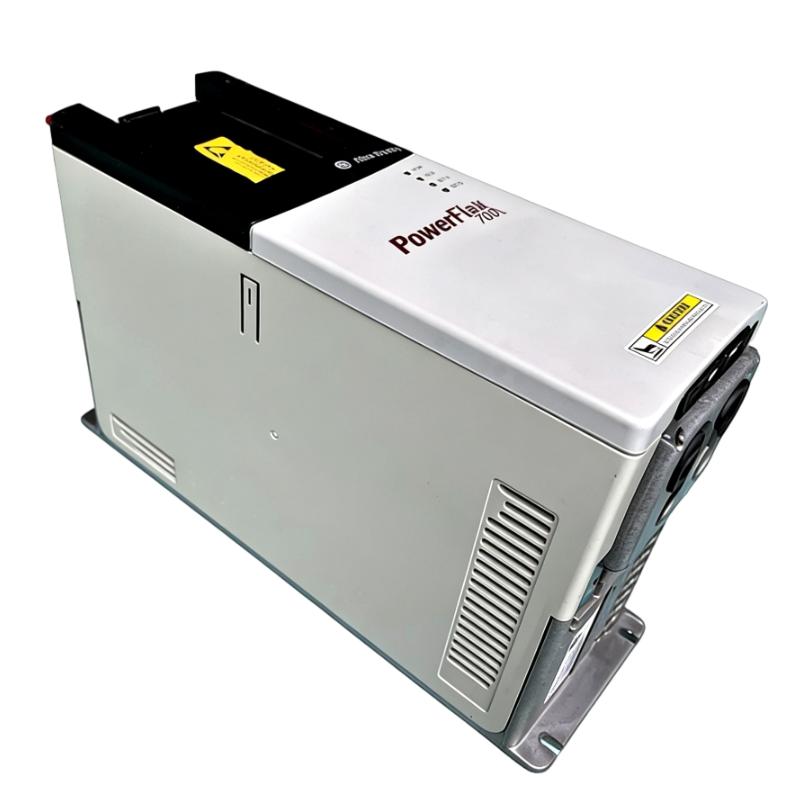
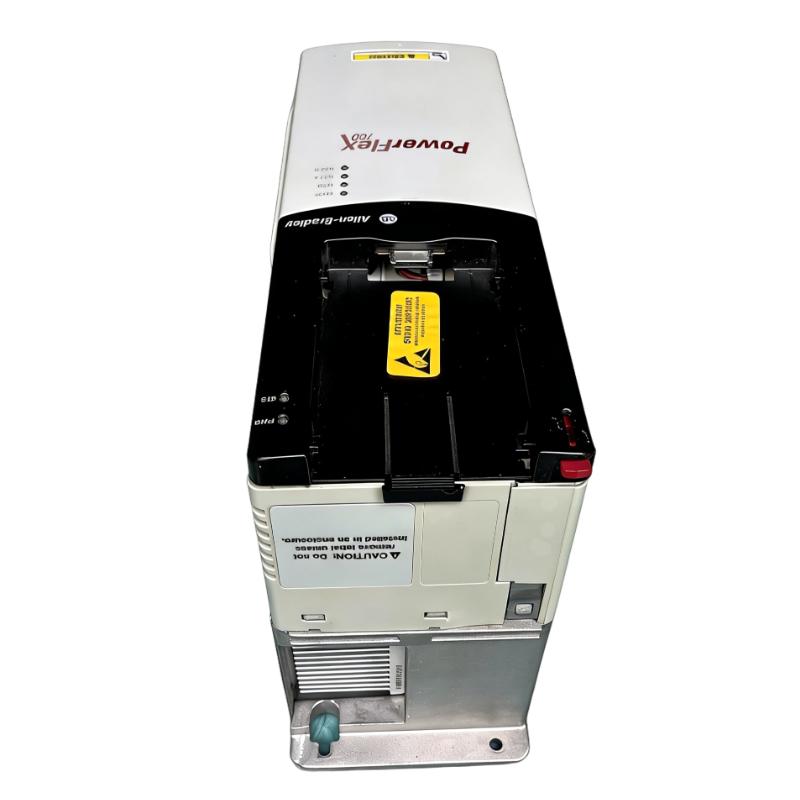
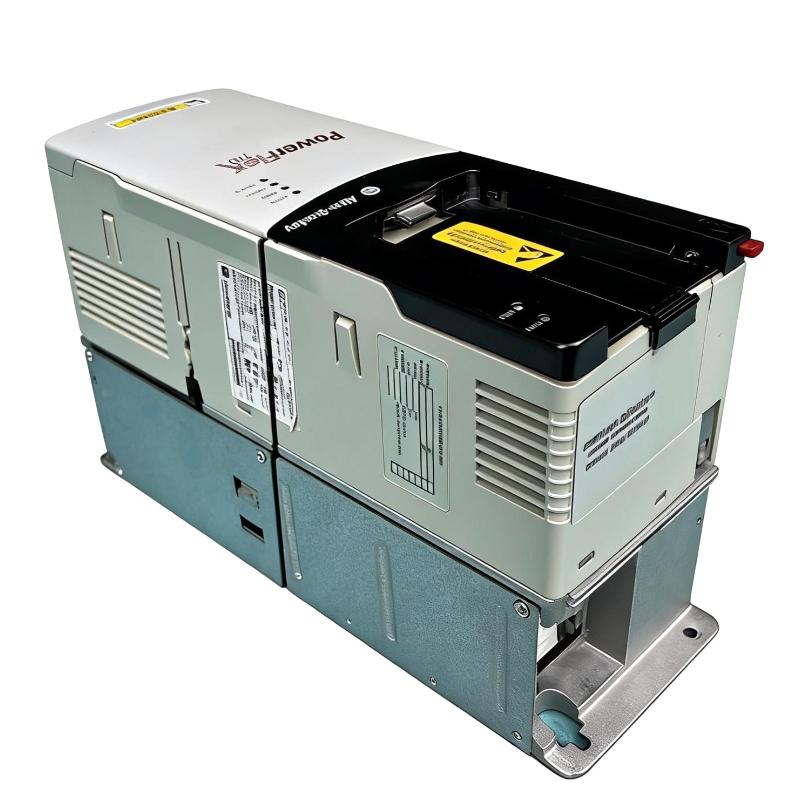
- Allen Bradley
- 20BP481N0NNNNNC0
- PowerFlex AC Drive
- USA
- 757.7 × 889.0 × 381.7 mm
- 384 kg
- Xiamen, China
- New & In Stock
- T/T, PayPal, Western Union
- 1 Year
- 1-3 Working Days
- DHL, UPS, TNT, FedEx and EMS.
- 24-Hour Service
- COO
- 64
Our advantage

Global Logistics
We have a 10-year logistics and express cooperation agreement, so our products can be shipped to any place in the world.

Brand new and original
Our products are imported in bulk from the place of origin. Because of the cooperative relationship, our products are all original and 100% new.

24-hour service
We provide 7*24 hours service to our customers. We will be there whenever you need us.

Price advantage
All our products are priced very favorably because we have our own warehouse and supply.
| Company Information | |||
| [email protected] | |||
| Mobile | +8615980777398 | ||
| +8615980777398 | |||
| 15980777398 |
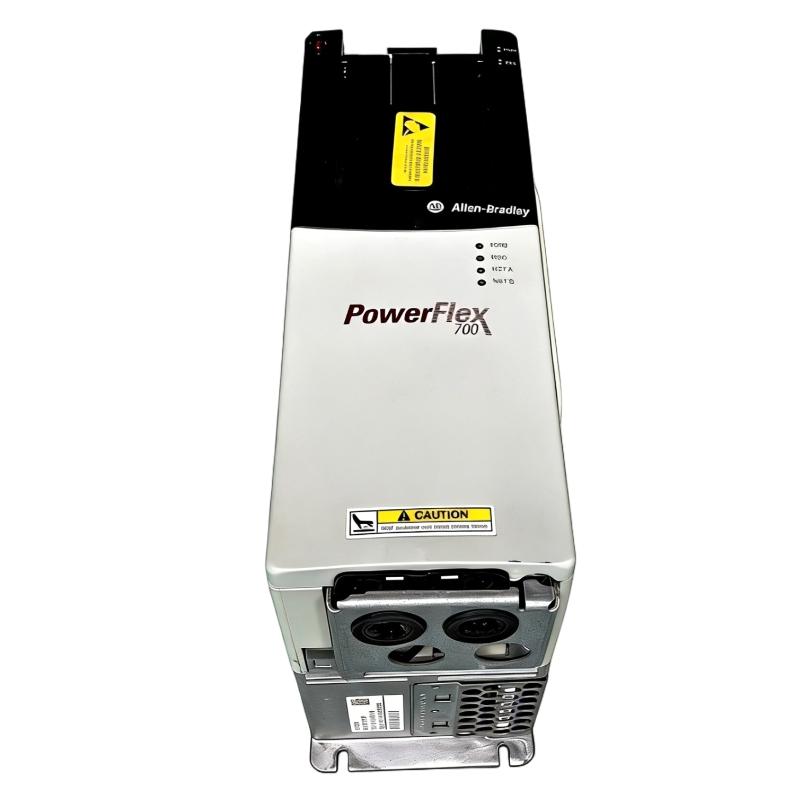
Allen-Bradley 20BP481N0NNNNNC0 Product Specification and Selection Guide
1. Product Overview
Allen-Bradley 20BP481N0NNNNNC0 is a high-power DC-input variable frequency drive belonging to the PowerFlex 700 AC Drive 20B family. It is designed for large industrial motor-drive applications where a high-current DC bus is available and accurate control of large AC motors is required.
The model is a particularly large-capacity configuration within the PowerFlex 700 family. Its nominal DC input is 540 VDC, with a rated current of approximately 481 A. The corresponding power capability is approximately 280 kW for normal-duty operation and 240 kW for heavy-duty operation.
The product is configured as an open-type/IP00 drive rather than a complete enclosed cabinet. This means that the drive is intended to be installed inside an appropriately designed electrical enclosure or control cabinet. The final cabinet arrangement must provide suitable protection against dust, moisture, accidental contact, temperature rise and other environmental factors.
The standard configuration represented by the catalog number is relatively basic in terms of optional hardware. It does not include an operator HIM, internal brake IGBT, drive-mounted brake resistor, EMC filter, communication module or feedback interface. The control configuration is based on vector control with 24 V I/O.
This makes the unit particularly suitable for large industrial systems where the system integrator already has a dedicated control architecture, external braking equipment, external communications infrastructure or a separate motor-feedback arrangement.
2. Product Identification
| Parameter | Specification |
|---|---|
| Product model | 20BP481N0NNNNNC0 |
| Brand | Allen-Bradley |
| Product family | PowerFlex 700 |
| Product series | PowerFlex 700 AC Drive 20B |
| Product type | High-power variable frequency drive |
| Input type | DC input |
| Nominal DC input voltage | 540 VDC |
| Rated current | 481 A |
| Normal-duty output capability | Approximately 280 kW |
| Heavy-duty output capability | Approximately 240 kW |
| Enclosure style | IP00 / open type |
| Control method | Vector control |
| I/O supply | 24 V I/O |
| HIM | Not included / blank configuration |
| Brake IGBT | Not included |
| Internal brake resistor | Not included |
| EMC filter | Not included |
| Communication module | Not included |
| Feedback option | Not included |
| Custom firmware | Not included |
| Typical installation | Industrial control cabinet |
| Product generation | PowerFlex 700 20B |
The exact motor output capability should always be evaluated against the actual motor nameplate, motor duty cycle, ambient temperature, switching frequency, overload requirements and installation conditions. The 280 kW and 240 kW figures should therefore be regarded as the principal duty-class ratings rather than as a universal guarantee that every motor can operate at those values under every operating condition.
3. Model Number Interpretation
The catalog number 20BP481N0NNNNNC0 contains several configuration elements that identify the electrical and functional arrangement of the drive.
The most important portion is the 20BP481 designation. The “20B” portion identifies the PowerFlex 700 20B architecture, while the “P” configuration identifies the DC-input arrangement. The “481” portion identifies the high-current 481 A rating.
The remaining characters define the factory configuration and optional features. In this particular configuration, the drive is supplied without a HIM, without an internal brake IGBT, without a drive-mounted braking resistor, without an EMC filter, without an internal communication module and without motor feedback hardware.
This is important when replacing an existing drive. Two PowerFlex 700 units can look very similar externally while having substantially different electrical configurations. The complete catalog number should therefore be checked rather than selecting a replacement only according to the family name or current rating.
4. Main Technical Parameters
| Technical Item | 20BP481N0NNNNNC0 |
|---|---|
| Rated DC input | 540 VDC |
| DC input current class | 481 A |
| Normal-duty power | Approx. 280 kW |
| Heavy-duty power | Approx. 240 kW |
| Control architecture | Vector control |
| I/O | 24 V I/O |
| Feedback | None in standard configuration |
| Communication module | None in standard configuration |
| Operator interface | No HIM / blank plate |
| Dynamic braking IGBT | None |
| Internal braking resistor | None |
| EMC filter | None |
| Enclosure | IP00 / open type |
| Cooling | Forced-air industrial drive cooling |
| Installation | Cabinet/panel installation |
| Application category | Large industrial AC motor control |
| Motor type | Primarily three-phase industrial AC motors |
| Duty selection | Normal duty / heavy duty according to application |
| Configuration | Standard, without listed optional modules |
The 540 VDC input configuration is particularly useful in systems where a common DC bus, regenerative power system, rectifier arrangement or other DC power architecture is already present.
Compared with a conventional AC-input drive, a DC-input version can be incorporated into a larger DC-bus architecture where several drives share a common DC supply. This can be advantageous in systems that require coordinated drives, energy sharing or centralized front-end power conversion.
5. Dimensions and Weight
The physical size and mass of high-power PowerFlex 700 20B drives depend on the exact frame arrangement, mounting configuration and whether the drive is installed as a standalone chassis or integrated into a larger cabinet system.
For this high-current 481 A configuration, the drive belongs to the large-frame class. The following figures are suitable for preliminary engineering and cabinet planning, but they should not be treated as fabrication dimensions for a final enclosure.
| Physical Parameter | Approximate Value |
|---|---|
| Installation type | Open chassis / IP00 |
| Approximate height | 1,100–1,250 mm |
| Approximate width | 500–600 mm |
| Approximate depth | 400–500 mm |
| Approximate footprint | Large industrial cabinet installation |
| Approximate weight | 220–280 kg |
| Weight for cabinet planning | Use approximately 250 kg as a preliminary planning value |
| Mounting | Vertical cabinet/panel mounting |
| Cooling requirement | Forced ventilation with adequate cabinet airflow |
| Service clearance | Additional clearance required around power and cooling sections |
Important: The dimensions and weight above are engineering estimates for planning purposes. The exact mechanical dimensions and shipping weight should be confirmed from the particular mechanical drawing or nameplate before manufacturing a cabinet, designing a lifting arrangement or calculating floor loading.
For a 481 A high-power drive, cabinet ventilation and service access are just as important as the nominal external dimensions. A cabinet that is physically large enough but has inadequate airflow can still result in excessive internal temperature and premature component aging.
6. Product Introduction
The PowerFlex 700 family was developed for industrial applications requiring more sophisticated motor control than a basic general-purpose inverter. The 20B platform is associated with larger industrial motors and higher-power machinery, making it suitable for applications where acceleration, deceleration, torque control and stable speed regulation are important.
The 20BP481N0NNNNNC0 represents a DC-input configuration rather than a conventional three-phase AC-input version. This makes it particularly interesting for high-power machinery using a common DC bus or a centralized power conversion system.
The 481 A rating places the unit in a high-current class. It is therefore intended for large motors and heavy industrial equipment rather than small pumps, fans or light-duty machinery.
The vector-control architecture allows the drive to regulate motor speed and torque more effectively than a simple scalar V/Hz control approach. Depending on the complete system configuration and motor characteristics, vector control can provide better low-speed performance, more controlled acceleration and improved response to changing loads.
7. Product Applications
7.1 Large Conveyor Systems
Large conveyors frequently require high starting torque and stable speed control, particularly when the conveyor is heavily loaded.
The 20BP481N0NNNNNC0 can be used in high-power conveyor applications where a large motor must accelerate smoothly instead of being connected directly to the power supply.
Typical applications include bulk-material conveyors, mining conveyors, material-transfer systems, aggregate handling equipment and large production-line transport systems.
The vector-control capability is useful where conveyor speed must remain stable despite changes in material loading.
7.2 Mining and Mineral Processing
Mining equipment often operates under severe mechanical loading. Crushers, conveyors, mills, pumps and other machinery can require very large motors and substantial starting torque.
A high-current drive such as this can provide controlled acceleration and deceleration while reducing the mechanical shock associated with direct starting.
The open/IP00 configuration is also suitable for integration into engineered electrical rooms and industrial drive cabinets, where environmental protection is provided by the overall installation rather than by the drive enclosure itself.
7.3 Large Pumps
High-power pumps are widely used in water treatment, industrial processing, chemical plants, power generation and large-scale infrastructure.
Variable-speed operation can allow the pump to operate closer to the actual process requirement instead of continuously running at full speed.
The drive can therefore be used for applications requiring controlled pump acceleration, stable operating speed and adjustment of process flow through motor-speed control.
7.4 Fans and Blowers
Large industrial ventilation systems, process-air systems and forced-draft equipment can use very large motors.
A variable frequency drive allows the motor speed to be adjusted according to the required airflow. This can provide better process control and can reduce unnecessary motor operation at maximum speed.
The drive is particularly relevant to large fans and blowers where the motor rating is beyond the range normally handled by compact general-purpose drives.
7.5 Compressors
Industrial compressors can have significant starting torque and demanding operating cycles.
A properly configured high-power drive can control acceleration, operating speed and deceleration while helping the machine avoid abrupt mechanical transitions.
The suitability of the drive for a particular compressor depends on compressor type, motor characteristics, load profile, required overload capability and the control method used by the complete machine.
7.6 Extrusion and Processing Machinery
Large extrusion lines and continuous-process machinery often require stable motor speed and repeatable torque behavior.
The drive’s vector-control architecture can be useful when the process is sensitive to speed variation or sudden load changes.
For continuous manufacturing equipment, the ability to coordinate motor speed with upstream and downstream machinery can also be important.
7.7 Material Handling Equipment
Large cranes, hoists and material-handling systems can require high torque and controlled acceleration.
However, applications involving rapid regenerative braking or suspended loads require careful evaluation of braking requirements. Since the standard 20BP481N0NNNNNC0 configuration does not include an internal brake IGBT or drive-mounted braking resistor, an external braking or regenerative architecture may be required.
8. Main Product Advantages
8.1 High Power Capacity
The most obvious advantage is the 481 A current class and approximately 280 kW normal-duty power capability.
This allows the drive to control substantially larger motors than compact industrial drives and makes it suitable for heavy machinery, production equipment and large process systems.
8.2 DC-Bus Architecture
The DC-input design can be advantageous in systems using a common DC bus.
A common DC architecture can allow multiple drives to share energy through the DC link and can simplify certain high-power system designs.
This is particularly attractive in applications with several large motors operating in a coordinated manner.
8.3 Vector Control
Vector control provides a more advanced approach to motor control than simple V/Hz operation.
It can improve torque response, speed regulation and low-speed behavior when correctly configured with the motor parameters and application requirements.
8.4 High-Current Industrial Design
A 481 A drive is designed for demanding industrial loads rather than light commercial applications.
The large power section, cooling system and industrial control architecture make it suitable for continuous-duty machinery where reliability and predictable motor operation are important.
8.5 Flexible System Integration
Because the standard configuration does not include numerous optional modules, system designers can integrate the drive into a larger control architecture according to the specific project.
External communications, feedback systems, braking equipment and other functions can be selected according to the requirements of the complete machine.
8.6 Suitable for Engineered Control Cabinets
The IP00/open configuration allows the drive to be installed as part of a properly engineered electrical cabinet.
This can be advantageous for OEM machinery and large industrial installations where several drives, contactors, PLC systems, circuit protection devices and auxiliary components are installed in a centralized electrical room or control cabinet.
8.7 Strong Compatibility Within the 20B Family
Another practical advantage is the availability of many related PowerFlex 700 20B configurations.
When maintaining an existing system, engineers can often select a related catalog number based on voltage, current, enclosure, braking, communication, feedback and control requirements instead of redesigning the complete drive system.
9. Important Configuration Limitations
The 20BP481N0NNNNNC0 should not be viewed as a fully equipped drive package.
The standard configuration does not include a HIM. Therefore, local operator interaction is not provided by an integrated keypad in the basic configuration.
It also does not include an internal brake IGBT or internal drive-mounted braking resistor. Applications with frequent high-energy deceleration may therefore require an external braking solution or a regenerative system.
The drive also does not include an internal communication module in this configuration. If the machine requires network communication, an appropriate communication architecture must be added or provided externally.
There is also no standard feedback option in the specified configuration. If closed-loop speed or position control is required, the complete feedback arrangement needs to be evaluated separately.
10. Five Recommended Models in the Same Series or Closely Related
The following models are useful reference points when selecting a replacement, alternative or configuration variant within the PowerFlex 700 20B family.
| Model | Series / Type | Main Electrical Rating | Configuration / Main Difference | Typical Application |
|---|---|---|---|---|
| 20BP481N0NNNNNC0 | PowerFlex 700 20B | 540 VDC, 481 A | DC-input, vector control, no HIM, no brake IGBT, no communication module | Large common-DC-bus machinery |
| 20BP481N0ANNNND0 | PowerFlex 700 20B | 540 VDC, 481 A class | Related DC-input configuration | Large industrial drive systems |
| 20BD481N0NNNNNC0 | PowerFlex 700 20B | 480 VAC, 3-phase, 481 A | AC-input version, open/IP00 type | Large industrial AC motors |
| 20BC481N0ANNNNC0 | PowerFlex 700 20B | 480 VAC class, high-current | Related 20B high-power configuration | Large process machinery |
| 20BR481N0ANNNNC0 | PowerFlex 700 20B | 480 VAC class, high-current | Related high-power configuration | Large industrial motor control |
The 20BD481N0NNNNNC0 is particularly relevant when the existing system uses conventional three-phase AC input rather than a DC bus.
The 20BP481 family is more appropriate when the electrical architecture provides the required DC input.
When selecting among these models, voltage and current should be considered first, followed by braking, communication, feedback, enclosure, control mode and installation requirements.
11. Five Recommended Popular Models from the Same Brand
The following models represent commonly encountered products from the same Allen-Bradley drive portfolio and are useful when considering an upgrade, replacement or a new machine design.
| Model | Product Family | Approximate Electrical Rating | Main Features | Typical Application |
|---|---|---|---|---|
| 25B-D024N114 | PowerFlex 525 | 480 VAC class, 24 A | Compact general-purpose AC drive, integrated control functions | Pumps, conveyors, fans, machine tools |
| 20F1ANC140JA0NNNNN | PowerFlex 753 | 480 VAC class | Modular industrial drive platform, advanced control and networking options | Process machinery, conveyors, pumps |
| 20G1ANC140JA0NNNNN | PowerFlex 755 | 480 VAC class | High-performance drive, advanced motor control and feedback options | Large industrial machinery |
| 22B-D010N104 | PowerFlex 4M | 480 VAC class, compact rating | Small general-purpose variable frequency drive | Small conveyors, fans and pumps |
| 21G1ANC205JA0NNNNN | PowerFlex 755T | High-power industrial class | Advanced drive platform for demanding motor and energy applications | Large machinery and sophisticated process systems |
The exact current rating of these related models depends on the complete catalog number and duty class. A model number should therefore not be selected solely from the family name.
12. Comparison of Recommended Models
| Model | Input Type | Power Class | Control Level | Communication | Feedback | Best Use |
|---|---|---|---|---|---|---|
| 20BP481N0NNNNNC0 | DC | Very high | Vector | Optional/external architecture | Not included | Large common DC bus |
| 20BP481N0ANNNND0 | DC | Very high | Vector | Configuration dependent | Configuration dependent | Large DC-drive system |
| 20BD481N0NNNNNC0 | AC | Very high | Vector | Optional | Not included | Large conventional AC supply |
| 20BC481N0ANNNNC0 | AC | Very high | Vector | Configuration dependent | Configuration dependent | Large process machinery |
| 20BR481N0ANNNNC0 | AC | Very high | Vector | Configuration dependent | Configuration dependent | Large industrial motor systems |
| 25B-D024N114 | AC | Medium | General-purpose | Integrated/options dependent | Limited | Compact machinery |
| 20F1ANC140JA0NNNNN | AC | High | Advanced | Advanced options | Available options | Industrial automation |
| 20G1ANC140JA0NNNNN | AC | High | Advanced | Advanced options | Available options | High-performance machinery |
| 22B-D010N104 | AC | Low/medium | General-purpose | Basic/options | Limited | Small machines |
| 21G1ANC205JA0NNNNN | AC | High/very high | Advanced | Advanced | Advanced options | Large sophisticated systems |
13. Selection Recommendations
If the existing installation already has a 540 VDC common bus and requires approximately 481 A of drive capacity, the 20BP481N0NNNNNC0 is the closest reference configuration in this group.
If the installation instead has a conventional 480 VAC three-phase supply, a 20BD/20BC/20BR configuration should be considered rather than directly replacing it with a DC-input model.
If the project is a new installation and does not have an existing PowerFlex 700 20B infrastructure, a newer drive platform may provide advantages in networking, diagnostics, programming, feedback integration and lifecycle support.
For smaller machines, a compact PowerFlex 525-class drive is generally much more appropriate than a 481 A industrial drive. Using an extremely large drive for a small motor would unnecessarily increase cabinet size, cost, cooling requirements and maintenance complexity.
14. Replacement and Upgrade Considerations
When replacing an existing 20BP481N0NNNNNC0, the replacement process should not be based only on the 481 A rating.
The first item to verify is the input architecture. The existing machine must actually provide the appropriate DC bus voltage.
The second item is motor power and current. Motor nameplate voltage, rated current, frequency, power and service factor should all be checked.
The third item is duty class. A conveyor, crusher or hoist can have substantially different overload requirements from a centrifugal pump or fan.
The fourth item is braking. If the machine frequently decelerates a large inertial load, the braking energy must have somewhere to go. The absence of an internal brake IGBT in the standard configuration is therefore an important consideration.
The fifth item is communications. A machine controlled by a PLC may depend on a specific industrial network architecture. The standard configuration of this model does not include an internal communication module, so the existing system architecture should be reviewed carefully.
The sixth item is feedback. Applications requiring encoder feedback, precise speed control or positioning may need additional hardware and a different configuration.
15. Application Advantages in Large Industrial Systems
For large industrial machines, the primary benefit of a high-power variable frequency drive is not simply the ability to vary motor speed.
Controlled acceleration can reduce mechanical shock on gearboxes, couplings, belts, chains and other transmission components.
Controlled deceleration can also reduce sudden mechanical stress and improve process stability.
Variable-speed control can allow the motor to match machine demand more closely. In pumps and fans, this can be especially valuable because the required process output may change substantially during operation.
Vector control can also improve the relationship between motor torque and commanded speed. This is useful for applications where the motor must respond to load changes without excessive speed deviation.
16. Advantages Compared with Direct Motor Starting
A large motor started directly from the electrical supply can create a substantial starting current and mechanical shock.
Using a high-power variable frequency drive allows the motor to accelerate progressively.
This can reduce mechanical stress and can make the overall machine easier to control.
For conveyors, this can prevent abrupt loading of the belt and gearbox.
For pumps, controlled acceleration can reduce hydraulic shock.
For fans, it can reduce sudden mechanical loading.
For processing machines, it can allow the motor to reach the required operating speed in a controlled manner.
17. Cabinet and Installation Considerations
Because the 20BP481N0NNNNNC0 is an open/IP00 drive, it should normally be installed inside a suitable electrical cabinet or protected electrical area.
The cabinet should provide adequate airflow and thermal management.
Large drives generate significant heat during operation. The cabinet designer should therefore calculate the total heat dissipation of the drive together with other electrical equipment.
The mounting structure should also be capable of supporting the considerable weight of a high-current drive and associated busbars, cables and accessories.
Power cables should be selected according to current, temperature, installation method, voltage rating and applicable electrical standards.
The DC bus arrangement deserves particular attention because a high-voltage DC system can remain hazardous even after the primary AC supply has been disconnected. Appropriate discharge, isolation and verification procedures must be incorporated into the installation.
18. Maintenance Considerations
Regular inspection is important for large industrial drives.
Cooling fans should be checked for contamination, abnormal noise and reduced airflow.
Cabinet ventilation filters should be inspected and cleaned or replaced as required.
Power terminals should be inspected according to the applicable maintenance procedure.
The DC bus should be treated as a hazardous energy source and verified as discharged before maintenance work.
The condition of capacitors, power semiconductor assemblies, cooling components and control boards should also be considered during long-term maintenance planning.
For older industrial drive systems, maintaining spare control boards, fans, power components and other critical parts can be particularly valuable when the machine is responsible for continuous production.
19. Practical Advantages of the 20BP481N0NNNNNC0
| Advantage | Practical Value |
|---|---|
| 481 A high-current rating | Suitable for very large industrial motors |
| 540 VDC input | Compatible with high-power DC-bus architectures |
| Vector control | Better torque and speed response |
| 280 kW normal-duty class | Suitable for demanding continuous industrial loads |
| 240 kW heavy-duty class | Appropriate for applications with higher load demands |
| Open/IP00 construction | Easy integration into engineered cabinets |
| No unnecessary built-in options | Allows system-specific configuration |
| 24 V I/O | Convenient for industrial control integration |
| PowerFlex 700 family architecture | Suitable for established large-drive systems |
| Multiple related configurations | Easier to select alternatives within the same platform |
20. Recommended Model Selection by Application
| Application | Recommended Reference Model | Reason |
|---|---|---|
| Large common-DC-bus machine | 20BP481N0NNNNNC0 | 540 VDC / 481 A high-power configuration |
| Large AC-fed conveyor | 20BD481N0NNNNNC0 | High-current AC-input configuration |
| Large process machine | 20BC481N0ANNNNC0 | Related high-power 20B configuration |
| Large industrial motor | 20BR481N0ANNNNC0 | High-current industrial configuration |
| Compact machine | 25B-D024N114 | Smaller and more economical drive class |
| Advanced industrial machinery | 20F1ANC140JA0NNNNN | More advanced industrial drive architecture |
| High-performance motor control | 20G1ANC140JA0NNNNN | Advanced control and feedback possibilities |
| Small fan or pump | 22B-D010N104 | Compact general-purpose drive |
| Sophisticated large machine | 21G1ANC205JA0NNNNN | Advanced high-power application platform |
21. Overall Product Assessment
The 20BP481N0NNNNNC0 is best understood as a high-power industrial DC-input drive rather than a general-purpose inverter.
Its 540 VDC input and 481 A rating place it firmly in the large-drive category. The approximately 280 kW normal-duty and 240 kW heavy-duty ratings make it appropriate for large motors used in conveyors, pumps, fans, compressors, processing equipment and other heavy industrial machinery.
Its biggest technical characteristic is the DC-input architecture. This makes it particularly valuable in applications where the drive is part of a common DC-bus system.
The lack of an internal HIM, brake IGBT, brake resistor, EMC filter, communication module and feedback option should not necessarily be viewed as a disadvantage. For an OEM or system integrator, this can actually provide flexibility because the drive can be incorporated into a larger engineered system with the required external equipment.
On the other hand, these omissions mean that the complete system design must provide the functions that the base drive does not include.
For a replacement project, the most important parameters are therefore not only the 481 A current rating and 540 VDC input. Engineers should also verify motor current, motor voltage, duty cycle, overload requirements, braking energy, feedback requirements, communications, cabinet cooling, environmental conditions and physical installation space.
22. Final Technical Summary
| Category | Summary |
|---|---|
| Model | 20BP481N0NNNNNC0 |
| Brand | Allen-Bradley |
| Series | PowerFlex 700 AC Drive 20B |
| Drive type | High-power DC-input variable frequency drive |
| DC input | 540 VDC |
| Rated current | 481 A |
| Normal-duty capacity | Approximately 280 kW |
| Heavy-duty capacity | Approximately 240 kW |
| Control | Vector control |
| I/O | 24 V I/O |
| Enclosure | IP00 / open type |
| HIM | Not included |
| Brake IGBT | Not included |
| Brake resistor | Not included |
| EMC filter | Not included |
| Communication module | Not included |
| Feedback | Not included |
| Approximate physical size | About 1,100–1,250 × 500–600 × 400–500 mm |
| Approximate weight | About 220–280 kg |
| Best suited applications | Large conveyors, pumps, fans, compressors, mining equipment, processing machinery and common-DC-bus systems |
| Main advantage | High-current DC-bus motor control with vector-control capability |
| Selection priority | DC voltage, motor current, duty, braking, feedback, communications and cabinet requirements |
In practical terms, the 20BP481N0NNNNNC0 is a large industrial drive intended for applications where a conventional small or medium-size inverter would not provide sufficient current capacity. Its strongest characteristics are its high-current capability, DC-bus architecture, vector-control capability and suitability for integration into large engineered control systems.
For an existing machine, the closest alternatives should normally be selected by matching the complete electrical configuration rather than simply selecting another 481 A model. Voltage type, DC versus AC input, braking configuration, feedback, communication, enclosure and duty rating all have to match the actual application.
For a new project, the selection should also consider whether the existing 20B architecture is being maintained for compatibility or whether a newer high-performance drive platform would provide better networking, diagnostics and long-term system flexibility.