

ProductPRODUCT
Featured products
Contact Us
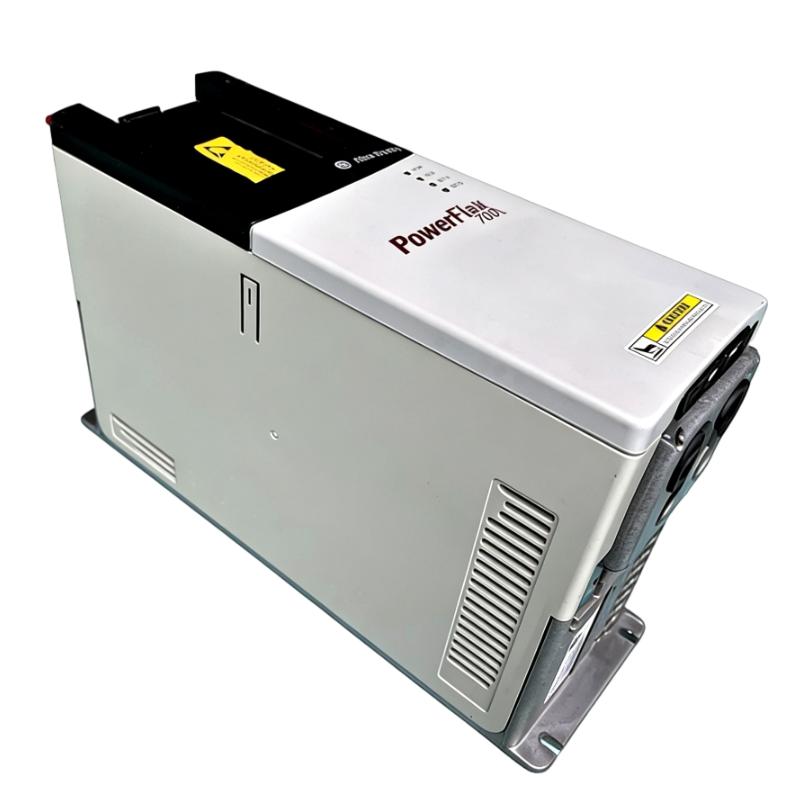
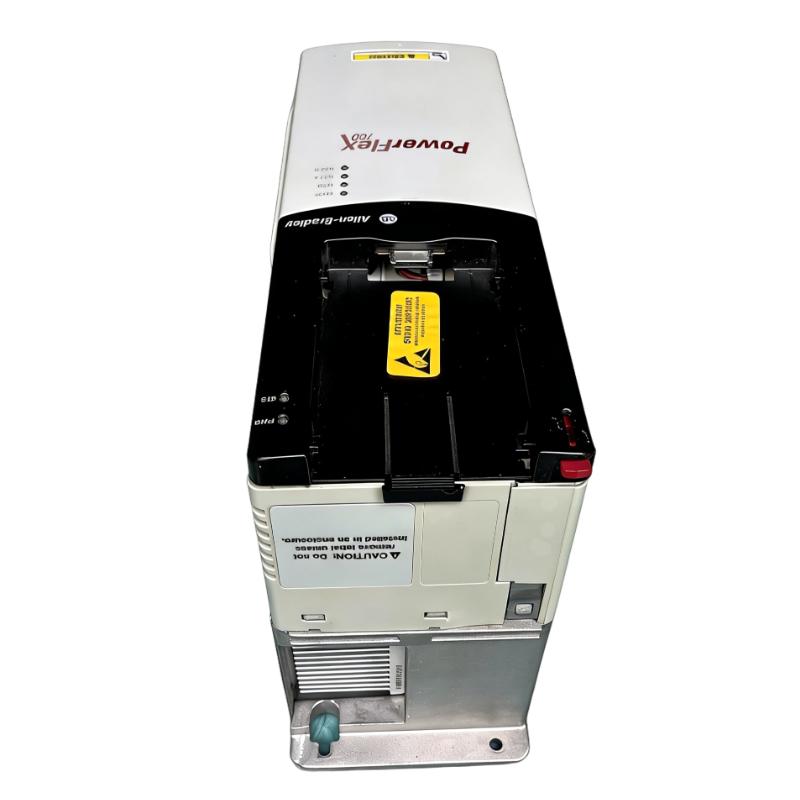
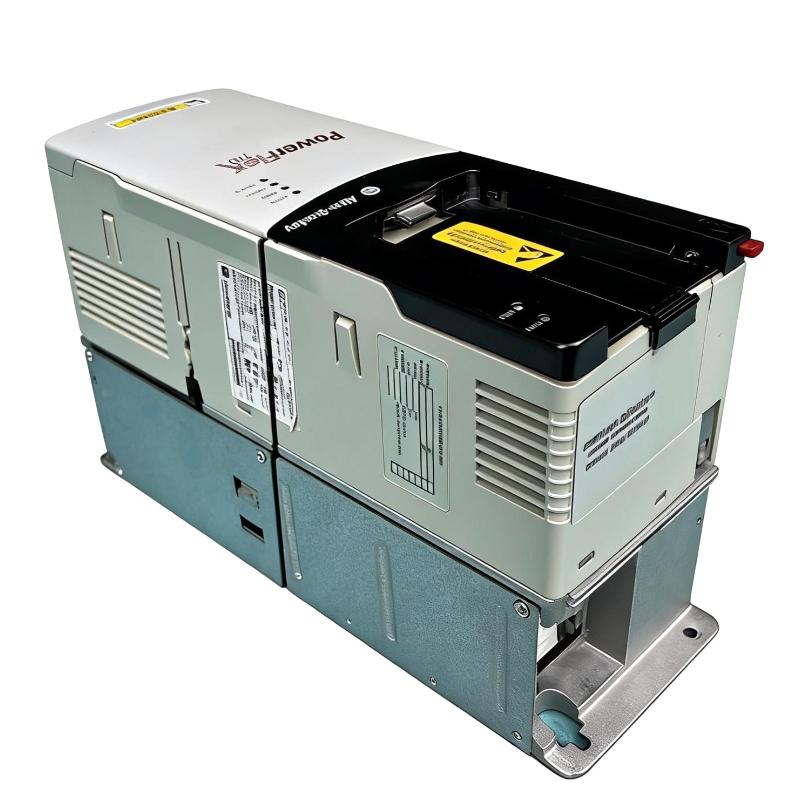
- Allen Bradley
- 20BP292N0NNNNNC0
- PowerFlex AC Drive
- USA
- 757.7 × 889.0 × 381.7 mm
- 173 kg
- Xiamen, China
- New & In Stock
- T/T, PayPal, Western Union
- 1 Year
- 1-3 Working Days
- DHL, UPS, TNT, FedEx and EMS.
- 24-Hour Service
- COO
- 64
Our advantage

Global Logistics
We have a 10-year logistics and express cooperation agreement, so our products can be shipped to any place in the world.

Brand new and original
Our products are imported in bulk from the place of origin. Because of the cooperative relationship, our products are all original and 100% new.

24-hour service
We provide 7*24 hours service to our customers. We will be there whenever you need us.

Price advantage
All our products are priced very favorably because we have our own warehouse and supply.
| Company Information | |||
| [email protected] | |||
| Mobile | +8615980777398 | ||
| +8615980777398 | |||
| 15980777398 |
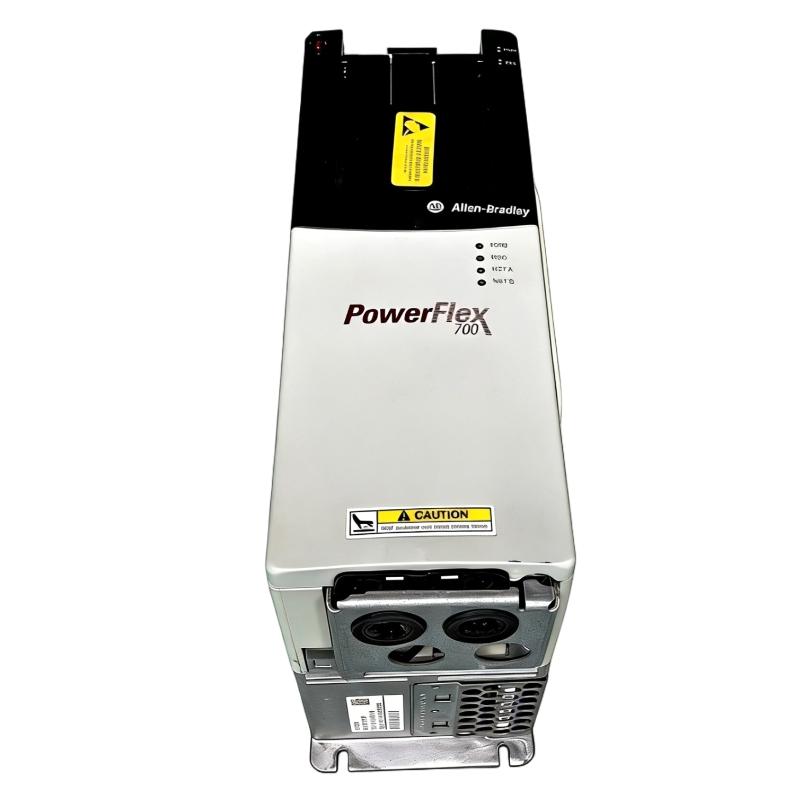
Allen-Bradley 20BP292N0NNNNNC0
Detailed Product Specifications, Product Introduction, Applications, Advantages and Model Recommendations
1. Product Overview
The Allen-Bradley 20BP292N0NNNNNC0 is a high-power industrial variable frequency drive belonging to the PowerFlex 700, 20B series.
It is a 540 VDC-input PowerFlex 700 drive with DC pre-charge, designed for large industrial motor applications where high output current, controlled acceleration, stable motor speed, and reliable operation are required.
The model has a 292 A continuous output-current rating and is rated at approximately 160 kW for Normal Duty and 150 kW for Heavy Duty applications.
Unlike an ordinary AC-input variable frequency drive, this model uses a DC input architecture. This makes it particularly suitable for systems where a suitable DC bus is already available, including common-DC-bus installations and specialized industrial power systems.
The complete catalog number is 20BP292N0NNNNNC0. The suffix identifies a specific configuration with no HIM keypad, no brake IGBT, no drive-mounted brake resistor, no CE-compliant filter, no internal communication module, vector control with 24 V I/O, and no encoder feedback.
This configuration is therefore relatively straightforward in terms of integrated options. It is intended for applications where the required braking, communications, and motor-feedback functions are either not required or are handled separately within the overall control system.
2. Brand and Product Series
| Item | Specification |
|---|---|
| Brand | Allen-Bradley |
| Product family | PowerFlex |
| Product series | PowerFlex 700 |
| Series designation | 20B |
| Model | 20BP292N0NNNNNC0 |
| Product type | Variable Frequency Drive / Adjustable Frequency AC Drive |
| Input architecture | DC input |
| DC input class | 540 VDC |
| Pre-charge | Yes |
| Output current | 292 A |
| Normal Duty rating | 160 kW |
| Heavy Duty rating | 150 kW |
| Control | Vector Control |
| I/O | 24 V I/O |
| Feedback | No Feedback |
| HIM | No HIM / Blank Plate |
| Brake IGBT | None |
| Drive-mounted brake resistor | None |
| EMC filter | Without CE-compliant filter |
| Communication module | None |
| Enclosure configuration | IP00 / NEMA/UL Type Open |
| Frame | Frame 7 |
| Cooling | Forced-air cooling |
| Typical application | Large industrial motor control |
3. Main Technical Parameters
| Parameter | 20BP292N0NNNNNC0 |
|---|---|
| Model | 20BP292N0NNNNNC0 |
| Brand | Allen-Bradley |
| Product family | PowerFlex |
| Series | PowerFlex 700 |
| Series code | 20B |
| Input type | DC |
| Nominal DC input voltage | 540 VDC |
| DC input configuration | DC input with pre-charge |
| Continuous output current | 292 A |
| 1-minute output current | Approximately 322 A |
| 3-second output current | Approximately 438 A |
| Normal Duty power | 160 kW |
| Heavy Duty power | 150 kW |
| Normal Duty horsepower class | Approximately 215 HP |
| Heavy Duty horsepower class | Approximately 200 HP |
| Control method | Vector control |
| I/O voltage | 24 V |
| Encoder feedback | None |
| HIM | No HIM / blank plate |
| Brake IGBT | No |
| Internal brake resistor | No |
| Communication module | No |
| CE-compliant filter | No |
| Enclosure | IP00 / NEMA/UL Type Open |
| Frame | 7 |
| Approx. width | 509.3 mm |
| Approx. height | 1498.6 mm |
| Approx. depth | 354.3 mm |
| Approx. drive weight | 147 kg |
| Approx. packaged weight | 173 kg |
| Cooling | Forced-air |
| Installation | Industrial cabinet / open-type enclosure |
| Typical motor class | Large industrial motors |
| Typical operating environment | Industrial control systems |
4. Electrical Rating
The most important electrical characteristic of the 20BP292N0NNNNNC0 is its 292 A continuous output rating.
The drive also provides higher short-duration current capability.
| Current Rating | Approximate Value |
|---|---|
| Continuous current | 292 A |
| 1-minute current | 322 A |
| 3-second current | 438 A |
The continuous 292 A rating is suitable for substantial industrial motors, while the higher short-duration capability provides additional capacity during acceleration and temporary load increases.
This is particularly useful for machines with significant inertia.
For example, a large conveyor may require more torque during startup than it requires once the belt reaches its normal operating speed.
A large fan, pump, mixer, mill, or other rotating machine can have a similar operating profile.
The drive’s short-term overload capability provides additional operating margin, although the actual motor selection must always be based on motor nameplate current, application duty, overload requirements, ambient temperature, acceleration time, and other installation conditions.
5. Normal Duty and Heavy Duty Ratings
The 20BP292N0NNNNNC0 has two important power classifications.
| Duty | Rating |
|---|---|
| Normal Duty | 160 kW |
| Heavy Duty | 150 kW |
| Approx. Normal Duty horsepower | 215 HP |
| Approx. Heavy Duty horsepower | 200 HP |
Normal Duty is generally associated with applications where the load is comparatively moderate and the drive does not have to provide substantial overload current on a frequent basis.
Heavy Duty applications normally involve more demanding torque requirements, frequent acceleration, heavier mechanical loading, or greater overload requirements.
For that reason, the 160 kW figure should not be interpreted as meaning that every 160 kW motor can automatically be connected to this drive.
The correct selection should be based on the motor’s actual full-load current and the mechanical duty of the machine.
6. DC Input and Pre-Charge Configuration
One of the most important features of the model is its 540 VDC input.
This makes it different from the more familiar three-phase AC-input PowerFlex 700 configurations.
A DC-input drive is useful in systems where the DC bus is generated elsewhere or where several drives are connected to a common DC power architecture.
The pre-charge function is also important because large DC-link capacitors can draw a very high inrush current if they are connected directly to the DC source without suitable current limiting.
The pre-charge arrangement controls this initial charging process and helps protect the power components and the upstream DC system.
For this reason, the 20BP292 should be considered as part of a complete DC power system rather than as an isolated device.
7. Model Number Explanation
The catalog number 20BP292N0NNNNNC0 contains several configuration identifiers.
| Catalog Number Section | General Meaning |
|---|---|
| 20B | PowerFlex 700 series |
| P | 540 VDC input with pre-charge |
| 292 | 292 A output rating |
| N0 | No HIM / blank plate |
| N | No brake IGBT |
| N | No drive-mounted brake resistor |
| N | Without CE-compliant filter |
| N | No internal communication module |
| C | Vector control with 24 V I/O |
| 0 | No feedback |
The complete catalog number is important because two drives with the same 292 A base rating may have different options.
For replacement work, it is therefore better to match the complete model number rather than selecting a drive based only on the 20BP292 portion.
8. Product Introduction
The 20BP292N0NNNNNC0 is a large industrial motor-control unit designed to regulate the speed and torque of AC motors.
The basic principle is straightforward.
The drive receives DC electrical power, processes that energy through its power-conversion section, and produces a controlled three-phase output for the motor.
By adjusting the output frequency and voltage according to the selected control method, the drive can regulate motor speed.
This provides much greater flexibility than simply connecting the motor directly to a fixed-frequency electrical supply.
For industrial equipment, this means the motor can accelerate gradually, operate at different speeds, and decelerate under controlled conditions.
The result can be smoother machine operation and better coordination between the motor and the production process.
9. Vector Control
The 20BP292N0NNNNNC0 uses vector control with 24 V I/O.
Vector control is particularly useful when the application requires better motor response than a basic V/Hz control strategy can provide.
Instead of treating the motor primarily as a frequency-dependent load, vector control provides a more sophisticated method of controlling the motor’s magnetic flux and torque-producing components.
This can improve torque response and speed regulation.
Applications such as conveyors, mixers, process machinery, and other variable-load equipment can benefit from this type of control.
The specific model does not include encoder feedback, so it is a sensorless/vector configuration rather than an encoder-feedback configuration.
This can simplify installation because an encoder cable and motor-mounted encoder are not required for the drive configuration.
10. Applications
10.1 Large Conveyor Systems
Large conveyors are one of the most suitable applications for a drive in this power class.
A conveyor can have substantial mechanical inertia, especially when it is carrying heavy material.
Starting a large conveyor motor directly can result in high starting current and mechanical shock.
Using a variable frequency drive allows the motor to accelerate progressively.
This reduces the sudden mechanical impact on belts, shafts, couplings, gearboxes, and other drive components.
The drive can also allow conveyor speed to be adjusted according to production requirements.
10.2 Material Handling
Large material-handling machines often require controlled speed and substantial torque.
Examples include:
- Bulk-material conveyors
- Aggregate handling equipment
- Industrial transport systems
- Loading and unloading machinery
- Large transfer systems
- Processing-line conveyors
The 20BP292’s 292 A current rating gives it enough capacity for many large material-handling motors.
10.3 Pumps
Large pumps can benefit considerably from variable-speed control.
Instead of operating the pump continuously at full motor speed, the drive can adjust speed according to the required process flow.
This can improve process control and, in suitable variable-flow systems, reduce unnecessary energy consumption.
Typical applications include:
- Industrial water circulation
- Cooling-water systems
- Process-fluid systems
- Wastewater equipment
- Large pumping stations
- Industrial circulation systems
10.4 Fans and Blowers
Large fans and blowers can also be controlled using this type of drive.
Industrial ventilation systems often have changing airflow requirements.
When full airflow is unnecessary, the motor can operate at a lower speed.
This provides a more flexible method of controlling airflow than simply operating the motor at full speed all the time.
Typical applications include:
- Factory ventilation
- Dust extraction
- Process exhaust
- Industrial air handling
- Large cooling systems
- Combustion-air systems
10.5 Mixers
Large industrial mixers can experience changing mechanical loads as material is added or removed.
A variable frequency drive can provide controlled acceleration and maintain the required operating speed.
Vector control is useful where the mixer needs a more stable response to changing torque demand.
10.6 Mills and Process Machinery
Large mills, rollers, grinders, crushers, and other process machines may require significant motor power.
These machines can also have high inertia and rapidly changing mechanical loads.
A high-power vector drive can provide controlled acceleration, stable running speed, and appropriate torque response.
The exact suitability depends on the machine’s torque curve and the motor’s rated current.
10.7 Compressors
Large compressors may require controlled acceleration because of their mechanical inertia and starting load.
A drive can reduce the electrical and mechanical stress associated with starting.
For compressor applications, however, the drive must be selected according to the compressor type, motor current, speed range, starting requirements, and process-control strategy.
11. Main Product Advantages
11.1 High 292 A Output Capacity
The 292 A continuous rating is the primary reason to use this drive.
It is intended for large industrial motors rather than small machine motors.
The drive is capable of handling substantially higher power than compact industrial inverters.
11.2 High Power Rating
The approximately 160 kW Normal Duty rating places the product in the large industrial-drive category.
This makes it appropriate for machines requiring considerable mechanical power.
It can therefore serve applications where smaller drives would not have enough output-current capacity.
11.3 DC-Bus Architecture
The 540 VDC input arrangement is useful for industrial systems based around a DC bus.
This can simplify the overall power architecture when several drives share a common DC supply.
It can also make the drive suitable for specialized systems in which DC power is already available.
11.4 Pre-Charge Function
The integrated pre-charge architecture helps manage the initial charging of the drive’s DC-link capacitors.
This is particularly important on a drive of this size because the DC-link capacitance is substantial.
Proper pre-charge control helps limit inrush current and provides a more controlled startup of the drive’s power section.
11.5 Vector Control
Vector control provides better motor performance than basic scalar control in applications requiring good speed regulation and torque response.
This can be particularly helpful for:
- Conveyors
- Mixers
- Process machinery
- Material handling
- Variable-load equipment
11.6 No Encoder Required
The selected configuration has no feedback device.
This can be useful when the application does not require closed-loop encoder feedback.
It eliminates the need for an encoder installation and associated feedback wiring.
For applications where precise positioning or extremely tight speed regulation is not required, a sensorless vector arrangement can be a practical solution.
11.7 24 V I/O
The 24 V I/O configuration is suitable for conventional industrial control architectures.
Start, stop, enable, fault, status, interlock, and other control signals can be incorporated into a 24 V control system.
11.8 Large Industrial Construction
The Frame 7 construction provides the physical and thermal capacity needed for a drive in this current range.
It is designed for installation as part of a larger industrial control cabinet or suitable open-type enclosure.
12. Dimensions and Weight
The physical size of the 20BP292N0NNNNNC0 is an important consideration.
The model is associated with Frame 7 and the IP00/NEMA/UL Type Open configuration.
| Mechanical Parameter | Approximate Specification |
|---|---|
| Frame | Frame 7 |
| Enclosure | IP00 / NEMA/UL Type Open |
| Width | 509.3 mm |
| Height | 1498.6 mm |
| Depth | 354.3 mm |
| Drive weight | 147 kg |
| Packaged weight | 173 kg |
| Installation | Industrial cabinet / open-type enclosure |
| Cooling | Forced-air |
| Mounting | Industrial fixed installation |
The dimensions are large enough that the product should be planned as a cabinet-level industrial component rather than a compact wall-mounted inverter.
The approximate 147 kg drive weight also requires suitable handling equipment during installation and replacement.
The packaged weight is approximately 173 kg.
The actual installation envelope should allow additional space for cable entry, airflow, maintenance access, lifting equipment, and heat dissipation.
13. Enclosure and Environmental Considerations
The N0 configuration is associated with an IP00 / NEMA/UL Type Open construction.
This means the drive itself should not be regarded as a completely enclosed industrial product.
It needs to be installed within a suitable electrical cabinet or controlled environment where the required level of protection can be achieved.
The enclosure should take into account:
- Dust
- Moisture
- Conductive contamination
- Ambient temperature
- Airflow
- Heat dissipation
- Service access
- Electrical clearance
- Cable routing
The drive’s cooling airflow should not be blocked.
High-power semiconductor devices produce considerable heat, so cabinet ventilation is a major part of a successful installation.
14. Five Recommended Models from the Same Series or Closely Related Models
The following models are useful for comparison with the 20BP292 because they belong to the same PowerFlex 700 20B family or are closely related high-power configurations.
| Model | Series | Input | Output Current | Normal Duty | Heavy Duty | Control | Feedback | Approx. Dimensions | Weight |
|---|---|---|---|---|---|---|---|---|---|
| 20BP260N0NNNNNC0 | PowerFlex 700 / 20B | 540 VDC | 260 A | Approx. 140 kW class | Approx. 130 kW class | Vector | None | Frame 6/7 class | Approx. 100–150 kg |
| 20BP292N0NNNNNC0 | PowerFlex 700 / 20B | 540 VDC | 292 A | 160 kW | 150 kW | Vector | None | 509.3 × 1498.6 × 354.3 mm | 147 kg |
| 20BP325N0NNNNNC0 | PowerFlex 700 / 20B | 540 VDC | 325 A | Approx. 180 kW class | Approx. 160 kW class | Vector | None | Frame 7 class | Approx. 147 kg |
| 20BP365N0NNNNNC0 | PowerFlex 700 / 20B | 540 VDC | 365 A | Approx. 200 kW class | Approx. 180 kW class | Vector | None | Frame 7/8 class | Approx. 150–300 kg |
| 20BP481N0NNNNNC0 | PowerFlex 700 / 20B | 540 VDC | 481 A | Approx. 250 kW class | Approx. 225 kW class | Vector | None | Large Frame 8 | Approx. 300–400 kg |
These models provide a useful progression around the 292 A rating.
The 20BP260 is appropriate when the motor requirement is somewhat lower.
The 20BP325 provides additional current capacity above the 292 A model.
The 20BP365 and 20BP481 are more appropriate when the application requires additional motor current and power.
However, these models should not be selected purely by horsepower.
Motor nameplate current is generally the more useful starting point when selecting a variable frequency drive.
15. Five Additional Related High-Power Models
| Model | Product Family | Input Class | Output Current | Approx. Power Class | Control | Application Level | Approx. Dimensions | Weight |
|---|---|---|---|---|---|---|---|---|
| 20BR292N0ANNNNC0 | PowerFlex 700 / 20B | 650 VDC | 292 A | Large industrial motor | Vector | Large industrial equipment | Frame 7 | Approx. 147 kg class |
| 20BR325N0ANNNEC0 | PowerFlex 700 / 20B | 650 VDC | 325 A | Large industrial motor | Vector | Heavy-duty machinery | Frame 7 | Approx. 147 kg class |
| 20BR248A0NNNANC0 | PowerFlex 700 / 20B | 650 VDC | 248 A | Large motor | Vector | Process equipment | Frame 6/7 | Approx. 100–150 kg |
| 20BD292N0NNNNNC0 | PowerFlex 700 / 20B | 480 VAC | 292 A | Large motor | Vector | Industrial machinery | Frame 7 | Approx. 147–170 kg |
| 20BD325N0NNNNNC0 | PowerFlex 700 / 20B | 480 VAC | 325 A | Large motor | Vector | Heavy industrial equipment | Frame 7 | Approx. 150–180 kg |
The most important difference among these models is the input architecture.
The 20BP family uses the 540 VDC input class.
The 20BR family uses a higher DC-voltage class.
The 20BD family is based on an AC-input architecture.
Therefore, these models should not be treated as direct replacements without checking the upstream power system.
16. Five Popular or Representative Models from the Same Brand
For a broader product comparison, the following five models represent different drive sizes and product families.
| Model | Product Family | Voltage Class | Current Class | Approx. Power Class | Control | Typical Application | Approx. Dimensions | Weight |
|---|---|---|---|---|---|---|---|---|
| 25B-D010N104 | PowerFlex 525 | 480 VAC class | 10 A class | Small/medium motor | Sensorless vector | Pumps, fans, conveyors, machinery | Compact | Approx. 5–10 kg |
| 25B-D017N114 | PowerFlex 525 | 480 VAC class | 17 A class | Medium motor | Sensorless vector | General machinery | Compact | Approx. 5–10 kg |
| 20F11NC043JA0NNNNN | PowerFlex 753 | 480 VAC class | 43 A class | Medium industrial motor | Vector | Process equipment, conveyors, pumps | Medium | Approx. 20–30 kg |
| 20G11NC043JA0NNNNN | PowerFlex 755 | 480 VAC class | 43 A class | Medium industrial motor | Advanced vector | High-performance machinery | Medium | Approx. 20–30 kg |
| 20G11ND077AA0NNNNN | PowerFlex 755 | 480 VAC class | 77 A class | Larger industrial motor | Advanced vector | Process machinery, conveyors, pumps | Large | Approx. 40–70 kg |
These five products cover a much wider range of motor applications.
The 20BP292 is substantially larger and is intended for applications where approximately 292 A of motor current is required.
The smaller PowerFlex 525 models are intended for completely different motor sizes and should not be considered direct replacements.
17. Comparison of Nearby 20BP Models
| Model | Current | Relative Capacity | Suitable Motor Level | Frame Class | Approx. Weight |
|---|---|---|---|---|---|
| 20BP260 | 260 A | Lower than 292 A | Large motor | 6/7 | Approx. 100–150 kg |
| 20BP292 | 292 A | Reference | Large motor | 7 | 147 kg |
| 20BP325 | 325 A | Higher than 292 A | Large motor | 7 | Approx. 147 kg class |
| 20BP365 | 365 A | Significantly higher | Large industrial motor | 7/8 | Approx. 150–300 kg |
| 20BP481 | 481 A | Much higher | Very large industrial motor | 8 | Approx. 300–400 kg |
The 292 A version is a useful middle point in this portion of the DC-input PowerFlex 700 range.
When an existing machine uses a 292 A drive, moving to a larger current rating is not automatically an upgrade.
A higher-rated drive can have different physical dimensions, cooling requirements, protection requirements, cable requirements, and parameter settings.
The motor and machine should therefore be evaluated as a complete system.
18. 20BP292 Compared with 20BR292
The 20BP292 and 20BR292 look very similar in their current rating, but their input-voltage classes are different.
| Parameter | 20BP292 | 20BR292 |
|---|---|---|
| Product family | PowerFlex 700 | PowerFlex 700 |
| Series | 20B | 20B |
| Input type | DC | DC |
| DC voltage class | 540 VDC | 650 VDC |
| Output current | 292 A | 292 A |
| Control | Vector | Vector |
| Typical use | 540 VDC bus systems | Higher-voltage DC bus systems |
| Physical class | Frame 7 | Frame 7 |
| Approx. dimensions | 509.3 × 1498.6 × 354.3 mm | Frame 7 class |
| Approx. weight | 147 kg | Approx. 147 kg class |
The two products therefore have similar current capacity but are intended for different DC-bus voltage systems.
This is an important point when selecting replacement equipment.
The available DC bus voltage should be confirmed before considering either model.
19. 20BP292 Compared with 20BD292
Another useful comparison is between the DC-input 20BP292 and the AC-input 20BD292.
| Parameter | 20BP292 | 20BD292 |
|---|---|---|
| Input architecture | DC | AC |
| Input class | 540 VDC | 480 VAC class |
| Output current | 292 A | 292 A |
| Series | PowerFlex 700 / 20B | PowerFlex 700 / 20B |
| Control | Vector | Vector |
| Feedback | Configuration dependent | Configuration dependent |
| Application | DC-bus systems | Conventional AC-input systems |
| Frame | 7 | 7 |
| Approx. weight | 147 kg class | Similar large-frame class |
| Direct electrical replacement | No | No |
Although the output current is the same, the input systems are different.
Therefore, replacing one with the other requires an evaluation of the complete electrical architecture.
20. Communication and Feedback Configuration
The 20BP292N0NNNNNC0 does not include an internal communication module.
This means that communication requirements must be considered separately.
The same applies to encoder feedback.
The model has no feedback option.
This configuration can be advantageous when the motor is operated in a sensorless vector mode and the application does not require encoder feedback.
For high-precision speed regulation or applications requiring closed-loop control, another configuration may be more appropriate.
The choice should depend on the actual machine requirements rather than simply selecting the most feature-rich configuration.
21. Braking Configuration
The model is configured without an internal brake IGBT and without a drive-mounted brake resistor.
This means the drive is not configured as an integrated dynamic-braking package.
For applications with high-inertia loads that need rapid deceleration, the braking requirements should therefore be evaluated separately.
A conveyor, fan, pump, or other machine may have very different deceleration characteristics.
If the machine must stop rapidly, the energy returned by the motor during deceleration has to be managed correctly.
For regenerative applications, a suitable system architecture is required rather than simply assuming that the standard drive configuration can absorb all regenerated energy.
22. Installation and Cabinet Requirements
Because the drive is approximately 147 kg, installation requires proper mechanical support.
The cabinet structure should be capable of supporting the drive and the associated busbars, cables, and accessories.
The approximate 509.3 mm width and 1498.6 mm height also mean that the enclosure needs to be designed around the drive’s actual dimensions.
Additional space should be provided for:
- Power cables
- DC bus connections
- Motor output cables
- Control wiring
- Cooling airflow
- Maintenance access
- Safe electrical clearances
- Service tools
- Lifting and removal procedures
The drive should not be installed tightly against other heat-generating equipment.
Adequate airflow is essential for reliable operation.
23. Maintenance Considerations
The DC bus is one of the most important safety considerations for this product.
Large DC-link capacitors can retain dangerous electrical energy after the external power supply has been disconnected.
For maintenance work, the appropriate isolation and lockout procedures must be followed.
The DC bus voltage must be verified to have fallen to a safe level before personnel work on the power section.
Because the unit weighs approximately 147 kg, mechanical handling is also an important maintenance issue.
Suitable lifting equipment should be used when removing or replacing the drive.
The control electronics, cooling system, power terminals, capacitors, fans, and associated components should all be inspected according to the maintenance requirements of the particular installation.
24. Typical Industrial Benefits
| Benefit | Practical Effect |
|---|---|
| 292 A output | Handles large industrial motors |
| 160 kW Normal Duty | Suitable for substantial continuous loads |
| 150 kW Heavy Duty | Suitable for demanding applications |
| 540 VDC input | Fits DC-bus industrial architectures |
| Pre-charge | Controls initial DC-link charging |
| Vector control | Better torque and speed response |
| No encoder required | Simplifies sensorless installations |
| 24 V I/O | Convenient industrial control interface |
| Large Frame 7 design | Suitable for high-power applications |
| Controlled acceleration | Reduces mechanical shock |
| Controlled deceleration | Improves stopping behavior |
| Variable speed | Allows machine speed to follow process demand |
| Large current reserve | Useful for transient load conditions |
| Modular PowerFlex architecture | Convenient for existing installations |
25. Suitable Application Types
The 20BP292N0NNNNNC0 is particularly well suited to applications such as:
| Application | Suitability | Main Requirement |
|---|---|---|
| Large conveyor | Very suitable | High torque and controlled acceleration |
| Bulk material handling | Very suitable | Large motor and variable speed |
| Large pump | Suitable | Variable flow control |
| Large fan | Suitable | Variable airflow |
| Industrial blower | Suitable | Large motor speed control |
| Mixer | Suitable | Changing torque |
| Mill | Suitable after engineering review | High load and inertia |
| Crusher | Suitable after engineering review | High starting torque |
| Compressor | Suitable after engineering review | High starting and running load |
| Hoist | Requires detailed engineering | Braking and safety functions |
| Small fan | Not suitable | Excessive drive capacity |
| Small pump | Not suitable | Drive is significantly oversized |
26. Advantages and Limitations
| Category | Advantage | Consideration |
|---|---|---|
| Power | 292 A output | Requires large electrical infrastructure |
| Motor capacity | Up to 160 kW Normal Duty class | Must check actual motor current |
| Input | 540 VDC | Requires compatible DC bus |
| Control | Vector control | Correct motor parameters are important |
| Feedback | Sensorless configuration | Not ideal where encoder feedback is essential |
| Braking | Simple configuration | External braking solution may be needed |
| Communication | No internal communication module | External architecture may be required |
| Installation | Large industrial frame | Requires substantial cabinet space |
| Weight | 147 kg | Mechanical lifting required |
| Enclosure | Open-type configuration | Requires suitable external enclosure |
| Cooling | Forced-air | Cabinet ventilation must be adequate |
| Maintenance | Industrial architecture | High-voltage DC safety procedures required |
27. Overall Product Assessment
The Allen-Bradley 20BP292N0NNNNNC0 is a high-power PowerFlex 700 20B-series variable frequency drive designed for large industrial motor applications.
Its main specifications are a 540 VDC input, 292 A continuous output, approximately 160 kW Normal Duty, approximately 150 kW Heavy Duty, vector control, 24 V I/O, and a no-feedback configuration.
The model also has no HIM keypad, no internal brake IGBT, no drive-mounted brake resistor, no CE-compliant filter, and no internal communication module.
This configuration makes the drive relatively straightforward for applications where these functions are not required or are provided elsewhere.
The Frame 7 mechanical design gives the product the physical capacity necessary for this level of electrical power.
The approximate dimensions are 509.3 mm wide × 1498.6 mm high × 354.3 mm deep, while the approximate drive weight is 147 kg and the packaged weight is approximately 173 kg.
The physical dimensions and weight should be taken seriously during cabinet design, transportation, installation, and maintenance.
The drive is especially appropriate for large conveyors, material-handling equipment, pumps, fans, blowers, mixers, mills, compressors, and other industrial machines requiring substantial motor power and controlled variable-speed operation.
The 540 VDC input is one of its defining characteristics.
It should therefore be selected only when the upstream DC power system is compatible with the drive.
The model should not be confused with similarly rated AC-input or higher-voltage DC-input versions.
For replacement applications, the complete catalog number 20BP292N0NNNNNC0 should be checked against the existing drive, including its input architecture, current rating, control mode, feedback configuration, braking requirements, communication requirements, enclosure arrangement, and physical dimensions.
Overall, the 20BP292N0NNNNNC0 can be described as a large-frame, 292 A, 540 VDC-input, vector-controlled industrial variable frequency drive designed for approximately 150–160 kW-class motor applications.
Its strongest characteristics are its high current capacity, DC-bus architecture, pre-charge capability, vector control, 24 V industrial I/O, and suitability for large machinery requiring controlled speed and torque.
For a properly matched application, it provides a practical combination of high-power motor control, controlled acceleration and deceleration, and flexible industrial operation.