

ProductPRODUCT
Featured products
Contact Us
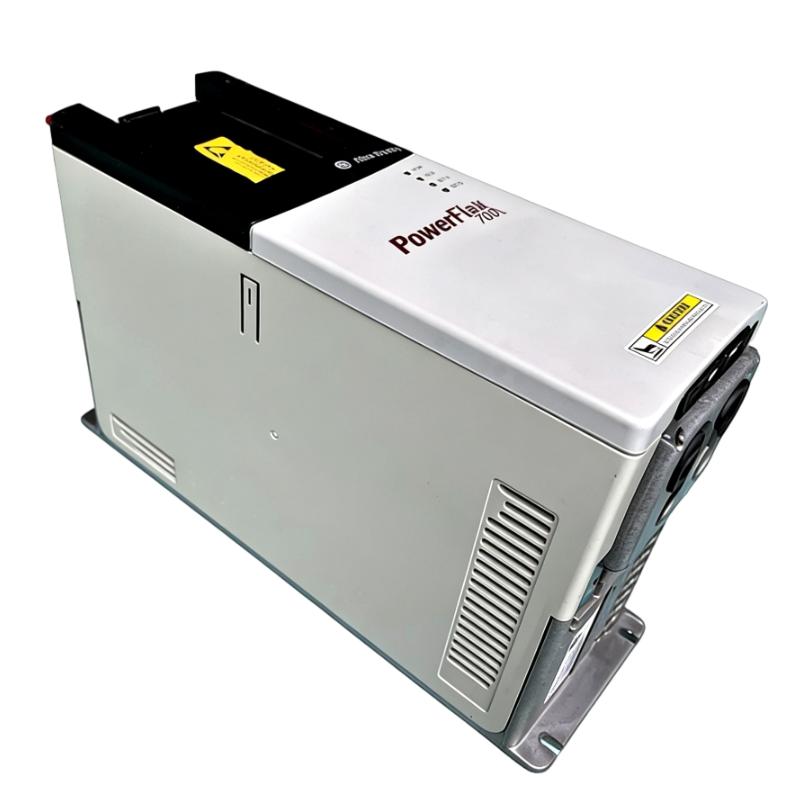
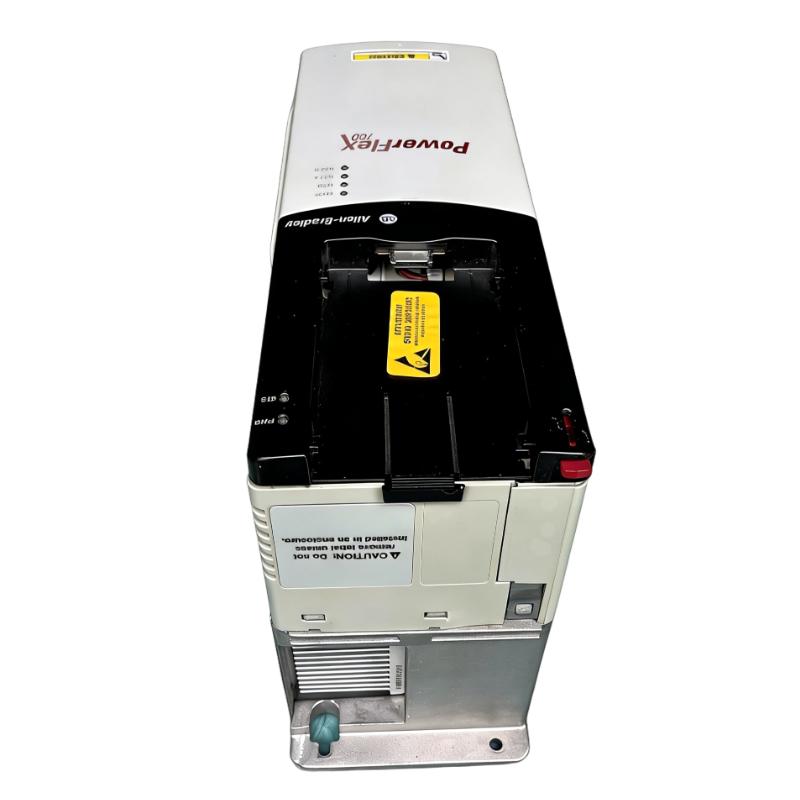
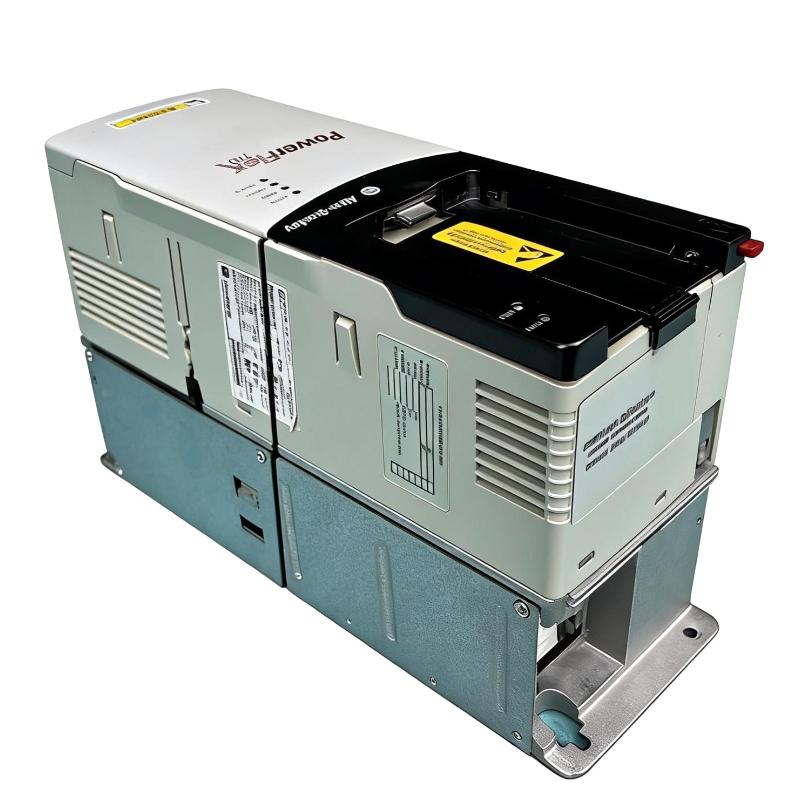
- Allen Bradley
- 20BC325N3ANNNNC0
- PowerFlex AC Drive
- USA
- 310mm x 220mm x 120mm
- 14.5kg
- Xiamen, China
- New & In Stock
- T/T, PayPal, Western Union
- 1 Year
- 1-3 Working Days
- DHL, UPS, TNT, FedEx and EMS.
- 24-Hour Service
- COO
- 45
Our advantage

Global Logistics
We have a 10-year logistics and express cooperation agreement, so our products can be shipped to any place in the world.

Brand new and original
Our products are imported in bulk from the place of origin. Because of the cooperative relationship, our products are all original and 100% new.

24-hour service
We provide 7*24 hours service to our customers. We will be there whenever you need us.

Price advantage
All our products are priced very favorably because we have our own warehouse and supply.
| Company Information | |||
| [email protected] | |||
| Mobile | +8615980777398 | ||
| +8615980777398 | |||
| 15980777398 |
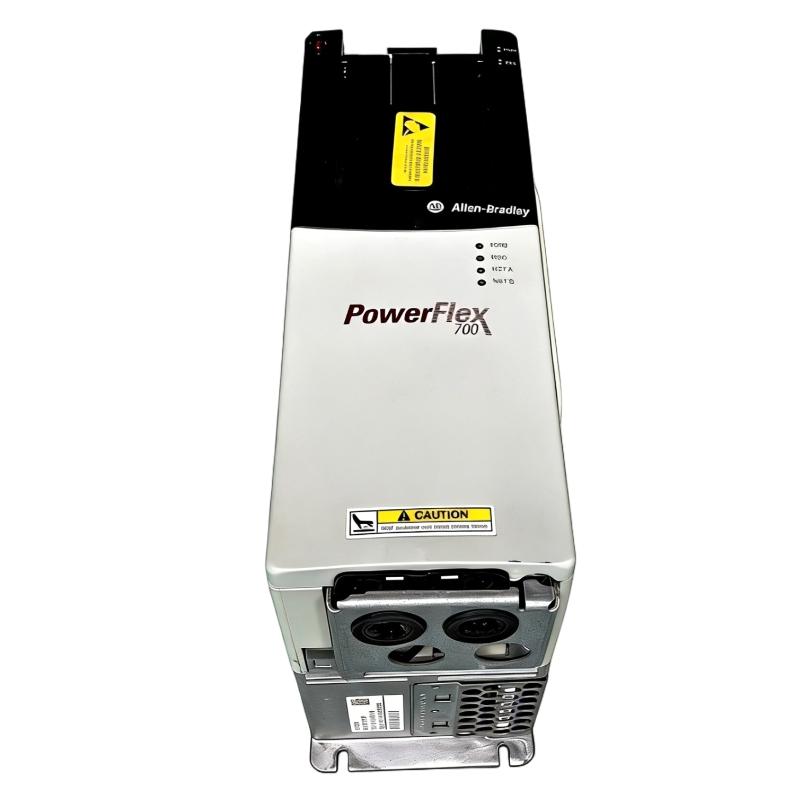
Allen-Bradley 20BC325N3ANNNNC0 — Detailed Product Introduction, Specifications, Applications and Model Recommendations
1. Product Overview
The 20BC325N3ANNNNC0 is a high-power adjustable-frequency AC drive from the PowerFlex 700 series under the Allen-Bradley brand.
This model is designed for demanding industrial motor-control applications where a large three-phase AC motor needs controlled starting, adjustable speed, controlled acceleration and deceleration, and stable torque regulation.
The most important characteristics of this model are its 480 VAC class three-phase input, 325 A current rating, approximately 250 HP / 186 kW power class, vector control with 24 V DC I/O, Frame 7 construction and open/IP00 mounting concept. Closely related catalog configurations in the same 325 A class are documented with these electrical characteristics.
The model is particularly appropriate for large industrial machines such as conveyors, pumps, fans, compressors, mixers, process equipment and material-handling systems.
Unlike a small machine inverter, this is a large industrial drive intended to be incorporated into a properly engineered electrical installation. The cabinet, ventilation, protection, grounding, cable routing and maintenance access are all important parts of the overall system.
The N3 configuration is also significant because it is associated with a high-power 480 V configuration and vector-control architecture. Similar N3 configurations in the same 325 A family are listed with vector control and 24 V DC control I/O.
2. Brand and Product Series
| Item | Details |
|---|---|
| Model | 20BC325N3ANNNNC0 |
| Brand | Allen-Bradley |
| Product Series | PowerFlex 700 |
| Product Category | Adjustable Frequency AC Drive |
| Product Type | Industrial Variable Frequency Drive |
| Main Function | AC motor speed and torque control |
| Voltage Class | 480 VAC class |
| Phase | 3-phase |
| Current Rating | 325 A |
| Power Class | Approximately 250 HP / 186 kW |
| Control Method | Vector control |
| Control I/O | 24 V DC |
| Frame | Frame 7 class |
| Enclosure Concept | Open / IP00 type |
| Intended Installation | Electrical control cabinet / industrial panel |
| Application Level | Large industrial machinery |
The PowerFlex 700 series is positioned as a higher-power industrial AC-drive family rather than a compact machine-level inverter.
For this reason, the 20BC325N3ANNNNC0 is best understood as a drive for substantial industrial motors and production equipment rather than small standalone machines.
3. Main Technical Parameters
| Parameter | 20BC325N3ANNNNC0 |
|---|---|
| Model | 20BC325N3ANNNNC0 |
| Brand | Allen-Bradley |
| Series | PowerFlex 700 |
| Product Type | Adjustable Frequency AC Drive |
| Input Voltage | 480 VAC class |
| Input Phase | 3-phase |
| Output Phase | 3-phase |
| Input Frequency | 50/60 Hz class |
| Rated Current | 325 A |
| Approx. Power Rating | 250 HP / 186 kW |
| Motor Control | Vector control |
| Control I/O | 24 V DC |
| Frame Size | Frame 7 |
| Enclosure Type | Open / IP00 |
| Brake IGBT | Not included in this configuration |
| Internal Brake Resistor | Not included |
| Communication Module | Not included in the referenced configuration |
| Feedback Option | Not included |
| EMC Filter | Configuration dependent; this configuration is listed without EMC filter / common-mode choke |
| HIM | Configuration dependent |
| Mounting | Cabinet / panel |
| Cooling | Forced-air industrial cooling |
| Approx. Weight | Approx. 14.5 kg as listed for the corresponding N3 325 A catalog configuration; verify exact shipping and assembly weight before handling |
| Dimensions | Frame 7; exact H × W × D should be verified from the mechanical drawing for the exact catalog suffix before cabinet fabrication |
| Typical Motor Range | Large industrial motors |
| Typical Duty | Industrial continuous-duty / variable-speed applications |
The available product information for a closely matching 20BD325N3ANNNNC0 configuration lists 480 VAC, three-phase, 325 A, 250 HP / 186 kW, vector control with 24 V DC, and a listed weight of approximately 14.51 kg.
There is an important engineering point regarding dimensions and weight: high-power drive catalog numbers can contain different mounting, enclosure and option configurations. Therefore, an exact dimensional value should not be fabricated when the exact mechanical drawing for 20BC325N3ANNNNC0 has not been confirmed.
For equipment planning, this model should be treated as a large Frame 7 industrial drive, and the exact height, width and depth should be confirmed against the nameplate and mechanical drawing of the physical unit before cabinet production.
4. Understanding the 20BC325N3ANNNNC0 Model
The catalog number contains several pieces of configuration information.
| Catalog Number Section | General Interpretation |
|---|---|
| 20B | PowerFlex 700 family |
| C | Voltage-family designation |
| 325 | 325 A current class |
| N3 | Control / configuration designation |
| A | Configuration position |
| NNNN | Additional option positions |
| C0 | Final configuration designation |
The most useful practical identification is:
PowerFlex 700 / 480 VAC class / 325 A / approximately 250 HP / 186 kW / vector control / 24 V DC I/O / Frame 7.
Catalog-number interpretation should always be done as a complete string. Individual characters should not be interpreted independently when determining replacement compatibility, because braking, feedback, communication, filtering, operator-interface and enclosure options can change from one configuration to another.
5. Product Introduction
The 20BC325N3ANNNNC0 is designed to regulate the operating behavior of a large AC motor.
In a conventional direct-on-line starting arrangement, a motor is connected directly to the incoming electrical supply. The motor then accelerates according to its electrical and mechanical characteristics.
A variable-frequency drive changes this arrangement by electronically controlling the electrical power supplied to the motor.
This allows the motor to start progressively, operate at different speeds and decelerate according to programmed requirements.
For large motors, these capabilities can have a significant impact on the machine.
A conveyor can accelerate gradually instead of applying a sudden mechanical load.
A pump can change speed according to process demand.
A fan can operate at reduced speed when maximum airflow is unnecessary.
A mixer can start slowly before reaching its production speed.
A compressor can use controlled acceleration rather than relying solely on direct starting.
This makes the drive a key component of the complete motor-control system rather than simply an electronic replacement for a motor starter.
6. Vector Control
One of the important characteristics of the model is its vector-control architecture.
Vector control is intended to provide more sophisticated control of motor flux, torque and speed than basic scalar V/Hz control.
This becomes especially useful when the motor is subjected to changing loads.
For example, a conveyor may be lightly loaded at one moment and heavily loaded later. A mixer can experience a large change in material resistance. A pump can encounter changing process conditions.
With vector control, the drive can respond to these changing operating conditions more effectively.
The practical benefits can include:
- Better speed regulation.
- Improved torque response.
- Smoother acceleration.
- More controlled deceleration.
- Better behavior under changing loads.
- Improved low-speed operation in appropriate applications.
- More stable operation of large industrial machines.
7. 325 A Current Capacity
The 325 A rating is one of the defining characteristics of this model.
This places the drive in a high-current industrial category.
A 325 A drive is intended for substantially larger motors than compact machine drives.
At this power level, selecting a drive based only on motor horsepower is not recommended.
The motor’s actual rated current, overload requirement, operating duty, speed range, ambient temperature and application characteristics should all be considered.
For an existing installation, the motor nameplate should be checked carefully before selecting the replacement drive.
8. Approximately 250 HP / 186 kW Power Class
The 325 A N3 configuration is associated with a power rating of approximately 250 HP, or 186 kW, in the corresponding 480 V configuration.
This makes the drive appropriate for large industrial machinery.
Typical applications at this level include:
- Large conveyors.
- Industrial pumps.
- Large ventilation fans.
- Blowers.
- Compressors.
- Crushers.
- Mixers.
- Material-handling equipment.
- Process machinery.
- Large production lines.
The actual motor selection must still be based on current and duty requirements rather than relying solely on the nominal horsepower number.
9. Product Applications
9.1 Conveyor Systems
Large conveyors can benefit significantly from variable-speed control.
A conveyor carrying a heavy material load can require substantial starting torque.
Starting the motor abruptly can place stress on:
- Belts.
- Gearboxes.
- Couplings.
- Shafts.
- Bearings.
- Mechanical supports.
The drive allows the motor to accelerate progressively.
Speed can also be adjusted according to the production rate.
This is particularly useful for long conveyors, bulk-material handling systems and production lines where several conveyor sections need coordinated operation.
9.2 Industrial Pumps
The drive is well suited to large pumping applications.
A pump does not necessarily need to operate continuously at full speed.
By controlling motor speed, the pumping system can be adjusted to meet process requirements.
Typical applications include:
- Process-water circulation.
- Cooling-water systems.
- Industrial water treatment.
- Large utility pumps.
- Chemical-process circulation.
- Manufacturing process systems.
For centrifugal pumps, reducing speed can provide significant operating benefits when the process allows variable-speed operation.
9.3 Large Fans and Blowers
Large industrial fans often operate under changing airflow requirements.
Instead of operating continuously at maximum speed, the drive can adjust motor speed according to the required airflow.
Potential applications include:
- Industrial ventilation.
- Furnace systems.
- Exhaust systems.
- Dust collection.
- Process-air systems.
- Large cooling systems.
- Air-handling equipment.
9.4 Compressors
Large compressors may require controlled starting and operating-speed management.
The drive can provide a controlled acceleration profile and allow the motor to operate within the required speed range.
The final suitability depends on the compressor technology and the manufacturer’s permitted operating range.
This is especially important for lubrication, cooling, minimum operating speed and mechanical resonance considerations.
9.5 Mixers
Industrial mixers can experience highly variable torque.
When the material is thick or the vessel is heavily loaded, starting torque can be substantially greater than the torque required during steady-state operation.
The drive can provide gradual acceleration and adjustable operating speed.
This can be useful in:
- Chemical processing.
- Material preparation.
- Slurry handling.
- Industrial blending.
- Batch processing.
9.6 Material Handling
The drive can be used in large material-handling systems where speed control and controlled acceleration are required.
Examples include:
- Bulk material conveyors.
- Feed systems.
- Processing machinery.
- Large transfer systems.
- Industrial production equipment.
For lifting or hoisting applications, the complete braking and safety architecture must be engineered separately. A variable-frequency drive should not be regarded as the sole safety mechanism for a load that must be mechanically held.
10. Main Advantages
10.1 High-Power Capability
The 325 A rating makes this model suitable for large industrial motors.
It is considerably more appropriate for high-power equipment than compact drive families.
This makes it useful in heavy industrial environments where motor loads can be substantial.
10.2 Vector Motor Control
Vector control is one of the main technical advantages.
It provides more sophisticated motor management than simple frequency control.
For machines with changing loads, controlled torque requirements or demanding speed regulation, this can provide a noticeable operational improvement.
10.3 Controlled Acceleration
The drive can gradually increase motor speed.
This reduces the sudden mechanical impact associated with direct starting.
For large machinery, controlled acceleration can help reduce stress on mechanical components.
10.4 Controlled Deceleration
The motor can also be brought down from operating speed in a controlled manner.
The exact deceleration performance depends on the application, load inertia and braking arrangement.
Because the referenced configuration does not include an internal brake IGBT, applications requiring rapid deceleration or significant regenerative energy need a suitable braking or regenerative solution.
10.5 Adjustable Speed
The drive allows the motor to operate at different speeds.
This provides greater flexibility than fixed-speed motor operation.
A production machine can therefore be adjusted to different operating conditions without changing mechanical gearing every time the production speed changes.
10.6 Improved Process Flexibility
A variable-speed motor can respond to changing production requirements.
For example:
- A conveyor can change speed.
- A pump can follow flow demand.
- A fan can adjust airflow.
- A mixer can change mixing speed.
- A process machine can synchronize with another machine.
10.7 Industrial PLC Integration
The 24 V DC I/O architecture is suitable for integration with conventional industrial control systems.
A PLC or other controller can provide operating commands while the drive handles the detailed motor-control function.
This allows the drive to become part of an automated production system rather than functioning as an isolated motor controller.
11. Physical Installation
Because this is a high-power industrial drive, installation needs to be planned carefully.
The drive should be installed inside a suitable electrical enclosure or engineered panel where the environment can be controlled.
The enclosure should provide adequate:
- Ventilation.
- Heat dissipation.
- Protection.
- Electrical clearance.
- Cable routing.
- Maintenance space.
- Grounding.
- Power isolation.
The exact cabinet dimensions should be established from the mechanical drawing for the exact unit.
The weight shown for a closely matching 325 A N3 configuration is approximately 14.51 kg, but the actual installed assembly weight can vary according to configuration, accessories and packaging.
12. Dimensions and Weight
| Mechanical Parameter | Specification / Engineering Guidance |
|---|---|
| Model | 20BC325N3ANNNNC0 |
| Frame | Frame 7 class |
| Enclosure | Open / IP00 |
| Installation | Cabinet / panel |
| Height | Exact value should be taken from the mechanical drawing for the exact catalog configuration |
| Width | Exact value should be taken from the mechanical drawing for the exact catalog configuration |
| Depth | Exact value should be taken from the mechanical drawing for the exact catalog configuration |
| Approx. Weight | Approx. 14.5 kg for the corresponding 325 A N3 configuration |
| Cabinet Space | Large-drive installation space required |
| Cooling | Forced-air ventilation |
| Maintenance Clearance | Adequate front and service access required |
It is preferable to state the dimensional information conservatively rather than provide an unsupported number.
For a replacement project, the exact H × W × D dimensions should be taken from the mechanical drawing associated with the physical catalog number and series. This is especially important when the drive is being installed in an existing cabinet.
13. Electrical Installation Considerations
At 325 A, electrical installation should be treated as a serious high-power engineering task.
The input protection system must be selected according to the applicable electrical requirements.
Motor cables must be appropriately sized for continuous current and installation conditions.
Grounding must be properly engineered.
Power and control cables should be routed appropriately to reduce unwanted electrical interference.
The enclosure’s heat-management system must account for the heat generated by the drive and other components installed in the same cabinet.
The motor cable length should also be considered because long motor cables can influence drive and motor behavior.
14. Braking Considerations
The referenced configuration does not include an internal brake IGBT or internal braking resistor.
This is an important consideration for machines that require rapid stopping.
If the machine has a high-inertia load, stopping the motor can cause energy to return toward the DC bus.
Depending on the application, a suitable braking solution may be necessary.
Possible system-level solutions can include:
- Dynamic braking.
- External braking resistor.
- Regenerative drive system.
- Mechanical braking.
The correct solution depends on the motor size, load inertia, stopping time and operating cycle.
15. Communication and Control
The model configuration is suitable for integration into an industrial control system.
Typical control functions can include:
- Start.
- Stop.
- Forward.
- Reverse.
- Speed reference.
- Fault indication.
- Drive status.
- Running indication.
- Frequency reference.
- Process interlocks.
The actual communication architecture depends on the selected hardware configuration and the control system used by the machine.
Because the referenced configuration does not include an internal communication module, additional communication hardware may be required when network-based control is needed.
16. Five Related Models — Same Series or Closely Related
The following models are useful candidates for comparison within the same product family or closely related high-power configurations.
They should not automatically be regarded as plug-and-play replacements. Voltage class, current rating, braking, feedback, communication, enclosure and control options must be checked individually.
| Model | Series | Voltage Class | Current | Power Class | Control | Frame / Construction | Approx. Weight | Dimensions |
|---|---|---|---|---|---|---|---|---|
| 20BC325N3ANNNNC0 | PowerFlex 700 | 480 VAC class | 325 A | ~250 HP / 186 kW | Vector / 24 V DC I/O | Frame 7 / Open IP00 | ~14.5 kg* | Exact Frame 7 dimensions to be verified |
| 20BD325N3ANNNNC0 | PowerFlex 700 | 480 VAC | 325 A | 250 HP / 186 kW | Vector / 24 V DC | Frame 7 / Open type | ~14.51 kg | Exact mechanical drawing required |
| 20BD325N3NNNNNC0 | PowerFlex 700 | 480 VAC | 325 A | 250 HP | Vector / 24 V DC | Frame 7 | ~14.51 kg | Configuration-dependent |
| 20BD325N3ANNNDC0 | PowerFlex 700 | 480 VAC | 325 A | 250 HP | Vector / 24 V DC | Frame 7 / Open IP00 | ~14.51 kg | Configuration-dependent |
| 20BD325N0ANNNNC0 | PowerFlex 700 | 480 VAC | 325 A | High-power class | Vector-oriented configuration | Frame 7 | Configuration-dependent | Configuration-dependent |
| 20BD325N0ANNNND0 | PowerFlex 700 | 480 VAC | 325 A | High-power class | Vector-oriented configuration | Frame 7 | Configuration-dependent | Configuration-dependent |
*The listed approximate weight is based on the closely matching 325 A N3 configuration; the exact physical unit should be weighed or checked against its mechanical documentation before shipping or lifting.
17. Recommended Related Model 1 — 20BD325N3ANNNNC0
| Parameter | Details |
|---|---|
| Model | 20BD325N3ANNNNC0 |
| Series | PowerFlex 700 |
| Voltage | 480 VAC |
| Phase | 3-phase |
| Current | 325 A |
| Power | 250 HP / 186 kW |
| Control | Vector |
| I/O | 24 V DC |
| Brake IGBT | Not included |
| Internal Brake Resistor | Not included |
| Communication Module | Not included |
| Frame | Frame 7 |
| Enclosure | Open / IP00 |
| Weight | Approx. 14.51 kg |
| Dimensions | Frame 7; exact H × W × D requires the corresponding mechanical drawing |
This is one of the closest comparison models because it retains the same 480 V, 325 A and approximately 250 HP / 186 kW class.
It is therefore a useful model to compare when looking for a similar electrical configuration.
18. Recommended Related Model 2 — 20BD325N3NNNNNC0
| Parameter | Details |
|---|---|
| Model | 20BD325N3NNNNNC0 |
| Series | PowerFlex 700 |
| Voltage | 480 VAC |
| Phase | 3-phase |
| Current | 325 A |
| Power | 250 HP class |
| Control | Vector with 24 V DC |
| Frequency | 50/60 Hz class |
| Brake Resistor | Not installed |
| Brake IGBT | Not installed |
| EMC Filter | Not available in listed configuration |
| Temperature Range | Approximately 0–40°C listed |
| Humidity | Approximately 5–95%, non-condensing |
| Weight | Approx. 14.51 kg |
| Dimensions | Frame 7 / configuration dependent |
This configuration is useful when comparing different option combinations within the same high-power PowerFlex family.
19. Recommended Related Model 3 — 20BD325N3ANNNDC0
| Parameter | Details |
|---|---|
| Model | 20BD325N3ANNNDC0 |
| Series | PowerFlex 700 |
| Voltage | 480 VAC |
| Phase | 3-phase |
| Current | 325 A |
| Power | 250 HP |
| Frame | Frame 7 |
| Enclosure | Open / Flange Mount / IP00 configuration |
| Display | Configuration dependent |
| Communication | Configuration dependent |
| Control | Vector / 24 V DC I/O |
| Brake | No internal brake resistor |
| Weight | Approx. 14.51 kg |
| Dimensions | Frame 7; exact dimensions configuration-dependent |
This model is particularly useful as a comparison when the physical mounting arrangement or operator-interface requirements are different.
20. Recommended Related Model 4 — 20BD325N0ANNNNC0
| Parameter | Details |
|---|---|
| Model | 20BD325N0ANNNNC0 |
| Series | PowerFlex 700 |
| Voltage | 480 VAC |
| Phase | 3-phase |
| Current | 325 A |
| Power | High-power 325 A class |
| Brake IGBT | Without |
| Brake Resistor | No internal resistor |
| Feedback | No feedback option |
| Communication | No internal communication module |
| Filter | Without EMC filter / common-mode choke |
| Frame | Frame 7 class |
| Weight | Configuration-dependent |
| Dimensions | Configuration-dependent |
This is a useful comparison model because it has the same general 325 A / 480 V high-power positioning but a different option configuration.
21. Recommended Related Model 5 — 20BD325N0ANNNND0
| Parameter | Details |
|---|---|
| Model | 20BD325N0ANNNND0 |
| Series | PowerFlex 700 |
| Voltage | 480 VAC |
| Phase | 3-phase |
| Current | 325 A |
| Power | High-power 325 A class |
| Brake IGBT | Without |
| Internal Brake Resistor | No |
| Feedback | No feedback |
| Communication | No internal communication module |
| EMC Filter | Without EMC filter / common-mode choke |
| Custom Firmware | Not included |
| Frame | Frame 7 class |
| Weight | Configuration-dependent |
| Dimensions | Configuration-dependent |
This is another closely related configuration that can be considered when comparing high-power PowerFlex 700 options.
22. Five Popular Allen-Bradley Models for Broader Comparison
The following five models belong to different drive families under the same brand and are useful for comparing different application levels.
They are not direct replacements for the 325 A PowerFlex 700.
| Model | Series | Voltage Class | Typical Current / Power | Control | Typical Application | Approx. Weight | Dimensions |
|---|---|---|---|---|---|---|---|
| 25B-D2P3N114 | PowerFlex 525 | 480 VAC class | ~2.3 A | Sensorless vector | Compact machines | ~2 kg class | Compact |
| 25B-D6P0N104 | PowerFlex 525 | 480 VAC class | ~6 A | Sensorless vector | Small/medium machinery | ~3 kg class | Compact |
| 20F11NC2P2JA0NNNNN | PowerFlex 753 | 480 VAC class | ~2.2 A | Advanced vector control | Industrial machinery | ~5–10 kg class | Compact/medium |
| 20G11NC072AA0NNNNN | PowerFlex 755 | 480 VAC class | ~72 A class | Advanced vector control | Process and production equipment | Configuration-dependent | Large industrial format |
| 20G11ND077AA0NNNNN | PowerFlex 755 | 480 VAC class | ~77 A class | Advanced vector control | High-performance industrial systems | Configuration-dependent | Large industrial format |
These models cover a much broader range than the reference drive.
The PowerFlex 525 is aimed at compact equipment, while the PowerFlex 753 and PowerFlex 755 families are more suitable for advanced industrial applications.
23. Comparison of the Main Drive Families
| Feature | PowerFlex 525 | PowerFlex 700 | PowerFlex 753 | PowerFlex 755 |
|---|---|---|---|---|
| Main Position | Compact machine drive | High-power industrial drive | Advanced industrial drive | Advanced industrial / high-performance drive |
| Typical Motor Size | Small to medium | Medium to very large | Medium to large | Medium to very large |
| Physical Size | Small | Large at high ratings | Medium to large | Medium to large |
| Control Capability | General-purpose vector | Industrial vector | Advanced vector | Advanced vector |
| Large Motor Applications | Limited | Excellent | Excellent | Excellent |
| 325 A Application | Not suitable | Suitable | Application-dependent | Application-dependent |
| Cabinet Integration | Relatively simple | Requires substantial planning | Application-dependent | Application-dependent |
| Best Application | OEM machines | Large industrial machinery | Industrial process control | Advanced process and motion applications |
24. Why Choose the 20BC325N3ANNNNC0?
The strongest reason to choose this model is its combination of high current capacity and industrial motor-control capability.
A 325 A drive is designed for a substantially larger motor than compact variable-frequency drives.
The model is therefore appropriate when the machine requires:
- High motor current.
- Adjustable speed.
- Controlled acceleration.
- Controlled deceleration.
- Vector-based motor control.
- PLC integration.
- Industrial cabinet installation.
- Reliable operation under changing load conditions.
It is particularly attractive for applications where the motor is too large for a compact drive but does not require a completely different high-end drive architecture.
25. Advantages in Industrial Production
Stable Operation
The drive can provide controlled motor operation instead of simple on/off switching.
This is valuable when production equipment must operate continuously for long periods.
Reduced Mechanical Shock
Controlled acceleration can reduce sudden loading of mechanical components.
This is especially useful for conveyors, mixers and machines with high inertia.
Flexible Production Speed
The machine can operate at different speeds depending on the process.
This can make production lines more flexible.
Better Load Response
Vector control can improve the motor’s response when the load changes.
This is important for machinery where torque requirements are not constant.
Automation Compatibility
The drive can be integrated into a larger automation system.
This allows motor operation to become part of the machine’s overall control strategy.
26. Important Selection Notes
Before replacing an existing drive with 20BC325N3ANNNNC0, the following points should be checked carefully.
| Check Item | What Should Be Confirmed |
|---|---|
| Supply Voltage | 480 VAC class |
| Motor Voltage | Compatible with drive output |
| Motor Current | Must be within applicable drive rating |
| Motor Power | Approximately 250 HP / 186 kW class |
| Duty | Normal-duty or heavy-duty requirement |
| Overload | Required overload percentage and duration |
| Speed Range | Required minimum and maximum motor speed |
| Feedback | Whether encoder/feedback is required |
| Braking | Whether dynamic or regenerative braking is required |
| Communication | Required network interface |
| I/O | Required control signals |
| Cabinet | Existing cabinet dimensions |
| Cooling | Cabinet heat dissipation capacity |
| Cable | Motor and input cable sizing |
| Grounding | Protective and functional grounding |
| Environment | Temperature, humidity, dust and vibration |
| Mechanical Fit | Exact H × W × D |
| Weight | Lifting and installation capability |
| Existing Parameters | Backup and transfer before replacement |
27. Replacement Considerations
A high-power drive replacement should never be based solely on the fact that both drives have the same horsepower.
The following should all match the application:
Voltage + current + duty + overload + motor type + control method + braking + feedback + communication + I/O + enclosure + dimensions.
For example, a 325 A drive with a different voltage class may not be an appropriate substitute even if its nominal horsepower appears similar.
Likewise, a drive with the same electrical rating but a different braking or communication configuration may require additional hardware.
Physical dimensions are also important. A replacement drive may have the correct electrical rating but still fail to fit the existing cabinet.
28. Product Strengths and Limitations
| Area | Evaluation |
|---|---|
| High-Power Capability | Excellent |
| Current Capacity | Excellent |
| Vector Control | Excellent |
| Adjustable Speed | Excellent |
| Large Conveyor Applications | Excellent |
| Large Pump Applications | Excellent |
| Fan / Blower Applications | Excellent |
| Mixer Applications | Excellent |
| PLC Integration | Good to Excellent |
| Cabinet Integration | Excellent with proper engineering |
| Compactness | Low |
| Built-in Braking | Configuration-dependent; not included in the referenced configuration |
| Built-in Communication | Not included in the referenced configuration |
| Installation Difficulty | Medium to High |
| Maintenance Requirement | Industrial-level |
| Replacement Complexity | High for a direct system replacement |
| Suitability for Large Motors | Excellent |
29. Recommended Selection Ranking
For a system that is already using a high-power PowerFlex 700 configuration, the recommended selection order can be considered as follows:
| Priority | Model | Reason |
|---|---|---|
| 1 | 20BC325N3ANNNNC0 | Reference configuration |
| 2 | 20BD325N3ANNNNC0 | Very close 325 A / 480 V PowerFlex 700 comparison |
| 3 | 20BD325N3NNNNNC0 | Same 325 A / 480 V class with different configuration |
| 4 | 20BD325N3ANNNDC0 | Same high-power family with different configuration |
| 5 | 20BD325N0ANNNNC0 | Same 325 A PowerFlex 700 class with different option arrangement |
| 6 | 20BD325N0ANNNND0 | Related high-power PowerFlex 700 configuration |
The first four choices are particularly useful when the objective is to stay close to the original high-power configuration.
However, the exact catalog number should be matched against the existing nameplate before ordering.
30. Final Summary
The 20BC325N3ANNNNC0 is a high-power Allen-Bradley PowerFlex 700 adjustable-frequency AC drive designed for large three-phase industrial motors.
Its key specifications include a 480 VAC class supply, three-phase operation, 325 A current capacity, approximately 250 HP / 186 kW power class, vector control, 24 V DC control I/O and Frame 7 open/IP00 construction.
Its strongest applications include large conveyors, pumps, fans, blowers, compressors, mixers, material-handling equipment and process machinery.
The main advantages are high power capacity, adjustable speed, controlled acceleration and deceleration, vector-based motor control, improved load response and integration into industrial automation systems.
The 325 A current rating makes this a substantially larger drive than compact machine-oriented inverters. The physical installation therefore requires careful attention to cabinet space, cooling, electrical clearances, grounding, cable sizing and maintenance access.
The closest comparison models are other high-power PowerFlex 700 configurations, especially 325 A / 480 V models. Models such as 20BD325N3ANNNNC0, 20BD325N3NNNNNC0, 20BD325N3ANNNDC0, 20BD325N0ANNNNC0 and 20BD325N0ANNNND0 can be considered when evaluating alternative configurations.
For a broader brand-level comparison, the PowerFlex 525, PowerFlex 753 and PowerFlex 755 families provide options ranging from compact machine control to advanced industrial applications.
For a direct replacement, however, the most important rule is to match the complete electrical and mechanical configuration rather than selecting solely by horsepower. The motor current, voltage, duty, overload capability, braking, feedback, communication, I/O, cabinet dimensions and cooling requirements should all be checked before the replacement is finalized.