

ProductPRODUCT
Featured products
Contact Us
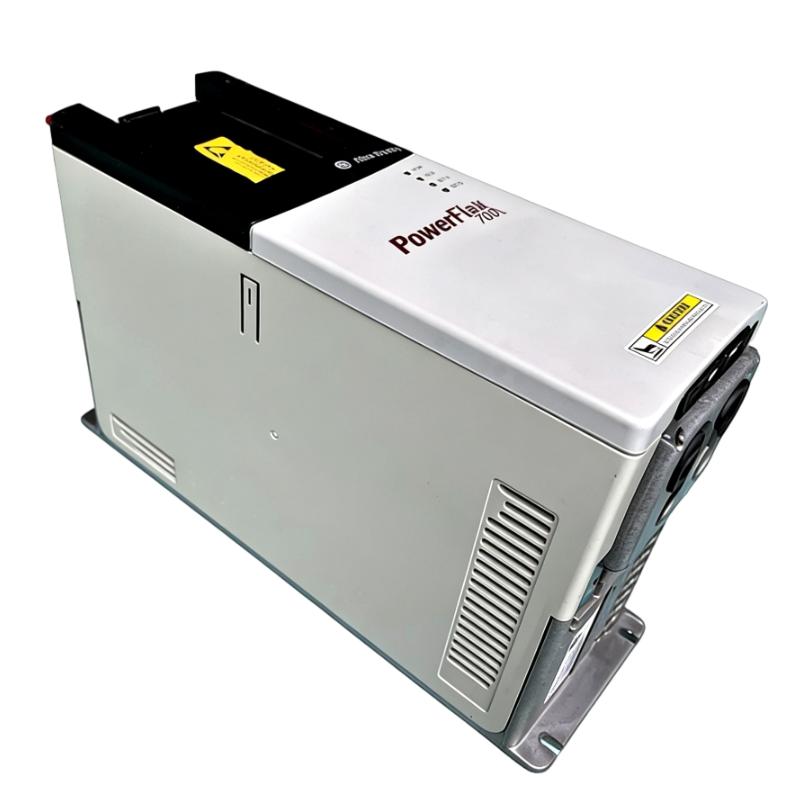
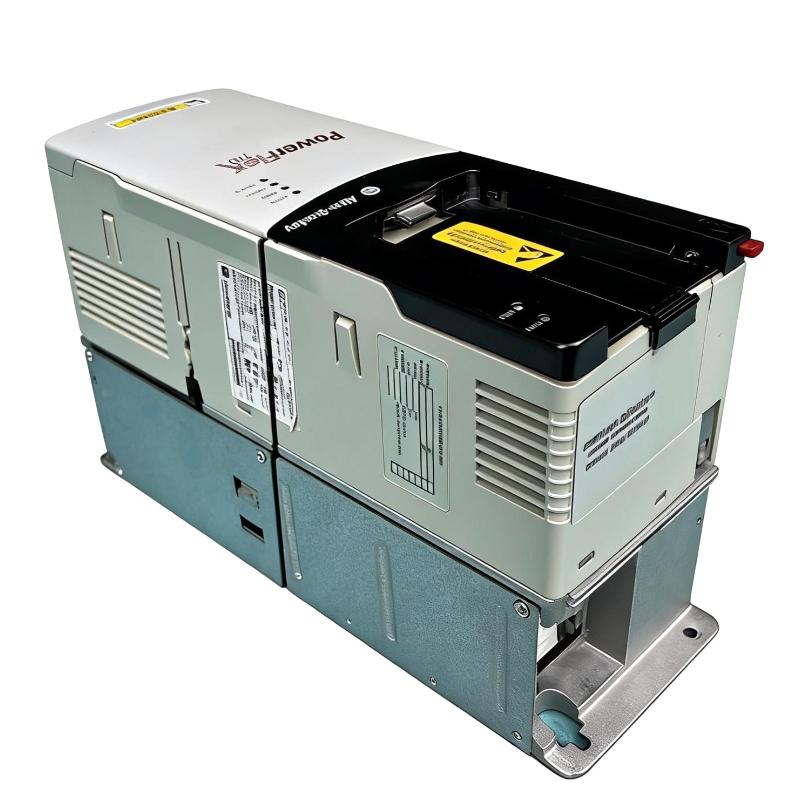
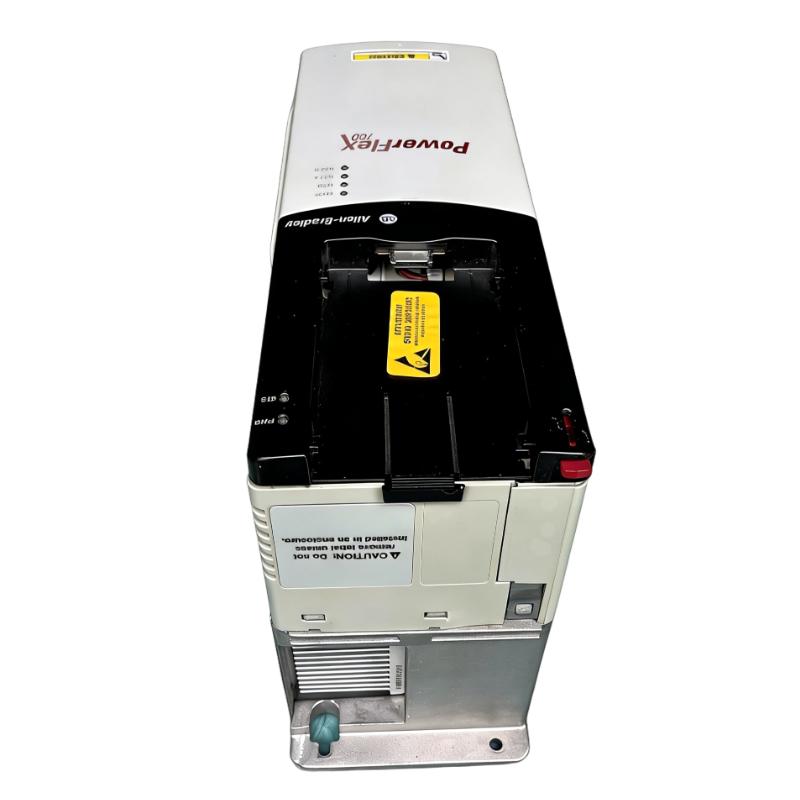
- Allen Bradley
- 20BC170A0NNNANC0
- PowerFlex AC Drive
- USA
- 700 × 350 × 350 mm
- 45kg
- Xiamen, China
- New & In Stock
- T/T, PayPal, Western Union
- 1 Year
- 1-3 Working Days
- DHL, UPS, TNT, FedEx and EMS.
- 24-Hour Service
- COO
- 54
Our advantage

Global Logistics
We have a 10-year logistics and express cooperation agreement, so our products can be shipped to any place in the world.

Brand new and original
Our products are imported in bulk from the place of origin. Because of the cooperative relationship, our products are all original and 100% new.

24-hour service
We provide 7*24 hours service to our customers. We will be there whenever you need us.

Price advantage
All our products are priced very favorably because we have our own warehouse and supply.
| Company Information | |||
| [email protected] | |||
| Mobile | +8615980777398 | ||
| +8615980777398 | |||
| 15980777398 |
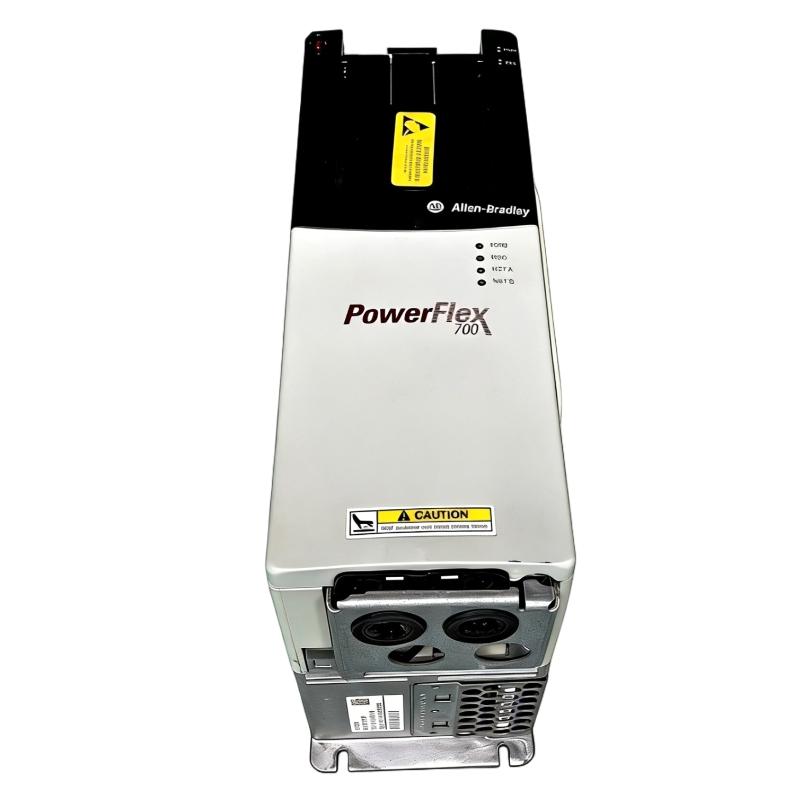
20BC170A0NNNANC0 Product Overview and Technical Guide
1. Product Introduction
The 20BC170A0NNNANC0 is a high-power AC variable frequency drive belonging to the PowerFlex 700, 20B Series. It is designed for industrial three-phase motor control applications where high output current, reliable speed regulation, controlled acceleration and deceleration, and flexible motor-control functions are required.
This model is a 400 V-class, three-phase AC drive with a 170 A continuous output-current rating. Its normal-duty power rating is approximately 90 kW, while its heavy-duty application rating is approximately 75 kW. This makes it suitable for relatively large industrial motors and machinery.
The model is particularly appropriate for industrial installations where a motor needs to operate at adjustable speeds rather than simply running directly from the fixed-frequency electrical supply. By controlling the output frequency and voltage supplied to the motor, the drive can regulate motor speed and torque according to the requirements of the machine.
The 20BC170A0NNNANC0 is a Frame 6 PowerFlex 700 configuration. It uses an IP20 enclosure arrangement and is intended to be installed inside an appropriate electrical cabinet or protected industrial enclosure.
The catalog configuration is also characterized by the absence of an internal brake IGBT and internal braking resistor. It is therefore important to evaluate the stopping characteristics and regenerative energy of the application before selecting the drive for machinery requiring rapid deceleration.
The model is especially relevant to high-power applications such as conveyors, pumps, fans, mixers, compressors, process machinery, material-handling equipment, and general industrial production machinery.
2. Brand and Product Series
| Category | Specification |
|---|---|
| Brand | Allen-Bradley |
| Product family | PowerFlex 700 AC Drive |
| Series | 20B |
| Catalog number | 20BC170A0NNNANC0 |
| Product type | AC Variable Frequency Drive |
| Drive category | Industrial AC Motor Drive |
| Frame | Frame 6 |
| Voltage class | 400 V AC |
| Input power | 3-phase AC |
| Output | 3-phase variable-frequency AC |
| Continuous output current | 170 A |
| Normal-duty power | Approximately 90 kW |
| Heavy-duty power | Approximately 75 kW |
| Enclosure | IP20 / NEMA Type 1 installation |
| Control | Vector-oriented motor control |
| Brake IGBT | Not included |
| Internal brake resistor | Not included |
| Feedback | No feedback option in the basic configuration |
| Communication module | No internal communication module in the basic configuration |
| Filter configuration | EMC filter / common-mode choke configuration |
| Cooling | Forced-air cooling |
| Installation | Electrical cabinet / protected industrial enclosure |
| Product generation | Legacy industrial AC drive platform |
The most important identification information is the complete catalog number 20BC170A0NNNANC0. Similar-looking PowerFlex 700 models can have different voltage classes, current ratings, braking configurations, communication options, feedback functions, filters, or enclosure arrangements.
3. Main Technical Specifications
| Parameter | Specification |
|---|---|
| Model | 20BC170A0NNNANC0 |
| Product family | PowerFlex 700 |
| Series | 20B |
| Frame size | Frame 6 |
| Input voltage | 380–400 V AC class |
| Nominal mains voltage | 400 V AC |
| Input phase | 3-phase |
| Input frequency | 50 Hz nominal |
| Output phase | 3-phase |
| Continuous output current | 170 A |
| Normal-duty rating | Approximately 90 kW |
| Heavy-duty rating | Approximately 75 kW |
| Output voltage | Variable, up to approximately 400 V AC |
| Output frequency | Adjustable, application dependent |
| Maximum frequency capability | Up to approximately 400 Hz |
| PWM frequency | Approximately 4 kHz at 400 V conditions |
| Control method | Vector-oriented AC motor control |
| Digital inputs | 6 |
| Digital outputs | 3 |
| Analog inputs | 2 |
| Analog outputs | 2 |
| Communication module | None in standard configuration |
| Feedback option | None in standard configuration |
| Brake IGBT | Without brake IGBT |
| Internal braking resistor | Not included |
| EMC filtering | EMC filter / common-mode choke configuration |
| Enclosure protection | IP20 |
| NEMA classification | Type 1 when installed in suitable enclosure/system arrangement |
| Maximum ambient operating temperature | Approximately 50°C under specified conditions |
| Maximum altitude without derating | Approximately 1,000 m |
| Storage temperature | Approximately -40°C minimum |
| Cooling | Forced air |
| Mounting | Cabinet/panel mounting |
| Approximate frame dimensions | Approximately 700 × 350 × 350 mm class |
| Approximate dimensions | Approximately 700 × 350 × 350 mm (H × W × D) |
| Approximate weight | Approximately 45 kg |
| Installation environment | Indoor industrial environment |
| Motor type | Three-phase AC induction / compatible AC motor |
| Typical motor size | Up to approximately 90 kW normal duty |
| Typical applications | Pumps, fans, conveyors, mixers, process machinery, material handling |
Dimension and weight note: physical dimensions and shipping weight can vary with the exact frame arrangement, junction-box configuration, terminal configuration, and installed accessories. For cabinet engineering, transportation, or mechanical replacement, the actual unit’s mechanical drawing and nameplate should be treated as the final dimensional reference.
4. Electrical Characteristics
The 20BC170A0NNNANC0 is designed around a 400 V-class three-phase industrial electrical system.
Its 170 A continuous output rating is one of the most important selection parameters. In practice, the drive should not be selected merely by comparing the nominal motor horsepower. The motor’s actual full-load current, overload characteristics, duty cycle, acceleration requirements, ambient conditions, and installation altitude should all be considered.
For normal-duty applications, the drive is generally associated with motors around the 90 kW class.
For heavy-duty applications requiring greater overload capability, the usable motor rating is reduced to approximately the 75 kW class.
This distinction is important because a motor that appears to match the drive based on horsepower may still exceed the drive’s thermal or current capability when operating under heavy-duty conditions.
5. Normal-Duty and Heavy-Duty Selection
| Application condition | Approximate rating |
|---|---|
| Normal-duty motor rating | 90 kW class |
| Heavy-duty motor rating | 75 kW class |
| Continuous output current | 170 A |
| Short-term overload | Higher than continuous rating, depending on duty configuration |
| Recommended selection basis | Motor current + overload requirement |
| Primary selection parameter | Motor full-load current |
| Secondary selection parameter | Motor power |
| Additional consideration | Ambient temperature and altitude |
For conveyors, crushers, mixers, extruders, hoists, and other machines with high starting torque or frequent acceleration, heavy-duty selection should be considered rather than relying only on the nominal 90 kW normal-duty rating.
6. Control Technology
The drive is designed for sophisticated industrial AC motor control rather than simple fixed-frequency motor operation.
The drive can vary the output frequency and voltage according to the motor-control requirements.
This allows the connected motor to operate at different speeds while maintaining controlled acceleration, deceleration, and torque behavior.
Vector-oriented control is particularly useful for machines where the load changes during operation. Compared with basic scalar control, vector-based control can provide improved speed regulation and dynamic response.
7. Motor Speed Control
A major advantage of the 20BC170A0NNNANC0 is its ability to control motor speed continuously.
For example, a conveyor may need to operate slowly during loading and faster during normal production.
A pump may need different speeds according to process demand.
A fan may need to operate at different speeds according to airflow requirements.
A mixer may require a low-speed mixing stage followed by a high-speed stage.
In each case, the drive can adjust the motor’s operating speed without requiring mechanical gear changes for every operating condition.
8. Acceleration and Deceleration
The drive provides configurable acceleration and deceleration functions.
Controlled acceleration is valuable for high-power machinery because starting a large motor directly from the line can produce substantial electrical and mechanical stress.
A controlled acceleration profile can help reduce:
- Motor starting stress
- Gearbox shock
- Belt tension shock
- Coupling stress
- Conveyor material movement
- Mechanical vibration
- Production disturbances
Controlled deceleration can provide similar benefits when stopping the machine.
However, the stopping process must be evaluated carefully in applications with large rotating inertia. When a motor decelerates, energy can be returned to the drive’s DC bus. If the application produces significant regenerative energy, an appropriate braking arrangement may be necessary.
9. Brake Configuration
The 20BC170A0NNNANC0 configuration does not include an internal brake IGBT.
It also does not include an internal brake resistor.
This is not necessarily a disadvantage. Many industrial applications do not require dynamic braking.
For example, a pump or fan that naturally slows down after the stop command may not require an aggressive braking system.
On the other hand, applications such as high-inertia conveyors, unwinders, winders, centrifuges, and certain material-handling systems may require additional braking equipment.
Therefore, braking requirements should be determined from:
- Motor power
- Motor speed
- Load inertia
- Required stopping time
- Number of stops per hour
- Direction of rotation
- Regenerative energy
- Mechanical braking system
- Required emergency stopping behavior
10. Feedback Configuration
The basic configuration does not include an encoder feedback option.
For standard open-loop vector applications, this may be completely adequate.
However, certain machines require more precise speed regulation or position-related control.
Typical examples include:
- High-precision material handling
- Winding machinery
- Certain machine tools
- Hoisting systems
- Specialized production machinery
If encoder feedback is required, a suitable feedback-capable configuration should be selected rather than assuming the base 20BC170A0NNNANC0 can provide closed-loop feedback without additional hardware.
11. Communication
The basic configuration does not include an internal communication module.
This means the exact automation architecture should be reviewed before integration.
Industrial applications may require communication between the drive and a PLC, HMI, supervisory control system, or other automation equipment.
Typical information exchanged between a drive and controller can include:
- Start command
- Stop command
- Speed reference
- Output frequency
- Motor current
- Motor speed
- Drive status
- Fault status
- Warning status
- DC bus voltage
- Acceleration/deceleration control
- Parameter information
12. I/O Capability
The drive provides a combination of analog and digital I/O suitable for hardwired control.
| I/O type | Approximate quantity |
|---|---|
| Digital inputs | 6 |
| Digital outputs | 3 |
| Analog inputs | 2 |
| Analog outputs | 2 |
The I/O can be used for functions such as:
- Start
- Stop
- Forward
- Reverse
- Jog
- External fault
- Speed selection
- Speed reference
- Current monitoring
- Frequency monitoring
- Status indication
- Interlock signals
13. Enclosure and Installation
The 20BC170A0NNNANC0 uses an IP20-class enclosure configuration.
IP20 equipment is intended to be protected from direct environmental exposure and is normally installed inside an electrical cabinet or suitable industrial enclosure.
The enclosure should provide adequate protection against:
- Dust
- Water
- Oil mist
- Chemical contamination
- Mechanical impact
- Excessive humidity
The cabinet must also provide sufficient ventilation because a high-power drive generates heat during operation.
14. Approximate Mechanical Parameters
| Mechanical parameter | Approximate value |
|---|---|
| Frame | Frame 6 |
| Height | ≈700 mm |
| Width | ≈350 mm |
| Depth | ≈350 mm |
| Overall size class | Large industrial drive |
| Approximate volume | ≈0.086 m³ |
| Approximate weight | ≈45 kg |
| Mounting | Panel/cabinet |
| Cooling | Forced air |
| Installation clearance | Must follow drive installation requirements |
| Service access | Front and terminal access required |
| Cabinet ventilation | Required |
These values are intended for general planning only. Actual dimensions can differ depending on the specific Frame 6 mechanical arrangement and installed options.
For a replacement project, the actual physical unit should be measured or its mechanical drawing should be checked before manufacturing a cabinet.
15. Product Applications
15.1 Conveyor Systems
The 20BC170A0NNNANC0 is well suited to large conveyor systems.
Large conveyors can experience significant inertia and starting torque. Controlled acceleration can help prevent belt shock and reduce mechanical stress.
Typical applications include:
- Mining conveyors
- Bulk-material conveyors
- Warehouse conveyors
- Manufacturing conveyors
- Packaging lines
- Heavy material-transfer systems
15.2 Pumps
The drive is suitable for large industrial pump motors.
Variable-speed operation allows the motor to respond to changing process requirements.
Typical applications include:
- Industrial water pumps
- Cooling-water systems
- Process pumps
- Circulation pumps
- Water-treatment systems
- Industrial utility systems
15.3 Fans and Blowers
Large ventilation and process fans can use variable-speed operation to regulate airflow.
This is particularly useful when the process does not require full airflow continuously.
Typical applications include:
- Industrial ventilation
- Furnace fans
- Exhaust systems
- Cooling systems
- Process air systems
- Dust collection systems
15.4 Mixers
Large mixers often require controlled torque during startup and adjustable speed during the mixing process.
The drive can provide controlled acceleration and adjustable operating speed.
Typical applications include:
- Chemical processing
- Material blending
- Industrial mixing
- Food-processing machinery
- Process tanks
- Manufacturing systems
15.5 Material Handling
The high current capacity makes this drive suitable for larger material-handling systems.
Applications can include:
- Rollers
- Conveyors
- Transfer systems
- Production-line material handling
- Bulk material systems
- Industrial lifting auxiliaries
15.6 Compressors
Variable-speed control can be useful for industrial compressor systems where the required operating condition changes over time.
The drive can provide controlled starting and adjustable operating speed, reducing the need to operate the motor continuously at maximum speed.
15.7 Process Machinery
The drive can also be incorporated into continuous production machinery.
Examples include:
- Extrusion equipment
- Processing lines
- Production machines
- Industrial automation equipment
- Large rotating machinery
- Manufacturing systems
16. Main Product Advantages
High Current Capability
The 170 A output rating gives the drive substantial motor-control capacity.
This makes it appropriate for large industrial motors and heavy production equipment.
High-Power Industrial Operation
The approximately 90 kW normal-duty rating allows the drive to control motors considerably larger than those typically served by compact machine drives.
Vector-Control Capability
Vector control provides improved motor-speed and torque regulation compared with basic V/Hz operation.
This is valuable where the machine experiences changing loads or requires more controlled motor behavior.
Controlled Motor Starting
Large motors can create significant starting current and mechanical stress.
The drive provides a controlled starting process that can reduce mechanical shock and improve machine operation.
Adjustable Speed
Motor speed can be adjusted according to the process requirement.
This can improve production flexibility and can also reduce unnecessary energy consumption in applications such as pumps and fans.
Industrial I/O
The combination of digital and analog I/O makes the drive suitable for hardwired machine-control systems.
High-Power Application Flexibility
The PowerFlex 700 platform covers many industrial applications, allowing engineers to use a familiar drive architecture across different machine types.
Robust Industrial Construction
The drive is designed for installation in industrial control cabinets and is intended for continuous industrial operation when correctly installed, cooled, protected, and configured.
17. Energy-Related Benefits
A variable-frequency drive can provide important energy benefits, particularly in variable-torque applications.
For example, a centrifugal fan or pump does not necessarily need to run at full speed all the time.
By reducing motor speed when process demand is lower, the mechanical power requirement can decrease significantly.
The actual energy savings depend on:
- Motor efficiency
- Load type
- Operating schedule
- Speed profile
- Process requirements
- Pump/fan system characteristics
- Drive efficiency
- Mechanical losses
Consequently, the drive should not be viewed as automatically reducing energy consumption in every application. Its greatest energy-saving potential is generally found where the mechanical load naturally decreases with motor speed.
18. Reliability Advantages
The drive can improve machine reliability by controlling the motor in a predictable manner.
Direct-on-line starting can place significant stress on mechanical components.
Variable-frequency starting allows the machine to accelerate according to a programmed profile.
This can reduce stress on:
- Bearings
- Gearboxes
- Couplings
- Belts
- Chains
- Shafts
- Conveyor structures
- Pumps
- Fans
19. Recommended Same-Series or Closely Related Models
The following five models are useful comparison candidates within the PowerFlex 700 / 20B family or very closely related configurations.
The exact catalog suffix determines options, so these models should be compared carefully before treating any of them as a replacement.
| Model | Series | Voltage class | Current class | Normal-duty power | Heavy-duty power | Frame / size class | Approx. dimensions | Approx. weight |
|---|---|---|---|---|---|---|---|---|
| 20BC170A0NNNANC0 | PowerFlex 700 / 20B | 400 V | 170 A | 90 kW | 75 kW | Frame 6 | ≈700 × 350 × 350 mm | ≈45 kg |
| 20BC170A0NNNANN0 | PowerFlex 700 / 20B | 400 V | 170 A | 90 kW | 75 kW | Frame 6 | ≈700 × 350 × 350 mm | ≈45 kg |
| 20BC170A0ANNANC0 | PowerFlex 700 / 20B | 400 V | 170 A | 90 kW | 75 kW | Frame 6 | ≈700 × 350 × 350 mm | ≈45 kg |
| 20BC170A0ANNANA0 | PowerFlex 700 / 20B | 400 V | 170 A | 90 kW | 75 kW | Frame 6 | ≈700 × 350 × 350 mm | ≈45 kg |
| 20BD170A0NNNANC0 | PowerFlex 700 / 20B | 480 V class | 170 A class | Application dependent | Application dependent | Frame 6 class | ≈700 × 350 × 350 mm | ≈45 kg |
The first four models are particularly close to the original because they maintain the same general 170 A / 400 V / Frame 6 architecture, while their catalog suffixes can represent differences in options and configuration.
The 20BD configuration belongs to the same general PowerFlex 700 platform but is intended for a higher-voltage 480 V-class electrical system. It should therefore not be considered a direct replacement for a 400 V drive without checking the complete electrical system.
20. Comparison of Same-Series Models
| Model | Input | Output current | Power class | Feedback | Brake IGBT | Communication | Enclosure | Approx. dimensions | Weight kg |
|---|---|---|---|---|---|---|---|---|---|
| 20BC170A0NNNANC0 | 400 V, 3-phase | 170 A | 90 kW ND / 75 kW HD | No | No | Basic configuration | IP20 | ≈700 × 350 × 350 mm | ≈45 |
| 20BC170A0NNNANN0 | 400 V, 3-phase | 170 A | 90 kW ND / 75 kW HD | No | No | Basic configuration | IP20 | ≈700 × 350 × 350 mm | ≈45 |
| 20BC170A0ANNANC0 | 400 V, 3-phase | 170 A | 90 kW ND / 75 kW HD | Configuration dependent | No | Configuration dependent | IP20 | ≈700 × 350 × 350 mm | ≈45 |
| 20BC170A0ANNANA0 | 400 V, 3-phase | 170 A | 90 kW ND / 75 kW HD | No | No | No internal module | IP20 | ≈700 × 350 × 350 mm | ≈45 |
| 20BD170A0NNNANC0 | 480 V class, 3-phase | 170 A class | Application dependent | Configuration dependent | Configuration dependent | Configuration dependent | IP20 | ≈700 × 350 × 350 mm | ≈45 |
21. Five Popular Models from the Same Brand
For a broader comparison, the following five models represent commonly encountered products from the same brand’s industrial variable-frequency drive portfolio.
| Model | Product family | Voltage class | Current / power class | Typical application | Control | Approx. dimensions | Weight kg |
|---|---|---|---|---|---|---|---|
| 25B-D017N104 | PowerFlex 525 | 480 V class | 17 A class | Small conveyors, pumps, fans | Sensorless vector | ≈260 × 140 × 170 mm | ≈4 |
| 25B-D010N104 | PowerFlex 525 | 480 V class | 10 A class | Small machinery and pumps | Sensorless vector | ≈220 × 120 × 160 mm | ≈3 |
| 22B-D017N104 | PowerFlex 40 | 480 V class | 17 A class | General machine control | Sensorless vector | ≈260 × 140 × 170 mm | ≈4 |
| 20F11ND077JA0NNNNN | PowerFlex 753 | 480 V class | 77 A class | Large industrial machinery | Advanced vector control | ≈600 × 300 × 300 mm | ≈30–40 |
| 20G11ND077JA0NNNNN | PowerFlex 755 | 480 V class | 77 A class | High-performance machinery | Advanced vector control | ≈600 × 300 × 300 mm | ≈30–40 |
The dimensions and weights in this comparison are approximate equipment-planning values. Compact-drive dimensions vary significantly by power rating and frame. Larger modular drive systems can also change size and weight depending on installed options.
22. PowerFlex 525
The PowerFlex 525 is a compact AC drive platform aimed at lower-power industrial applications.
Compared with the 20BC170A0NNNANC0, it is dramatically smaller and is intended for a completely different motor-power range.
Its main strengths include compact installation, relatively simple integration, and suitability for distributed machine automation.
Typical applications include:
- Small conveyors
- Small pumps
- Fans
- Packaging machines
- Small processing machines
- General machine automation
It should not be considered a direct replacement for a 170 A high-power drive.
23. PowerFlex 40
The PowerFlex 40 family is another compact industrial drive platform.
It is useful for straightforward motor-speed control applications where the motor rating is considerably lower than the 90 kW class associated with the 20BC170A0NNNANC0.
Typical applications include:
- Small conveyors
- Pumps
- Fans
- Machine tools
- Packaging equipment
- Small production machinery
24. PowerFlex 753
The PowerFlex 753 is much more relevant when the user is considering a high-power modernization project.
It is designed for larger industrial machinery and more advanced control requirements.
Typical applications include:
- Large conveyors
- Pumps
- Fans
- Compressors
- Process machinery
- Material handling
- Production equipment
It can be a more suitable direction when an older high-power drive needs to be replaced with a newer-generation architecture.
25. PowerFlex 755
The PowerFlex 755 is intended for advanced industrial motor-control applications.
It is particularly relevant where the machine requires sophisticated control functions, system integration, feedback options, and high-performance operation.
Typical applications include:
- High-performance conveyors
- Hoisting equipment
- Extrusion
- Process machinery
- Material handling
- Large production machines
- High-performance rotating equipment
26. Why the 20BC170A0NNNANC0 Is Suitable for Heavy Industrial Equipment
The main reason this model is suitable for heavy industrial machinery is its combination of high current capacity and flexible motor-control functionality.
A 170 A continuous output rating provides considerable electrical capacity for large three-phase motors.
At the same time, vector-based control allows the motor to be controlled more precisely than with a simple fixed-frequency starter.
This combination is useful for machines that have:
- High starting torque
- Large mechanical inertia
- Variable production speed
- Frequent speed changes
- Controlled acceleration requirements
- Controlled stopping requirements
- Changing mechanical loads
- Long operating periods
27. Typical Industrial System Architecture
A typical installation can consist of the following components:
| System component | Function |
|---|---|
| Incoming 3-phase power | Supplies electrical power to the drive |
| Circuit protection | Protects the drive and upstream electrical system |
| AC drive | Converts fixed-frequency AC power into controlled variable-frequency output |
| Motor | Converts electrical energy into mechanical energy |
| PLC | Provides machine-level control |
| HMI | Provides operator interface |
| Sensors | Provide process or machine feedback |
| Control wiring | Provides hardwired commands and status |
| Communication network | Transfers control and diagnostic data when configured |
| Mechanical load | Conveyor, pump, fan, mixer, compressor, etc. |
This arrangement allows the drive to function as the motor-control section of a larger automated production system.
28. Important Parameters to Record Before Replacement
If the existing machine is operating correctly and the drive is being replaced, it is useful to record all important configuration values before removing the original drive.
The following information should be preserved:
| Parameter group | Information to record |
|---|---|
| Motor | Voltage, current, frequency, speed, power |
| Acceleration | Acceleration time and profile |
| Deceleration | Deceleration time and profile |
| Speed | Minimum and maximum speed |
| Analog input | Scaling and signal type |
| Analog output | Scaling and signal type |
| Digital inputs | Function assigned to each input |
| Digital outputs | Function assigned to each output |
| Faults | Existing fault history |
| Current limits | Configured current limits |
| Motor protection | Thermal and overload settings |
| Communication | Network and addressing configuration |
| Feedback | Encoder/feedback configuration if used |
| Braking | Braking method and stopping behavior |
| Control mode | V/Hz, vector or other configured mode |
| Start source | Keypad, terminal, PLC or network |
| Speed reference | Analog, preset speed, network or other source |
29. Advantages Compared with Direct-On-Line Starting
A conventional direct-on-line starter essentially connects the motor directly to the fixed-frequency electrical supply.
The 20BC170A0NNNANC0 provides considerably more control.
| Characteristic | Direct-on-line starter | 20BC170A0NNNANC0 |
|---|---|---|
| Variable speed | No | Yes |
| Controlled acceleration | Limited | Yes |
| Controlled deceleration | Limited | Yes |
| Motor torque control | Limited | Advanced |
| Speed reference | Fixed | Adjustable |
| Starting current management | Limited | Controlled |
| Process speed adjustment | No | Yes |
| Motor diagnostics | Limited | Extensive |
| Programmable operation | Limited | Yes |
| PLC integration | External control required | Supported through control architecture |
| Energy optimization | Limited | Possible through speed control |
The principal advantage is therefore not simply motor starting. It is the ability to make motor operation part of the machine’s overall control strategy.
30. Application Selection Table
| Application | Suitability | Main reason |
|---|---|---|
| Large conveyor | Excellent | High current and controlled acceleration |
| Industrial pump | Excellent | Adjustable speed and process control |
| Large fan | Excellent | Variable airflow and speed control |
| Mixer | Excellent | Adjustable speed and torque |
| Compressor | Good | Controlled speed and starting |
| Material handling | Excellent | Speed and acceleration control |
| Process machinery | Excellent | Flexible motor control |
| Machine tool | Good | Variable-speed operation |
| Small conveyor | Excessive capacity | Smaller drive may be more economical |
| Small fan | Excessive capacity | Compact drive would normally be preferable |
31. Overall Product Advantages
The 20BC170A0NNNANC0 combines high electrical capacity with the control flexibility required by demanding industrial machinery.
Its 170 A continuous-current capability makes it appropriate for large motors.
Its 400 V-class three-phase configuration fits common European and international industrial power systems.
Its vector-control capability provides better dynamic motor behavior than basic fixed-frequency control.
Its analog and digital I/O allow it to operate with hardwired machine-control systems.
Its industrial enclosure arrangement allows it to be integrated into a properly designed control cabinet.
Its PowerFlex 700 architecture also provides a familiar control platform for existing industrial installations.
32. Points That Should Be Considered Before Purchase
Because the 20BC170A0NNNANC0 is a high-power legacy drive, users should consider several factors before purchasing it for a new project.
First, the exact voltage must be confirmed.
Second, the motor full-load current must be compared with the drive’s 170 A rating.
Third, the application should be classified as normal duty or heavy duty.
Fourth, the braking requirements must be evaluated because the catalog configuration does not contain an internal brake IGBT.
Fifth, encoder feedback requirements should be checked.
Sixth, the required communication protocol should be determined.
Seventh, cabinet ventilation must be sufficient.
Eighth, the physical dimensions and mounting holes should be verified.
Ninth, the replacement strategy should consider long-term availability and maintenance requirements.
Tenth, if the application is a new machine rather than an existing installation, a newer-generation high-performance drive should also be evaluated.
33. Recommended Model Selection by Application
| Requirement | Recommended model direction |
|---|---|
| Existing 400 V / 170 A PowerFlex 700 installation | 20BC170A0NNNANC0 or equivalent 20BC170 configuration |
| Same current rating with different option configuration | 20BC170A0NNNANN0 |
| Same 170 A PowerFlex 700 platform | 20BC170A0ANNANC0 |
| Similar 170 A PowerFlex 700 configuration | 20BC170A0ANNANA0 |
| 480 V-class high-power system | 20BD170-class PowerFlex 700 |
| New compact low-power machine | 25B-D017N104 |
| Small general-purpose motor | 25B-D010N104 |
| Compact industrial motor control | 22B-D017N104 |
| High-power modernization | 20F11ND077JA0NNNNN |
| Advanced high-performance modernization | 20G11ND077JA0NNNNN |
34. Final Technical Summary
| Specification category | 20BC170A0NNNANC0 |
|---|---|
| Brand | Allen-Bradley |
| Product family | PowerFlex 700 |
| Series | 20B |
| Catalog number | 20BC170A0NNNANC0 |
| Drive type | AC Variable Frequency Drive |
| Input | 3-phase AC |
| Input voltage | 400 V AC class |
| Input frequency | 50 Hz nominal |
| Output | 3-phase variable-frequency AC |
| Continuous output current | 170 A |
| Normal-duty rating | Approximately 90 kW |
| Heavy-duty rating | Approximately 75 kW |
| Frame | Frame 6 |
| Control | Vector-oriented motor control |
| Digital inputs | 6 |
| Digital outputs | 3 |
| Analog inputs | 2 |
| Analog outputs | 2 |
| Feedback | No feedback option in basic configuration |
| Brake IGBT | No |
| Internal brake resistor | No |
| Communication module | No internal communication module in basic configuration |
| EMC configuration | EMC filter / common-mode choke |
| Enclosure | IP20 |
| Cooling | Forced air |
| Operating temperature | Up to approximately 50°C under specified conditions |
| Altitude | Approximately 1,000 m without derating |
| Approximate dimensions | ≈700 × 350 × 350 mm |
| Approximate weight | ≈45 kg |
| Typical applications | Conveyors, pumps, fans, mixers, compressors, process machinery |
| Main advantage | High-power industrial motor control with flexible speed and torque regulation |
35. Conclusion
The 20BC170A0NNNANC0 is a high-capacity industrial AC drive designed around the PowerFlex 700 20B architecture.
Its key specification is the 170 A continuous output-current rating, combined with a 400 V-class three-phase input and approximately 90 kW normal-duty / 75 kW heavy-duty capability.
The model is particularly well suited to large conveyors, pumps, fans, mixers, compressors, material-handling systems, and other industrial machines requiring controlled motor speed and torque.
Its vector-control capability, programmable acceleration and deceleration, industrial I/O, motor-protection functions, and high current capacity make it a strong solution for demanding motor-control applications.
For an existing installation, the most important consideration is maintaining electrical, mechanical, functional, and control compatibility. A model with the same current rating is not automatically a direct replacement because catalog suffixes can represent differences in braking, feedback, communication, filtering, control, and other options.
For modernization, the 20B family provides the closest conceptual match, while newer high-performance drive families are worth considering when long-term availability, advanced networking, diagnostics, and modern control functions are important.
The most important selection parameters for this model are therefore 400 V-class input voltage, 170 A output current, 90 kW normal-duty rating, 75 kW heavy-duty rating, Frame 6 construction, IP20 enclosure, vector control, braking requirements, feedback requirements, communication requirements, cabinet dimensions, thermal conditions, and approximately 45 kg equipment weight.
When used within its electrical and thermal limits and installed in an appropriately designed industrial control cabinet, the 20BC170A0NNNANC0 provides a powerful and flexible solution for large three-phase AC motor applications.