

ProductPRODUCT
Featured products
Contact Us
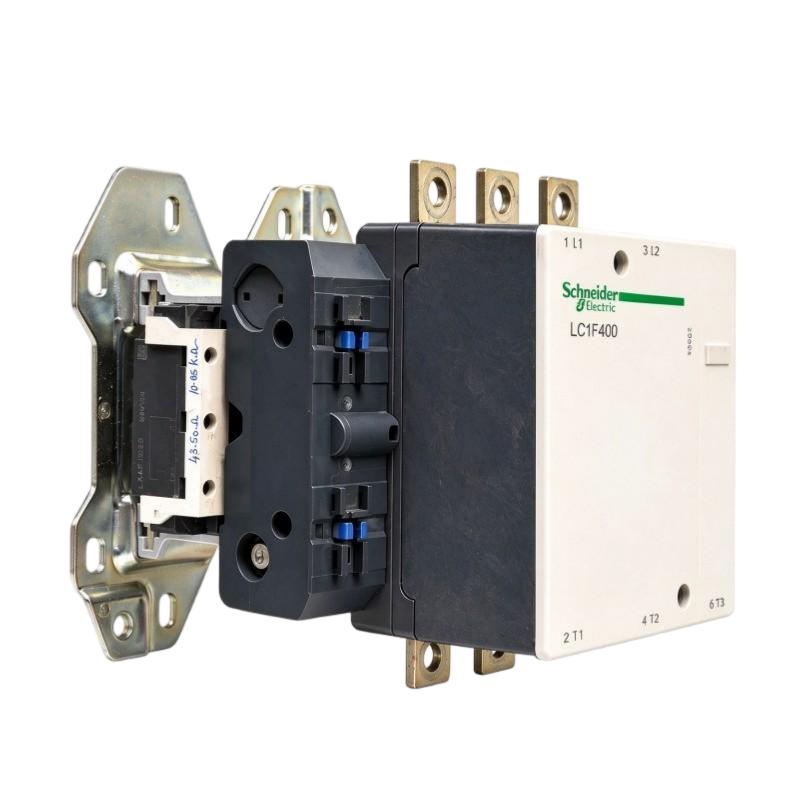
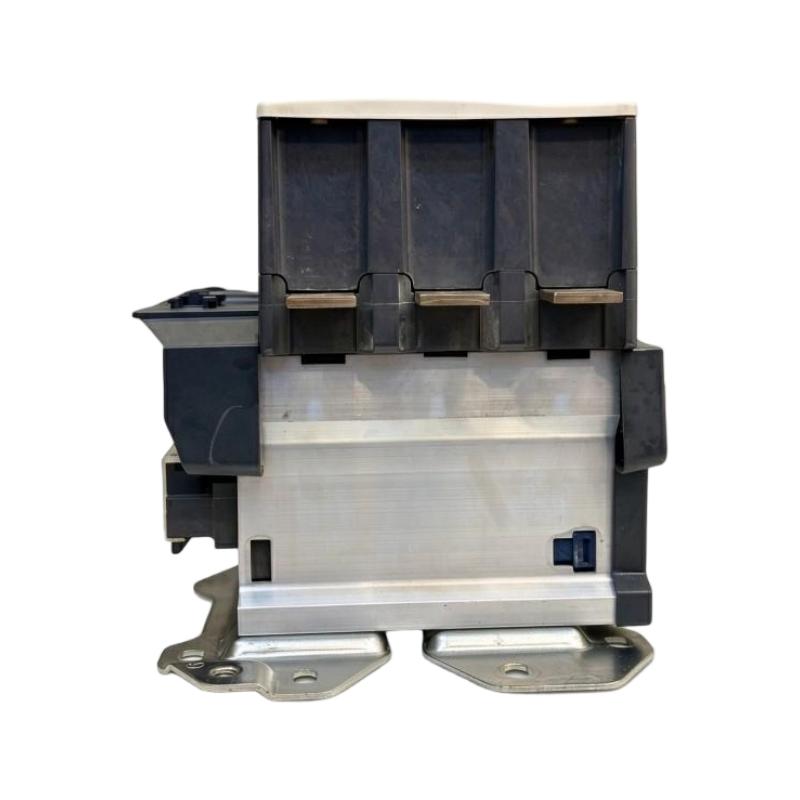
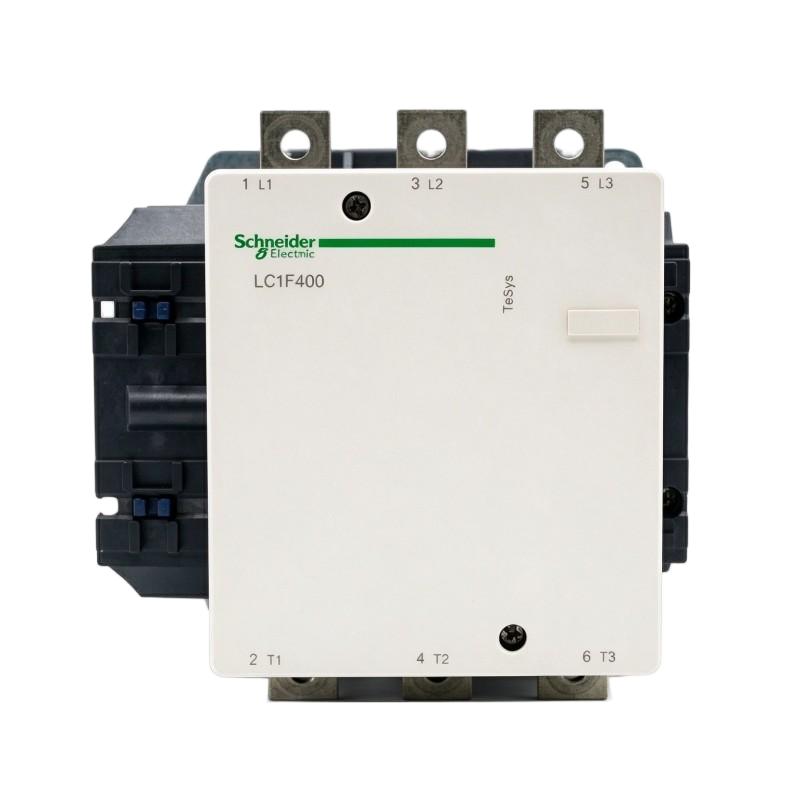
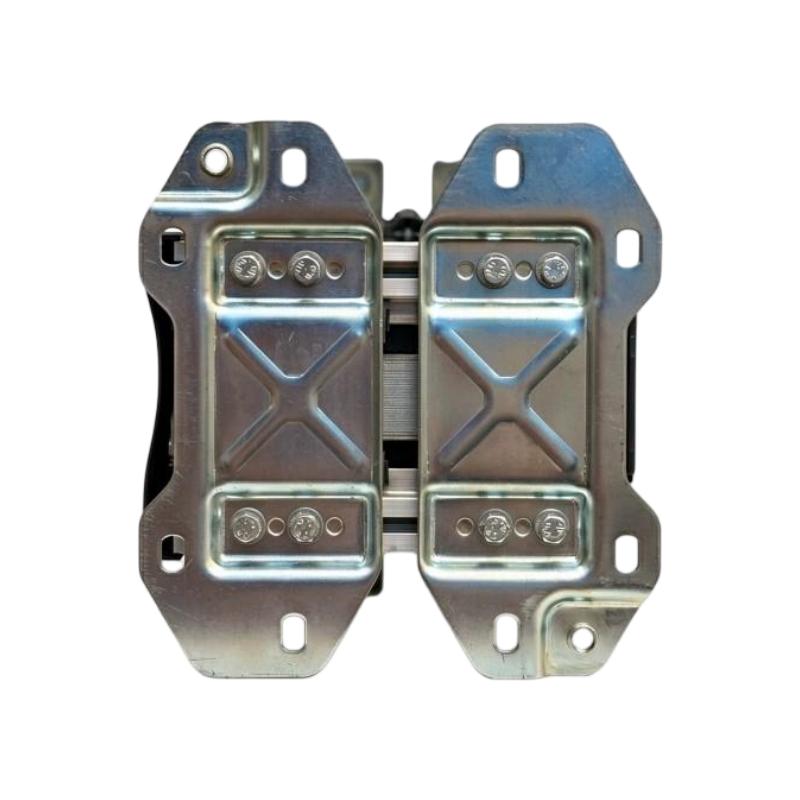
- Schneider
- LC1F400P7
- Contactor
- France
- 206 x 213 x 219 mm
- 9.1 kg
- Xiamen, China
- New & In Stock
- T/T, PayPal, Western Union
- 1 Year
- 1-3 Working Days
- DHL, UPS, TNT, FedEx and EMS.
- 24-Hour Service
- COO
- 7
Our advantage

Global Logistics
We have a 10-year logistics and express cooperation agreement, so our products can be shipped to any place in the world.

Brand new and original
Our products are imported in bulk from the place of origin. Because of the cooperative relationship, our products are all original and 100% new.

24-hour service
We provide 7*24 hours service to our customers. We will be there whenever you need us.

Price advantage
All our products are priced very favorably because we have our own warehouse and supply.
| Company Information | |||
| [email protected] | |||
| Mobile | +8615980777398 | ||
| +8615980777398 | |||
| 15980777398 |
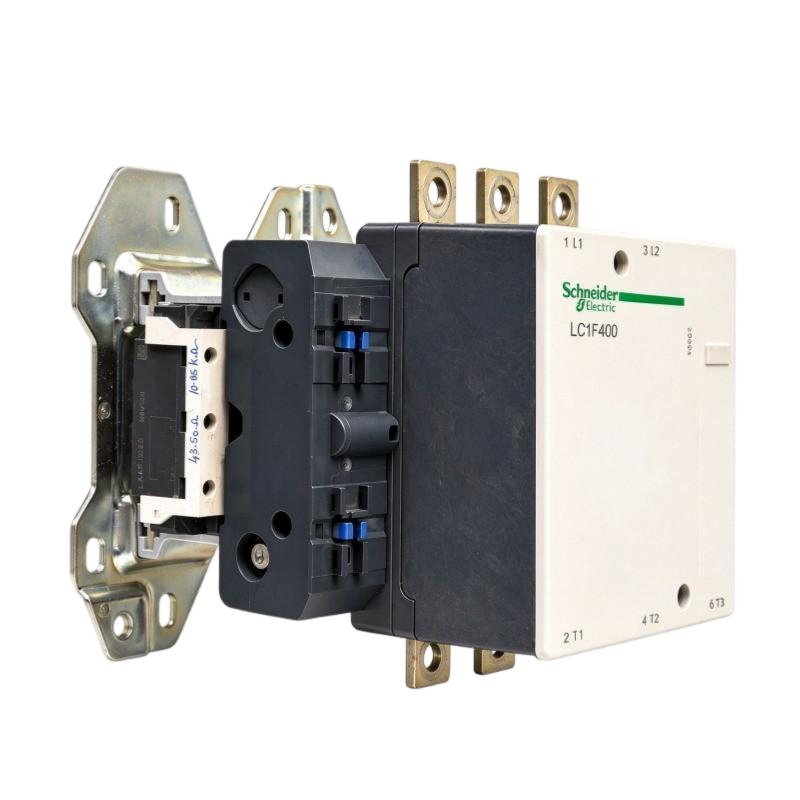
Product Overview
The Schneider Electric LC1F400P7 TeSys F Contactor is a high-current, three-pole electrical switching device designed for industrial motor control and power distribution applications. It is part of Schneider Electric’s TeSys F contactor family and is intended for switching three-phase motors and other compatible electrical loads in industrial installations.
A contactor is an electrically operated switching device that allows a control circuit to manage a higher-power electrical circuit. When the coil receives the specified control voltage, the electromagnetic mechanism operates the main contacts, connecting or disconnecting the load from the power supply. This arrangement enables motors and other industrial equipment to be controlled remotely through PLCs, motor-control circuits, and other automation equipment.
The LC1F400P7 features three normally open main power contacts and is rated for 400 A under AC-3 operating conditions at up to 440 V AC. Its conventional thermal current rating is 500 A under the specified AC-1 conditions. The model uses a 230 V AC control coil, making coil-voltage verification particularly important when replacing an existing contactor.
For motor-control applications, the contactor supports motor ratings of up to 200 kW at 380–400 V AC under AC-3 conditions. The actual motor selection must also account for starting current, switching frequency, operating temperature, and the characteristics of the driven load.
The LC1F400P7 is suitable for industrial control panels, motor starters, large machinery, and power-control systems where high-current switching is required. Its heavy-duty construction and three-pole configuration make it relevant to applications that require coordinated switching of three-phase electrical circuits.
Technical Specifications
| Parameter | Specification |
|---|---|
| Brand | Schneider Electric |
| Product Series | TeSys F |
| Model | LC1F400P7 |
| Product Type | Industrial Power Contactor |
| Contactor Configuration | 3-Pole |
| Main Contact Configuration | 3 Normally Open (3 NO) |
| AC-3 Rated Operational Current | 400 A |
| AC-1 Rated Operational Current | 500 A |
| Rated Operational Voltage | Up to 440 V AC for the specified AC-3 rating |
| Control Coil Voltage | 230 V AC |
| Control Circuit Frequency | 40–400 Hz |
| Motor Power at 380–400 V AC | 200 kW, AC-3 |
| Motor Power at 415 V AC | 220 kW, AC-3 |
| Motor Power at 440 V AC | 250 kW, AC-3 |
| Rated Impulse Withstand Voltage | 8 kV |
| Conventional Free-Air Thermal Current | 500 A |
| Protection Degree | IP20 front face with appropriate terminal shrouds |
| Mounting | Panel / industrial control-panel installation |
| Dimensions | 206 × 213 × 219 mm |
| Weight | 9.1 kg |
| Product Family | TeSys F |
| Product Lifecycle | Discontinued |
Electrical ratings depend on the utilization category, operating voltage, ambient temperature, and installation conditions. Always confirm the contactor’s nameplate and manufacturer’s technical documentation before applying it to a specific load.
Function and Working Principle
The LC1F400P7 uses an electromagnetic operating mechanism to control the connection between a three-phase power supply and an electrical load. Its main function is to switch high-current circuits through a relatively low-power control signal.
1. Electromagnetic Switching
The contactor contains an electromagnetic coil, a movable armature, fixed and movable contacts, and a mechanical return arrangement.
When the 230 V AC control voltage is applied to the coil, an electromagnetic field is generated. This field attracts the movable armature and changes the state of the main contacts.
When the coil is de-energized, the magnetic field collapses and the mechanism returns to its normal position. The main contacts open and interrupt the controlled circuit.
This operating principle allows a control system to manage a high-current motor circuit without requiring the PLC or operator control circuit to carry the motor current directly.
2. Three-Pole Power Switching
The LC1F400P7 has three normally open main contacts. These contacts are designed to switch the three phases of a compatible three-phase electrical circuit.
In a typical motor-control arrangement, the three main poles connect the incoming power supply to the motor when the contactor is energized. When the coil is de-energized, the contacts open and disconnect the motor from the supply.
The three-pole arrangement is suitable for conventional three-phase motor switching, provided that the contactor is correctly rated for the motor and application.
3. AC-3 Motor Switching
The AC-3 utilization category applies to the starting and switching-off of squirrel-cage motors during normal running conditions. Motor starting involves relatively high current, while switching off a running motor introduces different electrical stresses on the contacts.
The LC1F400P7 is rated at 400 A under AC-3 conditions at the specified voltage range. This rating should be used when assessing its suitability for motor-control duties.
The AC-1 rating is different and applies to resistive or slightly inductive loads. The 500 A AC-1 rating should not be used as a substitute for the 400 A AC-3 motor rating.
4. Control Circuit Operation
The 230 V AC coil allows the contactor to be operated by a compatible control circuit. A PLC output, relay interface, or motor-control circuit can control the coil through appropriately rated switching components.
The control circuit must provide the correct voltage and account for coil inrush and holding power. An unsuitable control supply or switching device may cause unreliable operation, excessive heating, or contactor malfunction.
5. Electrical Isolation and Load Control
When the contactor opens, its main contacts disconnect the controlled circuit under the conditions for which the device is designed. It is commonly used as part of a motor starter or power-control arrangement.
A contactor is not a substitute for a circuit breaker, fuse, or lockable isolator. Appropriate short-circuit protection and safe maintenance isolation must be provided separately.
Role in Industrial Control Systems
The LC1F400P7 can serve as the main switching element in industrial motor-control systems. It connects the power circuit to a motor or compatible load in response to commands from a control system.
PLC Integration
A programmable logic controller can control the contactor through an appropriately rated output interface or an intermediate relay.
For example, a PLC may energize the contactor coil when a machine receives a start command and de-energize it when the process requires a stop. Additional logic can coordinate the contactor with pressure switches, temperature sensors, safety interlocks, and other field devices.
The PLC should not drive the coil directly unless its output is specifically rated for the coil’s electrical characteristics.
Motor Starter Systems
The contactor can be used in a direct-on-line motor starter arrangement with suitable overload protection and short-circuit protection.
In this arrangement, the contactor performs the switching function, while the overload relay monitors motor current and provides protection against sustained overload conditions. Circuit breakers or fuses provide the required short-circuit protection.
The complete motor starter must be engineered according to the motor’s rated current, starting conditions, and applicable electrical standards.
HMI and Operator Control
An HMI can provide operators with start and stop commands, operating status, and alarm information through a PLC-based control system.
The PLC processes the operator command and controls the contactor coil through the appropriate interface. Auxiliary contacts, where installed, can provide feedback about the contactor’s operating state.
Power Distribution and Equipment Coordination
The LC1F400P7 may also be used in industrial power-control arrangements where a high-current circuit must be switched according to an automated operating sequence.
The contactor can coordinate with other control components, including motor protection devices, control relays, PLCs, and monitoring equipment. Its role should be defined within the overall electrical protection and control design.
Industrial Applications
The LC1F400P7 is intended for high-current industrial switching. Its 400 A AC-3 rating makes it relevant to appropriately rated motor-control applications.
1. Industrial Motor Control
Large industrial motors are used in manufacturing plants, processing facilities, and heavy machinery. A contactor provides an electrically operated means of connecting and disconnecting a motor from its power supply.
The LC1F400P7 can be considered for compatible three-phase motors within its rated operating conditions. Motor current, starting characteristics, switching frequency, and protection coordination must be verified before installation.
2. Pumping Systems
Industrial pumping stations use motors to move water, chemicals, process fluids, and other materials. Contactors can provide the switching function within pump starter circuits.
In a multi-pump installation, PLC logic may coordinate several contactors according to pressure, flow, tank level, or operating schedules.
3. Industrial Fans and Blowers
Large ventilation and air-handling systems often use three-phase motors. A high-current contactor can control the motor supply as part of the equipment’s electrical starter system.
For applications with frequent speed changes, a variable frequency drive may be more appropriate for motor-speed regulation, while a contactor may remain part of the power isolation or switching arrangement where permitted by the drive manufacturer’s instructions.
4. Compressors and Process Equipment
Industrial compressors and other process machines may use high-power motors that require reliable electrical switching.
The contactor can form part of the motor starter and operate under commands from pressure-control systems, PLCs, or other process controllers. Correct coordination with overload and short-circuit protection is essential.
5. Manufacturing and Production Lines
Automated production facilities use contactors to control motors, pumps, fans, and other electrical loads.
The LC1F400P7 may be used in suitable high-current circuits where its voltage, current, coil, and utilization-category ratings meet the system requirements.
Installation and System Integration
Correct installation is essential for reliable switching, electrical safety, and long-term service.
1. Verify the Coil Voltage
The LC1F400P7 uses a 230 V AC control coil. Before installation, confirm that the control circuit supplies the correct voltage and frequency.
Do not assume that a contactor with the same current rating has the same coil voltage. Other LC1F400 variants may use different control voltages.
2. Confirm the Main Circuit Ratings
Check the supply voltage, motor rated current, motor power, and utilization category. The 400 A AC-3 rating and 500 A AC-1 rating apply to different load conditions.
The contactor must be selected according to the actual motor and operating duty rather than its maximum current figure alone.
3. Mounting and Panel Layout
The supplied dimensions are 206 × 213 × 219 mm, and the product weight is 9.1 kg.
Allow adequate panel space for mounting, power-cable connections, control wiring, terminal access, and heat dissipation. The contactor should be mounted in an environment that meets the manufacturer’s temperature, humidity, and contamination requirements.
Observe the specified electrical clearances and use suitable terminal protection shrouds where required.
4. Power Wiring
The main power terminals carry substantial current. Use conductors, busbars, cable lugs, and connection hardware suitable for the operating current and installation conditions.
Ensure that terminals are tightened to the manufacturer’s specified torque. Loose connections can increase contact resistance, cause overheating, and damage the contactor or surrounding equipment.
5. Control Wiring
Connect the coil terminals to the correct control circuit. Verify the control supply, protective devices, switching interface, and wiring arrangement before energizing the coil.
Where PLC outputs are used, an appropriately rated relay or interface device may be required to handle the coil load.
6. Protection Coordination
The contactor should be used with suitable short-circuit and overload protection. A motor overload relay or electronic motor-protection device should be selected according to the motor’s rated current and starting conditions.
The contactor itself does not provide complete motor overload or short-circuit protection.
7. Commissioning and Functional Testing
Before returning equipment to service:
- Inspect the contactor body and terminals for visible damage.
- Confirm the correct coil voltage.
- Check all main and control wiring.
- Verify protective-device settings.
- Test the contactor’s opening and closing operation.
- Confirm that PLC interlocks and feedback signals work correctly.
- Monitor for abnormal noise, vibration, or heating during initial operation.
Document the final wiring and protection settings for future maintenance.
Compatible System Components
The LC1F400P7 is commonly used with other motor-control and industrial automation components.
| Component | Function | Integration Considerations |
|---|---|---|
| Three-phase AC motor | Converts electrical energy into mechanical motion | Verify motor current, power, voltage, and starting conditions |
| PLC | Controls contactor operation through control logic | Use a properly rated output or relay interface |
| Motor overload relay | Protects against sustained motor overload | Select according to motor rated current and starter arrangement |
| Circuit breaker | Provides short-circuit protection | Coordinate with contactor and motor-starter ratings |
| Control transformer or power supply | Provides the required control voltage | Confirm compatibility with the 230 V AC coil |
| Auxiliary contact block | Provides additional control and status contacts | Verify compatible accessories and contact configuration |
| HMI | Provides operator commands and equipment status | Typically communicates through the PLC |
| Terminal blocks and busbars | Distribute electrical power and control signals | Select appropriate current ratings and connection hardware |
| Electrical control cabinet | Houses and protects switching equipment | Provide sufficient space, clearances, and thermal management |
The components listed above are examples of equipment used in a complete installation. They are not necessarily supplied with the LC1F400P7.
Alternative Models and Replacement Considerations
The LC1F400P7 has been discontinued. Schneider Electric identifies TeSys Giga products as replacement options, including the LC1G400KUEN and LC1G400LSEA.
| Alternative Model | Description | Replacement Considerations |
|---|---|---|
| LC1G400KUEN | TeSys Giga, 3-pole, 400 A AC-3, wide-range 100–250 V AC/DC coil | Check coil-control compatibility and mounting requirements |
| LC1G400LSEA | TeSys Giga, 3-pole, 400 A AC-3, advanced version | Review control features, accessories, and installation requirements |
| Another LC1F400 variant | Related TeSys F contactor | Confirm coil voltage and complete catalog number |
| LC1F330 series | Lower-current TeSys F contactor family | Not a direct substitute unless the load ratings permit |
| LC1F500 series | Higher-current TeSys F contactor family | Requires a full electrical and mechanical compatibility review |
Before selecting a replacement, compare:
- AC-3 and AC-1 current ratings.
- Rated operational voltage.
- Coil voltage and frequency.
- Number and configuration of main contacts.
- Motor power rating.
- Control-circuit characteristics.
- Auxiliary contacts and accessories.
- Terminal and busbar arrangements.
- Mounting dimensions and electrical clearances.
- Short-circuit and overload protection coordination.
A replacement contactor should not be selected solely because it has a similar current rating. Differences in coil voltage, terminal design, mounting dimensions, and switching characteristics may require modifications to the control panel.
Key Advantages
High-Current Switching Capability
The LC1F400P7 provides a 400 A AC-3 rating for suitable motor-control applications, supporting high-power three-phase equipment.
Three-Pole Contact Configuration
Its three normally open main contacts allow coordinated switching of the three phases in a compatible electrical circuit.
230 V AC Coil Control
The electromagnetic coil supports operation from a compatible 230 V AC control circuit, enabling integration into industrial motor-control systems.
Industrial Motor-Control Design
The TeSys F contactor family is designed for industrial switching duties, including motor-control and resistive-load applications.
PLC-Based Control Integration
Through an appropriately rated control interface, the contactor can operate as part of an automated system controlled by a PLC, HMI, and other electrical components.
Established TeSys F Installation Base
The LC1F400P7 is relevant to maintenance and replacement work involving existing TeSys F motor-control panels.
Technical FAQs
1. What is the Schneider Electric LC1F400P7?
The LC1F400P7 is a TeSys F three-pole industrial power contactor designed for motor control and compatible electrical switching applications.
2. What is its AC-3 rated current?
Its AC-3 rated operational current is 400 A at the specified operating voltage of up to 440 V AC.
3. What is the AC-1 current rating?
The conventional AC-1 rated operational current is 500 A under the manufacturer’s specified conditions. AC-1 and AC-3 ratings apply to different load types and must not be interchanged.
4. What is the coil voltage?
The LC1F400P7 uses a 230 V AC control coil. Confirm this voltage before connecting the control circuit.
5. How many main contacts does it have?
It has three main power poles, all normally open. The contacts close when the electromagnetic coil is energized.
6. What motor power can it control?
The published AC-3 motor power rating is 200 kW at 380–400 V AC, 220 kW at 415 V AC, and 250 kW at 440 V AC. Actual suitability depends on motor current and operating conditions.
7. Can it be controlled by a PLC?
Yes. A PLC can control the contactor through an appropriately rated output or relay interface. The control circuit must be suitable for the 230 V AC coil.
8. Does the contactor provide overload protection?
No. The contactor performs the switching function. Suitable motor overload protection and short-circuit protection must be provided separately.
9. Is the LC1F400P7 still available as a current product?
The model has been discontinued. Schneider Electric lists TeSys Giga contactors as replacement options. Availability of original units may vary through industrial spare-parts suppliers.
10. What should be checked before purchasing a replacement?
Verify the complete model number, coil voltage, AC-3 current rating, pole configuration, physical dimensions, terminal arrangement, and condition of the equipment. Also confirm that the replacement is compatible with the existing motor starter and control panel.
Procurement and Maintenance Recommendations
When purchasing the Schneider Electric LC1F400P7, verify the complete catalog number and confirm that the unit has the required 230 V AC coil. This is particularly important when comparing different LC1F400 variants, because the suffix identifies configuration details that affect control-circuit compatibility.
For discontinued or surplus equipment, request clear photographs of the nameplate, main terminals, coil terminals, and contactor body. Confirm whether auxiliary contacts, terminal shrouds, and other accessories are included or need to be purchased separately.
During routine maintenance, inspect the main contacts, terminal connections, coil operation, and mechanical components. Look for signs of overheating, abnormal noise, contact wear, or loose wiring. Maintenance and replacement intervals should follow the manufacturer’s guidance and the switching duty of the application.
Before replacing the contactor, compare its electrical ratings and physical layout with the existing installation. A modern replacement may require changes to wiring, mounting arrangements, control circuits, or accessories.
Conclusion
The Schneider Electric LC1F400P7 TeSys F Contactor is a three-pole industrial power contactor with a 400 A AC-3 rating, a 500 A AC-1 rating, and a 230 V AC control coil. It is designed for high-current motor-control and industrial switching applications.
With dimensions of 206 × 213 × 219 mm and a weight of 9.1 kg, the LC1F400P7 is a substantial component intended for industrial control-panel installations. Since the model has been discontinued, accurate identification and careful comparison of electrical, mechanical, and control-circuit specifications are essential when sourcing spare units or planning a replacement.