

ProductPRODUCT
Featured products
Contact Us
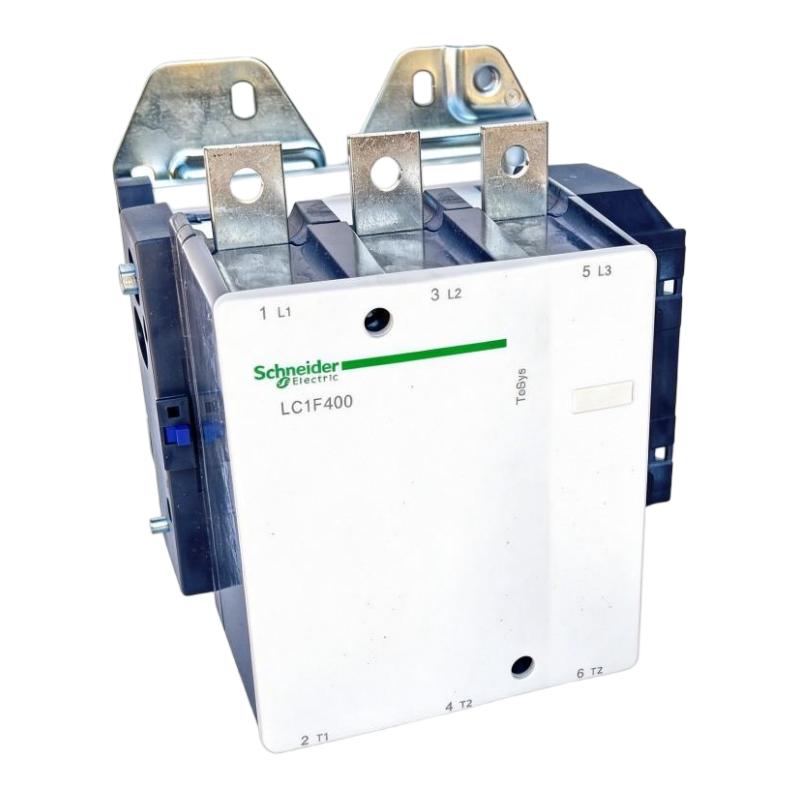
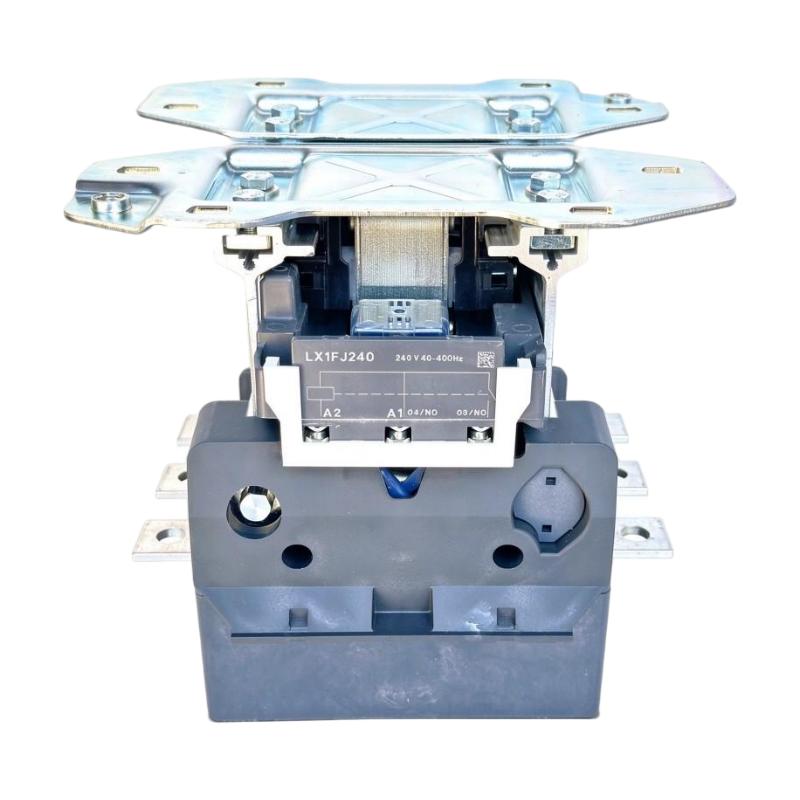
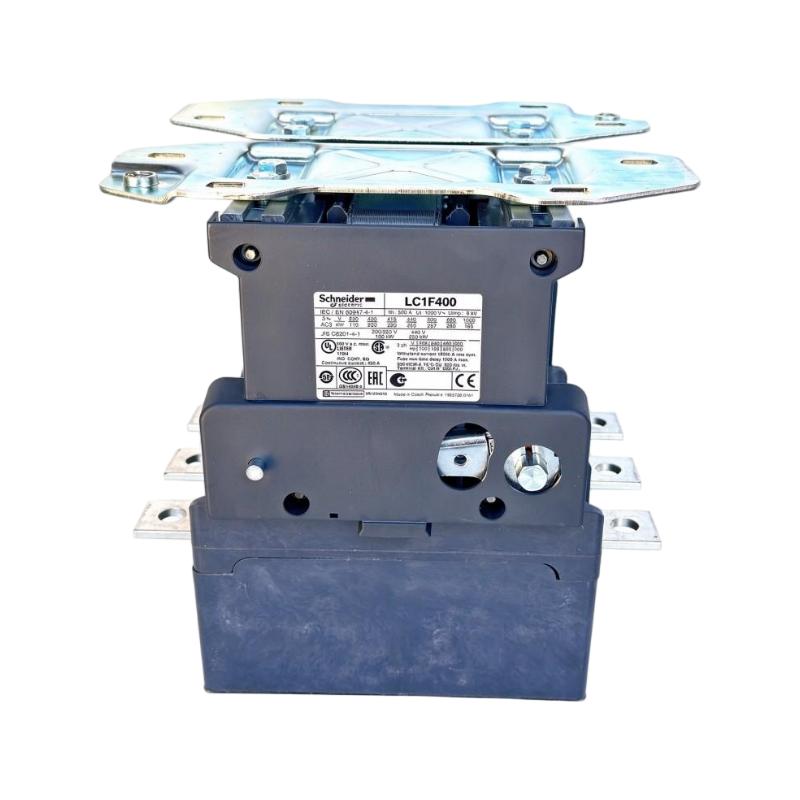
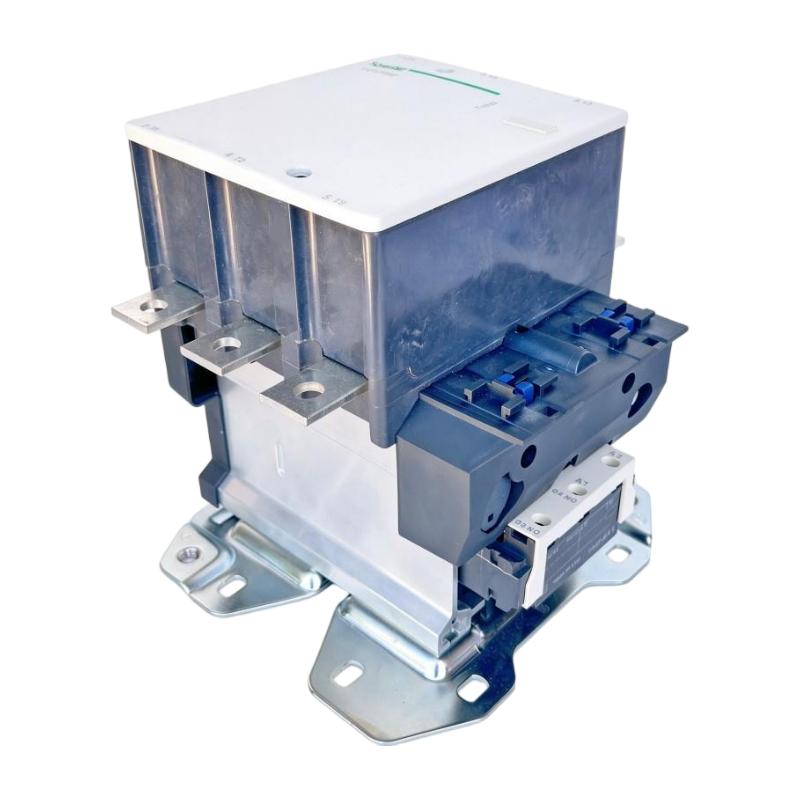
- Schneider
- LC1F400N7
- Contactor
- France
- 206 x 213 x 219 mm
- 9.1 kg
- Xiamen, China
- New & In Stock
- T/T, PayPal, Western Union
- 1 Year
- 1-3 Working Days
- DHL, UPS, TNT, FedEx and EMS.
- 24-Hour Service
- COO
- 7
Our advantage

Global Logistics
We have a 10-year logistics and express cooperation agreement, so our products can be shipped to any place in the world.

Brand new and original
Our products are imported in bulk from the place of origin. Because of the cooperative relationship, our products are all original and 100% new.

24-hour service
We provide 7*24 hours service to our customers. We will be there whenever you need us.

Price advantage
All our products are priced very favorably because we have our own warehouse and supply.
| Company Information | |||
| [email protected] | |||
| Mobile | +8615980777398 | ||
| +8615980777398 | |||
| 15980777398 |
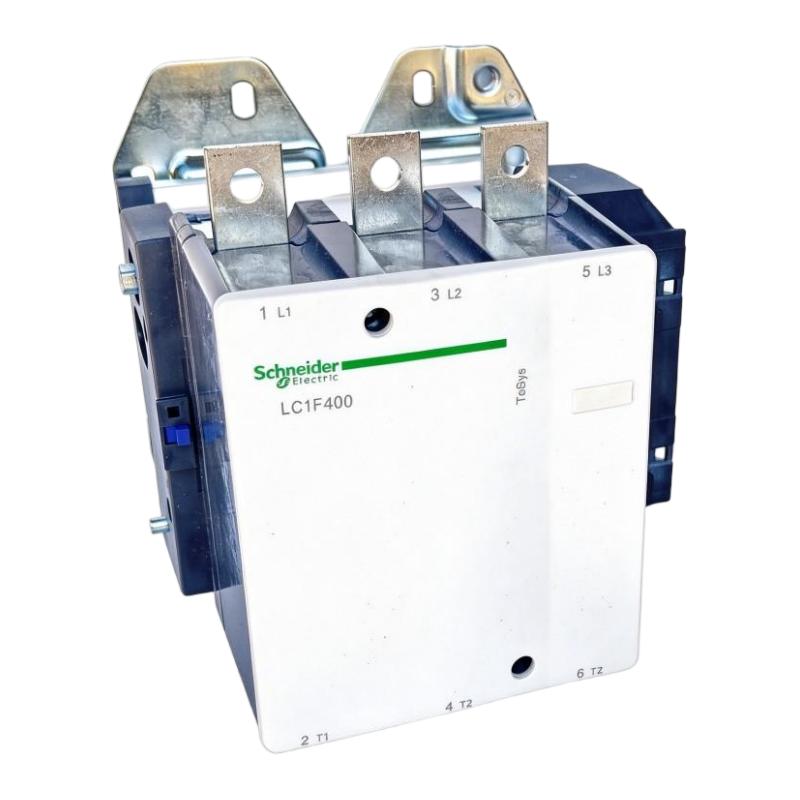
Product Overview
The Schneider Electric LC1F400N7 is a high-current industrial contactor from the TeSys F product range. It is designed for switching and controlling three-phase electrical loads in industrial power distribution, motor control, and automation systems.
As an electromagnetic contactor, the LC1F400N7 uses an electrical control circuit to operate its main power contacts. When the coil receives the specified control voltage, the magnetic mechanism closes the main contacts, allowing current to flow through the connected load. When the coil is de-energized, the contacts return to their open position, interrupting the controlled circuit.
The LC1F400N7 features three normally open main poles and is rated for 400 A in AC-3 applications at operating voltages up to 440 V AC. Its coil operates at 415 V AC, making it important to verify the control supply before installation. The contactor also has an AC-1 conventional thermal current rating of 500 A under the specified conditions.
The TeSys F design is intended for demanding switching applications where electrical equipment requires reliable control of high-current circuits. Typical applications include large motor starters, industrial machinery, power distribution assemblies, and production equipment.
The LC1F400N7 is a specific configuration within the LC1F400 contactor family. Its coil voltage and contact arrangement distinguish it from other related models. Selecting a replacement based only on the 400 A rating is therefore insufficient; the complete catalog number and electrical characteristics must be checked.
Technical Specifications
| Parameter | Specification |
|---|---|
| Brand | Schneider Electric |
| Product Series | TeSys F |
| Model | LC1F400N7 |
| Product Type | Industrial AC Contactor |
| Contactor Application | Motor Control / Resistive Loads |
| Number of Poles | 3P |
| Main Contact Configuration | 3 Normally Open (3NO) |
| AC-3 Rated Operational Current | 400 A |
| AC-3 Operating Voltage | Up to 440 V AC |
| AC-1 Conventional Thermal Current | 500 A |
| Coil Control Voltage | 415 V AC |
| Control Circuit Frequency | 40–400 Hz |
| Rated Operational Voltage | Up to 1000 V AC, subject to application conditions |
| Rated Insulation Voltage | 1000 V |
| Rated Impulse Withstand Voltage | 8 kV |
| Rated Breaking Capacity | 3200 A |
| Short-Time Withstand Current | 3600 A for 10 s at 40°C |
| Product Range | TeSys |
| Dimensions | 206 × 213 × 219 mm |
| Weight | 9.1 kg |
| Product Lifecycle | Discontinued |
| Typical Applications | Motor Control, Industrial Power Switching, Electrical Distribution |
Electrical ratings depend on utilization category, operating voltage, ambient temperature, and installation conditions. Always refer to the product’s technical documentation when designing a switching circuit.
Function and Working Principle
The LC1F400N7 operates through electromagnetic switching. Its coil and contact mechanism allow a low-current control signal to operate a high-current power circuit.
1. Electromagnetic Coil Operation
The contactor contains an electromagnetic coil designed for a 415 V AC control supply. When the correct voltage is applied, the coil generates a magnetic field that moves the contactor’s internal armature.
This movement operates the main contacts and changes the electrical state of the connected power circuit.
The control voltage must match the coil specification. Applying an incorrect voltage may cause unreliable operation, excessive heating, or coil damage.
2. Main Contact Switching
The LC1F400N7 has three normally open main contacts. These contacts are used to switch the three phases of a compatible electrical load.
When the coil is energized, the three main contacts close. When the coil is de-energized, they open.
This arrangement is commonly used in three-phase motor-control circuits, where all three supply phases must be switched together.
3. AC-3 Motor Switching
The contactor is rated for 400 A under AC-3 utilization conditions at voltages up to 440 V AC.
AC-3 is a utilization category associated with starting squirrel-cage motors and switching them off while running. Motor starting produces electrical and mechanical stresses that differ from those associated with resistive loads.
For this reason, engineers should use the AC-3 rating when evaluating motor-control applications rather than treating the AC-1 and AC-3 current ratings as interchangeable.
4. AC-1 Resistive Load Switching
The contactor has a conventional thermal current rating of 500 A under AC-1 conditions.
AC-1 generally applies to non-inductive or slightly inductive loads, such as certain resistive heating applications. The permitted current depends on the operating environment and manufacturer’s specifications.
The higher AC-1 figure does not mean the contactor can automatically switch a 500 A motor load. Motor applications must be evaluated using the appropriate utilization category.
5. Electrical Isolation Through Control
The contactor allows the control circuit to determine when the main power circuit is energized. This supports automatic switching through PLC outputs, motor protection devices, control relays, and other electrical control components.
A contactor is not a substitute for a safety-rated isolation device or a complete protective system. Appropriate circuit breakers, fuses, overload protection, and safety arrangements must be provided separately.
Role in Industrial Control Systems
The LC1F400N7 can serve as a power-switching component within industrial electrical control systems. It is commonly installed in motor-control centers, power distribution panels, and industrial machine cabinets.
PLC-Based Motor Control
A PLC can control the contactor through a suitably rated interface or an intermediate relay. The PLC program can issue commands according to operating conditions, sensor signals, machine sequences, and safety interlocks.
For example, a production system may activate a motor contactor after confirming that upstream equipment is ready and all required operating conditions are satisfied.
The PLC output must not be connected directly to the 415 V AC coil unless the output hardware is specifically rated for that voltage and switching duty. An appropriately rated interface circuit is often required.
Motor Starter Integration
The LC1F400N7 can form part of a direct-on-line motor starter arrangement. In this configuration, the contactor switches the motor supply while associated protection devices provide overload and short-circuit protection.
The complete starter assembly must be designed according to the motor’s rated current, starting characteristics, fault level, and applicable electrical standards.
Industrial Power Distribution
The contactor can also be used to switch high-current industrial circuits where the load and utilization category are within its ratings.
Its three-pole arrangement supports three-phase switching in industrial distribution and machine-control applications.
Control Panel Integration
The contactor is designed for installation in suitable industrial electrical assemblies. Panel designers must consider its dimensions, terminal clearances, conductor sizes, heat dissipation, and maintenance access.
Because this is a high-current device, the mechanical stability of the mounting arrangement and the correct tightening of power connections are particularly important.
Industrial Applications
The Schneider Electric LC1F400N7 is designed for high-current switching applications in industrial environments.
1. Large Industrial Motor Control
Large industrial motors are used in pumps, compressors, fans, conveyors, and production machinery. The contactor can be incorporated into an appropriately rated motor starter to control the motor’s three-phase power supply.
The motor’s starting current, rated current, utilization category, and operating frequency must be considered during selection.
2. Pumping Systems
Industrial pumping stations may use contactors to control motors supplying water, process fluids, or other industrial media.
The LC1F400N7 can be considered for compatible high-current pump motor circuits. The complete system should include suitable overload and short-circuit protection, as well as control interlocks for pressure, flow, and equipment status.
3. Compressor Installations
Large compressor systems require coordinated electrical control to manage motor operation and production demand.
A contactor can switch the compressor motor circuit in response to control signals from the compressor controller or a central PLC. The contactor must be selected according to the motor’s electrical characteristics and switching duty.
4. Industrial Fans and Ventilation
Large ventilation systems may use high-power motors to move air through industrial buildings, manufacturing facilities, and process installations.
The contactor can provide electrical switching for compatible fan motors. Where frequent speed adjustment is required, a variable frequency drive may be used as part of the wider motor-control system.
5. Manufacturing and Processing Equipment
Heavy manufacturing equipment may require high-current contactors for switching motors and other electrical loads.
The LC1F400N7 can be integrated into control cabinets serving industrial production lines, material-handling systems, and process machinery, provided that the load ratings and operating conditions are suitable.
6. Industrial Electrical Distribution
The contactor may be used in electrical assemblies that require controlled switching of compatible three-phase circuits.
Its application should be determined through a proper electrical design, including consideration of prospective fault current, upstream protection, load characteristics, and switching frequency.
Installation and System Integration
Correct installation is essential for the electrical performance, mechanical reliability, and service life of the LC1F400N7.
1. Verify the Coil Voltage
The LC1F400N7 uses a 415 V AC coil. Before installation, verify that the control circuit provides the correct voltage and operates within the permitted frequency range.
Do not assume that another LC1F400 model has the same coil voltage. Schneider Electric uses different coil-voltage suffixes across the product family.
2. Check Main Circuit Ratings
Confirm that the connected load is compatible with the contactor’s ratings.
For motor applications, use the AC-3 rating as the principal selection reference. For resistive loads, assess the applicable AC-1 rating.
The actual permitted current depends on the operating voltage, ambient temperature, duty cycle, and installation conditions.
3. Mounting and Panel Layout
The supplied product dimensions are 206 × 213 × 219 mm, and the listed product weight is 9.1 kg.
The contactor should be installed on a suitable mounting surface inside an appropriately designed electrical cabinet. Provide sufficient clearance around the unit for wiring, ventilation, inspection, and maintenance.
The mounting arrangement must support the device’s weight and the mechanical forces associated with power-circuit connections and switching.
4. Power Terminal Connections
Use conductors and connection hardware suitable for the intended current and installation conditions.
Power terminals must be tightened to the manufacturer’s specified torque. Loose connections can produce excessive contact resistance, localized heating, and equipment damage.
Inspect conductors for correct sizing, insulation condition, and mechanical security before energizing the circuit.
5. Control Circuit Wiring
Connect the 415 V AC coil through an appropriately rated control circuit. Depending on the application, this may include a PLC interface, control relay, auxiliary contacts, and electrical interlocks.
Control wiring should be clearly identified and separated from power conductors where required by the panel design and applicable standards.
6. Protection and Safety
The contactor should operate with suitable upstream short-circuit protection and motor overload protection.
A contactor alone does not provide complete motor protection. The protective devices must be coordinated with the motor, contactor, prospective fault current, and installation requirements.
Before maintenance, isolate the electrical supply and follow appropriate lockout/tagout procedures. Verify that the circuit is de-energized before accessing terminals or internal components.
7. Commissioning and Functional Testing
After installation, inspect the wiring, mounting, terminal connections, and control circuit.
Test the coil operation and confirm that all three main contacts switch correctly. Check the motor’s direction of rotation, operating current, and protective-device response before placing the equipment into normal service.
Record the installed model, coil voltage, wiring arrangement, and relevant maintenance information for future reference.
Compatible System Components
The LC1F400N7 is normally used with additional electrical and automation components to form a complete motor-control or power-switching assembly.
| Component | Function | Integration Considerations |
|---|---|---|
| Three-phase AC motor | Converts electrical power into mechanical motion | Match motor current and starting characteristics to the contactor rating |
| PLC | Controls automatic switching sequences | Use a suitable interface for the 415 V AC coil |
| Motor overload relay | Protects the motor against sustained overload | Select and coordinate according to motor current |
| Circuit breaker | Provides upstream circuit protection | Verify short-circuit rating and coordination |
| Industrial control transformer | Supplies control circuit voltage where required | Confirm the secondary voltage and power capacity |
| Auxiliary contact block | Provides additional control and status contacts | Check the compatible TeSys F accessory reference |
| Motor protection device | Provides additional motor protection functions | Coordinate with the complete starter assembly |
| Electrical control cabinet | Houses switching and protection equipment | Provide adequate space, ventilation, and clearances |
| Terminal blocks | Organize field and control wiring | Select suitable current and voltage ratings |
The listed components are examples of equipment that may be used in a complete installation. They are not necessarily included with the contactor.
Alternative Models and Replacement Considerations
The LC1F400N7 has been discontinued. Schneider Electric identifies LC1G400LSEA from the TeSys Giga range as its recommended replacement.
| Model | Product Family | Replacement Considerations |
|---|---|---|
| LC1F400N7 | TeSys F | Original 3-pole, 400 A AC-3 contactor with 415 V AC coil |
| LC1G400LSEA | TeSys Giga | Manufacturer-recommended replacement; verify coil, accessories, dimensions, and wiring |
| LC1F400F7 | TeSys F | Related 400 A model with a different coil-voltage configuration |
| LC1F400M7 | TeSys F | Related model with a 220 V AC coil; not a direct coil-voltage substitute |
| LC1F400U7 | TeSys F | Related model with a 240 V AC coil; verify complete configuration |
When selecting a replacement, compare the following specifications:
- AC-3 rated current and operating voltage.
- AC-1 thermal current where applicable.
- Coil control voltage and frequency.
- Number of poles and main contact arrangement.
- Auxiliary contact configuration.
- Mounting dimensions and terminal positions.
- Electrical clearances and connection requirements.
- Upstream protective-device coordination.
- Control circuit wiring and interlocking requirements.
A newer contactor may have different dimensions, accessories, terminal arrangements, and control characteristics. Even when Schneider Electric identifies a recommended replacement, the complete electrical assembly should be reviewed before installation.
Key Advantages
High-Current Switching Capability
The LC1F400N7 provides a 400 A AC-3 rating at operating voltages up to 440 V AC, supporting compatible industrial motor-control applications.
Three-Pole Main Contact Arrangement
Its three normally open main contacts allow coordinated switching of three-phase electrical loads.
415 V AC Control Coil
The specified coil voltage supports integration into compatible industrial control circuits designed for 415 V AC operation.
TeSys F Product Family
The TeSys F range is designed for industrial power switching and motor-control applications involving substantial electrical loads.
Industrial Panel Integration
Its design allows installation in suitable motor-control centers and electrical cabinets, subject to the required mounting and clearance conditions.
Established Maintenance Applications
The LC1F400N7 may be encountered in existing industrial installations. Accurate identification helps maintenance teams source the correct spare part and assess suitable replacement options.
Technical FAQs
1. What is the Schneider Electric LC1F400N7?
The LC1F400N7 is a TeSys F industrial contactor with three normally open main poles. It is designed for high-current switching, including motor-control applications.
2. What is the rated current of the LC1F400N7?
Its AC-3 rated operational current is 400 A at voltages up to 440 V AC. Its conventional thermal current under AC-1 conditions is 500 A. These ratings apply to different utilization categories and should not be treated as interchangeable.
3. What is the coil voltage?
The LC1F400N7 uses a 415 V AC control coil. The control supply must match the coil specification.
4. How many poles does this contactor have?
It has three poles, with three normally open main contacts (3NO). It is suitable for switching compatible three-phase circuits.
5. What is the difference between AC-1 and AC-3 ratings?
AC-1 is generally associated with non-inductive or slightly inductive loads, while AC-3 is used for starting squirrel-cage motors and switching them off while running.
The correct utilization category must be used when selecting a contactor for a specific load.
6. Can the LC1F400N7 be controlled by a PLC?
Yes. A PLC can control the contactor through a suitably rated output interface or intermediate relay. The interface must be designed for the contactor’s 415 V AC coil.
7. Does the contactor provide motor overload protection?
No. The contactor switches the power circuit but does not replace a motor overload relay or suitable motor protection device.
8. Is the LC1F400N7 still available from the manufacturer?
Schneider Electric lists the model as discontinued on April 6, 2026. Availability may remain through existing inventory or industrial spare-parts suppliers.
9. What is the recommended replacement?
Schneider Electric identifies the LC1G400LSEA TeSys Giga contactor as the recommended replacement. Verify the full application requirements before substitution.
10. What should buyers check before purchasing?
Verify the full catalog number, 415 V AC coil, 400 A AC-3 rating, three-pole contact arrangement, physical condition, terminal condition, and product authenticity. For used equipment, request clear photographs and appropriate functional test information.
Procurement and Maintenance Recommendations
When purchasing the Schneider Electric LC1F400N7, confirm the complete model reference and check that the 415 V AC coil matches the intended control circuit.
For existing installations, compare the contactor’s ratings with the connected motor or load. Check the utilization category, rated current, operating voltage, switching frequency, and upstream protective-device coordination.
For new-old-stock or refurbished units, request photographs of the nameplate, main terminals, coil connections, and overall housing. Confirm the product’s condition, included accessories, test status, warranty, and return terms.
During maintenance, inspect the main contacts for signs of wear, overheating, or abnormal discoloration. Check terminal tightness according to the manufacturer’s specified torque and inspect the coil and mechanical operating mechanism for abnormal conditions.
Because the model has been discontinued, maintenance teams should also evaluate the recommended LC1G400LSEA replacement. Any migration should include a review of mounting arrangements, electrical connections, coil voltage, control logic, and protective-device coordination.
Conclusion
The Schneider Electric LC1F400N7 TeSys F contactor is a three-pole industrial switching device with a 400 A AC-3 rating and a 415 V AC control coil. It is designed for high-current motor-control and industrial power-switching applications.
With dimensions of 206 × 213 × 219 mm and a product weight of 9.1 kg, the LC1F400N7 is suitable for installation in appropriately designed industrial electrical assemblies. Its 500 A AC-1 thermal current rating provides additional information for resistive-load applications, but motor applications must be evaluated using the AC-3 rating.
Since this model has been discontinued, accurate identification and replacement planning are important. The recommended LC1G400LSEA should be evaluated against the original installation before being adopted as a replacement.