

ProductPRODUCT
Featured products
Contact Us
- Schneider
- XCC-1514TS10X
- XCC Incremental Encoder
- France
- 58 mm
- 0.435 kg
- Xiamen, China
- New & In Stock
- T/T, PayPal, Western Union
- 1 Year
- 1-3 Working Days
- DHL, UPS, TNT, FedEx and EMS.
- 24-Hour Service
- COO
- 9
Our advantage

Global Logistics
We have a 10-year logistics and express cooperation agreement, so our products can be shipped to any place in the world.

Brand new and original
Our products are imported in bulk from the place of origin. Because of the cooperative relationship, our products are all original and 100% new.

24-hour service
We provide 7*24 hours service to our customers. We will be there whenever you need us.

Price advantage
All our products are priced very favorably because we have our own warehouse and supply.
| Company Information | |||
| [email protected] | |||
| Mobile | +8615980777398 | ||
| +8615980777398 | |||
| 15980777398 |
1. Product Overview
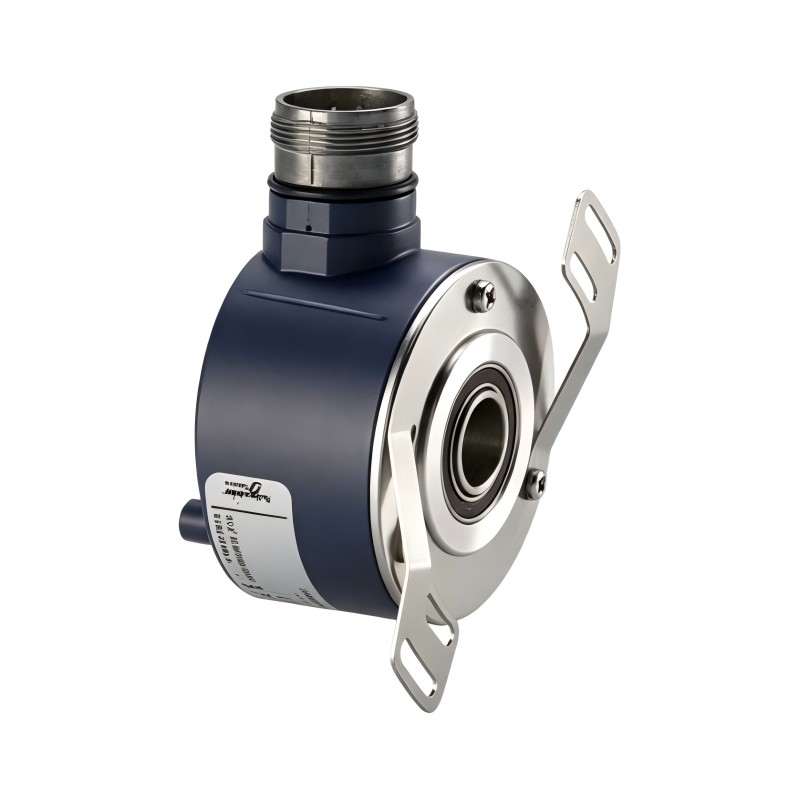
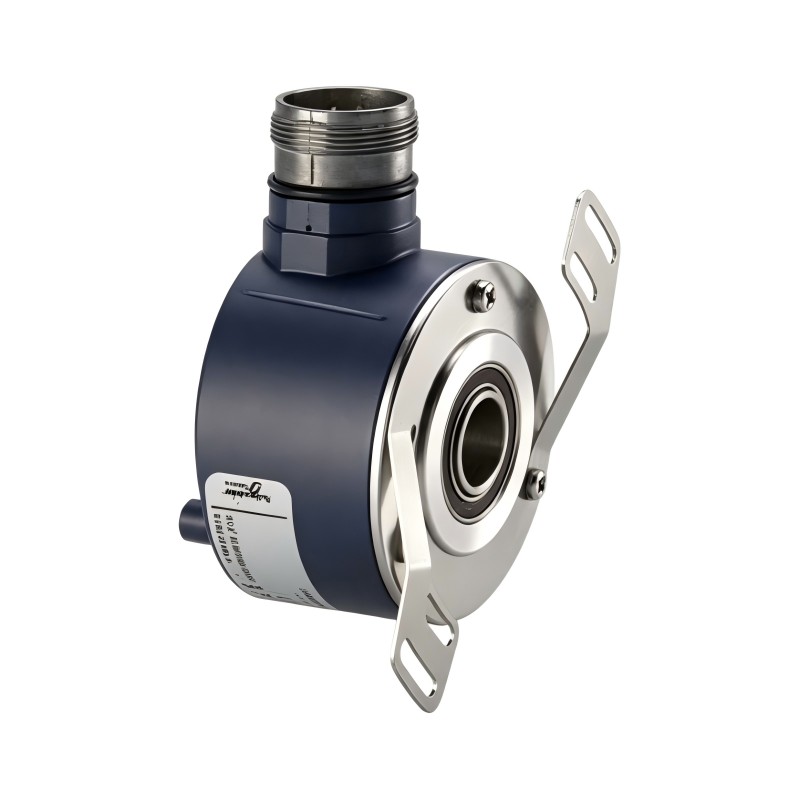
The Schneider Electric XCC1514TS10X is an incremental rotary encoder designed to provide reliable rotational position, speed, and movement feedback for industrial automation systems. As part of the OsiSense XCC encoder family, it is suitable for applications requiring accurate motion measurement and dependable feedback signals for programmable logic controllers (PLCs), motion controllers, counters, and compatible industrial control equipment.
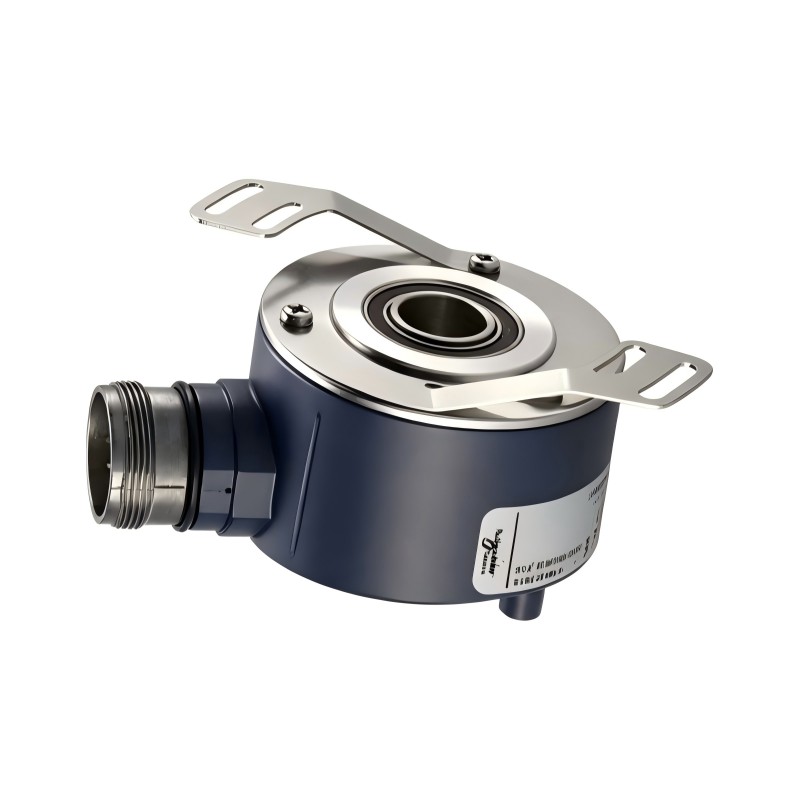
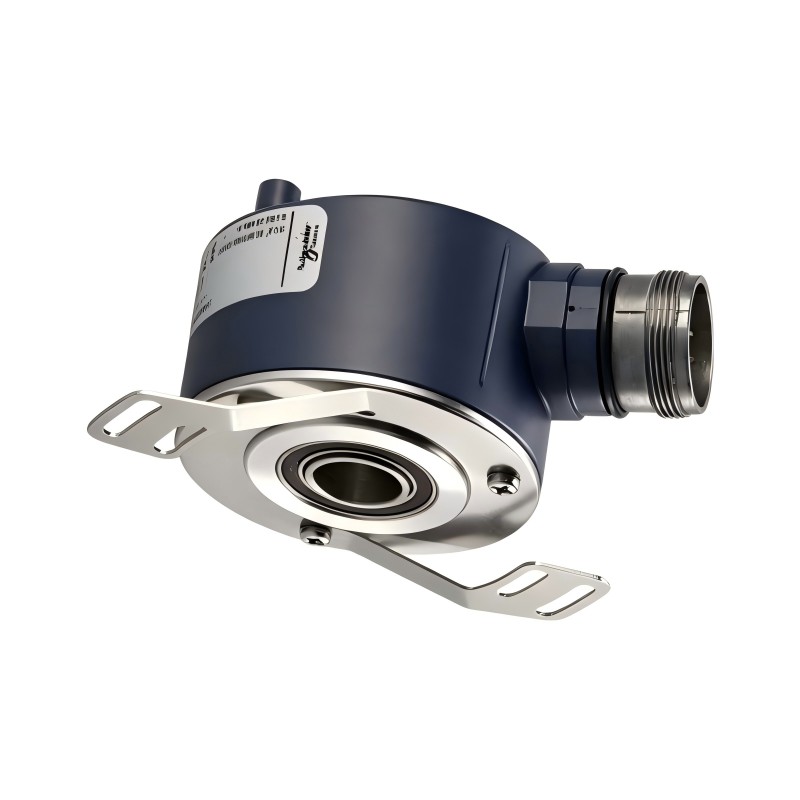
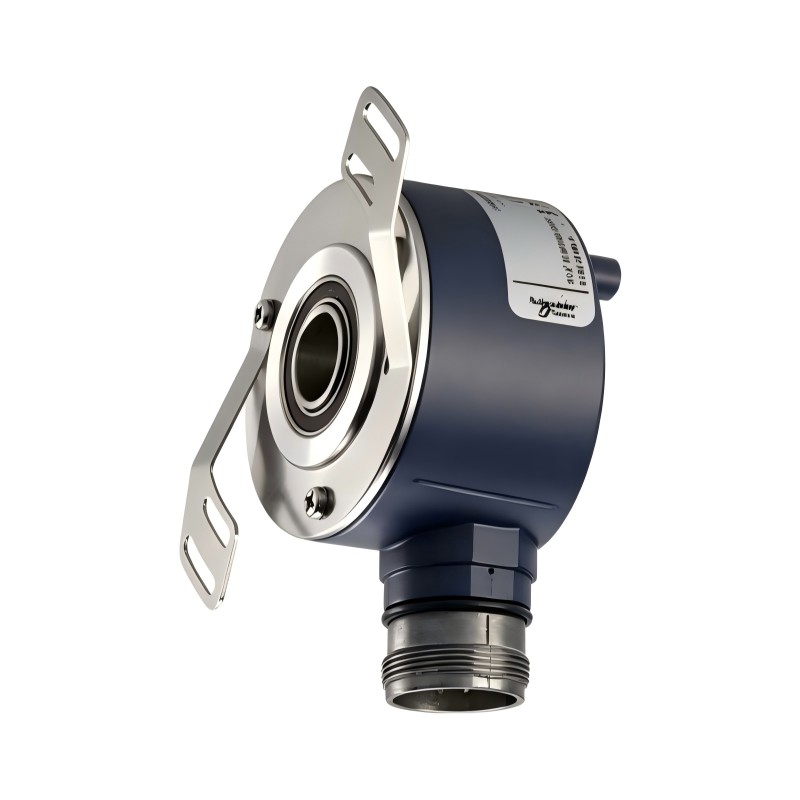
With a 58 mm housing diameter, a 14 mm through shaft, and a resolution of 1000 points per revolution, the XCC1514TS10X is designed for integration into machinery where rotational movement must be monitored and converted into electrical signals. Its through-shaft mounting arrangement allows the encoder to be installed around a compatible rotating shaft, making it useful in conveyor systems, packaging equipment, material handling machinery, and automated production lines.
A key feature of the XCC1514TS10X is its Type X output stage, which uses a 5 V RS-422 differential signal interface. Differential transmission can help improve signal reliability in electrically noisy industrial environments when the encoder is paired with a compatible receiving device and properly installed cabling.
The encoder uses a radial M23 male connector with 12 pins. This connection arrangement supports integration into industrial electrical systems through an appropriate mating connector or compatible pre-wired cable assembly.
For equipment maintenance teams, automation engineers, and industrial spare-parts buyers, identifying the complete model number is essential. The XCC1514TS10X should not be treated as interchangeable with every encoder in the XCC1514TS family because different suffixes may indicate different output interfaces, even when the housing and resolution are similar.
2. Technical Specifications
| Parameter | Specification |
|---|---|
| Brand | Schneider Electric |
| Product series | OsiSense XCC |
| Model | XCC1514TS10X |
| Product type | Incremental rotary encoder |
| Housing diameter | 58 mm |
| Shaft type | Through shaft |
| Shaft diameter | 14 mm |
| Shaft tolerance | H7 |
| Resolution | 1000 points per revolution |
| Output stage | Type X |
| Output interface | 5 V RS-422 differential driver |
| Supply voltage range | 4.75–30 V DC, according to product documentation |
| Electrical connection | Radial M23 male connector, 12 pins |
| Number of output channels | 3 |
| Maximum output frequency | Up to 300 kHz |
| Maximum rotational speed | Up to 6000 rpm |
| Enclosure material | Zamak |
| Base material | Aluminium |
| Shaft material | Stainless steel |
| Protection rating | IP65 |
| Operating temperature | -30°C to +70°C |
| Weight | 0.435 kg |
Specifications should be checked against the applicable product documentation and the encoder’s nameplate before installation. The Type X output interface is a critical selection parameter: confirm the receiving device’s RS-422 input requirements and the required electrical supply before connecting the encoder.
3. Function and Working Principle
The primary function of the Schneider XCC1514TS10X is to convert mechanical rotation into electrical feedback signals. A control system can process these signals to determine movement, estimate rotational speed, and track relative position.
Incremental Position Measurement
Unlike an absolute encoder, an incremental encoder does not independently provide a unique absolute position immediately after power-up. Instead, it generates pulses as the shaft rotates. The controller counts these pulses to calculate movement relative to a reference point.
The XCC1514TS10X has a nominal resolution of 1000 points per revolution. This provides the controller with a measurement basis for monitoring shaft rotation and calculating incremental displacement.
For example, if a compatible controller counts 1000 encoder points during one complete revolution, the result corresponds to one nominal encoder revolution under the specified counting convention. The final position-count resolution in the control program may differ depending on whether the controller counts rising edges, both signal edges, or uses quadrature decoding.
Rotational Speed Feedback
The frequency of the encoder’s output pulses changes with rotational speed. A PLC, counter, or motion controller can measure pulse frequency over a defined interval to estimate shaft speed.
This information can support speed monitoring, synchronization, and process control. For instance, a controller may compare measured conveyor speed against a target value and adjust a compatible variable frequency drive when the application and control architecture support closed-loop feedback.
The encoder does not independently regulate motor speed. It supplies feedback signals that another control device must interpret and use.
Direction Detection
Incremental encoder systems commonly use phase-related output signals to determine direction of rotation. A compatible receiver can compare the timing relationship between the A and B channels to identify forward or reverse movement.
The XCC1514TS10X uses a Type X RS-422 output stage. Engineers should confirm the exact signal assignments and receiver wiring against the model-specific connection diagram rather than assuming that all XCC encoder variants have identical electrical interfaces.
Differential Signal Transmission
The RS-422 output stage transmits complementary signal pairs to a compatible receiver. Differential signaling can improve resistance to common-mode electrical interference compared with single-ended signaling, provided the cable, grounding, termination, and receiver are appropriate for the installation.
This feature is particularly relevant when the encoder is installed near motors, drives, switching equipment, or other sources of electrical noise.
4. Role in Industrial Control Systems
The XCC1514TS10X serves as a feedback component within a larger automation system. It typically works alongside mechanical drive components, electrical interfaces, and control equipment rather than operating as a standalone controller.
PLC Position and Speed Feedback
A PLC equipped with a compatible high-speed counter or encoder interface can process incremental signals from the encoder. Depending on the controller’s capabilities, the measured values can be used to monitor shaft rotation, calculate travel distance, identify movement, or trigger actions at configured positions.
Before selecting an input module, confirm that it supports the encoder’s RS-422 differential interface, required input frequency, signal format, and supply arrangement. Standard digital inputs are not automatically suitable for high-frequency encoder signals.
Motor and Drive Monitoring
In selected applications, the encoder can provide motion feedback to a compatible drive or motion controller. The control system may use the feedback to evaluate speed, compare commanded and actual movement, or support synchronization between machine sections.
Compatibility depends on the drive’s feedback options and control architecture. The presence of an encoder input on a drive does not, by itself, guarantee support for this particular RS-422 encoder.
Production Counting
The encoder can support production counting when connected to an appropriate counter or PLC input. The controller can translate encoder pulses into movement increments or product counts using the machine’s mechanical ratio and configured logic.
Accurate counting requires correct scaling, suitable mechanical coupling, and appropriate handling of pulse frequency and direction.
Machine Status and Diagnostics
Encoder feedback can help maintenance personnel identify certain motion-related problems. For example, unexpected changes in pulse frequency or a mismatch between commanded and measured movement may indicate a mechanical issue, a coupling problem, a wiring fault, or a control-system configuration error.
These symptoms require further diagnosis; encoder signals alone cannot identify the exact cause of a machine fault.
5. Industrial Applications
The Schneider XCC1514TS10X can be considered for industrial machinery that requires incremental rotational feedback and supports its mechanical and electrical specifications.
Conveyor and Material Handling Systems
Conveyor systems often need to monitor the rotation of rollers, drive shafts, or other moving components. An encoder can provide pulse feedback for speed estimation, distance measurement, synchronization, and movement monitoring.
The 14 mm through-shaft configuration may suit installations where the mechanical shaft dimensions and mounting arrangement match the encoder.
Packaging Machinery
Packaging equipment can use incremental feedback to coordinate product movement, conveyor speed, and machine cycles. When connected to compatible control equipment, encoder signals can support repeatable motion measurement and synchronization between operating stages.
The control system must account for the machine’s mechanical transmission ratio, product spacing, and required positioning accuracy.
Printing and Processing Equipment
Rotational feedback is useful in printing, web handling, and continuous processing machinery, where coordinated movement may be required between rollers and driven sections.
The RS-422 interface may be beneficial where the installation requires differential signal transmission, provided the connected controller supports the correct input format.
Automated Assembly Lines
Assembly equipment may use encoders to monitor the rotation of shafts, rollers, or driven mechanisms. The resulting signals can help the control system determine whether movement has occurred as expected and whether a configured motion threshold has been reached.
Cutting and Feed Systems
In cutting machinery and feed mechanisms, encoder pulses can be converted into travel increments. The relationship between encoder rotation and actual linear movement depends on the drive roller diameter, gearing, belt or screw mechanism, and any mechanical slip.
The encoder’s resolution should therefore be evaluated alongside the complete mechanical system rather than considered in isolation.
6. Installation and System Integration
Correct installation is essential for reliable encoder feedback. Mechanical misalignment, unsuitable electrical connections, and incorrect signal interpretation can cause unstable readings or inaccurate movement measurement.
Mechanical Mounting
The XCC1514TS10X has a nominal housing diameter of 58 mm and a 14 mm through shaft. Before installation, verify that the machine shaft is dimensionally compatible and that the mounting arrangement accommodates the encoder body and anti-rotation hardware.
Recommended checks include:
- Confirm the shaft diameter and tolerance against the encoder specification.
- Check axial and radial loading limits in the applicable technical documentation.
- Align the encoder and rotating shaft correctly.
- Avoid forcing the encoder onto an incompatible shaft.
- Prevent excessive vibration, shock, or mechanical stress.
- Verify that the coupling and mounting hardware do not introduce unwanted loads.
A through-shaft encoder should be mounted according to its prescribed installation arrangement. Do not use the encoder housing or shaft as a substitute for suitable mechanical support.
Electrical Connection
The XCC1514TS10X uses a 12-pin radial M23 male connector. A compatible mating connector or pre-wired cable assembly is required.
Before energizing the system, check:
- The complete model number and output-stage suffix.
- The supply-voltage requirements of the encoder and receiver.
- The M23 connector pin assignments.
- The complementary RS-422 signal pairs.
- The receiving device’s input specification.
- Cable shielding and routing requirements.
- Any grounding, termination, and common-reference requirements specified by the equipment manufacturers.
Do not rely solely on wire color to determine pin assignments. Use the applicable wiring diagram for the exact model.
RS-422 Receiver Compatibility
The Type X output stage is designed for a 5 V RS-422 differential interface. The connected PLC input module, high-speed counter, motion controller, or interface module must accept the encoder’s differential signal format.
A device designed only for push-pull or single-ended encoder signals may require a suitable interface or a different encoder variant. An electrical conversion should be engineered and validated rather than assumed to be compatible.
Resolution and Scaling
The encoder provides 1000 points per revolution. The count value used by the controller depends on the selected decoding method.
For a rotating shaft, the controller can use encoder counts to calculate angular movement. For a conveyor or linear mechanism, the calculation also requires the effective roller circumference, gearing ratio, and other mechanical parameters.
Configure the controller using the correct counting convention. Confusing points per revolution with quadrature counts can produce a scaling error, even when the encoder itself is functioning correctly.
Commissioning
During commissioning, rotate the shaft under controlled conditions and verify that the controller receives stable signals. Check the direction of rotation, pulse count, speed calculation, and response to machine movement.
If the count is unstable or missing, inspect the connector, supply voltage, cable, signal polarity, receiver configuration, and mechanical mounting before replacing the encoder.
7. Compatible System Components
The XCC1514TS10X is normally integrated into a complete control system. The following component categories may be required, depending on the machine design.
| Component category | Function | Compatibility consideration |
|---|---|---|
| PLC | Processes feedback and executes machine logic | Requires a suitable encoder interface or high-speed counter |
| High-speed counter module | Counts encoder pulses | Must support the required RS-422 differential input |
| Motion controller | Processes motion feedback and coordinates movement | Confirm supported signal format, frequency, and counting mode |
| Motor drive | Controls the motor or driven mechanism | Encoder connection depends on drive feedback capabilities |
| M23 mating connector | Connects the encoder to field wiring | Must match the 12-pin connector arrangement |
| Shielded encoder cable | Carries encoder signals to the control cabinet | Select suitable cable construction and length for the environment |
| Mechanical mounting hardware | Secures the encoder to the machine | Must match the encoder mounting arrangement and shaft geometry |
| Industrial power supply | Provides the required electrical supply | Verify voltage, wiring, and system grounding requirements |
These are system component categories, not a guarantee of direct compatibility with every PLC, drive, or accessory from Schneider Electric or another manufacturer. The electrical interface and mechanical installation must be checked for the specific application.
8. Recommended Alternative Models
Several related XCC1514TS models share the 58 mm housing and 14 mm through-shaft configuration. They may be worth considering when sourcing a replacement, but the resolution and output interface must be checked carefully.
| Model | Resolution | Output type | Replacement consideration |
|---|---|---|---|
| XCC1514TS01X | 100 points/revolution | 5 V RS-422 | Lower resolution; requires application review |
| XCC1514TS03X | 360 points/revolution | 5 V RS-422 | Lower resolution; verify scaling |
| XCC1514TS05X | 500 points/revolution | 5 V RS-422 | Lower resolution; verify required accuracy |
| XCC1514TS10X | 1000 points/revolution | 5 V RS-422 | Reference model |
| XCC1514TS11X | 1024 points/revolution | 5 V RS-422 | Similar interface, but different resolution |
| XCC1514TS25X | 2500 points/revolution | 5 V RS-422 | Higher resolution; verify controller and scaling |
| XCC1514TS50X | 5000 points/revolution | 5 V RS-422 | Higher resolution; verify frequency and control requirements |
| XCC1514TS10Y | 1000 points/revolution | Push-pull | Different output interface; not automatically interchangeable |
For replacement procurement, confirm the exact part number, shaft dimensions, output stage, supply requirements, connector pinout, resolution, and available mounting accessories. A model with a similar appearance or the same housing diameter may still be electrically incompatible.
9. Key Advantages
Industrial Motion Feedback
The XCC1514TS10X provides incremental feedback that can be used for rotational movement measurement, speed monitoring, and position tracking when integrated with suitable control equipment.
1000-Point Resolution
Its 1000-point resolution offers a defined basis for measuring shaft rotation. Whether this is sufficient depends on the required measurement accuracy, mechanical transmission, controller counting method, and operating speed.
Differential RS-422 Output
The Type X output stage provides differential signaling for compatible receiving devices. Correctly implemented differential transmission can help maintain signal integrity in electrically demanding environments.
Through-Shaft Design
The 14 mm through-shaft configuration can simplify integration into machinery designed for this mounting arrangement. Mechanical dimensions and loading limits should be verified before installation.
Compact Industrial Housing
The 58 mm housing supports integration into a range of industrial machines. The encoder’s physical dimensions and mounting clearances should be considered during machine design or replacement planning.
Established XCC Product Family
The OsiSense XCC family includes incremental and other encoder configurations with different housing sizes, shaft arrangements, resolutions, and output stages. This range can help engineers select an encoder configuration suited to a particular control requirement.
10. Technical FAQs
What is the Schneider XCC1514TS10X?
It is an OsiSense XCC incremental rotary encoder designed to provide rotational feedback. It has a 58 mm housing, a 14 mm through shaft, 1000 points per revolution, and a Type X RS-422 differential output stage.
What is the resolution of the XCC1514TS10X?
The nominal resolution is 1000 points per revolution. The final count resolution in the PLC or motion controller depends on the receiver’s decoding method and configuration.
What is the output type of this encoder?
The XCC1514TS10X uses a Type X output stage, identified with a 5 V RS-422 differential driver. It should not be confused with the Type Y push-pull version.
What is the supply voltage range?
The product documentation lists a supply range of 4.75–30 V DC. Because the output stage is a 5 V RS-422 type, verify the detailed electrical specifications and receiver requirements before selecting the supply and wiring arrangement.
Can it connect directly to a PLC?
It can connect to a PLC system if the PLC or its interface module supports the encoder’s RS-422 differential signals, required pulse frequency, and wiring arrangement. A standard digital input is not necessarily suitable.
What is the shaft diameter?
The encoder has a 14 mm through shaft with an H7 shaft tolerance specification. Confirm the machine shaft dimensions and mounting arrangement before installation.
What connector does it use?
It uses a radial M23 male connector with 12 pins. The mating connector and cable must match the pin configuration and electrical requirements.
Is the XCC1514TS10Y a direct replacement?
Not necessarily. Although the XCC1514TS10Y has the same nominal resolution and similar mechanical configuration, it uses a push-pull output rather than the Type X RS-422 interface. Replacement suitability depends on the receiving controller and wiring.
What is the weight of the XCC1514TS10X?
The specified product weight is 0.435 kg. Packaging and shipping weight may be different.
What should be checked before ordering?
Confirm the complete part number, resolution, output type, supply requirements, connector arrangement, shaft dimensions, mounting hardware, and compatibility with the receiving controller. For a replacement, comparing the original unit’s nameplate and wiring documentation is particularly important.
11. Procurement and Maintenance Recommendations
When purchasing a Schneider XCC1514TS10X, buyers should verify the model suffix rather than relying only on the XCC series name. The difference between Type X RS-422 and Type Y push-pull outputs can determine whether an encoder works with the existing control system.
For maintenance teams, it is useful to record the installed model number, wiring arrangement, controller input configuration, and mechanical scaling parameters. These details can reduce downtime when a replacement is needed.
Before installing a replacement encoder, inspect the shaft mounting, anti-rotation arrangement, connector condition, cable shielding, and surrounding mechanical components. If the old encoder failed, determine whether the cause was electrical interference, mechanical overload, vibration, incorrect wiring, or a separate control-system fault.
For international spare-parts procurement, also confirm the supplied unit’s condition, product identification, packaging requirements, and applicable warranty terms with the supplier.
12. Conclusion
The Schneider Electric XCC1514TS10X is a 58 mm incremental rotary encoder with a 14 mm through shaft, 1000 points per revolution, a radial 12-pin M23 male connector, and a Type X 5 V RS-422 differential output stage. Its 0.435 kg weight and industrial mounting configuration make it a defined option for compatible motion-feedback applications.
It can support speed monitoring, incremental position measurement, movement counting, and machine synchronization when connected to an appropriate PLC, high-speed counter, or motion controller.
The most important selection consideration is electrical compatibility. Before installation or replacement, verify the RS-422 interface, supply requirements, resolution, shaft dimensions, and connector wiring against the requirements of the complete automation system.