

ProductPRODUCT
Featured products
Contact Us
- Schneider
- TWDDDI16DK
- Discrete Input Module
- France
- 100 × 80 × 20 mm
- 0.065 kg
- Xiamen, China
- New & In Stock
- T/T, PayPal, Western Union
- 1 Year
- 1-3 Working Days
- DHL, UPS, TNT, FedEx and EMS.
- 24-Hour Service
- COO
- 3
Our advantage

Global Logistics
We have a 10-year logistics and express cooperation agreement, so our products can be shipped to any place in the world.

Brand new and original
Our products are imported in bulk from the place of origin. Because of the cooperative relationship, our products are all original and 100% new.

24-hour service
We provide 7*24 hours service to our customers. We will be there whenever you need us.

Price advantage
All our products are priced very favorably because we have our own warehouse and supply.
| Company Information | |||
| [email protected] | |||
| Mobile | +8615980777398 | ||
| +8615980777398 | |||
| 15980777398 |
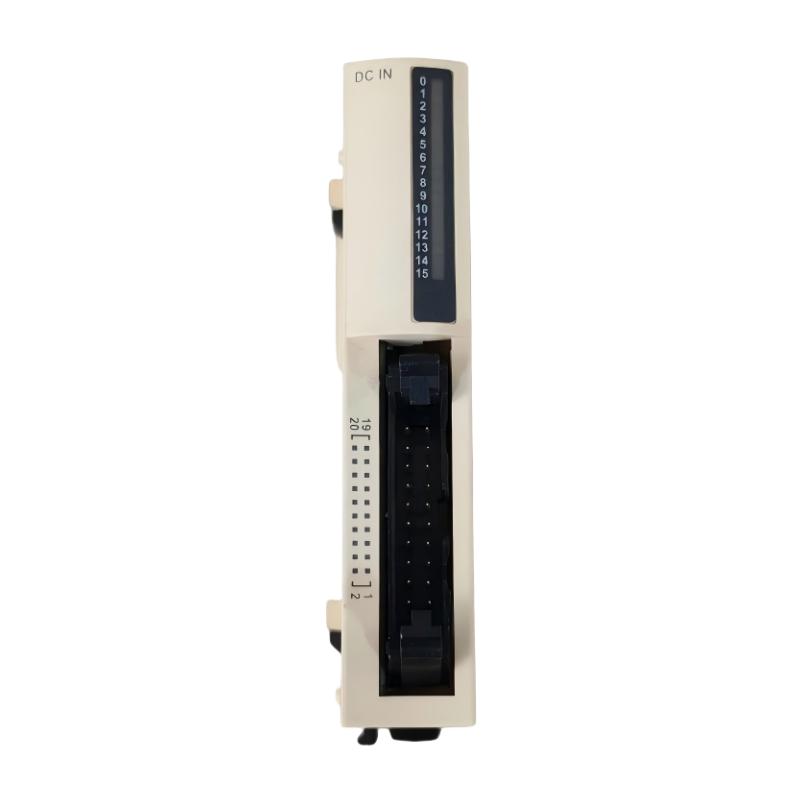
1. Product Overview
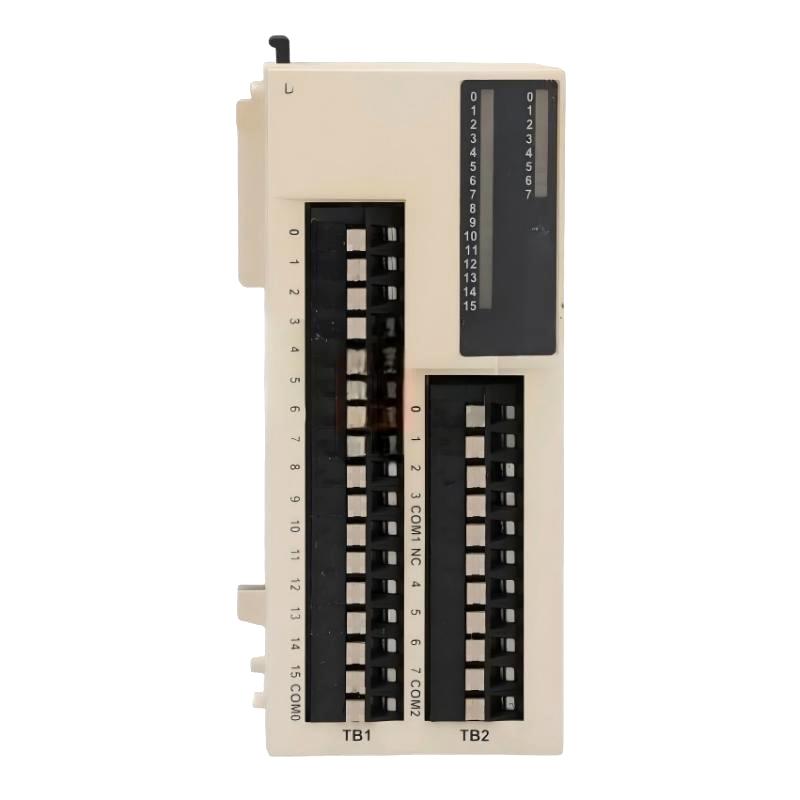
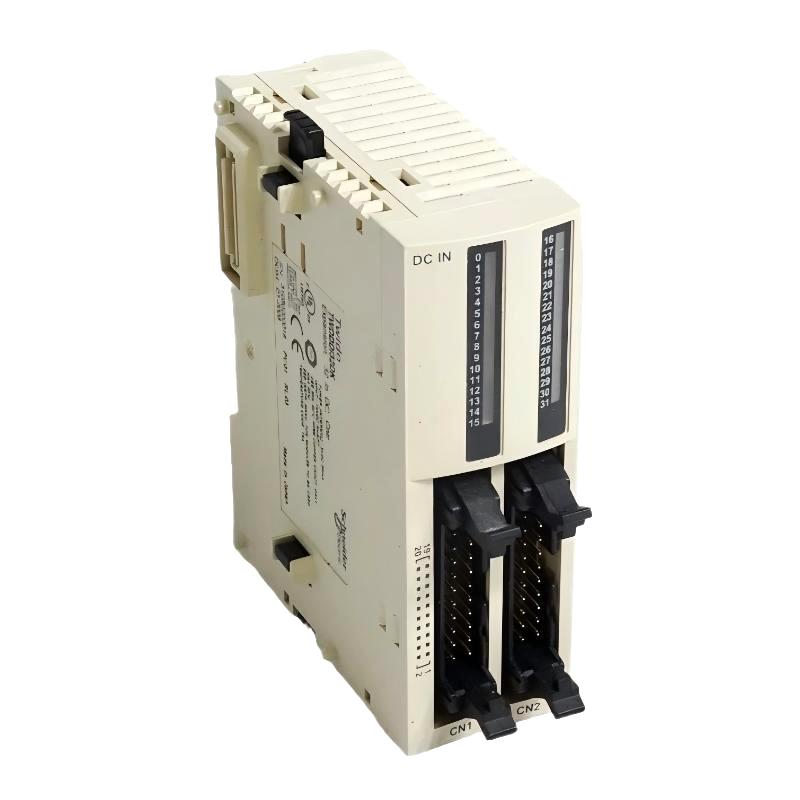
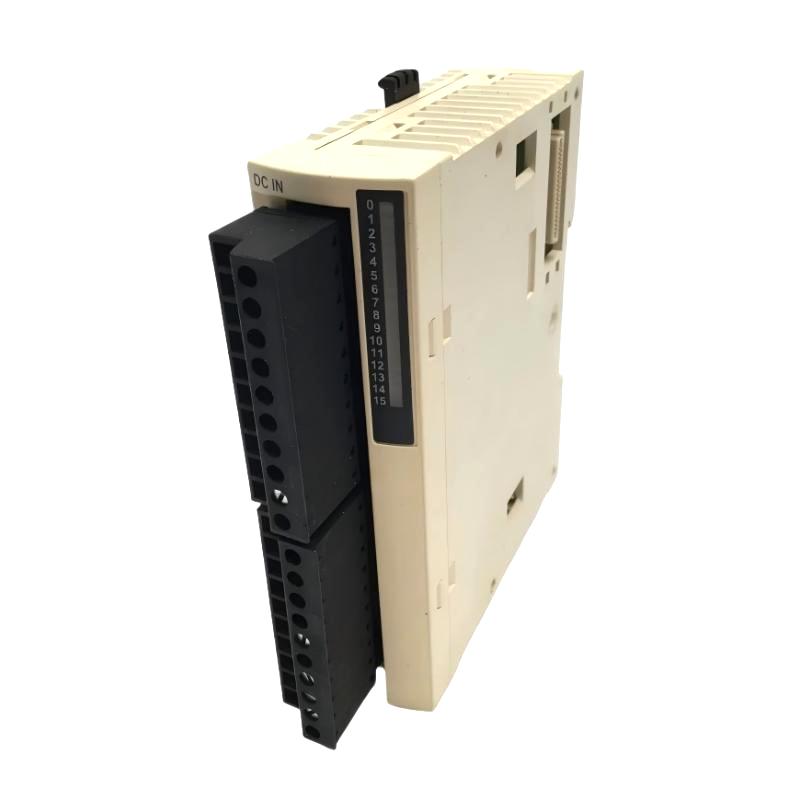
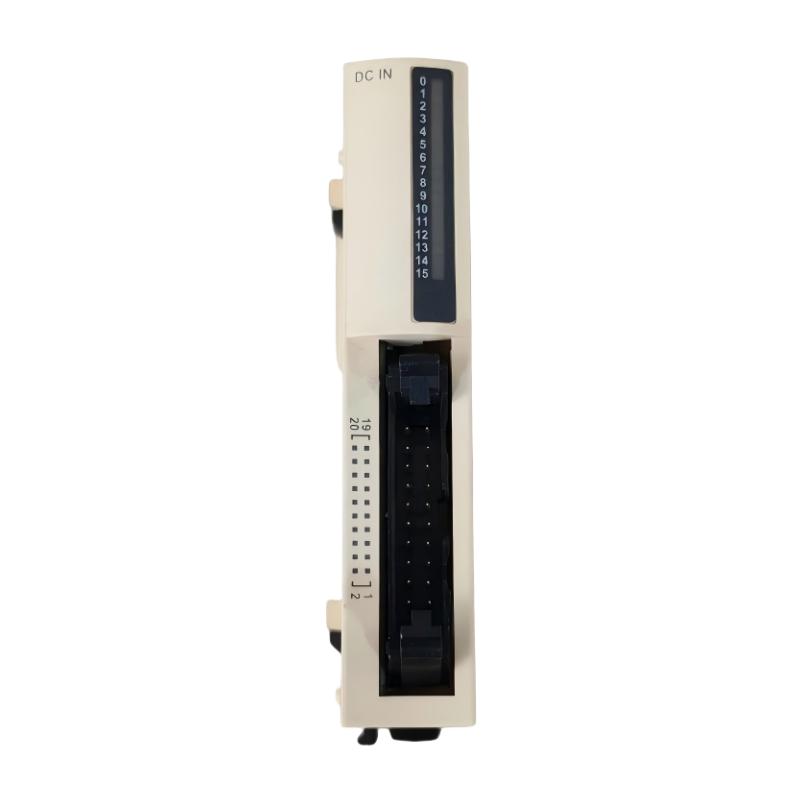
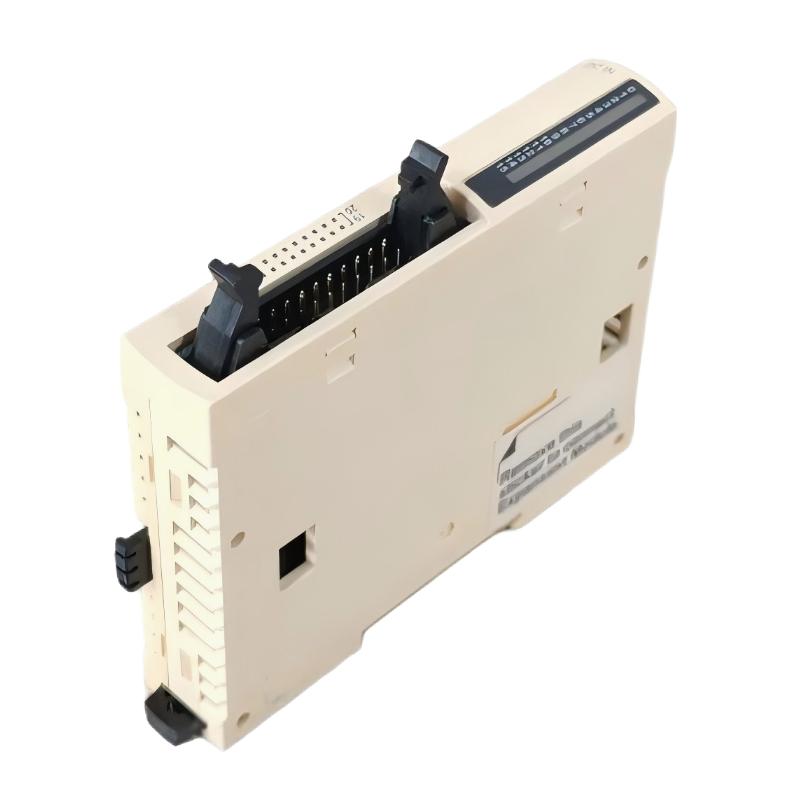
The Schneider Electric TWDDDI16DK Discrete Input Module is a digital input expansion module designed for compatible Modicon Twido programmable logic controller (PLC) systems. It provides 16 discrete input channels for monitoring the on/off states of industrial sensors, switches, push buttons, auxiliary contacts, and other compatible 24 V DC field devices.
As part of the Twido automation platform, the TWDDDI16DK allows a PLC to collect multiple digital signals through a single expansion module. The controller can use these signals in its application logic to monitor machine conditions, sequence operations, generate alarms, and coordinate connected equipment.
The module supports 24 V DC input signals and sink/source input configurations. Its 16-channel arrangement makes it suitable for control panels and machinery that require several digital status signals without occupying excessive expansion capacity.
A discrete input module differs from an output module in its function. The TWDDDI16DK receives signals from field devices and passes their logical states to the PLC. It does not directly energize motors, solenoids, or other output loads.
The module uses an HE-10 connector for its I/O connection. Correct wiring, signal polarity, common connections, and compatibility with the selected PLC are essential for reliable operation. The input signals must remain within the specified electrical range.
The TWDDDI16DK is relevant to maintenance teams supporting legacy Modicon Twido installations. Schneider Electric has discontinued this model, so purchasers should verify the exact part number and the condition of available stock. When considering a replacement, it is important to compare input functionality and connector arrangements rather than relying only on the number of channels.
Product Highlights
- Manufacturer: Schneider Electric
- Model: TWDDDI16DK
- Product family: Modicon Twido
- Product type: Discrete input expansion module
- Number of inputs: 16
- Rated input voltage: 24 V DC
- Input voltage range: 20.4–28.8 V DC
- Input logic: Sink or source
- Rated input current: 5 mA per input at 24 V DC
- Input impedance: 4.4 kΩ
- Input connection: HE-10 connector
- Internal 5 V DC current consumption: Approximately 35 mA with all inputs on
- Protection rating: IP20
- Dimensions supplied: 100 × 80 × 20 mm
- Weight supplied: 0.065 kg
- Product status: Discontinued
2. Technical Specifications
| Parameter | Specification |
|---|---|
| Manufacturer | Schneider Electric |
| Model number | TWDDDI16DK |
| Product family | Modicon Twido |
| Product category | Discrete input module |
| Number of input channels | 16 |
| Signal type | Digital/discrete |
| Rated input voltage | 24 V DC |
| Input voltage range | 20.4–28.8 V DC |
| Input logic | Sink or source |
| Rated input current | 5 mA per input at 24 V DC |
| Input impedance | 4.4 kΩ |
| Input filter time | Approximately 8 ms for ON and OFF states |
| Number of common lines | 1 |
| Input connection | HE-10 connector |
| Isolation | Photocoupler isolation between inputs and internal circuitry |
| Internal current consumption at 5 V DC, all inputs on | Approximately 35 mA |
| Internal current consumption at 5 V DC, all inputs off | Approximately 5 mA |
| External 24 V DC current consumption | 0 mA through the module’s internal bus under the specified input conditions |
| Protection rating | IP20 |
| Operating temperature | 0–55°C |
| Storage temperature | -25–70°C |
| Relative humidity | 30–95%, non-condensing |
| Pollution degree | 2 |
| Operating altitude | 0–2,000 m |
| Weight | 0.065 kg |
| Dimensions supplied | 100 × 80 × 20 mm |
| Product lifecycle | Discontinued |
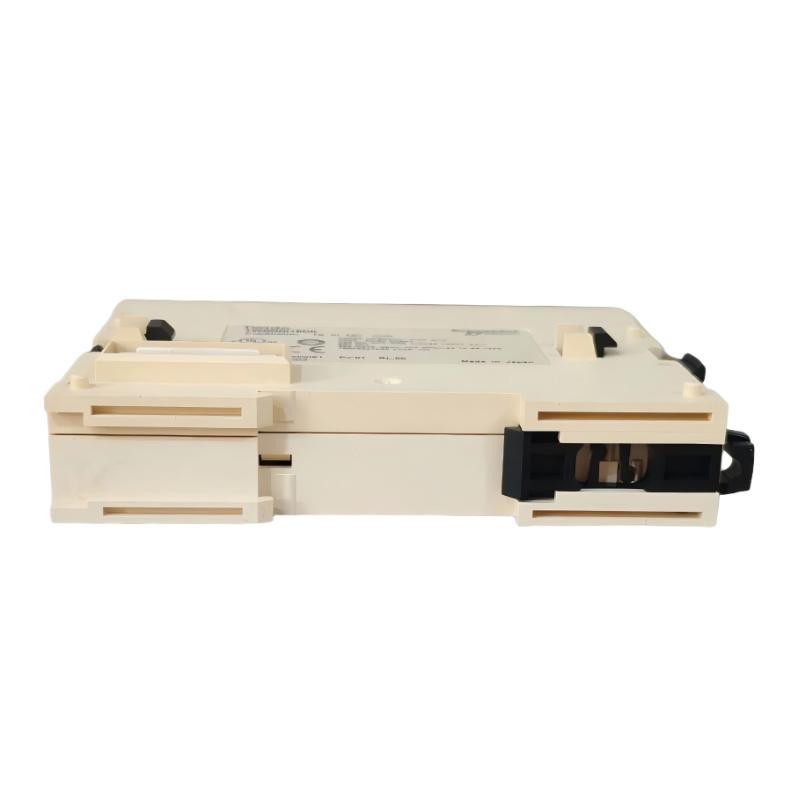
The supplied dimensions may represent packaging rather than the module body. Twido hardware documentation gives approximate module-body dimensions of 90 × 70 × 17.6 mm for this form factor. Confirm the exact mechanical dimensions and connector arrangement before installation.
3. Function and Working Principle
The TWDDDI16DK receives discrete electrical signals from field devices and converts them into logical input states that can be processed by the PLC.
3.1 Digital Signal Acquisition
A discrete input represents a defined state, typically ON or OFF. Unlike an analog input, which measures a continuously varying voltage or current, a digital input determines whether the electrical signal meets the conditions for a recognized logical state.
The TWDDDI16DK provides 16 separate input channels. Each channel can be connected to a compatible field signal according to the module’s wiring diagram.
Common input sources include:
- Push buttons and selector switches.
- Limit switches and position switches.
- Proximity sensors with compatible 24 V DC outputs.
- Photoelectric sensors.
- Relay auxiliary contacts.
- Equipment-ready and fault-status contacts.
- Digital status outputs from compatible controllers.
When an input signal meets the specified ON-state conditions, the module reports the corresponding logical state to the PLC. When the signal returns to the specified OFF-state conditions, the PLC can recognize the change after the applicable input filtering and processing delay.
3.2 24 V DC Input Operation
The module is designed for 24 V DC discrete input signals, with an allowable input range of 20.4–28.8 V DC.
This range is common in industrial control panels and is compatible with many industrial switches and sensors. However, the field device’s output type and electrical ratings must be checked before wiring.
A sensor designed for a different voltage, an incompatible output circuit, or an incorrect polarity arrangement may not operate as expected.
3.3 Sink and Source Input Logic
The TWDDDI16DK supports sink/source input configurations. These terms describe the way current flows through the field device and input circuit.
In a typical sourcing arrangement, a field device supplies positive voltage to the input. In a typical sinking arrangement, the field device provides a path toward the common or reference potential.
The correct arrangement depends on the connected device and the module’s common-terminal wiring. The wiring diagram must be followed carefully to avoid incorrect signal states or electrical damage.
3.4 Input Filtering and Signal Recognition
Industrial input modules use input filtering to reduce the effect of brief electrical disturbances and unwanted transitions.
The TWDDDI16DK has a specified input filter time of approximately 8 ms for ON and OFF states. This helps prevent very short disturbances from being interpreted as valid input changes.
Filtering also introduces a delay. If an application depends on very short pulses or high-speed counting, verify that the module’s input response is suitable. A dedicated high-speed counter or specialized input module may be required for signals that exceed the capabilities of a standard discrete input.
3.5 Isolation and Electrical Protection
Photocoupler isolation separates the input signal circuitry from the module’s internal logic circuitry. This helps reduce the direct transfer of electrical disturbances between field signals and the PLC’s internal electronics.
Isolation does not eliminate the need for correct wiring, suitable surge protection, proper grounding, or compliance with specified voltage limits.
The module is rated IP20 and is intended for installation inside an appropriately designed enclosure. It should not be exposed directly to water, conductive dust, or other environmental conditions outside its specified operating limits.
4. Role in Industrial Automation Systems
The TWDDDI16DK provides the PLC with discrete status information from field devices. The controller can use these inputs to determine machine conditions and decide when to perform specific operations.
4.1 Machine Status Monitoring
A machine may have numerous switches and sensors that indicate whether doors are closed, actuators are in position, components are present, or equipment is ready to operate.
The 16-channel arrangement allows multiple status signals to be collected through one module, helping organize the control panel’s digital input architecture.
4.2 Sequence Control
PLC programs commonly use discrete inputs to determine when a sequence can advance to the next step.
For example, a machine may wait for a position switch to indicate that a cylinder has reached its required position before continuing. The TWDDDI16DK can transmit the switch state to the PLC, where application logic evaluates the condition.
The actual sequence, timing, interlocks, and fault responses must be implemented in the PLC program.
4.3 Alarm and Fault Detection
Digital inputs can report equipment-ready signals, auxiliary contacts, and fault-status signals from compatible devices.
The PLC can evaluate these signals to generate alarms, prevent an operation from starting, or stop a sequence according to the application design.
The TWDDDI16DK provides the input interface; it does not independently determine the meaning or severity of a fault.
4.4 Integration of Field Sensors
The module can collect ON/OFF signals from compatible 24 V DC sensors. This is useful when a machine needs several discrete measurements but does not require analog measurement of every process variable.
The sensor’s electrical output, current requirements, and wiring configuration must match the module’s input characteristics.
4.5 Legacy Twido System Maintenance
In existing Twido-based machinery, the TWDDDI16DK may be part of an established I/O configuration with defined field wiring and PLC logic.
Replacing the module with the same reference can help preserve the existing arrangement. A different module may require connector changes, revised wiring, controller compatibility checks, and software modifications.
5. Typical Industrial Applications
Manufacturing Machinery
Manufacturing equipment often relies on discrete inputs to monitor machine positions, material presence, access doors, operating modes, and equipment status.
The TWDDDI16DK can collect up to 16 compatible digital signals for use in the PLC application.
Packaging Equipment
Packaging lines may contain photoelectric sensors, limit switches, and actuator-position sensors. These devices can provide discrete signals to the PLC to support sequencing and fault monitoring.
The module is suitable where the sensors’ output characteristics and response times are compatible with the input specifications.
Conveyor Systems
Conveyor applications commonly use sensors to detect product presence, end-of-travel conditions, motor-ready signals, and jam-related states.
The PLC can process these inputs to control conveyor sequences, coordinate stations, and trigger alarms.
Pumping and Utility Equipment
Digital inputs may be used to monitor running status, trip contacts, local/remote selector switches, and other equipment conditions.
The module can acquire these signals for PLC monitoring and interlocking logic. Actual motor control and protective functions must be handled by the appropriate control and protection devices.
Process Equipment
Industrial process skids may use discrete switches to indicate valve position, pressure-switch state, equipment availability, or process-step completion.
The TWDDDI16DK can bring these signals into a compatible Twido controller for application-specific monitoring and sequence control.
Legacy Automation Repair
When an existing Twido installation experiences an input-module fault, the TWDDDI16DK may be required to restore the original digital input configuration.
Because the model is discontinued, replacement sourcing should include part-number verification and functional testing before the module is installed in critical equipment.
6. Installation and System Integration
Correct installation is essential for reliable digital input recognition and long-term operation.
6.1 Verify PLC Compatibility
Before installation, confirm that the specific Modicon Twido controller supports the TWDDDI16DK and the intended expansion configuration.
Check the controller model, expansion limits, mounting arrangement, and power budget. The TWDDDI16DK should not be assumed to be compatible with every Schneider Electric PLC family.
6.2 Check the Field Device’s Output Type
Verify that each connected sensor or switch is compatible with the module’s 24 V DC input characteristics.
For electronic sensors, check the output type, polarity, current requirements, and sourcing or sinking behavior. For mechanical contacts, check the wiring arrangement and any required external circuit protection.
6.3 Follow the HE-10 Connector Wiring Diagram
The TWDDDI16DK uses an HE-10 connector for its input connection. Confirm the exact pin assignments and common-terminal arrangement from the applicable Twido hardware documentation.
Do not assume that the pinout is identical to every other 16-channel input module. Incorrect connections may prevent signals from being recognized or damage the equipment.
6.4 Check Common Connections and Polarity
The module has one common line. The field wiring must follow the documented common arrangement and the selected sink/source configuration.
Incorrect common wiring can cause inputs to remain permanently ON or OFF, behave intermittently, or fail to recognize valid signals.
6.5 Consider Cable Routing and Electrical Noise
Route low-voltage signal wiring away from motor power cables, variable-speed drives, contactors, and other major sources of electrical interference whenever practical.
Use suitable cable types and grounding arrangements for the installation. Apply additional protection where the electrical environment requires it.
6.6 Confirm Power and Environmental Conditions
Verify the Twido system’s power requirements and confirm that the module is installed within the specified temperature, humidity, and altitude limits.
The IP20 rating means the module is intended for protected installation. Use a suitable enclosure and ensure that the panel design provides appropriate mechanical support and environmental protection.
6.7 Configure and Test the PLC Application
After wiring, verify that each input channel is mapped correctly in the PLC application.
A commissioning check should include:
- Confirming the input address assigned to each field device.
- Activating each sensor or switch individually.
- Verifying the corresponding PLC input state.
- Checking that ON and OFF transitions are recognized correctly.
- Confirming that input filtering is suitable for the application.
- Testing alarm and sequence logic associated with the inputs.
- Checking the system response to disconnected or abnormal field signals.
Do not assume that a sensor is functioning correctly merely because its indicator light is on. Confirm that the signal reaches the module and is recognized by the PLC.
7. Compatible System Components
The following table describes common component categories used with a compatible Twido discrete input module.
| Component | Function | Integration Considerations |
|---|---|---|
| Compatible Modicon Twido PLC | Executes the control program | Confirm explicit support for the module |
| Twido expansion arrangement | Connects the input module to the controller | Check supported module positions and system limits |
| 24 V DC power supply | Provides field-device power where required | Confirm voltage, current capacity, and wiring |
| Proximity sensor | Detects the presence or position of an object | Verify 24 V DC output and sink/source compatibility |
| Photoelectric sensor | Detects products or objects optically | Confirm output type and switching behavior |
| Limit switch | Provides mechanical position feedback | Check contact ratings and wiring |
| Push button or selector switch | Provides operator commands | Confirm contact arrangement and circuit design |
| Relay auxiliary contact | Reports equipment status | Verify contact configuration and circuit voltage |
| HE-10 connector and compatible cable | Connects field signals to the module | Verify connector type and exact pinout |
| PLC programming software | Configures input addresses and application logic | Confirm compatibility with the installed Twido controller |
| HMI or operator panel | Displays status and alarms | Verify communications and application mapping |
These are general system component categories, not a guarantee of compatibility with every individual device. Always verify electrical ratings, connector pinouts, and the controller’s hardware configuration.
8. Alternative Models and Replacement Considerations
The TWDDDI16DK is discontinued. When choosing an alternative, the replacement must be evaluated for its digital input functionality, 24 V DC electrical characteristics, channel count, connector arrangement, and PLC compatibility.
| Candidate | Product Family | Potential Use | Important Considerations |
|---|---|---|---|
| TWDDDI16DK | Modicon Twido | Original 16-channel 24 V DC input module | Preferred reference when maintaining the original hardware configuration |
| TWDDDI16DT | Modicon Twido | Related 16-channel digital input module | Similar general function, but input characteristics and connector details must be checked |
| TM3DI16 | Modicon TM3 | 16-channel 24 V DC input module for supported newer controllers | Consider for a platform upgrade; not an automatic replacement for Twido hardware |
| BMXDDI1602 | Modicon X80 | 16-channel 24 V DC discrete input module | Suitable for evaluation in a compatible X80/M340 architecture, not a direct Twido substitute |
Important Note on Schneider’s Replacement Listing
Some regional Schneider Electric product pages list TM3DQ16R as the recommended replacement for TWDDDI16DK. However, TM3DQ16R is a 16-channel relay output module, not a discrete input module. It therefore does not perform the same input function and should not be treated as a functional equivalent for replacing the TWDDDI16DK.
For input functionality, modules such as TM3DI16 may be evaluated as part of a compatible newer-controller migration. Confirm the exact product documentation and controller architecture before choosing any substitute.
TWDDDI16DT
The TWDDDI16DT is a related Twido discrete input module with 16 inputs. Despite the similar part number and general function, do not assume it is interchangeable with the TWDDDI16DK.
Compare input current, impedance, connector arrangement, wiring requirements, and the supported controller configuration before making a substitution.
TM3DI16
The TM3DI16 is a 16-channel discrete input module for supported newer Modicon controller families. It can be considered where an automation system is being upgraded from a legacy Twido platform.
It should not be treated as a plug-in replacement. A migration may require a different PLC, revised wiring, new I/O mapping, and changes to the control program.
Replacement Selection Checklist
Before ordering an alternative, verify:
- Input count: Confirm that 16 discrete input channels are available.
- Input voltage: Check compatibility with the field devices’ 24 V DC signals.
- Sink/source logic: Verify the required input wiring arrangement.
- Connector: Confirm HE-10 or the alternative module’s specified connection method.
- Input characteristics: Check current, impedance, filtering, and response time.
- PLC compatibility: Verify the controller family and expansion architecture.
- Software: Review I/O mapping and program changes.
- Installation: Confirm mounting dimensions, wiring, and power requirements.
- Testing: Validate all input channels before returning the machine to service.
For a legacy repair, a tested original TWDDDI16DK may reduce the need for wiring and software modifications. For a modernization project, select a new input module as part of the complete PLC migration plan.
9. Key Advantages
16 Digital Input Channels
The module provides 16 channels for acquiring discrete signals from compatible field devices, supporting compact I/O configurations.
24 V DC Industrial Input
Its 24 V DC input design is suitable for many common industrial sensors, switches, and auxiliary contacts when their electrical characteristics match the module.
Sink/Source Input Support
The module supports sink/source input arrangements, offering flexibility for compatible field-device wiring.
Photocoupler Isolation
Isolation between the input circuitry and internal logic helps limit the direct transfer of electrical disturbances, subject to the module’s specified ratings and correct installation.
Compact Expansion Design
The 16-channel arrangement allows multiple digital signals to be collected through one module, helping organize control-panel wiring and PLC input allocation.
Support for Legacy Twido Equipment
Accurate identification of the TWDDDI16DK can help maintenance teams restore digital input functions in existing Modicon Twido installations.
10. Technical FAQs
What is the Schneider TWDDDI16DK?
The TWDDDI16DK is a 16-channel discrete input expansion module designed for compatible Schneider Electric Modicon Twido PLC systems.
How many input channels does it provide?
It provides 16 discrete input channels.
What input voltage does it use?
The module is designed for 24 V DC discrete input signals, with a specified input voltage range of 20.4–28.8 V DC.
Does it support sink and source inputs?
Yes. The TWDDDI16DK supports sink/source input configurations. The wiring must follow the documented common-terminal arrangement and field-device requirements.
What type of connector does it use?
The module uses an HE-10 connector. Verify the exact pinout and cable arrangement before wiring.
What is its input current?
The specified input current is approximately 5 mA per input at 24 V DC.
What is the input filter time?
The specified filter time is approximately 8 ms for ON and OFF states. This should be considered when the application involves short pulses or fast-changing signals.
Is the TWDDDI16DK discontinued?
Yes. Schneider Electric lists the model as discontinued. Lifecycle dates vary by regional product page.
Is TM3DQ16R a direct replacement?
No. TM3DQ16R is a relay output module, whereas TWDDDI16DK is a discrete input module. They perform different functions and should not be substituted for one another as equivalent I/O devices.
What are the dimensions and weight?
The supplied listing gives dimensions of 100 × 80 × 20 mm and a weight of 0.065 kg. The weight is consistent with published module data, but the dimensions may represent packaging. Confirm the physical dimensions before installation or shipping calculations.
11. Procurement and Maintenance Considerations
Because the TWDDDI16DK is discontinued, accurate model identification is important when sourcing spare parts for an existing automation system.
Before purchasing, consider the following:
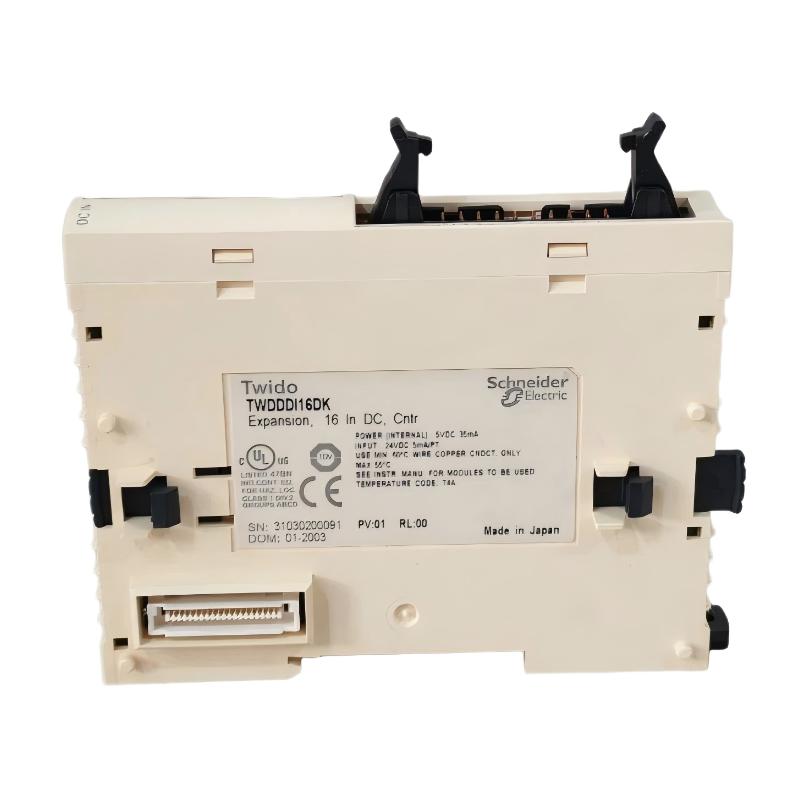
- Verify the complete model number on the product label.
- Request clear photographs of the module and its HE-10 connector.
- Confirm whether the item is unused surplus, used, or refurbished.
- Ask about functional testing and warranty coverage.
- Verify that the module’s input characteristics match the existing sensors.
- Check the PLC model and expansion configuration.
- Confirm connector pin assignments and the wiring arrangement.
- Preserve the PLC program and input-address documentation before replacement work.
- Verify the module dimensions if they are needed for mechanical installation or shipping.
- Test all 16 input channels after installation.
For critical equipment, a replacement should be tested using the actual field devices or a suitable signal test arrangement. Confirm that every input is recognized correctly and that the PLC responds as expected before returning the system to normal operation.
12. Conclusion
The Schneider Electric TWDDDI16DK Discrete Input Module is a 16-channel digital input expansion module for compatible Modicon Twido PLC systems. It supports 24 V DC input signals, sink/source configurations, and HE-10 connectivity.
The module can acquire signals from industrial sensors, switches, auxiliary contacts, and other compatible field devices. Its 16-channel design makes it suitable for machine monitoring, sequence control, alarm detection, and legacy automation maintenance.
Since the TWDDDI16DK is discontinued, purchasers should confirm the exact model and product condition before ordering. Replacement selection requires particular care because Schneider Electric’s regional replacement listing includes a relay output module that does not perform the same function. Any alternative must be checked for input functionality, electrical compatibility, connector arrangement, and PLC support.
Correct wiring, careful commissioning, and verification of every input channel help reduce replacement risk and support reliable operation of existing industrial control systems.