
NewsNEWCENTER
Featured products
Contact Us
Siemens Expands Industrial Automation Innovation with SIMATIC PLC, Industrial Edge and Smart Factory Technologies
2026-07-23The global manufacturing industry is entering a new phase of transformation as companies continue adopting intelligent automation systems, digital production technologies, and connected industrial solutions.
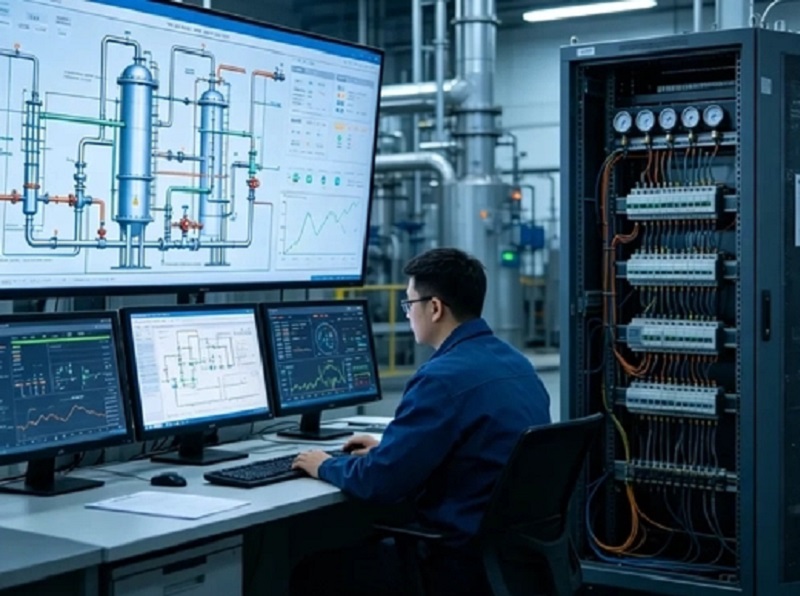
Manufacturers across industries such as automotive, electronics, semiconductor, food and beverage, pharmaceuticals, logistics, and industrial machinery are facing increasing pressure to improve:
- Production efficiency
- Product quality
- Equipment reliability
- Energy management
- Manufacturing flexibility
Traditional automation systems focused primarily on controlling machines and production processes. However, modern factories require much more advanced capabilities, including real-time data analysis, predictive maintenance, flexible production management, and intelligent decision-making.
To address these challenges, industrial companies are increasingly integrating programmable logic controllers, industrial communication networks, edge computing technologies, and digital manufacturing platforms.
Siemens continues to play an important role in industrial automation development through its SIMATIC PLC systems, industrial software solutions, Industrial Edge technologies, and smart manufacturing concepts.
The evolution of Siemens automation technologies reflects a major trend in the industry: PLC systems are becoming intelligent control platforms that not only operate machines but also connect production equipment, collect industrial data, and support digital transformation strategies.
For global manufacturers, automation engineers, and system integrators, intelligent PLC-based automation has become a fundamental technology for building efficient, flexible, and future-ready factories.
PLC Systems Remain the Foundation of Industrial Automation
Programmable Logic Controllers are among the most important technologies in modern industrial control.
PLC systems are responsible for:
- Processing input signals
- Executing control programs
- Managing industrial equipment
- Coordinating production processes
- Communicating with other automation devices
In manufacturing environments, PLC controllers are widely used for:
- Assembly lines
- Packaging machines
- Material handling systems
- Production equipment
- Process automation applications
Modern PLC systems provide advanced capabilities including:
- High-speed processing
- Industrial communication
- Motion control
- Remote diagnostics
- Network integration
These features allow manufacturers to create more flexible and intelligent automation architectures.
Siemens SIMATIC PLC systems have become widely recognized in industrial automation applications because of their scalability and ability to integrate with different automation environments.
From small machine control applications to large production systems, PLC technology provides the control foundation required for modern manufacturing.
Smart Factory Development Requires Connected Automation Systems
The concept of smart factories is becoming increasingly important across global industries.
A smart factory is not simply an automated production facility.
It is a connected industrial environment where:
- Machines communicate with each other
- Production data is collected continuously
- Equipment performance is analyzed
- Manufacturing processes are optimized
Modern smart factories combine multiple technologies, including:
- PLC controllers
- Industrial networks
- Sensors
- Robotics
- Digital software platforms
- Data analytics systems
The goal is to create production environments that can respond faster to changing requirements.
For example:
A production machine generates operational data.
The PLC system collects and processes information.
Industrial networks transfer data.
Digital platforms analyze performance.
Engineers use the results to improve production.
This connected approach allows manufacturers to achieve higher efficiency and better operational control.
Industrial Edge Technology Brings Intelligence Closer to Production
One important development in industrial automation is the increasing use of edge computing.
Traditional industrial systems often send large amounts of data to centralized platforms for analysis.
Industrial Edge technology changes this approach by allowing data processing closer to production equipment.
Edge computing provides several advantages:
- Faster response times
- Reduced network load
- Improved data processing efficiency
- Better real-time decision-making
In industrial environments, edge technologies can analyze information from:
- PLC systems
- Sensors
- Machines
- Production lines
This allows companies to identify production issues more quickly.
For example:
A machine sensor detects unusual operating conditions.
The PLC system collects the information.
An edge computing platform analyzes the data locally.
Engineers receive information before a major failure occurs.
This supports faster response and improved equipment reliability.
Digital Manufacturing Improves Production Management
Digital transformation is changing how manufacturers manage their operations.
Traditional factories often relied on manual reporting and separate information systems.
Modern digital manufacturing connects production data with business and operational management.
Digital manufacturing technologies help companies analyze:
- Production output
- Equipment utilization
- Quality performance
- Maintenance requirements
- Energy consumption
With better production visibility, manufacturers can make more informed decisions.
Benefits include:
- Reduced downtime
- Improved production planning
- Better resource utilization
- Higher operational efficiency
Digital manufacturing is becoming a key strategy for companies seeking long-term competitiveness.
Industrial Communication Enables Better System Integration
Modern automation systems depend heavily on reliable industrial communication.
Factories contain many different devices, including:
- PLC controllers
- Sensors
- Drives
- Robots
- Human-machine interfaces
- Industrial computers
These devices must exchange information efficiently.
Industrial communication technologies allow automation systems to work together.
Benefits include:
- Faster data exchange
- Improved system coordination
- Easier troubleshooting
- Better production monitoring
System integration is becoming increasingly important as factories adopt more advanced automation solutions.
PLC and Robotics Integration Supports Flexible Manufacturing
Industrial robotics has become a major component of modern manufacturing.
Robots are widely used in:
- Assembly
- Welding
- Packaging
- Inspection
- Material transportation
However, robots require precise coordination with automation systems.
PLC controllers provide important functions by managing:
- Production sequences
- Communication signals
- Safety operations
- Machine coordination
The integration of PLC systems and robotics helps manufacturers achieve:
- Higher production speed
- Better product consistency
- Greater flexibility
This is particularly important in industries where production requirements change frequently.
Predictive Maintenance Improves Equipment Reliability
Equipment downtime is one of the biggest challenges facing manufacturers.
Unexpected failures can result in:
- Production losses
- Higher maintenance costs
- Delayed deliveries
- Reduced efficiency
Modern automation systems support predictive maintenance strategies by collecting equipment data.
Information from:
- PLC controllers
- Sensors
- Motors
- Drives
- Machines
can be analyzed to identify abnormal conditions.
Predictive maintenance allows manufacturers to:
- Detect problems earlier
- Schedule maintenance activities
- Reduce unexpected shutdowns
- Extend equipment service life
As factories become more digital, predictive maintenance will become an increasingly important automation application.
Energy Efficiency Becomes a Major Focus of Industrial Automation
Manufacturing facilities consume significant amounts of energy.
Energy costs have become an important factor affecting industrial competitiveness.
Automation technologies help companies monitor and optimize energy usage.
Smart automation systems can analyze:
- Equipment operating conditions
- Production efficiency
- Energy consumption patterns
This enables manufacturers to:
- Reduce energy waste
- Improve equipment performance
- Support sustainability objectives
The combination of automation and energy management is becoming a key direction for future industrial development.
Cybersecurity Requirements Increase in Connected Factories
As industrial systems become more connected, cybersecurity has become a critical consideration.
Modern factories integrate:
- Automation networks
- Digital platforms
- Remote monitoring systems
- Industrial communication technologies
While connectivity improves efficiency, it also creates new security requirements.
Manufacturers must protect:
- Control systems
- Production data
- Industrial networks
Future automation solutions must provide both intelligent functionality and strong cybersecurity protection.
Challenges During Industrial Digital Transformation
Although smart automation provides significant benefits, manufacturers must overcome several challenges.
Legacy Equipment Integration
Many factories still operate older machines and automation systems.
Connecting existing equipment with modern digital platforms requires careful planning.
Skilled Engineering Requirements
Modern automation projects require expertise in:
- PLC programming
- Industrial communication
- Digital technologies
- Data management
Investment Planning
Smart factory development requires investment in:
- Automation hardware
- Software platforms
- Engineering services
- Workforce training
However, long-term improvements in efficiency and productivity provide significant value.
Future Outlook: Intelligent PLC Automation Will Continue Driving Smart Manufacturing
The future of industrial automation will depend on intelligent, connected, and flexible technologies.
Manufacturers will continue adopting:
- Advanced PLC systems
- Industrial Edge solutions
- Digital manufacturing platforms
- Industrial IoT technologies
- Predictive maintenance systems
Siemens SIMATIC PLC technology represents the continued evolution of industrial control toward intelligent manufacturing environments.
As global industries continue upgrading their production facilities, PLC-based automation will remain a fundamental technology supporting:
- Higher productivity
- Improved reliability
- Better flexibility
- Sustainable manufacturing
The factories of the future will not only automate production processes but also collect information, analyze performance, and continuously optimize operations.
Conclusion
Industrial automation is moving beyond traditional machine control toward intelligent digital manufacturing ecosystems.
Siemens SIMATIC PLC systems, combined with Industrial Edge technology and digital manufacturing solutions, demonstrate how modern automation can improve production efficiency, operational visibility, and manufacturing flexibility.
For global industries, intelligent PLC automation provides the foundation for building smarter factories and more competitive production systems.
As manufacturers continue their digital transformation journey, advanced automation technologies will remain essential for creating efficient, reliable, and sustainable industrial environments.