

ProductPRODUCT
Featured products
Contact Us
- GE
- VMIVME-3230
- Thermocouple Board
- USA
- 233 × 160 × 20 mm
- 0.91 kg
- Xiamen, China
- New & In Stock
- T/T, PayPal, Western Union
- 1 Year
- 1-3 Working Days
- DHL, UPS, TNT, FedEx and EMS.
- 24-Hour Service
- COO
- 5
Our advantage

Global Logistics
We have a 10-year logistics and express cooperation agreement, so our products can be shipped to any place in the world.

Brand new and original
Our products are imported in bulk from the place of origin. Because of the cooperative relationship, our products are all original and 100% new.

24-hour service
We provide 7*24 hours service to our customers. We will be there whenever you need us.

Price advantage
All our products are priced very favorably because we have our own warehouse and supply.
| Company Information | |||
| [email protected] | |||
| Mobile | +8615980777398 | ||
| +8615980777398 | |||
| 15980777398 |
Product Overview
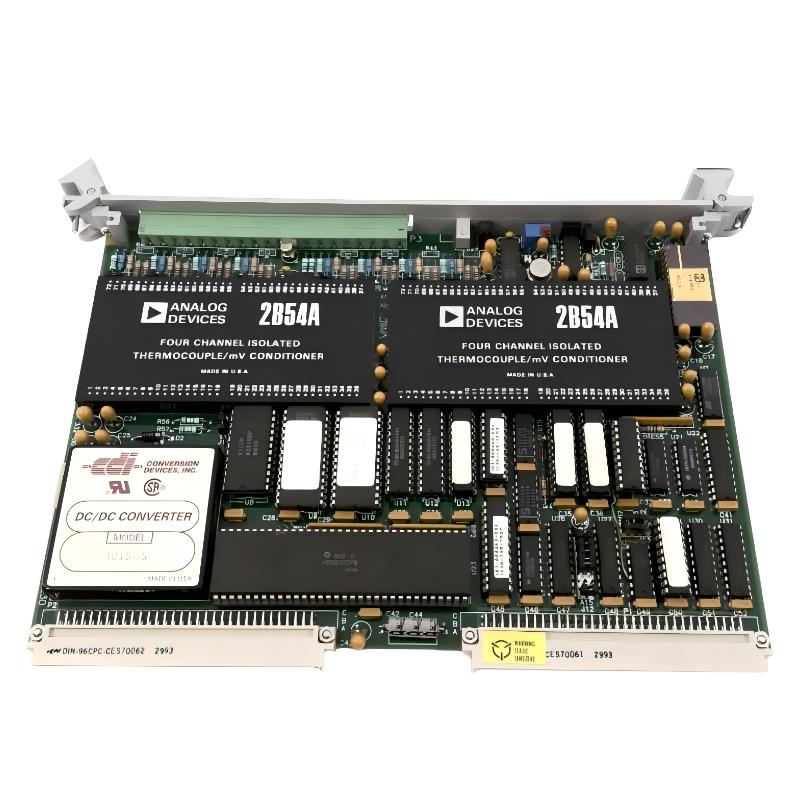
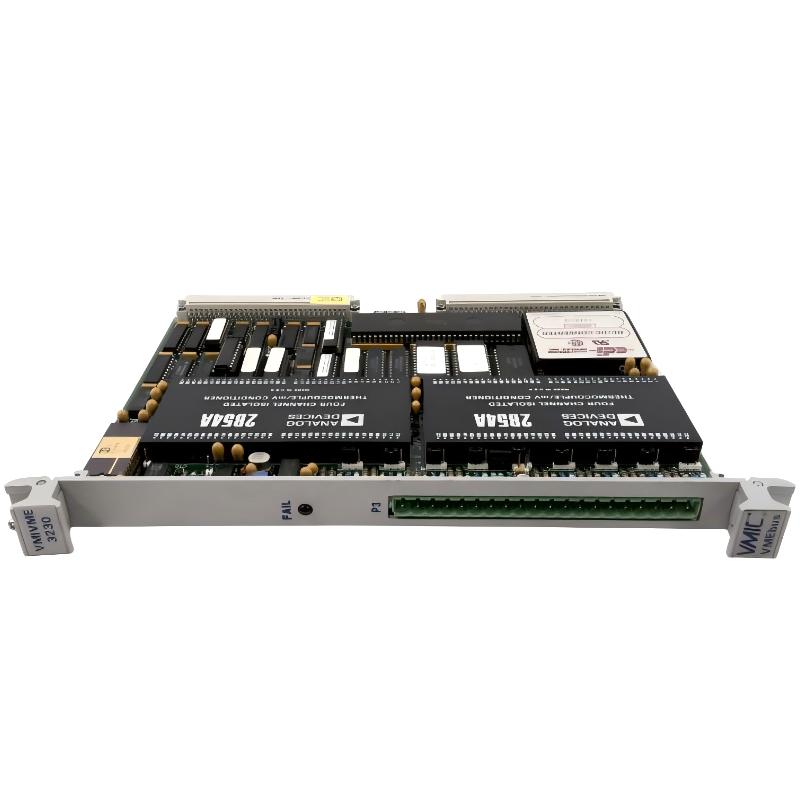
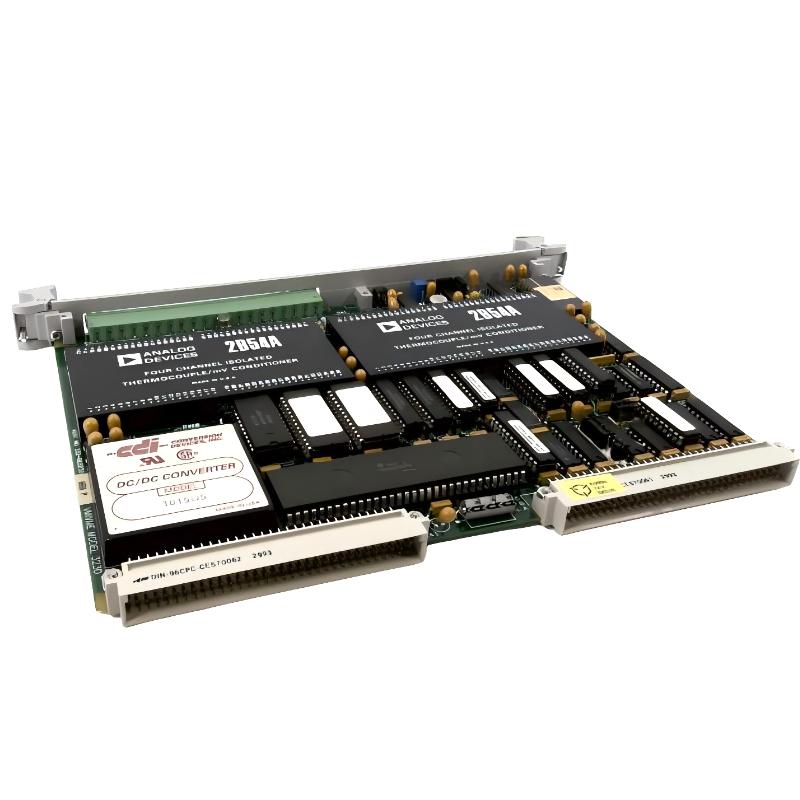
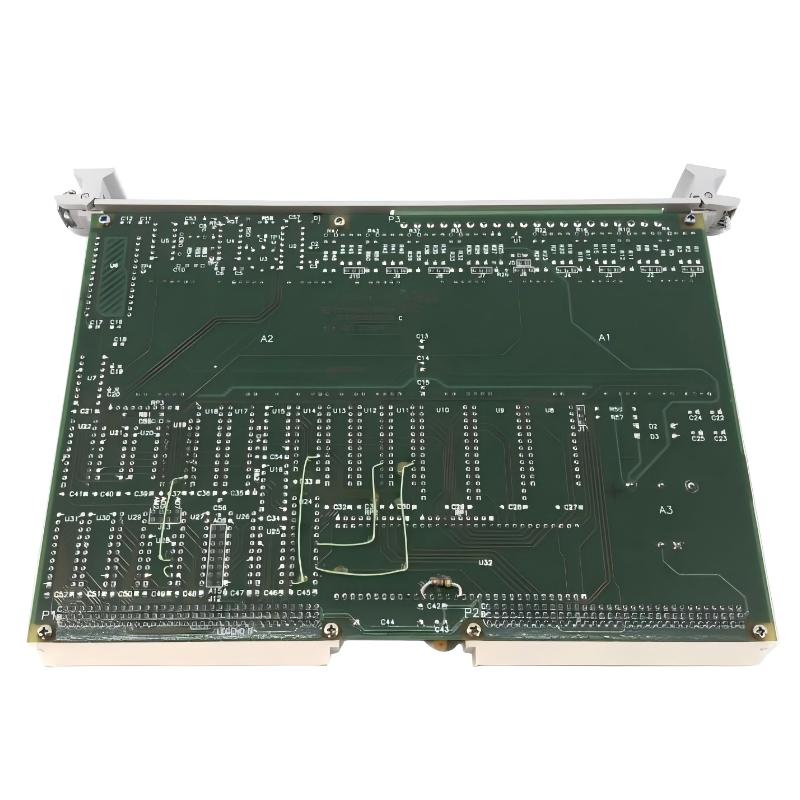
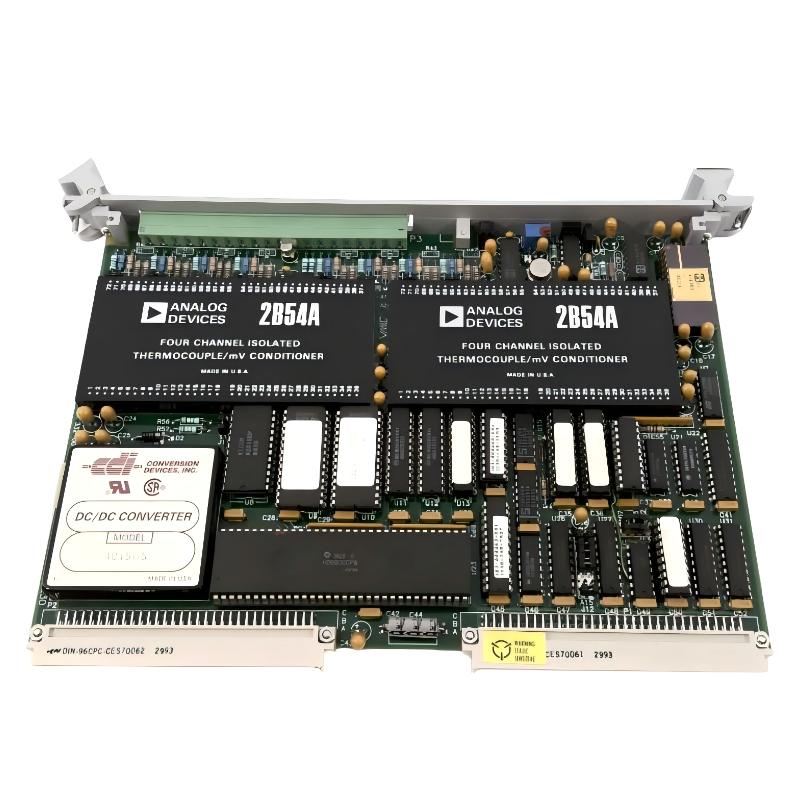
The GE VMIVME-3230 Intelligent 8-Channel Thermocouple Board is a temperature acquisition board used in industrial control, monitoring, and data acquisition systems. It interfaces with thermocouple sensors to collect temperature-related signals from equipment and processes, allowing the host system to monitor thermal conditions and use the acquired data for control, alarm handling, or process supervision.
In applications involving industrial furnaces, test equipment, process skids, and machinery monitoring, multiple temperature points often need to be measured simultaneously. An eight-channel thermocouple board allows several sensor inputs to be handled through a single board, helping consolidate temperature measurements within a VME-based control or data acquisition architecture.
The VMIVME-3230 belongs to GE’s VMIC VME product family. Its intelligent board architecture supports temperature input acquisition within a larger computer-based control system. When integrating or replacing this board, engineers should verify the supported thermocouple types, input characteristics, channel configuration, and host-system compatibility against the installed hardware documentation. These details are important when maintaining measurement accuracy and ensuring that the collected temperature data is interpreted correctly by the host application.
Technical Specifications
| Parameter | Specification |
|---|---|
| Brand | GE |
| Model | VMIVME-3230 |
| Product Series | VMIC VME |
| Product Type | Intelligent 8-Channel Thermocouple Board |
| Board Category | Temperature Input and Data Acquisition |
| Number of Channels | 8 |
| Input Type | Thermocouple |
| Primary Function | Temperature signal acquisition |
| System Architecture | VME-based control and data acquisition |
| Data Processing | Intelligent board-based acquisition architecture |
| Typical Input Source | Industrial thermocouple sensors |
| Application | Temperature monitoring and process control |
| Installation Type | VME system board |
| Dimensions | 233 × 160 × 20 mm |
| Weight | 0.91 kg |
Product Features
- Eight-channel temperature acquisition: Supports temperature monitoring across multiple sensor points, allowing a control or data acquisition system to collect readings from several locations through one board.
- Thermocouple signal interface: Provides an interface for thermocouple-based temperature measurement, making the board relevant to industrial applications where temperature is a key process variable.
- Intelligent board architecture: Belongs to a family of computer-based industrial I/O products intended to perform dedicated acquisition functions within a larger control system.
- VME system integration: Fits into a VME-based equipment architecture, where boards communicate with a host computer or controller through the system backplane.
- Multi-point monitoring: Allows several temperature measurement locations to be incorporated into a single acquisition arrangement, reducing the need to treat every sensor as a separate standalone monitoring device.
- Support for process supervision: Acquired temperature values can be used by host software for trend display, operating-limit checks, alarm generation, and process analysis, depending on the installed system configuration.
- Useful for legacy system maintenance: Provides a replacement option to investigate when an existing VMIC-based control or measurement system develops thermocouple input faults or requires board-level maintenance.
- Centralized sensor acquisition: Consolidates thermocouple connections within the control system, helping organize field sensor wiring and temperature data collection.
- Integration with application-specific software: The host application determines how acquired readings are displayed, logged, compared with operating limits, or used by higher-level control logic.
- Configuration-dependent measurement performance: Correct operation depends on the board’s supported sensor types, input configuration, wiring arrangement, and any required calibration or compensation settings.
Working Principle
The GE VMIVME-3230 acquires temperature information from connected thermocouple sensors and makes the resulting measurement data available to the host system. A thermocouple produces a small voltage related to the temperature difference between its measuring junction and reference junction. The acquisition hardware must process this signal appropriately before the host can use it as a temperature reading.
The general measurement process follows these stages:
- Thermocouple signal input: Each connected sensor supplies a low-level electrical signal corresponding to its thermal condition.
- Input signal conditioning: The board’s input circuitry handles the thermocouple signal for acquisition. The exact conditioning and measurement implementation depends on the board’s hardware design.
- Temperature conversion: The input signal is interpreted using the appropriate thermocouple characteristics and any required reference-junction compensation or calibration information supported by the system.
- Data acquisition: Measurements from the available channels are acquired and processed according to the board’s operating architecture.
- Host communication: The acquired data is transferred through the VME system interface to the host computer or controller.
- Application-level processing: Host software can display temperature readings, record trends, compare measurements with configured limits, or use the data in supervisory control logic.
The board serves as the temperature acquisition interface; it does not independently determine the overall process response. Any alarm, shutdown, or closed-loop control action depends on the host application, configured logic, and connected control hardware.
For accurate measurements, the thermocouple type, wiring polarity, sensor extension cable, reference-junction compensation method, and host configuration must all be compatible with the installed board.
Role in a VME-Based Temperature Monitoring Architecture
The VMIVME-3230 functions as the temperature input acquisition layer between field thermocouples and the host computer or controller. It converts sensor information into data that the system can use for process monitoring and higher-level decision-making.
| System Component | Function | Relationship to the VMIVME-3230 |
|---|---|---|
| Thermocouple Sensors | Measure temperature at field locations | Supply the temperature-dependent signals acquired by the board |
| Thermocouple Extension Wiring | Carries sensor signals to the control cabinet | Must match the sensor type and wiring requirements to avoid measurement errors |
| VMIVME-3230 Board | Acquires thermocouple inputs | Collects temperature information across its input channels |
| VME Backplane | Provides the board’s system connection | Connects the acquisition board to the host and other compatible VME modules |
| VME Host Computer or Controller | Runs the control or acquisition application | Reads and processes the board’s acquired data |
| Data Acquisition Software | Displays, records, and evaluates measurements | Converts acquired data into usable temperature information and application variables |
| Alarm and Supervisory Logic | Evaluates readings against configured operating limits | Uses host-processed temperature values to determine whether an alarm or response is required |
| Control Output Hardware | Operates external devices when commanded | Executes control actions initiated by the application, where configured |
A fault in the temperature acquisition path can affect the accuracy or availability of several monitored points. Troubleshooting should therefore distinguish sensor faults, field wiring problems, board-level failures, VME communication issues, and host-software configuration errors.
Industrial Applications
| Application | Typical Temperature Monitoring Requirement | Role of the VMIVME-3230 |
|---|---|---|
| Industrial Furnaces and Ovens | Monitoring temperatures at multiple heating zones | Collects thermocouple measurements for process supervision |
| Thermal Test Equipment | Recording temperature changes during equipment testing | Provides multi-point temperature data to the host acquisition system |
| Manufacturing Process Lines | Monitoring heating, curing, or thermal treatment stages | Consolidates temperature inputs for display and evaluation |
| Power Generation Facilities | Monitoring selected thermal conditions in auxiliary equipment | Supplies acquired temperature data to the configured monitoring application |
| Research and Test Laboratories | Collecting measurements from multiple test locations | Supports centralized thermocouple data acquisition |
| Industrial Machinery | Monitoring bearing housings, heated components, or process temperatures where thermocouples are installed | Provides temperature input data for trending and condition monitoring |
| Process Engineering Systems | Comparing measured temperatures across process stages | Allows the host system to evaluate multiple measurement points |
| Legacy VME Control Systems | Maintaining existing computer-based industrial measurement installations | Serves as a board-level component in compatible temperature acquisition systems |
The exact application depends on the sensor types supported by the board, the host interface, the installed software, and the overall system design. Safety-related temperature trips should use appropriately engineered and validated protection arrangements rather than relying solely on an ordinary data acquisition path.
Installation and Maintenance
- Verify the board identification: Confirm the complete VMIVME-3230 model number and board revision against the existing system configuration before installation or replacement.
- Check system compatibility: Verify that the host computer, VME backplane, slot assignment, and installed software support the board.
- Review thermocouple requirements: Confirm the thermocouple types and input configuration supported by the specific board before connecting field sensors.
- Isolate the equipment: Follow the site’s electrical safety and electrostatic discharge procedures before removing or installing the board.
- Inspect the board and connectors: Check the board edge connector, accessible contacts, components, and mounting hardware for damage, contamination, or signs of overheating.
- Verify sensor wiring: Check thermocouple polarity, terminal assignments, extension cable compatibility, and wiring condition before applying power.
- Check grounding and noise conditions: Review shielding, grounding, and cable routing to reduce electrical interference that could affect low-level thermocouple signals.
- Install the board correctly: Align the board with the designated VME slot and insertion guides, then secure it according to the system’s installation procedure. Do not force the board into the backplane.
- Confirm software configuration: Verify channel assignments, sensor types, scaling, and other acquisition parameters in the host application.
- Check startup and communication: After restoring power according to the approved procedure, confirm that the host recognizes the board and that no unexpected hardware or communication errors are reported.
- Validate temperature readings: Compare selected channel readings with a suitable reference or known temperature source where practical, and investigate abnormal offsets, unstable readings, or missing channels.
- Document maintenance results: Record the board identification, affected channels, wiring checks, configuration changes, test results, and any corrective action taken.
If one channel produces an abnormal reading while the remaining channels operate normally, begin by checking the associated thermocouple and wiring before assuming the board has failed. If several channels become unavailable together, inspect the board connection, system power, VME communication, and host configuration. Any calibration or functional test should follow the procedures applicable to the specific hardware revision.
Related Components
| Component | Function | Relationship to the VMIVME-3230 |
|---|---|---|
| Thermocouple Sensors | Measure process or equipment temperature | Provide the field signals acquired by the board |
| Thermocouple Extension Cable | Carries thermocouple signals from sensors to the acquisition system | Must be compatible with the sensor type and wiring requirements |
| VME Backplane | Provides the board’s electrical and communication connection to the system | Hosts the acquisition board within the VME architecture |
| VME Host CPU Board | Executes the control or data acquisition application | Reads the measurements collected by the thermocouple board |
| VME Analog Input Hardware | Acquires other analog process signals | Can complement temperature acquisition in a larger measurement system |
| Digital Input/Output Boards | Monitor discrete signals and operate control outputs | Support associated monitoring and control functions in the host system |
| Industrial Control Software | Processes and presents acquired measurement data | Uses the temperature readings for trending, alarms, and supervisory logic |
| Calibration Reference Equipment | Provides a known measurement reference during testing | Helps verify temperature measurement performance during maintenance |
Recommended Related Models
| Model or Product Family | Product Type | Relevance |
|---|---|---|
| GE VMIVME-3230 | Intelligent 8-Channel Thermocouple Board | The target board for multi-channel temperature acquisition |
| GE VMIC VME Analog Input Boards | Analog Input Boards | Related acquisition hardware for collecting other analog process signals; verify individual model compatibility |
| GE VMIC VME Digital Input Boards | Digital Input Boards | Complementary hardware for monitoring discrete equipment states |
| GE VMIC VME Digital Output Boards | Digital Output Boards | Complementary hardware for application-controlled discrete outputs |
| GE VMIC VME CPU Boards | VME Processor Boards | Host-side hardware for executing acquisition and control software |
The related categories above describe potential roles within a VME-based system rather than guaranteed interchangeable products. Specific model numbers, electrical interfaces, software support, and slot compatibility should be confirmed before selecting replacement or expansion hardware.
Key Advantages
- Supports acquisition from multiple thermocouple measurement points through one board.
- Consolidates temperature inputs within a VME-based control or data acquisition system.
- Supplies temperature data for host-based monitoring, trending, and application logic.
- Supports maintenance of compatible legacy VMIC measurement installations.
- Helps organize multi-point temperature monitoring within industrial equipment and test systems.
Technical FAQs
1. What is the GE VMIVME-3230 used for?
The GE VMIVME-3230 is an intelligent eight-channel thermocouple board used to acquire temperature signals in compatible VME-based control and data acquisition systems. The host application can use the acquired measurements for monitoring, recording, and configured process logic.
2. How many thermocouple channels does the VMIVME-3230 support?
The product designation identifies it as an eight-channel thermocouple board. The supported sensor types, channel configuration, and measurement characteristics should be confirmed against the documentation for the specific hardware revision.
3. Why might one thermocouple channel show an incorrect temperature?
Possible causes include a damaged sensor, incorrect polarity, unsuitable extension wiring, poor connections, electrical interference, incorrect channel configuration, or a fault in the acquisition hardware. Comparing the affected channel with a known reference and checking the field wiring can help isolate the problem.
4. Can the VMIVME-3230 be installed in any VME system?
No. A VME form factor alone does not guarantee compatibility. The host system must support the board’s electrical interface, board configuration, software driver, and acquisition requirements. These factors should be checked before installation or replacement.