

ProductPRODUCT
Featured products
Contact Us
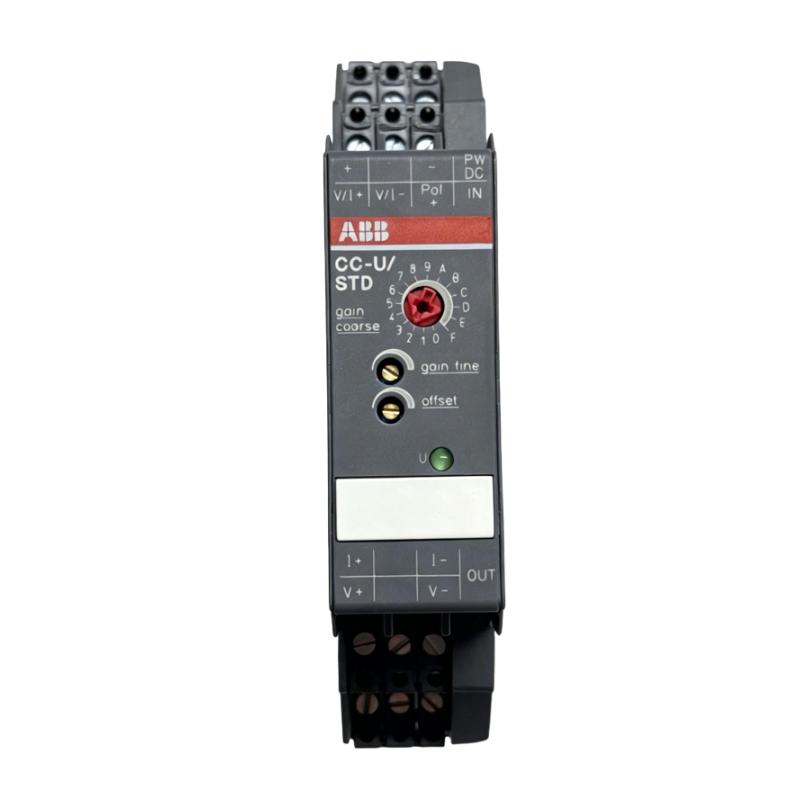
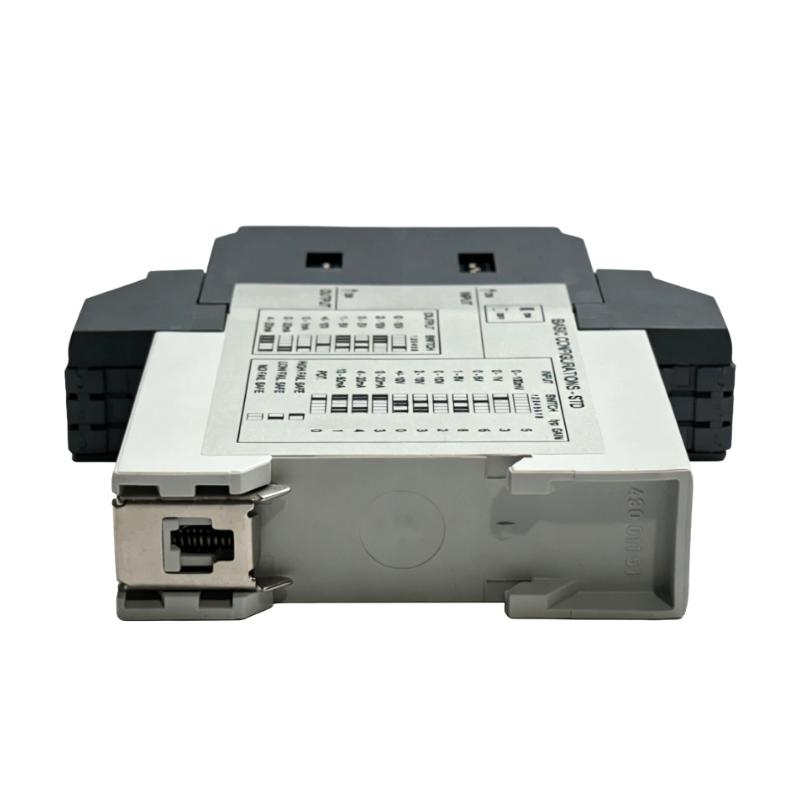
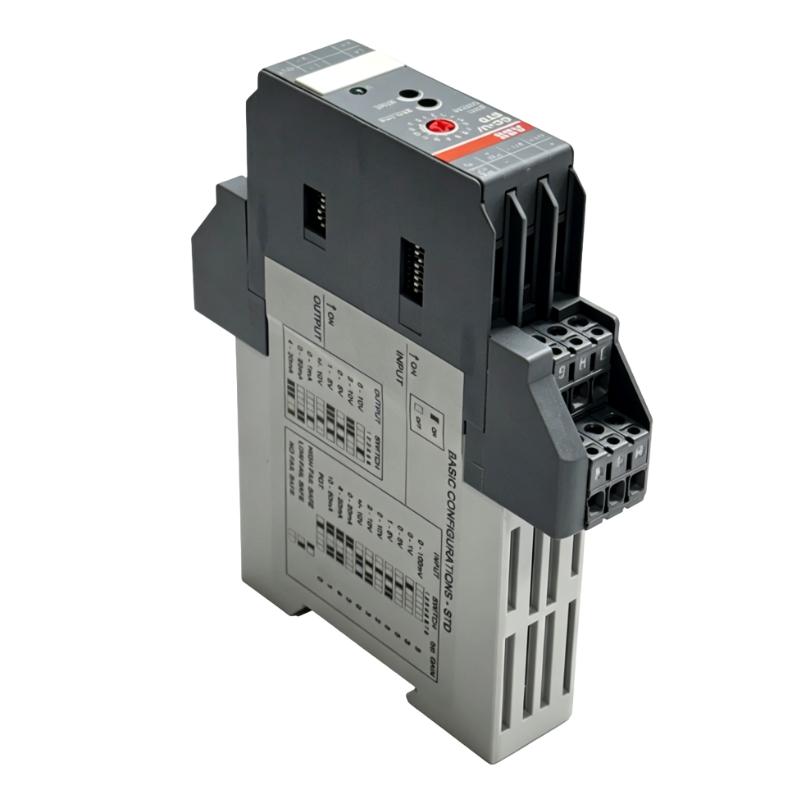
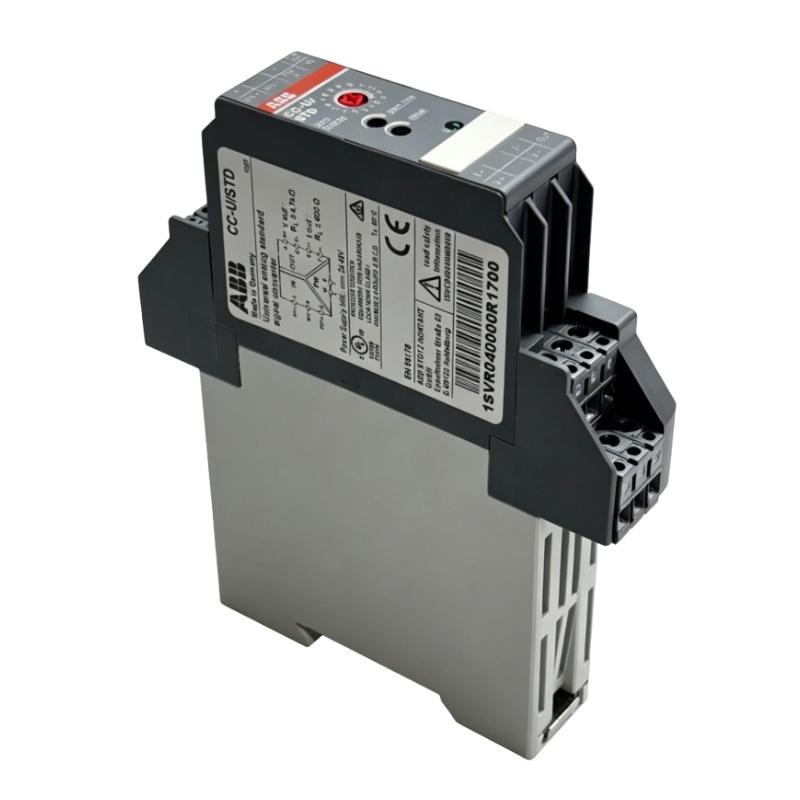
- ABB
- CC-U/STD 1SVR040000R1700
- Universal Signal Converter
- Sweden (SE)
- 120 × 22.5 × 105 mm
- 0.125 kg
- Xiamen, China
- New & In Stock
- T/T, PayPal, Western Union
- 1 Year
- 1-3 Working Days
- DHL, UPS, TNT, FedEx and EMS.
- 24-Hour Service
- COO
- 6
Our advantage

Global Logistics
We have a 10-year logistics and express cooperation agreement, so our products can be shipped to any place in the world.

Brand new and original
Our products are imported in bulk from the place of origin. Because of the cooperative relationship, our products are all original and 100% new.

24-hour service
We provide 7*24 hours service to our customers. We will be there whenever you need us.

Price advantage
All our products are priced very favorably because we have our own warehouse and supply.
| Company Information | |||
| [email protected] | |||
| Mobile | +8615980777398 | ||
| +8615980777398 | |||
| 15980777398 |
Product Overview
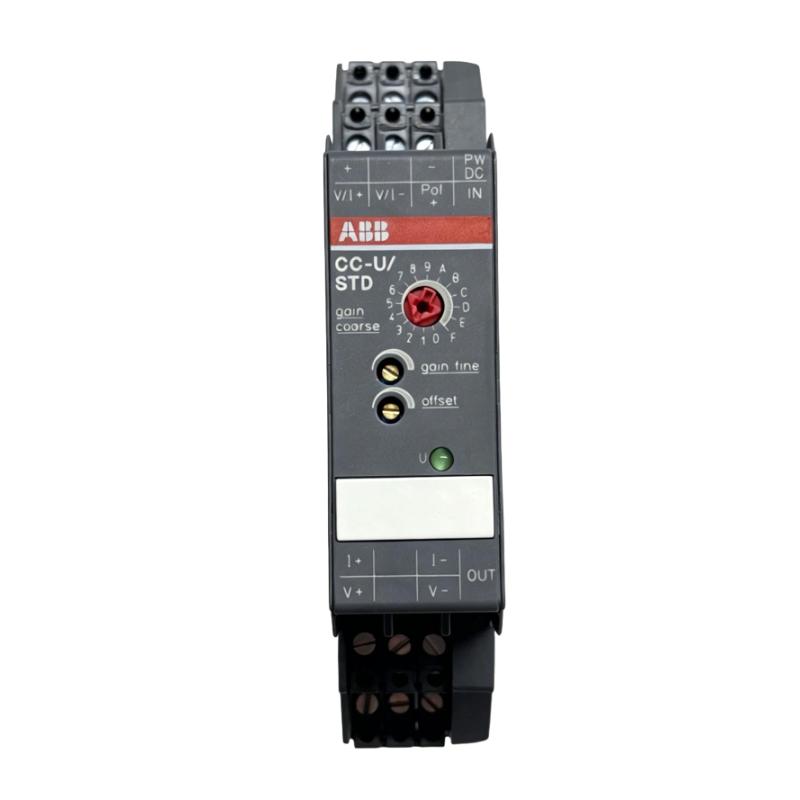
The ABB CC-U/STD 1SVR040000R1700 Universal Signal Converter is an interface device used in industrial automation systems to condition and transfer signals between field instruments and control equipment. It can be applied where a process signal must be adapted before reaching a PLC, controller, monitoring unit, or other receiving device.
In a typical control cabinet, signal converters help maintain compatibility between different parts of an automation system. They are particularly useful when integrating measurement instruments into an existing control architecture, replacing interface components during maintenance, or organizing signal connections between field devices and centralized control equipment.
For maintenance engineers, the key consideration is matching the converter’s supported input and output configuration to the actual signal requirements. Correct selection helps prevent signal mismatches that can affect process readings, control decisions, or alarm handling.
Technical Specifications
| Parameter | Specification |
|---|---|
| Brand | ABB |
| Model | CC-U/STD |
| Order Number | 1SVR040000R1700 |
| Product Type | Universal Signal Converter |
| Product Series | CC-U |
| Product Category | Signal Conditioning and Interface Equipment |
| Primary Function | Industrial signal conversion |
| System Application | Process instrumentation and automation |
| Typical Input Source | Compatible field measurement or control signal |
| Typical Output Destination | PLC, controller, monitoring equipment, or signal interface |
| Installation Environment | Industrial control cabinet |
| System Integration | Field instrumentation and control-system interfaces |
| Configuration Requirement | Must match the connected signal types and operating requirements |
| Maintenance Focus | Signal compatibility, wiring integrity, and operating condition |
| Dimensions | 120 × 22.5 × 105 mm |
| Weight | 0.125 kg |
Product Features
- Universal signal interface: Supports signal-conversion applications where field instrumentation and control equipment require compatible signal interfaces. The precise supported input and output combinations must be established from the device configuration.
- Control-system integration: Can be incorporated into automation cabinets connecting process instruments with PLCs, controllers, and monitoring systems.
- Compact cabinet installation: Its narrow form factor helps conserve valuable space in control panels containing multiple interface and signal-conditioning devices.
- Improved signal organization: Separating signal-interface functions from the main controller can make cabinet wiring and troubleshooting easier to manage.
- Suitable for maintenance and retrofit work: Can be considered when replacing an existing signal converter or updating an instrumentation interface, provided the electrical and functional requirements match.
- Clear model identification: The CC-U/STD designation and order number help maintenance teams distinguish the intended device when checking inventory, preparing replacement parts, and documenting cabinet components.
- Practical diagnostic access: When installed with accessible terminals and clearly labeled wiring, the converter can be checked as part of a systematic signal-path investigation.
Working Principle
A universal signal converter operates as an interface between a signal source and the equipment that receives the signal. The input comes from a compatible field instrument or another control-system device. The converter processes the signal according to its supported conversion function and supplies a corresponding output to the receiving equipment.
In a process-control application, for example, a measurement instrument may send a signal that must be adapted before a controller can use it. The converter sits in the signal path, allowing the control system to receive a signal in the format supported by the installed interface.
The converter does not replace the field sensor or the controller’s control logic. Instead, it handles the interface function between them. Its effectiveness depends on matching the input signal, output signal, supply requirements, and wiring arrangement to the application. Incorrect configuration or incompatible signal levels can lead to incorrect readings, unstable indications, or a loss of usable process data.
Role in a Process Control Architecture
| System Layer | Role of the CC-U/STD Signal Converter |
|---|---|
| Field Instrumentation | Receives a compatible signal from a field measurement or control device. |
| Signal Interface | Performs the applicable signal-conversion function between the source and destination. |
| PLC or Controller | Supplies the compatible output required by the receiving control-system input. |
| HMI and Monitoring | Supports process indication when the converted signal is connected to an appropriate monitoring input. |
| Maintenance and Diagnostics | Provides an identifiable interface point for checking wiring, signal continuity, and signal compatibility. |
The CC-U/STD is an interface component rather than a standalone process controller. It does not independently execute the PLC program, operate field actuators, or determine process setpoints. Its role is to support the signal path on which those control functions depend.
When troubleshooting an abnormal process value, engineers should evaluate the complete path: the field instrument, converter input, converter configuration and supply, converter output, and receiving controller channel. This approach helps distinguish a signal-conversion problem from a sensor fault or a controller-side issue.
Industrial Applications
- Process measurement systems: Used as a signal-interface component where compatible instrumentation signals need to be adapted before entering a control system.
- PLC-based automation: Applied in control cabinets that connect field devices to programmable logic controllers through suitable signal interfaces.
- Manufacturing equipment: Can support instrumentation interfaces in production machinery where process measurements are transferred to local or centralized controllers.
- Utility and facility monitoring: May be incorporated into monitoring panels for compatible temperature, pressure, level, flow, or other process signals, subject to the converter’s supported signal specifications.
- Industrial retrofit projects: Useful for evaluating signal-interface requirements when upgrading an older control panel or integrating a new instrument into an existing installation.
- Control-panel maintenance: Can be considered as a replacement interface component when the existing converter’s model, electrical characteristics, and conversion function have been verified.
- Distributed instrumentation systems: Can serve at the interface between field measurement equipment and a receiving control cabinet when the system’s signal and wiring requirements are satisfied.
Installation and Maintenance
- Verify the complete model number: Confirm that CC-U/STD and order number 1SVR040000R1700 match the required replacement or installation specification.
- Check signal compatibility: Establish the input and output signal types before connecting the converter to field instruments or control equipment.
- Confirm the supply requirements: Verify the required supply voltage and connection arrangement against the applicable device documentation and panel design.
- Isolate power before wiring: Follow site electrical safety procedures and ensure the relevant circuit is safely isolated before installing, removing, or modifying connections.
- Review terminal assignments: Identify each terminal from the device markings and wiring information rather than relying on the layout of a different converter model.
- Inspect the mounting position: Install the unit securely in the designated control-panel location and maintain the clearances required by the equipment and cabinet design.
- Separate signal wiring where necessary: Follow the control-panel design for routing low-level signal cables away from sources of electrical interference.
- Check conductor termination: Ensure wires are correctly inserted and secured, with no loose strands or damaged insulation that could cause intermittent signals.
- Verify the configuration: Confirm that the converter’s applicable settings or configuration match the source signal and the receiving equipment.
- Test the signal path: After installation, compare the field input with the converter output and the value displayed by the controller to identify discrepancies.
- Investigate abnormal readings systematically: Check the field instrument, wiring, supply, converter, and receiving channel in sequence instead of replacing components without diagnosis.
- Record maintenance results: Document the installed model, wiring changes, configuration, test results, and replacement date to support future troubleshooting.
Related Components
| Component | Role in the System | Relationship to the CC-U/STD |
|---|---|---|
| Field Transmitter | Measures a process variable and generates an electrical signal. | May act as the signal source when its output matches the converter’s supported input. |
| PLC Analog Input Module | Receives process signals for controller processing. | May receive the converter output when the signal type and electrical range are compatible. |
| Process Controller | Uses measurement data to execute control logic. | Processes the signal after it has passed through the appropriate input interface. |
| HMI Panel | Displays process values, alarms, and operating states. | Can display values obtained through the controller or a compatible monitoring interface. |
| Control Power Supply | Supplies electrical power to compatible control devices. | Must meet the converter’s specified supply requirements; voltage compatibility should be verified. |
| Terminal Blocks | Provide organized connection points for panel wiring. | Help route field signals and converter outputs to their designated destinations. |
| Signal Isolator | Provides electrical isolation between compatible signal circuits. | May be used elsewhere in the same signal chain when isolation is required; it is not automatically interchangeable with a converter. |
| Shielded Instrument Cable | Carries measurement signals between field devices and control equipment. | Supports signal transmission when selected and installed according to the site’s wiring requirements. |
Recommended Related Models
| Model or Product Family | Product Type | Application Relationship |
|---|---|---|
| ABB CC-U Series | Universal Signal Converters | The closest product family to investigate when selecting another converter for a similar signal-interface application. |
| ABB CC-E Series | Signal Converters | A related ABB signal-conversion family worth evaluating when reviewing alternative interface arrangements. |
| ABB S200 Series | Miniature Circuit Breakers and Protection Devices | Relevant to control-panel circuit protection, but not a direct signal-converter replacement. |
| ABB Interface Relays | Interface Relays | Useful for switching and electrical interfacing in the same cabinet; relay functions differ from analog signal conversion. |
| ABB PLC I/O Modules | Input and Output Modules | Relevant where field signals are connected directly to automation controllers, provided the I/O module supports the required signal type. |
| ABB Process Instrumentation | Measurement Instruments | Provides potential signal sources for a converter-based measurement chain, subject to electrical compatibility. |
Products within related ABB families should not be treated as direct substitutes solely because they share a manufacturer or application category. A replacement must match the required signal conversion, input and output ranges, supply requirements, terminal arrangement, and installation constraints.
Key Advantages
- Dedicated signal-interface function: Helps connect compatible field signals to the receiving control equipment.
- Compact panel integration: Makes efficient use of available space in industrial control cabinets.
- Flexible system application: Can be evaluated for instrumentation, PLC interfaces, and control-panel retrofit work where the required signal characteristics are supported.
- Simplified signal-path troubleshooting: Provides a defined interface point for checking input and output behavior.
- Clear spare-parts identification: The model designation and order number support inventory control and replacement planning.
- Integration with established control equipment: Can be incorporated into a broader automation system without replacing the field instrument or controller, provided the interface requirements are met.
Technical FAQs
1. What is the ABB CC-U/STD 1SVR040000R1700 used for?
It is a universal signal converter used in industrial automation signal-interface applications. It can be installed between a compatible field signal source and receiving control equipment when the required conversion function matches the device’s supported specifications.
2. Can the CC-U/STD be connected directly to any PLC analog input?
No. The converter’s output must be compatible with the PLC input’s signal type and electrical range. The input source, converter configuration, supply requirements, and terminal assignments should all be checked before wiring.
3. What should be checked when replacing an existing signal converter with this model?
Confirm the complete model number, supported input and output signals, supply requirements, terminal arrangement, configuration, and mounting requirements. A similar appearance or a shared application does not establish electrical or functional interchangeability.
4. What could cause an incorrect reading after installing the converter?
Potential causes include an incompatible input signal, an incorrect converter configuration, loose or miswired terminals, an unsuitable supply, electrical interference, a faulty field instrument, or an incompatible receiving input. Checking the signal at each stage helps identify where the discrepancy originates.