

ProductPRODUCT
Featured products
Contact Us
- GE
- XVME-230
- Intelligent Counter Module
- USA
- 200 × 100 × 25 mm
- 0.431 kg
- Xiamen, China
- New & In Stock
- T/T, PayPal, Western Union
- 1 Year
- 1-3 Working Days
- DHL, UPS, TNT, FedEx and EMS.
- 24-Hour Service
- COO
- 3
Our advantage

Global Logistics
We have a 10-year logistics and express cooperation agreement, so our products can be shipped to any place in the world.

Brand new and original
Our products are imported in bulk from the place of origin. Because of the cooperative relationship, our products are all original and 100% new.

24-hour service
We provide 7*24 hours service to our customers. We will be there whenever you need us.

Price advantage
All our products are priced very favorably because we have our own warehouse and supply.
| Company Information | |||
| [email protected] | |||
| Mobile | +8615980777398 | ||
| +8615980777398 | |||
| 15980777398 |
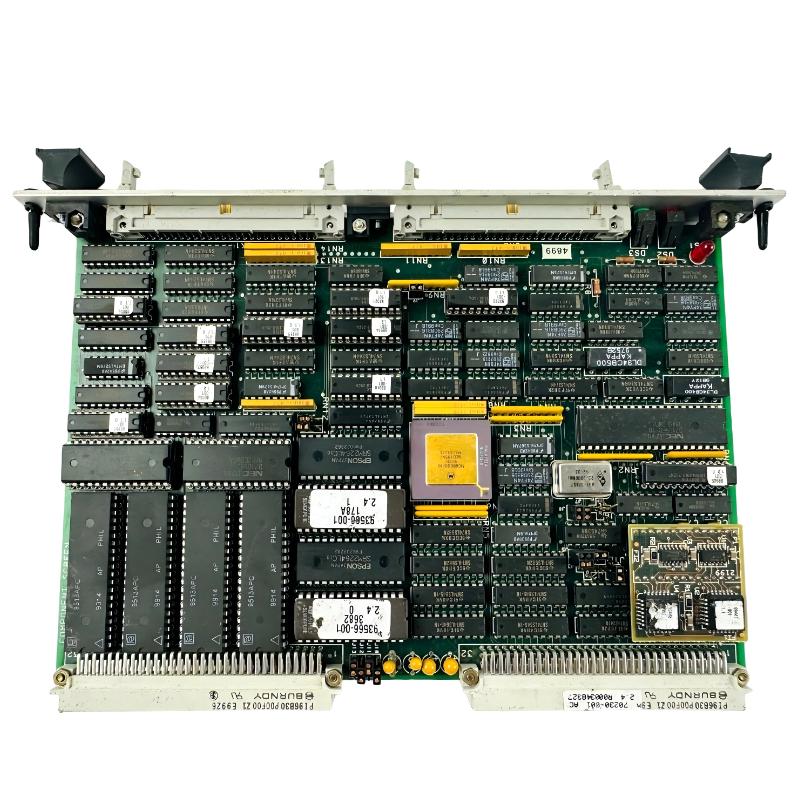
Product Overview
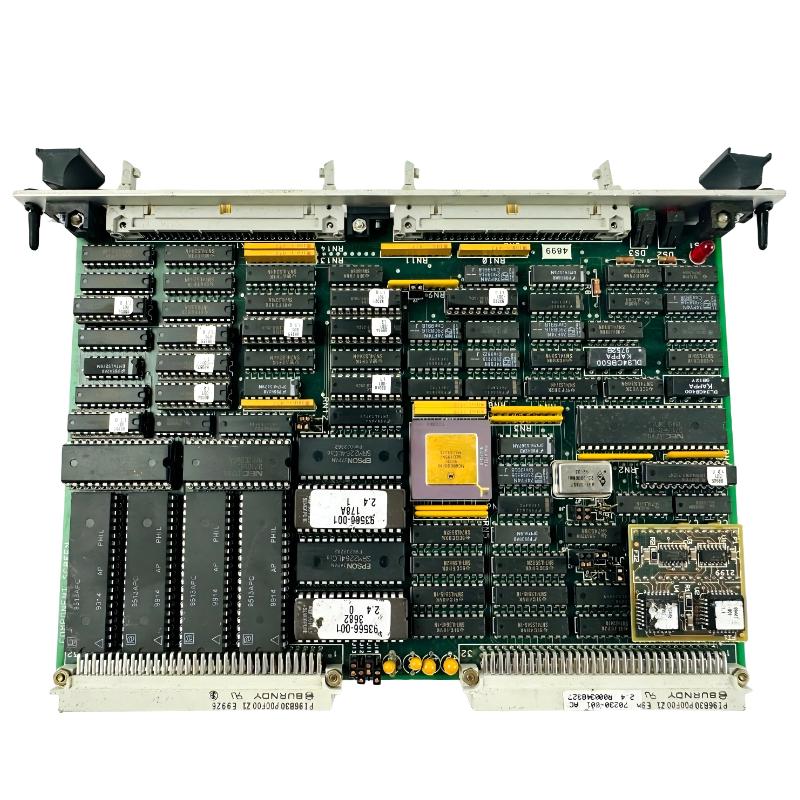
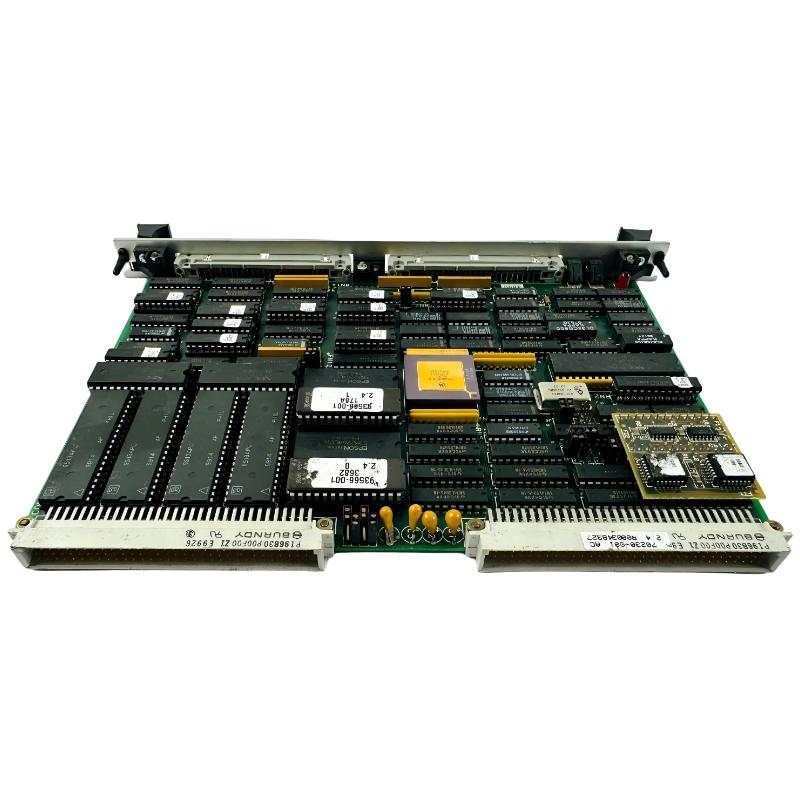
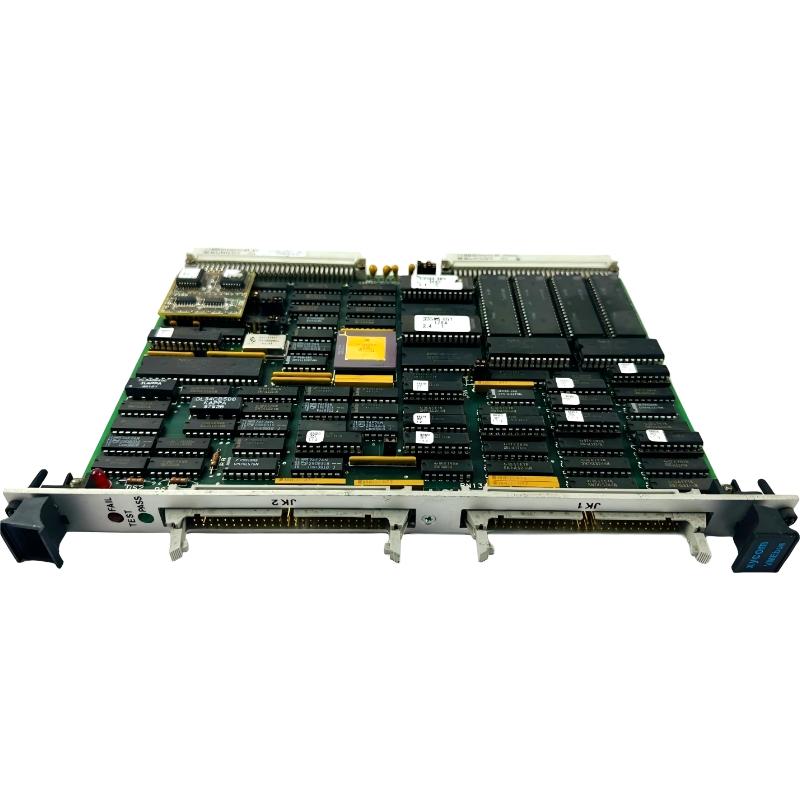
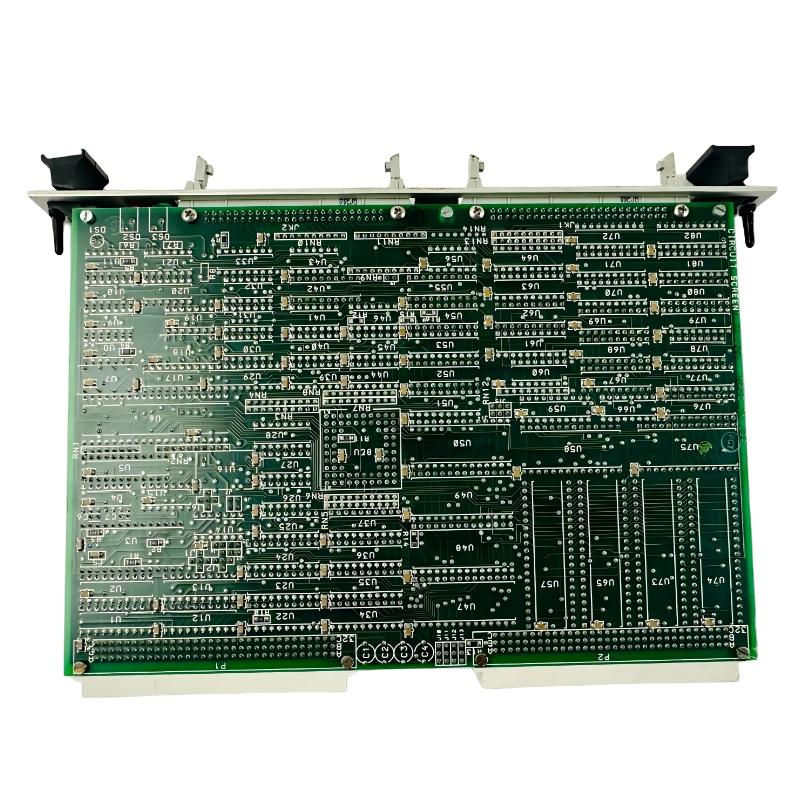
The GE XVME-230 Intelligent Counter Module is an industrial counting and measurement board used in compatible VME-based control and data acquisition systems. It handles counter-related input signals, allowing a host computer or controller to monitor pulse activity and obtain count information for equipment monitoring, sequence control, and measurement tasks.
In industrial applications, pulse signals are commonly generated by encoders, proximity sensors, flow meters, and other devices that produce discrete electrical transitions. A dedicated counter module allows these signals to be processed as count data rather than relying on the host processor to monitor every pulse directly. This is useful when the application requires repeated event counting, position-related measurements, or tracking of machine cycles.
The XVME-230 belongs to GE’s XVME industrial computing product family. Its role within a VME system is to provide dedicated counting functionality that can be accessed by the host application. When installing a replacement or integrating the module into an existing system, engineers should confirm the supported input signal characteristics, counter configuration, interface requirements, and software compatibility for the specific hardware version.
Technical Specifications
| Parameter | Specification |
|---|---|
| Brand | GE |
| Model | XVME-230 |
| Product Series | XVME |
| Product Type | Intelligent Counter Module |
| Board Category | Counter and Measurement Interface |
| Primary Function | Pulse counting and event measurement |
| System Architecture | VME-based control system |
| Input Signal Type | Counter-related electrical signals |
| Counting Function | Hardware-assisted counting |
| Host Interface | VME bus |
| Data Access | Host-accessible counter information |
| Typical Input Sources | Encoders, pulse sensors, and compatible signal devices |
| Application | Industrial counting and measurement |
| Installation Type | VME system board |
| Dimensions | 200 × 100 × 25 mm |
| Weight | 0.431 kg |
Product Features
- Dedicated counting functionality: Provides counter-related processing within a VME-based system, allowing applications to obtain count information without depending entirely on continuous host-level signal polling.
- Pulse signal monitoring: Supports applications that use electrical pulses to represent events, movement, cycles, or measured quantities, subject to the module’s supported input characteristics.
- VME host integration: Connects counting functionality to a compatible VME host computer or controller, allowing software to access the module’s data within the overall control application.
- Support for event measurement: Can be used in systems that count repeated events, monitor production cycles, or collect pulse-based measurement information.
- Encoder-related applications: Counter modules are commonly used with pulse-producing position and speed sensors. Actual encoder compatibility depends on the XVME-230’s input design and supported signal format.
- Reduced host processing demand: Dedicated counting hardware can handle pulse activity independently of the host’s main application loop, reducing the need for the processor to detect each transition through software polling.
- Integration with industrial computing platforms: Fits into compatible VME-based equipment architectures that combine processor boards, input/output hardware, and application-specific interfaces.
- Support for legacy equipment: Provides a board-level component for maintaining existing VME installations where counter functionality is part of the original machine or test system design.
- Application-dependent configuration: Correct operation depends on the input wiring, signal characteristics, counter setup, and host software configuration used by the installation.
- Useful for maintenance and replacement: Can be considered during troubleshooting when a compatible system experiences missing counts, incorrect event totals, or counter input problems.
Working Principle
The GE XVME-230 Intelligent Counter Module processes input transitions from compatible signal sources and makes the resulting count information available to the host system. In a typical counting application, each valid input pulse represents an event or a unit of movement, depending on the connected sensor and the application logic.
The general operating sequence is as follows:
- Signal input: A compatible sensor or external device supplies pulse signals to the module’s input circuitry.
- Input recognition: The module detects valid signal transitions according to its supported electrical characteristics and configured operating conditions.
- Counter update: The counting hardware updates the associated count value as qualifying pulses are received.
- Host access: The VME host reads the counter information through the system interface using the appropriate software driver or register access method.
- Application processing: The host application converts count information into useful values, such as event totals, production counts, or movement-related measurements.
- Control or monitoring response: Application logic can compare the acquired count with configured limits and initiate an appropriate action through other system hardware when required.
For example, a production machine may use a pulse sensor to track repeated cycles. The counter module records qualifying pulses, while the host application uses the count value to monitor production progress or determine when a configured target has been reached.
The module provides counting and data acquisition functionality; the exact measurement method and control response depend on the sensor interface, supported counter features, and host application.
Role in a VME-Based Counting and Control Architecture
The XVME-230 provides the counting interface between pulse-generating field devices and the host computer. It handles counter-related signal processing, while the host application interprets the resulting values and coordinates any associated control or monitoring tasks.
| System Component | Function | Relationship to the XVME-230 |
|---|---|---|
| VME Host CPU Board | Executes the main control or data acquisition application | Reads counter data and applies application logic |
| XVME-230 Counter Module | Processes counter-related input signals | Records qualifying events and provides count information |
| Pulse Sensor | Generates electrical pulses in response to an event or movement | Supplies signals to the counter input |
| Rotary or Linear Encoder | Produces pulse signals associated with position or movement | Can serve as a counter signal source if electrically compatible |
| Proximity Sensor | Detects the presence or passage of an object | Can provide event pulses for counting applications |
| VME Backplane | Connects the counter module to the host system | Provides the module’s system interface |
| Device Driver or Interface Software | Allows the application to access the module | Supports counter configuration and data retrieval |
| Digital Output Hardware | Operates external devices under host control | Can execute a response when application logic identifies a counting condition |
| Supervisory Software | Displays and records operational information | Uses count data for monitoring, reporting, and process tracking |
When a counting problem occurs, the fault may originate in the sensor, field wiring, input signal characteristics, module hardware, VME interface, or application configuration. Checking each part of the signal path helps avoid replacing the module unnecessarily.
Industrial Applications
| Application | Typical Counting Requirement | Role of the XVME-230 |
|---|---|---|
| Production Line Monitoring | Counting completed products or machine cycles | Records pulse-based events for production tracking |
| Conveyor Systems | Counting objects passing a defined point | Processes pulses from compatible detection sensors |
| Position Measurement | Tracking pulse increments from an encoder | Supplies count information for host-side position calculations where supported |
| Machine Cycle Monitoring | Recording repeated machine operations | Maintains event counts for operating statistics |
| Flow Measurement | Counting pulses from a compatible pulse-output flow meter | Supplies pulse totals for host-side quantity calculations |
| Industrial Test Equipment | Recording events during repeated test sequences | Supports pulse counting within a test application |
| Automated Assembly | Tracking parts or operation sequences | Provides count information for production and sequence logic |
| Legacy VME Control Systems | Maintaining existing counting and measurement functions | Serves as a counter board within a compatible VME installation |
The suitability of the XVME-230 for a particular application depends on the electrical properties of the incoming signals, the required counting behavior, the host interface, and the installed software. High-speed, quadrature, frequency measurement, or other specialized functions should not be assumed unless confirmed for the specific module version.
Installation and Maintenance
- Verify the module identification: Confirm the complete XVME-230 model designation and hardware revision before installation or replacement.
- Check host compatibility: Verify that the VME chassis, backplane, host processor, and system configuration support the module.
- Confirm input signal requirements: Check the supported input voltage, signal type, pulse characteristics, and any applicable frequency limits before connecting field devices.
- Isolate the equipment: Follow the site’s electrical safety and electrostatic discharge procedures before removing or installing the board.
- Inspect the board and connectors: Examine the board edge connector, field wiring interface, and accessible components for damage, contamination, or signs of overheating.
- Check sensor wiring: Verify terminal assignments, signal polarity where applicable, common connections, and cable condition before applying power.
- Review signal quality: Check that the connected sensor produces valid electrical transitions and that electrical noise or contact bounce is not causing false counts.
- Install the module correctly: Align the board with the designated VME slot and insertion guides, then secure it according to the chassis procedure. Do not force the board into the backplane.
- Verify counter configuration: Confirm the channel assignments, operating mode, count initialization, and other supported parameters used by the host application.
- Check startup and communication: After restoring power according to the approved procedure, verify that the host recognizes the module and can access the required counter information.
- Test counting accuracy: Apply a known number of input pulses or use an appropriate test signal to compare the module’s count with the expected result.
- Document maintenance results: Record the module identification, sensor connection details, configuration, test results, and any corrective action taken.
If counts are missing or inconsistent, first verify that the sensor produces valid pulses and that the signal reaches the correct input. If the input signal is correct, check the counter configuration, host software, module connection, and system diagnostics before concluding that the board is defective.
Related Components
| Component | Function | Relationship to the XVME-230 |
|---|---|---|
| VME Host CPU Board | Executes the control or acquisition application | Reads counter values and processes the data |
| VME Backplane | Provides the board’s system connection | Connects the counter module to the host |
| Pulse-Output Sensor | Generates electrical pulses representing events | Supplies signals for counting |
| Rotary Encoder | Produces pulse signals associated with rotational movement | Supports encoder-based counting where compatible |
| Proximity Sensor | Detects the presence or passage of objects | Provides event signals for counting applications |
| Field Signal Cable | Carries sensor signals to the module | Maintains the electrical connection between field devices and the counter input |
| Digital Input Module | Acquires discrete status signals | Complements counter functionality in a larger VME system |
| Digital Output Module | Operates external control devices | Executes application-controlled actions based on processed count data |
| Host Interface Software | Provides access to the module’s functions | Enables configuration and retrieval of counter information |
Recommended Related Models
| Model or Product Family | Product Type | Relevance |
|---|---|---|
| GE XVME-230 | Intelligent Counter Module | Target module for compatible VME-based counting applications |
| GE XVME CPU Boards | VME Processor Boards | Host-side hardware for executing counting and control applications |
| GE XVME Digital Input Modules | Digital Input Modules | Complementary hardware for discrete status monitoring |
| GE XVME Digital Output Modules | Digital Output Modules | Complementary hardware for output control based on application logic |
| GE XVME Analog Input Modules | Analog Input Modules | Complementary hardware for acquiring voltage or current process signals |
Key Advantages
- Provides dedicated counter functionality within a compatible VME system.
- Supports pulse-based event tracking and measurement applications.
- Reduces the need for continuous host-level polling of individual input transitions.
- Integrates counting data with existing VME-based monitoring and control software.
- Supports maintenance of legacy industrial computing and data acquisition systems.
Technical FAQs
1. What is the GE XVME-230 Intelligent Counter Module used for?
The GE XVME-230 is a counter module for compatible VME-based control and data acquisition systems. It processes supported input pulses and makes count information available to the host application for event tracking, measurement, and monitoring.
2. Which devices can provide input signals to the XVME-230?
Potential signal sources include pulse-output sensors, encoders, proximity sensors, and compatible flow meters. The actual devices that can be connected depend on the module’s supported input voltage, signal format, and counting characteristics.
3. Why does the counter value fail to increase?
Possible causes include a sensor that is not generating pulses, incorrect wiring, an incompatible signal level, electrical noise, an incorrect counter configuration, or a problem with the module or host interface. Verify the input signal first, then check configuration and system communication.
4. Can the XVME-230 be used as a general-purpose digital input module?
A counter module and a general-purpose digital input module serve different functions. The XVME-230 is intended for counting-related operations. Its ability to handle particular discrete signals depends on the documented input characteristics and supported operating modes; it should not automatically be treated as a substitute for a standard digital input board.