

ProductPRODUCT
Featured products
Contact Us
- Siemens
- 6AG1522-5HH00-7AB0
- Digital Output Module
- Germany
- 35 × 147 × 129 mm
- 0.368 kg
- Xiamen, China
- New & In Stock
- T/T, PayPal, Western Union
- 1 Year
- 1-3 Working Days
- DHL, UPS, TNT, FedEx and EMS.
- 24-Hour Service
- COO
- 5
Our advantage

Global Logistics
We have a 10-year logistics and express cooperation agreement, so our products can be shipped to any place in the world.

Brand new and original
Our products are imported in bulk from the place of origin. Because of the cooperative relationship, our products are all original and 100% new.

24-hour service
We provide 7*24 hours service to our customers. We will be there whenever you need us.

Price advantage
All our products are priced very favorably because we have our own warehouse and supply.
| Company Information | |||
| [email protected] | |||
| Mobile | +8615980777398 | ||
| +8615980777398 | |||
| 15980777398 |
Product Overview
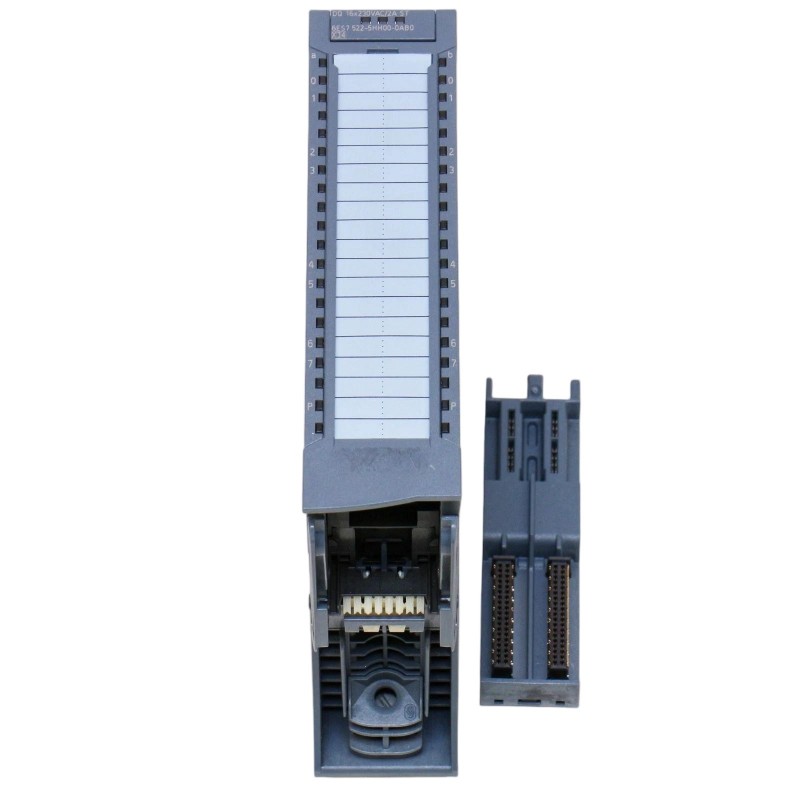
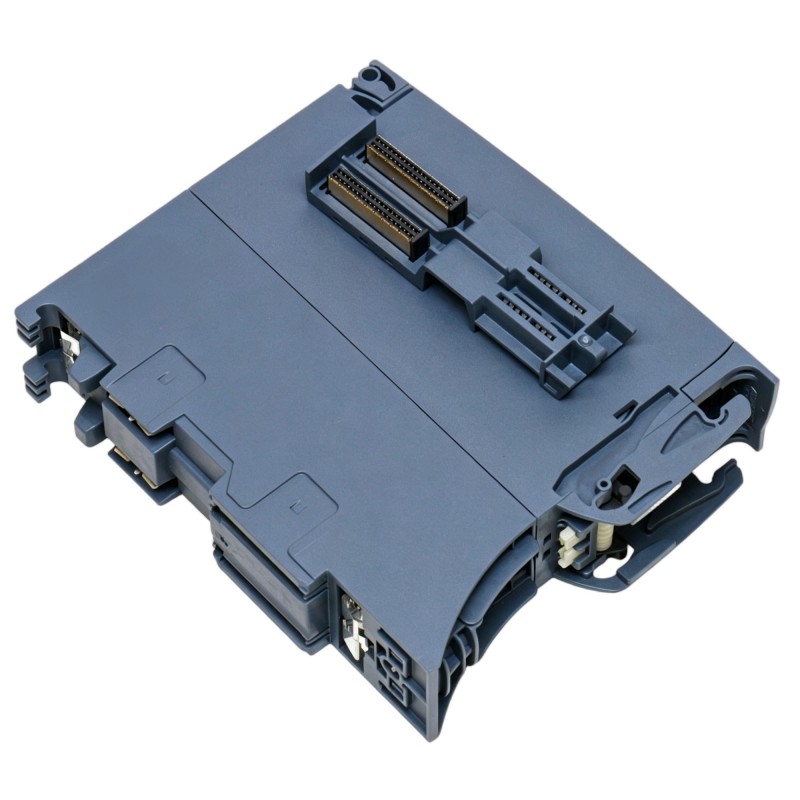
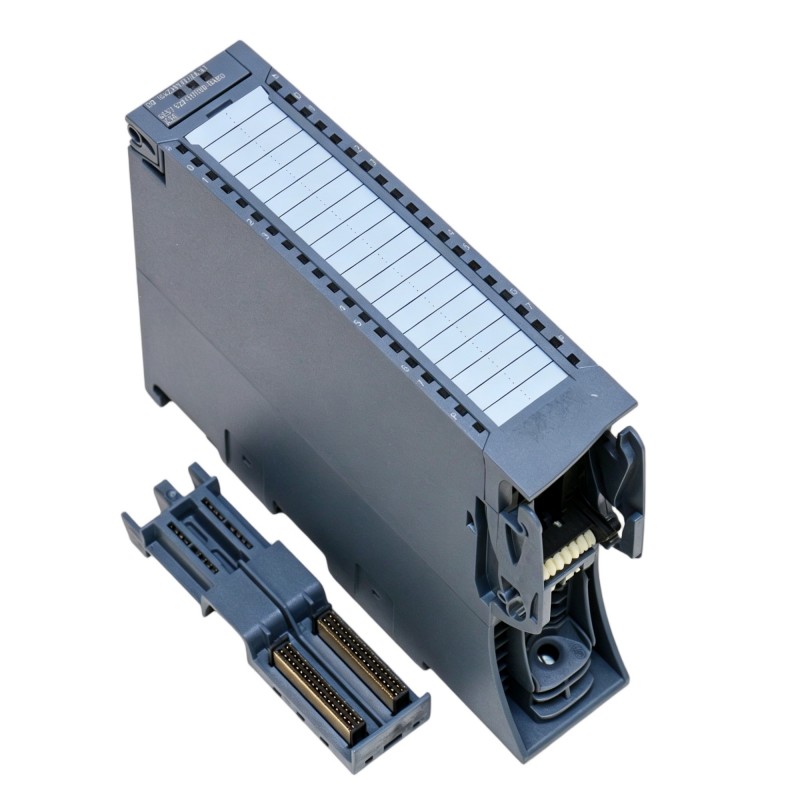
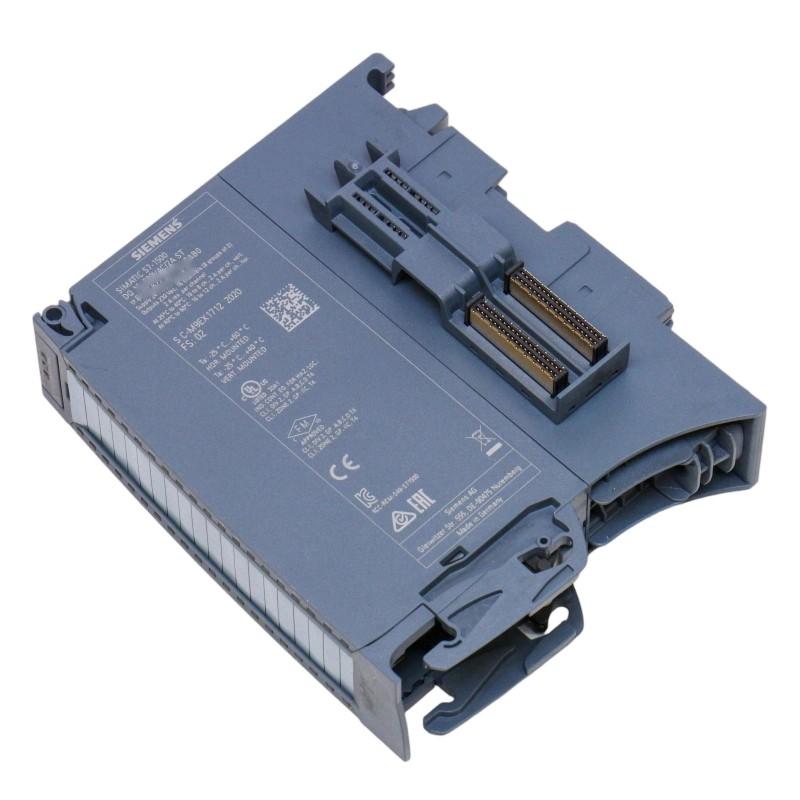
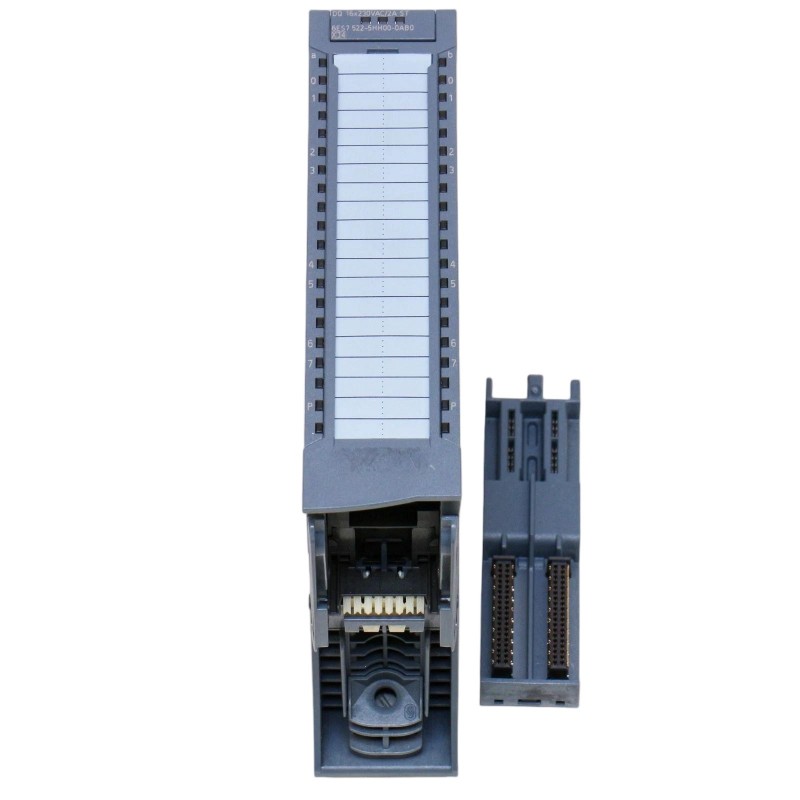
The Siemens 6AG1522-5HH00-7AB0 is a SIPLUS S7-1500 Digital Output Module for discrete output control in SIMATIC S7-1500 automation systems. It forms the hardware interface between the PLC’s internal control logic and external devices that need to be switched according to a programmed sequence.
In a typical control cabinet, the module receives output information from the S7-1500 CPU through the system backplane and applies the commanded states to its digital output channels. Those channels can be used within control circuits involving relays, contactors, solenoid valves, indicators, interlocks, and other suitable discrete field devices.
The module is especially relevant in applications where numerous on/off commands must be coordinated with input signals, timers, permissives, alarms, and machine sequences. Rather than treating each output as an isolated switch, engineers normally use the module as part of a complete signal path extending from the PLC program to the final field device.
For maintenance and commissioning, this architecture also provides a logical troubleshooting path. An unexpected field response can be investigated by checking the PLC command, module status, channel wiring, external supply, interface components, and load in sequence.
Technical Specifications
| Parameter | Value |
|---|---|
| Product Model | 6AG1522-5HH00-7AB0 |
| Product Type | SIPLUS S7-1500 Digital Output Module |
| Product Family | Siemens SIPLUS S7-1500 |
| Module Type | Digital Output |
| System Platform | SIMATIC S7-1500 |
| Signal Type | Digital Output |
| Application | Discrete signal and load control |
| Mounting Concept | S7-1500 modular system |
| Dimensions | 35 × 147 × 129 mm |
| Weight | 0.368 kg |
Product Features
- SIPLUS S7-1500 platform integration — Intended for use within the SIPLUS version of the SIMATIC S7-1500 modular automation architecture.
- Digital output interface — Converts output states generated by the controller into discrete field-side switching signals.
- CPU-to-field connection — Establishes the output-side link between S7-1500 control logic and connected external circuits.
- Suitable for sequential machine control — Supports discrete commands used in machine cycles, interlocks, auxiliary functions, and equipment sequencing.
- Modular system architecture — Can be installed alongside other S7-1500 system and I/O modules as part of a structured PLC station.
- Field-device interface — Can be incorporated into circuits for suitable relays, contactors, solenoids, indicators, and other discrete loads.
- Straightforward signal tracing — The architecture allows technicians to follow an output from the PLC program through the I/O module and into the field circuit.
- Suitable for control cabinet applications — Works within organized PLC cabinets where CPU, I/O, terminal, interface, and field wiring functions are separated.
- Complementary I/O capability — Can be used together with digital input and analog I/O modules to build a complete automation station.
Working Principle
The 6AG1522-5HH00-7AB0 functions as the digital output stage of an S7-1500 control system. The actual control decision is made by the PLC application, while the output module executes the resulting digital states at the I/O level.
1. Process information enters the controller
The CPU receives information from digital inputs, analog values, HMI commands, internal variables, and other control functions. The application program evaluates these conditions against the required machine or process sequence.
2. The CPU calculates output states
Based on programmed logic, the CPU determines which discrete devices need to be activated or deactivated. Interlocks and permissive conditions can be incorporated into this decision so that an output is only commanded when the required operating conditions are satisfied.
3. Output data reaches the module
The calculated output states are transferred internally through the S7-1500 backplane to the digital output module. The module therefore follows the controller’s configured output data rather than independently executing the process sequence.
4. Digital channels control the external circuit
The corresponding output channels change state according to the command received from the CPU. The external circuit then uses that state to operate an appropriate field device or interface component.
5. The field device performs the physical action
A connected relay, contactor, solenoid, indicator, or other discrete device responds to the output circuit. In a machine sequence, this could correspond to energizing an actuator, enabling an auxiliary circuit, changing an equipment state, or initiating the next process step.
6. The complete chain can be diagnosed
If the expected field action does not occur, technicians can compare the programmed command with the actual module condition and then move downstream through the terminal wiring, power source, interface components, and load.
Role in a SIMATIC S7-1500 Control Architecture
The 6AG1522-5HH00-7AB0 occupies the digital output layer of the S7-1500 architecture. It does not replace the CPU’s control logic; instead, it provides the hardware path through which that logic reaches discrete field equipment.
| Control Layer | Function | Relationship to the Digital Output Module |
|---|---|---|
| HMI / Supervisory Layer | Operator commands and visualization | Supplies operator requests and displays equipment status |
| S7-1500 CPU | Program execution and sequence control | Determines the required output states |
| System Backplane | Internal module communication | Transfers output data to the I/O module |
| Digital Output Module | Channel-level output control | Converts PLC output data into discrete field-side states |
| Interface / Protection Layer | Switching, isolation, and circuit protection | Adapts the output to the field circuit when required |
| Field Equipment | Physical machine or process action | Responds to the commanded output state |
This separation is useful in both commissioning and fault finding. For example, if the CPU is correctly generating an output command but the associated equipment does not operate, the engineer can check the output channel and then move to the field-side circuit without immediately assuming that the PLC program is at fault.
Industrial Applications
| Application | Typical Output Task | Example Equipment |
|---|---|---|
| Machine Automation | Sequence and interlock commands | Relays, contactors, solenoids, indicators |
| Packaging Machinery | Station-by-station control | Pneumatic actuators, valves, auxiliary devices |
| Conveyor Systems | Equipment sequencing | Motor starters, actuators, status circuits |
| Process Equipment | Discrete process commands | On/off devices, auxiliary valves, alarm circuits |
| Material Handling | Actuator coordination | Contactors, solenoid devices, machine interlocks |
| Utility Equipment | Auxiliary equipment control | Pumps, fans, valves, alarm interfaces |
| Production Lines | Coordinated discrete outputs | Actuators, relays, indicators, machine stations |
| Control Cabinet Upgrades | PLC I/O integration | S7-1500 control and field interface circuits |
| Automated Test Equipment | Automated switching | Relays, indicators, actuators, interlock circuits |
Installation and Maintenance
- Confirm the module identity — Verify that the installed hardware matches the project documentation and the intended SIPLUS S7-1500 configuration.
- Inspect the mounting position — Ensure the module is correctly installed in the S7-1500 station and that the mechanical and backplane interfaces are properly engaged.
- Check the engineering configuration — Confirm that the module is represented correctly in the PLC hardware configuration before commissioning.
- Verify output addressing — Make sure the PLC program addresses the intended output channels and that the configured outputs correspond to the actual field devices.
- Inspect field terminals — Check terminal connections, conductor identification, cable routing, and cabinet termination for loose or incorrectly landed wires.
- Verify the field-side supply — Confirm that the associated external circuit has the required power source and that protective components are correctly installed.
- Review the connected load — Check whether the field device and any intermediate interface components are appropriate for the actual output circuit.
- Monitor the commanded state — Use PLC monitoring functions during commissioning to determine whether the application program is generating the expected output command.
- Check module diagnostics — Review available system diagnostic information for hardware, configuration, or channel-related conditions.
- Trace the output circuit — If the module command is correct, inspect the terminal, wiring, relay or contactor, external supply, and field device progressively.
- Check interface components — A failed contactor coil, relay, fuse, terminal, solenoid, or protection component can prevent the field device from responding even when the PLC output command is correct.
- Document maintenance work — Record channel assignments, wiring changes, configuration updates, and commissioning results after replacement or troubleshooting.
Related Components
| Component | Role in the System |
|---|---|
| Siemens SIMATIC S7-1500 CPU | Executes the application program and generates output commands |
| SIPLUS S7-1500 Digital Input Modules | Acquire discrete field states for PLC processing |
| SIPLUS S7-1500 Analog I/O Modules | Interface with analog process signals |
| S7-1500 System Backplane | Provides internal communication between the CPU and I/O modules |
| Signal Relays | Provide switching, isolation, or interface functions |
| Contactors | Switch motors and other higher-power circuits through suitable control arrangements |
| Solenoid Valves | Convert electrical control commands into pneumatic or hydraulic actions |
| Terminal Blocks | Organize field wiring and cabinet-side connections |
| HMI System | Provides operator control and process visualization |
| Engineering System | Handles hardware configuration, I/O setup, diagnostics, and PLC programming |
Recommended Related Models
| Model | Product Type | Typical Relationship |
|---|---|---|
| Siemens 6AG1522-5EH00-7AB0 | SIPLUS S7-1500 Digital Output Module | Related SIPLUS digital output hardware |
| Siemens 6AG1522-5FF00-7AB0 | SIPLUS S7-1500 Digital Output Module | Related digital output module within the SIPLUS platform |
| Siemens 6AG1522-5FH00-7AB0 | SIPLUS S7-1500 Digital Output Module | Complementary SIPLUS output hardware |
| Siemens 6AG1522-5HF00-2AB0 | SIPLUS S7-1500 Digital Output Module | Related S7-1500 SIPLUS digital output module |
| Siemens 6AG1521 Series | SIPLUS S7-1500 Digital Input Modules | Complementary digital input hardware |
| Siemens SIPLUS S7-1500 Analog I/O Series | SIPLUS S7-1500 Analog I/O Modules | Complementary interface for analog process signals |
Key Advantages
- Integrates digital output control into the SIPLUS S7-1500 automation platform.
- Provides a direct PLC-side interface for discrete field control circuits.
- Supports structured machine and process sequencing through the S7-1500 architecture.
- Allows output faults to be traced from PLC logic through the I/O channel and into the field circuit.
- Can be incorporated with relays, contactors, solenoids, indicators, and other suitable interface devices.
- Fits modular control cabinet architectures based on the S7-1500 platform.
- Suitable for automation systems requiring SIPLUS-based digital output hardware.
Technical FAQs
How does the 6AG1522-5HH00-7AB0 fit into an S7-1500 station?
It functions as a digital output module within the S7-1500 station. The CPU executes the application program and sends the required output states through the system backplane, while the module handles the corresponding digital output channels.
What should be checked if the output state in the PLC changes but the actuator does not respond?
Check the output channel and module status first, then inspect the terminal connection, external field supply, interface relay or contactor, protective components, and actuator. This helps determine whether the fault is in the PLC/I/O section or downstream in the field circuit.
Can an external relay or contactor be used with this digital output module?
Yes, an external relay or contactor can form part of the field interface when the application requires additional switching capability, isolation, or an interface between the PLC output and the controlled circuit. The actual arrangement must match the electrical requirements of the installed hardware and load.
Why is output channel documentation important during replacement?
Each output channel is associated with a specific PLC address and field circuit. Accurate documentation allows a replacement module to be wired and configured consistently, reducing the risk of incorrect actuator operation or unexpected machine behavior during commissioning.