

ProductPRODUCT
Featured products
Contact Us
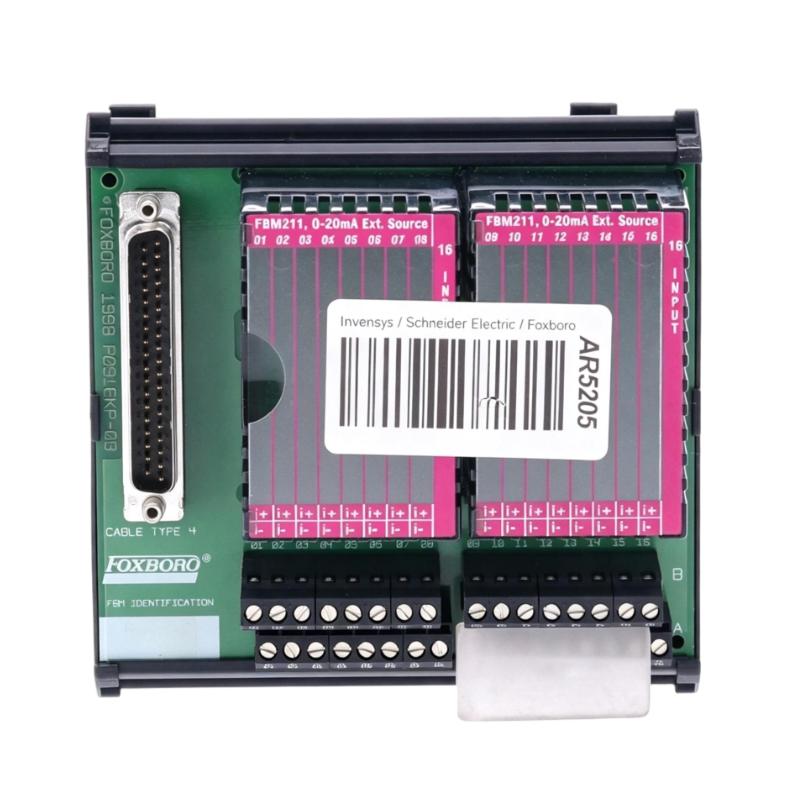
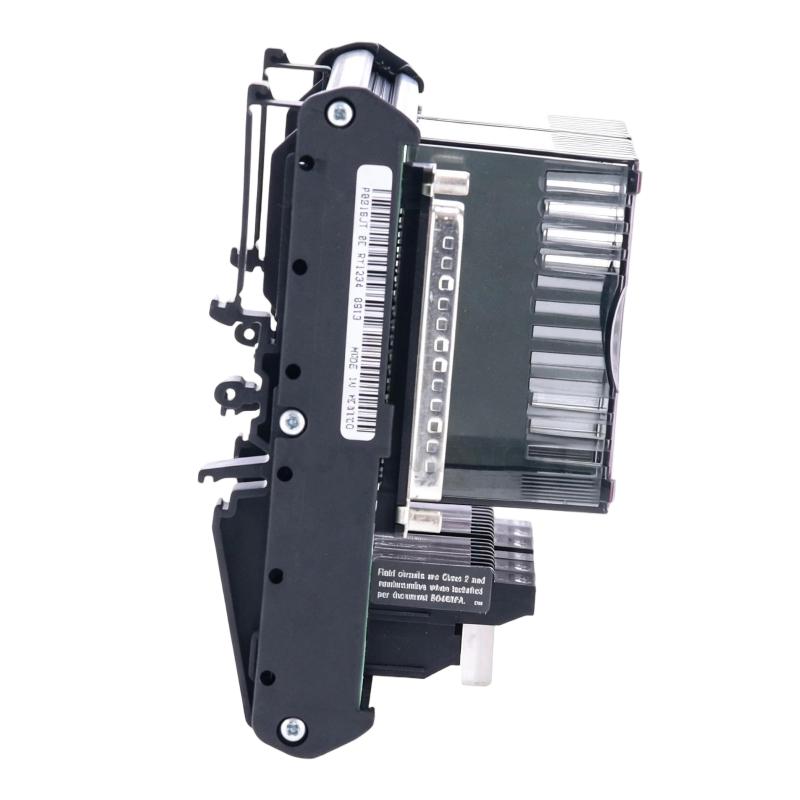
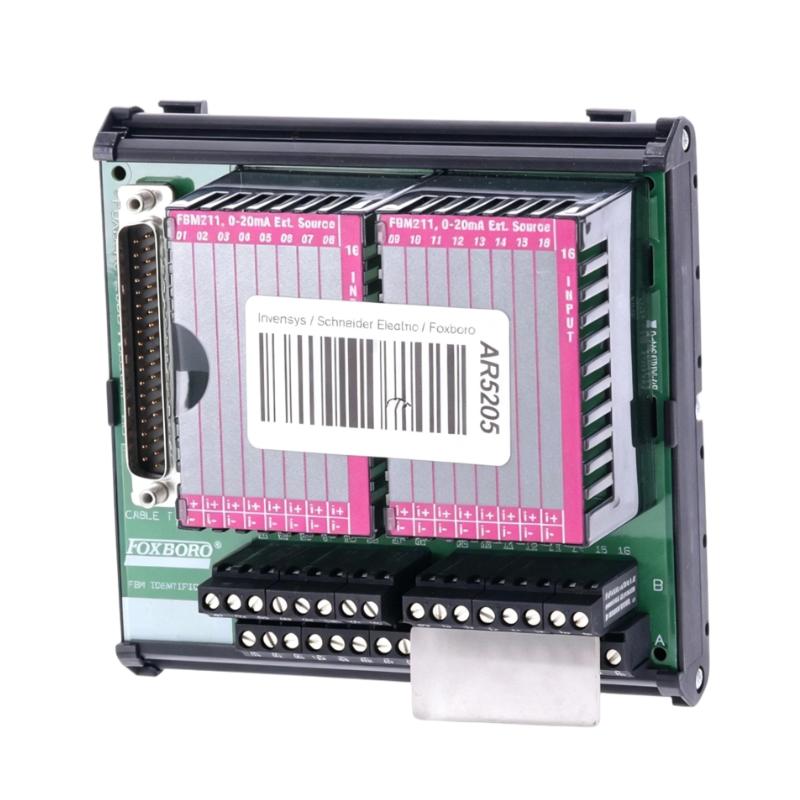

- Foxboro
- FBM211 P0916JT
- Termination Assembly
- USA
- 127 × 80 × 125 mm
- 0.272 kg
- Xiamen, China
- New & In Stock
- T/T, PayPal, Western Union
- 1 Year
- 1-3 Working Days
- DHL, UPS, TNT, FedEx and EMS.
- 24-Hour Service
- COO
- 4
Our advantage

Global Logistics
We have a 10-year logistics and express cooperation agreement, so our products can be shipped to any place in the world.

Brand new and original
Our products are imported in bulk from the place of origin. Because of the cooperative relationship, our products are all original and 100% new.

24-hour service
We provide 7*24 hours service to our customers. We will be there whenever you need us.

Price advantage
All our products are priced very favorably because we have our own warehouse and supply.
| Company Information | |||
| [email protected] | |||
| Mobile | +8615980777398 | ||
| +8615980777398 | |||
| 15980777398 |
Product Overview
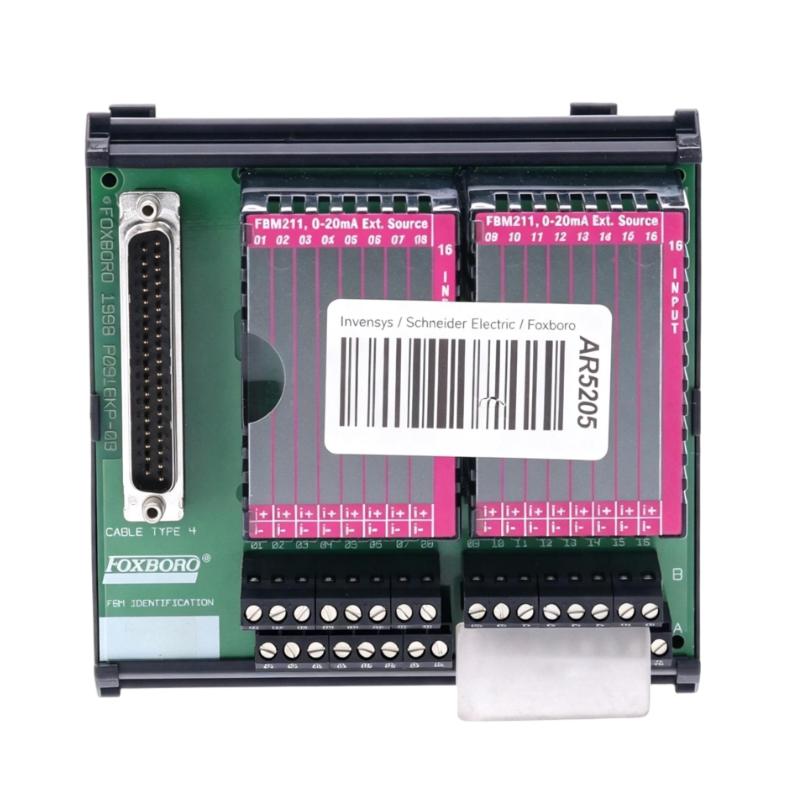
The Foxboro FBM211 P0916JT I/A Series Termination Assembly is a field wiring termination component associated with Foxboro FBM211 analog input installations. It provides the physical connection interface between field instrumentation wiring and the FBM211 I/O layer, giving technicians a structured point for organizing and servicing analog signal circuits.
In a typical process control cabinet, transmitters for pressure, temperature, flow, level, and other process variables are connected through field wiring to the I/O system. The P0916JT provides the termination interface used to route these field circuits toward the associated FBM211 analog input module.
The termination assembly itself does not perform analog signal conversion, scaling, control calculations, or process logic. Its purpose is to establish an organized physical wiring path around the I/O hardware. This separation makes cabinet wiring easier to inspect and helps technicians isolate wiring-related problems from issues associated with the electronic I/O module or field transmitter.
Technical Specifications
| Parameter | Specification |
|---|---|
| Product Model | P0916JT |
| Product Type | Termination Assembly |
| Product Family | Foxboro FBM211 |
| Series | I/A Series |
| Assembly Type | I/O Termination Assembly |
| Application | Analog Field Signal Termination |
| Associated I/O | FBM211 Analog Input Module |
| Signal Type | Analog Field Signals |
| Field Interface | Process Instrumentation Wiring |
| Wiring Function | Field Signal Termination and Routing |
| System Role | I/O Field Wiring Interface |
| Installation Location | Control Cabinet / I/O Panel |
| Connection Function | Field Wiring to I/O Interface |
| Maintenance Function | Circuit Identification and Service Access |
| Dimensions | 127 × 80 × 125 mm |
| Weight | 0.272 kg |
Product Features
- Provides a structured termination point for field wiring associated with Foxboro FBM211 analog input installations.
- Organizes analog field circuits before they enter the electronic I/O layer.
- Separates field wiring activities from the internal signal-processing functions of the I/O module.
- Supports easier identification and inspection of individual process instrument circuits.
- Provides a defined cabinet-side interface for analog transmitter wiring.
- Helps technicians isolate field wiring faults during commissioning and maintenance.
- Suitable for structured Foxboro I/A Series control cabinet installations.
Working Principle
The P0916JT operates as a passive termination interface within the FBM211 signal path. It does not measure the process variable itself and does not execute any control-system logic. Instead, it establishes the physical connection through which an analog field signal can be routed toward the associated I/O module.
1. Field instrument connection
A process transmitter, such as a pressure, temperature, flow, or level instrument, generates an analog electrical signal representing the measured process condition. Its field conductors are routed into the control cabinet.
2. Field wiring termination
The conductors are connected at the appropriate termination points on the P0916JT. Proper wire identification and terminal assignment are important because each circuit must correspond to the correct field instrument and I/O channel.
3. Signal routing
After termination, the analog field circuit continues through the cabinet wiring arrangement toward the associated FBM211 analog input interface. The termination assembly provides the physical wiring path but does not modify the measurement.
4. Analog input acquisition
The FBM211 receives the field signal and makes the measurement available to the Foxboro I/A Series control system. Signal processing, configuration, scaling, alarming, and control functions are handled by the appropriate I/O and control-system layers rather than by the termination assembly.
5. Maintenance access
Because the field circuit has a defined termination point, technicians can inspect wiring, verify circuit continuity, and trace individual conductors without treating the electronic I/O module itself as the primary wiring access point.
Role in a Foxboro I/A Series Analog Input Architecture
The P0916JT belongs to the field-wiring portion of an FBM211 analog input installation. Its position can be viewed as the physical interface between process instrumentation and the electronic I/O system.
| Architecture Layer | Function |
|---|---|
| Process Equipment | Produces the physical process variable |
| Field Transmitter | Measures the process variable and generates an analog signal |
| Field Wiring | Carries the measurement toward the control cabinet |
| P0916JT Termination Assembly | Terminates and organizes the field circuit |
| FBM211 Analog Input Module | Acquires the analog field signal |
| I/A Series Control System | Processes the measurement and executes configured control functions |
| Operator Interface | Displays process values, alarms, trends, and equipment status |
This arrangement keeps the physical wiring interface separate from the electronic measurement and control functions. For larger control cabinets, this distinction can make circuit tracing and maintenance considerably more systematic.
Industrial Applications
| Application | Typical Use |
|---|---|
| Pressure Measurement | Termination of pressure transmitter wiring before the analog I/O layer |
| Temperature Monitoring | Cabinet-side termination of temperature measurement circuits |
| Flow Measurement | Field wiring interface for flow transmitter signals |
| Level Measurement | Termination of continuous tank or vessel level signals |
| Process Control Loops | Wiring interface for analog process variables used by control algorithms |
| Chemical Processing | Organization of transmitter circuits throughout process units |
| Oil and Gas Facilities | Field instrumentation termination within centralized I/O cabinets |
| Utility Systems | Connection and organization of analog measurements from plant utility equipment |
Installation and Maintenance
- Verify the termination assembly assignment — Confirm that the P0916JT is associated with the intended FBM211 installation and cabinet wiring documentation.
- Review the engineering drawings — Check field-device tags, terminal assignments, I/O references, and circuit numbers before connecting conductors.
- Identify each field circuit — Confirm that every conductor corresponds to the correct transmitter and intended analog input path.
- Apply electrical isolation procedures — Follow site-specific isolation and maintenance requirements before working on field wiring.
- Prepare conductors correctly — Prepare each conductor according to the applicable termination procedure while avoiding damage to the wire or insulation.
- Secure the field connections — Make sure conductors are properly seated and mechanically secured at the assigned termination points.
- Inspect wiring organization — Check that circuits are routed and identified consistently with the cabinet wiring documentation.
- Check for loose or damaged connections — Inspect accessible termination points for loose conductors, damaged insulation, corrosion, or other visible problems.
- Verify circuit continuity when required — Perform approved continuity checks before returning a serviced circuit to operation.
- Trace abnormal analog signals systematically — When a measurement is missing or incorrect, inspect the complete path from the transmitter through the P0916JT and associated wiring to the FBM211.
- Maintain accurate documentation — Record approved wiring modifications, circuit changes, and terminal reassignment so the cabinet drawings remain current.
- Include termination points in periodic inspections — During scheduled maintenance, inspect accessible connections and wiring for mechanical or environmental deterioration.
Related Components
| Component | Function in the System |
|---|---|
| Foxboro FBM211 | Analog input interface for continuous process measurements |
| Foxboro I/A Series Control System | Processes acquired analog measurements and executes control applications |
| Pressure Transmitters | Provide pressure measurements to the analog input system |
| Temperature Transmitters | Generate process temperature signals |
| Flow Transmitters | Provide continuous flow measurements |
| Level Transmitters | Supply process vessel or tank level measurements |
| Field Wiring | Carries analog signals from instruments to the control cabinet |
| I/O Cabinet Components | Provide the physical infrastructure around the termination and I/O layers |
| Operator Interface | Presents acquired measurements, alarms, and trends to operators |
Recommended Related Models
| Model | Product Type | Typical Relationship |
|---|---|---|
| Foxboro FBM211 RH914TN | I/A Series Analog Input Module | Associated analog input module for the termination assembly |
| Foxboro FBM207c P0917MF | Compression Termination Assembly | Related Foxboro field wiring termination hardware |
| Foxboro FBM207c RH917GY | Channel Isolated Contact Sense Input Interface Module | Related discrete input I/O hardware |
| Foxboro FBM207c P0917GY | Channel Isolated Contact Sense Input Interface Module | Related contact-sense input interface |
| Foxboro I/A Series Termination Assemblies | I/O Termination Assembly | Related cabinet-side field wiring components |
Key Advantages
- Provides a defined field-wiring interface for FBM211 analog input installations.
- Organizes transmitter circuits before they reach the electronic I/O layer.
- Simplifies circuit identification and cabinet-side inspection.
- Keeps passive wiring functions separate from analog signal processing.
- Supports systematic troubleshooting of field wiring and I/O connections.
- Suitable for structured process-control cabinet installations.
Technical FAQs
What is the purpose of the Foxboro FBM211 P0916JT?
The P0916JT is a termination assembly associated with FBM211 analog input installations. It provides the physical termination and routing point for field wiring between process instrumentation and the associated I/O interface.
Does the P0916JT convert or process analog signals?
No. The termination assembly is a passive wiring component. It does not perform analog measurement processing, scaling, control calculations, or signal interpretation. Those functions belong to the associated I/O and control-system layers.
How does the P0916JT relate to the FBM211?
The P0916JT provides the field-side wiring interface, while the FBM211 performs the electronic analog input function. A typical signal path is field transmitter → field wiring → P0916JT → FBM211 → I/A Series control system.
What should be checked if an analog input is missing?
Start at the field transmitter and trace the complete circuit toward the control system. Check the transmitter output, field wiring, P0916JT termination point, associated wiring, FBM211 input path, and the corresponding control-system configuration. This approach helps distinguish a wiring problem from an instrument or I/O problem.