

ProductPRODUCT
Featured products
Contact Us
- Schneider
- TSXETY410
- Analog Output Module
- France
- 260 x 180 x 55 mm
- 0.35 kg
- Xiamen, China
- New & In Stock
- T/T, PayPal, Western Union
- 1 Year
- 1-3 Working Days
- DHL, UPS, TNT, FedEx and EMS.
- 24-Hour Service
- COO
- 4
Our advantage

Global Logistics
We have a 10-year logistics and express cooperation agreement, so our products can be shipped to any place in the world.

Brand new and original
Our products are imported in bulk from the place of origin. Because of the cooperative relationship, our products are all original and 100% new.

24-hour service
We provide 7*24 hours service to our customers. We will be there whenever you need us.

Price advantage
All our products are priced very favorably because we have our own warehouse and supply.
| Company Information | |||
| [email protected] | |||
| Mobile | +8615980777398 | ||
| +8615980777398 | |||
| 15980777398 |
1. Product Overview
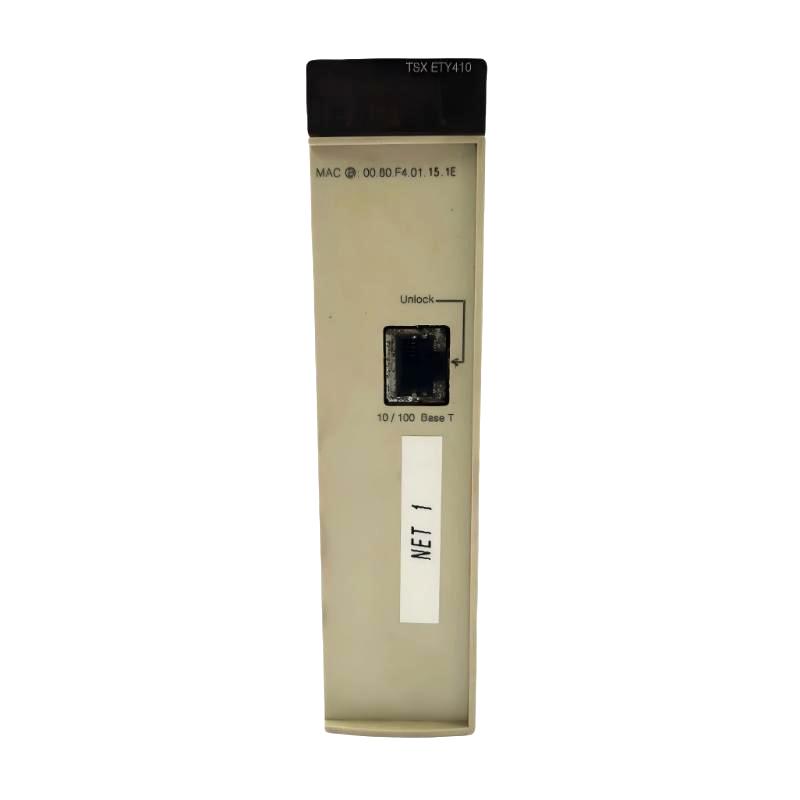
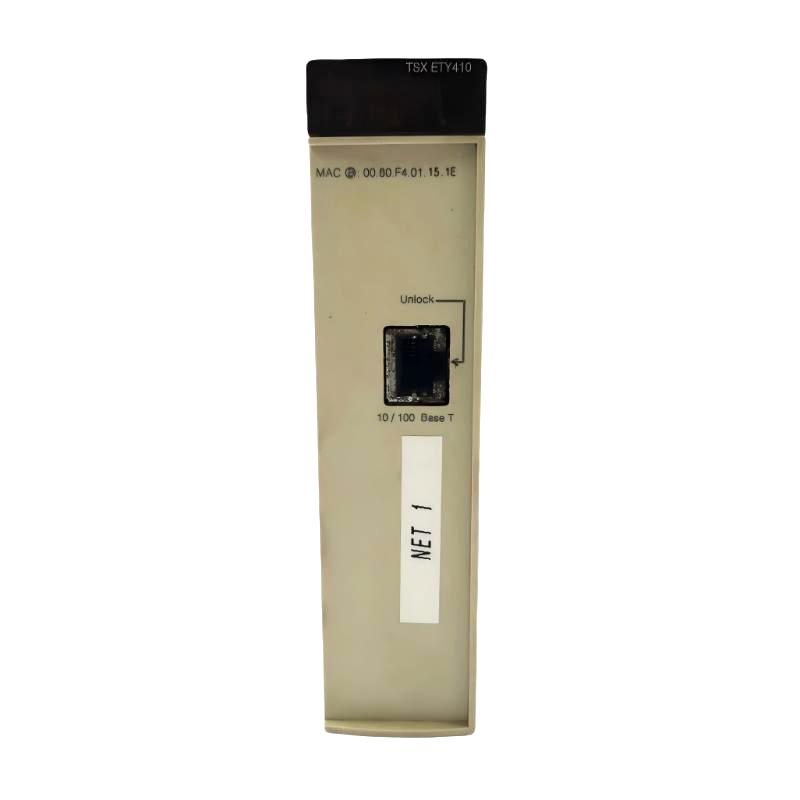
The Schneider Electric TSXETY410 is associated with Schneider Electric’s Modicon Premium automation product family. Before purchasing or integrating this component, it is important to verify the exact model designation and product function against the original label and technical documentation.
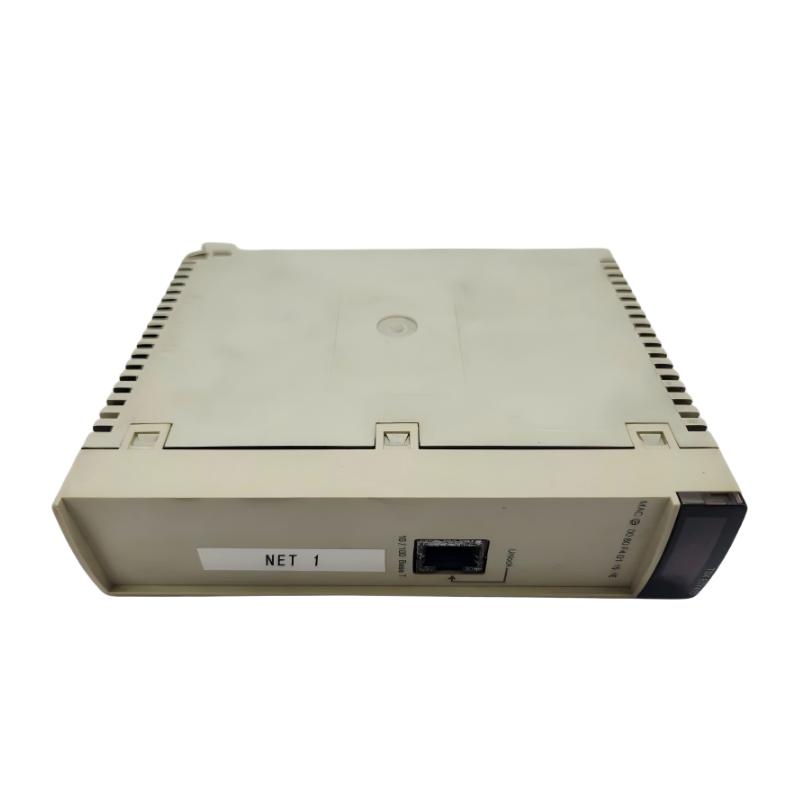
The supplied product description identifies the TSXETY410 as an Analog Output Module. However, the TSXETY model designation is associated with Schneider Electric Ethernet communication products, so the analog-output classification should not be assumed to be correct without verification. This distinction is important because an analog output module and an Ethernet communication module perform fundamentally different functions in an industrial control system.
An analog output module typically converts controller commands into electrical signals used to control devices such as variable-speed drives, control valves, and other process actuators. An Ethernet communication module, by contrast, transfers data between PLC systems and compatible networked devices.
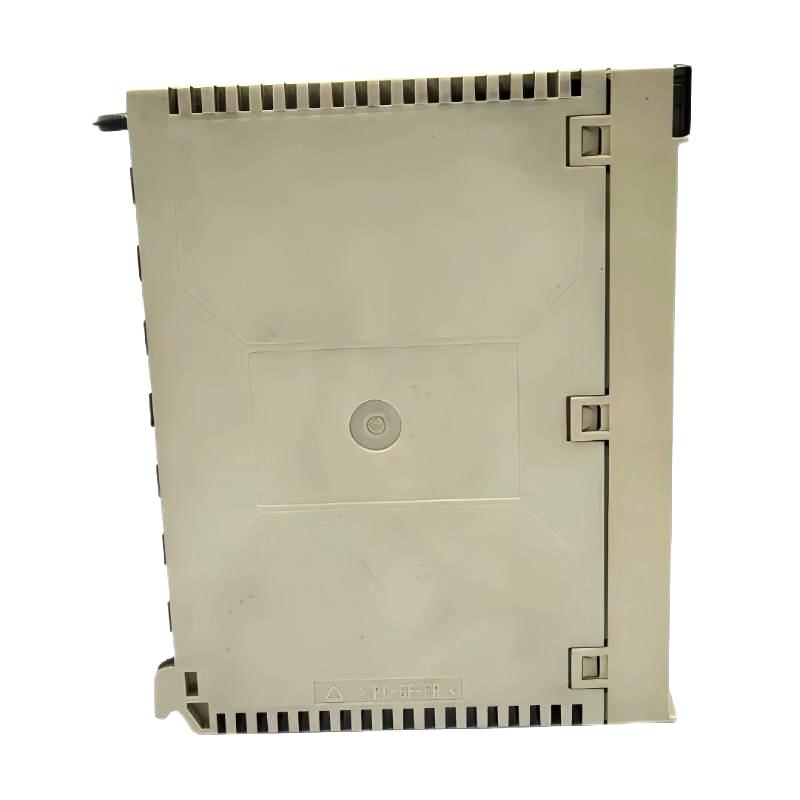
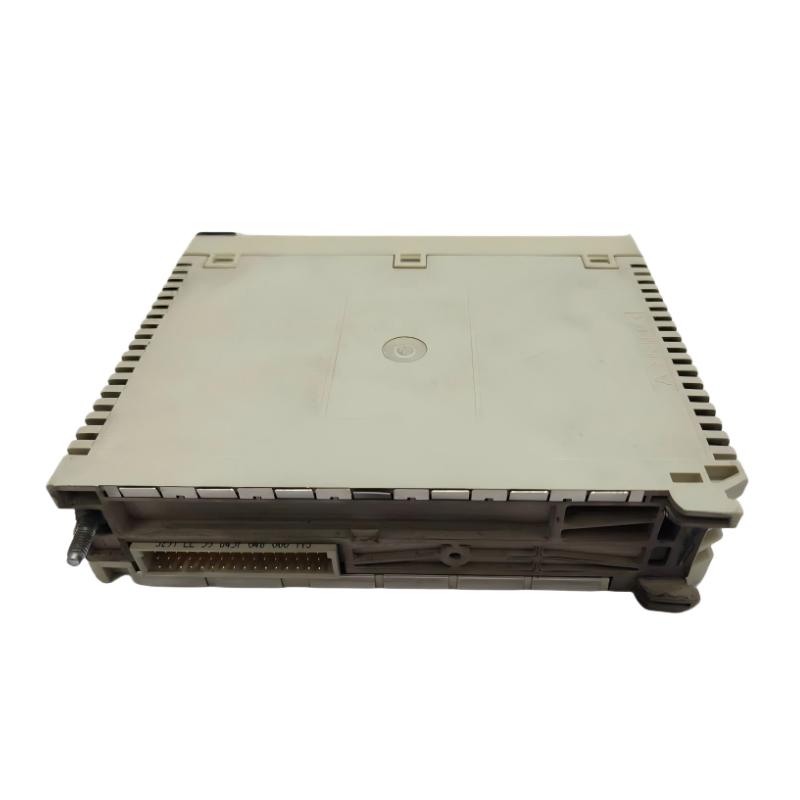
The supplied physical specifications are 260 × 180 × 55 mm and 0.35 kg. These details can assist with preliminary identification, but the product’s actual function, electrical characteristics, interface requirements, and system compatibility must be confirmed before installation or replacement.
For industrial spare-parts procurement, accurate model identification helps prevent ordering errors, unnecessary downtime, and incompatibility with existing automation equipment.
2. Technical Specifications
| Parameter | Specification |
|---|---|
| Brand | Schneider Electric |
| Model | TSXETY410 |
| Supplied Product Description | Analog Output Module |
| Product Identification | Verify against the original product label |
| Product Family | Verify the exact Schneider Electric product family |
| Dimensions | 260 × 180 × 55 mm |
| Weight | 0.35 kg |
| Output Type | Not confirmed; depends on the correctly identified product |
| Output Channels | Requires verification |
| Signal Range | Requires verification |
| Communication Interface | Requires verification |
| Installation Environment | Industrial automation and control systems |
| Compatibility | Confirm against the installed PLC platform and hardware revision |
Important technical note: The model prefix TSXETY is generally associated with Ethernet communication modules rather than analog output modules. The exact identity of TSXETY410 should therefore be confirmed before using this article as a technical specification or purchasing reference. Do not infer analog output voltage, current ranges, channel count, or wiring arrangements from the supplied description alone.
3. Function and Working Principle
The working principle depends on whether the component is an analog output module or an Ethernet communication module. These are different product categories and should not be treated as interchangeable.
3.1 If the Required Product Is an Analog Output Module
An analog output module receives a digital command from a PLC and converts it into an electrical signal that a compatible field device can interpret.
Common analog output signals in industrial automation include 0–10 V and 4–20 mA, although the actual ranges depend on the specific module.
Typical functions include:
- Sending speed or torque references to compatible drives.
- Adjusting control valve positions.
- Providing reference signals to process controllers.
- Controlling other compatible actuators.
- Supporting continuous process regulation.
The module’s output type, channel count, resolution, electrical isolation, and load limits must be checked against its exact technical documentation.
3.2 If the Required Product Is an Ethernet Communication Module
An Ethernet communication module provides a network connection for compatible PLC systems. It may support communication between controllers, engineering workstations, supervisory control systems, and other networked equipment.
Depending on the exact product, functions may include industrial protocol communication, network data exchange, diagnostics, and access to controller information.
These functions differ substantially from analog signal generation. Correct identification is therefore essential before specifying installation procedures or compatible equipment.
4. Role in Industrial Automation Systems
4.1 Analog Signal Control
When a correctly identified analog output module is used, it can serve as the interface between PLC logic and continuously controlled equipment.
For example, a PLC may calculate a desired flow rate and send a corresponding analog command to a compatible control valve or drive. The output module converts the command into the electrical signal required by the field device.
The actual control performance depends on module accuracy, resolution, signal compatibility, field wiring, and the connected device.
4.2 Industrial Network Communication
When an Ethernet communication module is used, its role is to exchange data between compatible automation equipment and industrial network applications.
This can support centralized monitoring, controller communication, diagnostics, and integration with supervisory software.
The communication protocols and network features available depend on the exact model and hardware revision.
4.3 Maintaining Existing PLC Systems
Industrial facilities often maintain established PLC installations for many years. Accurate identification of replacement components is important because different modules may share similar physical characteristics while performing completely different functions.
Before replacing a component, compare the model number, product label, connector arrangement, installation location, and electrical or communication requirements.
5. Industrial Applications
5.1 Manufacturing Automation
Manufacturing systems use PLCs to coordinate production equipment, manage process variables, and exchange information between control components.
A verified analog output module may be used to regulate compatible drives or actuators. A verified Ethernet module may support network communication between PLCs and supervisory systems.
The appropriate application depends on the confirmed product identity.
5.2 Process Control
Process industries use analog signals for continuous control of pressure, temperature, flow, and liquid levels. Analog output modules can provide command signals to compatible actuators in these applications.
Ethernet communication modules support a different role by enabling data exchange between controllers and monitoring systems.
Selecting the correct product category is essential for reliable process operation.
5.3 Water and Wastewater Treatment
Water treatment facilities commonly use analog signals to control pumps, valves, and other process equipment. Network communication also supports monitoring and coordination across treatment stages.
The TSXETY410 should not be assigned to either function until its exact identity is verified.
5.4 Energy and Utility Systems
Energy and utility facilities use analog control signals for compatible equipment and industrial communication networks for centralized monitoring.
Correct product identification ensures that the selected component matches the intended electrical interface, communication protocol, and control architecture.
5.5 Industrial Equipment Maintenance
For maintenance teams, a correctly identified spare part can reduce repair time and help restore equipment operation. Model-number verification is particularly important when working with legacy Schneider Electric automation systems.
6. Installation and System Integration
Installation procedures must be based on the confirmed product type. An analog output module and an Ethernet communication module require different wiring, configuration, and commissioning procedures.
6.1 Verify the Model Number
Before installation, check the complete model number printed on the original component label. Confirm that it matches the purchase order and system documentation.
Record the hardware revision and any additional identification numbers available on the device.
6.2 Confirm the Product Function
Determine whether the component provides analog outputs or Ethernet communication.
For an analog output module, verify the output signal range, channel configuration, wiring terminals, load requirements, and supported PLC platform.
For an Ethernet module, verify the communication interfaces, protocol support, network configuration requirements, and compatible controller family.
6.3 Check Hardware Compatibility
Confirm that the component is designed for the intended PLC rack or installation arrangement. Check mounting requirements, power supply requirements, and any necessary accessories.
Do not install a component based solely on matching dimensions or a similar model number.
6.4 Complete Wiring and Configuration
Use the wiring diagrams and configuration procedures for the confirmed model.
For analog outputs, check signal polarity, grounding, shielding, electrical isolation, and field-device compatibility as applicable.
For Ethernet communication, check connector compatibility, cable requirements, network settings, and communication parameters.
6.5 Commission the System
After installation, conduct the appropriate functional tests.
For analog outputs, verify the configured signal and confirm that the connected device responds as expected under controlled conditions.
For Ethernet communication, verify network connectivity, protocol communication, and data exchange with the intended equipment.
Follow the facility’s safety procedures and commissioning requirements before returning the system to normal operation.
7. Common Problems and Troubleshooting
7.1 Incorrect Product Ordered
A mismatch between the product description and model designation can result in ordering an unsuitable component.
Recommended action: Verify the full model number, product label, and original equipment documentation before installation or return processing.
7.2 Analog Output Signal Is Missing
If the confirmed component is an analog output module, possible causes include incorrect wiring, an incompatible field device, incorrect PLC configuration, or a module fault.
Recommended action: Check the module’s documented output specifications, wiring diagram, channel configuration, and diagnostic information.
7.3 Analog Output Value Is Incorrect
Incorrect values may result from mismatched signal ranges, scaling errors, incorrect channel assignments, or field wiring problems.
Recommended action: Confirm the configured signal range and scaling, then compare the output with the expected value using an appropriate test method.
7.4 Ethernet Communication Failure
If the confirmed component is an Ethernet communication module, possible causes include incorrect network settings, damaged cabling, address conflicts, or unsupported communication configurations.
Recommended action: Check power, network connections, addressing, and protocol compatibility using the exact module’s documentation.
7.5 Replacement Does Not Work
A replacement may have a different function, hardware revision, or compatibility requirement.
Recommended action: Compare the original and replacement model numbers and verify that their electrical and communication functions match. Do not assume that a similarly sized component is a direct replacement.
8. Preventive Maintenance
8.1 Inspect the Component
Check for visible damage, contamination, connector problems, or signs of overheating. Follow the manufacturer’s maintenance recommendations.
8.2 Maintain Accurate Records
Keep the verified model number, hardware revision, system location, wiring information, and configuration records together with the maintenance documentation.
8.3 Check System Compatibility
Before making changes to the PLC program, network, or field wiring, confirm that the component’s documented capabilities match the intended configuration.
8.4 Keep Suitable Spare Parts
Maintain spare parts that have been verified for the specific PLC platform and application. Accurate identification can reduce downtime and prevent installation errors.
8.5 Follow Safe Maintenance Procedures
Before handling or replacing a module, follow the facility’s isolation, lockout/tagout, and electrical safety procedures. Do not remove or install a component while energized unless the manufacturer explicitly permits the operation.
9. Compatibility and Replacement Considerations
The most important consideration when sourcing TSXETY410 is confirming the actual product identity.
The supplied description identifies it as an analog output module, but the TSXETY prefix is associated with Schneider Electric Ethernet communication products. This discrepancy should be resolved before the component is purchased, advertised, or installed.
Before selecting a replacement, verify:
- The complete model number on the product label.
- The product’s actual function.
- The compatible PLC platform and rack.
- The electrical or communication interface.
- The hardware revision and configuration requirements.
- The dimensions and weight of the actual unit.
- Whether the replacement is documented as a direct substitute.
If an analog output module is required, the replacement must match the application’s signal type, channel count, electrical ratings, and controller compatibility. If an Ethernet communication module is required, protocol support and network interface compatibility are the primary considerations.
10. Key Benefits of Accurate Product Identification
Reduced Purchasing Errors
Confirming the model number and product function helps prevent ordering a communication module when an analog output module is required, or vice versa.
Improved System Compatibility
Matching the component to the correct PLC platform and application requirements helps reduce integration problems.
More Efficient Maintenance
Accurate technical records allow maintenance teams to identify replacement parts and troubleshoot faults more efficiently.
Better Spare-Parts Planning
Verified product information supports inventory control, procurement, and planning for legacy automation equipment.
More Reliable Commissioning
Using the correct wiring diagrams, electrical specifications, and configuration procedures helps ensure that the component is tested appropriately before operation.
11. Frequently Asked Questions
Q1: What is the Schneider TSXETY410?
The exact function should be confirmed from the product label and applicable technical documentation. The supplied description calls it an analog output module, but the TSXETY prefix is associated with Ethernet communication products.
Q2: What are the dimensions and weight provided for this product?
The supplied dimensions are 260 × 180 × 55 mm, and the supplied weight is 0.35 kg. These values should be checked against the actual unit before procurement.
Q3: Can the TSXETY410 be used as an analog output module?
Its analog output function has not been confirmed. Verify the model number and original documentation before connecting it to analog field devices.
Q4: Can the TSXETY410 be used for Ethernet communication?
The TSXETY model prefix is associated with Ethernet communication products, but the exact TSXETY410 designation should be verified before specifying its interfaces or protocol capabilities.
Q5: What information should be checked before purchasing?
Confirm the model number, product function, dimensions, weight, hardware revision, electrical or communication specifications, and compatibility with the existing automation system.
Q6: Why is model verification important?
Industrial modules can look similar while serving different functions. Installing the wrong module may prevent the system from operating correctly and can introduce unnecessary maintenance costs.
Q7: Can a replacement be selected by dimensions alone?
No. Dimensions and weight are useful identification details, but the replacement must also match the required function, electrical characteristics, communication interfaces, and PLC compatibility.
12. Conclusion
The Schneider Electric TSXETY410 requires additional product-identity verification before its technical function can be stated conclusively. Although the supplied description identifies it as an Analog Output Module, the TSXETY prefix is associated with Schneider Electric Ethernet communication products.
The supplied physical specifications are 260 × 180 × 55 mm and 0.35 kg. Before publishing definitive technical claims or purchasing this component, confirm the model number against the original product label and applicable documentation.
Accurate identification is essential for selecting the correct spare part, maintaining PLC compatibility, and ensuring reliable operation in industrial automation systems.