

ProductPRODUCT
Featured products
Contact Us
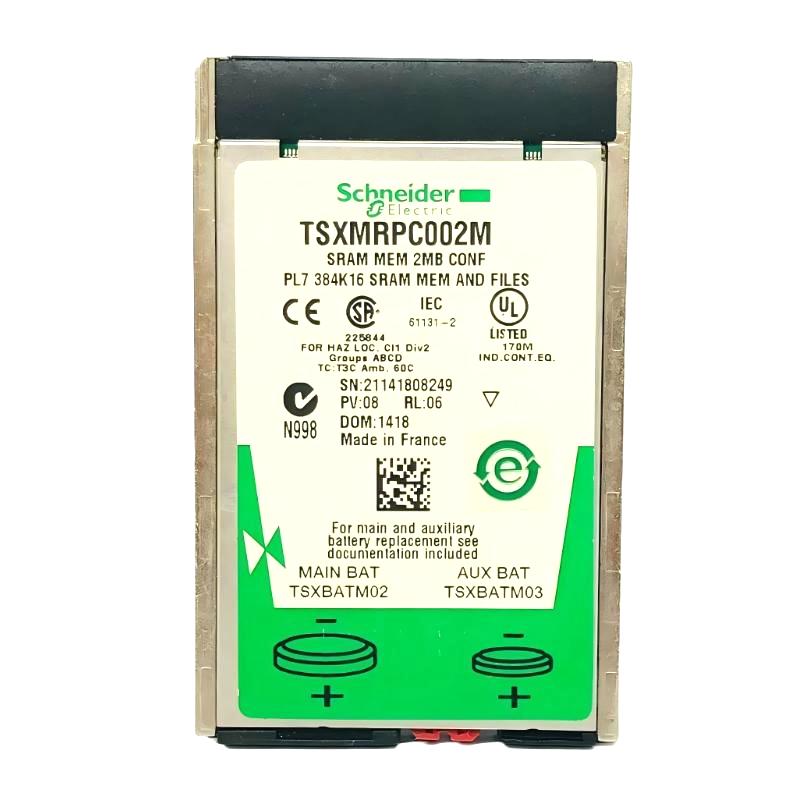
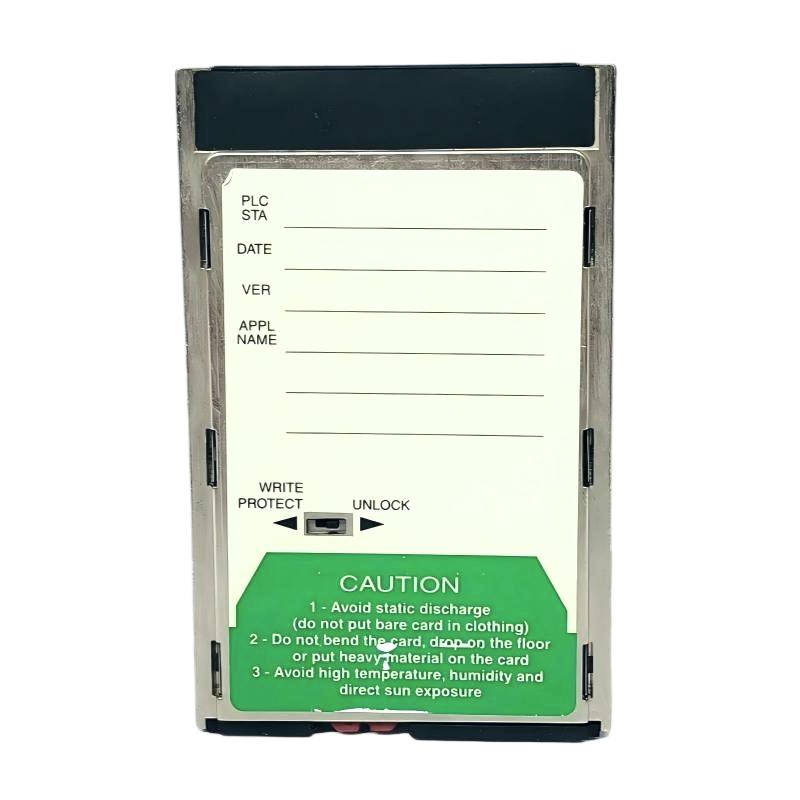
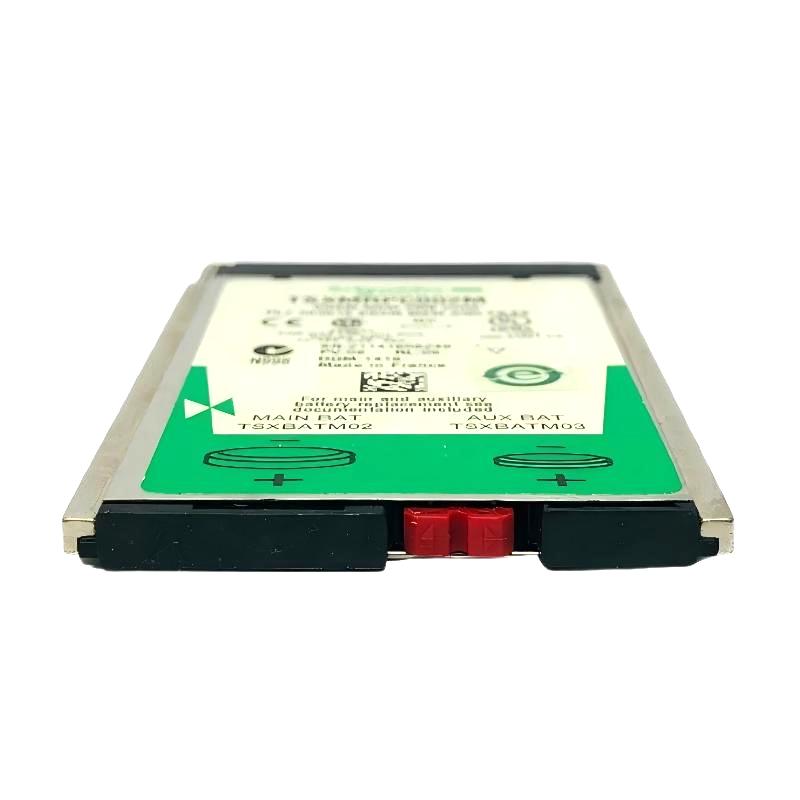
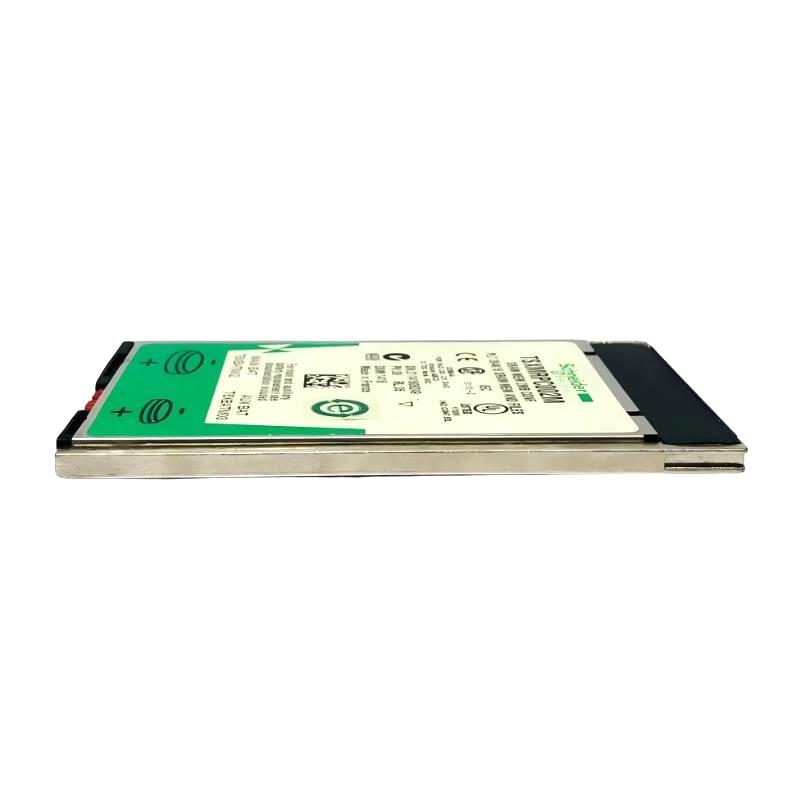
- Schneider
- TSXMRPC002M
- SRAM Memory
- France
- 130 x 90 x 30 mm
- 0.076 kg
- Xiamen, China
- New & In Stock
- T/T, PayPal, Western Union
- 1 Year
- 1-3 Working Days
- DHL, UPS, TNT, FedEx and EMS.
- 24-Hour Service
- COO
- 4
Our advantage

Global Logistics
We have a 10-year logistics and express cooperation agreement, so our products can be shipped to any place in the world.

Brand new and original
Our products are imported in bulk from the place of origin. Because of the cooperative relationship, our products are all original and 100% new.

24-hour service
We provide 7*24 hours service to our customers. We will be there whenever you need us.

Price advantage
All our products are priced very favorably because we have our own warehouse and supply.
| Company Information | |||
| [email protected] | |||
| Mobile | +8615980777398 | ||
| +8615980777398 | |||
| 15980777398 |
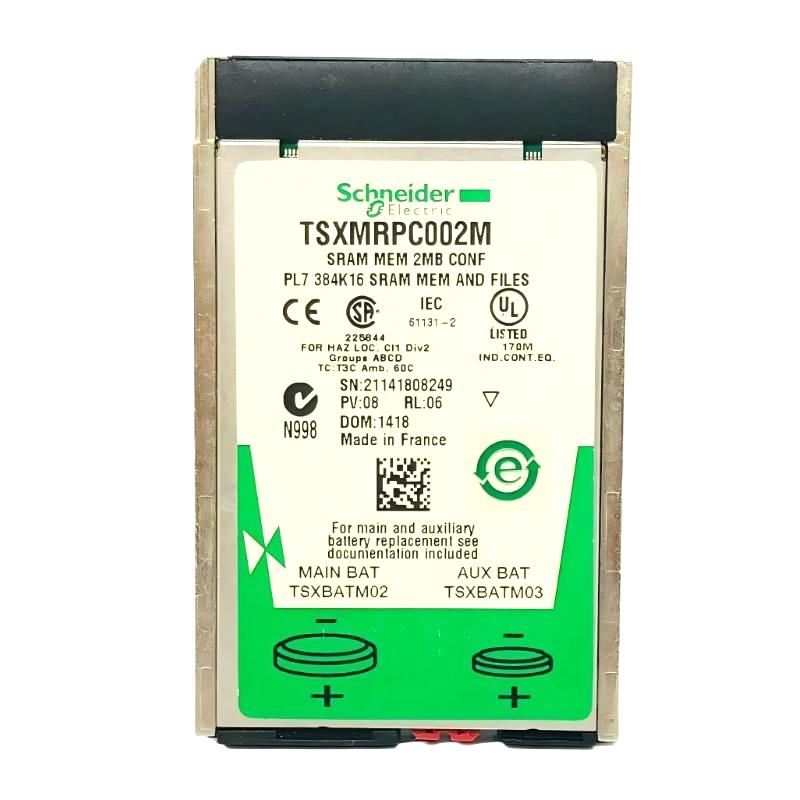
1. Product Overview
The Schneider TSXMRPC002M SRAM Memory Module is an industrial automation memory component associated with Schneider Electric programmable logic controller (PLC) systems. Memory modules are important in automation environments because they provide storage for application data, control information, and other information required by supported hardware configurations.
In industrial control applications, the correct memory component helps maintain the intended relationship between a PLC’s hardware and its stored application information. Selecting the appropriate memory module is particularly important when maintaining legacy automation equipment, replacing existing components, or managing spare parts for long-running production systems.
The TSXMRPC002M has supplied dimensions of 130 × 90 × 30 mm and a weight of 0.076 kg. These specifications can assist with preliminary identification, storage planning, and equipment inventory management.
Before installation or replacement, confirm the exact memory capacity, supported PLC models, memory technology, retention characteristics, and installation requirements using the product label and applicable technical documentation. The specific capabilities of a memory module should not be inferred from its model name alone.
2. Technical Specifications
| Parameter | Specification |
|---|---|
| Brand | Schneider Electric |
| Model | TSXMRPC002M |
| Product Type | SRAM Memory Module |
| Product Category | Industrial Automation Memory |
| Memory Technology | SRAM, subject to confirmation for the exact product reference |
| Dimensions | 130 × 90 × 30 mm |
| Weight | 0.076 kg |
| Application | PLC memory storage and maintenance, subject to hardware compatibility |
| Installation Method | Confirm the approved mounting or insertion method |
| Memory Capacity | Verify from the product label and technical documentation |
| Data Retention | Confirm the applicable retention method and backup requirements |
| System Compatibility | Verify the supported PLC family and hardware configuration |
The dimensions and weight listed above are the supplied product specifications. Memory capacity, battery requirements, retention behavior, and supported controller models should be verified before commissioning.
3. Function and Working Principle
Static random-access memory (SRAM) is a semiconductor memory technology that can provide fast access to stored information while the memory circuit is powered. In industrial automation, SRAM-based components may be used for application data, working information, or other memory functions defined by the supported controller architecture.
The actual role of the TSXMRPC002M depends on its specific design and the Schneider Electric hardware with which it is intended to operate. Not every SRAM module performs the same function, and a memory component may have specific requirements concerning capacity, configuration, retention, and supported processor models.
When evaluating this module, engineers should verify the following characteristics:
- The memory capacity and intended storage function.
- The controller or processor models that support the module.
- Whether data retention depends on a battery or another retention mechanism.
- The approved installation position and connection method.
- Any hardware configuration or software requirements.
- The correct procedure for transferring, backing up, or restoring stored data.
Understanding these characteristics helps prevent incompatible replacements and reduces the risk of losing important application information during maintenance.
4. Role in Industrial Automation Systems
Memory components support the storage and management of information used by industrial control systems. Their exact responsibilities vary according to the PLC family, processor design, and installed application.
PLC Application Management
A supported memory module may provide storage associated with a PLC application or other controller information. Engineers must confirm which data types the TSXMRPC002M supports before using it for a specific storage task.
Maintenance of Legacy Control Systems
Many industrial facilities operate equipment that remains in service for extended periods. Maintaining the correct memory hardware can help support repair activities and reduce the need for unnecessary changes to an established control architecture.
Program Backup and Recovery
Memory replacement or controller maintenance can involve transferring application data. Before performing these operations, technicians should create a verified backup and follow the documented procedure for the specific controller and memory module.
Spare Parts Management
Accurate identification of memory modules helps maintenance teams avoid mixing similar-looking components with different capacities or compatibility requirements. Recording the complete model number also makes future replacement and procurement more reliable.
5. Industrial Applications
The TSXMRPC002M may be evaluated for an industrial automation installation when its intended function and compatibility have been confirmed.
Manufacturing and Assembly Lines
Manufacturing equipment relies on PLCs to coordinate machine sequences, monitor sensors, and control actuators. Compatible memory hardware can support the established controller configuration and maintenance strategy.
Packaging Machinery
Packaging machines use control programs to coordinate filling, sealing, labeling, and material handling. When servicing these systems, technicians should preserve the required application data and use memory components approved for the installed controller.
Material Handling Systems
Conveyors, sorting equipment, and automated transfer systems often depend on established PLC programs. Correct memory identification is important when repairing controllers or maintaining spare hardware for these applications.
Process Control Equipment
Industrial process installations may use PLC-based control for pumps, valves, auxiliary equipment, and interlocking functions. Memory components must be selected according to the controller’s requirements and the system’s data-retention needs.
Legacy Automation Maintenance
For older production systems, obtaining the correct replacement memory component can be an important part of lifecycle support. Engineers should verify the complete product reference and compatibility rather than choosing a substitute based only on its dimensions or general description.
These examples describe potential application environments for compatible PLC memory hardware. They do not independently establish that the TSXMRPC002M is supported by every system listed.
6. Installation and System Integration
Correct handling and installation help protect memory hardware and preserve the integrity of stored data. The manufacturer’s model-specific instructions and site safety procedures should always take precedence over this general checklist.
Step 1: Confirm the Product Reference
Check the label and verify that the module is marked TSXMRPC002M. Compare the part number with the installed component, equipment bill of materials, and control-system documentation.
Step 2: Back Up Important Data
Before removing or replacing a memory component, determine whether it contains application data or other information that must be retained. Create and verify a suitable backup using the approved procedure for the controller.
Step 3: Place the Equipment in a Safe State
Follow the site’s shutdown and lockout/tagout procedures. Isolate the relevant power sources where required and verify the equipment’s safe condition before handling the module.
Step 4: Observe Electrostatic Discharge Precautions
Electronic memory components can be sensitive to electrostatic discharge. Use appropriate ESD protection, handle the module by its designated edges, and avoid touching exposed contacts.
Step 5: Inspect the Module and Connector
Check for visible damage, contamination, corrosion, or bent contacts. Do not install a module that appears damaged or does not match the required hardware configuration.
Step 6: Verify Compatibility and Retention Requirements
Confirm the supported controller, memory capacity, retention method, and any battery-related requirements. Do not assume that a replacement has the same retention characteristics as the original component.
Step 7: Install According to the Approved Procedure
Insert or mount the module using the specified method. Ensure that it is properly seated and that any required locking or retaining mechanism is engaged.
Step 8: Restore Power and Validate Operation
Restore power according to the approved commissioning procedure. Check controller diagnostics and verify that the memory is recognized. Confirm that the required application or data is available before returning the equipment to normal operation.
7. Common Problems and Troubleshooting
Memory-related faults may originate from the module itself, the controller, the connection, the configuration, or the data-retention system.
| Symptom | Possible Cause | Recommended Action |
|---|---|---|
| Memory module is not recognized | Incorrect installation or unsupported hardware | Verify the model, seating, and controller compatibility |
| Controller reports a memory error | Module fault, incompatible memory, or configuration issue | Review controller diagnostics and the approved hardware configuration |
| Application data is unavailable | Missing data, incorrect installation, or a retention problem | Check backups and follow the documented recovery procedure |
| Stored information is not retained | Retention mechanism issue or unsupported operating conditions | Verify the module’s specified retention method and maintenance requirements |
| Fault appears after replacement | Incorrect replacement or incomplete commissioning | Compare the old and new part references and repeat the approved validation checks |
| Intermittent memory-related faults | Connector contamination, poor contact, or associated hardware problems | Inspect the connection and investigate controller diagnostics |
7.1 Verify Module Compatibility
Confirm the complete part number and supported controller models. A memory module that fits physically may still be incompatible with the installed processor or control system.
7.2 Inspect the Connection
Check the module’s seating and accessible contacts according to the manufacturer’s procedure. Ensure that the module is installed in the designated location and that no connector damage is present.
7.3 Review Controller Diagnostics
Record diagnostic messages before changing hardware or configuration. Error information can help distinguish a memory recognition problem from an application, processor, or system-level fault.
7.4 Check Data-Retention Requirements
If stored information is missing after a shutdown or replacement, determine how the specific module retains data and whether any backup or battery requirements apply. Do not assume that all SRAM modules use the same retention arrangement.
7.5 Restore Data Carefully
If application data must be restored, use a verified backup and the procedure specified for the controller. Confirm the resulting application state before returning the machine to service.
8. Preventive Maintenance
A structured maintenance process can help reduce memory-related downtime and protect important control-system information.
- Maintain verified backups: Keep current copies of PLC programs and relevant configuration files.
- Record complete model numbers: Include the full part reference in inventory records and maintenance documentation.
- Follow ESD precautions: Protect memory modules during storage, inspection, installation, and removal.
- Inspect connectors: Check for contamination or damage during scheduled maintenance.
- Monitor controller diagnostics: Record recurring errors and investigate their underlying causes.
- Verify retention requirements: Follow the specified procedure for any required battery or data-retention maintenance.
- Store spare modules properly: Protect spare parts from moisture, contamination, physical damage, and electrostatic discharge.
- Document replacements: Record the replacement date, part number, backup status, and commissioning results.
Maintenance intervals should be determined by the product documentation, the operating environment, and the site’s equipment reliability requirements.
9. Compatibility and Replacement Considerations
The TSXMRPC002M should be selected according to its verified function and the requirements of the target automation system.
| Selection Factor | What to Verify |
|---|---|
| Complete model number | Confirm TSXMRPC002M against the required part reference |
| Memory capacity | Ensure that the capacity meets the controller’s requirements |
| Memory technology | Confirm the specified memory type |
| Controller compatibility | Verify the supported processor and PLC family |
| Data retention | Check retention characteristics and any battery requirements |
| Mechanical design | Compare dimensions, connectors, and installation method |
| Data transfer | Determine whether existing application data must be backed up or restored |
| Product condition | Assess storage history, visible condition, and testing status |
| Commissioning | Confirm recognition, diagnostics, and application operation after installation |
A module with similar dimensions or a comparable product description is not necessarily a suitable substitute. If the TSXMRPC002M is unavailable, an alternative should be selected only after its functional and technical equivalence has been established.
10. Key Benefits of Correct Memory Selection
Using the correct memory component can support the reliability and maintainability of an industrial control installation.
Appropriate system integration: A compatible module helps preserve the intended relationship between the PLC and its memory hardware.
Support for legacy equipment: Correctly identified spare parts can simplify maintenance of established automation systems.
Improved data management: Appropriate backup and retention procedures help protect application information during servicing.
Simplified troubleshooting: Accurate part identification and documented configuration details make it easier to investigate memory-related faults.
Practical inventory planning: The supplied dimensions of 130 × 90 × 30 mm and weight of 0.076 kg support preliminary storage and inventory planning.
These benefits depend on verified product specifications, correct installation, and compliance with the controller manufacturer’s requirements.
11. Technical FAQs
Q1: What is the Schneider TSXMRPC002M?
The TSXMRPC002M is identified in the supplied product information as an SRAM memory module for industrial automation applications. Its exact function and supported hardware should be confirmed from the product label and applicable technical documentation.
Q2: What are the dimensions of the TSXMRPC002M?
The supplied dimensions are 130 × 90 × 30 mm.
Q3: What is the weight of the TSXMRPC002M?
The supplied product weight is 0.076 kg.
Q4: What is SRAM memory used for in industrial automation?
SRAM is a semiconductor memory technology used for fast data access. In PLC systems, the exact storage role depends on the controller architecture and the memory module’s design.
Q5: Is the TSXMRPC002M compatible with every Schneider Electric PLC?
No. Compatibility must be verified against the supported controller family, processor, memory capacity, and system configuration.
Q6: Does the module require a battery?
The retention method and any battery requirements should be confirmed from the documentation for the exact product reference. Do not assume a battery is required or unnecessary without verification.
Q7: What should be done before replacing the memory module?
Confirm the replacement part number, back up important application data, follow electrical safety and ESD precautions, and check the approved installation procedure.
Q8: Why might a controller fail to recognize the module?
Possible causes include incorrect installation, incompatible hardware, connector problems, or a module fault. Review the controller’s diagnostic messages and verify the supported hardware configuration.
Q9: Can a similar SRAM module be used as a replacement?
Only if its memory capacity, function, retention characteristics, mechanical design, and controller compatibility are confirmed. Similar appearance alone is not sufficient.
12. Conclusion
The Schneider TSXMRPC002M SRAM Memory Module is an industrial automation memory component with supplied dimensions of 130 × 90 × 30 mm and a weight of 0.076 kg. Correct identification and compatibility verification are essential when using this component for maintenance, replacement, or spare-parts planning.
Before installation, confirm the module’s exact storage function, capacity, retention requirements, and supported controller models. Back up important application data, follow electrostatic discharge precautions, and validate system operation after replacement. These measures help protect control-system information and support reliable maintenance of industrial automation equipment.