

ProductPRODUCT
Featured products
Contact Us
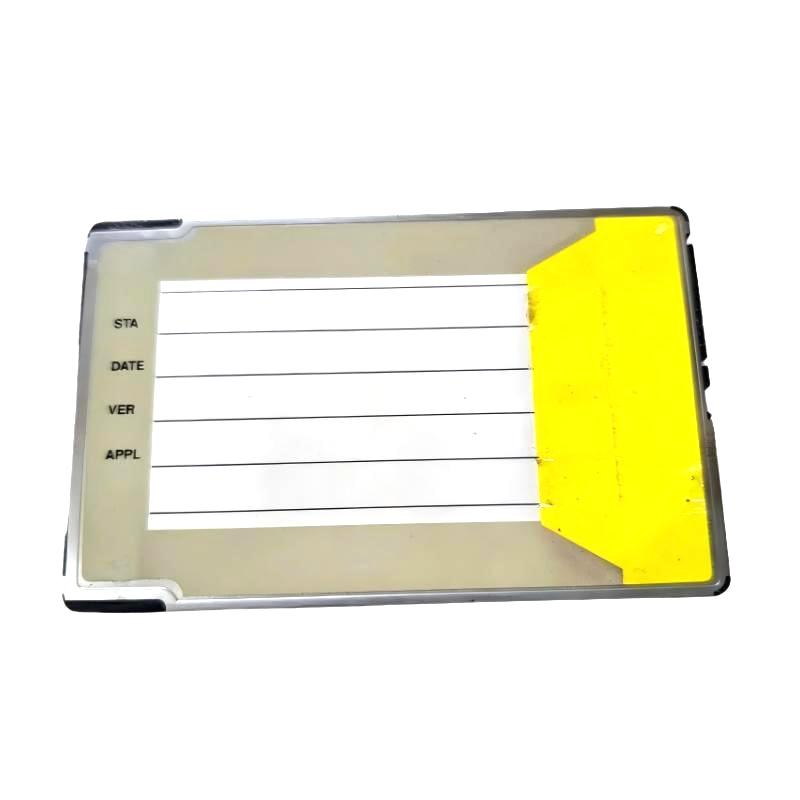
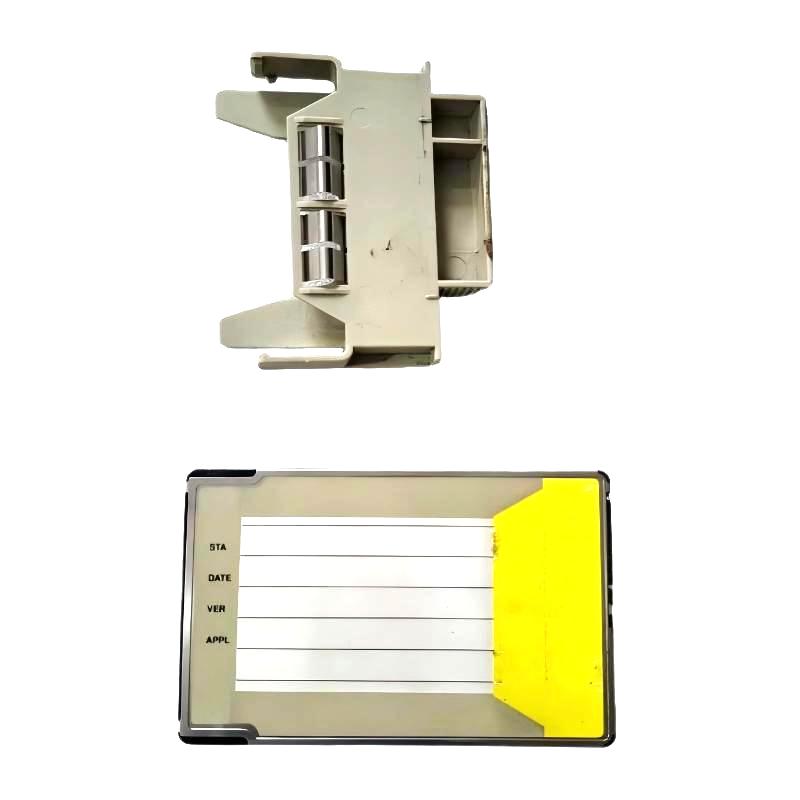
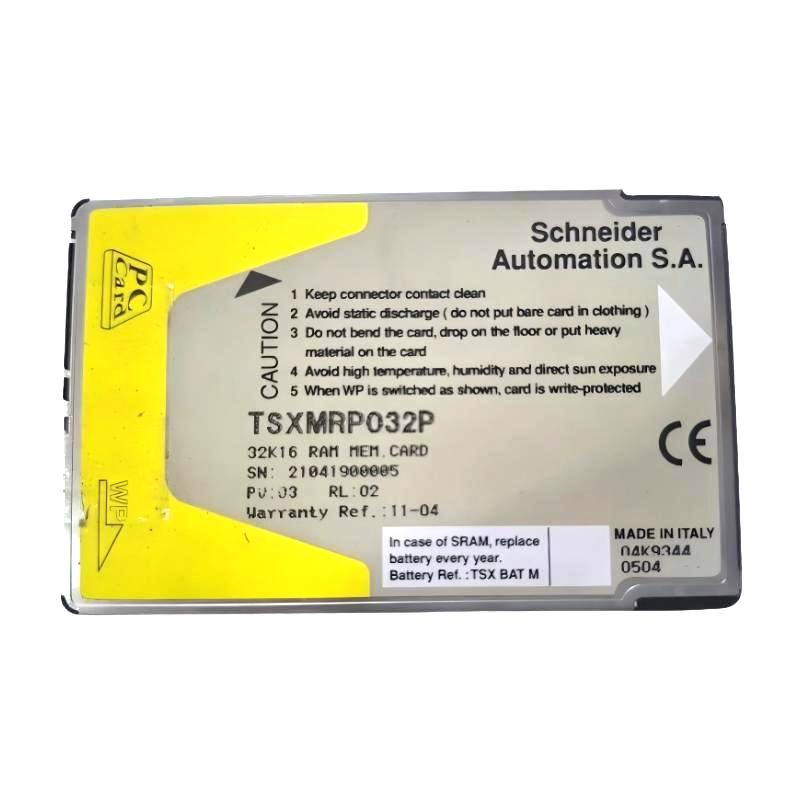
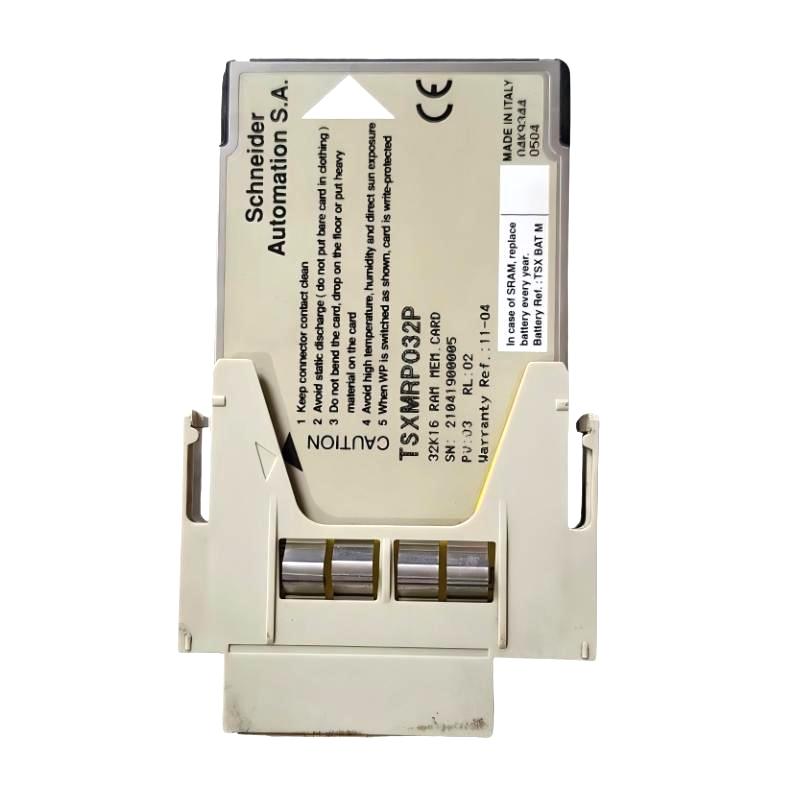
- Schneider
- TSXMRP032P
- RAM Expansion Card
- France
- 137 x 116 x 69 mm
- 0.58 kg
- Xiamen, China
- New & In Stock
- T/T, PayPal, Western Union
- 1 Year
- 1-3 Working Days
- DHL, UPS, TNT, FedEx and EMS.
- 24-Hour Service
- COO
- 3
Our advantage

Global Logistics
We have a 10-year logistics and express cooperation agreement, so our products can be shipped to any place in the world.

Brand new and original
Our products are imported in bulk from the place of origin. Because of the cooperative relationship, our products are all original and 100% new.

24-hour service
We provide 7*24 hours service to our customers. We will be there whenever you need us.

Price advantage
All our products are priced very favorably because we have our own warehouse and supply.
| Company Information | |||
| [email protected] | |||
| Mobile | +8615980777398 | ||
| +8615980777398 | |||
| 15980777398 |
1. Product Overview
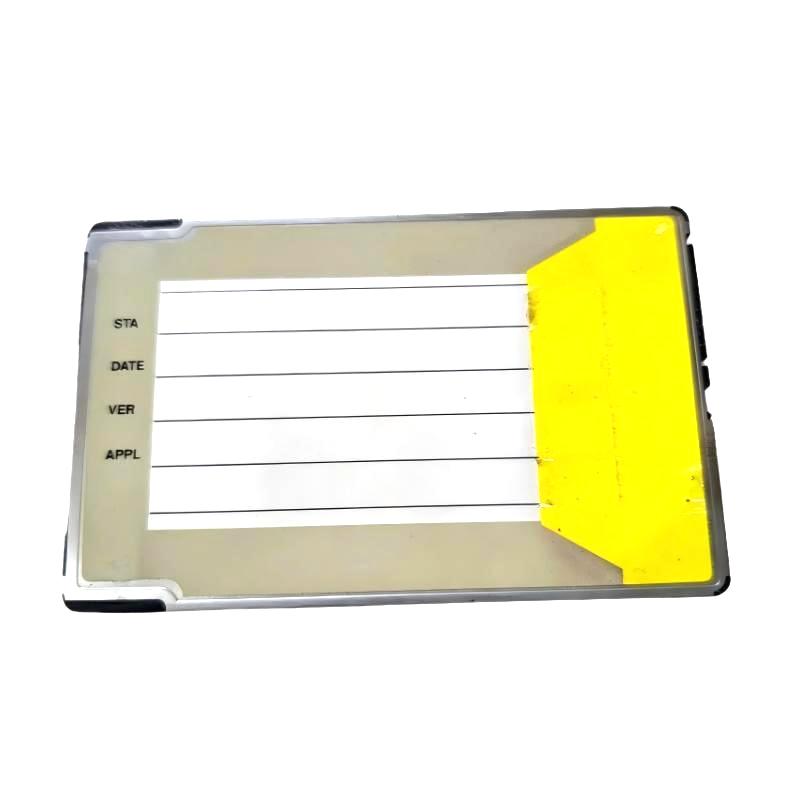
The Schneider TSXMRP032P RAM Expansion Card is an industrial automation memory component identified for use in compatible Schneider Electric control systems. RAM expansion components provide additional or designated memory resources within a supported controller architecture, helping meet the storage and data-handling requirements of industrial applications.
In programmable logic controller (PLC) systems, memory is essential for managing application instructions, working data, configuration information, and other information required during equipment operation. Selecting the correct memory expansion is important for maintaining system compatibility and ensuring that the controller operates according to its intended configuration.
RAM, or Random Access Memory, enables electronic systems to access stored data directly. Depending on the memory architecture, RAM may be used for temporary working data, application-related storage, or other controller-specific functions. Conventional RAM is generally volatile, meaning that it does not retain its contents without power unless an appropriate retention mechanism is provided.
The exact function, memory capacity, interface, and supported controller models of the TSXMRP032P should be confirmed against the product label and applicable technical documentation before installation or replacement.
For maintenance engineers, system integrators, and industrial spare-parts buyers, accurate model identification is essential when maintaining existing automation equipment or sourcing a compatible replacement.
2. Technical Specifications
| Parameter | Specification |
|---|---|
| Brand | Schneider Electric |
| Model Number | TSXMRP032P |
| Product Type | RAM Expansion Card |
| Memory Technology | RAM; exact implementation to be confirmed |
| Primary Function | Memory expansion for a compatible control system |
| Dimensions | 137 × 116 × 69 mm |
| Weight | 0.58 kg |
| Product Category | Industrial Automation Memory Component |
| Typical Application | Compatible PLC and industrial control systems |
| Installation Method | Depends on the supported controller and interface |
| Memory Capacity | To be confirmed from product documentation |
| Data Retention | Depends on the memory design and supported retention method |
| System Compatibility | Must be verified against the target controller |
Specification note: The dimensions and weight are based on the supplied product information. Confirm whether the measurements apply to the complete assembly or packaging before using them for cabinet layout or mechanical installation planning. The precise memory capacity, controller compatibility, and retention requirements should also be verified before commissioning.
3. Function and Working Principle
The TSXMRP032P is identified as a RAM expansion card. Its specific role depends on the hardware architecture and the memory functions supported by the target controller.
3.1 Memory Expansion
Industrial controllers require memory resources to manage application execution and associated data. A compatible expansion card may provide additional memory capacity or support a specific memory function defined by the controller design.
The actual purpose of the TSXMRP032P should be confirmed for the intended PLC model. A general RAM designation does not, by itself, establish whether the component stores application programs, working data, or another type of information.
3.2 Random Access Operation
RAM allows data to be accessed directly rather than requiring sequential access to every preceding storage location. This characteristic supports efficient data handling in electronic control systems.
The speed, capacity, and supported operations depend on the memory implementation and the controller with which it is designed to operate.
3.3 Data Retention
Conventional RAM is volatile and typically loses stored contents when power is removed. Some industrial memory arrangements may incorporate battery backup or another retention mechanism, depending on the design.
Before removing or replacing the TSXMRP032P, determine whether the installed system relies on the card to preserve information and whether a backup or special maintenance procedure is required.
3.4 Interaction with the Controller
A compatible memory expansion operates as part of the controller’s overall memory architecture. The controller accesses the installed memory through its designated interface and supported firmware.
For reliable operation, the memory card must match the controller’s requirements for hardware compatibility, memory organization, and supported configuration.
4. Role in Industrial Automation Systems
Memory components contribute to the operation and maintenance of PLC-based automation systems. Their exact role depends on the controller architecture and the functions assigned to the memory.
Application Execution Support
PLC-based machines use control logic to manage sequences, equipment states, sensor responses, and actuator commands. Appropriate memory resources support the controller’s intended operating configuration.
Working Data Management
Depending on the supported architecture, RAM may be used for temporary variables, intermediate calculations, and other data processed during control operations. The specific use of the TSXMRP032P should be verified before assigning it to a particular memory function.
System Maintenance
When an existing memory component requires replacement, matching the exact model helps reduce the risk of hardware incompatibility. Maintenance personnel should also determine whether data must be preserved before removing the original component.
Legacy Equipment Support
Many industrial facilities continue to operate established control systems. Correctly identified memory expansion cards can help maintenance teams manage spare parts and maintain compatible installations.
Application Recovery Planning
Memory-related maintenance should include an understanding of where application and configuration data are stored. Verified backups and documented restoration procedures help reduce the risk of unexpected downtime.
5. Industrial Applications
The TSXMRP032P should only be used in configurations for which its compatibility and intended function have been established. The following examples describe general applications of industrial memory components rather than confirmed uses for this specific model.
Manufacturing and Assembly Lines
Manufacturing equipment uses PLCs to coordinate sensors, motors, actuators, and automated production sequences. Suitable memory components support the controller architecture used to manage these operations.
Packaging Machinery
Packaging systems depend on programmed sequences for product handling, filling, sealing, labeling, and material transfer. The correct memory configuration helps support the requirements of the installed controller.
Material Handling Equipment
Conveyors, transfer stations, and sorting systems rely on control logic to coordinate equipment movement and operating states. Compatible memory hardware forms part of the overall control system configuration.
Process Automation
Industrial process equipment may use PLCs to monitor operating conditions and manage equipment sequences. The memory configuration must meet the requirements of the specific controller and application.
Existing Schneider Electric Control Systems
The TSXMRP032P may be relevant when maintaining a compatible Schneider Electric installation. The exact PLC reference and approved memory options should be confirmed before purchasing or installing the card.
6. Installation and System Integration
Correct installation begins with confirming the exact model and the requirements of the target controller. Physical fit alone does not establish functional compatibility.
Step 1: Verify the Product Reference
Check the product label to confirm the complete model number TSXMRP032P. Compare it with the existing component, equipment drawings, and the approved spare-parts list.
Step 2: Confirm Controller Compatibility
Identify the exact PLC model, processor reference, hardware revision, and relevant firmware version. Confirm that the controller supports this memory expansion and its intended function.
Step 3: Back Up Relevant Data
Before removing the existing component, determine whether it contains application information, configuration data, or other information that must be preserved.
Create and verify a backup using the controller’s supported tools and procedures where applicable. Do not assume that a replacement card contains the original application or data.
Step 4: Isolate the Equipment
Place the machine in a safe state and isolate relevant power sources according to the site’s lockout/tagout procedure. Follow the applicable manufacturer’s instructions for memory card removal and installation.
Do not assume that the card supports hot swapping or that it can be removed while the controller is energized.
Step 5: Apply ESD Precautions
Use suitable electrostatic discharge protection when handling the memory card. Avoid touching exposed contacts and keep the component in protective packaging when it is not installed.
Step 6: Install the Card Correctly
Follow the approved mounting procedure and confirm the required orientation. Ensure that the card is securely seated without applying excessive force to its connectors or housing.
Step 7: Check Controller Status
Restore power according to the approved commissioning procedure. Review status indicators, diagnostic messages, and memory configuration information using the supported controller tools.
Step 8: Validate Operation
Confirm that the controller recognizes the installed component and that the expected application and configuration are available. Perform controlled functional testing before returning the equipment to normal operation.
7. Common Problems and Troubleshooting
Memory-related problems can result from incompatible hardware, installation errors, data-retention issues, or faults elsewhere in the control system.
| Symptom | Possible Cause | Recommended Action |
|---|---|---|
| Memory card is not recognized | Incompatible model or incorrect installation | Verify the complete part number, interface, and approved installation procedure |
| Controller reports a memory error | Unsupported configuration or hardware fault | Record the diagnostic code and consult the applicable controller documentation |
| Application fails to start | Missing or incompatible application data | Check the application version and controller diagnostics |
| Data is lost after power interruption | Volatile memory or retention mechanism issue | Verify the memory design and required retention procedure |
| Equipment behavior changes after replacement | Incorrect application or configuration | Compare the installed data with a verified backup |
| Programming or transfer operation fails | Unsupported software or programming method | Confirm the required tools and supported transfer procedure |
| Fault remains after card replacement | Root cause may be external to the card | Check controller compatibility, power, connections, and associated hardware |
7.1 Verify Hardware Compatibility
Confirm that the installed card is supported by the exact controller model. Similar product descriptions or dimensions do not guarantee equivalent memory functions.
7.2 Review Data Retention
If data is missing after a shutdown, establish whether the memory is volatile and whether the system requires a battery or another retention mechanism. Follow the controller-specific procedure for data recovery.
7.3 Check Application Integrity
If the controller cannot access the expected application, compare the available data with the approved backup. Confirm that the application is compatible with the installed hardware and that any required initialization procedure has been completed.
7.4 Inspect the Installation
With the equipment safely isolated, inspect the card and its interface for visible damage, contamination, or improper seating. Follow the manufacturer’s instructions for handling and inspection.
7.5 Review Diagnostic Information
Record error messages and status indications before changing the configuration or replacing additional components. This helps distinguish a memory-related fault from a processor, power, or application issue.
8. Preventive Maintenance
Proper handling and maintenance planning help reduce memory-related faults and support reliable operation of industrial control systems.
- Maintain verified backups: Keep current copies of application programs and relevant configuration data where supported.
- Document installed hardware: Record the complete model number, controller reference, and intended memory function.
- Use ESD protection: Follow suitable electrostatic discharge precautions during handling and replacement.
- Store spare components correctly: Protect unused cards from moisture, contamination, impact, and electrostatic discharge.
- Monitor controller diagnostics: Investigate recurring memory-related alarms and document corrective actions.
- Follow approved procedures: Use the manufacturer’s instructions for installation, removal, and commissioning.
- Record replacement activities: Document the installed part number, maintenance date, and validation results.
- Review recovery procedures: Ensure that application backups and restoration instructions are available to authorized maintenance personnel.
Maintenance intervals and inspection requirements depend on the actual hardware design and operating environment.
9. Compatibility and Replacement Considerations
Selecting a replacement for the TSXMRP032P requires confirmation of the card’s function and compatibility with the target system.
Exact Model Verification
Confirm the complete part number TSXMRP032P. Similar model numbers may identify components with different capacities, interfaces, memory organizations, or controller support.
Controller and Firmware Compatibility
Verify the target PLC model, processor reference, hardware revision, and firmware requirements. Support for one controller does not guarantee compatibility with every Schneider Electric PLC.
Memory Capacity and Function
Confirm the required capacity and intended memory role from the applicable technical documentation. Do not infer the card’s exact capacity or function from its model number alone.
Data Retention Requirements
Determine whether the memory is volatile and whether the installed system uses battery backup or another retention mechanism. Establish the correct backup procedure before removing the original component.
Mechanical Dimensions
The supplied dimensions are 137 × 116 × 69 mm, with a listed weight of 0.58 kg. Confirm whether these measurements refer to the card, a complete assembly, or packaged goods before using them for mechanical planning.
Programming and Application Recovery
Verify whether the replacement requires programming, initialization, or transfer of the original application. Maintain a verified backup wherever supported.
Replacement recommendation: Select a replacement only after confirming the exact controller compatibility, memory capacity, interface, retention characteristics, and intended function.
10. Key Benefits
When correctly matched to a supported automation system, the TSXMRP032P may provide several practical benefits:
- Memory expansion support: Provides a memory component for the configuration required by a compatible controller.
- Efficient data access: RAM technology supports direct access to stored information.
- Legacy system maintenance: May help maintain compatible existing industrial automation installations.
- Improved spare-parts management: Exact model identification helps reduce procurement errors.
- Structured application recovery: Backup and restoration procedures help protect important control information.
- Maintenance planning: Accurate hardware records support replacement planning and system lifecycle management.
Actual benefits depend on the component’s verified specifications and the requirements of the target PLC.
11. Frequently Asked Questions
Q1: What is the Schneider TSXMRP032P?
The Schneider TSXMRP032P is identified as a RAM Expansion Card for compatible industrial automation systems. Its precise memory function and supported controller models should be verified before use.
Q2: What are the dimensions and weight of the TSXMRP032P?
The supplied specifications list dimensions of 137 × 116 × 69 mm and a weight of 0.58 kg. Confirm whether these values refer to the component itself or the complete supplied assembly.
Q3: What does RAM mean?
RAM stands for Random Access Memory. It is used to store information that an electronic system can access directly. The specific role of RAM depends on the system architecture.
Q4: Does RAM retain information when power is removed?
Conventional RAM is volatile and normally loses stored information when power is removed. Some industrial memory arrangements may include a battery or another retention mechanism. Confirm the retention design of the specific component.
Q5: Is the TSXMRP032P compatible with all Schneider Electric PLCs?
No. Compatibility depends on the PLC family, processor model, hardware revision, memory interface, and supported configuration.
Q6: Can the TSXMRP032P replace another RAM expansion card?
Only if the replacement is confirmed to meet the target controller’s technical requirements. Similar appearance or a similar product description is not sufficient to establish compatibility.
Q7: What should be checked before replacing the card?
Verify the complete model number, target controller, memory function, data-retention requirements, and approved installation procedure. Back up relevant application data before removal where applicable.
Q8: What should be done if the controller reports a memory fault?
Record the diagnostic information, verify the installed card and controller compatibility, inspect the installation, and check the application backup. Follow the approved troubleshooting procedure before replacing additional hardware.
Q9: Does a replacement card include the original PLC program?
The presence of a particular application should not be assumed. Confirm the supplied component’s condition and contents, and prepare an approved restoration procedure if required.
12. Conclusion
The Schneider TSXMRP032P RAM Expansion Card is an industrial automation memory component intended for compatible control system configurations. RAM technology supports direct access to stored information, while the card’s precise function depends on the controller architecture and approved memory arrangement.
For industrial maintenance engineers, system integrators, and spare-parts buyers, accurate identification is essential. Before purchasing or installing the TSXMRP032P, verify the target PLC model, memory capacity, interface, data-retention requirements, and applicable installation procedures.
The supplied dimensions are 137 × 116 × 69 mm, and the listed weight is 0.58 kg. Confirm these measurements against the actual component or supplied assembly before using them for installation planning. Careful compatibility checks, reliable backups, and systematic commissioning help reduce replacement errors and support dependable automation system maintenance.