

ProductPRODUCT
Featured products
Contact Us
- Schneider
- LXM32MD18N4
- Motion Servo Drive
- France
- 68 × 270 × 237 mm
- 2.1 kg
- Xiamen, China
- New & In Stock
- T/T, PayPal, Western Union
- 1 Year
- 1-3 Working Days
- DHL, UPS, TNT, FedEx and EMS.
- 24-Hour Service
- COO
- 4
Our advantage

Global Logistics
We have a 10-year logistics and express cooperation agreement, so our products can be shipped to any place in the world.

Brand new and original
Our products are imported in bulk from the place of origin. Because of the cooperative relationship, our products are all original and 100% new.

24-hour service
We provide 7*24 hours service to our customers. We will be there whenever you need us.

Price advantage
All our products are priced very favorably because we have our own warehouse and supply.
| Company Information | |||
| [email protected] | |||
| Mobile | +8615980777398 | ||
| +8615980777398 | |||
| 15980777398 |
Product Overview
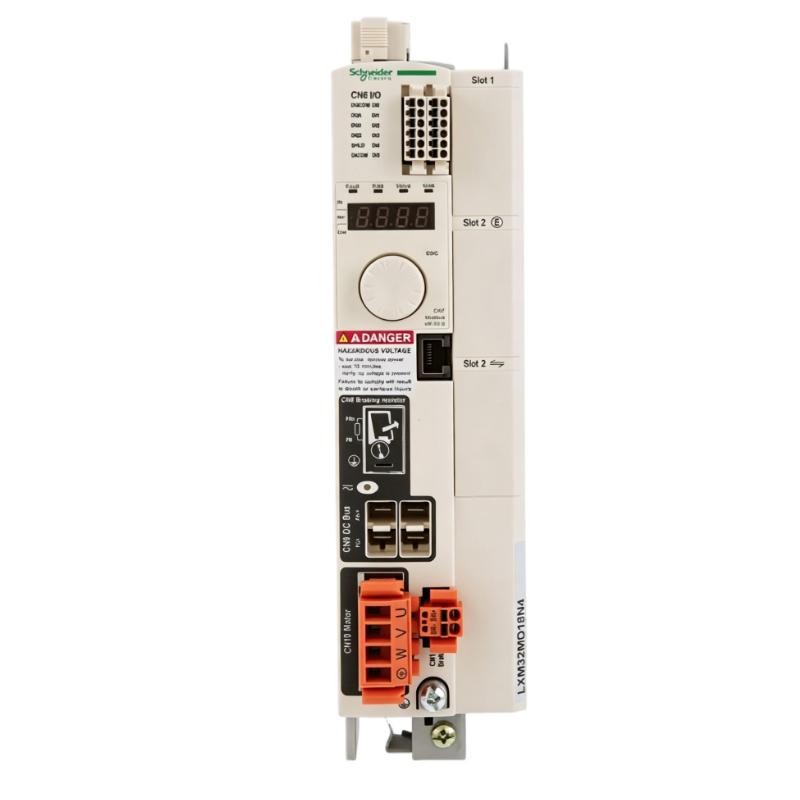
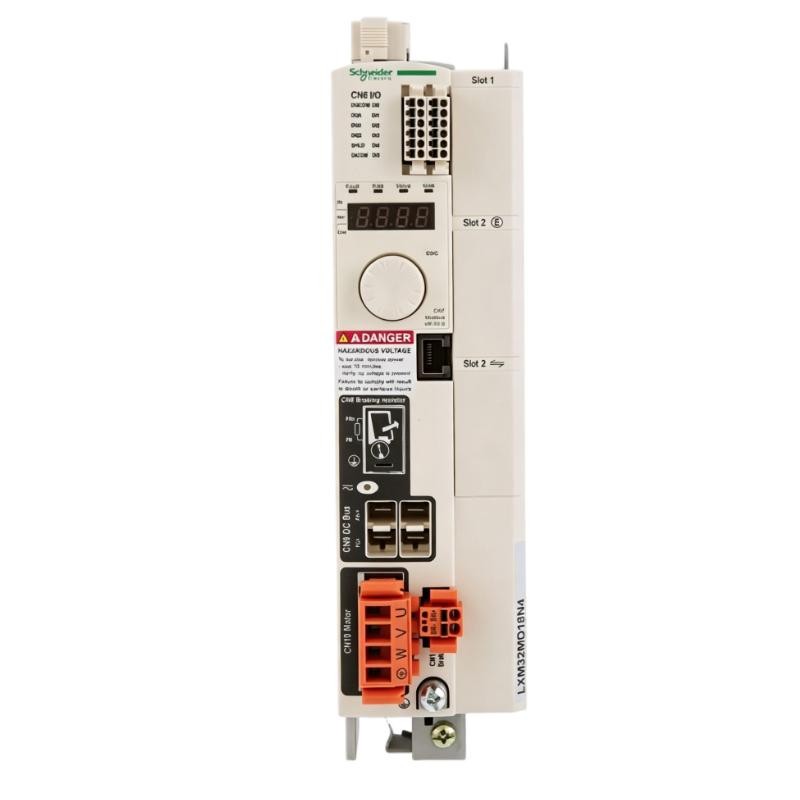
The Schneider Electric LXM32MD18N4 is a three-phase motion servo drive from the Lexium 32 range. It regulates a compatible servo motor for applications that require controlled acceleration, repeatable positioning, and precise speed adjustment. With a nominal output rating of 1.8 kW at 400 V and a continuous output current of 6 A at an 8 kHz switching frequency, it suits machinery that needs coordinated motor control rather than simple fixed-speed operation.
Typical applications include automated assembly equipment, packaging machinery, material-feeding systems, indexing mechanisms, and production machines with servo-controlled axes. In these systems, the drive receives commands from a motion controller, regulates motor power, and uses feedback to control the motor’s response to changing loads and movement commands.
Consider an automated assembly station that moves a component into position before a fastening operation. The controller determines the required movement, while the servo drive regulates the motor’s acceleration and stopping behavior. This arrangement allows the axis to repeat the same movement sequence across production cycles, provided that the motor, feedback system, mechanical transmission, and control parameters are correctly matched.
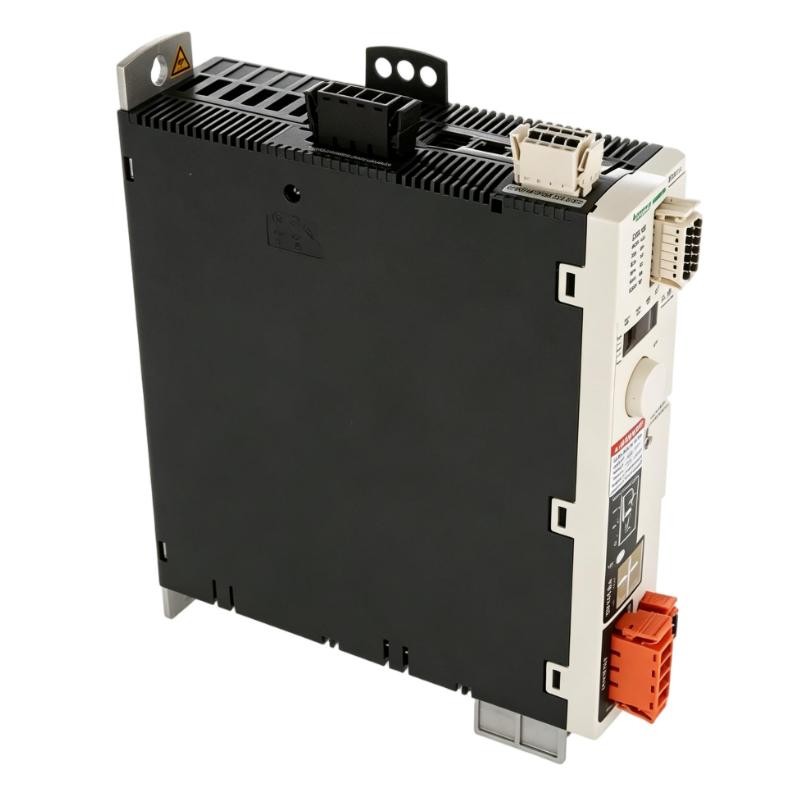
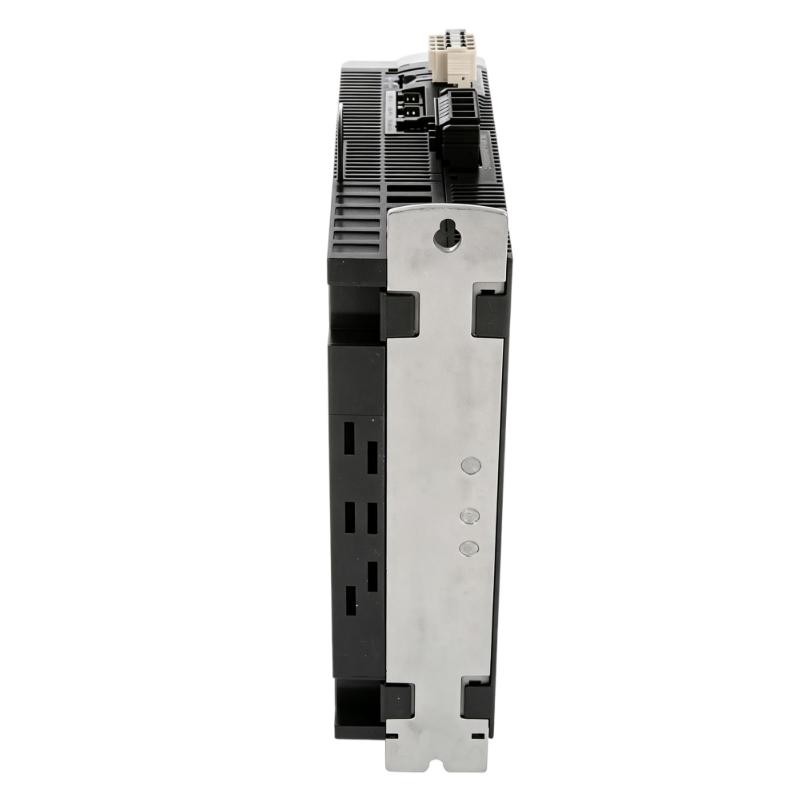
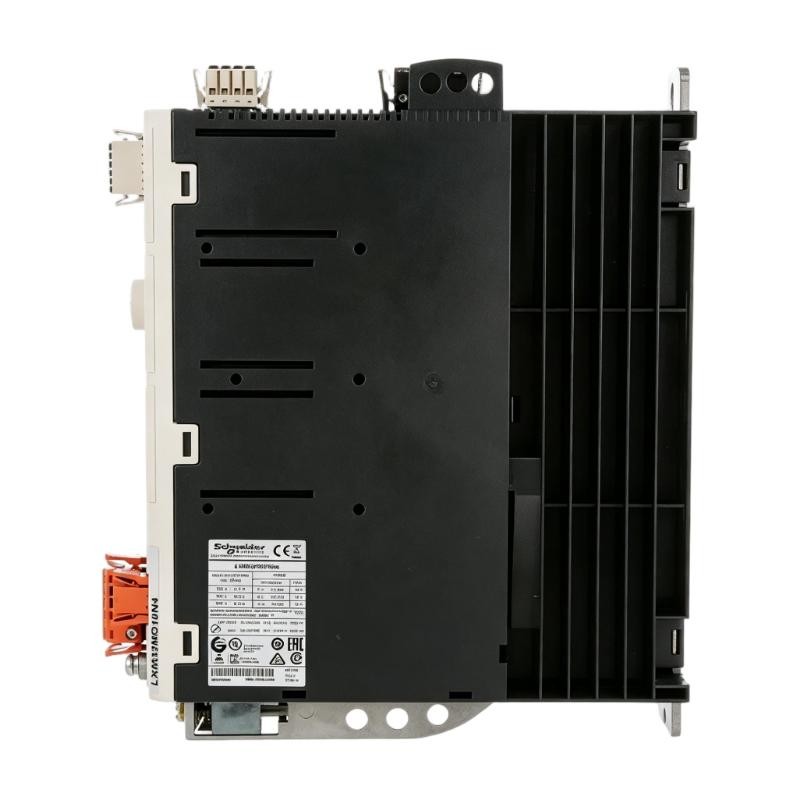
The LXM32MD18N4 uses a book-format housing intended for installation in an electrical enclosure. Its integrated EMC filter helps manage conducted electromagnetic interference, while removable, color-coded connectors simplify wiring and servicing. The drive also supports PC-based configuration through the Lexium 32 software environment.
Supply voltage is an important selection factor for this model. It supports both 200–240 V and 380–480 V three-phase supply arrangements within the specified operating limits. Its nominal power rating varies with the supply voltage, so the motor and drive must be selected according to the actual electrical supply and the required axis performance.
Unlike a basic motor starter, a servo drive continuously regulates motor output in response to motion commands and feedback. This is useful where stopping position, speed changes, and movement timing affect the quality of the finished product. The final performance depends on the complete drive system, including motor compatibility, feedback wiring, mechanical inertia, and application-specific tuning.
Technical Specifications
| Parameter | Specification |
|---|---|
| Manufacturer | Schneider Electric |
| Model | LXM32MD18N4 |
| Product Type | Motion Servo Drive |
| Product Family | Lexium 32 |
| Device Short Name | LXM32M |
| Drive Format | Book |
| Network Phases | Three-phase |
| Rated Supply Voltage | 200–240 V AC and 380–480 V AC |
| Supply Voltage Limits | 170–264 V AC and 323–528 V AC |
| Supply Frequency | 50/60 Hz |
| Network Frequency Limits | 47.5–63 Hz |
| Integrated EMC Filter | Yes |
| Continuous Output Current | 6 A at 8 kHz |
| Peak Output Current | Up to 18 A for 5 seconds, subject to operating conditions |
| Nominal Power | 1.2 kW at 208 V; 1.8 kW at 400 V and 480 V |
| Switching Frequency | 8 kHz |
| Discrete Inputs | 8, including logic, capture, and safety-related inputs |
| Analog Input Range | Configuration-dependent |
| Feedback | Compatible servo motor feedback |
| Cooling | Integrated fan |
| Software Configuration | Lexium 32 configuration software |
| Protection Rating | IP20 |
| Operating Temperature | 0–50°C under specified operating conditions |
| Mounting Position | Vertical, within the specified installation tolerance |
| Dimensions | 68 × 270 × 237 mm |
| Weight | 2.1 kg |
Product Features
- 1.8 kW nominal power at 400 V: Suitable for servo applications requiring this output rating.
- Three-phase supply compatibility: Supports specified low- and high-voltage supply ranges.
- Integrated EMC filter: Helps control conducted electrical interference.
- 6 A continuous output current: Supports compatible servo motors within the drive’s operating limits.
- High peak-current capability: Supports short-duration current demands within specified limits.
- Integrated cooling fan: Helps manage heat generated during drive operation.
- Removable, color-coded connectors: Simplify wiring identification and servicing.
- PC-based configuration: Supports parameter setup and drive diagnostics through compatible software.
- Book-format construction: Suits enclosure-based installations where cabinet arrangement and wiring access must be planned carefully.
Working Principle
The LXM32MD18N4 converts incoming AC power into controlled electrical output for a compatible servo motor. It processes commands from the machine controller and adjusts motor output according to the requested motion and available feedback.
Motion Controller → LXM32MD18N4 → Servo Motor → Mechanical Axis
During a positioning cycle, the controller specifies the movement required by the machine. The drive regulates motor torque and speed as the axis accelerates, travels, and decelerates. Feedback from the motor allows the control system to evaluate the actual response and correct movement as required.
For example, a packaging machine may need to advance a film feed mechanism by a defined distance, stop for a sealing operation, and then repeat the cycle. The controller coordinates the sequence, while the servo drive manages the motor’s movement profile. Correct command scaling and mechanical setup are necessary to achieve consistent feed lengths.
In speed-control applications, the drive regulates motor rotation against a configured speed reference. This can be useful for feeding, rotating, or transporting mechanisms that must maintain a commanded speed during a production stage. The response depends on the motor configuration and the load applied to the shaft.
The integrated EMC filter helps reduce conducted interference associated with drive operation. Proper cabinet grounding, cable routing, and separation between motor power wiring and sensitive signal wiring remain necessary for good electromagnetic compatibility.
The drive’s integrated fan moves cooling air through the unit to remove heat generated by power conversion. Restricted airflow, excessive ambient temperature, or contamination can affect thermal performance. Installation planning should therefore include adequate ventilation and the clearances required for the connected cables.
When a servo axis decelerates, energy may flow back from the motor into the drive. The application’s inertia and stopping frequency determine how much regenerative energy must be handled. If the operating cycle exceeds the drive’s internal energy-handling capability, an appropriate braking arrangement may be required.
Role in a Lexium 32 Motion Control System
The LXM32MD18N4 acts as the power-conversion and motor-regulation stage between the motion controller and the servo motor. It executes configured control functions and adjusts motor output to meet the movement requirements of the machine.
Motion Controller → Servo Drive → Servo Motor → Mechanical Transmission → Machine Mechanism
| System Component | Function |
|---|---|
| Schneider Electric LXM32MD18N4 | Regulates servo motor power and executes configured motion control |
| Compatible Servo Motor | Converts electrical power into mechanical movement |
| Motor Feedback Device | Supplies feedback for motor regulation |
| PLC or Motion Controller | Generates commands and coordinates the machine sequence |
| Motor Power Cable | Carries controlled output power to the motor |
| Feedback Cable | Transfers motor feedback signals |
| Control Wiring | Connects the drive to external command and status signals |
| EMC Grounding Arrangement | Supports electromagnetic compatibility |
| External Braking Components | Handle regenerative energy where required |
| Mechanical Transmission | Transfers motor movement to the driven axis |
Industrial Applications
| Application | Typical Use |
|---|---|
| Packaging Machinery | Controlling feed axes, indexing mechanisms, and synchronized movements |
| Automated Assembly | Positioning components for fastening, insertion, or inspection |
| Material Feeding | Regulating the movement of film, sheet material, or workpieces |
| Indexing Equipment | Moving fixtures between defined processing positions |
| Printing Machinery | Controlling compatible feed and positioning mechanisms |
| Labeling Systems | Coordinating product movement with labeling operations |
| Automated Inspection | Positioning parts for repeatable measurement |
| Light Material Handling | Operating servo-driven transfer mechanisms within the drive’s ratings |
| Special-Purpose Machines | Executing programmed movements in dedicated production equipment |
The model is most suitable where its current capacity, supply voltage, feedback compatibility, and motion-control functions match the actual machine requirements.
Installation and Maintenance
- Confirm the supply voltage: Select the appropriate supply arrangement within the specified limits and ensure that the drive configuration matches the installation.
- Match the motor ratings: Check rated voltage, current, power, feedback type, and supported drive-motor compatibility before wiring.
- Provide adequate ventilation: Keep the integrated fan’s airflow path clear and maintain the required cabinet clearances.
- Mount the drive correctly: Install it vertically within the specified tolerance and use the recommended mounting arrangement.
- Establish protective grounding: Check grounding continuity and the installation’s electrical protection before energizing the drive.
- Inspect the power connections: Verify terminal assignments, cable ratings, connection security, and motor wiring.
- Check feedback wiring: Confirm that the feedback device and cable are compatible and that connectors are securely seated.
- Separate power and signal cables: Route motor power wiring away from sensitive control and feedback wiring where practicable to reduce interference.
- Configure drive parameters: Enter the appropriate motor data, control settings, and movement limits using compatible configuration software.
- Check the motion profile: Set acceleration, deceleration, speed, and positioning parameters according to the load and production cycle.
- Test under controlled conditions: Run the axis at reduced speed and confirm direction, feedback response, stopping behavior, and fault status before normal operation.
- Monitor operating conditions: Inspect ventilation, connectors, cable condition, fault history, and parameter records during scheduled maintenance.
If the drive trips during acceleration or deceleration, investigate the supply, motor configuration, load inertia, wiring, and braking arrangement. Repeated faults should be assessed using the recorded diagnostic information rather than addressed through arbitrary parameter changes.
Related Components
| Component | Function |
|---|---|
| Schneider Electric LXM32MD18N4 | Controls a compatible servo motor |
| Compatible Lexium 32 Servo Motor | Produces the required mechanical movement |
| Motor Feedback Device | Supplies feedback signals for motor regulation |
| PLC or Motion Controller | Generates movement commands and coordinates operations |
| Motor Power Cable | Connects the drive output to the motor |
| Feedback Cable | Transfers feedback signals to the drive |
| Control Wiring | Carries command, enable, and status signals |
| EMC Grounding Components | Support the installation’s grounding and interference-control arrangements |
| External Braking Resistor, Where Required | Dissipates regenerative energy |
| Circuit Protection Devices | Protect the supply circuit in accordance with the system design |
Recommended Related Models
| Model | Product Type | Typical Application |
|---|---|---|
| Schneider LXM32MD12N4 | Lexium 32 Motion Servo Drive | Lower-current servo applications |
| Schneider LXM32MD18N4 | Lexium 32 Motion Servo Drive | Servo applications requiring the 18 A peak-current class |
| Schneider LXM32MD30N4 | Lexium 32 Motion Servo Drive | Applications requiring a higher current and power rating |
| Schneider LXM32MD72N4 | Lexium 32 Motion Servo Drive | Higher-power servo systems requiring a larger drive rating |
Key Advantages
- Supports servo motor control in industrial motion systems.
- Accepts specified three-phase supply arrangements.
- Integrates an EMC filter.
- Supports short-duration peak-current demands within rated limits.
- Uses an integrated fan for cooling.
- Provides removable, color-coded connectors.
- Supports PC-based configuration and diagnostics.
- Fits enclosure-based installations using a book-format drive.
Technical FAQs
Can the LXM32MD18N4 operate from both 230 V and 400 V three-phase supplies?
The drive supports specified 200–240 V and 380–480 V three-phase supply ranges. Its nominal power rating differs by supply voltage, so the motor and application requirements should be evaluated against the relevant operating conditions.
What does the 18 A rating mean for this servo drive?
The 18 A figure refers to its short-duration peak output-current capability under specified conditions, not its continuous output current. The documented continuous output current is 6 A at an 8 kHz switching frequency.
Why does the LXM32MD18N4 require an integrated cooling fan?
Power conversion generates heat during operation. The fan helps move cooling air through the drive, so blocked airflow, high cabinet temperatures, and inadequate ventilation can contribute to thermal faults or reduced operating capability.
What should be checked if the drive loses positioning accuracy?
Check the motor feedback connection, motor configuration, command scaling, mechanical backlash, and load inertia. Also review acceleration and deceleration settings and inspect the drive’s diagnostic history to identify whether the issue is electrical, mechanical, or parameter-related.