

ProductPRODUCT
Featured products
Contact Us
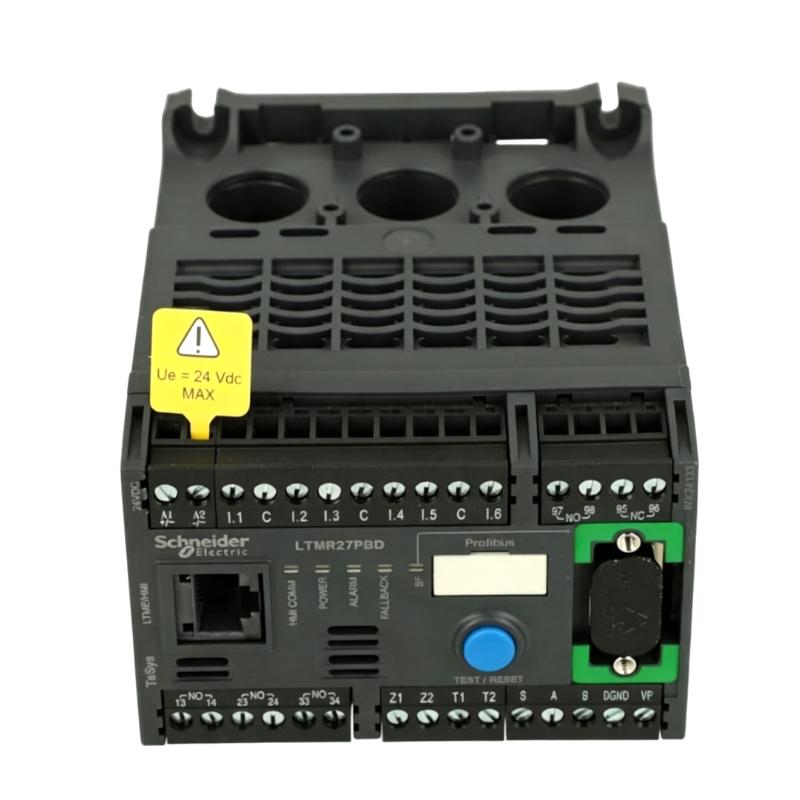
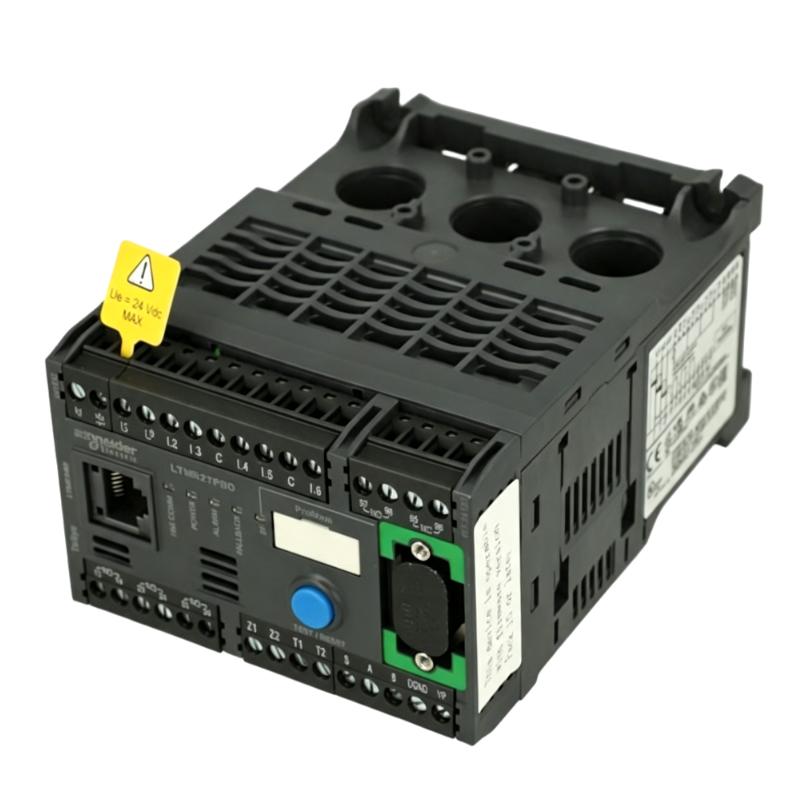
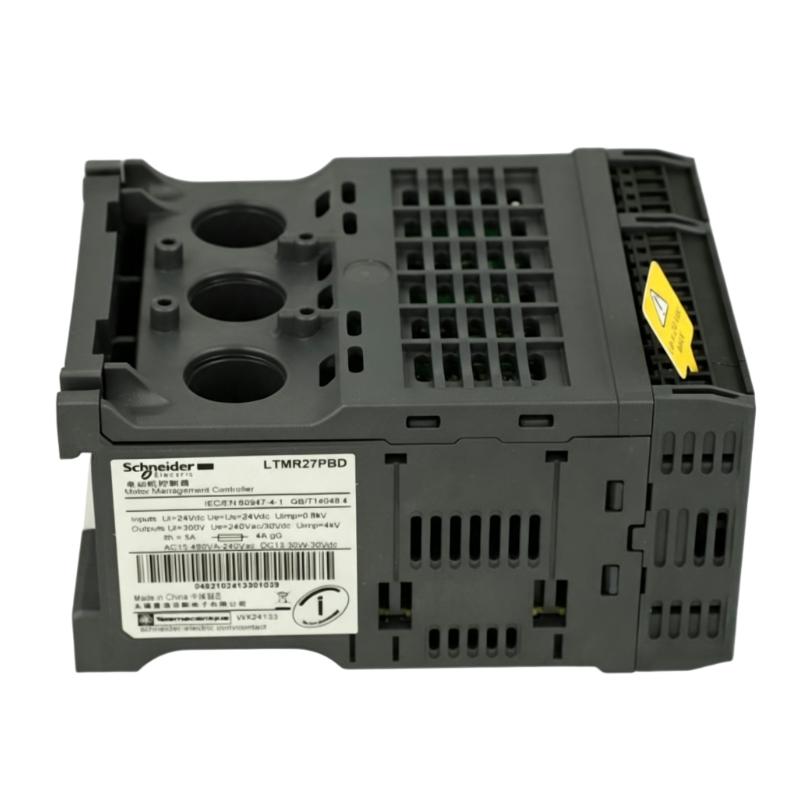
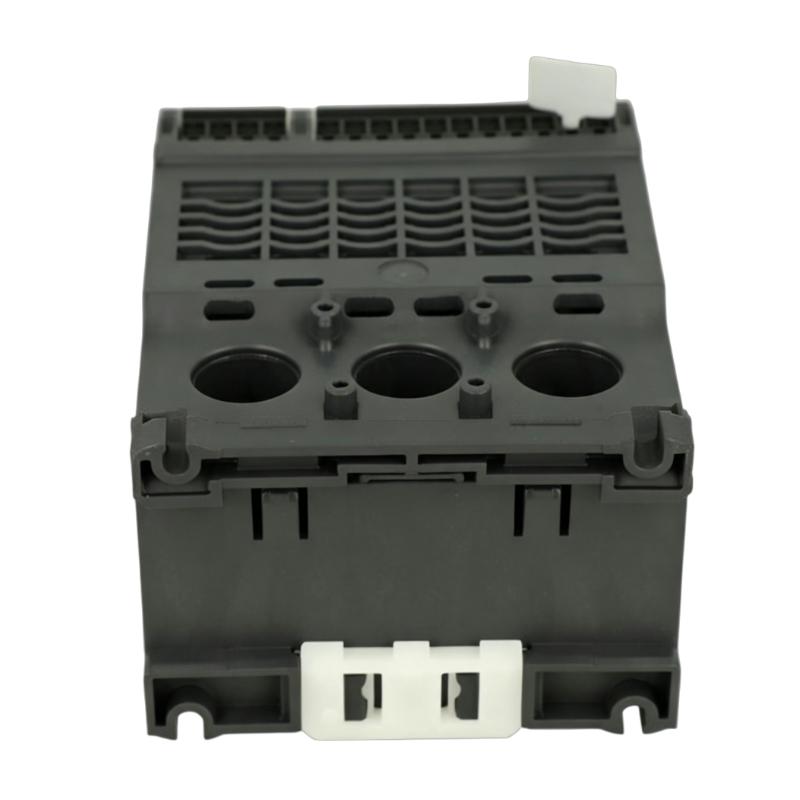
- Schneider
- LTMR27PBD
- Motor Controller
- France
- 91 × 61 × 122.5 mm
- 0.53 kg
- Xiamen, China
- New & In Stock
- T/T, PayPal, Western Union
- 1 Year
- 1-3 Working Days
- DHL, UPS, TNT, FedEx and EMS.
- 24-Hour Service
- COO
- 59
Our advantage

Global Logistics
We have a 10-year logistics and express cooperation agreement, so our products can be shipped to any place in the world.

Brand new and original
Our products are imported in bulk from the place of origin. Because of the cooperative relationship, our products are all original and 100% new.

24-hour service
We provide 7*24 hours service to our customers. We will be there whenever you need us.

Price advantage
All our products are priced very favorably because we have our own warehouse and supply.
| Company Information | |||
| [email protected] | |||
| Mobile | +8615980777398 | ||
| +8615980777398 | |||
| 15980777398 |
Product Overview
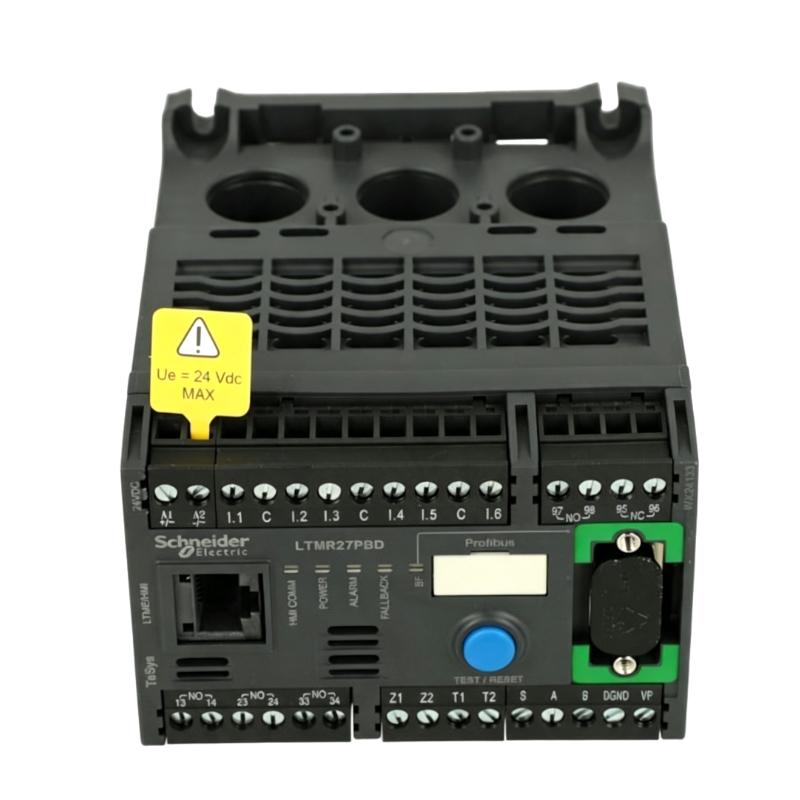
The Schneider LTMR27PBD TeSys T Motor Controller is used for motor management within industrial automation systems where motor operation, status monitoring, and protection need to be integrated into the control architecture. It works as part of the TeSys T motor management system rather than as a standalone power-switching device.
In a typical installation, the LTMR27PBD is associated with motor switching equipment such as a contactor or starter. The automation controller issues operating commands, while the motor controller manages the motor control sequence and monitors operating conditions. This arrangement is commonly applied to pumps, conveyors, fans, compressors, mixers, and other motor-driven machinery.
For process equipment, the controller can form the interface between the plant control system and the motor starter circuit. Motor status and abnormal conditions can be incorporated into the PLC or supervisory control strategy, allowing operators to distinguish between a control command problem, a motor protection event, and a downstream switching or wiring issue.
When replacing an LTMR27PBD, technicians should check the associated TeSys T components, motor settings, control wiring, and system configuration rather than replacing the controller in isolation. This is particularly important when the controller is part of an operating production or process system.
Technical Specifications
| Parameter | Specification |
|---|---|
| Model | LTMR27PBD |
| Product Family | Schneider TeSys T |
| Product Type | Motor Controller |
| Primary Function | Motor management, monitoring, control, and protection |
| System Role | Motor control and management interface |
| Application | Industrial motor control and automation |
| Dimensions | 91 × 61 × 122.5 mm |
| Weight | 0.53 kg |
Product Features
- TeSys T motor management architecture
- Motor operating condition monitoring
- Motor control and protection functions
- Interface between automation control and motor switching equipment
- Integration with industrial motor control systems
- Suitable for motor-driven process and machine equipment
- Supports centralized motor status monitoring
- Applicable to pump, conveyor, fan, compressor, and mixer systems
- Useful for motor fault diagnosis and maintenance
- Suitable for industrial automation control panels
Working Principle
The LTMR27PBD receives motor operating commands from the automation control layer and works with the associated TeSys T switching equipment to control the motor. Motor operating information is monitored through the motor management system, while abnormal conditions can result in protection actions or status indications.
The controller therefore sits between the control strategy and the motor power-switching path. During troubleshooting, engineers can separate the control command path from the actual motor power path to determine whether a problem originates in the controller, starter, protection circuit, wiring, or motor.
PLC / Automation Controller → LTMR27PBD → Contactor / Motor Starter → Motor
For applications requiring centralized monitoring, motor status and fault information can also be incorporated into the HMI or supervisory control system.
Role in a TeSys T Motor Control Architecture
The LTMR27PBD functions as the motor management interface within the TeSys T architecture. It connects the automation control strategy with the equipment responsible for switching and protecting the motor circuit.
Automation Controller → LTMR27PBD → Motor Switching / Protection Equipment → Motor
| System Element | Function |
|---|---|
| PLC / Automation Controller | Sends motor commands and processes operating status |
| LTMR27PBD | Performs motor management, monitoring, control, and protection |
| Contactor / Motor Starter | Switches the motor power circuit |
| Motor Protection Equipment | Handles protection of the motor and associated circuit |
| Motor | Provides mechanical drive for the connected equipment |
| HMI / Supervisory System | Displays motor status, alarms, and operating information |
Industrial Applications
| Application | Typical Use |
|---|---|
| Pumping Systems | Motor management for process, utility, and transfer pumps |
| Conveyor Equipment | Control and monitoring of material-handling motors |
| Industrial Fans | Motor management for ventilation and process air systems |
| Compressor Systems | Monitoring and control of compressor drive motors |
| Mixing Equipment | Motor control for mixers and agitators |
| Manufacturing Machinery | Motor management within automated production equipment |
| Process Equipment | Control of electrically driven process machinery |
| Plant Utilities | Management of auxiliary motors throughout industrial facilities |
Installation and Maintenance
- Confirm that the replacement unit is the correct LTMR27PBD model.
- Record the existing motor configuration before removing the controller.
- Check the associated TeSys T switching and protection equipment.
- Isolate the motor control circuit before disconnecting the existing unit.
- Identify all control and communication wiring before removal.
- Inspect terminals and connectors for looseness, contamination, or mechanical damage.
- Verify motor nameplate information against the configured motor parameters.
- Check that the PLC or automation controller is issuing the expected motor command.
- Verify controller status before attempting a motor start.
- Test the contactor or motor starter operation after installation.
- Confirm that motor status, alarms, and fault information are correctly reported to the HMI or supervisory system.
- Record the final configuration and protection settings for future maintenance.
Related Components
| Component | Function |
|---|---|
| TeSys T System | Provides the overall motor management architecture |
| TeSys T Motor Controller | Handles motor management and monitoring functions |
| TeSys Contactor | Performs motor power switching |
| Motor Starter | Provides the motor starting and switching interface |
| Motor Protection Equipment | Protects the motor and power circuit |
| PLC | Provides the automation control commands |
| HMI | Displays motor operating status and alarms |
| Communication Components | Transfers motor management information within the automation system |
Recommended Related Models
| Model / Product Family | Product Type | Typical Application |
|---|---|---|
| LTMR27PBD | TeSys T Motor Controller | Motor management and protection |
| LTMR100CFM | TeSys T Motor Controller | Industrial motor management |
| LTMR08MBD | TeSys T Motor Management Controller | Motor control applications |
| LTMR08PBD | TeSys T Motor Management Controller | Motor monitoring and control |
| LTMR08PFM | TeSys T Motor Management Controller | Industrial motor management |
| TeSys T Series | Motor Management System | Integrated motor control and protection |
| TeSys Contactors | Motor Switching Components | Motor power switching |
| TeSys Motor Starters | Motor Starter Components | Motor starting and control |
Key Advantages
- Integrates motor management with industrial automation
- Combines motor monitoring, control, and protection functions
- Supports centralized motor status and fault management
- Works with TeSys T switching and protection components
- Suitable for a broad range of motor-driven equipment
- Facilitates systematic troubleshooting of motor control circuits
Technical FAQs
What type of motor control architecture is the LTMR27PBD normally used in?
The LTMR27PBD is used within a TeSys T motor management architecture, typically between the automation controller and the motor switching equipment. It handles motor management functions while the associated contactor or starter switches the motor power circuit.
Why can a motor fail to start even when the LTMR27PBD shows normal status?
A normal controller status does not confirm that the complete motor circuit is healthy. The PLC command, motor parameters, protection state, contactor, control wiring, incoming power, and motor itself should all be checked.
How can a technician determine whether a motor fault originates from the controller or the starter circuit?
Start by checking whether the LTMR27PBD receives the correct control command and whether its status changes as expected. If the controller responds correctly but the contactor does not operate, attention should move to the switching circuit, wiring, and protection devices.
What information should be recorded before replacing an LTMR27PBD?
Record the motor nameplate data, configured motor parameters, protection settings, control wiring, associated TeSys T components, and automation-system configuration. These records help ensure that the replacement controller is commissioned with the intended motor-management settings.