
NewsNEWCENTER
Featured products
Contact Us
Schneider Electric Pushes Software-Defined Automation for the Next Generation of Industry
2026-09-17Schneider Electric is accelerating the transition toward open, software-defined industrial automation, with recent developments focusing on flexible control architectures, Industrial AI and modernization of existing facilities.
The company’s EcoStruxure Foxboro Software Defined Automation (SDA), introduced earlier this month, is designed to combine the established capabilities of Foxboro DCS with an open software-defined architecture. Schneider positions the technology as a way for process and hybrid industries to modernize automation while maintaining operational continuity.
Moving Beyond Hardware-Defined Control
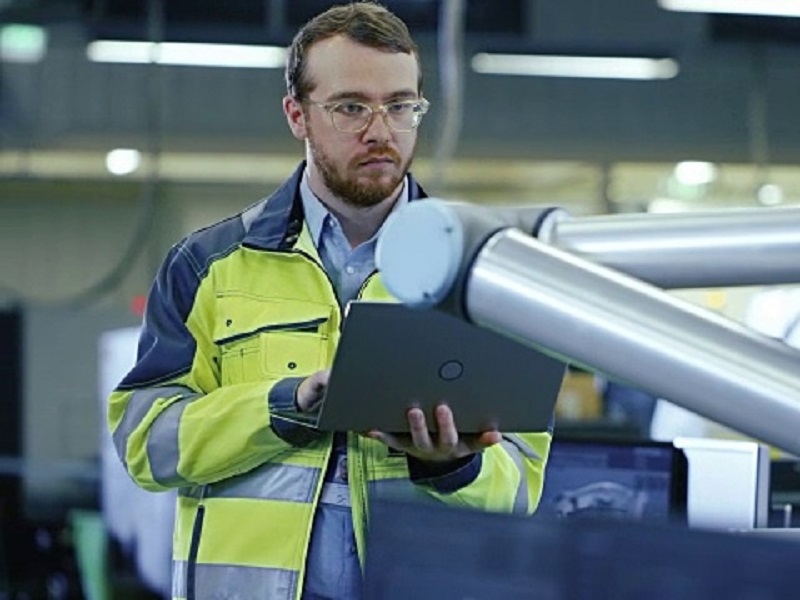
Traditional PLC and DCS architectures often depend heavily on dedicated hardware and proprietary control environments. While these systems provide deterministic control and long operating lifecycles, modernization can become difficult when plants need to introduce new software, analytics or AI technologies.
Software-defined automation separates more of the control and application layer from the underlying hardware. This can provide manufacturers with greater flexibility when upgrading automation systems.
Schneider Electric is positioning this architecture as a foundation for industrial operations that need to continuously adapt as production requirements, energy systems and digital technologies change.
Combining Automation With Industrial AI
AI is becoming an increasingly important part of Schneider Electric’s automation strategy.
At Automate 2026, Schneider demonstrated the convergence of software-defined automation, industrial AI and electrification, highlighting how these technologies can work together within a unified industrial architecture.
AI can analyze production and equipment data, identify operational patterns and support engineers with optimization recommendations. When connected directly with automation systems, these capabilities can potentially move beyond analysis toward more responsive operational workflows.
However, reliable industrial AI requires well-structured and contextualized plant data. Without a consistent data architecture, AI applications operating in separate automation silos may have difficulty understanding the wider production environment.
Modernizing Existing Plants
One of the most important applications for software-defined automation is brownfield modernization.
Many industrial facilities still depend on PLCs and DCS platforms that were installed years or even decades ago. Completely replacing these systems can require significant investment and production downtime.
Schneider Electric has therefore also introduced an automation modernization approach based on EcoStruxure Automation Expert and HPE hybrid-cloud infrastructure. The solution is designed to allow modernization alongside existing PLC and DCS environments rather than requiring an immediate complete replacement.
This incremental approach can be particularly relevant for process industries where continuous production is critical.
Preparing for More Autonomous Operations
Software-defined automation can also provide an infrastructure for future autonomous operations.
As industrial companies introduce digital twins, edge computing and AI agents, automation systems need to exchange information across traditionally separated layers. Open architectures can make this integration easier by providing software interfaces and standardized data structures.
Schneider Electric executives have recently emphasized that manufacturers need to establish structured industrial data and flexible automation foundations before they can effectively scale agentic AI across production environments.
Outlook
The development of software-defined automation represents an important change in the architecture of industrial control systems.
For PLC engineers, DCS specialists and system integrators, the trend does not mean that traditional controllers will immediately disappear. Instead, control hardware can increasingly become one component within a broader software-centered automation environment.
The combination of PLC and DCS control, Industrial AI, edge computing, digital intelligence and electrification could allow factories and process plants to modernize more gradually while maintaining existing production capabilities.
Schneider Electric’s latest developments show how software-defined automation is becoming a practical technology for connecting today’s industrial control systems with the more flexible, AI-enabled automation architectures being developed for the future.