
NewsNEWCENTER
Featured products

Contact Us
Schneider Electric, NVIDIA and HPE Accelerate Industrial AI with Edge-Based AI Agents for Process Automation
2026-11-20Schneider Electric announced a strategic collaboration with NVIDIA and Hewlett Packard Enterprise (HPE) on October 21, 2026, to accelerate the adoption of Physical AI across process and heavy industries.
The collaboration introduces a new approach to industrial artificial intelligence through Industrial AI Agents at the Edge. By combining industrial automation expertise, AI computing infrastructure and edge-based software, the companies aim to help manufacturers monitor equipment, improve cybersecurity and optimize energy consumption directly within industrial environments.
The development reflects an important change in industrial automation: AI is moving beyond traditional data analysis and becoming more closely connected to real-time industrial operations.
Bringing Artificial Intelligence Closer to Industrial Operations
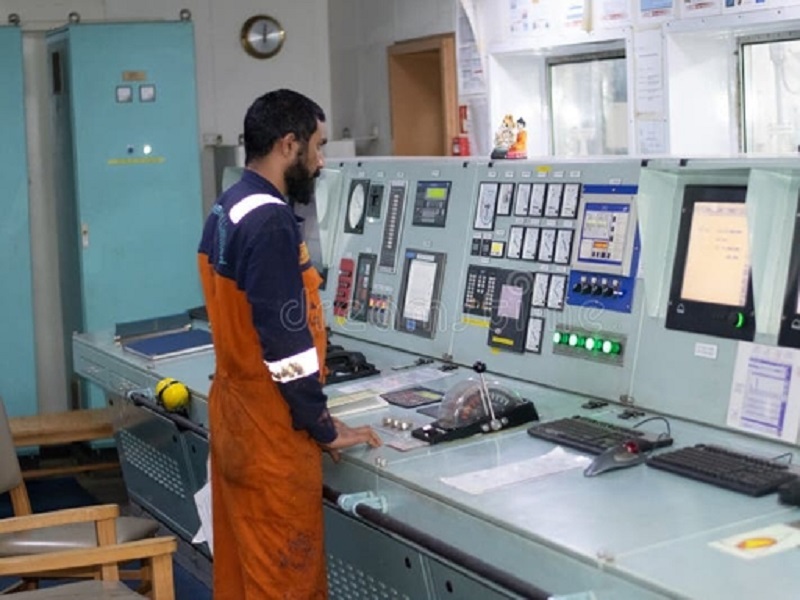
Industrial facilities generate large volumes of data through PLCs, DCS controllers, sensors, drives, industrial networks and supervisory systems. However, collecting this information is only the first step. The greater challenge is transforming operational data into useful decisions.
Traditional monitoring systems generally rely on predefined thresholds, alarms and engineering rules. These remain essential, but increasingly complex production environments require additional analytical capabilities.
The Industrial AI Agents introduced through the Schneider Electric, NVIDIA and HPE collaboration are designed to operate closer to the industrial environment.
The solution combines:
-
Schneider Electric’s industrial automation and operational technology expertise.
-
NVIDIA’s AI technologies and computing capabilities.
-
HPE Private Cloud AI infrastructure.
-
Edge-based deployment for industrial applications.
This architecture is intended to allow AI applications to analyze operational information locally, helping organizations maintain greater control over sensitive industrial data while reducing dependence on transferring every data point to remote cloud environments.
Three Key Industrial AI Agent Applications
The initial solution focuses on three important areas of industrial operations.
1. Operational Technology Monitoring
Industrial control systems require continuous monitoring to maintain availability and production reliability.
An OT environment may include PLCs, DCS controllers, industrial servers, engineering workstations, network switches and communication devices. Problems involving any of these components can affect production.
Schneider Electric’s OT monitoring approach combines operational information, equipment configurations, network topology, alarms and maintenance history.
The AI monitoring agents are designed to help identify emerging issues, assess their potential operational impact and recommend appropriate corrective actions.
For maintenance engineers, this can provide additional support when investigating communication problems, abnormal system behavior or potential equipment failures.
2. Industrial Cybersecurity
Cybersecurity has become a critical requirement for connected industrial facilities.
Unlike ordinary IT environments, industrial control systems must maintain predictable operation while protecting equipment and production processes. A cybersecurity incident can affect not only information systems but also physical industrial operations.
The cybersecurity agents are designed to correlate network activity, control-system behavior, equipment configurations and operational events.
This contextual analysis can help identify abnormal conditions and evaluate their potential impact on industrial processes.
For PLC and DCS engineers, this approach highlights the importance of integrating cybersecurity monitoring with an understanding of the actual control-system architecture.
Network segmentation, access management, secure remote connections and change-control procedures remain essential elements of industrial cybersecurity.
3. Industrial Energy Optimization
Energy consumption is another major concern for process industries.
Manufacturing facilities often operate pumps, compressors, motors, heating systems and other energy-intensive equipment. Even relatively small improvements in operating efficiency can become significant when applied across an entire plant.
The energy optimization agents are designed to analyze process information, equipment performance, energy consumption patterns and production requirements.
Based on this information, they can identify potential efficiency improvements and recommend operational adjustments.
Applications may include:
-
Identifying inefficient equipment operating conditions.
-
Analyzing energy consumption across production processes.
-
Evaluating opportunities to improve motor and pump operation.
-
Supporting more efficient process control.
-
Monitoring the impact of energy optimization measures.
These capabilities can help industrial operators make energy management a more integrated part of everyday production decisions.
Why Edge Computing Matters for Industrial AI
One of the important aspects of this collaboration is the use of edge-based AI infrastructure.
In traditional cloud-based architectures, industrial data may need to travel outside the facility before it can be analyzed. Depending on network conditions and application requirements, this can introduce latency, connectivity dependencies and additional data-management considerations.
Edge computing places computing resources closer to where industrial data is generated.
For process industries, this approach offers several potential advantages.
Lower communication dependency: Selected analytical workloads can operate locally without continuously transferring all operational information to remote infrastructure.
Improved data control: Organizations can maintain greater control over sensitive production and equipment information.
Faster operational analysis: Local processing can support applications that require timely responses to changing operating conditions.
Flexible deployment: Facilities can develop AI applications according to their infrastructure and operational requirements.
The combination of HPE Private Cloud AI and NVIDIA technologies provides the computing foundation, while Schneider Electric contributes industrial application knowledge and its EcoStruxure Industrial Insights environment for managing and governing AI agents.
A Practical Foundation for Process Industry Digitalization
The collaboration is particularly relevant to industries where production continuity and operational safety are essential.
In chemical manufacturing, operators must maintain accurate control of temperature, pressure, flow and other process variables. AI-assisted monitoring can provide additional information for identifying abnormal operating patterns.
In oil and gas facilities, large numbers of rotating machines, pipelines, compressors and control systems generate continuous operational data. Intelligent monitoring can help maintenance teams investigate emerging problems.
In pulp and paper production, equipment availability and energy efficiency directly influence manufacturing performance. Digital monitoring can improve visibility into control-system health and operational conditions.
The companies also highlighted CMPC Chile as an example of existing operational technology monitoring in a real industrial environment. Its control-system monitoring deployment provides a foundation for exploring how AI agents could further support operational investigation and decision-making.
What This Means for PLC and DCS Engineers
For industrial automation professionals, this collaboration demonstrates how the role of control-system data is expanding.
PLCs and DCS platforms remain responsible for executing control strategies and maintaining stable process operation. However, additional software layers are increasingly being used to analyze information across equipment, networks and production systems.
This creates new considerations for system integrators and engineering teams:
-
Data integration: Ensure that relevant PLC, DCS and industrial network information can be accessed reliably.
-
System compatibility: Evaluate interfaces between existing automation platforms and edge computing infrastructure.
-
Cybersecurity architecture: Define clear boundaries between control networks, monitoring applications and external systems.
-
AI validation: Verify recommendations before applying changes to critical industrial processes.
-
Operational responsibility: Establish clear procedures for human approval and oversight of AI-assisted actions.
AI agents should complement established automation and safety systems, not replace properly engineered control logic or independent safety protection.
Conclusion
The collaboration between Schneider Electric, NVIDIA and HPE represents an important development in the application of artificial intelligence to industrial automation.
By introducing edge-based AI agents for operational technology monitoring, cybersecurity and energy optimization, the companies are creating a practical pathway toward more intelligent process operations.
For manufacturers, the potential benefits include improved system visibility, faster troubleshooting, stronger cybersecurity monitoring and more informed energy management.
For PLC, DCS and industrial automation engineers, the development highlights a growing industry trend: future automation systems will increasingly combine reliable control hardware with edge computing, industrial software and AI-driven analysis.
As industrial digitalization continues to advance, the integration of AI with existing automation infrastructure is likely to become an important part of next-generation manufacturing and process control.