

ProductPRODUCT
Featured products
Contact Us
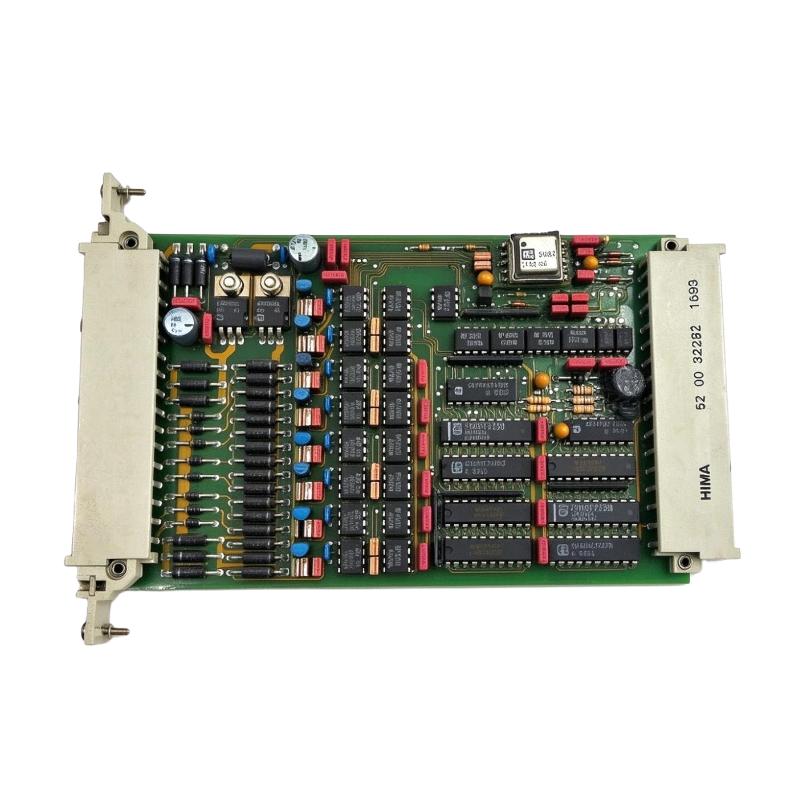
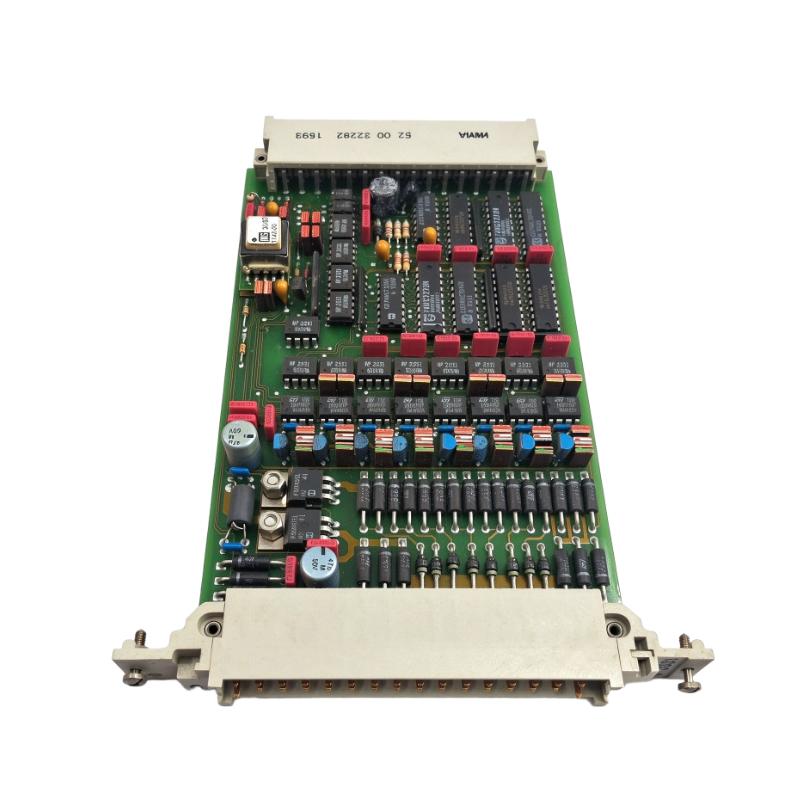
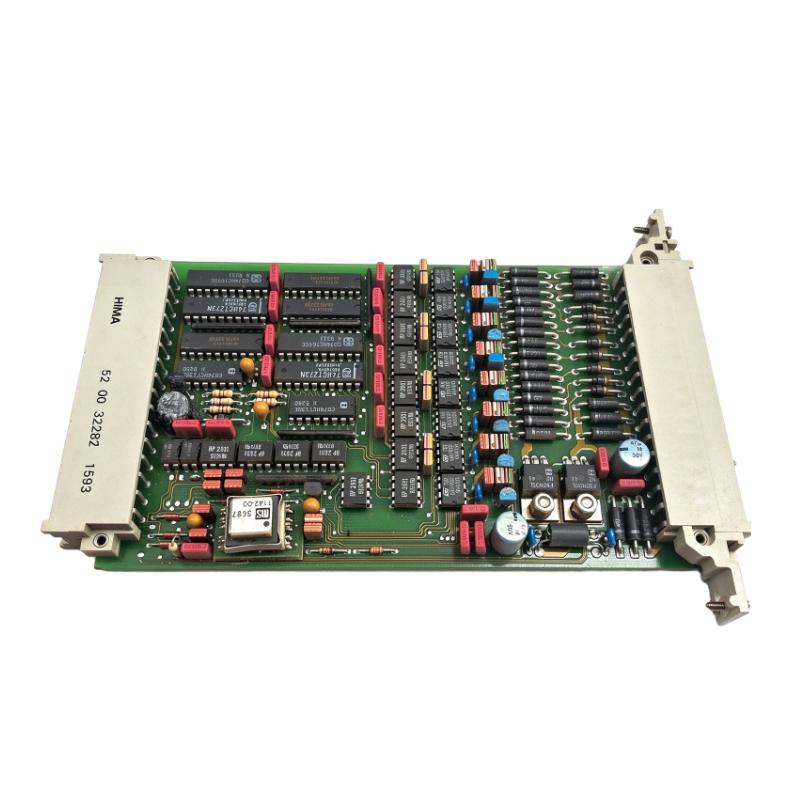
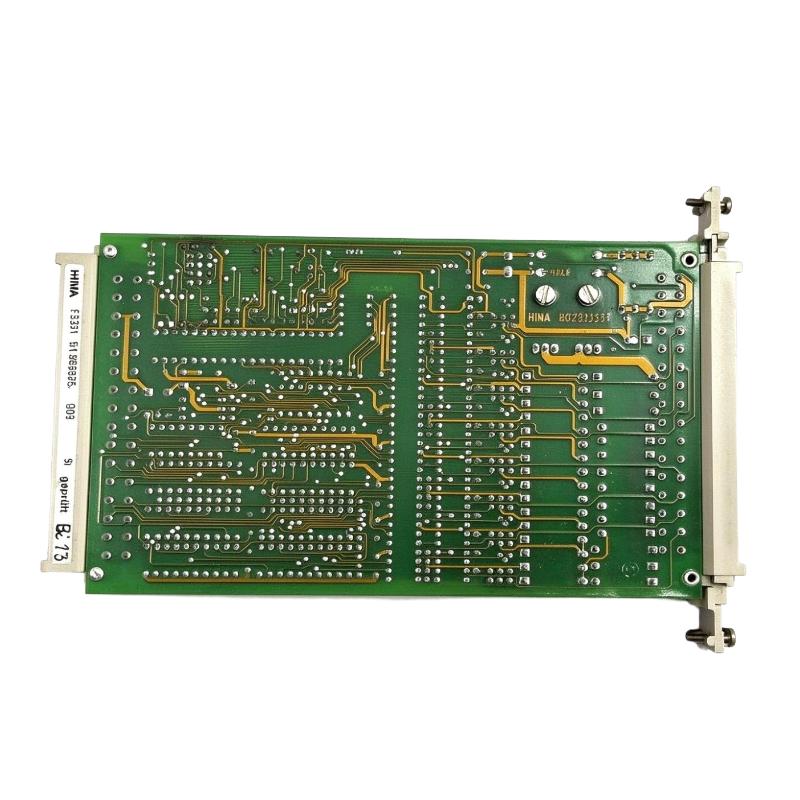
- HIMA
- F3335
- Digital Output Module
- Germany
- 120 x 160 x 40 mm
- 0.113 kg
- Xiamen, China
- New & In Stock
- T/T, PayPal, Western Union
- 1 Year
- 1-3 Working Days
- DHL, UPS, TNT, FedEx and EMS.
- 24-Hour Service
- COO
- 4
Our advantage

Global Logistics
We have a 10-year logistics and express cooperation agreement, so our products can be shipped to any place in the world.

Brand new and original
Our products are imported in bulk from the place of origin. Because of the cooperative relationship, our products are all original and 100% new.

24-hour service
We provide 7*24 hours service to our customers. We will be there whenever you need us.

Price advantage
All our products are priced very favorably because we have our own warehouse and supply.
| Company Information | |||
| [email protected] | |||
| Mobile | +8615980777398 | ||
| +8615980777398 | |||
| 15980777398 |
Product Overview
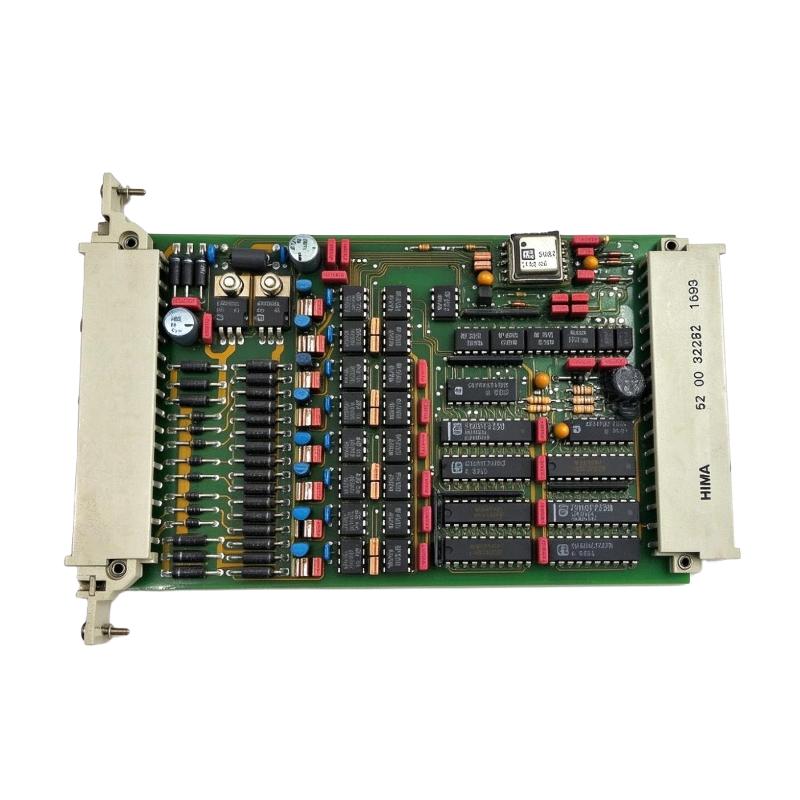
The HIMA F3335 Digital Output Module is a safety-related output module designed for use in industrial safety and process control systems. It provides digital output signals for controlling compatible field devices and is particularly associated with intrinsically safe applications in hazardous industrial environments.
Manufactured by HIMA, the F3335 belongs to the company’s range of safety-related I/O modules used in systems such as emergency shutdown (ESD), process safety, and other applications requiring dependable control of field equipment. It provides an interface between the safety controller and selected field circuits, allowing the control system to issue output commands according to its configured safety logic.
The F3335 provides four digital output channels. Its technical characteristics include a maximum output voltage of 24 V and an intrinsically safe output current of up to 12 mA, subject to the applicable system and field-circuit conditions. The module is identified as a SIL 3 safety-related device in HIMA documentation.
An important distinction is that the F3335 is not a conventional high-current digital output module. Its intrinsically safe output design is intended for compatible low-energy field circuits. It should not be treated as a general-purpose 24 V, 2 A output module or used to drive ordinary high-current solenoid valves without an appropriate interface and engineering assessment.
In a safety instrumented system, the F3335 can support the controlled activation or deactivation of compatible field devices. Its actual safety function depends on the controller configuration, application logic, field wiring, installation conditions, and the overall safety design.
Technical Specifications
| Parameter | Specification |
|---|---|
| Brand | HIMA |
| Manufacturer | HIMA Paul Hildebrandt GmbH |
| Model | F3335 |
| Product Type | Digital Output Module |
| Module Category | Safety-Related Digital Output |
| Number of Channels | 4 |
| Output Voltage | Up to 24 V |
| Output Current | Up to 12 mA, according to the documented intrinsically safe output specification |
| Output Characteristic | Intrinsically Safe (Ex i) |
| Safety Classification | SIL 3, subject to system and application requirements |
| Typical Function | Control of compatible intrinsically safe field circuits |
| System Association | HIMA safety automation platforms |
| Module Width | 4 spacing units (SU), as listed in H41q/H51q documentation |
| Dimensions Provided | 120 × 160 × 40 mm |
| Weight Provided | 0.113 kg |
| Typical Applications | ESD, process safety, hazardous-area field-device control |
Note: The dimensions and weight are the supplied listing values. Confirm the exact hardware revision and installation arrangement before using these figures for cabinet design or shipping.
Function and Working Principle
The F3335 operates as a digital output interface within a safety-related automation system. It receives output commands from the safety controller and uses its output circuitry to control compatible field circuits.
1. Digital Output Signal Processing
A safety controller executes application logic based on input signals, process conditions, and configured safety requirements. When the logic requires an output action, the controller sends the corresponding command to the output module.
The F3335 translates the command into an electrical output for the connected field circuit. Depending on the application, this may be used to operate a compatible low-energy device or control interface.
The output channels must be connected only to field circuits that meet the module’s electrical and intrinsic-safety requirements.
2. Four-Channel Output Configuration
The F3335 provides four digital output channels. This allows a single module to serve several compatible field circuits within the limits of its design.
The four-channel arrangement can help organize safety-related output wiring in a modular control cabinet. Each channel must be assigned and configured according to the safety application, wiring plan, and field-device requirements.
The number of available channels does not mean that every field device can be connected directly. The electrical characteristics of each load must be checked before installation.
3. Intrinsic Safety
One of the defining characteristics of the F3335 is its intrinsically safe output capability.
Intrinsic safety is a protection concept used in hazardous areas. It limits the electrical energy available in a circuit so that, under specified conditions, the circuit cannot provide sufficient energy to ignite a flammable atmosphere.
The F3335 is intended for compatible Ex i field circuits. Its maximum documented output characteristics must be considered together with the field-device parameters, cable capacitance and inductance, associated equipment, and applicable hazardous-area certification.
Intrinsic safety is a property of the properly designed and assessed circuit, not simply a feature that can be assumed from the module name. The complete loop must comply with the relevant installation and certification requirements.
4. Safety-Related Output Control
The F3335 is identified in HIMA documentation as a SIL 3 safety-related module. It can be used as part of a safety function when integrated into an appropriate safety system.
For example, a safety controller may command a field circuit to change state after receiving a valid shutdown condition. The output module then provides the corresponding electrical signal to the compatible field interface.
The achieved safety integrity level depends on the complete safety instrumented function, including sensors, logic solver, output devices, wiring, diagnostics, maintenance, and proof testing. A SIL 3 module alone does not make an entire installation SIL 3 compliant.
5. Fault and System Diagnostics
Safety-related automation systems use hardware and software diagnostics to identify abnormal conditions and support safe operation.
The available diagnostic behavior and fault response must be checked in the applicable HIMA system documentation and hardware revision information. Engineers should not assume that the F3335 provides the same line-monitoring or individual channel diagnostic functions as other HIMA output modules.
Role in Industrial Control Systems
The F3335 is intended to operate as part of a wider safety-related control architecture. It provides the output interface between the safety controller and compatible field circuits.
Safety Instrumented Systems
A safety instrumented system monitors defined process conditions and initiates protective actions when necessary. The F3335 can serve as an output component in a suitable architecture where intrinsically safe field-circuit control is required.
The safety application must be designed, validated, and maintained according to the applicable functional safety standards and project requirements.
Emergency Shutdown Systems
Emergency shutdown systems are used to bring industrial processes or equipment to a defined safe state when specified abnormal conditions occur.
A safety controller may use output modules to command compatible field interfaces as part of an ESD sequence. The F3335 can be considered where its intrinsically safe electrical characteristics and system compatibility meet the application requirements.
Fire and Gas Protection
Fire and gas systems monitor conditions such as combustible gas, toxic gas, or fire detection signals. Depending on the safety architecture, output modules may participate in actions such as activating alarms or initiating shutdown-related field functions.
The F3335 should only be used for field circuits that are electrically and functionally compatible with its output characteristics.
Hazardous-Area Equipment Interfaces
Industrial facilities may contain classified hazardous areas where electrical equipment must meet specific explosion-protection requirements.
The F3335’s Ex i output characteristic makes it relevant to compatible intrinsically safe circuits. However, the module’s use must follow the applicable system approval, field-device certification, wiring, and installation requirements.
Industrial Applications
The F3335 is associated with safety-related output control in industrial environments where intrinsically safe field circuits are required.
1. Oil and Gas Facilities
Oil and gas facilities often contain areas where flammable gases or vapors may be present. Safety systems in these installations monitor process conditions and initiate protective actions when abnormal operating conditions are detected.
The F3335 may be used as part of a compatible safety output arrangement for intrinsically safe field circuits. Its use must be supported by the relevant hazardous-area design and safety documentation.
2. Chemical and Petrochemical Plants
Chemical and petrochemical facilities use safety instrumented systems to monitor process variables and respond to hazardous conditions.
The F3335 can support selected output functions where low-energy, intrinsically safe field interfaces are required. The module’s electrical limits must be checked against the connected device and the complete circuit design.
3. Refining and Process Industries
Refineries and continuous-process facilities rely on safety-related control systems to help protect equipment, personnel, and production assets.
Output modules can form part of the control path between safety logic and field devices. The F3335 is suitable only for applications that meet its specified output and system requirements.
4. Hazardous-Area Instrumentation
Some hazardous-area instruments and field interfaces use intrinsically safe circuits to reduce ignition risk.
The F3335 may be used in a properly engineered Ex i arrangement where its output characteristics are compatible with the connected equipment. Cable parameters, device certification, and associated circuit components must be assessed.
5. Emergency Shutdown and Safety Interlocking
Safety interlocks help prevent equipment from operating under unsafe conditions. A safety controller can evaluate input conditions and issue output commands to the relevant field interface.
The F3335 can participate in such an arrangement when the required field circuit is compatible with its four-channel intrinsically safe output design.
Installation and System Integration
Correct installation is essential for functional safety, electrical reliability, and compliance with hazardous-area requirements.
1. Verify System Compatibility
Before installing the F3335, confirm that the target HIMA system supports the module. Check the system family, rack or mounting arrangement, hardware revision, firmware requirements, and applicable system documentation.
Do not assume that every HIMA I/O module is interchangeable across all HIMA platforms.
2. Confirm Field-Circuit Compatibility
Check the electrical characteristics of every connected field device. The F3335 has a documented intrinsically safe output characteristic of up to 24 V and 12 mA.
The field-device requirements must fall within the permitted output limits. If the field device requires higher current or a different voltage, an appropriate certified interface or alternative output module may be required.
3. Review Intrinsic-Safety Parameters
For Ex i applications, review the complete circuit, including:
- Output voltage and current limits.
- Field-device input parameters.
- Maximum permitted cable capacitance.
- Maximum permitted cable inductance.
- Associated equipment and barriers, where applicable.
- Hazardous-area classification.
- Applicable certificates and installation conditions.
The complete circuit must meet the relevant intrinsic-safety requirements. Do not rely solely on the module designation.
4. Check Wiring and Terminal Arrangements
Use the correct terminal assembly and wiring arrangement specified for the installed HIMA system. Confirm channel assignments, polarity, cable identification, and grounding requirements.
Keep safety-related wiring organized and clearly labeled. Follow the project wiring diagrams and applicable electrical installation standards.
5. Configure the Safety Application
The safety controller configuration must correctly identify the output module and assign its channels to the intended safety functions.
Application logic, output behavior, fault response, and safe-state requirements must be reviewed and validated by qualified functional-safety personnel.
6. Commission and Validate
Before the system is returned to operation, perform the required commissioning and functional tests.
Confirm module recognition, channel assignment, field-circuit operation, safety logic response, and fault handling. Record test results and retain the approved configuration documentation.
For safety-related applications, commissioning and proof testing must follow the site’s functional-safety procedures and applicable HIMA instructions.
Compatible System Components
The F3335 is used as part of a HIMA safety automation installation. The following components represent typical elements of a complete system, but exact compatibility must be confirmed against the installed platform and hardware revision.
| Component | Function | Integration Considerations |
|---|---|---|
| HIMA safety controller | Executes safety application logic | Verify platform and firmware compatibility |
| HIMA system rack or mounting assembly | Provides the module installation arrangement | Confirm the correct system family and module position |
| HIMA terminal assembly | Provides field wiring connections | Use the specified terminal arrangement |
| Intrinsically safe field device | Receives the module’s output signal | Verify voltage, current, and Ex i parameters |
| Field wiring | Connects the output channels to field circuits | Check cable capacitance, inductance, and installation conditions |
| Associated safety equipment | Supports the overall safety function | Confirm system approval and circuit compatibility |
| Engineering and configuration software | Configures the safety application | Use the appropriate HIMA-supported engineering environment |
| Power supply | Provides system operating power | Confirm voltage, capacity, redundancy, and system requirements |
The table describes possible system elements. It does not mean that these items are included with the F3335 module.
Alternative Models and Replacement Considerations
HIMA provides several digital output modules with different channel counts, electrical ratings, and diagnostic characteristics. These models should not be considered direct substitutes without a detailed technical review.
| HIMA Model | General Characteristics | Replacement Considerations |
|---|---|---|
| F3330 | 8-channel, 24 V DC digital output, up to 0.5 A per channel | Standard safety-related output; not equivalent to the F3335’s Ex i output |
| F3331 | 8-channel, 24 V DC digital output with line monitoring | Different channel count and diagnostic characteristics |
| F3333 | 4-channel, 24 V DC digital output, up to 2 A per channel | Higher-current output design; not a direct Ex i replacement |
| F3334 | 4-channel, 24 V DC digital output with line monitoring, up to 2 A per channel | Different output and diagnostic characteristics |
| F3335 | 4-channel intrinsically safe digital output | Reference model for like-for-like replacement |
| F3349 | 8-channel, 24/48 V DC digital output with line monitoring | Different voltage range and channel arrangement |
Before selecting a replacement, compare:
- Number of output channels.
- Output voltage and current.
- Intrinsic-safety characteristics.
- SIL capability and applicable certification.
- Line-monitoring and diagnostic functions.
- System compatibility and hardware revision.
- Terminal and wiring arrangement.
- Safety application configuration.
- Field-device electrical parameters.
A module with the same general designation as a digital output module may have very different electrical and safety characteristics. Replacement decisions should be approved by the responsible control-system and functional-safety engineers.
Key Advantages
Four Digital Output Channels
The F3335 provides four output channels for compatible field circuits, allowing multiple output functions to be arranged within a single module.
Intrinsically Safe Output Design
Its Ex i characteristics make it relevant to properly engineered intrinsically safe field circuits in hazardous-area applications.
SIL 3 Safety-Related Capability
The module is listed in HIMA documentation as a SIL 3 safety-related device. The complete safety function must still meet all applicable design and validation requirements.
Integration with HIMA Safety Systems
The F3335 is part of HIMA’s safety-related I/O product range and can be used in compatible HIMA system architectures.
Modular System Design
Its modular construction supports organized installation and maintenance within an appropriately designed safety-control system.
Application-Specific Field Control
The module provides a dedicated output interface for compatible low-energy field circuits, helping separate safety logic processing from field-device connections.
Technical FAQs
1. What is the HIMA F3335?
The HIMA F3335 is a four-channel safety-related digital output module designed for intrinsically safe field-circuit applications.
2. How many output channels does the F3335 provide?
It provides four digital output channels.
3. What is the output voltage of the F3335?
HIMA documentation identifies an output characteristic of up to 24 V for the intrinsically safe circuit. The permitted operating values must be checked against the applicable module and system documentation.
4. What is the maximum output current?
The documented intrinsically safe output current is up to 12 mA. This is a low-energy output specification, not a 2 A general-purpose digital output rating.
5. Does the F3335 support SIL 3 applications?
Yes. HIMA documentation identifies the F3335 as a SIL 3 safety-related digital output module. The achieved SIL level depends on the complete safety instrumented function and its implementation.
6. Is the F3335 suitable for hazardous areas?
It is designed for intrinsically safe field-circuit applications. However, the complete circuit must meet the applicable Ex i certification and installation requirements. The module designation alone does not authorize connection to any hazardous-area device.
7. Can it directly drive a standard 24 V solenoid valve?
Not necessarily. The documented output current is limited to a low-energy value of up to 12 mA. A standard solenoid valve may require considerably more current. Check the valve’s electrical requirements and use only an approved interface arrangement.
8. Can the F3335 replace an F3333 or F3334?
Not as a direct substitution. The F3333 and F3334 are higher-current digital output modules, while the F3335 is an intrinsically safe output module with different electrical characteristics.
9. What should be checked before purchasing a replacement?
Verify the complete model number, hardware revision, physical condition, system compatibility, and any required certification or documentation. Confirm that the replacement matches the existing field-circuit design.
10. What is important during maintenance?
Inspect the module and associated terminal connections according to the manufacturer’s maintenance instructions. Check wiring identification, field-circuit condition, module diagnostics, and the documented safety-test requirements. Any changes to a safety-related circuit should be reviewed and recorded.
Procurement and Maintenance Recommendations
When sourcing the HIMA F3335, verify the complete model designation and confirm that the module’s intrinsically safe output characteristics match the intended application. This is particularly important for facilities operating in hazardous areas, where an incorrect output module can compromise the approved field-circuit design.
For new, surplus, or refurbished modules, request clear photographs of the product label, connector area, and physical condition. Confirm the hardware revision, system compatibility, available test records, and applicable warranty or return terms.
For maintenance planning, retain the original safety configuration and wiring documentation. Record channel assignments and field-device parameters, and ensure that maintenance activities follow the site’s functional-safety management procedures.
Do not substitute the F3335 with a standard high-current digital output module merely because both products belong to the same general module category. The intrinsic-safety characteristics and certification requirements are essential selection criteria.
Conclusion
The HIMA F3335 Digital Output Module is a four-channel safety-related output module designed for intrinsically safe field-circuit applications. With a documented output characteristic of up to 24 V and 12 mA, it is intended for compatible low-energy field interfaces rather than ordinary high-current loads.
Its SIL 3 safety-related capability and Ex i output design make it relevant to selected safety automation applications in process industries and hazardous-area installations. Correct system integration, field-device compatibility, and compliance with intrinsic-safety requirements are essential for reliable operation.
For maintenance and replacement projects, engineers should verify the exact module revision, system compatibility, output parameters, and safety documentation before installation.