

ProductPRODUCT
Featured products
Contact Us
- GE
- HE693THM449C
- Thermocouple Input Module
- USA
- 145 x 34 x 140 mm
- 0.25 kg
- Xiamen, China
- New & In Stock
- T/T, PayPal, Western Union
- 1 Year
- 1-3 Working Days
- DHL, UPS, TNT, FedEx and EMS.
- 24-Hour Service
- COO
- 6
Our advantage

Global Logistics
We have a 10-year logistics and express cooperation agreement, so our products can be shipped to any place in the world.

Brand new and original
Our products are imported in bulk from the place of origin. Because of the cooperative relationship, our products are all original and 100% new.

24-hour service
We provide 7*24 hours service to our customers. We will be there whenever you need us.

Price advantage
All our products are priced very favorably because we have our own warehouse and supply.
| Company Information | |||
| [email protected] | |||
| Mobile | +8615980777398 | ||
| +8615980777398 | |||
| 15980777398 |
Product Overview
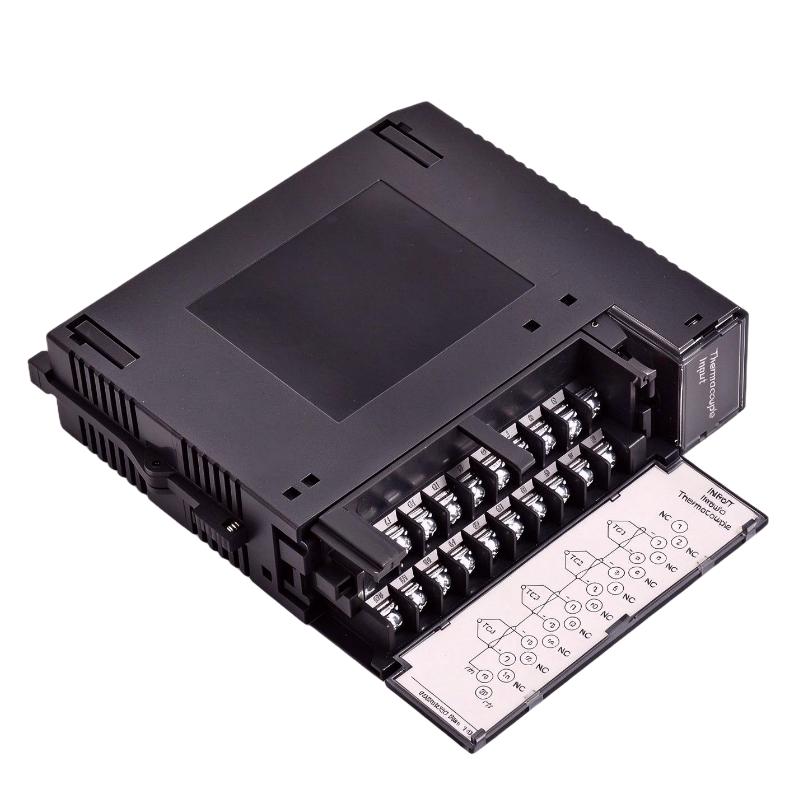
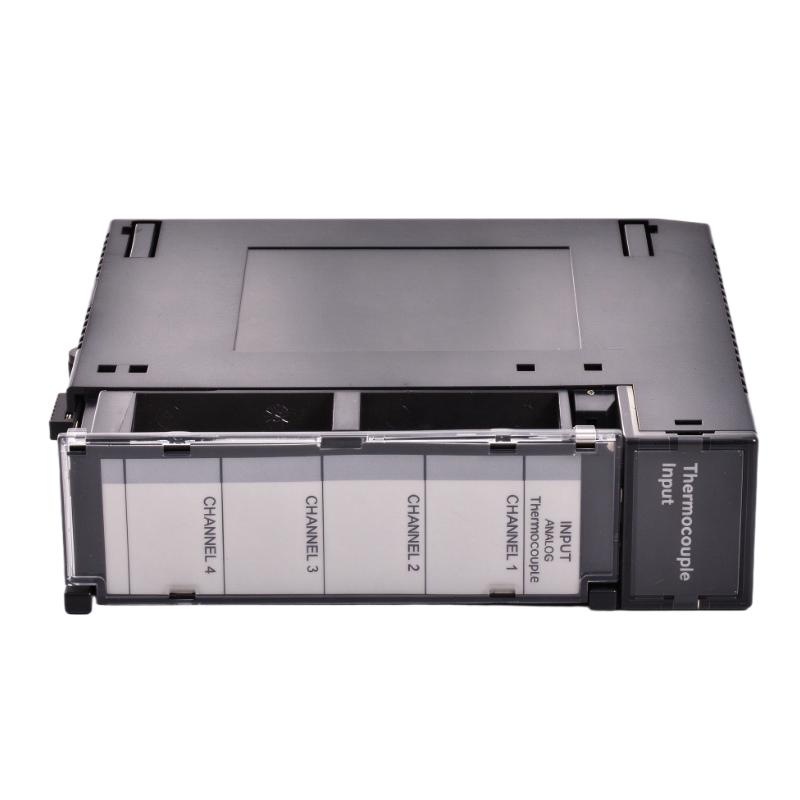
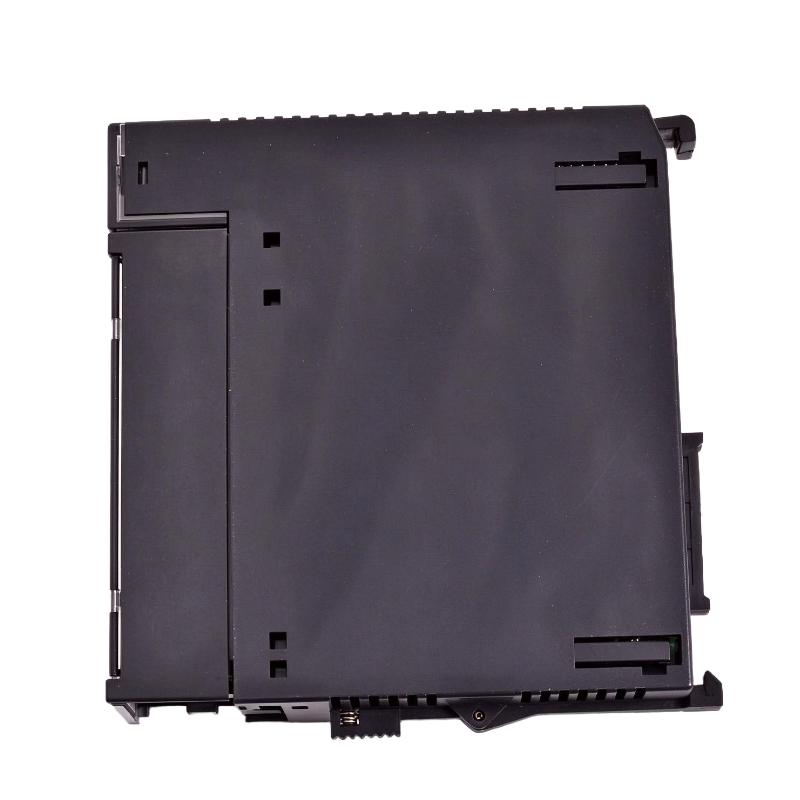
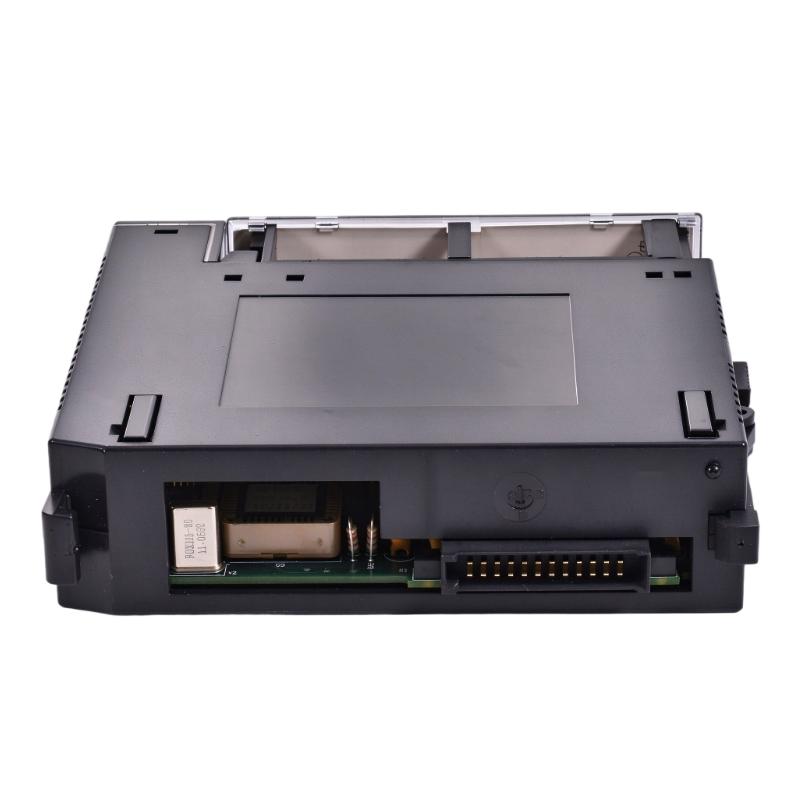
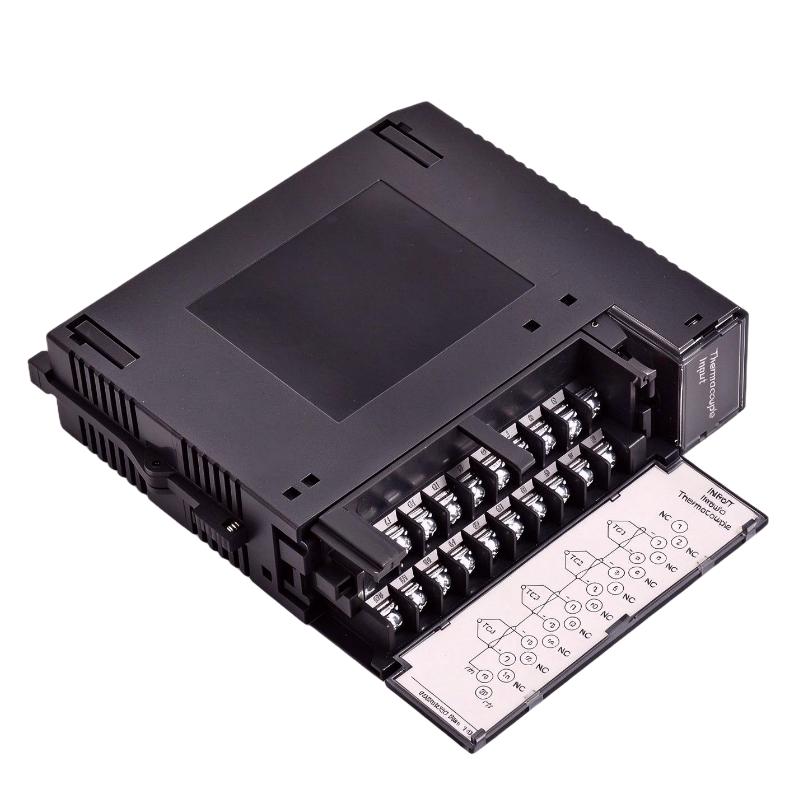
The GE HE693THM449C Thermocouple Input Module is an industrial temperature measurement module designed for use with compatible GE Fanuc Series 90-30 programmable logic controller systems. It provides an interface between thermocouple sensors installed in industrial equipment and the PLC, allowing temperature signals to be acquired, processed, and used in automated control applications.
Thermocouples are widely used in industrial environments because they can measure temperature across a broad operating range and are suitable for many types of machinery and processes. However, their output is a relatively small electrical signal that requires appropriate signal conditioning and conversion before a controller can use it. The HE693THM449C performs this thermocouple input processing within the PLC system.
This module provides four thermocouple input channels and supports several common thermocouple types, including J, K, N, T, E, R, and S. Each channel can be configured for the required sensor type, allowing the module to accommodate different temperature measurement points within an industrial installation.
The module offers a resolution of 0.5°C or 0.5°F and provides open-circuit detection and alarm information. These functions help operators and control systems identify abnormal sensor conditions that may affect temperature monitoring.
The HE693THM449C is suitable for applications where temperature information is required for process supervision, equipment protection, heating control, or production monitoring. Its integration with a compatible Series 90-30 PLC allows temperature measurements to become part of the wider automation strategy.
Technical Specifications
| Parameter | Specification |
|---|---|
| Brand | GE Fanuc |
| Manufacturer | GE Intelligent Platforms / legacy GE Fanuc product line |
| Model | HE693THM449C |
| Product Type | Thermocouple Input Module |
| Product Series | Series 90-30 |
| Number of Input Channels | 4 |
| Supported Thermocouple Types | J, K, N, T, E, R, S |
| Resolution | 0.5°C or 0.5°F |
| Typical Accuracy | ±0.5°C for J, K, N, and T types |
| A/D Conversion Type | Integrating |
| A/D Conversion Rate | 40 channels per second |
| Open-Circuit Detection | Supported |
| Open-Circuit Alarm | Supported |
| Channel-to-Channel Isolation | Not specified in the referenced catalog data |
| Backplane Slot Requirement | 1 slot |
| PLC System | Compatible GE Fanuc Series 90-30 systems |
| Connector | 20-screw terminal block |
| Internal Power Consumption | 80 mA at 5 V DC; 60 mA at 24 V DC relay supply |
| Dimensions Provided | 145 × 34 × 140 mm |
| Weight Provided | 0.25 kg |
| Typical Application | Industrial temperature monitoring and process control |
Note: Specifications are based on published information for the HE693THM449 model family. Confirm the exact suffix, revision, terminal arrangement, and applicable hardware documentation for the HE693THM449C before installation.
Function and Working Principle
The HE693THM449C receives low-level electrical signals from thermocouple sensors and converts them into temperature information that can be processed by a compatible PLC.
Its operation involves several stages, from sensor signal acquisition to digital conversion and controller communication.
1. Thermocouple Signal Acquisition
A thermocouple consists of two dissimilar conductive materials joined at a measuring junction. When the measuring junction and reference junction are at different temperatures, the thermocouple produces a small voltage related to the temperature difference.
The module receives this signal through its input terminals. Because thermocouple signals are relatively small, reliable wiring and suitable electrical installation practices are important for accurate measurements.
The HE693THM449C supports seven common thermocouple types:
- Type J
- Type K
- Type N
- Type T
- Type E
- Type R
- Type S
Different thermocouple types have different temperature characteristics. The sensor type configured in the module must match the actual field sensor.
2. Signal Processing and Analog-to-Digital Conversion
After receiving the thermocouple signal, the module performs the required analog and digital processing. Its integrating analog-to-digital conversion method is used to convert the incoming measurement signal into digital information.
The published conversion rate is 40 channels per second. With four input channels, this provides temperature acquisition for multiple measurement points within the same PLC installation.
The resulting digital values can be transferred to the controller for use in monitoring, alarms, calculations, and control logic.
3. Temperature Resolution
The HE693THM449C provides a resolution of 0.5°C or 0.5°F. Resolution describes the smallest measurement increment represented by the module; it should not be confused with measurement accuracy.
Published catalog data lists typical accuracy of ±0.5°C for J, K, N, and T thermocouple types. Accuracy can vary according to sensor type and operating conditions.
For applications requiring tighter temperature tolerances, engineers should evaluate the complete measurement chain, including the thermocouple, wiring, reference-junction compensation, installation conditions, and controller configuration.
4. Open-Circuit Detection and Alarm
A thermocouple circuit may become disconnected because of damaged wiring, loose terminals, sensor failure, or maintenance work.
The module supports open-circuit detection and alarm information. This helps the control system distinguish an abnormal sensor connection from an ordinary temperature change.
PLC logic can use this information to generate an alarm, flag an invalid measurement, or initiate an appropriate process response.
5. Cold-Junction Compensation Considerations
Thermocouple measurements depend on the temperature difference between the measuring junction and the reference junction. Appropriate cold-junction compensation is therefore necessary for meaningful temperature conversion.
The Series 90-30 thermocouple module documentation describes the use of an external AD592 cold-junction compensation feature in the thermocouple input module family. The precise compensation arrangement should be verified for the installed HE693THM449C configuration and its associated accessories.
Role in Industrial Control Systems
The HE693THM449C serves as the temperature acquisition interface in a PLC-based automation system. It connects field thermocouples with controller logic, enabling temperature measurements to be used in industrial process supervision and control.
PLC Temperature Monitoring
The module supplies temperature information to the compatible PLC. The controller can use the values to monitor process conditions, compare measurements against configured limits, and coordinate other equipment.
For example, a PLC may monitor several temperature points in a production machine and generate an alarm when one measurement moves outside its permitted range.
Process Alarm Management
Temperature alarms are important in applications where excessive or insufficient temperature can affect product quality, machine performance, or operational safety.
The module’s open-circuit detection can also help identify sensor wiring problems. PLC programming can use these diagnostic signals to notify operators and support troubleshooting.
Heating and Cooling Control
Temperature values can be used as feedback for heating or cooling processes. A PLC may compare the measured temperature with a target value and control heaters, fans, cooling valves, or other actuators.
The module provides the measurement input; the actual control strategy is implemented by the PLC program and associated control equipment.
Integration with Operator Interfaces
A human-machine interface can display temperature values, alarms, trends, and operating status. The PLC processes the input information and communicates relevant data to the operator interface.
This allows maintenance and production personnel to observe temperature conditions without directly accessing the field sensors or module terminals.
Industrial Applications
The HE693THM449C can be used in industrial installations where thermocouple-based temperature monitoring is required. Its four-channel design supports several measurement points within a compatible PLC system.
1. Industrial Heating Equipment
Industrial ovens, heating chambers, and thermal processing machines require temperature monitoring to maintain consistent operating conditions.
The module can acquire thermocouple signals from selected measurement locations. The PLC can use these values to monitor heating performance and coordinate heating elements or related equipment.
2. Manufacturing Process Monitoring
Many manufacturing processes depend on stable temperature conditions. Temperature measurements may be required for material processing, equipment supervision, or product quality monitoring.
The HE693THM449C can provide input data for PLC-based monitoring systems, helping operators identify temperature deviations during production.
3. Furnace and Thermal Equipment Monitoring
Furnaces and other thermal systems may use multiple thermocouples to monitor different zones or equipment locations.
The module’s four input channels allow several measurement points to be connected to one input module, provided the sensors and system configuration are compatible.
4. Packaging and Processing Machinery
Certain packaging and processing machines use heating elements for sealing, forming, drying, or material treatment. Temperature feedback helps maintain the required process conditions.
The module can supply temperature measurements to the PLC, which can coordinate heating outputs and generate alarms when sensor readings are abnormal.
5. Industrial Utility Systems
Boilers, heat exchangers, industrial ventilation systems, and other utility equipment may require temperature monitoring at selected locations.
Thermocouple signals acquired through the module can be incorporated into PLC logic for equipment supervision and operational reporting.
Installation and System Integration
Correct installation is essential for reliable temperature measurement. Thermocouple signals are relatively small, so wiring practices, sensor configuration, grounding, and environmental conditions can influence measurement quality.
1. Verify PLC Compatibility
Before installation, confirm that the HE693THM449C is compatible with the target GE Fanuc Series 90-30 PLC configuration.
Check the controller hardware, rack or backplane arrangement, module revision, and available I/O configuration. The module family is documented as occupying one slot, but the exact installation requirements should be checked against the applicable system manual.
2. Confirm Thermocouple Type
Each input channel must be configured for the correct thermocouple type.
For example, a Type K sensor must not be configured as Type J. Incorrect sensor configuration can produce inaccurate temperature values even when the wiring is physically correct.
Record the sensor type and measurement location for each channel during commissioning.
3. Use Appropriate Thermocouple Wiring
Use thermocouple extension or compensation wire appropriate for the sensor type and installation conditions.
Incorrect cable materials, unsuitable connections, or poor terminal contact can introduce measurement errors. Keep thermocouple wiring away from high-voltage power conductors and sources of electromagnetic interference where practical.
4. Check Terminal Connections
The documented module configuration uses a 20-screw terminal block. Inspect the terminal block for damaged contacts, loose screws, corrosion, and incorrect wiring.
Verify terminal assignments using the applicable wiring diagram rather than relying on assumptions based on another module in the same product family.
5. Verify Reference-Junction Compensation
Confirm the required cold-junction compensation arrangement for the installed module and sensor wiring.
Incorrect compensation can cause systematic temperature measurement errors. Follow the manufacturer’s documentation for the required accessories and wiring arrangement.
6. Configure PLC Logic
After installation, configure the PLC program to read the module’s input data and diagnostic information.
The control program may include:
- Temperature value scaling and display.
- High-temperature and low-temperature alarms.
- Open-circuit fault handling.
- Sensor validity checks.
- Heating and cooling control logic.
- Historical temperature recording.
The exact data addresses and configuration parameters depend on the controller and software version.
7. Perform Commissioning Tests
Before returning the system to production, verify that all four channels operate correctly.
Compare module readings with an appropriate reference instrument, check sensor polarity and wiring, and test the open-circuit diagnostic response where permitted by the maintenance procedure.
Record the configured thermocouple types, channel assignments, compensation arrangement, and alarm thresholds.
Compatible System Components
The HE693THM449C works as part of a temperature measurement and PLC control arrangement. The following components may be used in a compatible installation.
| Component | Function | Integration Considerations |
|---|---|---|
| GE Fanuc Series 90-30 PLC | Processes temperature data and executes control logic | Confirm CPU and rack compatibility |
| Thermocouple sensors | Measure process temperature | Select compatible J, K, N, T, E, R, or S sensors |
| Thermocouple extension wire | Connects sensors to the module | Match the thermocouple type and wiring requirements |
| 20-screw terminal block | Provides field wiring connections | Verify the correct terminal arrangement |
| Cold-junction compensation accessory | Supports accurate thermocouple measurement | Confirm the compensation method required by the module |
| PLC power supply | Supplies system operating power | Verify available backplane power capacity |
| HMI | Displays temperature values and alarms | Configure PLC communication and display logic |
| Heating controller or output module | Controls heating equipment | Coordinate output logic with measured temperatures |
| Cooling equipment | Regulates process temperature | Use appropriate PLC control and interlocks |
| Industrial control cabinet | Protects and organizes control equipment | Maintain suitable temperature and environmental conditions |
These are system-level components and are not necessarily included with the HE693THM449C module.
Alternative Models and Replacement Considerations
When maintaining a legacy Series 90-30 system, replacement selection should be based on the complete module specifications rather than the product description alone.
| Model | Description | Replacement Considerations |
|---|---|---|
| HE693THM449 | Four-channel thermocouple input module | Closely related base model; verify suffix and revision |
| HE693THM409 | Four-channel thermocouple input module | Similar sensor types and resolution, but diagnostic features differ |
| HE693THM166 | 16-channel thermocouple input module | Higher channel density and broader sensor-type support |
| HE693THM665 | Enhanced thermocouple input module | Six channels with additional features, including isolation |
| HE693THM666 | Enhanced thermocouple input module | Six-channel isolated configuration with a 60 Hz notch filter |
A replacement should be checked for:
- Number of thermocouple input channels.
- Supported thermocouple types.
- Resolution and accuracy.
- Open-circuit detection and alarm behavior.
- Cold-junction compensation requirements.
- Terminal block and wiring compatibility.
- Backplane and PLC compatibility.
- I/O address allocation and PLC program changes.
- Power consumption and installation requirements.
A module with the same number of channels is not necessarily a direct replacement. Differences in diagnostics, isolation, sensor configuration, and data representation may require changes to the PLC program or wiring.
Key Advantages
Four Independent Thermocouple Inputs
The module supports four temperature measurement channels, allowing several sensors to be connected within one PLC installation.
Multiple Thermocouple Types
Support for J, K, N, T, E, R, and S sensors provides flexibility for different industrial temperature measurement requirements.
Integrated Signal Processing
The module performs analog and digital processing of thermocouple signals, allowing the PLC to use the resulting measurement data.
Open-Circuit Diagnostics
Open-circuit detection and alarm information help identify sensor wiring problems and support maintenance troubleshooting.
Practical Temperature Resolution
The 0.5°C or 0.5°F resolution supports temperature monitoring in a range of industrial process applications.
Series 90-30 Integration
The module is designed for compatible GE Fanuc Series 90-30 systems, allowing temperature acquisition to be incorporated into an established PLC architecture.
Compact Module Format
Its supplied dimensions of 145 × 34 × 140 mm and weight of 0.25 kg make it suitable for installation in compatible industrial control equipment.
Technical FAQs
1. What is the GE HE693THM449C?
The HE693THM449C is a thermocouple input module designed for compatible GE Fanuc Series 90-30 PLC systems. It receives thermocouple signals and converts them into temperature information for controller processing.
2. How many input channels does the module provide?
The module provides four thermocouple input channels.
3. Which thermocouple types are supported?
The documented HE693THM449 family supports J, K, N, T, E, R, and S thermocouple types.
4. What is the resolution of the HE693THM449C?
The published resolution is 0.5°C or 0.5°F.
5. Does the module support open-circuit detection?
Yes. The HE693THM449 family documentation lists open-circuit detection and alarm functionality, which can help identify disconnected or faulty thermocouple circuits.
6. Can different thermocouple types be connected to the same module?
The module documentation indicates that each channel can be configured for a specific sensor type. The actual sensor type and channel configuration must be checked during installation.
7. Is cold-junction compensation required?
Yes. Thermocouple measurement requires appropriate reference-junction compensation. Verify the required compensation arrangement and accessories for the exact module configuration.
8. Is the HE693THM449C compatible with every GE PLC?
No. It is associated with the GE Fanuc Series 90-30 product family. Compatibility with other PLC families should not be assumed.
9. What is the difference between HE693THM449 and HE693THM409?
Both are four-channel thermocouple input modules supporting several common thermocouple types. The published catalog data lists open-circuit alarm functionality for the HE693THM449, while the HE693THM409 does not list the same alarm feature. Confirm the exact hardware revision before replacement.
10. What should be checked before purchasing?
Verify the complete model number, suffix, revision, terminal block, physical condition, and compatibility with the installed Series 90-30 system. For used equipment, request clear photographs and available functional test information.
Procurement and Maintenance Recommendations
The HE693THM449C is a legacy industrial automation component. Before purchasing, compare the full catalog number printed on the module with the equipment documentation and the installed PLC configuration.
For replacement projects, verify the number of input channels, supported thermocouple types, diagnostic functions, resolution, and terminal arrangement. A similar-looking thermocouple input module may have different electrical characteristics or software requirements.
For used or surplus equipment, inspect the terminal block, connector contacts, housing, and circuit board condition. Check for signs of corrosion, overheating, physical damage, or unauthorized repair. Where possible, request a functional test using compatible thermocouple signals.
During routine maintenance, inspect thermocouple wiring and terminal connections. Confirm that sensor types are configured correctly and that reference-junction compensation is operating as intended. Periodically compare temperature readings against an appropriate calibrated reference instrument when process accuracy is important.
Keep a record of module revisions, PLC configuration, channel assignments, sensor types, and alarm settings. This information can simplify troubleshooting and reduce commissioning time when a module is replaced.
Conclusion
The GE HE693THM449C Thermocouple Input Module provides four-channel temperature acquisition for compatible GE Fanuc Series 90-30 PLC systems. Supporting J, K, N, T, E, R, and S thermocouple types, it offers 0.5°C or 0.5°F resolution, integrating analog-to-digital conversion, and open-circuit detection with alarm functionality.
Its role in industrial automation is to convert field temperature measurements into information that a PLC can use for process monitoring, alarm management, and temperature-related control strategies.
For maintenance and replacement applications, confirming the exact suffix, sensor configuration, terminal arrangement, and PLC compatibility is essential. Proper thermocouple wiring and reference-junction compensation are also important for achieving reliable temperature measurements.