

ProductPRODUCT
Featured products
Contact Us
- GE
- 8707-CA-08
- 8 Module Carrier
- USA
- 185 × 30 × 120 mm
- 0.6 kg
- Xiamen, China
- New & In Stock
- T/T, PayPal, Western Union
- 1 Year
- 1-3 Working Days
- DHL, UPS, TNT, FedEx and EMS.
- 24-Hour Service
- COO
- 4
Our advantage

Global Logistics
We have a 10-year logistics and express cooperation agreement, so our products can be shipped to any place in the world.

Brand new and original
Our products are imported in bulk from the place of origin. Because of the cooperative relationship, our products are all original and 100% new.

24-hour service
We provide 7*24 hours service to our customers. We will be there whenever you need us.

Price advantage
All our products are priced very favorably because we have our own warehouse and supply.
| Company Information | |||
| [email protected] | |||
| Mobile | +8615980777398 | ||
| +8615980777398 | |||
| 15980777398 |
Product Overview
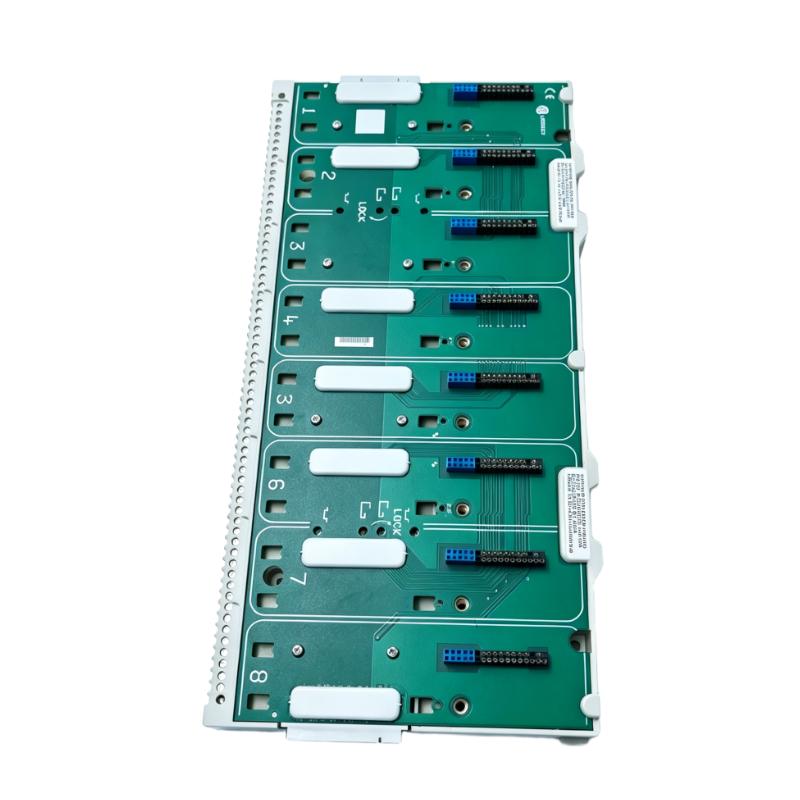
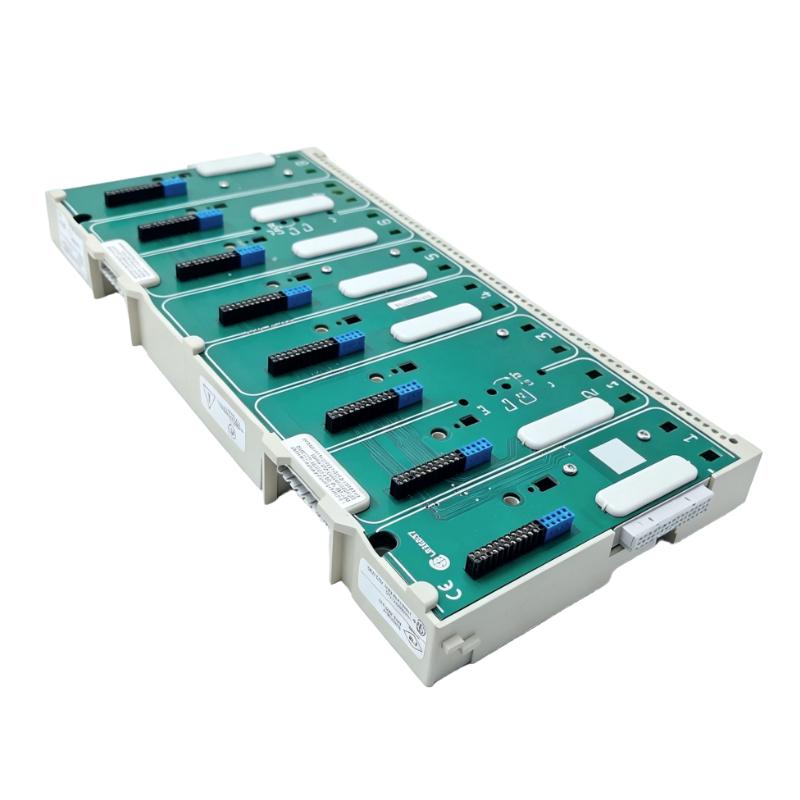
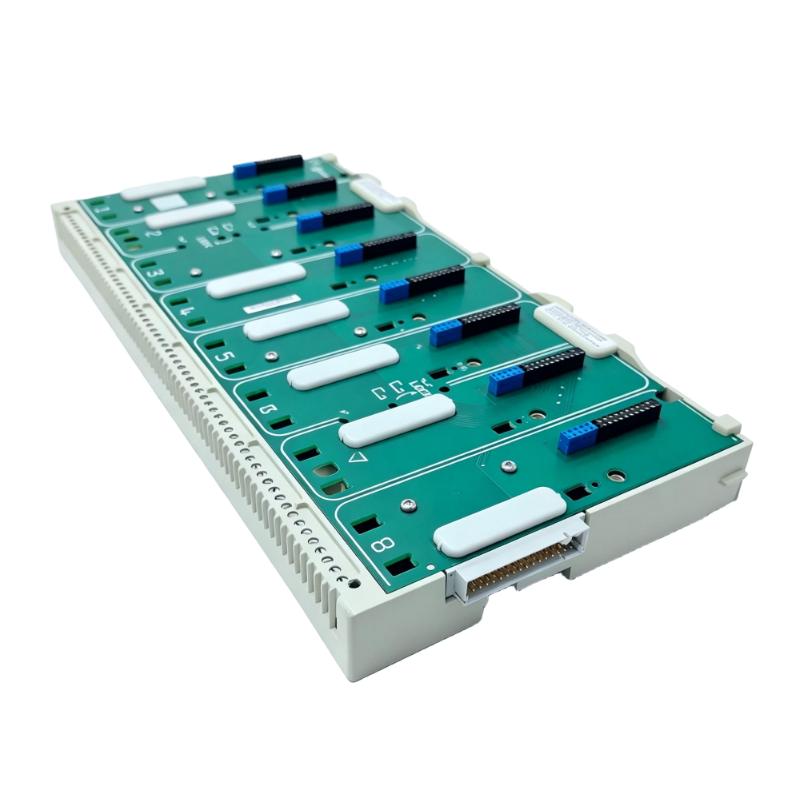
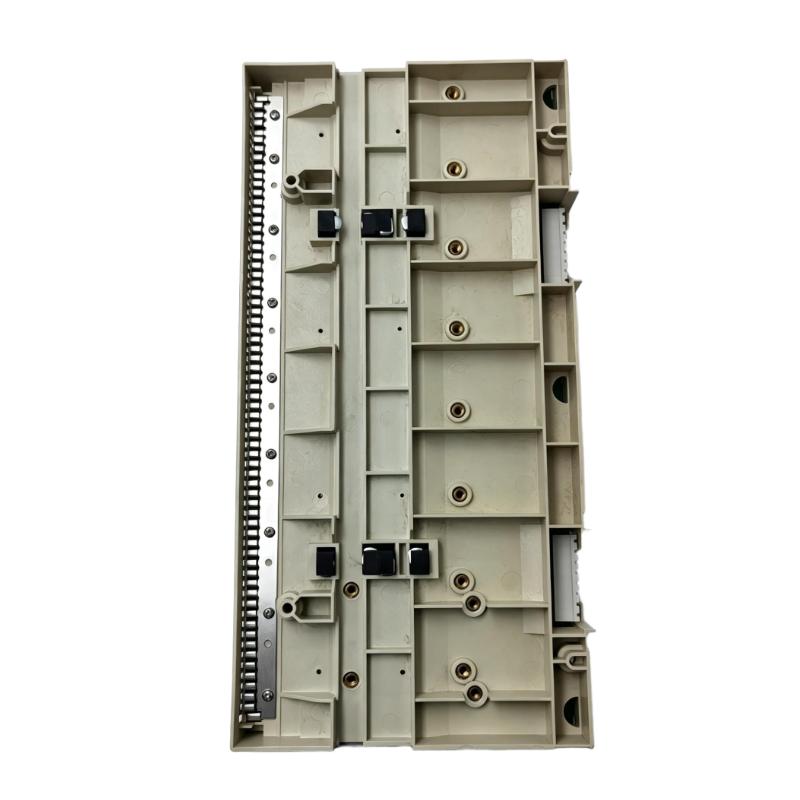
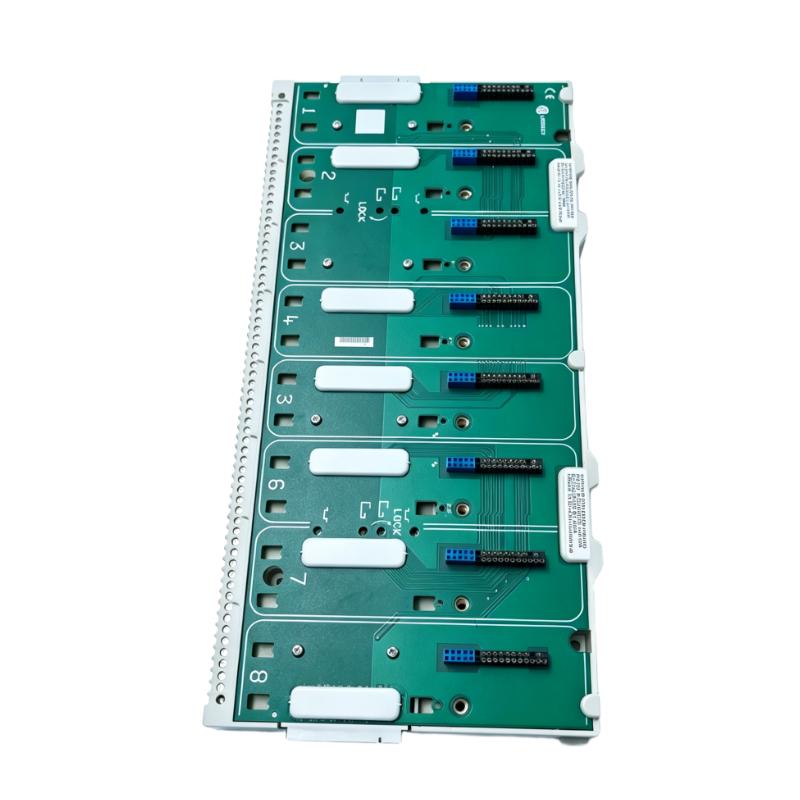
The GE 8707-CA-08 is a PAC8000 8 Module Carrier used to provide the physical mounting and interconnection structure for PAC8000 I/O modules. Rather than processing field signals itself, the carrier establishes the mechanical and electrical interface required for installing multiple PAC8000 modules as part of a distributed I/O station.
In a PAC8000 control cabinet, the carrier forms the base of the I/O assembly. Individual modules are installed on the carrier and connected through the carrier’s internal interface, creating an organized module arrangement for field signal acquisition and control output functions.
For panel builders and maintenance technicians, the carrier is important when expanding, replacing, or reorganizing PAC8000 I/O stations. A properly installed carrier keeps the module arrangement consistent and provides the connection infrastructure required by the installed I/O hardware.
Technical Specifications
| Parameter | Specification |
|---|---|
| Product Model | 8707-CA-08 |
| Product Type | 8 Module Carrier |
| Series | PAC8000 |
| Module Capacity | 8 Modules |
| Dimensions | 185 × 30 × 120 mm |
| Weight | 0.6 kg |
Product Features
- 8-module mounting capacity — Provides a common carrier structure for installing up to eight compatible PAC8000 modules.
- PAC8000 system integration — Forms part of the distributed I/O hardware arrangement used by the PAC8000 platform.
- Module interconnection — Provides the physical interface through which installed I/O modules connect within the station.
- Structured I/O layout — Keeps multiple I/O modules arranged in a defined cabinet or field-station configuration.
- Expansion support — Suitable for building out a PAC8000 I/O station where additional module positions are required.
- Serviceable architecture — A carrier-based arrangement allows individual modules to be serviced without redesigning the overall mounting structure.
Working Principle
The 8707-CA-08 functions as the mounting and interconnection foundation for a group of PAC8000 modules. Compatible modules are positioned on the carrier, where their mechanical mounting and electrical interface are established through the carrier assembly.
During operation, the carrier itself does not execute application logic or independently acquire process signals. The installed I/O modules perform their respective input or output functions, while the carrier maintains the common physical connection between those modules and the rest of the PAC8000 I/O station.
When commissioning a new station, the carrier provides a consistent location for module installation and wiring organization. During maintenance, technicians can identify an individual module by its position on the carrier and investigate the module, field wiring, or upstream system connection separately.
Role in a PAC8000 Distributed I/O Control Architecture
| Architecture Layer | Role of 8707-CA-08 |
|---|---|
| Field Devices | Generate or receive process signals through connected I/O modules |
| Field Wiring | Carries signals between field equipment and the I/O station |
| PAC8000 I/O Modules | Perform the actual signal input/output functions |
| 8707-CA-08 Carrier | Mounts and interconnects the installed I/O modules |
| PAC8000 I/O Station | Groups field interfaces into a structured distributed I/O assembly |
| Controller / Control Network | Exchanges process data and control information with the I/O station |
The carrier therefore occupies the infrastructure layer of the PAC8000 I/O architecture. Its purpose is to support the I/O modules that perform the actual field signal functions.
Industrial Applications
| Application | Typical Use |
|---|---|
| Process Automation | Building PAC8000 distributed I/O stations for plant instrumentation |
| Oil & Gas Facilities | Organizing field I/O modules within remote or local control panels |
| Chemical Processing | Providing a structured mounting base for process I/O |
| Power and Utilities | Supporting grouped I/O modules for equipment monitoring and control |
| Manufacturing Systems | Installing multiple PAC8000 modules in a centralized or distributed station |
| Remote I/O Panels | Creating an organized module assembly close to field equipment |
| System Expansion | Adding compatible I/O modules within an existing PAC8000 architecture |
Installation and Maintenance
- Verify carrier compatibility — Confirm that the 8707-CA-08 is appropriate for the intended PAC8000 module arrangement.
- Review the system layout — Check the I/O station drawings and module allocation before mounting the carrier.
- Prepare the mounting location — Ensure that the panel or enclosure provides the required support and installation clearances.
- Secure the carrier — Mount the carrier according to the applicable PAC8000 installation procedure.
- Inspect the interface — Check the carrier’s module connection areas for contamination, physical damage, or foreign material.
- Identify module positions — Maintain the documented order of installed I/O modules to simplify commissioning and maintenance.
- Install compatible modules — Confirm each module is intended for use with the carrier before installation.
- Check module seating — Make sure each installed module is fully engaged with the carrier interface.
- Verify station connections — Inspect the connections between the carrier assembly, installed modules, and associated system hardware.
- Perform commissioning checks — Verify module identification and I/O operation against the system configuration.
- Inspect during maintenance — If an individual I/O point becomes unavailable, check the affected module and its carrier connection before replacing the complete assembly.
- Document changes — Record module additions, removals, position changes, and carrier replacement in the current system documentation.
Related Components
| Component | Relationship |
|---|---|
| PAC8000 I/O Modules | Installed directly as part of the carrier-based I/O assembly |
| PAC8000 I/O Station | Uses the carrier to organize multiple I/O modules |
| Field Wiring | Connects field devices with the installed I/O modules |
| PAC8000 Controller | Exchanges control and process information with the distributed I/O system |
| Control Network | Provides communication between the I/O station and control-system equipment |
| Cabinet / Panel Hardware | Provides the physical installation environment for the carrier assembly |
Recommended Related Models
| Model | Product Type | Application Relationship |
|---|---|---|
| GE 8707-CA-08 | PAC8000 8 Module Carrier | Provides the carrier structure for an eight-module PAC8000 I/O arrangement |
| GE PAC8000 I/O Modules | PAC8000 I/O Modules | Installed on the carrier for field signal interfacing |
| GE PAC8000 Controller | PAC8000 Controller | Provides control-system processing for the associated distributed I/O |
| GE PAC8000 Communication Modules | PAC8000 Communication Module | Supports communication within the PAC8000 control architecture |
| GE PAC8000 Termination Hardware | PAC8000 Termination Hardware | Provides the field-side connection arrangement for compatible I/O installations |
Key Advantages
- Provides mounting infrastructure for up to eight compatible PAC8000 modules.
- Creates an organized I/O station layout.
- Supports the physical interconnection of installed PAC8000 modules.
- Simplifies module identification and service work.
- Suitable for PAC8000 distributed I/O expansion and panel construction.
- Separates the carrier infrastructure from the signal-processing functions performed by individual modules.
Technical FAQs
What is the primary function of the GE 8707-CA-08?
The 8707-CA-08 is an 8 Module Carrier for the GE PAC8000 platform. Its primary function is to provide the mounting and interconnection structure for compatible PAC8000 I/O modules.
Does the 8707-CA-08 process field signals?
No. The carrier is infrastructure hardware rather than an independent I/O processing module. Signal acquisition, output, or other application-specific functions are performed by the compatible PAC8000 modules installed on the carrier.
How many modules can be installed on the 8707-CA-08?
The model designation identifies it as an 8 Module Carrier, providing positions for up to eight compatible PAC8000 modules. The actual station configuration should follow the applicable PAC8000 hardware and system documentation.
What should be checked if a PAC8000 module is not communicating correctly?
First verify that the affected module is correctly seated on the carrier and that its associated connections are intact. The module itself, carrier interface, station connections, and system configuration can then be checked in sequence to isolate the source of the communication or I/O problem.