

ProductPRODUCT
Featured products
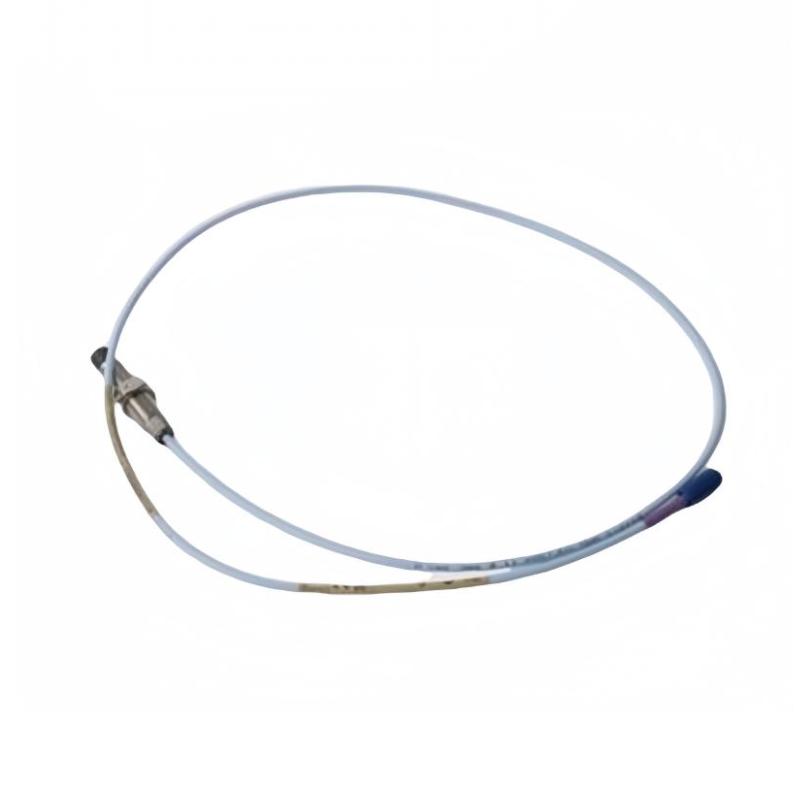
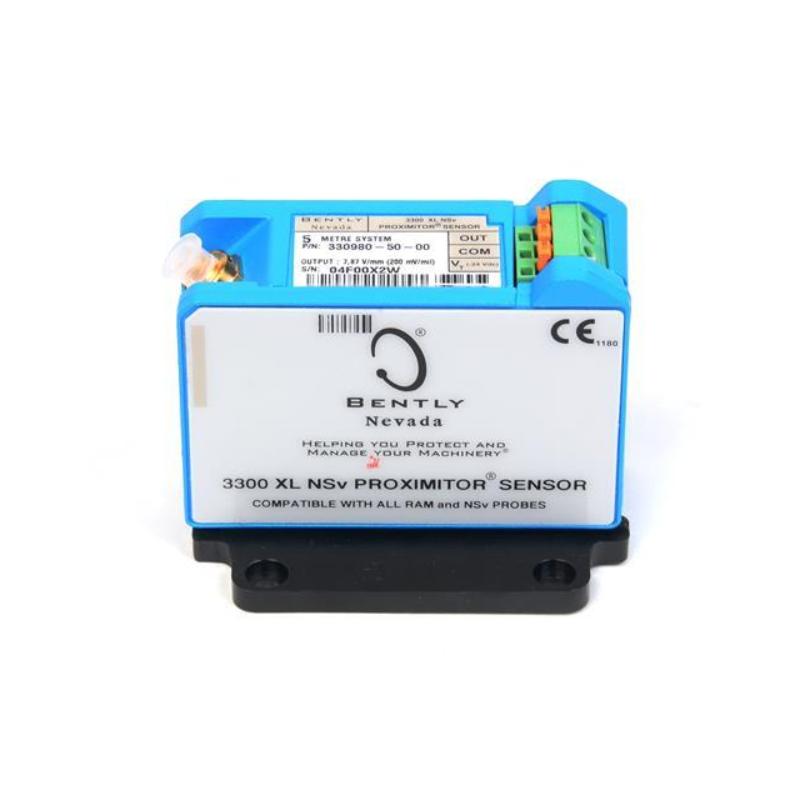
Contact Us
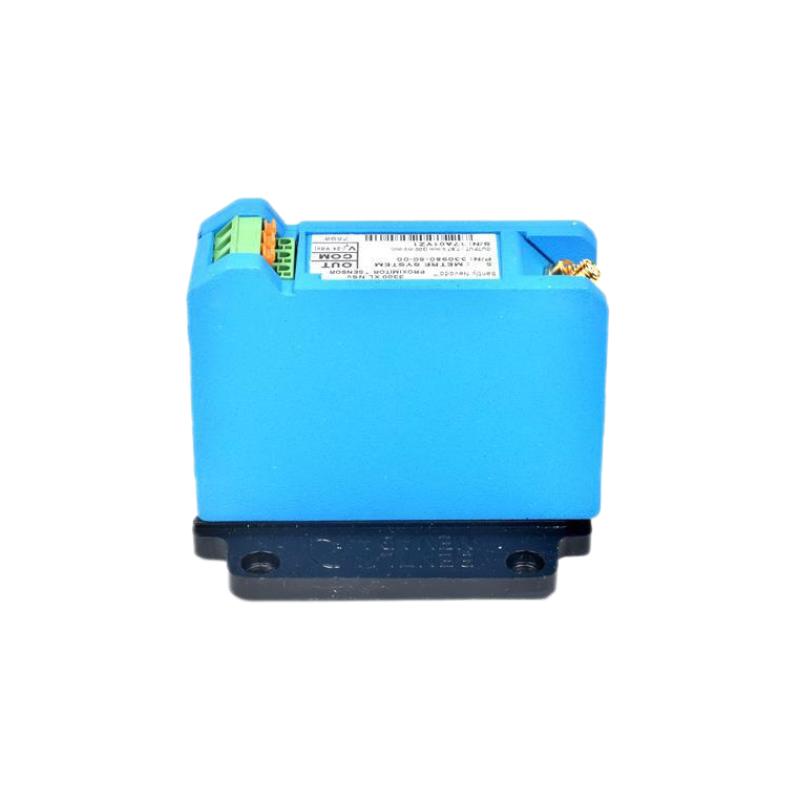
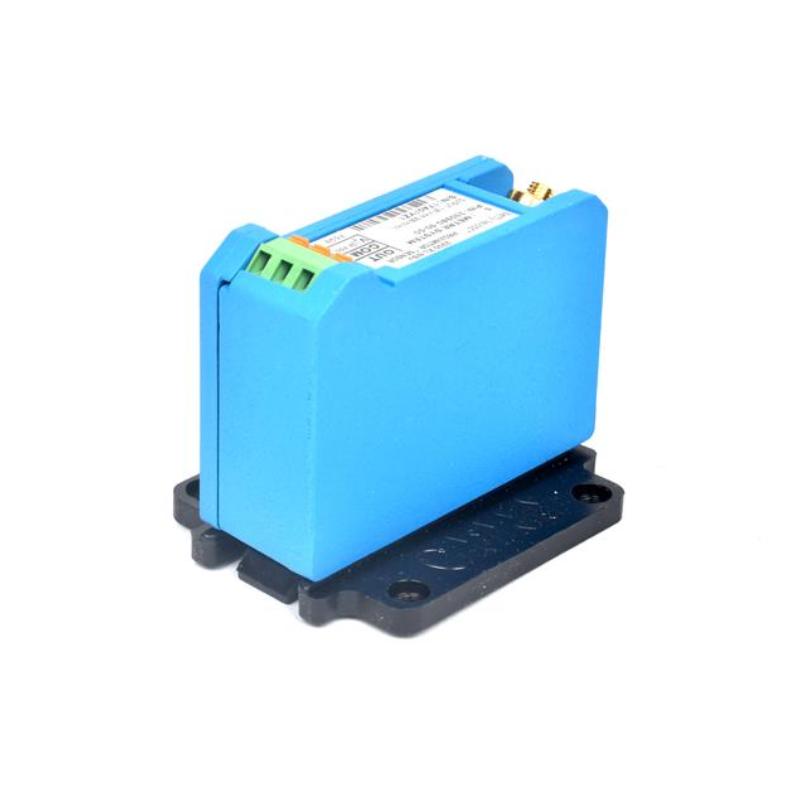
- Bently Nevada
- 350610-01-05
- Temperature Monitors
- USA
- 81.3 × 35.1 × 63.5 mm
- 0.25kg
- Xiamen, China
- New & In Stock
- T/T, PayPal, Western Union
- 1 Year
- 1-3 Working Days
- DHL, UPS, TNT, FedEx and EMS.
- 24-Hour Service
- COO
- 4
Our advantage

Global Logistics
We have a 10-year logistics and express cooperation agreement, so our products can be shipped to any place in the world.

Brand new and original
Our products are imported in bulk from the place of origin. Because of the cooperative relationship, our products are all original and 100% new.

24-hour service
We provide 7*24 hours service to our customers. We will be there whenever you need us.

Price advantage
All our products are priced very favorably because we have our own warehouse and supply.
| Company Information | |||
| [email protected] | |||
| Mobile | +8615980777398 | ||
| +8615980777398 | |||
| 15980777398 |

Bently Nevada 350610-01-05 Product Specifications, Technical Overview, Applications, Advantages, and Related Models
1. Product Overview
The Bently Nevada 350610-01-05 is the model number specified for this product inquiry. Bently Nevada is a brand associated with industrial machinery condition monitoring, vibration measurement, and rotating equipment protection. Its product portfolio is used in industrial environments where continuous monitoring of machinery condition is important for operational reliability, maintenance planning, and equipment protection.
For industrial procurement and technical evaluation, identifying the exact product configuration is essential. A model number may identify a particular hardware assembly, product variant, or configuration within a broader monitoring system. Before using this unit as a replacement for an installed component, its full part number, hardware revision, electrical interface, mounting arrangement, and compatibility with the existing monitoring system should be confirmed.
Technical data note: The exact manufacturer-defined product description, dimensions, and net weight for part number 350610-01-05 cannot be reliably established from the model number alone in this offline response. The following overview distinguishes general application information from specifications that require confirmation. Unverified dimensions, weights, and electrical ratings are not presented as confirmed facts.
2. Detailed Product Parameters
The model is identified as an Acceleration Interface Module associated with industrial machinery monitoring. Its intended role is related to acceleration-signal interfacing in compatible vibration measurement arrangements.
2.1 Basic Technical Specifications
| Parameter | Specification |
|---|---|
| Brand | Bently Nevada |
| Model Number | 350610-01-05 |
| Product Name | Acceleration Interface Module |
| Product Category | Industrial instrumentation and machinery condition monitoring |
| Product Series | 350610 acceleration interface product family |
| Primary Function | Acceleration signal interfacing |
| Application | Compatible machinery monitoring and vibration measurement installations |
| Signal Type | Acceleration-related instrumentation signals; exact interface details require confirmation |
| Input Channels | Not independently verified for this exact part number |
| Output Signal | Not independently verified for this exact part number |
| Operating Voltage | Not independently verified for this exact part number |
| Power Consumption | Not independently verified for this exact part number |
| Operating Temperature | Not independently verified for this exact part number |
| Storage Temperature | Not independently verified for this exact part number |
| Communication Interface | Not independently verified for this exact part number |
| Mounting Method | Must be confirmed against the installed system and product drawing |
| Dimensions (mm) | 81.3 × 35.1 × 63.5 mm; reported physical dimensions, subject to part-number confirmation |
| Weight (kg) | 0.246 kg; reported net weight, subject to part-number confirmation |
| Installation Environment | Industrial instrumentation environment, subject to applicable system requirements |
| Replacement Requirements | Confirm complete part number, electrical interface, hardware revision, and system compatibility |
The dimensions and weight above are reported for the identified model in product information, but they should be verified against the physical unit or its applicable technical documentation before being used for engineering drawings, cabinet design, or shipping calculations.
2.2 Parameter Interpretation
Product identification: The complete designation 350610-01-05 should be used for procurement and inventory control. The suffix must not be ignored because different suffixes can represent different hardware configurations, options, or approvals.
Measurement interface: An acceleration interface module is associated with the instrumentation path between an acceleration measurement device and compatible monitoring equipment. The precise input characteristics, conditioning function, output format, and allowable electrical limits must be checked before connection.
Physical installation: A reported size of 81.3 × 35.1 × 63.5 mm indicates a compact component. However, the actual installation envelope may also depend on terminal access, connectors, mounting hardware, cable bend radius, and enclosure clearance.
Weight: The reported net weight is 0.246 kg. Packaging, protective materials, accessories, and any separate mounting components are not included unless specifically stated in the applicable packing specification.
Electrical compatibility: Voltage, current, sensor excitation, signal sensitivity, impedance, grounding, and intrinsic-safety requirements must not be inferred from the model number. These details are particularly important when replacing an existing module in an operating machinery protection system.
3. Product Introduction
The Bently Nevada 350610-01-05 is identified as an acceleration interface module intended for industrial instrumentation and machinery condition monitoring applications.
In rotating machinery installations, vibration measurement is an important part of equipment condition assessment. Bearings, shafts, gear assemblies, couplings, and other mechanical components can develop abnormal operating conditions that produce changes in vibration or acceleration signals. Properly selected instrumentation allows these signals to be measured and delivered to a compatible monitoring arrangement for evaluation.
An acceleration interface component serves a role within this measurement chain. Depending on its specific design, an interface module may provide the electrical connection or signal-handling functions required between the measurement device and the associated monitoring equipment. The precise functions of this particular part number must be established from its applicable configuration documentation.
3.1 Role in an Industrial Monitoring System
A typical machinery monitoring arrangement may include several connected elements:
– Measurement device: Detects a physical condition such as acceleration or vibration.
– Signal interface: Provides the required electrical connection and any specified signal conditioning or isolation.
– Monitoring equipment: Receives the signal and evaluates it according to the supported measurement functions.
– Control or alarm system: Uses configured monitoring outputs to notify operators or initiate an approved response.
– Maintenance personnel: Review the measurements, operating history, and inspection results to determine whether corrective action is necessary.
The 350610-01-05 should be considered as one component within a compatible instrumentation arrangement rather than as a complete machinery monitoring system on its own.
3.2 Product Design Considerations
Industrial monitoring components must operate within the electrical and environmental limits of the equipment in which they are installed. Correct connections, appropriate cable routing, adequate enclosure protection, and suitable grounding are important for reliable measurement.
When evaluating this module, particular attention should be paid to the following items:
1. Whether the connected sensor type is supported.
2. Whether the input and output signal characteristics match the associated equipment.
3. Whether the power supply and electrical protection requirements are satisfied.
4. Whether the physical dimensions and mounting arrangement match the existing installation.
5. Whether the module is approved for the required operating environment.
6. Whether the selected replacement retains the necessary functionality of the original configuration.
These checks help avoid incorrect substitutions and reduce the risk of inaccurate readings or unexpected monitoring-system behavior.
4. Main Applications
4.1 Rotating Machinery Condition Monitoring
Rotating machinery is widely used in industrial production, energy generation, chemical processing, and other continuous-process environments.
Vibration and acceleration measurements can help maintenance personnel identify changes in mechanical behavior. Depending on the installed sensor and monitoring equipment, the resulting information may contribute to the assessment of imbalance, looseness, impact events, bearing deterioration, or other abnormal operating conditions.
The 350610-01-05 may be considered for a compatible acceleration-monitoring arrangement when its intended function and electrical specifications match the installation.
4.2 Turbine and Generator Auxiliary Systems
Turbines and generators contain high-value mechanical assemblies that require carefully managed operating conditions.
Monitoring installations may use multiple types of sensors to observe shaft movement, vibration, acceleration, temperature, and other operating variables. An acceleration interface component may form part of an appropriate measurement arrangement where the required interface is supported.
Its suitability for a particular turbine or generator application must be confirmed from the installed system configuration rather than assumed from the product category alone.
4.3 Pumps and Compressor Installations
Industrial pumps and compressors often operate for extended periods, sometimes under substantial mechanical and thermal loads.
Condition monitoring can help maintenance teams recognize changes in vibration behavior and investigate possible mechanical problems before they develop into more serious failures.
A compatible acceleration interface module may support the measurement chain used in these installations. It does not, by itself, diagnose every fault or guarantee protection against equipment damage.
4.4 Industrial Production Equipment
Production machinery may include motors, gearboxes, fans, blowers, conveying systems, and other rotating assemblies.
Where acceleration measurements are part of the maintenance strategy, the corresponding instrumentation must provide a suitable connection between the sensor and the monitoring equipment.
The main practical consideration is whether the module matches the existing sensor technology, signal requirements, and installation design.
4.5 Predictive Maintenance Programs
Predictive maintenance uses equipment condition information to help determine when inspection or maintenance is appropriate.
A suitable measurement interface can contribute to the consistency of the monitoring arrangement. When combined with trend analysis, operating records, inspections, and other diagnostic methods, vibration data can help maintenance personnel investigate developing problems and plan service activities.
The effectiveness of this approach depends on sensor placement, signal quality, measurement configuration, alarm settings, and the quality of the maintenance process.
5. Product Advantages
5.1 Dedicated Instrumentation Function
A component designed for a specific interface role can simplify equipment configuration when it matches the requirements of the installed system.
Using the correct module helps maintain the intended signal path and avoids improvised electrical connections that could introduce measurement errors or compatibility problems.
5.2 Compact Physical Format
The reported dimensions suggest a relatively compact component.
A compact form factor can be useful where cabinet space, mounting area, or access for maintenance is limited. Final installation suitability still depends on the actual mounting arrangement and the clearances required for connectors and wiring.
5.3 Integration with Compatible Monitoring Equipment
A properly matched interface component can help maintain continuity within an established instrumentation system.
For maintenance departments, retaining the correct part number and configuration is especially important when replacing a component in an existing installation. This can reduce unnecessary changes to wiring and system design, provided that the replacement is confirmed as compatible.
5.4 Support for Maintenance and Troubleshooting
A clearly identified component simplifies inventory management, maintenance documentation, and replacement planning.
When an equipment fault occurs, technicians can compare the installed module with the system bill of materials and the original configuration records. This improves traceability and helps reduce errors during maintenance work.
5.5 Contribution to Measurement Reliability
Reliable measurement depends on the entire signal chain, including the sensor, cables, interface, monitoring equipment, and installation environment.
Using the correct interface component can help preserve the intended measurement configuration. However, the accuracy, frequency response, noise performance, and long-term stability of this exact model should not be assumed without its applicable specifications.
5.6 Practical Spare-Parts Management
Industrial facilities often benefit from maintaining a structured inventory of critical instrumentation components.
Keeping the complete part number, hardware revision, installed location, and relevant compatibility information together makes it easier to identify the correct spare during an outage or maintenance activity.
6. Product Brand and Series
6.1 Brand Information
| Item | Description |
|---|---|
| Brand | Bently Nevada |
| Industry | Industrial instrumentation and machinery condition monitoring |
| Main Product Areas | Vibration monitoring, machinery protection, proximity measurement, and condition monitoring |
| Typical Equipment | Turbines, compressors, pumps, generators, motors, and other rotating machinery |
| Product Type in This Inquiry | Acceleration interface module |
| Model Under Review | 350610-01-05 |
Bently Nevada is associated with machinery monitoring technologies used in industrial facilities. Its product families include sensor systems, monitoring modules, and related instrumentation for evaluating the condition of rotating equipment.
6.2 Product Series
The 350610-01-05 is identified with the 350610 acceleration interface product family. It should not automatically be treated as interchangeable with modules from the 3300 or 3500 product families merely because those products share the same brand.
| Series or Family | General Product Role | Relationship to 350610-01-05 |
|---|---|---|
| 350610 | Acceleration interface product family | Closest family identification |
| 3500 | Modular machinery monitoring and protection | Related industrial monitoring ecosystem; not automatically interchangeable |
| 3300 XL | Proximity probes and associated measurement components | Related condition-monitoring technology |
| 990 | Proximity measurement and monitoring products | Related application area, depending on configuration |
The exact series designation and the intended use of each configuration should be confirmed before ordering a replacement or designing a new installation.
7. Five Related Models for Technical Evaluation
The following five models are relevant alternatives or complementary components for an industrial machinery monitoring application. They are not asserted to be direct replacements for the 350610-01-05. Some belong to other product families, so compatibility must be evaluated individually.
The physical dimensions and weights shown as unverified are deliberately left that way rather than assigning measurements from a different model or configuration.
| Model | Product Name | Main Function | Typical Application | Dimensions (mm) | Weight (kg) |
|---|---|---|---|---|---|
| 350610-00-05 | Acceleration Interface Module | Acceleration interface | Compatible acceleration measurement systems | Not independently verified | Not independently verified |
| 3500/42M | Proximitor Seismic Monitor | Multi-channel vibration and position monitoring | Rotating machinery protection | Configuration-dependent; verify drawing | Configuration-dependent; verify drawing |
| 3500/40M | Proximitor Monitor | Proximity-transducer signal monitoring | Shaft vibration and position monitoring | Configuration-dependent; verify drawing | Configuration-dependent; verify drawing |
| 3500/25 | Enhanced Keyphasor Module | Keyphasor signal processing | Shaft reference and rotational timing measurements | Configuration-dependent; verify drawing | Configuration-dependent; verify drawing |
| 3500/22M | Transient Data Interface Module | Monitoring-system data interface | Communication and data collection for compatible systems | Configuration-dependent; verify drawing | Configuration-dependent; verify drawing |
7.1 Model 350610-00-05
This is the closest model in the table because its designation shares the 350610 family identifier and it is identified as an acceleration interface module.
The difference between -00-05 and -01-05 should not be dismissed as a minor naming variation. Before considering the former as a substitute, compare the hardware revision, electrical characteristics, terminal arrangement, approved application, and supported monitoring configuration.
7.2 Model 3500/42M
The 3500/42M is a multi-channel monitoring module associated with vibration and position measurements in compatible machinery monitoring systems.
It is relevant when a project involves broader machinery protection functions rather than only an acceleration interface. Its function differs from that of an interface module, so it should be evaluated as part of the monitoring architecture rather than assumed to be a drop-in replacement.
7.3 Model 3500/40M
The 3500/40M is associated with proximity-transducer monitoring. It is used in compatible installations to monitor shaft vibration and related position measurements.
This model may be useful when the project requires shaft-relative vibration monitoring. The choice between a proximity-based measurement arrangement and an acceleration-based arrangement depends on the mechanical quantity being measured, sensor type, and system design.
7.4 Model 3500/25
The 3500/25 is an Enhanced Keyphasor Module used for rotational reference signals in compatible machinery monitoring arrangements.
A rotational reference can help relate vibration measurements to shaft position or rotational speed. This can be useful in diagnostic work involving rotating equipment, although the module does not perform the same function as an acceleration interface component.
7.5 Model 3500/22M
The 3500/22M is a Transient Data Interface module associated with data communication and collection in compatible monitoring systems.
It is relevant to projects that require monitoring-system data to be made available to other supported equipment or software. Its role is at the data-interface level rather than the sensor-interface level.
8. Five Popular Bently Nevada Models for Broader Applications
The following models represent other established product types within the Bently Nevada portfolio. They are useful candidates for procurement research, maintenance planning, and system expansion.
“Popular” here refers to their relevance across common industrial monitoring applications, not to a verified sales ranking.
| Model | Product Name | Principal Parameters or Function | Typical Application | Dimensions (mm) | Weight (kg) |
|---|---|---|---|---|---|
| 330101 | 3300 XL 8 mm Proximity Probe | Non-contact shaft displacement sensing; exact probe length and configuration depend on part number | Shaft vibration and position measurements | Depends on complete part number; verify drawing | Not independently verified |
| 330103 | 3300 XL 8 mm Proximity Probe | Non-contact proximity measurement; probe configuration must be matched to the system | Rotating machinery monitoring | Depends on complete part number; verify drawing | Not independently verified |
| 330180 | 3300 XL Proximitor Sensor | Signal conversion and conditioning for a compatible proximity probe system | Shaft displacement and vibration measurement | Depends on installation and housing configuration | Not independently verified |
| 330130 | 3300 XL Extension Cable | Electrical connection between compatible probe and Proximitor components | Proximity measurement installations | Depends on cable length and connector configuration | Not independently verified |
| 3500/61 | Temperature Monitor | Temperature monitoring using supported RTD or thermocouple configurations | Temperature monitoring for industrial machinery | Depends on module and I/O configuration | Not independently verified |
8.1 Model 330101
The 330101 belongs to the 3300 XL 8 mm proximity probe family.
Proximity probes measure the distance between the probe tip and a suitable conductive target. In rotating machinery applications, this principle is commonly used for shaft-relative displacement and vibration measurement.
The correct probe must be selected according to its full part number, physical length, cable arrangement, mounting requirements, and compatibility with the associated Proximitor sensor.
8.2 Model 330103
The 330103 is another model designation associated with the 3300 XL 8 mm proximity probe family.
It may be relevant to installations that use non-contact shaft measurement. The exact mechanical and electrical configuration must be established from the complete part number before it is considered interchangeable with another probe.
8.3 Model 330180
The 330180 is associated with the 3300 XL Proximitor sensor family.
A Proximitor sensor forms part of a proximity measurement chain and works with compatible probe and extension-cable components. Selection should account for the required measurement range, probe system, mounting location, cable arrangement, and monitoring input.
8.4 Model 330130
The 330130 is associated with the 3300 XL extension cable family.
Cable selection is important because the total electrical length and compatibility of the probe, extension cable, and Proximitor sensor affect the intended measurement system. A cable should not be selected on physical appearance or nominal length alone.
8.5 Model 3500/61
The 3500/61 is a temperature-monitoring module associated with supported RTD and thermocouple input arrangements.
Temperature measurements complement vibration measurements by helping maintenance personnel assess the operating condition of bearings, machinery housings, and other monitored locations where suitable sensors are installed.
The correct input/output configuration, sensor type, wiring arrangement, and module revision should be verified before integration into an existing monitoring rack.
9. Comparison of the Main Product Options
| Comparison Item | 350610-01-05 | 3500/42M | 3500/40M | 330101 | 3500/61 |
|---|---|---|---|---|---|
| Product Type | Acceleration interface module | Multi-channel monitor | Proximity monitor | Proximity probe | Temperature monitor |
| Primary Measurement Role | Acceleration-related interface | Vibration and position monitoring | Proximity-transducer monitoring | Non-contact displacement sensing | Temperature monitoring |
| Typical Installation | Compatible acceleration instrumentation | Monitoring rack | Monitoring rack | Near the measured target | Monitoring rack |
| Measures Physical Quantity Directly | Depends on the associated sensor and interface arrangement | Processes supported sensor signals | Processes supported proximity signals | Senses target distance | Receives supported temperature sensor signals |
| Best Evaluation Criterion | Interface compatibility | Monitoring channel and function requirements | Proximity sensor compatibility | Probe and extension-system compatibility | RTD/thermocouple and I/O compatibility |
| Direct Substitute for 350610-01-05 | Reference model | No, unless a specific system design establishes an equivalent function | No, different measurement interface | No, different component type | No, different measurement function |
| Dimensions and Weight | Reported as 81.3 × 35.1 × 63.5 mm and 0.246 kg; verify | Verify exact configuration | Verify exact configuration | Verify complete part number | Verify module and I/O configuration |
10. Selection and Replacement Recommendations
When selecting a model for an industrial project, the most important factor is not simply whether two products share a brand or have similar model numbers. Their measurement functions, electrical characteristics, and installation requirements must match the intended application.
For a replacement of the 350610-01-05, the recommended checks are:
1. Confirm the complete part number. Record all digits and suffixes from the installed component.
2. Check the intended function. Confirm whether the original component is used for acceleration signal interfacing, signal conditioning, isolation, or another specified task.
3. Verify the electrical interface. Compare input and output characteristics, power requirements, grounding, and applicable safety restrictions.
4. Check physical compatibility. Confirm the dimensions, mounting arrangement, terminal positions, and connector clearances.
5. Confirm system compatibility. Verify that the replacement is supported by the installed monitoring equipment and its hardware revision.
6. Review the commissioning procedure. Follow the approved procedures for installation, wiring, configuration, and functional testing.
7. Update maintenance records. Record the installed part number, revision, location, and any configuration changes.
For a new monitoring project, the 350610 family is the most relevant starting point when an acceleration interface is specifically required. The 3500/42M and 3500/40M are more relevant when the requirement concerns monitoring functions, while the 3300 XL families are candidates for applications involving proximity probes and associated components.
11. Procurement and Technical Verification Checklist
The following table can be used during purchasing, incoming inspection, and maintenance planning.
| Verification Item | Required Action | Reason |
|---|---|---|
| Exact model | Confirm 350610-01-05 against the physical label | Prevent incorrect ordering |
| Product family | Confirm the intended 350610 configuration | Avoid family-level substitution errors |
| Dimensions | Obtain a drawing for the exact part number | Ensure physical fit |
| Weight (kg) | Confirm net weight from the applicable product record | Support shipping and inventory calculations |
| Electrical characteristics | Verify the specified voltage, signal range, and terminal assignments | Prevent electrical incompatibility |
| Sensor compatibility | Confirm the supported acceleration sensor and signal type | Preserve measurement integrity |
| System compatibility | Confirm support in the installed monitoring arrangement | Prevent commissioning problems |
| Condition | Inspect for damage, corrosion, or connector deterioration | Reduce installation risk |
| Configuration | Check hardware revision and any applicable options | Maintain intended functionality |
| Testing | Follow the approved installation and functional test procedure | Confirm correct operation |
| Documentation | Retain the applicable product and installation records | Improve traceability |
12. Final Product Assessment
The Bently Nevada 350610-01-05 is identified as an acceleration interface module for compatible industrial machinery monitoring applications. Its potential value lies in supporting the correct interface between measurement instrumentation and the wider monitoring arrangement.
Its main practical benefits are its dedicated interface role, reported compact dimensions, clear model identification, and potential use in maintenance and replacement activities where the original configuration is known.
For related products, the 350610-00-05 is the closest family-level candidate to investigate first. The 3500/42M, 3500/40M, 3500/25, and 3500/22M provide different monitoring or interface functions, while the 3300 XL probe and sensor families and the 3500/61 address other measurement requirements.
The most important purchasing consideration is exact technical compatibility. Dimensions and weight are useful for logistics and mechanical planning, but they do not establish interchangeability. Before placing an order or installing a replacement, confirm the full part number, electrical specifications, physical drawing, and intended monitoring-system application.